

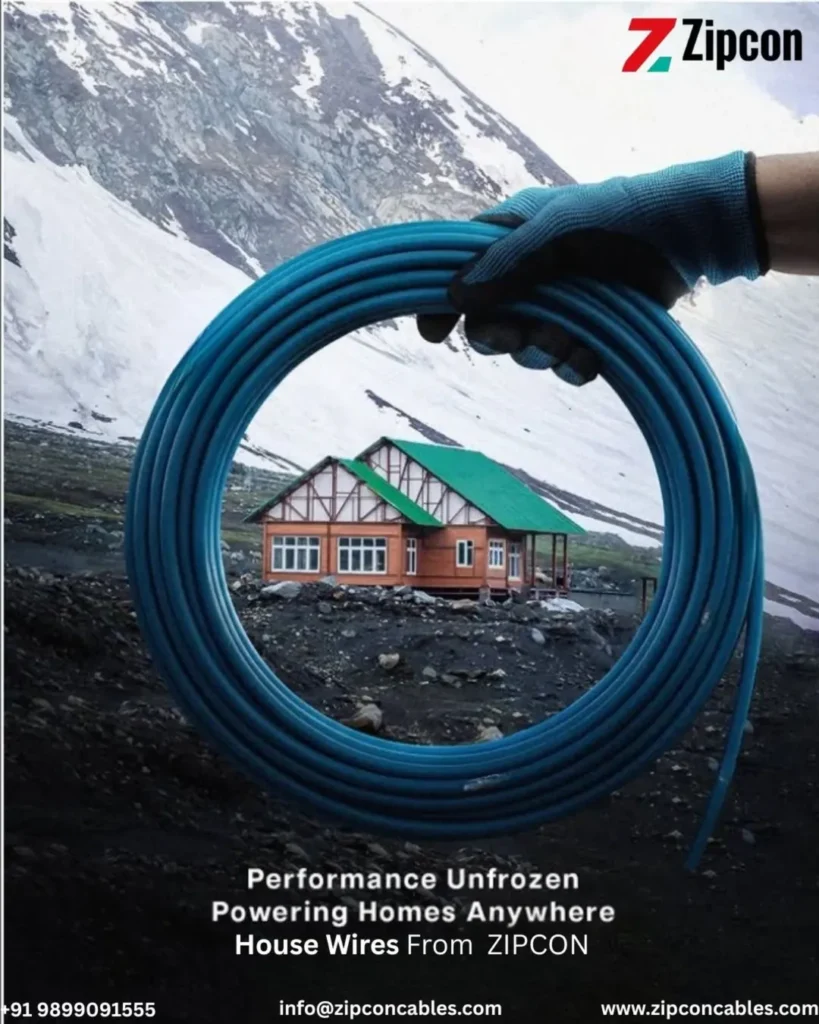
Industrial flexible cables in India are essential wherever electrical connections must withstand movement, vibration, bending, repeated flexing, and demanding operating conditions. They are commonly used in manufacturing plants, machinery, automation systems, control panels, material-handling equipment, construction equipment, and industrial installations.
Choosing an industrial cable is not simply about selecting the right conductor size. Engineers and buyers must evaluate the cable’s insulation, conductor construction, voltage rating, temperature range, mechanical strength, flexibility, environmental resistance, and installation method. A cable that performs well in a fixed installation may not deliver the same service life in a continuously moving application.
For businesses investing in electrical infrastructure, the right flexible cable can improve reliability and reduce maintenance-related interruptions. Zipcon Cables focuses on practical cable solutions designed around application requirements, helping industrial users make better decisions based on performance rather than price alone.
For inquiries or assistance:👉 https://zipconcables.com/contact-us/
What Are Industrial Flexible Cables?
Industrial flexible cables are electrical cables designed to tolerate bending and movement while maintaining reliable electrical performance. Unlike conventional rigid or less-flexible cables, they generally use finely stranded conductors and suitable insulation materials to provide improved flexibility.
Their construction can vary significantly depending on the application. A cable designed for occasional movement may have different construction requirements from one used in robotic equipment or a cable carrier where thousands of bending cycles can occur.
For this reason, the term industrial flexible cable covers several cable constructions rather than one universal product. Engineers should always match cable construction with the actual movement profile and working environment.
Why Flexible Cables Matter in Industrial Applications
Industrial equipment rarely operates under perfectly static conditions. Motors vibrate, machines move, automated systems travel along defined paths, and production equipment may experience repeated starting, stopping, and mechanical movement.
A standard cable installed in an unsuitable moving application can experience conductor fatigue, insulation damage, abrasion, or premature failure. These failures can interrupt production and increase replacement and maintenance costs.
Flexible cables are therefore selected not only for electrical conductivity but also for their ability to tolerate the mechanical conditions present at the installation site.
Typical Applications
Industrial flexible cables can be used in:
- Manufacturing machinery
- Automation and control systems
- CNC and machine tools
- Material-handling equipment
- Conveyor systems
- Industrial control panels
- Motors and machinery connections
- Construction equipment
- Lifting and moving systems
- Industrial power distribution
- Robotics and automated equipment
- Temporary industrial installations
The exact cable construction should always be selected according to the manufacturer’s technical specifications and the operating environment.
Key Factors Engineers Should Consider
1. Conductor Construction
The conductor has a major influence on flexibility. Fine-stranded copper conductors generally provide better flexibility than solid or coarse-stranded constructions.
For applications involving repeated movement, engineers should examine conductor class, strand construction, cross-sectional area, and bending requirements instead of evaluating the cable only by its nominal size.
2. Insulation Material
Insulation protects the conductor and helps the cable withstand electrical, thermal, and environmental stresses.
PVC is widely used in many industrial cable applications because of its practical balance of cost, insulation performance, flexibility, and availability. However, the appropriate insulation depends on temperature, chemicals, oil exposure, mechanical stress, and other site conditions.
3. Voltage Rating
The cable must be suitable for the system voltage. Using an incorrectly rated cable can create safety and performance problems.
Buyers should check the manufacturer’s stated voltage rating and ensure that it corresponds with the electrical system and applicable installation requirements.
4. Temperature Resistance
Industrial environments can expose cables to elevated temperatures from motors, machinery, electrical panels, furnaces, production processes, or enclosed installations.
Cable selection should therefore consider both the ambient temperature and the temperature generated during normal electrical operation. The manufacturer’s specified operating temperature should be treated as a key selection parameter.
5. Mechanical Flexibility
Flexibility requirements depend on how the cable moves.
A cable subjected to occasional bending has different requirements from a cable continuously moving through a cable carrier. Repeated flexing can place considerable mechanical stress on conductors and insulation.
Engineers should identify whether the installation involves:
- Static installation
- Occasional bending
- Repeated movement
- Continuous flexing
- Torsional movement
- Dragging or mechanical movement
This distinction can significantly affect cable selection.
Industrial Flexible Cable vs Standard Electrical Cable
The primary difference is application suitability.
| Factor | Industrial Flexible Cable | Standard/Flexible General-Purpose Cable |
|---|---|---|
| Movement | Designed for applications involving movement | Often intended for less demanding movement |
| Conductor | Typically finer stranded construction | Construction varies |
| Flexibility | Higher where application requires it | Depends on cable type |
| Mechanical stress | Selected for industrial conditions | May have more limited mechanical capability |
| Applications | Machinery, automation, industrial equipment | General electrical installations |
| Selection priority | Movement + environment + electrical load | Electrical requirements + installation |
The comparison does not mean every industrial cable is automatically suitable for continuous motion. Application-specific specifications always take priority.
How to Choose the Right Industrial Flexible Cable
A practical selection process starts with the application rather than the cable price.
Step 1: Identify the Electrical Load
Determine the required conductor size based on current, voltage, installation conditions, permissible voltage drop, and applicable electrical requirements.
Cable sizing should be performed according to the relevant engineering standards and project specifications.
Step 2: Understand the Movement
Record how the cable will move during operation. Determine the approximate bending radius, frequency of movement, travel distance, and whether torsion is involved.
This information is particularly important for automated machinery and cable-chain applications.
Step 3: Evaluate the Environment
Consider exposure to:
- Heat
- Moisture
- Oil
- Chemicals
- Dust
- Abrasion
- Outdoor conditions
- Mechanical impact
The cable’s construction should be compatible with the environment in which it will operate.
Step 4: Check Installation Requirements
Installation conditions can influence cable life. Avoid tight bends, excessive pulling force, crushing, sharp edges, and unsupported cable weight where the cable is not designed for such conditions.
Always follow the manufacturer’s installation recommendations.
Step 5: Verify Technical Specifications
Before purchasing, compare the manufacturer’s datasheet for:
- Conductor material
- Conductor construction
- Cross-sectional area
- Insulation material
- Voltage rating
- Temperature rating
- Flexibility characteristics
- Overall diameter
- Weight
- Bending requirements
- Applicable standards or certifications
A technical datasheet is more useful for procurement decisions than a generic product description.
Examples of Industrial Flexible Cable Selection
Example 1: Automated Machinery
Suppose a cable connects a control cabinet to a moving machine component. The cable experiences regular movement during every production cycle.
A general fixed-installation cable may not be the best choice. The engineer should evaluate a flexible construction designed for the machine’s movement pattern and bending requirements.
Example 2: Manufacturing Plant
Consider a production area where cables are installed near motors and machinery with moderate vibration.
The selection should consider electrical load, temperature, mechanical conditions, routing, and environmental exposure. A suitably constructed industrial flexible cable can provide more dependable service than a cable selected only on conductor size.
Example 3: Temporary Industrial Equipment
Construction and maintenance activities may require equipment to be connected and disconnected regularly.
In such situations, cable flexibility, mechanical durability, handling characteristics, and environmental suitability become important purchasing considerations.
Benefits of Using Quality Industrial Flexible Cables
Improved Installation Flexibility
Flexible construction can make cable routing easier around machinery, panels, and equipment where rigid cable installations are difficult.
Better Suitability for Moving Equipment
When correctly specified, flexible cables can accommodate movement that would place excessive stress on unsuitable cable constructions.
Reduced Maintenance Risk
Cable failures can result in machine downtime. Selecting a cable appropriate for the application can help reduce premature wear and unnecessary replacement.
Reliable Electrical Performance
The correct conductor size, insulation system, and voltage rating help maintain dependable electrical operation throughout the intended service conditions.
Why Buyers Should Not Select Cables Only by Price
Cable procurement based solely on the lowest quotation can create higher costs later.
A cheaper cable may appear attractive during purchase but become expensive if it has unsuitable flexibility, inadequate environmental resistance, poor construction, or a shorter operating life for the intended application.
A better approach is to compare total application value. Consider cable quality, technical suitability, expected service conditions, installation requirements, supplier reliability, and after-sales support alongside the initial purchase price.
What Makes a Reliable Cable Manufacturer Important?
The manufacturer plays an important role in cable quality and consistency. Buyers should evaluate whether the supplier provides clear technical specifications, appropriate product documentation, consistent manufacturing quality, and support for selecting the correct cable.
For industrial projects, traceability and specification accuracy can also be important because procurement teams may need to match the supplied cable with approved project requirements.
Zipcon Cables can be considered for industrial cable requirements where buyers need practical, application-focused cable solutions. Before final procurement, users should review the relevant Zipcon product specifications and confirm suitability for their particular electrical and mechanical conditions.
Expert Tips for Engineers and Buyers
- Start with the application, not the product name. Define electrical load, movement, environment, and installation conditions first.
- Check the conductor construction. Flexibility depends heavily on how the conductor is stranded.
- Respect minimum bending requirements. Repeatedly bending a cable below its recommended radius can accelerate mechanical damage.
- Consider the complete operating environment. Heat, oil, moisture, chemicals, abrasion, and vibration can all influence cable life.
- Ask for technical documentation. A proper datasheet allows engineers to compare products objectively.
- Avoid unnecessary oversizing or undersizing. Cable selection should balance electrical requirements with physical installation constraints.
- Buy from a consistent manufacturer. Consistent construction and documented specifications help reduce procurement and installation uncertainty.
- Consider lifecycle cost. A technically suitable cable can be more economical over its operating life than a low-cost cable that requires frequent replacement.
Common Mistakes When Buying Industrial Flexible Cables
Choosing Only by Cross-Sectional Area
A 4 sq mm or 6 sq mm label does not tell you everything about cable suitability. Conductor construction, insulation, voltage rating, temperature, and flexibility requirements also matter.
Ignoring Cable Movement
A cable used in continuous motion should not be selected using the same criteria as a fixed installation.
Using an Incorrect Bending Radius
Sharp bends can place excessive stress on the conductor and insulation. Cable routing should respect the manufacturer’s recommended bending requirements.
Overlooking Environmental Conditions
A cable suitable for a clean indoor panel may not be suitable for an installation exposed to oil, moisture, chemicals, high temperatures, or abrasion.
Selecting Only on Price
Lowest purchase price does not necessarily mean lowest overall cost. Performance, reliability, installation, and replacement frequency should also be considered.
Why Choose Zipcon Cables for Industrial Cable Requirements?
For industrial users, cable selection should combine electrical performance with practical installation requirements. Zipcon Cables aims to provide cable solutions suited to demanding electrical applications while giving buyers clear product specifications for informed selection.
From flexible electrical connections to specialized cable requirements, the right product should always be matched to conductor size, operating voltage, movement, temperature, installation method, and environmental conditions.
For your next industrial project, evaluate the application first and then select the Zipcon cable construction that matches the required technical parameters.
Conclusion
Selecting industrial flexible cables in India requires more than comparing prices or conductor sizes. Engineers and buyers must consider flexibility, conductor construction, insulation, voltage, temperature, mechanical stress, bending requirements, and the operating environment.
The right cable can support reliable machine operation, simplify installation, and reduce the risk of premature cable-related failures. The wrong cable can create unnecessary maintenance, downtime, and replacement costs.
Zipcon Cables is a practical option to consider when evaluating industrial cable solutions. Before placing an order, review the technical datasheet, define the application’s electrical and mechanical requirements, and confirm that the selected cable meets the project’s specifications.
Top 5 FAQs
1. What are industrial flexible cables used for?
Industrial flexible cables are used for electrical connections in machinery, automation equipment, control systems, manufacturing plants, conveyors, motors, and other applications where cables may experience bending, vibration, or movement.
2. How are industrial flexible cables different from standard cables?
Industrial flexible cables are selected for applications that may involve greater mechanical movement or flexibility requirements. Their conductor construction and overall design can make them more suitable for industrial equipment than cables intended primarily for fixed installations.
3. What should engineers check before selecting an industrial flexible cable?
Engineers should evaluate conductor size and construction, voltage rating, insulation, temperature range, movement, bending radius, environmental exposure, installation conditions, and applicable project or regulatory requirements.
4. Are flexible cables suitable for continuous movement?
Some flexible cables are designed for repeated or continuous movement, while others are intended for occasional bending or flexible installation. Continuous-motion applications require a cable specifically rated or recommended for that duty.
5. Why choose Zipcon Cables for industrial applications?
Zipcon Cables offers cable solutions for various electrical applications. Buyers should select the appropriate Zipcon product by reviewing its technical specifications and matching the cable construction to the project’s electrical, mechanical, and environmental requirements.