Choosing the right solar cables is a critical decision in any photovoltaic (PV) installation — affecting long-term performance, safety, and cost. In Gurgaon, Zipcon Cables stands out as a trusted solar cable manufacturer in gurgaon offering technically engineered solutions tailored for rooftop, commercial, and utility-scale solar systems.
This article explains key technical factors — conductivity, durability, weight, cost, safety, installation considerations, and use cases — as well as comparisons between copper and aluminium solar cables. Practical guidance helps you choose the right cable for your application.
For inquiries or assistance, visit: 👉https://zipconcables.com/contact-us/
What Are Solar Cables?
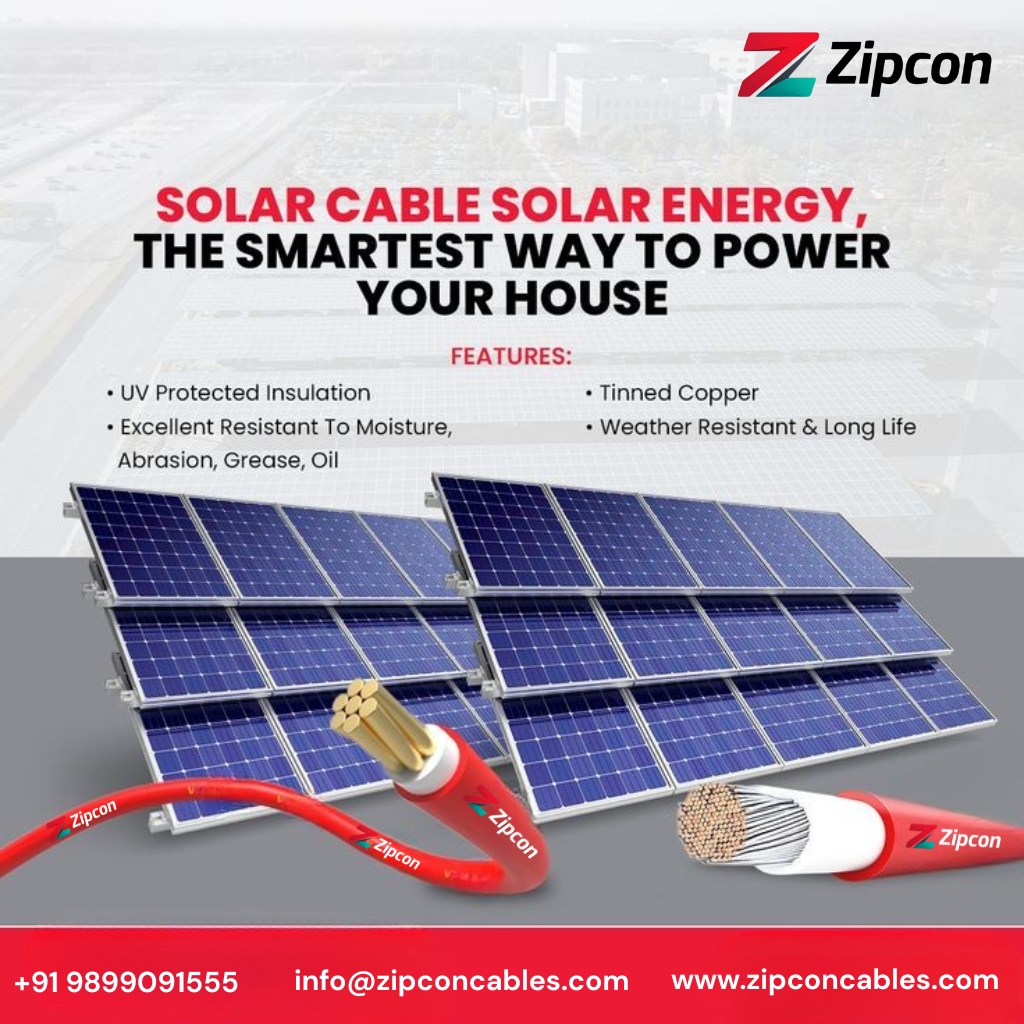
Solar cables are UV-resistant, weather-proof electrical cables designed for PV systems. They transmit DC power from solar modules to inverters and AC power to loads or grids. Unlike general-purpose cables, solar cables must handle:
- High DC voltages
- Outdoor weather, temperature swings, and sunlight exposure
- Mechanical stresses (wind, vibration, foot traffic in rooftops)
- Chemical resistance (ozone, moisture, pollutants)
Zipcon Cables manufactures solar cables with materials and design features that meet these application demands.
Key Technical Considerations
Conductivity
Conductivity determines how efficiently a cable transmits current with minimal voltage drop.
- Copper: Excellent electrical conductivity (~100% IACS), lower resistive losses, especially important in long runs or high-current circuits.
- Aluminium: Lower conductivity (~61% IACS) by volume, so larger cross-sectional area is needed to match copper performance.
Practical guidance: Use copper where reducing voltage drop and maximizing efficiency is critical — e.g., long DC runs from large arrays to inverters.
Durability
Outdoor solar environments demand robust construction.
Zipcon Cables solar cables typically feature:
- Cross-linked polyethylene (XLPE) insulation — heat and weather resistant
- UV-stable jackets — protect against sun damage
- Ozone and moisture resistance — critical in humid or polluted environments
Why it matters: Insulation quality directly affects lifespan; poor insulation can lead to cracking and electrical faults.
Weight
Weight influences both handling during installation and support structure loading.
- Copper cables are heavier.
- Aluminium cables are lighter and easier to route across rooftops or cable trays.
Installer insight: For large utility solar farms with long cable runs, aluminium cables reduce installation labor and support infrastructure costs.
Cost
Generally, cable costs rise with material performance:
- Copper cables: Higher raw material cost but better conductivity and long-term efficiency.
- Aluminium cables: Lower upfront cost and lighter weight but larger diameter and connectors needed.
Value trade-off: For budget-constrained commercial or industrial rooftops, aluminium may be cost-effective; for high-performance systems, copper often yields fewer losses and better ROI.
Copper vs Aluminium Solar Cables – Quick Comparison
| Criterion | Copper Cable | Aluminium Cable |
|---|---|---|
| Conductivity | Excellent | Lower (needs bigger size) |
| Weight | Heavy | Light |
| Cost | Higher | Lower |
| Installation Ease | Harder | Easier |
| Voltage Drop | Lower | Higher (when same size) |
| Mechanical Strength | Higher | Lower |
Use case guidance:
- Copper: Best for long DC cable runs, rooftop systems with limited space, and projects prioritizing efficiency.
- Aluminium: Best for cost-sensitive, long trunk runs where weight and budget matter more than highest conductivity.
Typical Use Cases
1. Residential Rooftop Solar
- Short cable runs (module to inverter)
- High efficiency and minimal voltage drop matter
- Often tighter pathways
Recommendation: Copper solar cables from Zipcon deliver low loss and superior reliability for residential rooftops.
2. Commercial & Industrial Systems
- Medium to long runs
- Usually structured cable trays and more space
- Cost and performance both matter
Recommendation: For C&I systems, choose based on length and budget: shorter runs benefit from copper; longer runs may use aluminium to balance cost and ease of installation.
3. Utility-Scale Solar Farms
- Very long distances from arrays to central inverters
- Heavy cable routing across large terrain
- Weight and cost become significant drivers
Recommendation: Aluminium solar cables excel in utility setups due to lighter weight and lower price, provided proper sizing and terminations are used.
Safety and Installation Considerations
When choosing and installing solar cables:
1. Correct Sizing:
Select cable cross-section based on current load and allowable voltage drop. Undersized cables cause heating and efficiency loss.
2. Connector Compatibility:
Use compatible MC4 or IEC connectors. Zipcon cables are available with standard connector interfaces to ensure safe, tight connections.
3. UV and Weather Protection:
Always choose UV-rated, weather-proof jackets. Exposed cables must resist cracking and moisture ingress.
4. Bending Radius:
Respect minimum bending radius to avoid stressing insulation.
5. Labels and Standards:
Ensure cables comply with relevant standards (e.g., IEC 62930, IS/IEC guidelines) and are clearly marked for DC use.
Choosing the Right Solar Cable from Zipcon Cables
For Efficiency and High Performance:
- Copper solar cables are ideal. Despite higher material cost, their superior conductivity and lower losses make them perfect for rooftop and performance-focused installations.
For Cost and Weight Optimization:
- Aluminium solar cables offer a cost-effective, lighter alternative for long runs in utility-scale or large commercial projects.
Balanced Choice:
Engineers and procurement teams should evaluate system length, expected current, environmental exposure, and budget. In many commercial settings, a mix — copper near panels and aluminium for long trunk runs — can optimize both performance and cost.
Conclusion
Zipcon Cables in Gurgaon delivers engineered cable solutions that address the real needs of solar installations across scales — from residential rooftops to large solar farms. Focus on material properties like conductivity, durability, weight, and cost, and choose based on technical requirements and installation context. For most high-efficiency and reliability-focused projects, copper solar cables stand out; for cost and weight-sensitive large installations, aluminium alternatives excel.