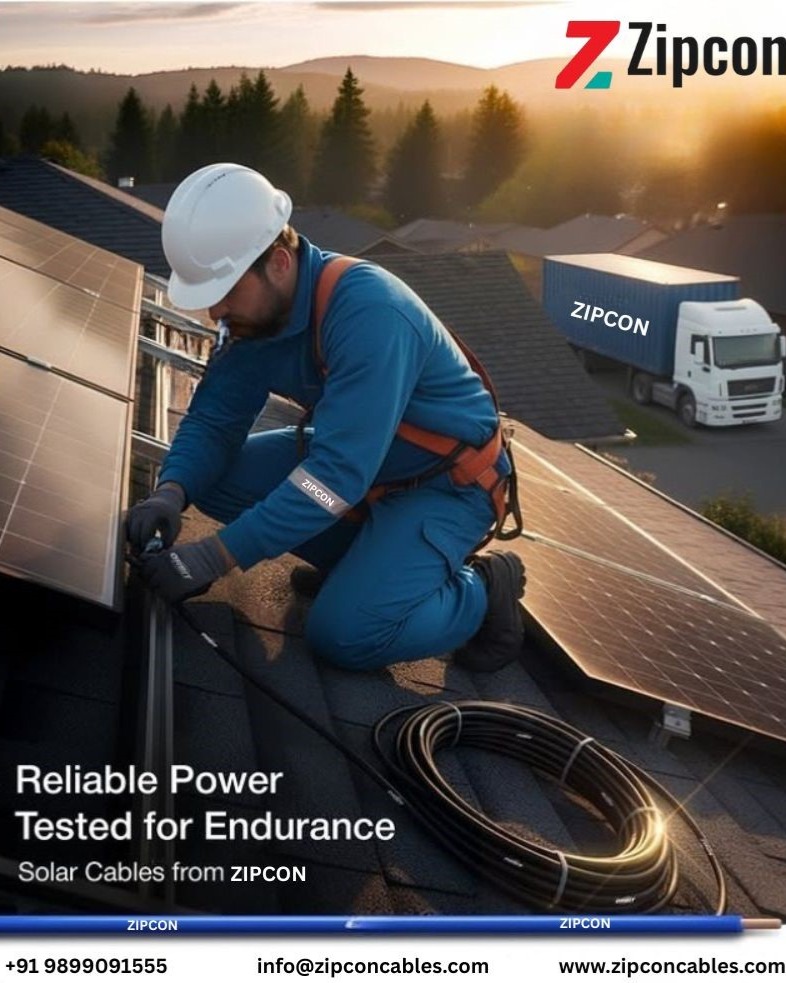
Choosing the right solar cable is not just a technical formality in a commercial or industrial solar project — it directly affects how efficiently your system performs for the next 25 years. Many project owners focus heavily on panels and inverters but underestimate the role of cables. The result? Higher voltage drop, unexpected heating, insulation failure, and long-term energy loss.
If you’re planning a rooftop plant, factory installation, or utility-scale Best Solar Cable project in Noida, your cable choice must match your load requirements, site conditions, and budget — not just the lowest per-meter price.
This guide explains what truly matters when selecting the best solar cable in Noida and how to choose between copper and aluminium options wisely. We’ll also look at why Zipcon Cables is a practical and reliable solution for commercial and industrial solar projects.
For technical support or project inquiries: https://zipconcables.com/contact-us/
Key Technical Factors Buyers Should Evaluate
Conductivity and Voltage Drop
Conductivity determines how efficiently electricity flows through a cable. Higher conductivity means lower resistance — and lower resistance means less voltage drop.
Copper has higher conductivity than aluminium. In practical terms, that means:
- Lower voltage drop over long distances
- Smaller cable size for the same current rating
- Better performance in high-load systems
For projects where the distance between panels, inverters, and transformers is significant, conductivity becomes a critical decision factor. Even a small voltage drop percentage can impact overall system output.
Durability in Harsh Conditions
Solar cables operate in demanding environments. They face:
- Continuous UV exposure
- High rooftop temperatures (often above 60°C in industrial zones around Noida)
- Rain and moisture
- Mechanical stress during installation
Quality solar cables use XLPO (cross-linked polyolefin) insulation. This material resists UV radiation, heat, and flame spread. For industrial and commercial sites, heat resistance and long-term insulation stability are non-negotiable.
Weight and Structural Load
Copper is heavier. Aluminium is lighter.
In large rooftop projects, especially on pre-engineered buildings or older factory sheds, cable weight can influence tray loading and support structure requirements. Aluminium cables help reduce structural stress in such cases.
Cost Beyond Price Per Meter
Copper costs more than aluminium. But smart buyers don’t compare price per meter alone. They evaluate:
- Required cross-section size
- Voltage drop impact
- Installation complexity
- Long-term energy loss
Sometimes paying more upfront for copper reduces operational losses over the system’s lifetime.
Safety and Compliance
In industrial settings, safety is critical. Solar cables should offer:
- Flame-retardant insulation
- Low smoke emission
- High insulation resistance
- Compliance with recognized standards
Good cable quality minimizes fire risk and short-circuit failure — which is essential in commercial facilities where downtime means revenue loss.
Installation Practicality
Fine-stranded copper cables are generally more flexible and easier to route in tight rooftop spaces. Aluminium cables may require careful termination and larger bending radii to ensure secure connections.
For complex rooftop layouts, flexibility can significantly reduce installation time.
Copper vs Aluminium Solar Cables – Practical Comparison
Where Copper Performs Better
- Long cable runs with strict voltage drop limits
- High-current DC systems
- Rooftop systems with limited tray space
- High-temperature industrial rooftops
- Projects prioritizing maximum efficiency
Copper’s higher conductivity allows smaller cross-sections and reduced losses, making it ideal for performance-focused installations.
Where Aluminium Is More Suitable
- Large ground-mounted utility projects
- Budget-sensitive projects with large cable quantities
- Long AC transmission runs where larger cable sizes are acceptable
- Installations where reducing structural load matters
Aluminium becomes cost-effective when properly sized to compensate for its lower conductivity.
Real-World Scenarios
Industrial Rooftop in Noida
Limited space, high surface temperatures, moderate cable distances.
Best choice: Copper DC solar cables for better heat resistance, lower voltage drop, and easier routing.
Ground-Mounted Utility Project Near Noida
Large area, long cable routes, tight project budgets.
Best choice: Aluminium for long AC runs, copper for DC strings where voltage drop must be tightly controlled.
Long Run Between Inverter and Transformer (150+ meters)
Best approach: Perform a voltage drop calculation. Either increase copper cross-section or use properly sized aluminium cable. Aluminium often becomes economically practical here.
High-Temperature Industrial Facility
Dust, heavy machinery heat, continuous operation.
Best choice: High-quality copper cable with UV-resistant and heat-resistant insulation.
Why Zipcon Cables Is a Reliable Option
When choosing solar cables in Noida, reliability and consistency matter more than brand claims. Zipcon Cables focuses on:
- High-conductivity copper and aluminium conductors
- UV-resistant and heat-resistant insulation
- Durable outer sheathing for outdoor conditions
- Stable performance under industrial load
For engineers and procurement managers, this means predictable performance, reduced maintenance risk, and fewer installation issues.
Direct Recommendation: How to Decide
Keep it simple:
- Choose copper if efficiency, compact installation, and long-term performance are your top priorities. Ideal for commercial rooftops and industrial facilities.
- Choose aluminium if you are executing a large ground-mounted project and need to optimize capital cost without compromising acceptable performance.
- For mixed installations, use copper in DC strings and aluminium for long AC transmission runs after proper voltage drop calculation.
Before finalizing your purchase, calculate:
- Current load
- Distance of cable run
- Acceptable voltage drop (usually 1–3%)
- Environmental conditions
Then select the cable size and material accordingly.
The right solar cable does more than connect panels — it protects your energy output and investment for decades. In commercial and industrial solar projects across Noida, choosing a dependable manufacturer like Zipcon Cables ensures you are investing in durability, safety, and long-term performance.