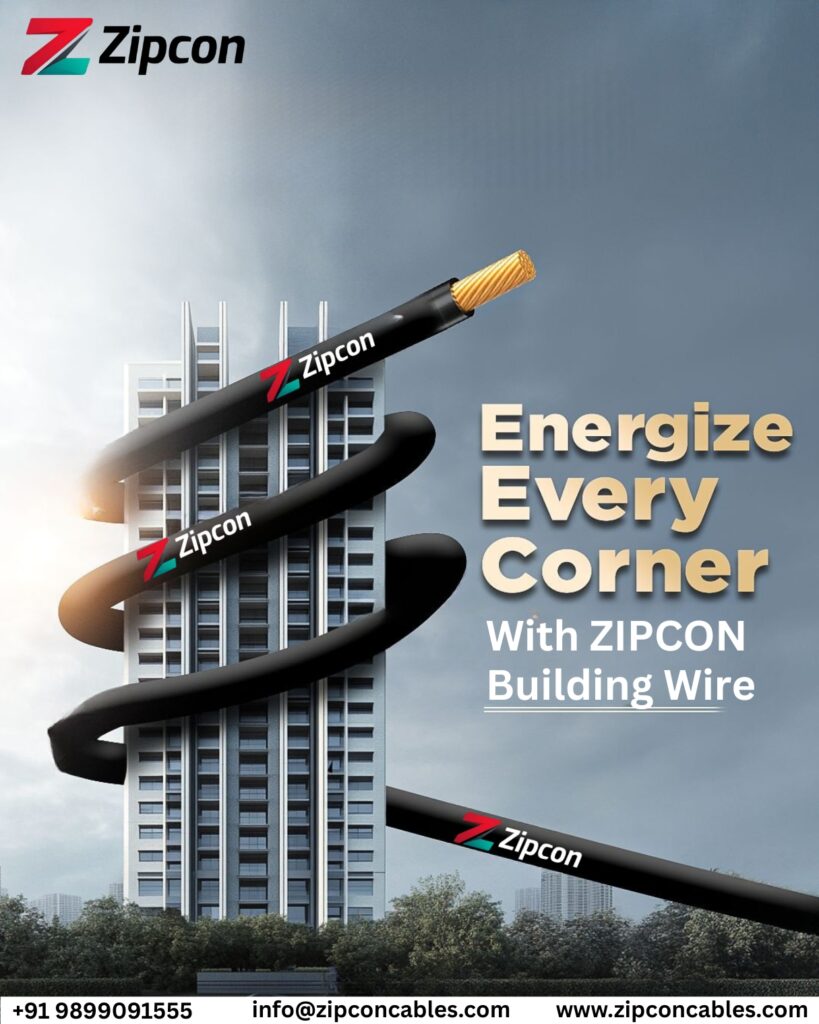
Choosing the right house wire is not just about price — it’s about safety, performance, and long-term reliability. In fast-growing areas like Gurgaon, where residential towers, offices, retail spaces, and small industries are expanding rapidly, electrical loads are higher and more complex than ever. This makes multistrand house wire a practical and dependable choice for both commercial and residential installations.
Brands like Zipcon Cables are increasingly preferred because they focus on consistent conductor quality, insulation strength, and performance under real site conditions.
For inquiries or assistance, visit: https://zipconcables.com/contact-us/
What Is Multistrand House Wire and Why Is It Used?
Multistrand house wire consists of multiple thin strands of conductor (usually copper or aluminum) twisted together to form a single core. Unlike single-strand (solid) wire, multistrand wire is flexible and easier to route through conduits and panels.
In residential projects, it is commonly used for lighting circuits, power sockets, AC lines, kitchen appliances, and inverter wiring. In commercial setups, it supports heavier loads such as HVAC systems, lift circuits, distribution panels, and server rooms.
The biggest reason professionals choose multistrand wire is flexibility. During installation, especially in high-rise buildings or tight conduits, flexibility reduces breakage risk and speeds up work.
Conductivity: The Core Performance Factor
Conductivity determines how efficiently current flows through the wire. Copper multistrand wire offers significantly higher conductivity than aluminum. This means:
- Lower voltage drop
- Better load handling
- Reduced heat generation
- Improved energy efficiency
For example, in a commercial office where multiple AC units and computers operate simultaneously, copper multistrand wire maintains stable performance without overheating.
Zipcon Cables’ copper multistrand wires are manufactured with high-purity copper, which ensures consistent current flow and minimal resistance losses.
Aluminum, while lighter and cheaper, has lower conductivity. To match copper’s performance, aluminum conductors must be thicker.
Durability and Heat Resistance
Under continuous load, wires heat up. The ability to withstand temperature rise without insulation damage is critical.
Copper performs better in high-load environments because:
- It handles higher temperatures efficiently.
- It expands and contracts less under heat cycles.
- It has stronger tensile strength.
In a residential building with heavy appliances like geysers and induction cooktops, copper multistrand wiring provides better long-term durability.
Aluminum wires are more prone to expansion and contraction, which may loosen connections over time if not installed carefully.
Zipcon Cables focuses on strong PVC insulation and proper strand compaction, improving overall durability and mechanical strength.
Weight and Cost Considerations
This is where aluminum sometimes becomes attractive.
- Copper is heavier and more expensive.
- Aluminum is lighter and cheaper.
In large commercial projects where cable length runs into hundreds of meters, aluminum may reduce overall material cost and structural load.
However, cost should never compromise safety. For internal house wiring and power circuits, copper remains the safer long-term investment.
Think long term: cheaper installation today should not mean maintenance headaches tomorrow.
Safety and Standards
Safety depends on conductor quality, insulation, and compliance with standards.
Good multistrand house wire should:
- Meet IS standards
- Have flame-retardant insulation
- Offer proper current rating
- Provide strong insulation resistance
Copper multistrand wire is generally safer in high-load applications because it resists overheating and reduces the risk of loose terminal connections.
Zipcon Cables ensures consistent strand quality and insulation thickness, which directly impacts safety during overload situations.
Installation Needs and Practical Handling
Multistrand wire behaves differently from single-strand wire.
- It bends easily without cracking.
- It fits better in crowded conduits.
- It reduces stress at connection points.
In a real-world scenario: imagine wiring a large residential tower in Gurgaon. Electricians often pull cables through long vertical conduits. A solid wire may kink or break under stress. Multistrand wire slides more smoothly and withstands bending.
In commercial panels with multiple bends and tight spaces, flexibility becomes a major advantage.
However, proper termination is important. Multistrand wires should be crimped or fitted with lugs to prevent loose strands.
Copper Multistrand vs Aluminum vs Single-Strand
Here’s a practical comparison:
Copper Multistrand
Best for high-load residential and commercial circuits. High conductivity, better heat resistance, longer lifespan. Higher upfront cost but better long-term reliability.
Aluminum Multistrand
Suitable for budget-sensitive projects and long-distance runs where weight matters. Requires larger cross-section for same performance. Needs careful installation to prevent loosening.
Single-Strand Wire
Less flexible. More suited for fixed installations with minimal bends. Not ideal for complex routing in modern buildings.
Real-World Application Scenarios
Large Residential Apartment
For power sockets, kitchen loads, and AC wiring — copper multistrand from Zipcon Cables is ideal. It handles fluctuating loads and offers long service life.
Commercial Office Space
For distribution boards and heavy electrical equipment — copper multistrand is safer and more stable.
UPS Backup Circuits
Voltage stability is critical. Copper ensures minimal voltage drop and consistent backup performance.
Cost-Sensitive Warehouse Project
Aluminum may be considered for main feeders if properly sized and installed by experienced professionals.
Direct Recommendation: How to Choose
If your project involves:
- High load equipment
- Frequent bending and complex routing
- Long-term reliability focus
- Indoor residential or commercial wiring
Choose copper multistrand wire — especially from a reliable brand like Zipcon Cables.
If your project involves:
- Very long cable runs
- Lower load demand
- Budget constraints
- Structural weight considerations
Aluminum multistrand can be considered — but ensure correct sizing and proper termination.
For most residential and commercial internal wiring in Gurgaon, copper multistrand remains the safest and most practical choice.
Final Thought
Electrical wiring is not an area where shortcuts make sense. The difference between average wire and quality multistrand wire shows up after years of use — in safety, efficiency, and maintenance costs.
Zipcon Cables’ multistrand house wires are well-suited for Gurgaon’s growing infrastructure needs because they combine conductivity, flexibility, and insulation strength in a practical, installation-friendly design.
When selecting house wire, focus on load requirements, installation conditions, and long-term reliability — not just initial cost. That decision will protect both your property and your investment for years to come.