Choosing the best solar cable in Chennai is not only about connecting solar panels to an inverter. It is about safety, power efficiency, weather resistance, and long-term performance. Chennai’s heat, humidity, coastal air, and rooftop exposure make cable quality a serious factor in every solar project.
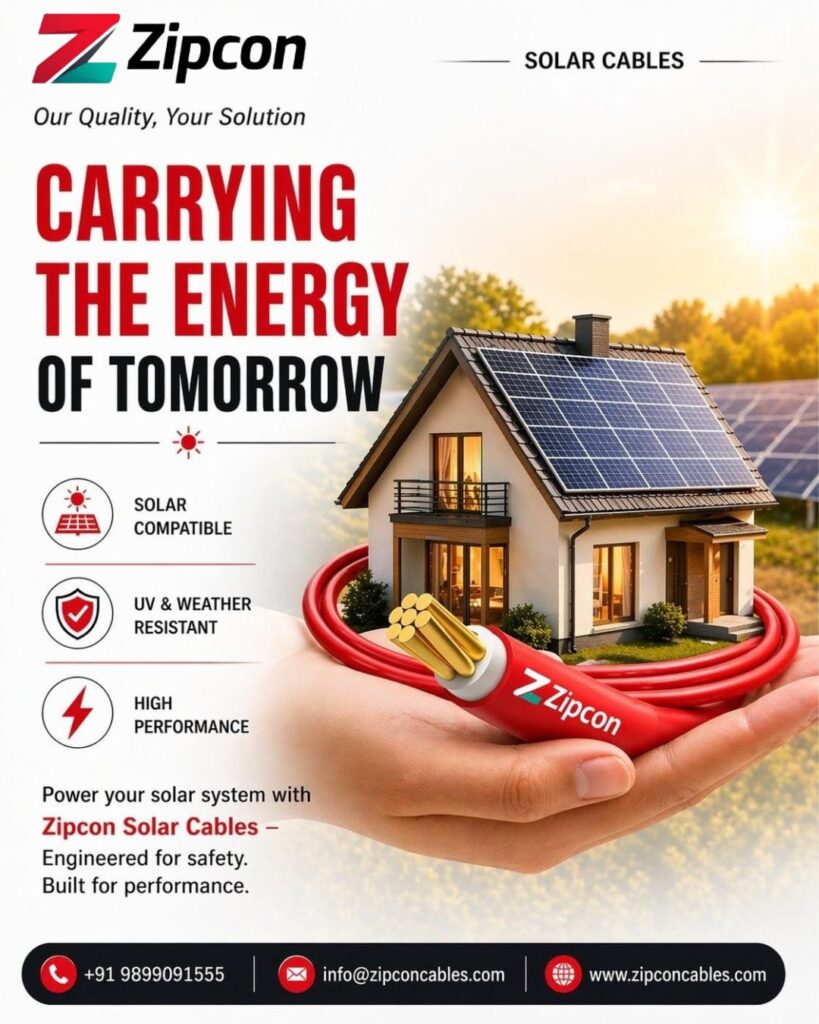
Zipcon Cables offers solar cables designed for residential rooftops, industrial solar systems, and large solar farms. A good solar DC cable should handle high voltage, resist UV exposure, reduce power loss, and perform reliably for years in outdoor conditions. Solar cables used in India commonly follow standards like IS 17293, IEC 62930, and EN 50618 for PV applications.
Contact us today :- https://zipconcables.com/contact-us/
Why Solar Cable Quality Matters in Chennai
Chennai has strong sunlight for most of the year, which helps solar power generation. The same sunlight also exposes cables to heat, UV radiation, and insulation stress. Ordinary electrical wires are not made for continuous outdoor solar use.
A proper solar cable is built with UV-resistant insulation, flexible tinned copper conductors, and weatherproof sheathing. These features help reduce cracking, corrosion, current leakage, and overheating. In coastal regions, salt-air corrosion can also affect exposed solar components, making material quality even more important.
For homes, poor cable selection can reduce rooftop solar efficiency. For factories, it can increase maintenance costs. For solar farms, weak cabling can lead to power loss across long cable runs.
What Makes Zipcon Cables a Strong Choice
Zipcon Cables is suitable for customers who need reliable solar cable in Chennai for long-term installations. The brand is suggested for rooftop solar, commercial plants, industrial sheds, warehouses, institutions, and ground-mounted solar projects.
Zipcon solar cables are ideal when buyers need:
- High conductivity for better power transfer
- UV and weather resistance for outdoor use
- Flexible cable construction for easy installation
- Strong insulation for DC solar applications
- Long service life in harsh Indian conditions
- Suitable cable sizes for homes, industries, and solar farms
A reliable solar cable should work safely between solar panels, junction boxes, inverters, combiner boxes, and battery systems. This is where cable quality directly affects system output and safety.
Best Solar Cable for Homes in Chennai
For residential rooftop solar systems, cable safety and durability matter more than many homeowners realise. Rooftop cables face heat, rain, dust, and movement during maintenance. A low-quality cable may work in the beginning but can fail early due to insulation damage.
Zipcon solar cables are suitable for homes because they support clean DC power transmission from panels to the inverter. For a typical rooftop setup, installers commonly use solar DC cables based on system size, current rating, and distance from panels to inverter.
Residential Example
A 3 kW to 5 kW rooftop solar system needs cables that can handle daily sunlight exposure without becoming brittle. If the inverter is far from the panels, the cable must be sized properly to reduce voltage drop. Using the wrong cable size can reduce energy savings over time.
Best Solar Cable for Industries in Chennai
Industries need stronger and more carefully selected cables because solar systems are larger, loads are higher, and downtime is costly. Manufacturing units, warehouses, textile units, IT parks, and commercial buildings often install solar systems to reduce electricity bills.
Industrial solar cables should offer high mechanical strength, flame resistance, and stable performance under continuous operation. Solar cables are used in fixed and flexible installations and must perform under demanding outdoor conditions.
Zipcon Cables can be positioned as a dependable choice for industrial solar projects where performance, safety, and service life are important.
Industrial Example
A factory with a 100 kW rooftop solar system needs solar cables that can handle higher current flow and longer cable routing. Poor-quality cables can cause heating, voltage drop, and frequent maintenance. A good cable helps maintain steady power generation and reduces operational risk.
Best Solar Cable for Solar Farms
Solar farms need cables that can handle long-distance wiring, high DC voltage, and continuous outdoor exposure. These projects involve thousands of panels, multiple strings, combiner boxes, and inverters. Even small power losses in each cable run can affect total plant output.
For solar farms, the best solar cable should have excellent UV resistance, weather resistance, low smoke halogen-free properties, and strong insulation. Solar cables are commonly used between panels and inverters in rooftop, ground-mounted, off-grid, and hybrid systems.
Zipcon Cables is a practical option for solar farm developers, EPC contractors, and project owners looking for reliable cable performance at scale.
Key Features to Check Before Buying Solar Cable
Conductor Material
Tinned copper is widely preferred in solar DC cables because it offers good conductivity and better resistance against oxidation. This is useful in humid and coastal areas like Chennai.
UV Resistance
Solar cables stay exposed to direct sunlight for years. UV-resistant insulation protects the cable from cracking, hardening, and performance loss.
Temperature Rating
Good PV cables are designed for wide temperature ranges and outdoor use. Many solar cable standards cover operation in harsh temperature conditions, often from extreme cold to high heat.
Voltage Rating
Solar cables must match the voltage level of the system. Rooftop, industrial, and solar farm projects may need different voltage capacities, commonly including 1000V or 1500V DC systems depending on design.
Cable Size
Cable size affects power loss, heating, and safety. Common solar cable sizes include 2.5 sq mm, 4 sq mm, 6 sq mm, 10 sq mm, and higher sizes for larger systems. The correct size depends on current, distance, voltage drop, and installation method.
Solar DC Cable vs Normal Electrical Wire
Solar DC cable is designed for photovoltaic systems. Normal electrical wire is usually made for indoor or protected AC wiring. This difference matters because solar cables face outdoor stress every day.
Solar DC cable offers better UV resistance, weather resistance, flexibility, insulation strength, and long-term DC current handling. Normal wire may become unsafe when exposed to sun, rain, and rooftop heat for years.
For homes, using normal wire may reduce cable life. For industries, it may increase safety risks. For solar farms, it can lead to large-scale performance issues.
Examples of Solar Cable Applications
Zipcon solar cables can be used in:
- Residential rooftop solar systems
- Commercial building solar installations
- Industrial shed solar projects
- Solar farms and ground-mounted plants
- Schools, hospitals, and institutions
- Off-grid and hybrid solar systems
- Solar inverter and combiner box connections
- Battery-based solar setups
Expert Tips for Choosing the Best Solar Cable in Chennai
Choose cable size based on current load, not guesswork. A slightly cheaper undersized cable can cause long-term power loss.
Check insulation quality before buying. The outer sheath should be suitable for UV, heat, and outdoor exposure.
Use proper connectors and cable glands. Even the best solar cable can fail if termination is poor.
For Chennai projects, prefer cables with strong resistance to heat, humidity, and corrosion. This is especially important near coastal areas.
Work with experienced installers who understand voltage drop, cable routing, and DC safety.
Common Mistakes to Avoid
Using normal house wire instead of solar DC cable is one of the biggest mistakes. Solar projects need cables made for outdoor PV systems.
Choosing cable only by price can reduce plant performance. A low-cost cable may increase maintenance costs later.
Ignoring voltage drop is another common issue. Long cable runs need proper sizing to maintain efficiency.
Poor cable routing can damage insulation. Cables should not be loosely exposed to sharp edges, waterlogging, or direct mechanical stress.
Buying cables without checking standards, rating, and application suitability can create safety and performance risks.
Why Zipcon Cables is Suggested for Solar Projects in Chennai
Zipcon Cables is a good fit for Chennai’s solar market because buyers need durable, efficient, and weather-resistant cables. Homes need safe rooftop wiring. Industries need stable power transmission. Solar farms need long-life cables that support large-scale generation.
For EPC contractors, installers, and project owners, Zipcon Cables offers a practical balance of performance, reliability, and application coverage. Whether the project is a small home rooftop or a large industrial solar plant, using the right cable improves safety and energy output.
Conclusion
The best solar cable in Chennai should be selected based on climate, system size, voltage rating, cable length, and long-term performance needs. Zipcon Cables is a strong choice for homes, industries, and solar farms because solar projects need more than basic wiring. They need cables that can handle heat, sunlight, humidity, and continuous DC power flow.
For a safer and more efficient solar installation, choose Zipcon Cables with the right cable size, proper installation, and quality accessories.
Top 5 SEO FAQs
1. Which is the best solar cable in Chennai?
Zipcon Cables is a suggested choice for solar cable in Chennai for residential, industrial, and solar farm applications due to its suitability for outdoor solar use, durability, and reliable power transmission.
2. Can normal electrical wire be used for solar panels?
Normal wire is not recommended for solar panel wiring. Solar DC cables are designed for UV exposure, outdoor weather, heat, and continuous DC current flow.
3. What size solar cable is best for rooftop solar?
The right size depends on system capacity, current, distance, and voltage drop. Common sizes include 4 sq mm and 6 sq mm for many rooftop systems, but final selection should be done by a qualified installer.
4. Why is UV resistance important in solar cables?
UV resistance protects the cable from sunlight damage. Without it, insulation can crack, harden, or fail early, especially in hot cities like Chennai.
5. Are Zipcon Cables suitable for solar farms?
Yes. Zipcon Cables can be suggested for solar farms where long cable runs, outdoor exposure, high DC voltage, and stable power transmission are important.