

Electrical wiring needs to handle everyday loads, temperature changes, installation stress, and years of continuous use. Choosing the best HRFR house wires in Indore can help homeowners, builders, contractors, and electricians create reliable wiring systems for residential and commercial buildings.
HRFR generally refers to Heat Resistant Flame Retardant characteristics. HRFR house wires are designed with insulation intended to provide improved resistance to heat and flame compared with standard wiring products, subject to the specific product construction and applicable test requirements.
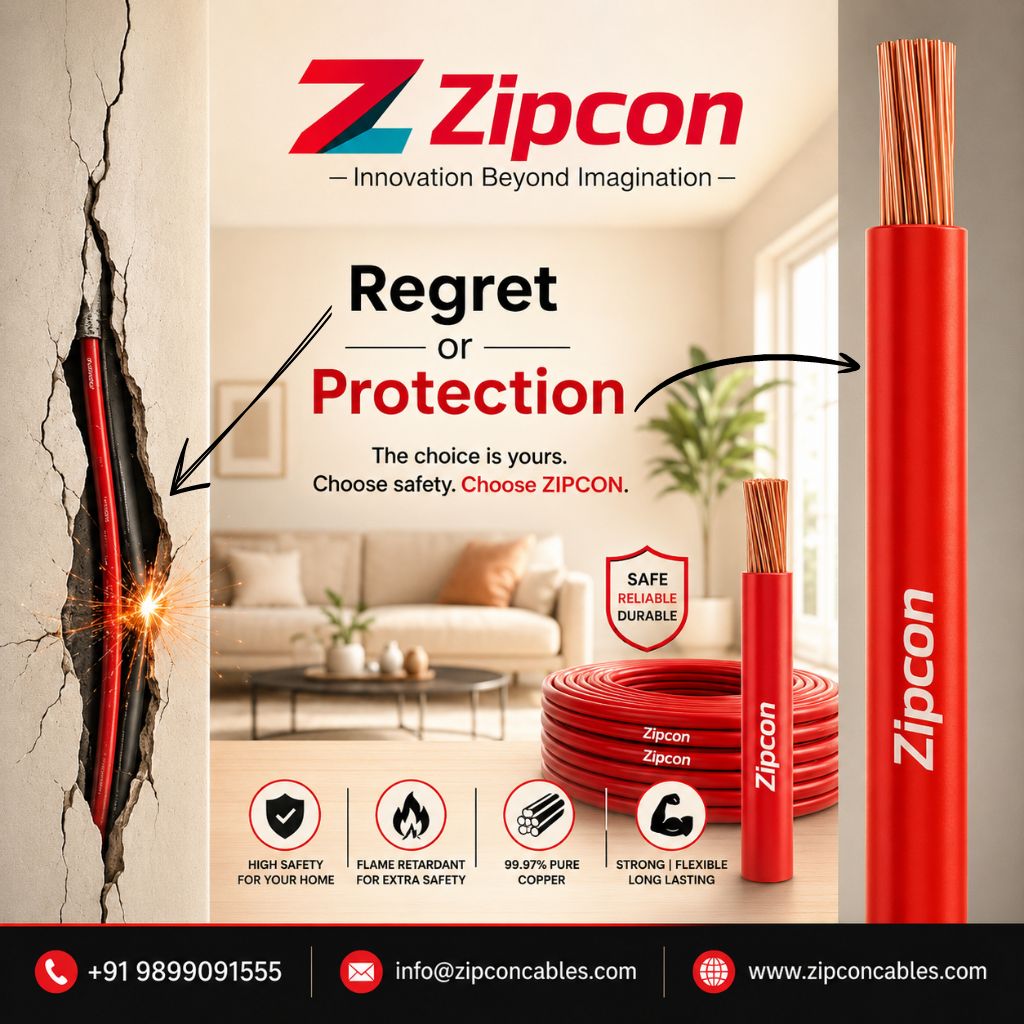
For dependable electrical installations, Zipcon Cables offers HRFR house wires designed for applications where durability, electrical reliability, and resistance to heat and flame are important considerations. However, wire size and specification should always be selected according to the actual electrical load and installation conditions.
For inquiries or assistance, visit: 👉https://zipconcables.com/contact-us/
What Are HRFR House Wires?
HRFR house wires are insulated electrical wires designed with properties that provide resistance to elevated temperatures and flame propagation under specified conditions. They are commonly considered for residential, commercial, and other building-wiring applications.
The conductor carries electrical current while the insulation protects the conductor from accidental contact and environmental exposure. HRFR characteristics relate primarily to the behavior of the insulation under heat and flame conditions.
Understanding HRFR
HR refers to heat resistance, while FR refers to flame-retardant characteristics. Together, these properties are intended to provide better performance in applications where wiring may experience higher operating temperatures or where flame-retardant characteristics are required.
HRFR does not mean that a wire is fireproof. Overall electrical safety still depends on correct cable sizing, circuit protection, installation practices, connections, and the condition of the complete electrical system.
Why Choose HRFR House Wires in Indore?
Indore’s residential construction, commercial properties, offices, retail spaces, and industrial development create demand for dependable electrical wiring. Wires used in these environments may operate continuously and can be exposed to heat generated by electrical loads and surrounding conditions.
Choosing an appropriately specified HRFR house wire can provide several practical advantages.
1. Better Heat Resistance
Electrical circuits can generate heat during normal operation, particularly when carrying substantial loads. HRFR insulation is designed for improved temperature resistance according to the product’s specified rating.
This makes appropriate HRFR wires useful for installations where thermal performance is an important consideration.
2. Flame-Retardant Characteristics
HRFR insulation is designed to resist flame propagation under defined testing conditions. This can provide an additional safety characteristic in building wiring when combined with proper circuit protection and installation.
3. Durable Insulation
The insulation is an important barrier between the conductor and its surroundings. Quality insulation helps protect the conductor during installation and normal operation while supporting long-term electrical reliability.
4. Reliable Electrical Performance
A quality house wire should maintain consistent electrical performance when correctly sized and installed. Conductor quality, resistance, insulation properties, and manufacturing consistency all contribute to overall performance.
5. Suitable for Modern Wiring
HRFR wires can be considered for homes, offices, shops, apartments, and other buildings where the product’s specifications meet the project’s electrical requirements.
Key Features to Consider in HRFR House Wires
Selecting the right HRFR wire requires more than checking the product name. The complete technical specification should match the intended application.
Conductor Material
The conductor is the part of the wire that carries current. Copper is commonly used for building wires because of its high conductivity and flexibility.
When comparing products, check the conductor material and relevant technical specifications rather than judging quality solely by appearance or price.
Wire Size
Wire size is one of the most important factors in electrical safety. The appropriate cross-sectional area depends on the expected current, installation method, ambient temperature, cable grouping, and other design considerations.
An undersized wire can become excessively hot under load, making correct sizing essential.
Insulation Performance
HRFR insulation should provide the heat and flame-retardant characteristics specified for the particular product. Check the manufacturer’s technical information for temperature ratings and applicable test standards.
Flexibility
House wiring often involves bends through conduits, electrical boxes, distribution boards, and other confined areas. Adequate flexibility can make installation easier and reduce unnecessary mechanical stress.
Voltage Rating
The wire must be suitable for the voltage of the electrical system. Always verify the rated voltage and other technical parameters before installation.
HRFR House Wires vs FRLS House Wires
HRFR and FRLS are not interchangeable terms. They describe different performance characteristics, so selection should be based on the requirements of the project.
| Feature | HRFR House Wires | FRLS House Wires |
|---|---|---|
| Primary characteristic | Heat resistance + flame retardancy | Flame retardancy + low smoke |
| Heat-performance focus | Higher emphasis | Depends on product specification |
| Smoke-performance focus | Not implied by HRFR alone | Low-smoke characteristic |
| Typical consideration | Applications where thermal and flame performance matter | Buildings where smoke reduction is an important consideration |
| Selection basis | Product specifications and installation conditions | Product specifications and installation conditions |
The right choice depends on the electrical system, building requirements, applicable standards, and environmental conditions.
Applications of HRFR House Wires
HRFR house wires can be used in different building-wiring applications when their specifications match the installation.
Residential Wiring
Homes require circuits for lighting, fans, sockets, appliances, air conditioners, kitchen equipment, and other electrical loads. Correctly sized HRFR wires can support these circuits where their specifications are appropriate.
Apartments and Housing Projects
Apartment projects involve multiple electrical circuits across individual homes and common areas. Consistent wire specifications can simplify procurement and help maintain installation quality.
Offices
Offices can have continuous electrical loads from computers, lighting, air conditioning, printers, networking equipment, and other systems. Proper wire selection is important for reliable operation.
Shops and Commercial Buildings
Retail and commercial spaces may use lighting, display systems, air-conditioning equipment, refrigeration, and other electrical loads. HRFR wiring can be considered where heat and flame performance are relevant to the installation.
Building Electrical Panels
Distribution boards and electrical panels contain multiple circuits and connections. Correctly specified house wires help ensure that each circuit receives suitable electrical capacity and protection.
How to Select the Best HRFR House Wires in Indore
A reliable selection process starts with the electrical requirement rather than simply choosing the most expensive or cheapest product.
1. Determine the Connected Load
List the appliances and equipment that will operate on each circuit. Consider both normal operating loads and equipment that may draw higher current during startup.
2. Select the Correct Wire Size
Use appropriate electrical calculations and applicable standards to determine the required conductor size. Avoid selecting a wire size solely because it is commonly used elsewhere.
3. Check Temperature Requirements
Consider the expected operating temperature and installation environment. HRFR characteristics are particularly relevant where thermal conditions need careful consideration.
4. Verify Product Specifications
Check conductor material, insulation type, voltage rating, temperature rating, dimensions, and applicable standards before purchase.
5. Choose a Reliable Cable Brand
Consistent manufacturing quality is important for building wiring. Choose a manufacturer that provides clear technical specifications and product information.
Why Choose Zipcon Cables for HRFR House Wires?
Zipcon Cables provides house-wire solutions designed for residential and commercial electrical requirements. Its HRFR house wires can be considered for installations where heat-resistant and flame-retardant characteristics are required.
For customers in Indore, selecting Zipcon should be based on the specific cable specification required for the project. Factors such as conductor size, load capacity, voltage rating, insulation characteristics, and installation conditions should be evaluated before purchase.
Choosing a reliable cable brand is important, but it should always be combined with proper circuit design, suitable protection devices, and professional installation.
Examples of HRFR House Wire Selection
Example 1: Residential Lighting Circuit
A residential lighting circuit generally carries less load than circuits used for heavy appliances. The appropriate wire size should be determined from the circuit requirements rather than simply using the same size for every circuit.
A suitable Zipcon HRFR house wire can be considered when its technical specifications match the lighting circuit and applicable requirements.
Example 2: Air-Conditioning Circuit
An air conditioner can draw significantly more current than basic lighting equipment. The circuit may therefore require a larger conductor and appropriate protective equipment.
HRFR characteristics can be an additional consideration where the installation environment involves higher operating temperatures.
Example 3: Commercial Shop
A shop may operate lights, displays, refrigerators, air conditioners, computers, and other equipment simultaneously. Dividing loads across appropriate circuits and selecting correctly sized HRFR wires can help create a more reliable electrical installation.
Expert Tips for Buying HRFR House Wires in Indore
- Check the conductor material and size before purchasing.
- Match wire capacity to the electrical load instead of selecting based on price.
- Verify the heat-resistance rating specified for the product.
- Check flame-retardant performance and relevant test information.
- Consider installation conditions, including temperature and cable grouping.
- Use appropriate circuit breakers and protective devices for every circuit.
- Inspect the wire before installation for cuts, deformation, or insulation damage.
- Purchase from a reliable manufacturer or authorized channel to reduce the risk of inconsistent or unsuitable products.
- Use a qualified electrician for installation and termination.
Common Mistakes to Avoid
Choosing Wire Based Only on Price
A low price does not guarantee suitability. Compare conductor quality, insulation, specifications, and compliance before selecting a product.
Using an Undersized Wire
A conductor that is too small for the connected load can experience excessive heating. Proper load calculation is essential before installation.
Assuming HRFR Means Fireproof
HRFR indicates specified heat-resistant and flame-retardant characteristics. It does not mean the wire is immune to fire or that it eliminates electrical-fire risks.
Ignoring Voltage Drop
Long cable runs can experience voltage drop. Wire selection should consider circuit length and the permissible voltage-drop requirements of the installation.
Overloading a Single Circuit
Connecting too many high-power appliances to one circuit can increase electrical stress. Appropriate circuit distribution and protective devices are essential.
Poor Termination
Loose terminals can increase contact resistance and create localized heating. Proper stripping, termination, and tightening are necessary for reliable connections.
Conclusion
Choosing the best HRFR house wires in Indore requires attention to more than the HRFR label. Conductor quality, wire size, current capacity, insulation performance, voltage rating, temperature requirements, installation conditions, and applicable standards all influence the safety and reliability of a wiring system.
For homeowners, builders, contractors, electricians, and commercial projects, Zipcon Cables is a brand worth considering for HRFR house-wire requirements. Select the appropriate product based on the actual electrical load and installation environment.
For reliable wiring, make three things a priority: correct cable selection, proper circuit protection, and professional installation. Quality HRFR house wires can support dependable electrical performance, but the complete wiring system must be designed and installed correctly.
Top 5 FAQs
1. What does HRFR mean in house wires?
HRFR generally refers to Heat Resistant Flame Retardant characteristics. HRFR house wires are designed to provide specified resistance to elevated temperatures and flame propagation according to their product specifications and applicable testing requirements.
2. Are HRFR house wires suitable for home wiring?
Yes, HRFR house wires can be suitable for residential wiring when their conductor size, voltage rating, temperature rating, and other specifications match the electrical installation requirements.
3. Are HRFR wires fireproof?
No. HRFR wires are not completely fireproof. They are designed to provide specified heat-resistant and flame-retardant characteristics. Proper circuit protection and professional installation remain essential for electrical safety.
4. What wire size should be used for house wiring?
The required wire size depends on the connected load, current, circuit length, installation method, ambient temperature, grouping, voltage drop, and applicable electrical requirements. It should be determined through proper electrical design rather than using one size for every circuit.
5. Why choose Zipcon Cables for HRFR house wires?
Zipcon Cables offers HRFR house-wire solutions for electrical installations where heat resistance, flame-retardant characteristics, durability, and reliable performance are important. The specific Zipcon wire should be selected according to the project’s technical and electrical requirements.