Choosing the right cable is essential to ensuring the safety, efficiency, and longevity of your electrical systems, especially when operating in harsh environments. UV-resistant, water-resistant, and heat-resistant cables offer specialized protection that extends their lifespan and ensures optimal performance under specific conditions. In this article, we’ll discuss the properties, typical uses, and importance of selecting high-quality cables, such as Zipcon Cables, for installations that require resistance to UV rays, water, or heat.
Why Choose Zipcon Cables?
When it comes to wiring that needs to withstand challenging environments, Zipcon Cables offers a reliable solution. Zipcon’s UV-resistant, water-resistant, and heat-resistant cables are engineered to excel in environments where traditional cables might fail. These cables enhance safety, durability, and long-term reliability, ensuring your systems continue to operate smoothly, even in demanding conditions. Whether it’s harsh outdoor sunlight, exposure to moisture, or extreme heat, Zipcon Cables provide robust protection and peace of mind.
What Makes a Cable UV-Resistant, Water-Resistant, or Heat-Resistant?
Each type of resistance serves a unique purpose in enhancing the cable’s ability to perform in specific environments. Let’s take a closer look at what makes each type of cable resistant and how it benefits your installation.
UV-Resistant Cables
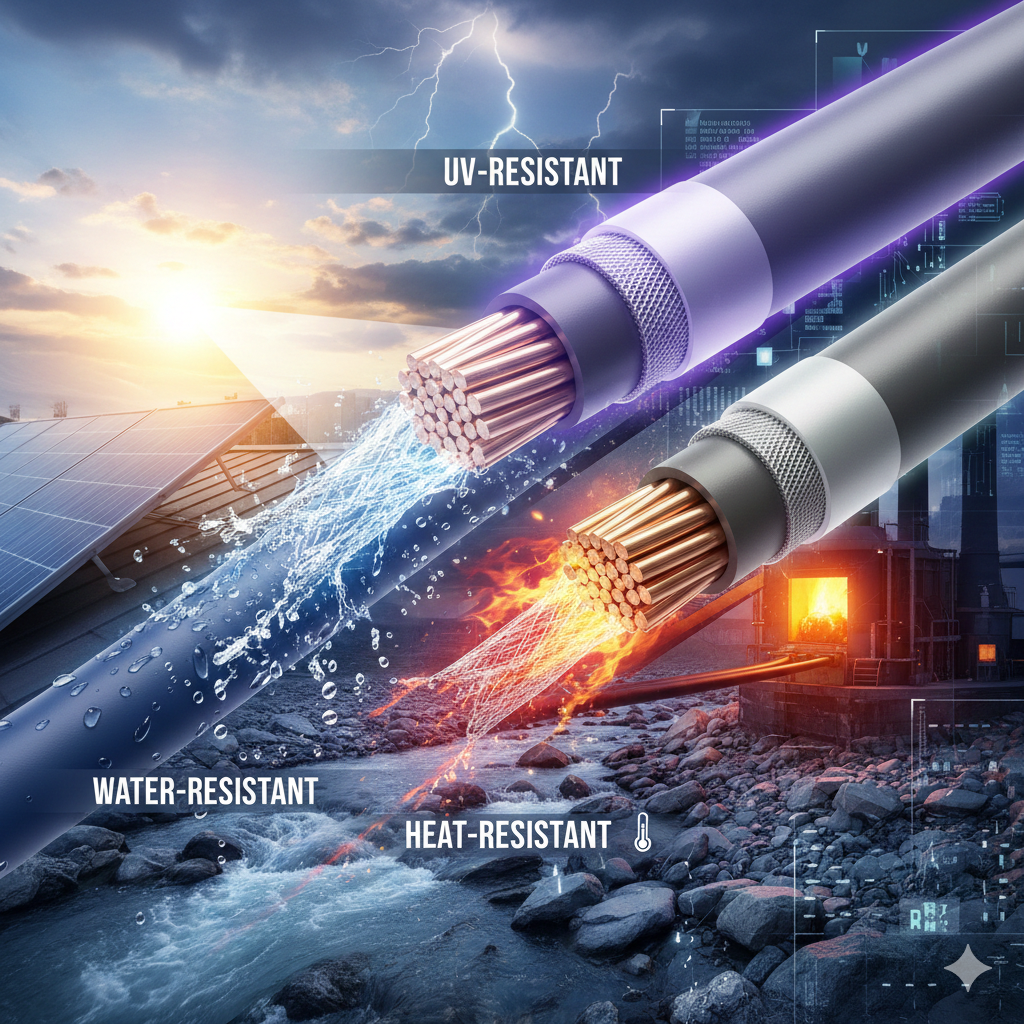
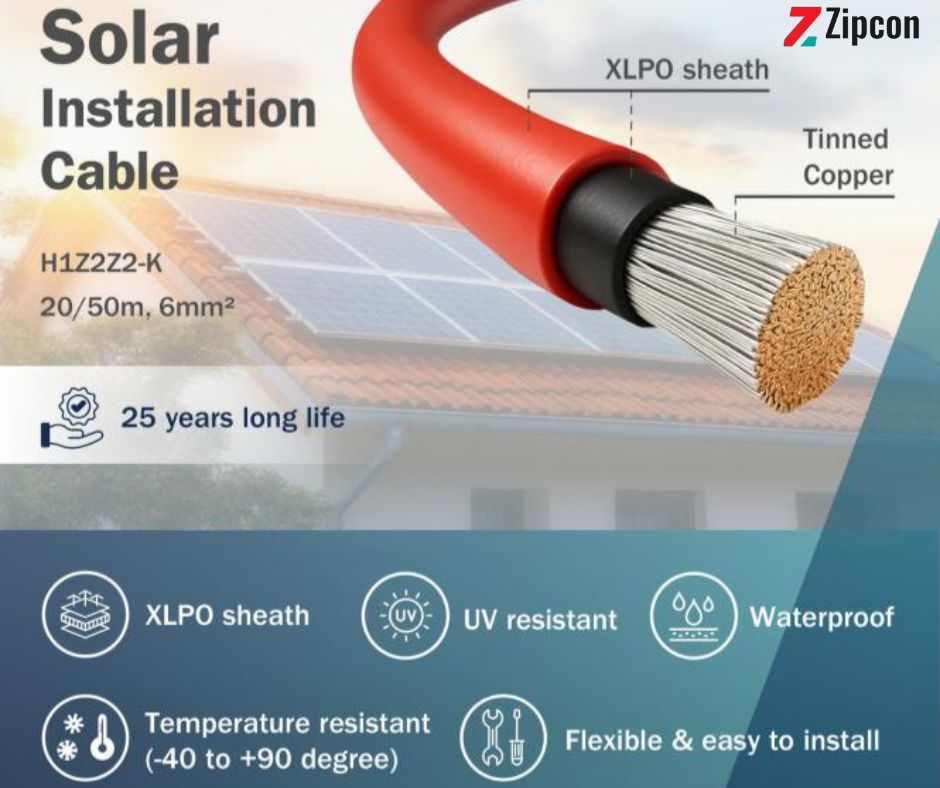
UV-resistant cables are designed to withstand the damaging effects of ultraviolet (UV) rays. Over time, exposure to UV radiation can degrade standard cables, causing them to crack, become brittle, and lose their electrical integrity. UV-resistant cables are coated with special materials that shield them from UV radiation, preserving their performance and safety for extended periods.
Typical Use Cases:
- Outdoor wiring: Whether for garden lighting, outdoor signage, or street lighting, UV-resistant cables are crucial for installations exposed to direct sunlight.
- Solar panel systems: Solar energy systems require UV-resistant cables to ensure long-term durability and reliable performance in the outdoor environment.
Water-Resistant Cables
Water-resistant cables are designed to resist moisture and prevent damage from water exposure. These cables are sealed to ensure that water cannot infiltrate the insulation, preventing short circuits and corrosion that can lead to system failure. Water-resistant cables are particularly valuable in areas prone to water exposure, such as marine environments or underground installations.
Typical Use Cases:
- Marine applications: Wiring for boats, docks, and offshore installations needs to be water-resistant to protect against saltwater exposure and ensure electrical safety.
- Underground installations: Electrical lines buried in the ground must be water-resistant to protect against moisture ingress, ensuring safety and reliable operation.
Heat-Resistant Cables
Heat-resistant cables are designed to perform in environments with high temperatures. These cables are built with insulation materials that can withstand elevated temperatures without degrading or losing their integrity. Heat-resistant cables are essential in industries where machinery or equipment generate significant heat, preventing overheating and fire risks.
Typical Use Cases:
- Industrial machinery: In factories or manufacturing plants, heat-resistant cables are required to power machinery safely in high-temperature environments.
- Power plants: Cables used in power generation and distribution systems must be heat-resistant to handle the high temperatures generated by electrical equipment.
Comparing UV-Resistant, Water-Resistant, and Heat-Resistant Cables
Each type of cable has its own set of advantages, but choosing the right one depends on the specific needs of your installation. Let’s compare these cables in terms of durability, cost-effectiveness, and performance.
- Durability:
- UV-resistant cables excel in outdoor environments, offering long-lasting protection against sunlight exposure. They maintain their structural integrity and performance even after prolonged sun exposure.
- Water-resistant cables are crucial for moisture-prone environments, offering long-term protection against water infiltration and ensuring electrical safety in underground or marine applications.
- Heat-resistant cables are designed to withstand high temperatures, ensuring they remain intact and functional even in extreme heat settings like industrial plants or power stations.
- Cost-Effectiveness:
- UV-resistant and heat-resistant cables tend to be more expensive due to the specialized materials used for their coatings and insulation.
- Water-resistant cables may be relatively more affordable depending on the required protection level, but they still offer critical performance enhancements for wet environments.
- While all three types of cables cost more than standard cables, they are worth the investment in environments where long-term durability, safety, and reliable performance are essential.
- Performance:
- UV-resistant Solar Cables provide reliable performance in areas exposed to sunlight, maintaining electrical integrity over time despite UV radiation.
- Water-resistant cables ensure that your wiring stays protected in damp or submerged environments, reducing the risk of water-induced failures and enhancing safety.
- Heat-resistant cables offer stable performance in high-temperature settings, ensuring the safe operation of equipment and preventing overheating-related risks.
Real-World Scenarios
Here’s how each type of cable performs in specific real-world scenarios:
- UV-Resistant Cables: In a solar panel installation, UV-resistant cables are crucial for ensuring that wiring exposed to sunlight remains intact for many years, providing reliable energy transmission and reducing the need for replacements.
- Water-Resistant Cables: For marine applications, such as wiring in boats or docks, water-resistant cables ensure that electrical systems remain functional and safe despite exposure to water and humidity.
- Heat-Resistant Cables: In industrial machinery, such as manufacturing equipment or conveyor belts, heat-resistant cables prevent overheating, reducing the risk of fire hazards and ensuring that machinery operates safely and efficiently.
Choosing the Right Cable for Your Application
When selecting a cable, consider the environment in which it will be installed. Each type of cable resistance provides a specific benefit based on the surrounding conditions.
- For outdoor installations where sunlight exposure is a concern, choose UV-resistant cables to ensure long-lasting durability.
- For environments prone to moisture, such as marine environments or underground installations, opt for water-resistant cables to prevent moisture-related damage.
- In high-temperature environments, like industrial settings or power plants, choose heat-resistant cables to maintain safe operation and prevent overheating.
Conclusion
Choosing the right cable for your application ensures that your electrical systems remain safe, efficient, and reliable. Whether you need UV-resistant, water-resistant, or heat-resistant cables, Zipcon Cables offers a high-quality solution designed to perform reliably under demanding conditions. By selecting Zipcon Cables, you invest in cables that ensure durability and long-term reliability, ultimately reducing maintenance and replacement costs. Always consider the specific requirements of your environment to make the best choice and ensure your systems operate without fail.