Choosing the best electric cables in Kerala is essential for safe electrical wiring, consistent power transmission and long-term performance. Kerala’s humid climate, heavy monsoon conditions and wide range of residential, commercial and industrial applications make cable quality an important consideration.
A good electrical cable should provide dependable conductivity, strong insulation, mechanical durability and protection against heat and moisture. Using poor-quality wires can increase the risk of insulation damage, voltage loss, overheating and electrical faults.
For residential wiring, commercial installations and demanding electrical applications, Zipcon Cables offers reliable cable solutions designed with quality insulation and consistent manufacturing standards. Selecting the right Zipcon cable according to load, application and installation conditions can help create a safer and more durable electrical system.
Contact us today:- https://zipconcables.com/contact-us/
Why Choosing the Right Electric Cable Matters in Kerala
Electrical cables carry current continuously, often for several hours every day. The cable must therefore be capable of handling the expected electrical load without excessive heating or insulation deterioration.
Kerala’s environmental conditions also make cable selection important. High humidity, frequent rainfall and moisture exposure can affect improperly protected electrical wiring. A cable with suitable insulation and construction provides better protection in these conditions.
Key benefits of quality electrical cables
- Better electrical safety
- Reliable current transmission
- Reduced risk of overheating
- Strong insulation performance
- Improved durability
- Better resistance to environmental conditions
- Lower chances of frequent wiring replacement
- Suitable performance for long-term installations
Types of Electric Cables Commonly Used in Kerala
Different electrical installations require different cable constructions. Choosing a cable based only on price can result in an unsuitable product for the actual application.
1. Single Core Electric Wires
Single-core wires are commonly used for residential and commercial electrical wiring. They are generally installed inside conduits, panels and electrical distribution systems.
They are available in different conductor sizes, allowing electricians to select the appropriate cable according to the current-carrying requirement of the circuit.
2. Multistrand Electric Wires
Multistrand wires contain several fine conductor strands instead of one solid conductor. This construction provides greater flexibility and makes the cable convenient for applications involving bends and movement.
Multistrand house wires are commonly considered for modern residential wiring where easy installation and flexibility are important.
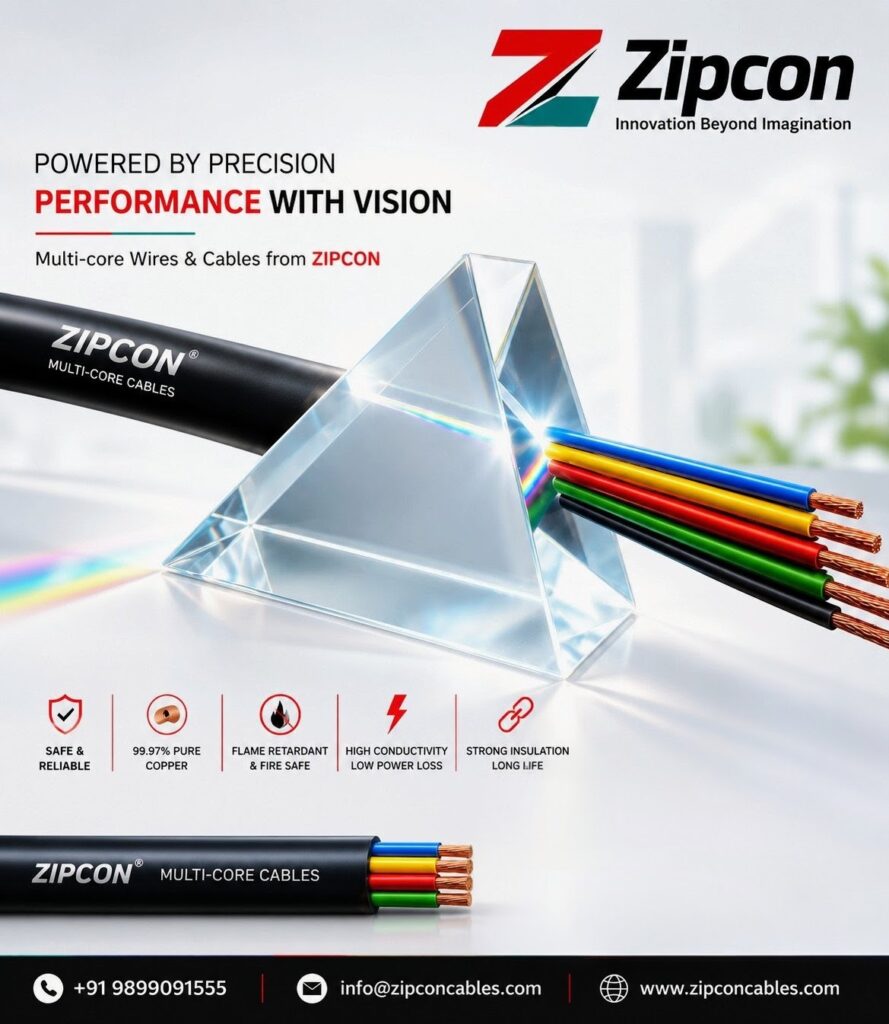
3. Multicore Cables
Multicore cables contain multiple insulated conductors within a common outer construction. They can simplify installations where several electrical connections need to be routed together.
They are useful across commercial, industrial, control and other electrical applications depending on the cable design and specifications.
4. Flexible Cables
Flexible cables are designed for applications where the cable needs to bend or move during installation or operation. Their flexibility makes them useful for electrical equipment, machinery and selected power applications.
The correct flexible cable should always be selected according to voltage, current, installation environment and equipment requirements.
5. FR, FRLS and HRFR Cables
Safety-focused house wires are available with different insulation characteristics.
FR (Flame Retardant) cables are designed to resist the spread of flame. FRLS (Flame Retardant Low Smoke) cables are designed to provide flame-retardant performance with reduced smoke emission. HRFR (Heat Resistant Flame Retardant) cables are intended for applications requiring enhanced resistance to heat along with flame-retardant properties.
For residential and commercial buildings, the appropriate cable should be selected based on the project’s electrical specifications and applicable standards.
What Makes the Best Electric Cables in Kerala?
The best electrical cable is not simply the cheapest or thickest option. Its suitability depends on conductor quality, insulation, cable construction, application and required electrical capacity.
1. Quality Conductors
The conductor is responsible for carrying electrical current. Copper and aluminium are widely used conductor materials, with their selection depending on application, required conductivity, installation requirements and cost considerations.
A properly manufactured conductor helps maintain consistent electrical performance and reduces unnecessary losses.
2. Strong PVC Insulation
Insulation separates the conductor from surrounding materials and helps reduce the risk of electrical contact and short circuits.
Quality PVC insulation can provide useful protection against mechanical stress, moisture and heat when the cable is designed for those conditions.
3. Proper Cable Size
Cable size must match the electrical load. A cable that is too small for the required current can experience excessive heating, while unnecessarily oversized cables can increase installation costs.
For example, a lighting circuit and a high-load appliance circuit should not automatically use the same cable size. Cable selection should be based on current requirements, installation method, cable length and applicable electrical guidelines.
4. Heat Resistance
Electrical cables generate heat when current flows through the conductor. High ambient temperatures or continuous heavy loads can increase operating temperature.
For installations exposed to elevated temperatures, selecting a cable with suitable temperature characteristics can improve reliability and service life.
5. Moisture Resistance
Moisture is an important consideration in Kerala because of its humid climate and heavy rainfall. Cables used in locations exposed to moisture should have insulation and construction appropriate for the environment.
However, cable insulation alone should not be treated as a substitute for proper installation, sealing, conduit protection and electrical safety practices.
Zipcon Cables for Reliable Electrical Wiring
Zipcon Cables can be considered for residential, commercial and selected industrial electrical wiring requirements where dependable cable construction and insulation performance are important.
Zipcon’s range can support different wiring requirements, including house wires, multistrand cables, multicore cables and other electrical cable applications. The appropriate product should be selected according to conductor material, cross-sectional area, voltage rating, installation conditions and intended use.
For Kerala projects, choosing the correct Zipcon cable rather than simply choosing a cable based on price can help improve the overall reliability of an electrical installation.
Electric Cable Selection Guide for Different Applications
| Application | Suitable Cable Consideration |
|---|---|
| Home lighting | Correct-size single or multistrand house wire |
| Fans and general circuits | Appropriate-size insulated house wire |
| High-load appliances | Cable selected according to rated load |
| Commercial wiring | Suitable FR/FRLS/HRFR or specified cable |
| Control applications | Appropriate multicore/control cable |
| Machinery | Flexible or multicore cable according to equipment |
| Moisture-prone areas | Cable construction suitable for environmental exposure |
| Industrial applications | Cable selected according to load, voltage and installation conditions |
The table provides general guidance only. Final cable selection should be made by a qualified electrician or electrical engineer based on the actual installation.
How to Choose the Right Electric Cable in Kerala
Check the Electrical Load
Start by determining the expected current and connected load. Cable size should be selected based on the electrical requirements rather than appearance or price.
Consider Cable Length
Long cable runs can experience voltage drop. In such installations, cable sizing may need to account for distance, load and acceptable voltage-drop limits.
Check Installation Conditions
Determine whether the cable will be installed inside a wall, conduit, panel, underground route, machinery or another environment. Installation conditions affect the type and specification required.
Select Appropriate Insulation
Different applications may require different insulation characteristics. For residential and commercial projects, FR, FRLS or HRFR options may be considered where specified by the project requirements.
Verify Standards and Specifications
Before purchasing, check the manufacturer’s specifications, applicable Indian standards, conductor material, cable size, voltage rating and other relevant technical information.
Examples of Electric Cable Selection
Example 1: Residential House Wiring
A new home may require separate circuits for lighting, fans, sockets, air conditioners, kitchen appliances and other equipment. Each circuit can have different load requirements.
Instead of using one cable size throughout the building, the electrician should select suitable cable sizes for each circuit based on its expected load and installation conditions.
Example 2: Commercial Building
A commercial building may have lighting systems, computers, air-conditioning equipment, pumps and other electrical loads.
In this situation, cable selection should consider continuous load, circuit grouping, installation method, temperature and voltage-drop requirements. Suitable Zipcon cables can be selected according to the project’s technical specifications.
Example 3: Moisture-Prone Installation
Electrical wiring installed in an area exposed to humidity or moisture requires suitable insulation and proper installation practices.
The cable should be appropriate for the environmental conditions, while junction boxes, conduits, terminations and connections should also be properly protected.
Expert Tips for Buying Electric Cables in Kerala
- Never select a cable only by price. Compare technical specifications, conductor material, insulation and application suitability.
- Choose the correct cross-sectional area. Cable size should correspond to the electrical load and installation conditions.
- Buy from reliable manufacturers or authorized suppliers. Product authenticity and consistent manufacturing quality matter for electrical safety.
- Check cable markings and specifications. Confirm size, voltage rating, conductor type and relevant manufacturing information before installation.
- Consider the environment. Humidity, heat, outdoor exposure and mechanical conditions should influence cable selection.
- Use qualified electricians. Correct installation is as important as selecting a quality cable.
- Do not mix cable specifications unnecessarily. Maintain appropriate cable quality across circuits and use products suited to their intended applications.
Common Mistakes When Choosing Electrical Cables
Choosing the Cheapest Cable
Low initial cost does not necessarily mean better value. A cable with unsuitable construction can lead to premature deterioration, replacement costs and electrical problems.
Using the Same Cable Size Everywhere
Different circuits have different loads. Using the same cable size for every application can result in an unsuitable electrical installation.
Ignoring Voltage Drop
Long-distance cable runs can experience voltage drop. This can affect the performance of connected equipment, particularly where the cable length and electrical load are significant.
Ignoring Environmental Conditions
Humidity, heat, outdoor exposure and mechanical stress should not be overlooked. Cable selection should reflect the actual installation environment.
Overlooking Installation Quality
Even a high-quality cable can perform poorly if connections are loose, terminations are improper or the cable is damaged during installation.
Why Choose Zipcon Cables?
Zipcon Cables focuses on providing dependable cable solutions for different electrical requirements. Its product range can be considered for house wiring and other applications where reliable insulation, proper conductor construction and consistent performance are required.
For customers searching for electric cables in Kerala, Zipcon provides an option to evaluate based on cable type, size, construction and application rather than choosing solely on price.
Whether the requirement is residential wiring, commercial electrical work or a specialized cable application, selecting the correct Zipcon product according to technical specifications can support safer and more reliable electrical installations.
Conclusion
The best electric cables in Kerala should combine suitable conductor quality, reliable insulation, correct sizing, appropriate temperature characteristics and construction suited to the installation environment.
Kerala’s humid climate makes proper cable selection and installation particularly important. Before purchasing, evaluate the electrical load, cable length, installation method, environmental conditions and required safety specifications.
For dependable electrical wiring solutions, Zipcon Cables is a brand worth considering for residential, commercial and other suitable applications. Choose the right Zipcon cable based on the project’s technical requirements and always ensure installation is completed by a qualified electrical professional.
Top 5 FAQs
1. Which are the best electric cables in Kerala?
The best electric cable depends on the application, electrical load, cable size, conductor material, insulation and installation environment. Zipcon Cables offers various cable solutions that can be selected according to specific wiring requirements.
2. Which cable is best for home wiring in Kerala?
For home wiring, suitable FR, FRLS or HRFR house wires can be considered depending on project requirements. The correct cable size should be determined according to circuit load, installation method and applicable electrical specifications.
3. Why is cable quality important for electrical wiring?
Quality cables provide reliable current transmission and suitable insulation protection. Proper cable selection can reduce the risk of overheating, insulation failure and premature cable replacement.
4. How do I select the correct electric cable size?
Cable size should be selected according to the expected current, connected load, cable length, installation method, ambient conditions and allowable voltage drop. A qualified electrician or electrical engineer should make the final selection.
5. Are Zipcon Cables suitable for electrical wiring?
Zipcon Cables offers cable products for different electrical applications, including house wiring and other cable requirements. The appropriate Zipcon product should be selected according to its technical specifications and intended application.