

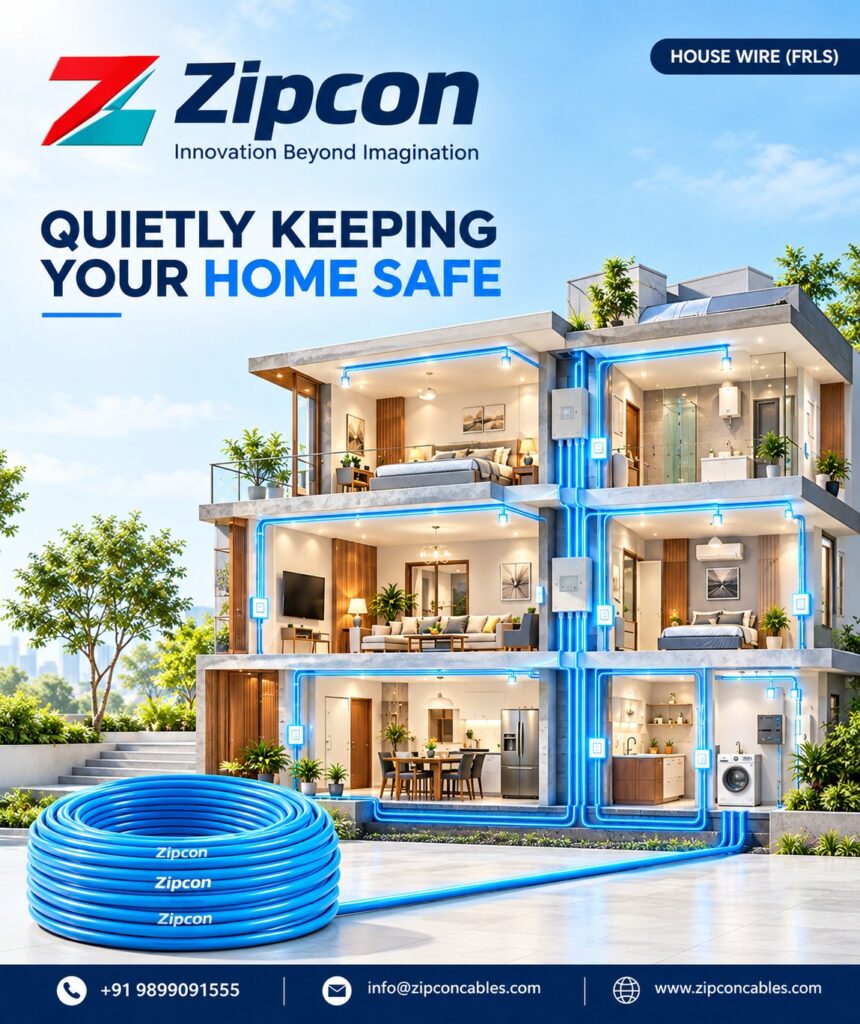
multistrand house wires in Noida is essential for creating a safe and dependable electrical system at home. A quality wire needs to handle everyday electrical loads while offering flexibility, reliable conductivity and good insulation protection.
Modern homes use multiple appliances, lighting circuits, fans, air conditioners, kitchen equipment and electronic devices. This makes selecting the right house wiring cable more important than simply choosing a wire based on price or appearance.
Multistrand wires are widely preferred for residential applications because their construction provides flexibility and makes routing through conduits, bends and electrical boxes easier. For homeowners, electricians and builders in Noida, the focus should be on conductor quality, insulation, appropriate wire size and dependable manufacturing standards.
For inquiries or assistance:– https://zipconcables.com/contact-us/
What Are Multistrand House Wires?
Multistrand house wires are electrical wires made using several fine strands of conductive metal instead of one solid conductor. These strands work together to carry electrical current while allowing the wire to bend more easily during installation.
This flexibility is particularly useful in residential wiring, where cables often need to pass through conduits, corners, switch boxes and distribution boards. A properly manufactured multistrand wire can make installation easier without compromising electrical performance.
For safe home wiring, the conductor and insulation both matter. High-quality copper conductors provide efficient current flow, while durable PVC insulation helps protect against moisture, heat, abrasion and accidental contact.
Why Choose Multistrand House Wires for Homes in Noida?
1. Better Flexibility During Installation
Residential electrical installations involve numerous bends and connections. Multistrand construction allows the wire to flex more easily, reducing installation difficulty in conduits and compact electrical boxes.
This makes multistrand house wires suitable for lighting circuits, fan points, socket connections and other household wiring applications where flexibility is valuable.
2. Reliable Electrical Conductivity
The conductor is one of the most important components of an electrical wire. Quality copper conductors can provide dependable current carrying performance when the correct wire size is selected for the intended load.
Using an appropriately sized wire also helps prevent excessive heating caused by overloading. Wire selection should therefore consider the connected load, circuit length and installation conditions rather than price alone.
3. Strong Insulation Protection
A good house wire needs more than a conductive core. Its insulation protects the conductor from moisture, mechanical damage and accidental contact while helping maintain electrical safety.
For residential applications, durable PVC insulation with suitable temperature and voltage characteristics is an important quality factor.
4. Easier Routing Through Conduits
Noida homes can have complex electrical layouts with concealed conduits, false ceilings and multiple distribution points. Flexible multistrand wires are easier to route through these pathways compared with less flexible alternatives.
This can simplify installation and help electricians create cleaner wiring arrangements.
Key Features to Check Before Buying House Wires
Not every wire sold as a house wire offers the same level of performance. Before selecting a product, evaluate several technical and construction factors.
Conductor Material
Look for wires manufactured with quality conductive material and consistent conductor construction. Copper is widely used in residential wiring because of its electrical conductivity and suitability for flexible cable construction.
Wire Size
Wire size should match the electrical load and application. Common residential sizes may include 1 sq mm, 1.5 sq mm, 2.5 sq mm, 4 sq mm and 6 sq mm, but the correct size depends on the circuit and installation requirements.
For example, lighting circuits generally have different requirements from heavy-load circuits supplying air conditioners, geysers or other high-power appliances.
Insulation Quality
The insulation should remain stable under the expected operating conditions. Look for consistent insulation thickness, proper surface finish and clearly marked specifications.
Poor insulation can increase the risk of leakage, short circuits and premature cable failure.
Voltage Rating
Always verify that the selected house wire is designed for the intended electrical system. Residential wiring should use cable with an appropriate voltage rating and comply with applicable Indian standards.
Manufacturing Consistency
Uniform conductor strands, insulation thickness and accurate size markings are important indicators of manufacturing quality. Reliable manufacturers maintain tighter control over these factors across production batches.
Multistrand House Wires vs Solid Wires
Both multistrand and solid conductors can be used in electrical applications, but they offer different installation characteristics.
| Feature | Multistrand House Wire | Solid Wire |
|---|---|---|
| Flexibility | High | Lower |
| Bending | Easier | Comparatively difficult |
| Conduit installation | Convenient | Less flexible |
| Residential routing | Highly suitable | Suitable for selected applications |
| Repeated movement | Better suited | Less suited |
| Installation in tight spaces | Easier | More difficult |
For many modern residential installations, the flexibility of multistrand house wires makes them a practical choice, particularly where wiring involves multiple bends and concealed conduits.
Choosing the Right Wire Size for Different Home Circuits
Selecting wire size according to electrical load is critical. Using an undersized conductor for a high-load circuit can cause excessive heating and create a safety risk.
Lighting and Fan Circuits
Lighting and fan circuits generally have lower electrical loads than dedicated appliance circuits. The appropriate conductor size should still be selected according to the circuit design and applicable electrical requirements.
Socket Circuits
General-purpose sockets can supply multiple appliances, so their wiring requirements can differ from lighting circuits. The expected load, circuit protection and installation method should be considered together.
High-Load Appliances
Air conditioners, electric water heaters, ovens and other high-power appliances typically require dedicated circuits with appropriately sized conductors and protective devices.
The wire should never be selected simply because a particular size is commonly used. A qualified electrician should assess the load and circuit conditions before installation.
Why Wire Quality Matters in Noida Homes
Residential electrical systems in Noida can experience demanding conditions, including high summer temperatures, extensive appliance usage and construction variations between apartments, independent houses and commercial-residential properties.
A quality electrical wire should therefore provide dependable insulation and conductor performance under its intended operating conditions. Good wiring also needs to work effectively with circuit breakers, distribution boards, switches and other electrical components.
Choosing a reputable multistrand house wire manufacturer in India can provide greater confidence in product consistency and technical specifications.
Examples of Multistrand House Wire Applications
Example 1: New Apartment Wiring
A newly constructed apartment may require separate circuits for lighting, fans, sockets, kitchen appliances and air conditioners. Flexible multistrand wires can simplify routing through concealed conduits and electrical boxes.
Example 2: Home Renovation
During renovation, existing conduits may have tight bends or limited space. Flexible house wires can make replacement or additional wiring easier when the installation conditions are suitable.
Example 3: Independent House
An independent house may have longer wiring routes across multiple floors. Proper wire sizing, circuit separation and suitable protection become particularly important to maintain electrical safety and performance.
Expert Tips for Buying Multistrand House Wires
- Select wire size according to electrical load, not based only on price or common practice.
- Check conductor quality and construction before purchasing.
- Inspect insulation quality for uniformity and proper markings.
- Verify voltage and technical specifications for the intended application.
- Use separate circuits for heavy appliances where required by the electrical design.
- Buy from an established manufacturer or authorised supplier to reduce the risk of inconsistent products.
- Have installation performed by a qualified electrician and follow applicable electrical standards.
- Avoid mixing unknown-quality wires with a carefully designed electrical installation.
Common Mistakes to Avoid
Choosing Wire Based Only on Price
The cheapest wire may not provide the conductor quality, insulation consistency or manufacturing reliability required for long-term residential use. Electrical wiring should be treated as a safety-critical component rather than a commodity where the lowest price automatically represents the best value.
Using the Same Wire Size Everywhere
Different circuits have different loads. Using one wire size throughout a house without considering circuit requirements can lead to improper installation.
Ignoring Insulation Quality
A conductor can have good conductivity while the overall cable still performs poorly if the insulation is inadequate. Both conductor and insulation need to be evaluated.
Overloading Circuits
Even a good-quality wire can become unsafe when a circuit is overloaded or incorrectly protected. Proper circuit design and suitable protective devices are essential.
Buying Unverified Products
Unclear specifications, poor markings and unknown manufacturing sources can make it difficult to verify whether a wire is suitable for residential use. Purchase from reliable manufacturers and suppliers with clear product information.
Why Choose Zipcon Cables for Multistrand House Wires?
Zipcon Cables focuses on electrical cables designed for dependable connectivity across residential, commercial and industrial applications. Its multistrand wire range can be positioned as a practical choice for applications where flexibility, reliable electrical performance and durable insulation are important.
For homeowners, contractors, builders and electricians in Noida, selecting a house wire should involve more than comparing prices. Product construction, conductor quality, insulation, wire size and application suitability all contribute to a safer electrical installation.
When planning a new home wiring project or replacing older wires, Zipcon Cables can be considered as a reliable option for quality-focused electrical requirements.
Conclusion
The best multistrand house wires in Noida should combine dependable conductivity, flexible construction, durable insulation and appropriate electrical ratings. The right product can make installation easier while supporting the safe and reliable operation of household electrical circuits.
Before purchasing, focus on the conductor material, wire size, insulation quality, voltage rating, manufacturing consistency and intended application. Avoid selecting wires purely on price, and ensure that circuit design and installation are handled according to applicable electrical requirements.
For reliable residential wiring solutions, Zipcon Cables is a strong option to consider when quality, flexibility and long-term electrical performance are priorities.
Top 5 FAQs
1. What are multistrand house wires?
Multistrand house wires contain several fine conductive strands that work together to carry electrical current. Their flexible construction makes them suitable for many residential wiring applications.
2. Why are multistrand wires suitable for home wiring?
Their flexibility makes them easier to route through conduits, bends and electrical boxes. They can be particularly useful in residential installations with complex wiring paths.
3. Which wire size is best for home wiring?
There is no single wire size suitable for every home circuit. The correct size depends on electrical load, circuit length, installation conditions and applicable electrical requirements.
4. What should I check when buying house wires in Noida?
Check the conductor material and construction, wire size, insulation quality, voltage rating, technical specifications and manufacturer reliability. The product should be appropriate for the specific circuit application.
5. Are Zipcon multistrand house wires suitable for residential applications?
Zipcon Cables offers multistrand wires designed for electrical connectivity across different applications. For residential use, the appropriate Zipcon wire should be selected according to the circuit load, required wire size and installation requirements.