

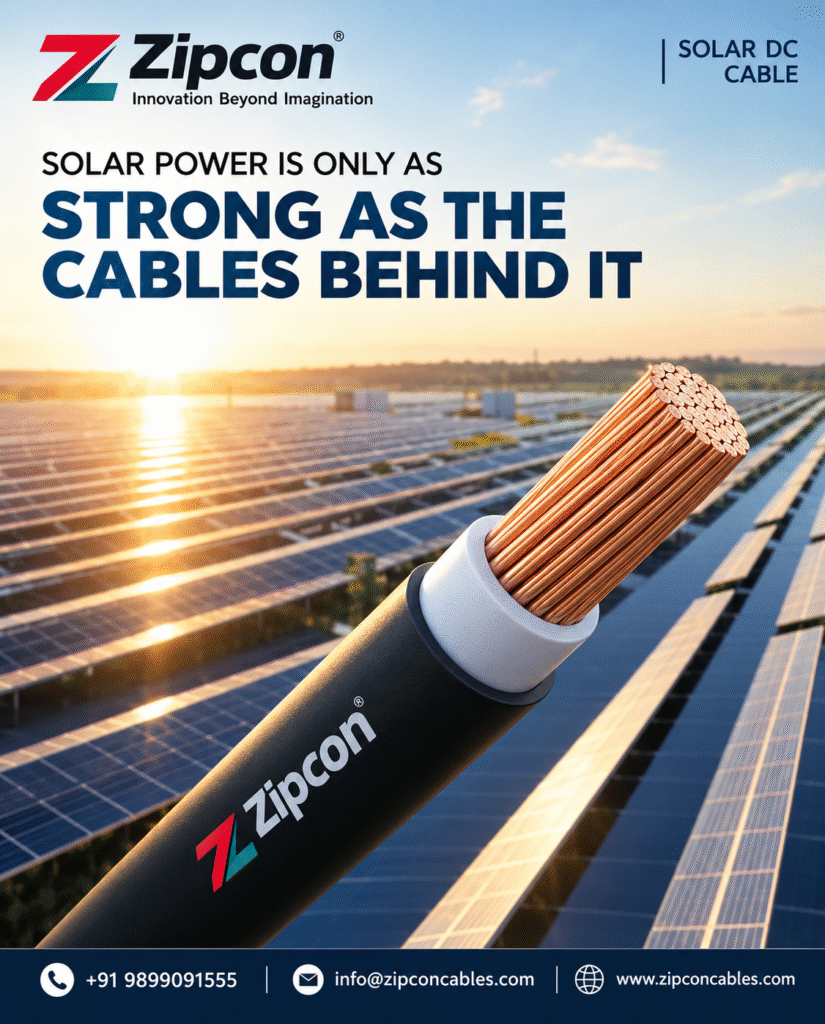
Choosing the best solar cable in Gurgaon is essential for maintaining safe and efficient power transmission in photovoltaic systems. Solar cables connect critical components such as solar panels, DC combiner boxes, charge controllers, inverters and other parts of a solar installation.
Unlike ordinary electrical wires, solar cables are designed for the specific conditions found in solar installations. They may remain exposed to sunlight, heat, moisture, temperature changes and outdoor environmental conditions for many years.
For inquiries or assistance:👉 https://zipconcables.com/contact-us/
What Is a Solar Cable?
A solar cable is a specialized electrical cable used primarily for connecting photovoltaic system components. It carries the DC electricity generated by solar panels toward the inverter or other equipment in the solar power system.
Solar cables require suitable insulation and sheath materials because they are commonly installed outdoors. The cable must be capable of handling environmental exposure while maintaining electrical and mechanical performance.
The correct cable depends on factors such as current capacity, system voltage, cable length, installation method, temperature and environmental conditions.
Why Solar Cable Quality Matters
A solar power system can operate for decades, making cable quality an important part of the overall installation. A cable failure can interrupt power generation and may require difficult maintenance, particularly when cables are installed across rooftops or large solar fields.
Poor cable selection can also contribute to excessive electrical losses, insulation deterioration and premature failure. Choosing an appropriately rated solar cable helps protect the electrical connection between photovoltaic components.
For Gurgaon installations, outdoor conditions should be considered when selecting solar DC cables, particularly where cables are exposed to direct sunlight and seasonal temperature variations.
Key Features of a High-Quality Solar Cable
UV and Weather Resistance
Solar cables are frequently exposed to sunlight and changing weather conditions. Suitable insulation and sheath materials should be designed to withstand the expected outdoor environment.
UV resistance is particularly important because prolonged exposure to sunlight can degrade unsuitable cable materials over time.
Reliable Electrical Conductivity
The conductor carries the DC power generated by the solar modules. High-quality conductors with suitable cross-sectional areas help minimize unnecessary electrical losses.
Copper is commonly selected for solar cable applications where high conductivity and dependable electrical performance are required.
Suitable Insulation
Solar cable insulation must provide electrical protection while tolerating the environmental conditions associated with photovoltaic installations. The insulation should be appropriate for the system voltage and expected operating temperature.
Mechanical Durability
Solar cables may be routed across rooftops, cable trays, mounting structures and solar farms. The cable construction should withstand normal handling, routing and installation-related mechanical stresses.
Temperature Performance
Solar installations can experience significant temperature variations. Cable materials should be selected according to the temperature range expected at the installation site.
Solar Cable Applications in Gurgaon
Residential Rooftop Solar
Homeowners installing rooftop solar systems require cables to connect PV modules with the inverter and other system components. Proper cable selection helps maintain reliable DC power transmission.
Rooftop cables can be exposed to direct sunlight, heat and rain, making environmental resistance an important consideration.
Industrial Solar Systems
Factories and warehouses may install larger rooftop or ground-mounted solar systems to reduce grid electricity consumption. These systems typically involve longer cable routes and higher power levels.
Correct conductor sizing becomes particularly important as system capacity and cable distance increase.
Commercial Solar Projects
Shopping complexes, offices, institutions and other commercial properties can use solar installations to generate electricity. Reliable cabling helps connect multiple PV modules and electrical components into a functional power system.
Solar Farms
Large solar farms require extensive networks of DC cables connecting photovoltaic modules, strings and collection equipment. Cable durability, current capacity, routing and environmental resistance become critical across large installations.
A cable failure in a difficult-to-access section of a solar farm can increase maintenance time, making appropriate cable selection important during project planning.
How to Choose the Best Solar Cable in Gurgaon
1. Check System Voltage
The solar cable must have a voltage rating suitable for the photovoltaic system. Check the system design and equipment specifications before selecting the cable.
2. Determine Current Capacity
Cable size should be selected according to the expected current and applicable installation requirements. A conductor that is too small for the load can increase electrical losses and operating temperature.
3. Consider Cable Length
Long cable runs can increase voltage drop. This is particularly relevant for industrial installations and solar farms where equipment may be positioned considerable distances apart.
4. Evaluate Outdoor Exposure
For rooftop and ground-mounted systems, consider exposure to UV radiation, rain, heat, moisture and temperature changes. The cable construction should be appropriate for these conditions.
5. Select the Correct Cable Size
Solar cables are available in different conductor sizes for different system requirements. The appropriate size should be determined from the system’s current, cable length, voltage and installation conditions rather than selecting a size based solely on availability.
Solar DC Cable vs Ordinary Electrical Wire
A standard electrical wire is not automatically suitable for photovoltaic installations. Solar cables are designed around the electrical and environmental requirements of solar power systems.
| Feature | Solar DC Cable | Ordinary Electrical Wire |
|---|---|---|
| Photovoltaic applications | Designed for this use | Not necessarily suitable |
| Outdoor exposure | Application-specific UV/weather resistance | Varies |
| DC solar connections | Suitable when correctly rated | Depends on specification |
| Temperature requirements | Designed for specified operating conditions | Varies |
| Solar installation | Preferred choice | Should not be substituted without confirming suitability |
The important consideration is whether the cable has the required electrical and environmental ratings for the specific solar system.
Examples of Solar Cable Applications
Example 1: Residential Rooftop
A home with rooftop solar panels needs cables to connect the PV modules to the inverter. The cable should be appropriately rated for the system voltage and current while being suitable for rooftop exposure.
Example 2: Industrial Rooftop Installation
An industrial facility may have a larger number of solar modules and longer cable routes. Voltage-drop calculations and conductor sizing become more important as the installation expands.
Example 3: Solar Farm
A solar farm can contain thousands of photovoltaic modules spread across a large area. Reliable DC cabling and organized cable routing are essential for maintaining electrical connectivity across the entire installation.
Expert Tips for Choosing Solar Cable
- Select cable according to the PV system voltage and current.
- Consider cable length when evaluating conductor size.
- Use cables designed for solar applications rather than generic wires.
- Check insulation and sheath suitability for outdoor exposure.
- Consider UV, moisture and temperature conditions.
- Keep DC cable routes organized and protected from unnecessary mechanical damage.
- Avoid excessive bending during installation.
- Use suitable connectors and ensure compatible cable connections.
- Follow the solar equipment manufacturer’s specifications.
- For larger projects, have cable sizing and installation practices verified by a qualified solar or electrical professional.
Common Mistakes to Avoid
Using Ordinary Wire for Solar Connections
Not every electrical wire is designed for continuous outdoor photovoltaic service. Using an unsuitable cable can reduce long-term reliability.
Choosing Cable Size Only by Price
A lower-cost cable may not have the electrical or environmental characteristics required by the installation. Compare technical specifications before making a purchase.
Ignoring Voltage Drop
Long DC cable runs can result in voltage losses. Ignoring cable length during system design can reduce electrical efficiency.
Poor Cable Routing
Solar cables should be routed carefully to reduce unnecessary exposure to sharp edges, excessive bending, mechanical damage and avoidable environmental stress.
Mixing Incompatible Components
Cables, connectors and solar equipment should be electrically and mechanically compatible. Poor connections can create resistance and localized heating.
Why Choose ZIPCON Cables for Solar Applications?
ZIPCON Cables offers cable solutions for solar and other electrical applications, with options suited to residential, commercial and industrial requirements.
For Gurgaon solar projects, ZIPCON solar cables can be considered for rooftop systems, industrial installations and larger photovoltaic projects where dependable DC power transmission and durable cable construction are required.
The correct ZIPCON cable should always be selected according to the project’s voltage, current, cable length, installation environment and equipment specifications.
Conclusion
The best solar cable in Gurgaon is one that matches the electrical requirements of the photovoltaic system while providing suitable protection against the environmental conditions of the installation. Conductor size, voltage rating, insulation, temperature performance and outdoor durability should all be evaluated before purchase.
Whether the requirement is for a residential rooftop, industrial solar installation or large solar farm, using a purpose-designed solar DC cable can support dependable power transmission and long-term system performance. ZIPCON Cables is a suitable option to consider when reliable solar cable solutions are required.
Top 5 FAQs
1. Which cable is best for a solar panel system?
A purpose-designed solar DC cable with the appropriate voltage, current, temperature and environmental ratings is generally suitable for photovoltaic systems. The exact size should be determined from the system design.
2. Can ordinary electrical wire be used for solar panels?
Ordinary electrical wire should not be substituted for solar cable unless its specifications explicitly meet the requirements of the solar installation. Solar cables are designed for the electrical and environmental conditions of PV systems.
3. What size solar cable is commonly used?
Solar cable sizes vary according to system current, voltage, cable length and installation conditions. Common sizes include 4 mm² and 6 mm², but the correct size should be calculated for the specific installation.
4. Why is UV resistance important in solar cables?
Solar cables are often exposed to direct sunlight for extended periods. UV-resistant materials help reduce degradation caused by prolonged ultraviolet exposure and support longer service life in suitable applications.
5. Are ZIPCON solar cables suitable for industrial solar projects?
ZIPCON solar cable solutions can be considered for residential, commercial and industrial photovoltaic applications. The appropriate cable specification should be selected according to the project’s electrical and environmental requirements.