

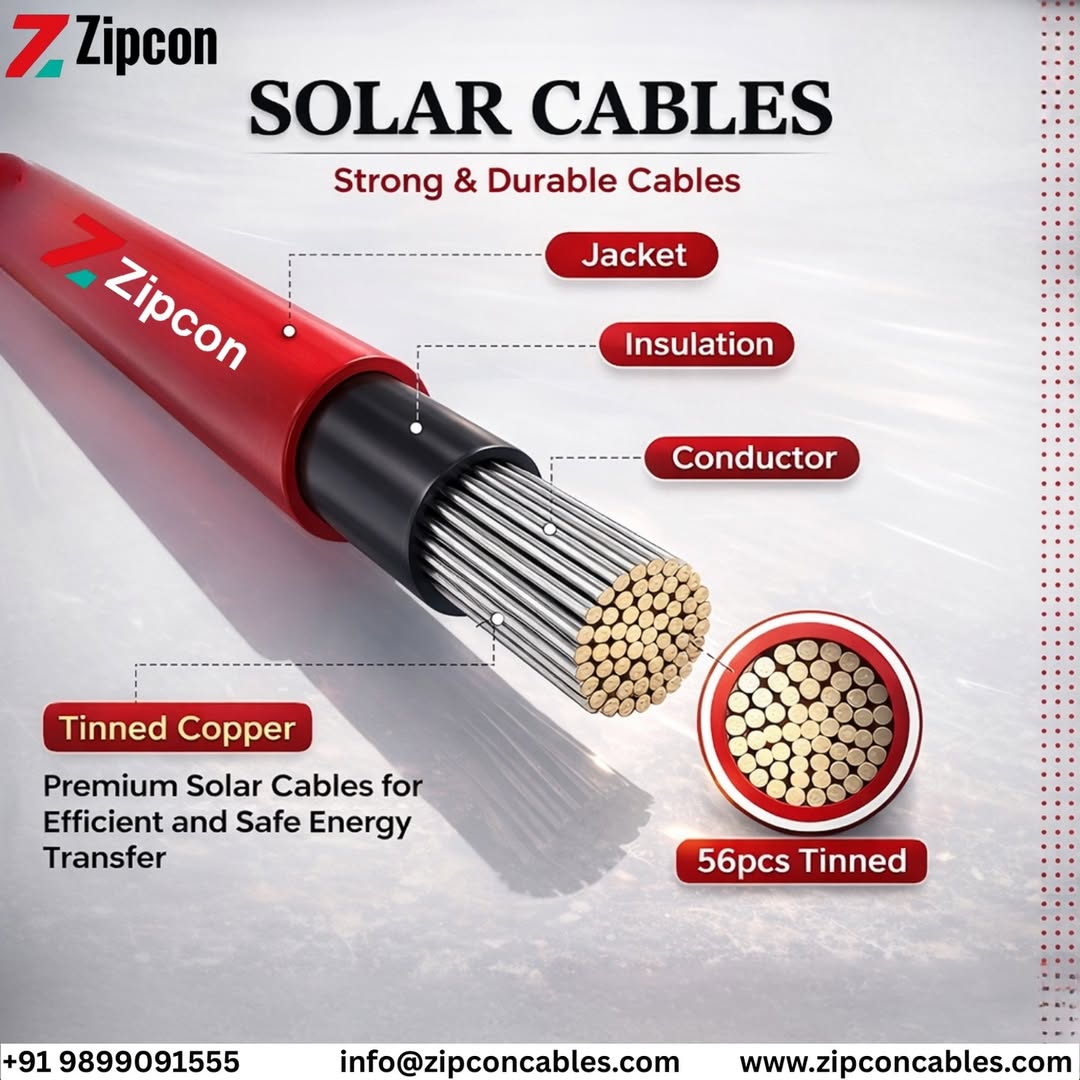
When it comes to solar power systems, selecting the right type of cable is crucial for efficient energy transmission. Among the key considerations for engineers, electricians, and buyers is whether to choose copper or aluminium cables for solar installations. Both options have distinct advantages, and understanding these differences can help in making an informed decision. Zipcon Cables, one of the leading solar cable manufacturers in Noida, offers both copper and aluminium cables, each suited to specific use cases. In this article, we will break down the differences between these two types of cables and help you choose the right one based on your project needs.
For inquiries or assistance, visit: 👉https://zipconcables.com/contact-us/
Copper vs. Aluminium Solar Cables: Key Differences
Conductivity
Copper is known for its excellent electrical conductivity. In fact, it is the most conductive material commonly used in electrical systems. This means that copper cables can transmit electricity more efficiently over long distances, reducing the potential for energy loss.
Aluminium, on the other hand, has about 60% of the conductivity of copper. While it is less efficient in terms of electrical conductivity, it still performs well in short to medium-range applications. For larger solar systems where efficiency is critical, copper cables are typically the preferred choice.
Recommendation: If your solar project requires minimal voltage loss and maximum energy transfer, copper cables from Zipcon Cables are ideal. For smaller-scale or cost-sensitive installations, aluminium cables can be a suitable alternative without significant performance compromise.
Weight
One of the standout advantages of aluminium cables is their lighter weight. Aluminium is approximately one-third the weight of copper, which can make a big difference in solar installations where weight and ease of handling are important. For rooftop installations, where cables need to be routed through tight spaces or over long distances, the reduced weight of aluminium cables can ease the physical burden.
Copper cables, being heavier, can be more difficult to handle, especially in large-scale projects. However, the superior conductivity of copper often compensates for this drawback.
Recommendation: For residential or smaller commercial solar setups, where weight may be a concern, aluminium cables are a great option. For larger, industrial-scale solar farms or installations where performance is paramount, copper cables would be more suitable.
Durability
Both copper and aluminium cables are durable, but copper cables tend to have a longer lifespan. Copper is less susceptible to corrosion and oxidation compared to aluminium, especially in harsh environmental conditions. Aluminium cables, while still durable, are more prone to corrosion over time, particularly when exposed to moisture and air. This can lead to performance degradation in solar systems, especially in coastal or humid environments.
Zipcon Cables offers high-quality coatings on both copper and aluminium cables to improve their resistance to environmental factors, enhancing their durability in various climates.
Recommendation: For installations in areas with harsh weather conditions or near saltwater, copper cables are generally a better choice due to their superior resistance to corrosion. For less demanding environments, aluminium cables will perform adequately.
Cost
One of the most significant factors influencing cable choice is cost. Copper cables are more expensive than aluminium cables due to the higher cost of raw materials and manufacturing processes. However, copper’s superior conductivity often justifies the higher initial investment for long-term savings in terms of efficiency.
Aluminium cables are a more budget-friendly option, making them an attractive choice for cost-sensitive projects where the slight trade-off in performance is acceptable.
Recommendation: If budget constraints are a primary concern and the project can tolerate a slight reduction in efficiency, aluminium cables are an economical choice. For large-scale projects that prioritize efficiency and longevity, copper cables provide greater value in the long run.
Installation Ease
Both copper and aluminium cables are relatively easy to install, but there are some differences in the process. Copper cables are more flexible, making them easier to work with when bending around corners or routing through tight spaces. Aluminium cables are less flexible and require special care during installation to avoid damage.
Another factor to consider is the connection points. Aluminium cables require antioxidant paste to prevent corrosion at connection points, whereas copper cables do not.
Recommendation: For installations requiring intricate routing or where flexibility is important, copper cables are the better choice. However, for large-scale installations where cost and weight reduction are more critical, aluminium cables from Zipcon Cables are an effective solution.
When to Choose Copper vs. Aluminium Cables
- Copper Cables:
- Large solar installations requiring high conductivity and minimal energy loss
- Installations in areas with extreme weather conditions
- Projects where durability and long-term performance are critical
- Where the weight of the cable is not a primary concern
- Aluminium Cables:
- Smaller solar systems or residential installations
- Projects where budget constraints are a concern
- Installations with less demanding environmental conditions
- When weight and handling ease are crucial
Conclusion
Selecting the right solar cable is an essential decision for any solar energy project. Copper cables offer superior conductivity, durability, and long-term performance, making them ideal for larger installations and harsh environments. On the other hand, aluminium cables are a cost-effective and lighter alternative, perfect for smaller projects and less demanding conditions. Zipcon Cables, a trusted solar cable manufacturer in Noida, provides both options to meet the needs of a variety of customers, from residential users to large-scale solar farms.
By understanding the differences between copper and aluminium cables, you can choose the best option based on your specific requirements, ensuring that your solar energy system operates efficiently and effectively for years to come.