

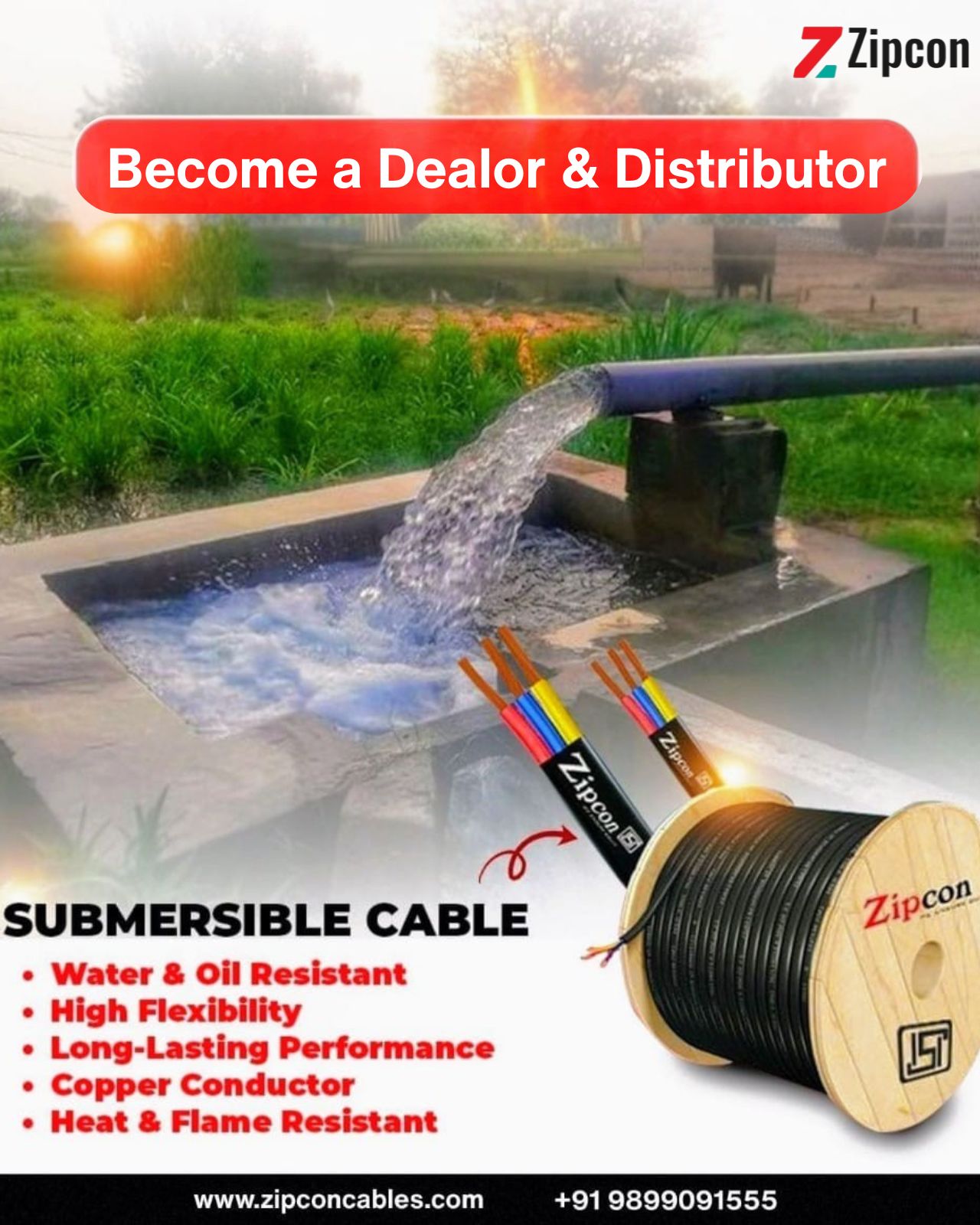
Selecting the right submersible flat cable for your project is crucial—especially in India, where diverse conditions demand cables that are efficient, durable, and cost-effective. These cables are designed to operate reliably in submerged environments, making the right choice essential for long-term performance and safety.
In this guide, we break down the key factors you should consider, compare copper vs. aluminum options, and highlight why Zipcon Cables is a trusted choice for submersible flat cable applications across India.
1. Conductivity: Ensuring Efficient Power Transmission
Conductivity is one of the most important aspects when choosing a submersible flat cable. It directly affects how efficiently power travels through the cable, especially in submerged or high-demand applications.
- Copper cables are known for their superior conductivity, making them ideal for high-power systems like deep-well submersible pumps and heavy filtration units. Copper minimizes resistance and energy loss, ensuring stable performance.
- Aluminum submersible flat cables are a more economical option. Though they have lower conductivity compared to copper, they work effectively in low- to medium-power applications.
Zipcon Cables manufactures both copper and aluminum variants, allowing project planners and engineers to choose cables based on power needs and budget.
2. Durability: Built to Last in Harsh Underwater Conditions
Submersible cables face challenges like continuous water exposure, chemicals, abrasion, and varying temperatures. Durability is key to long service life and low maintenance.
Zipcon Cables ensures durability through:
- High-grade insulation such as PVC, rubber, and thermoplastic elastomers
- Protection against water ingress, corrosion, and abrasion
- Resistance to saltwater, extreme temperatures, and chemicals
This makes Zipcon’s cables ideal for:
- Deep borewells
- Sewage systems
- Water treatment plants
- Agricultural water setups
3. Weight: Easier Installation and Handling
Submersible flat cables are lighter compared to round cables, making them easier to:
- Transport
- Install in narrow borewells
- Handle during deep-well operations
Lightweight cables also reduce labor fatigue and installation time, which is especially useful in irrigation systems and pump installations.
Zipcon’s lightweight submersible flat cables simplify work in remote and difficult-to-access environments.
4. Cost: Balancing Budget With Performance
Cost is a major deciding factor when choosing between copper and aluminum cables.
- Copper cables: Higher cost but offer exceptional performance, reduced energy loss, and longer life—ideal for high-load and long-distance applications.
- Aluminum cables: More affordable and suitable for low- to medium-power systems, offering great value for smaller projects.
Zipcon Cables provides both options so buyers can match performance needs with budget constraints.
5. Safety: Minimizing Electrical Risks
Safety cannot be compromised in submerged environments. Poor insulation or low-quality materials can lead to short circuits, shocks, or even fires.
Zipcon Cables ensures safety through:
- Waterproof, high-quality insulation
- Compliance with global standards like IEC, UL, and RoHS
- Protection against electrical leakage and faults
This ensures secure operation for installers and end-users alike.
6. Installation Requirements: What to Consider Before Setup
Before installing submersible flat cables, consider factors like:
- Installation depth
- Water temperature
- Chemical exposure
- Mechanical stress
For deep-well applications, cables must be properly anchored and pressure-resistant. Suitable connectors, junction boxes, and supports must also be used.
Zipcon provides clear installation guidelines and compatible accessories to ensure long-lasting performance.
7. Typical Applications of Submersible Flat Cables
Submersible flat cables are widely used in:
✔ Submersible Pumps
For borewells, deep wells, and sewage systems requiring constant submersion.
✔ Water Filtration Systems
To power submerged filtration units and ensure uninterrupted water flow.
✔ Irrigation & Agricultural Systems
For powering pumps in farms, remote areas, and deep-ground setups.
Zipcon Cables offers durable, reliable solutions tailored for each of these applications.
Copper vs. Submersible Flat Cables: Which One to Choose?
Your choice depends on your specific requirements:
| Copper Cables | Submersible Flat (Aluminum) Cables |
|---|---|
| Best conductivity | More economical |
| Ideal for high-power loads | Suitable for low/medium power |
| Long service life | Lightweight and easy to install |
| Higher upfront cost | Great for budget projects |
For most submerged applications—like pumps, irrigation units, and filtration systems—Zipcon’s submersible flat cables offer the best combination of performance, safety, and affordability.
Conclusion: Choosing the Best Submersible Flat Cable in India
Picking the right submersible flat cable requires evaluating conductivity, durability, safety, installation conditions, and budget.
- Copper cables deliver unmatched performance for heavy-duty applications.
- Aluminum submersible flat cables provide excellent value in standard submerged environments.
Zipcon Cables offers a comprehensive range of both types, making them a dependable choice for engineers, electricians, and buyers across India. Whether you’re working on a large industrial project or a residential well installation, Zipcon provides reliable, high-quality solutions built for long-term use.