

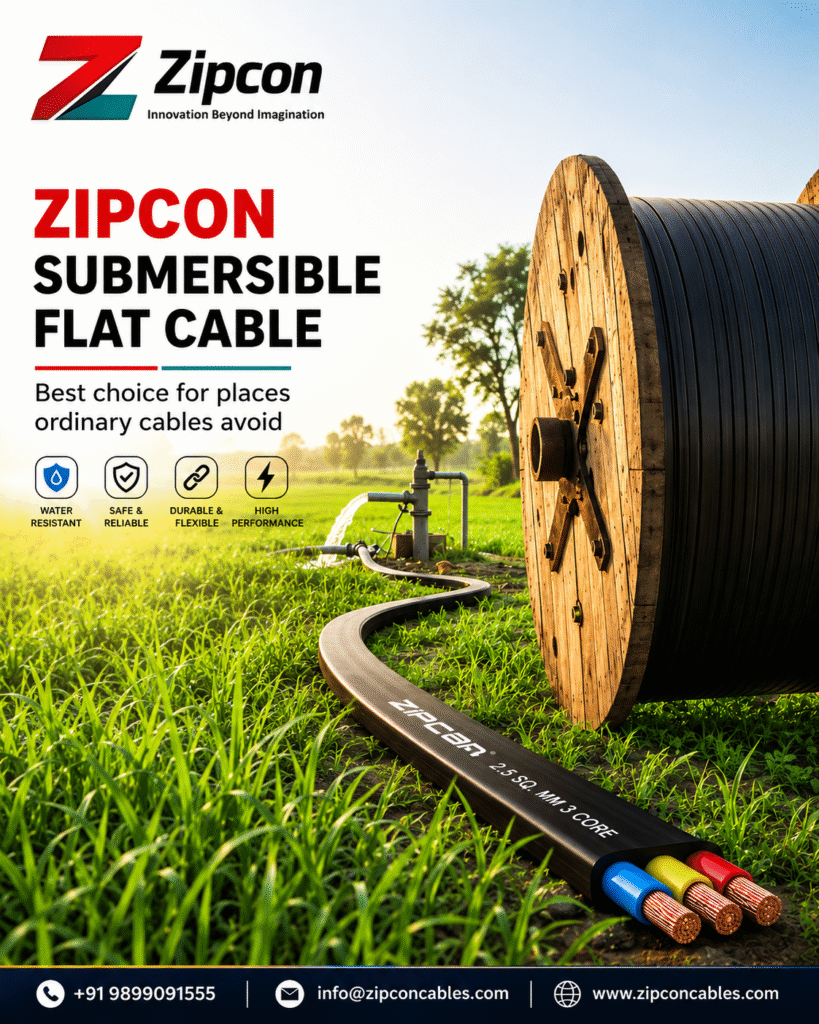
Choosing the best submersible cable in Jabalpur is essential for reliable pump operation, especially when the cable is installed in a borewell or another wet environment. A submersible pump depends on a continuous electrical connection, making cable quality, insulation, conductor size, and installation conditions important factors.
Unlike ordinary electrical wiring, submersible pump cables are selected for applications where moisture and water exposure are expected. The cable must provide suitable electrical insulation while handling the mechanical and environmental conditions associated with pump installation.
For residential water supply, agriculture, borewell systems, and commercial pumping applications, Zipcon Cables offers cable solutions that can be considered for suitable submersible pump requirements. Selecting the correct cable according to pump specifications can support reliable operation and help reduce avoidable electrical problems.
For inquiries or assistance:– https://zipconcables.com/contact-us/
What Is a Submersible Cable?
A submersible cable is an electrical cable intended for use with submersible pumps and equipment operating in wet or submerged environments. Its construction is designed to provide electrical insulation and protection appropriate for the intended application.
The cable connects the electrical supply to the pump motor, allowing power to reach equipment installed below the water level. Because the cable may remain in a demanding environment for extended periods, its insulation and mechanical construction are particularly important.
Submersible cables are available in different sizes, core configurations, conductor materials, and constructions. The correct selection depends on pump power, current, voltage, cable length, installation depth, and environmental conditions.
Why Submersible Cable Quality Matters
A submersible pump may operate for long periods, particularly in agricultural and water-supply applications. Any weakness in the electrical connection can affect pump reliability and increase the possibility of maintenance or downtime.
Water exposure makes insulation quality especially important. Appropriate insulation helps maintain electrical separation between the conductor and the surrounding environment when the cable is used within its specified conditions.
A properly selected cable also needs to handle the mechanical demands of installation. Correct sizing and careful installation together help create a more dependable connection between the power supply and pump motor.
Key Benefits of a Quality Submersible Cable
- Reliable electrical power transmission
- Suitable insulation for specified wet applications
- Better protection against moisture exposure
- Appropriate mechanical durability
- Reduced risk of insulation deterioration
- Suitable options for borewell and pump systems
- Reliable performance when correctly selected and installed
Important Features of a Good Submersible Cable
1. Reliable Insulation
Insulation is one of the most important components of a submersible pump cable. It separates the conductor from the surrounding environment and helps prevent electrical leakage.
The insulation material should be suitable for the cable’s voltage, temperature, and intended wet-environment application.
2. Correct Conductor Size
The conductor must carry the pump’s operating current safely. The required size depends on motor power, supply voltage, cable length, allowable voltage drop, and installation conditions.
An undersized conductor can contribute to excessive voltage drop and heating. Cable size should therefore be determined from the actual pump and installation requirements.
3. Water-Resistant Construction
Submersible cable installations involve water exposure by design. The cable should have construction appropriate for its specified wet or submerged application.
Water resistance should be evaluated together with insulation quality, cable rating, installation depth, and the manufacturer’s specifications.
4. Mechanical Strength
A pump cable may experience pulling and mechanical stress while being installed into a borewell. Adequate mechanical characteristics help the cable withstand the intended installation process.
Careful handling is equally important. Dragging, crushing, sharply bending, or damaging the cable can compromise its insulation.
5. Suitable Flexibility
Submersible cables may need to follow the pump installation route. Appropriate flexibility can make installation easier while reducing unnecessary stress.
The cable should still be used within its specified bending radius and mechanical limits.
Types of Submersible Pump Cables
3 Core Submersible Cable
A 3 core submersible cable can be suitable for certain three-phase pump applications. Each core carries one phase, with the exact configuration determined by the motor and electrical system.
The conductor cross-section must be selected according to the motor current, cable length, voltage, and installation conditions.
Flat Submersible Cable
Flat submersible cable has a flat profile and is used for suitable pump installations. Its construction can be convenient in certain borewell arrangements where the cable needs to run alongside the pump.
The cable should be selected according to its electrical and environmental specifications rather than shape alone.
Round Submersible Cable
Round submersible cables are suitable for applications requiring a round cable construction. Their suitability depends on the pump system, installation method, and cable rating.
Submersible Cable vs Regular Electrical Cable
Not every electrical cable is suitable for submersible pump applications. A general-purpose cable may be designed for dry or protected environments, while a submersible cable is selected for the specific conditions associated with pump installations.
| Feature | Submersible Cable | Regular Electrical Cable |
|---|---|---|
| Primary application | Submersible pumps | General electrical applications |
| Water exposure | Suitable for specified wet applications | Depends on cable type |
| Insulation | Designed according to intended use | Application-dependent |
| Installation | Borewells and pump systems | Homes, buildings, equipment |
| Selection factors | Pump load + cable length + environment | Load + installation + application |
The correct choice should always be based on the manufacturer’s specifications and the requirements of the pump installation.
Where Submersible Cables Are Used in Jabalpur
Residential Borewell Pumps
Homes using borewell water often depend on submersible pumps to move groundwater to storage tanks or household supply systems. The cable provides the electrical connection to the submerged motor.
Correct cable sizing and suitable insulation are important for dependable operation.
Agricultural Water Pumps
Agricultural pumps may operate for extended periods during irrigation. Cable selection should account for motor current, cable distance, installation depth, and environmental exposure.
Commercial Water Systems
Commercial buildings and facilities may use submersible pumps for water supply, drainage, or other applications. The cable should be selected according to the pump’s electrical and environmental requirements.
Borewell Installations
Deep borewell installations can involve significant cable lengths and mechanical demands. Voltage drop and cable construction should therefore be considered carefully.
How to Choose the Best Submersible Cable in Jabalpur
Check Pump Power
Start with the pump’s rated power and current. These specifications provide the basis for determining the conductor size.
Pump horsepower alone should not be used as the only cable-selection factor because voltage, current, cable length, and installation conditions also matter.
Consider Cable Length
Longer cable runs can create greater voltage drop. The conductor size may need to increase depending on the system design and allowable voltage drop.
Identify Single-Phase or Three-Phase Supply
The pump’s phase configuration determines the appropriate core arrangement. A three-phase pump may require a suitable three-core cable, while other systems can require different configurations.
Consider Borewell Depth
The installation depth affects the total cable length and can increase mechanical demands during installation. Both factors should be considered during cable selection.
Check Voltage Rating
Verify that the cable’s voltage rating is appropriate for the pump’s electrical system. Product specifications should always be checked before installation.
Evaluate Environmental Conditions
Consider water exposure, temperature, installation method, and mechanical conditions. The selected cable should be suitable for the complete operating environment.
Choose a Reliable Brand
For customers looking for the best submersible cable in Jabalpur, Zipcon Cables can be considered for suitable residential, agricultural, and commercial pump applications.
Examples of Submersible Cable Selection
Example 1: Residential Borewell
A homeowner installs a submersible pump at the bottom of a borewell. The installer must consider the motor current, supply voltage, total cable length, borewell depth, and cable installation method.
The selected cable should provide the required current-carrying capacity and suitable insulation for the wet environment.
Example 2: Agricultural Irrigation
An agricultural pump operates for several hours during irrigation. A correctly sized cable helps maintain the required electrical supply over the cable distance.
The installation should also minimize mechanical damage and ensure suitable connections.
Example 3: Deep Borewell
A deep borewell can require a long cable route. Voltage drop becomes an important consideration, while the cable must also withstand the physical demands of installation.
The cable should be selected based on calculations rather than choosing a size solely because it is commonly used.
Why Consider Zipcon Cables for Submersible Pumps?
Zipcon Cables provides electrical cable solutions for demanding applications, including suitable submersible pump requirements.
For customers searching for submersible cable in Jabalpur, Zipcon Cables can be considered based on the required conductor size, number of cores, insulation, voltage rating, and installation environment.
The right product should always be matched to the pump manufacturer’s specifications. A reliable brand is important, but correct sizing and professional installation are equally essential.
Expert Tips for Long-Lasting Pump Cable Performance
- Check the pump’s rated current before selecting the cable.
- Account for the complete cable length, including the distance from the power source to the submerged motor.
- Consider voltage drop for long cable installations.
- Select the correct number of cores according to the pump’s electrical configuration.
- Use suitable cable joints and terminations designed for the application.
- Avoid damaging the cable during installation. Do not drag, crush, or sharply bend it.
- Secure the cable properly according to the pump installation requirements.
- Inspect accessible connections periodically for signs of damage or deterioration.
- Follow the pump and cable manufacturer’s installation instructions.
- Use qualified electrical professionals for installation, testing, and maintenance.
Common Mistakes to Avoid
Using Ordinary Wire for a Submersible Pump
General-purpose electrical wire may not be suitable for wet or submerged applications. Always verify that the cable is specifically rated for the intended environment.
Selecting Cable Size Only by Pump HP
Horsepower provides useful information, but it does not determine cable size by itself. Current, voltage, cable length, voltage drop, and installation conditions must also be considered.
Ignoring Cable Length
A longer cable run can produce greater voltage drop. This can affect motor performance if the cable is not appropriately sized.
Poor Cable Jointing
Improperly made joints can allow moisture ingress and increase electrical resistance. Appropriate jointing and termination methods are essential.
Damaging Insulation During Installation
Cuts, crushing, excessive pulling, and sharp bends can compromise insulation. Cable should be handled carefully throughout installation.
Choosing the Cheapest Product
Price should not be the only selection factor. Cable construction, electrical rating, durability, and application suitability are more important for long-term pump operation.
Submersible Cable for Reliable Pump Performance
The cable is an essential part of the pump’s electrical system. Even a high-quality pump can experience operating problems if the power connection is incorrectly sized or unsuitable for the installation environment.
A suitable submersible cable helps maintain the electrical connection between the power supply and motor. When combined with correct circuit protection, proper termination, suitable installation practices, and regular inspection, it contributes to overall system reliability.
For residential, agricultural, and commercial users in Jabalpur, choosing the cable according to the actual pump specifications is the safest approach.
Why Choose Zipcon Submersible Cable in Jabalpur?
For homeowners, farmers, contractors, and electrical professionals looking for a submersible cable in Jabalpur, Zipcon Cables is an option worth considering for suitable pump applications.
Zipcon cable solutions can be evaluated according to conductor size, core configuration, insulation, electrical rating, and intended installation conditions. This specification-based approach helps ensure that the selected cable is appropriate for the pump.
Whether the installation is a residential borewell, agricultural irrigation system, or commercial water application, the priority should be a properly specified and professionally installed cable.
Conclusion
Selecting the best submersible cable in Jabalpur requires careful attention to pump current, voltage, conductor size, cable length, number of cores, insulation, borewell depth, and environmental conditions.
Zipcon Cables can be considered for suitable submersible pump cable requirements across residential, agricultural, and commercial applications. Choose the correct cable based on the pump manufacturer’s specifications and ensure professional installation.
Choose Zipcon Cables for dependable submersible wiring and build a pump system designed for reliable, long-lasting performance.
Top 5 FAQs
1. What is a submersible cable?
A submersible cable is designed for electrical connections involving submersible pumps and other specified wet or submerged applications. Its insulation and construction are selected to provide suitable electrical and mechanical protection.
2. Which submersible cable is best for a borewell pump?
The appropriate cable depends on the pump’s voltage, current, power, phase configuration, cable length, borewell depth, and installation conditions. A qualified professional should select the cable according to the pump specifications.
3. What size cable is required for a submersible pump?
There is no universal cable size for all submersible pumps. The correct size depends on motor current, voltage, cable length, voltage drop, installation conditions, and the cable’s specifications.
4. Can normal electrical wire be used for a submersible pump?
Normal electrical wire should not be used unless its specifications specifically permit the intended wet or submerged application. A cable suitable for the pump’s operating environment should be selected.
5. Why choose Zipcon Cables for submersible cable in Jabalpur?
Zipcon Cables offers electrical cable solutions for different applications. Customers can consider suitable Zipcon submersible cables based on conductor size, core configuration, insulation, voltage rating, installation conditions, and pump requirements.