

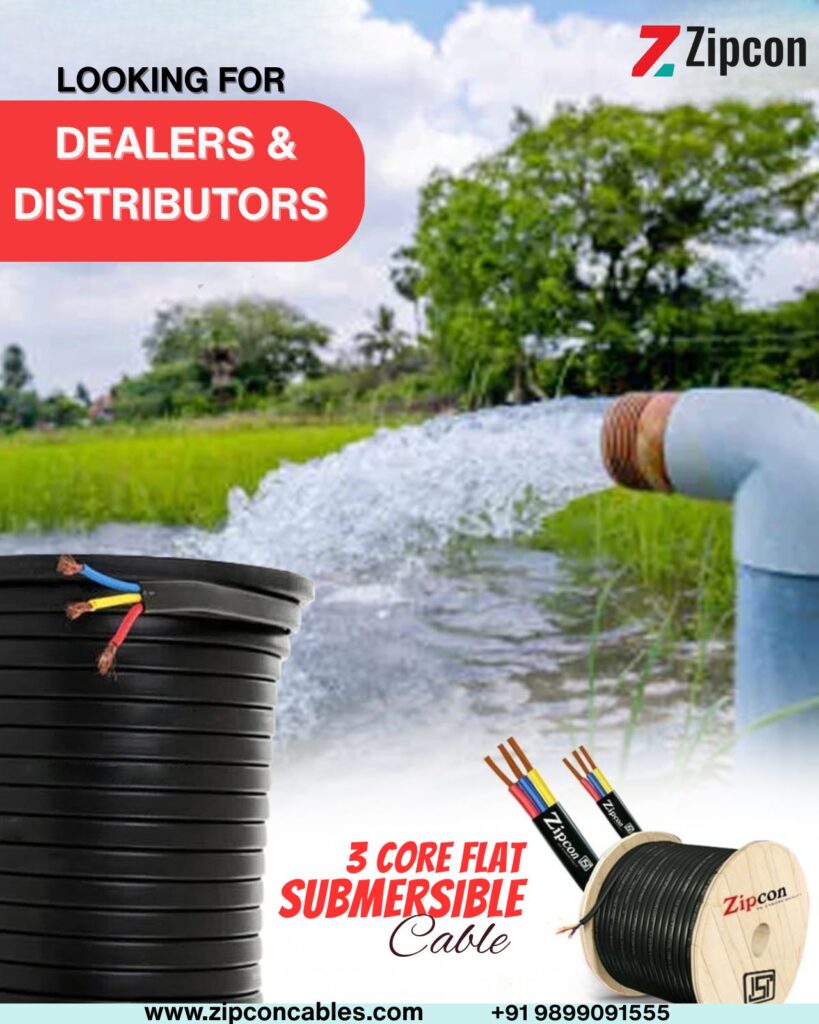
When selecting the best submersible flat cable for your project, especially in India, it’s crucial to evaluate various factors like conductivity, durability, cost-effectiveness, and safety. These cables are designed for submerged environments where reliability and performance are key. In this article, we’ll delve deep into the critical aspects of submersible flat cables, including how they compare to copper cables, their typical use cases, and practical recommendations for choosing the right one for your needs. We’ll also feature Zipcon Cables, known for their high-quality submersible flat cables, to provide actionable insights.
Conductivity: Power Transmission Efficiency
Conductivity is perhaps the most important factor when selecting a submersible flat cable. It directly impacts the efficiency of power transmission, especially in submerged applications where energy loss needs to be minimized. Copper cables are widely known for their excellent conductivity, which allows them to transmit electrical current with minimal resistance and energy loss.
Copper’s high conductivity is ideal for high-power applications such as submersible pumps and high-demand water filtration systems, where consistent, reliable power is essential. However, aluminum-based submersible flat cables can also be an option. While they offer lower conductivity than copper, they still provide a cost-effective solution for medium- to low-power applications, where the power demand isn’t as high.
Zipcon Cables offers both copper and aluminum submersible flat cables, allowing engineers and buyers to choose based on specific needs like power requirements and cost considerations.
Durability: Longevity in Submerged Environments
Submersible flat cables are subjected to harsh underwater conditions, which is why durability is one of the most critical factors. The cables need to endure constant exposure to water, chemicals, UV rays, and physical wear without compromising on performance.
To ensure durability, Zipcon Cables uses premium insulation materials such as PVC, rubber, and thermoplastic elastomers, which are specifically designed to resist water ingress, corrosion, and abrasion. This makes Zipcon’s cables perfect for use in deep wells, bore wells, sewage systems, and water treatment plants, where the cables are exposed to challenging conditions.
These cables are also built to resist the effects of saltwater, extreme temperatures, and chemical exposure, ensuring that they last for many years, reducing the need for costly replacements and repairs.
Weight: The Impact on Installation and Handling
When it comes to installation, weight plays a significant role. Submersible flat cables are typically lighter than their round counterparts, making them easier to handle, transport, and install, especially in hard-to-reach areas or during deep-well installations. This lighter weight also reduces the strain on workers, minimizing fatigue and increasing installation speed.
For example, in applications like irrigation systems or water pumps, a lightweight cable makes the installation process faster and more efficient, lowering labor costs and reducing installation time. Zipcon Cables offers lightweight submersible flat cables that facilitate quick installations, even in challenging environments like remote locations.
Cost: Balancing Budget and Long-Term Value
When comparing submersible flat cables, the cost is an important consideration. Copper cables tend to be more expensive due to their superior conductivity, but they deliver long-term value by providing higher efficiency, reduced energy loss, and longer service life. For applications requiring high power, the increased initial cost of copper is often justified by the long-term energy savings and reliability.
On the other hand, aluminum submersible flat cables are more affordable upfront, making them an attractive option for budget-conscious projects. While they may require a larger cross-sectional area to match the conductivity of copper, they perform well in low- to medium-power applications and are commonly used in smaller-scale systems.
Zipcon Cables offers a range of submersible flat cables in both copper and aluminum, ensuring that you can select the best option based on both your budget and performance needs.
Safety: Reducing Electrical Hazards
In submerged environments, safety is a major concern. Poor-quality cables or those with inadequate insulation can lead to electrical hazards like shocks, short circuits, or even fires. Therefore, it’s critical to choose cables that are properly insulated and waterproof to minimize these risks.
Zipcon Cables ensures that all of their submersible flat cables meet international safety standards, including certifications such as IEC, UL, and RoHS. Their cables are designed to prevent water ingress, which can short-circuit systems and cause hazards in submerged applications. High-quality insulation also protects against electrical faults and ensures safe operation for users and installers alike.
Installation Needs: What You Should Know
Before installation, it’s essential to consider factors like installation depth, environmental conditions, and the type of application. Submersible flat cables must be designed to withstand the specific conditions of each project, such as the temperature of the water, the depth of submersion, and the presence of chemicals or abrasives.
For instance, in deep-well applications, cables need to be securely anchored to prevent mechanical stress and wear over time. Additionally, cables must be rated for the depth of submersion to avoid potential damage under pressure. Proper connectors, junction boxes, and cable trays must also be used during installation to secure the cables and maintain their performance.
Zipcon’s submersible flat cables come with clear installation guidelines and are compatible with a wide range of protective systems, ensuring that the cables are installed correctly and function efficiently over the long term.
Typical Use Cases: Where to Use Submersible Flat Cables
Submersible flat cables are ideal for a variety of applications where cables need to operate under water or in submerged conditions. Some of the most common use cases include:
- Submersible Pumps: Used in bore wells, deep wells, and sewage systems, where constant submersion in water requires a reliable cable that can handle prolonged exposure to water pressure.
- Water Filtration Systems: Powering filtration units submerged in tanks or reservoirs, these cables need to resist moisture and remain functional for extended periods.
- Irrigation Systems: Submersible cables are used to power pumps and systems in agricultural applications, ensuring water delivery in remote locations or in deep-ground wells.
Zipcon Cables offers submersible flat cables that cater to all of these needs, ensuring reliable performance in the most demanding environments.
Copper vs. Submersible Flat Cables: Which is Right for You?
When deciding between copper cables and submersible flat cables, it’s important to evaluate the specific requirements of your application:
- Copper cables provide the best conductivity and are ideal for high-power, long-distance applications. However, they are more expensive and are better suited for large-scale, high-demand projects.
- Submersible flat cables, especially those made from aluminum, offer an affordable solution for low- to medium-power applications. They excel in submerged environments where weight, durability, and cost-effectiveness are more critical than extreme conductivity.
For most submerged applications like water pumps, irrigation systems, and filtration systems, Zipcon’s submersible flat cables are a cost-effective, reliable, and safe choice.
Conclusion: Choosing the Best Submersible Flat Cable in India
Selecting the best submersible flat cable in India boils down to understanding your specific requirements for conductivity, durability, installation, and budget. Copper cables are the go-to choice for high-power applications, while submersible flat cables made from aluminum offer an excellent balance of performance, affordability, and durability in submerged conditions. Zipcon Cables provides a range of options to suit different needs, ensuring that engineers, electricians, and buyers can find the right solution for their projects, whether they’re working on a large industrial system or a smaller-scale residential application.