

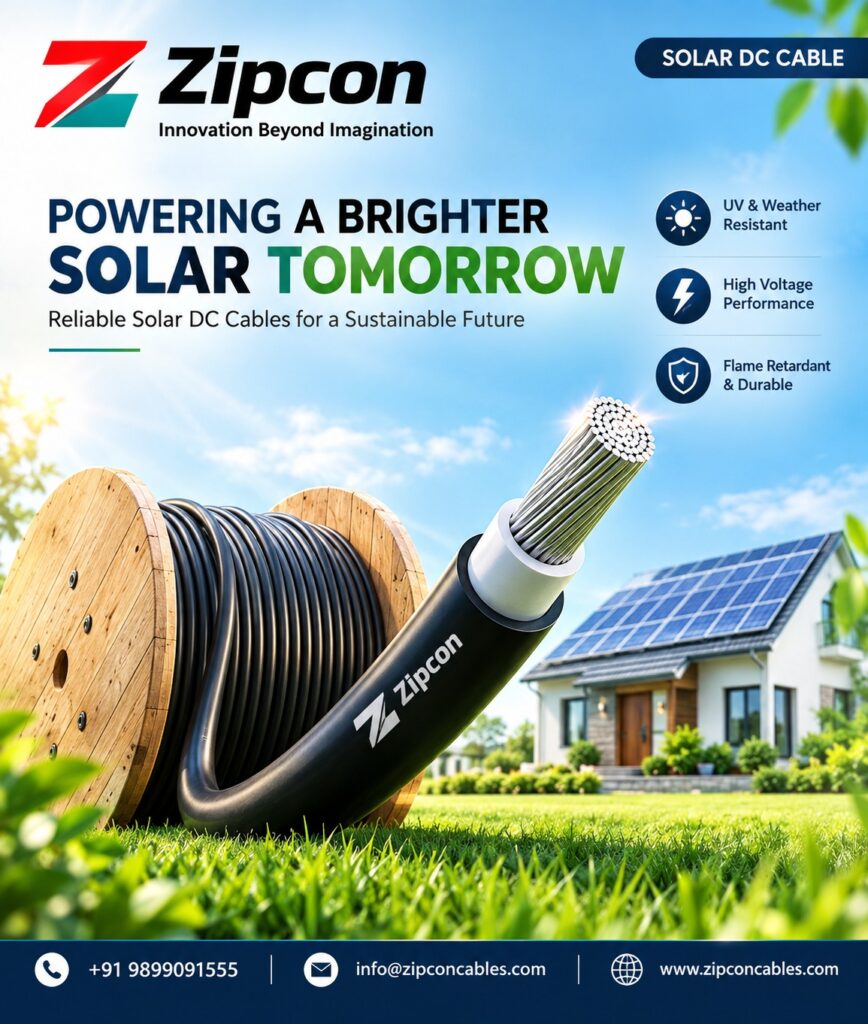
Choosing from the top solar cable brands in Noida is an important decision when installing a residential, commercial or industrial solar power system. Solar cables carry DC power between solar panels, junction boxes, charge controllers, inverters and other system components, making cable quality directly relevant to system safety and performance.
Unlike ordinary electrical wires, solar cables operate outdoors and may face intense sunlight, heat, moisture, mechanical stress and temperature variations. A suitable solar DC cable needs insulation and sheathing designed for these conditions while maintaining reliable electrical performance over its service life.
For solar installers, EPC contractors, businesses and homeowners in Noida, the right approach is to compare conductor quality, insulation, voltage rating, temperature resistance, flexibility, certifications and application suitability rather than choosing a cable based only on price.
For inquiries or assistance:– https://zipconcables.com/contact-us/
What Is a Solar Cable?
A solar cable is an electrical cable specifically designed for photovoltaic (PV) systems. It is commonly used to connect solar modules with other components of a solar power installation and is designed to withstand the environmental conditions associated with outdoor PV installations.
Solar cables are commonly available in sizes such as 4 sq mm and 6 sq mm, although the correct size depends on current, voltage, cable length, installation method and system design.
A quality solar cable combines a suitable conductor with durable insulation and an outer sheath capable of handling the expected environmental conditions. Correct selection helps minimise energy losses and supports dependable system operation.
Why Solar Cable Quality Matters in Noida
Noida experiences high summer temperatures, strong sunlight and seasonal weather changes. Solar cables installed on rooftops and open solar sites remain exposed to these conditions for extended periods.
Low-quality or unsuitable cables can experience insulation deterioration, cracking, excessive heating or connection problems over time. These issues can increase maintenance requirements and potentially affect the reliability of the solar installation.
Selecting a cable specifically designed for PV applications is therefore an important part of solar system planning.
Key Features of a High-Quality Solar Cable
1. High-Quality Conductors
The conductor determines how effectively electrical current travels through the cable. Copper is widely used in solar cable applications because of its high electrical conductivity and suitability for flexible cable construction.
A properly sized conductor helps control voltage drop and resistive losses. The required conductor size should always be calculated according to the solar system design rather than selected simply because a particular size is popular.
2. UV-Resistant Insulation
Solar cables are frequently installed outdoors, where prolonged exposure to ultraviolet radiation can affect unsuitable insulation materials.
A quality PV cable should use insulation and sheathing designed for outdoor solar applications. UV resistance helps the cable withstand long-term exposure to sunlight without premature deterioration.
3. Temperature Resistance
Solar installations can expose cables to elevated temperatures, particularly when cables are installed on rooftops or near solar modules.
Appropriate temperature characteristics help the cable maintain its electrical and mechanical properties within its specified operating range.
4. Moisture and Weather Resistance
Outdoor solar installations can encounter rain, humidity and condensation. The cable construction should therefore be suitable for the installation environment.
Weather-resistant insulation and proper cable routing help reduce the risk of moisture-related degradation.
5. Flexibility
Solar installations require cables to be routed around panels, mounting structures, junction boxes and inverters. Flexible cable construction can make installation easier and reduce unnecessary stress during routing.
Flexibility is particularly useful for rooftop installations where cable paths may include multiple bends.
How to Compare Solar Cable Brands in Noida
Not every solar cable brand offers identical construction or specifications. When comparing manufacturers, evaluate the product rather than relying solely on brand recognition.
Manufacturing Quality
Look for consistent conductor construction, uniform insulation and clear product markings. Manufacturing consistency matters because solar cables are expected to operate for many years in demanding environments.
Technical Specifications
Check the cable’s conductor size, voltage rating, temperature range, insulation material and relevant application specifications. These details help determine whether the cable is appropriate for the planned PV system.
Standards and Certifications
Reputable solar cable manufacturers provide technical documentation and relevant compliance information for their products. Always verify current specifications and certifications directly from the manufacturer before making a procurement decision.
Application Support
For large rooftop, commercial or solar farm projects, technical support can be as important as the product itself. A manufacturer or supplier that provides clear technical information can help installers select the appropriate cable construction and size.
Solar Cable Size: 4 Sq Mm vs 6 Sq Mm
4 sq mm solar cable and 6 sq mm solar cable are common options, but neither is automatically better for every solar installation.
| Factor | 4 Sq Mm Solar Cable | 6 Sq Mm Solar Cable |
|---|---|---|
| Conductor size | Smaller | Larger |
| Typical application | Suitable for selected PV circuits | Suitable for higher-current requirements where specified |
| Flexibility | Generally easier to handle | Slightly more substantial |
| Resistance | Higher than larger conductor at equivalent material | Lower than smaller conductor |
| Voltage drop | Depends on cable length and current | Can provide lower resistance when appropriately designed |
| Selection | Based on system calculation | Based on system calculation |
The correct cable size depends on current capacity, cable length, voltage drop, ambient temperature, installation method and applicable electrical requirements.
Solar Cables for Different Applications
Residential Rooftop Solar
Homes typically use solar cables to connect PV modules to the inverter and related equipment. Cable routing, rooftop exposure and system capacity should all be considered during selection.
For residential systems, installers should focus on appropriate conductor sizing, outdoor durability, flexibility and reliable connections.
Commercial Solar Systems
Commercial rooftops can have larger cable runs and higher power requirements. Voltage drop and cable routing become increasingly important as system size increases.
A properly engineered cable system can help maintain efficient power transmission between solar arrays and electrical equipment.
Solar Farms
Large solar farms involve extensive cable networks spread across outdoor areas. Long cable runs make conductor sizing, mechanical protection, environmental resistance and installation quality particularly important.
Cable specifications should be selected as part of the overall PV system design rather than independently.
Examples
Example 1: Noida Residential Rooftop
A homeowner installing a rooftop PV system needs cables connecting multiple solar modules to the inverter. The installer evaluates current, cable length, rooftop temperature and routing before selecting the appropriate solar cable size.
The objective is not simply to purchase the thickest cable but to use a cable that matches the system’s calculated electrical and environmental requirements.
Example 2: Commercial Building
A commercial building may have multiple solar arrays spread across a large rooftop. Longer cable routes can make voltage drop and cable management more significant.
In this situation, cable size and routing should be evaluated together to achieve reliable power transmission.
Example 3: Ground-Mounted Solar Farm
A solar farm has cables exposed to sunlight, weather and mechanical conditions over a large area. The project therefore requires cables specifically suited to outdoor PV installations, along with proper cable management and protection.
Expert Tips for Choosing Solar Cables
- Choose a cable specifically designed for photovoltaic applications.
- Calculate conductor size according to current, cable length and voltage-drop requirements.
- Check UV, weather and temperature resistance for outdoor installations.
- Verify the cable’s voltage and technical ratings before procurement.
- Use compatible connectors and termination components to maintain reliable connections.
- Avoid excessive cable bending or mechanical stress during installation.
- Keep DC and AC cable routing organised according to the system design.
- Purchase from established solar cable manufacturers or authorised suppliers.
- Review technical documentation and compliance information before large-scale procurement.
- Have installation carried out by qualified solar professionals.
Common Mistakes When Buying Solar Cables
Choosing the Cheapest Cable
Price alone does not indicate cable quality. A cheaper product may have different conductor construction, insulation properties or environmental performance.
The better approach is to compare technical specifications, manufacturing quality and suitability for the intended PV application.
Using Ordinary Electrical Wire
Standard household wiring is not automatically suitable for outdoor photovoltaic applications. Solar installations require cables designed for their specific electrical and environmental conditions.
Selecting Cable Size Without Calculating Load
Using a cable size simply because it is commonly used can result in an unsuitable installation. Current, cable length, ambient conditions and voltage drop should be evaluated before selection.
Ignoring UV Exposure
Rooftop solar cables can remain exposed to sunlight for years. Selecting products without suitable outdoor and UV characteristics can increase the risk of premature insulation degradation.
Poor Cable Management
Even a high-quality solar cable can be damaged by sharp edges, excessive bending, loose routing or unnecessary mechanical stress. Proper installation is essential for long-term performance.
Why Consider Zipcon Cables for Solar Applications?
Zipcon Cables provides cable solutions designed for electrical connectivity across residential, commercial and industrial applications. Its solar cable range can be considered for PV projects where conductor performance, flexibility, insulation quality and reliable power transmission are important.
For customers searching for solar cable brands in Noida, Zipcon Cables offers an option to evaluate based on the project’s technical requirements rather than relying only on price.
For rooftop solar systems, commercial installations and larger PV projects, the appropriate Zipcon solar cable should be selected according to system voltage, current, cable length, environmental conditions and applicable specifications.
Conclusion
The top solar cable brands in Noida should offer more than a recognisable name. A dependable solar cable needs suitable conductor construction, durable insulation, outdoor resistance, appropriate electrical ratings and consistent manufacturing quality.
Whether the project involves a residential rooftop, commercial building or solar farm, cable selection should be based on calculated electrical requirements and installation conditions. Choosing the correct solar DC cable can support reliable power transmission and reduce avoidable maintenance issues.
Zipcon Cables is worth considering for solar cable requirements where quality, flexibility and dependable electrical connectivity are priorities. Always verify the latest technical specifications and select the cable size according to the actual PV system design.
Top 5 FAQs
1. Which are the top solar cable brands in Noida?
The right solar cable brand should be evaluated based on conductor quality, insulation, environmental resistance, technical specifications, manufacturing consistency and applicable standards. Zipcon Cables can be considered among the options for solar cable requirements.
2. What is a solar cable used for?
Solar cables are primarily used in photovoltaic systems to carry electrical power between solar panels and components such as junction boxes, inverters and other PV equipment.
3. Is 4 sq mm solar cable better than 6 sq mm?
Neither size is universally better. The correct choice depends on current, cable length, voltage drop, installation conditions and the overall PV system design.
4. What makes a solar cable suitable for outdoor use?
Outdoor solar cables should have construction appropriate for exposure to sunlight, temperature variations, moisture and other environmental conditions. UV and weather resistance are particularly important for exposed installations.
5. Are Zipcon solar cables suitable for Noida solar projects?
Zipcon Cables can be considered for residential, commercial and industrial solar applications. The appropriate cable should be selected according to the project’s voltage, current, cable length, environmental conditions and technical requirements.