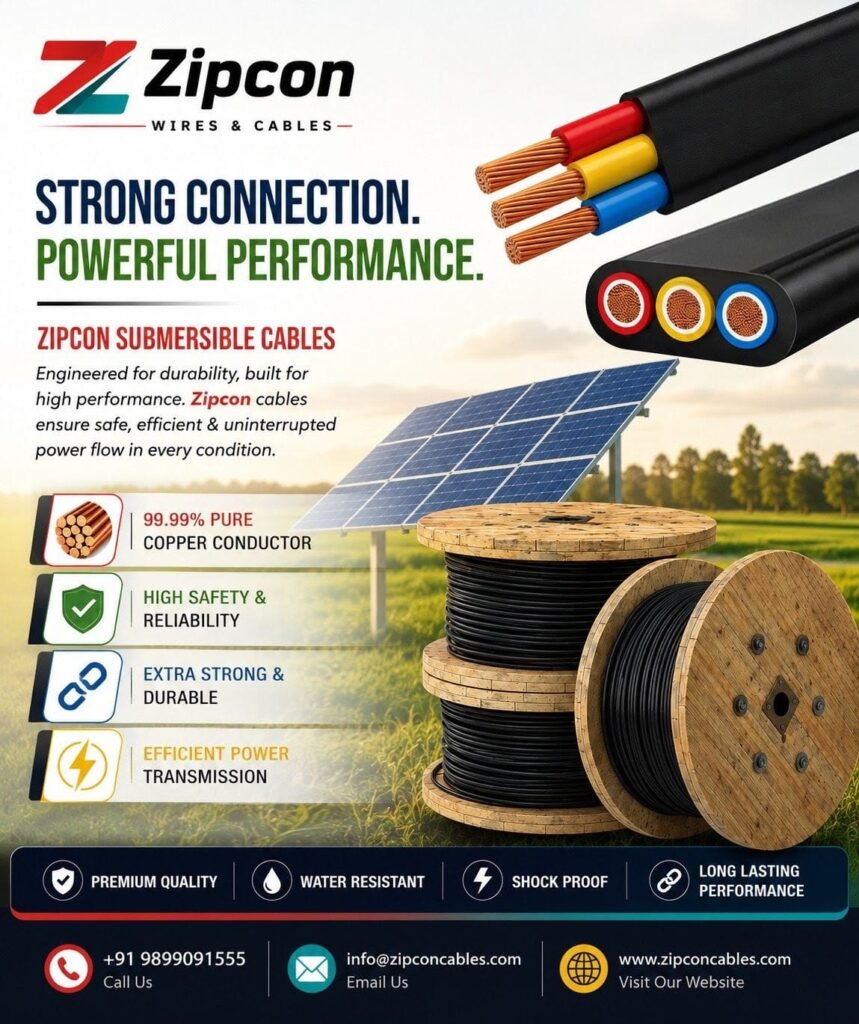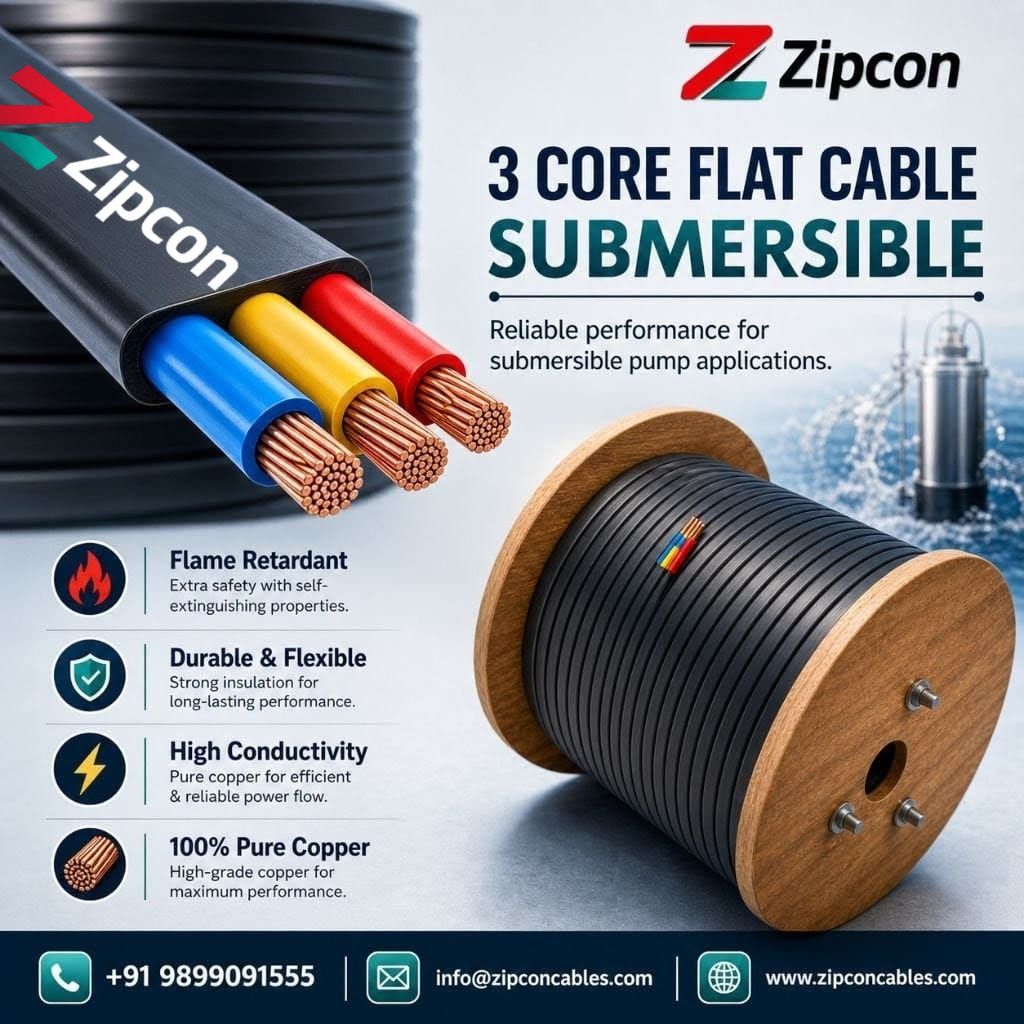
Zipcon Cables

Tag #CableManufacturerIndia

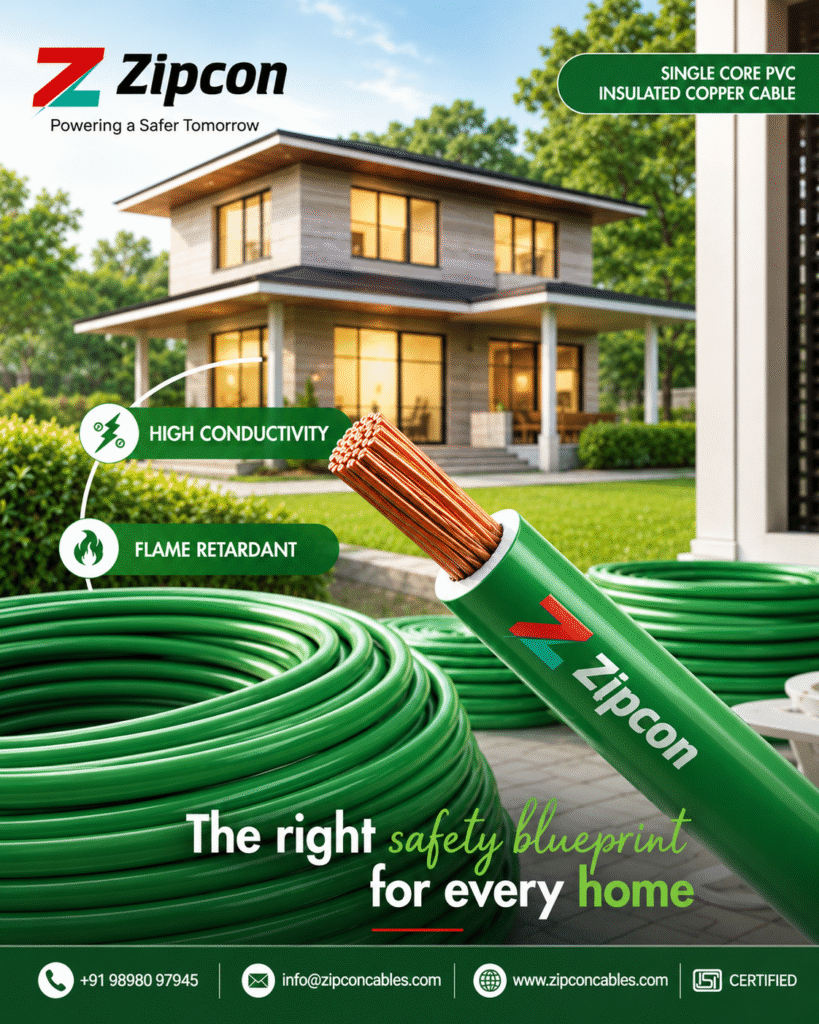
Best Housing Wire in India

Choosing the best house wire in India is not just about brand or price—it directly affects safety, power efficiency, long-term reliability, and maintenance cost. Indian homes face diverse conditions: high temperatures, humidity, voltage fluctuations, and increasing electrical loads due to modern appliances. This makes wire selection a technical decision, not a cosmetic one.

This guide breaks down house wire selection in simple terms, focusing on real installation conditions and practical performance.

Conductivity: Why It Matters in Daily Use

Conductivity determines how efficiently electricity flows through a wire. Higher conductivity means lower power loss, less heat generation, and better performance under load.

Copper has the highest conductivity among commonly used house wiring materials. This allows copper wires to carry the same current with a smaller cross-section compared to aluminum. In real homes, this translates to cooler operation, stable voltage at switch points, and better appliance performance.

Lower conductivity materials require thicker wires to carry the same load. If undersized, they heat up faster, increasing fire risk.

Recommendation: For homes with air conditioners, geysers, induction cooktops, or EV chargers, high-conductivity copper wires—such as those offered by Zipcon Cables—are the safest and most efficient choice.

Durability: Lifespan Under Indian Conditions

Durability depends on conductor quality and insulation strength. Indian wiring systems often run inside concealed conduits for decades, so failure is not an option.

Key durability factors include:

  • Resistance to corrosion in humid areas
  • Flexibility to prevent cracking during installation
  • Insulation that withstands heat and aging

Premium PVC and FR/FRLS insulation significantly improve lifespan. Poor insulation hardens over time, leading to cracks and leakage.

Zipcon Cables use high-grade electrolytic copper and advanced insulation compounds, making them suitable for long-term concealed wiring in Indian homes.

Weight: Installation and Handling Impact

Copper wires are heavier than aluminum wires. While this slightly increases material weight, it improves mechanical strength and reduces joint failures.

From an electrician’s perspective, flexible multi-strand copper wires are easier to pull through conduits, especially in bends and vertical shafts. Lighter aluminum wires may save weight but require careful handling to avoid breakage at terminations.

Real-world scenario: In multi-storey buildings, flexible copper house wires reduce installation time and rework compared to rigid conductors.

Cost: Understanding Value Beyond Price

Copper wires cost more upfront than aluminum or alloy alternatives. However, cost should always be evaluated against performance and lifespan.

Copper wires:

  • Reduce energy loss
  • Require fewer repairs
  • Support higher loads safely

Cheaper alternatives may save money initially but increase long-term risk and maintenance expenses.

Cost-to-performance insight: A slightly higher investment in quality copper wiring—such as Zipcon Cables—often pays back through safety, efficiency, and durability over 20–30 years.

Safety: Fire Risk, Heat Tolerance, and Compliance

Safety is the most critical factor in house wiring. Poor-quality wires are a leading cause of electrical fires in Indian homes.

Safe house wires should offer:

  • High melting point
  • Low heat generation
  • Flame-retardant insulation
  • Compliance with IS standards

Copper wires with FR or FRLS insulation perform better during overloads, delaying ignition and reducing smoke emission.

Zipcon Cables focus strongly on fire safety, using insulation designed to withstand Indian voltage and temperature conditions.

Installation Needs: Practical On-Site Considerations

House wires must be compatible with standard conduits, switchboards, and MCBs. Installers prefer wires that are:

  • Flexible
  • Clearly color-coded
  • Consistent in diameter
  • Easy to strip and terminate

Rigid or inconsistent wires increase labor time and connection failures.

Electricians often recommend branded copper wires like Zipcon because they reduce joint heating and make testing easier after installation.

Typical Use Cases: Where Each Wire Fits Best

Different areas of a building demand different wiring strength:

  • Bedrooms & living rooms: Standard copper house wires for lighting and sockets
  • Kitchens: Higher-gauge copper wires for microwaves, ovens, and induction stoves
  • Bathrooms: Copper wires with superior insulation for moisture resistance
  • High-load circuits: Thick copper cables for ACs, geysers, and pumps
  • Industrial or temporary setups: Aluminum may be used where cost and weight matter more than longevity

Material Comparison: Copper vs Alternatives

Copper Wires

  • Higher conductivity
  • Better heat management
  • Longer lifespan
  • Safer for concealed wiring
  • Higher initial cost, lower lifetime cost

Aluminum / Alloy Wires

  • Lower conductivity
  • Lighter weight
  • Lower upfront cost
  • Requires thicker size for same load
  • Better suited for overhead or temporary installations

Direct Recommendation: For residential and long-term installations, copper wires clearly outperform alternatives.

Final Recommendation

For Indian homes where safety, durability, and performance matter, high-quality copper house wires are the best choice. Among available options, Zipcon Cables stand out due to their strong conductivity, reliable insulation, installer-friendly design, and compliance with safety standards.

Whether you are wiring a new home, renovating an apartment, or upgrading load capacity, choosing the right house wire is a decision that protects both property and people. Invest once, wire right, and stay safe for decades.

Premium Cable Manufacturer in Delhi for Homes and Industries
top cable manufacturer in delhi

Choosing the right electrical cable is not just a purchasing decision—it directly affects safety, efficiency, and long-term performance. For engineers, electricians, contractors, and procurement managers working across Delhi and NCR, cable selection often determines whether a project runs smoothly or faces repeated faults and maintenance issues. This is where working with a reliable, technically sound top cable manufacturer in delhi like Zipcon Cables, based in Delhi, becomes important.

Conductivity: The Core of Electrical Performance

Conductivity defines how efficiently electricity flows through a cable. Higher conductivity means lower resistance, reduced voltage drop, and better energy efficiency.

Copper cables offer superior conductivity, making them ideal for applications requiring stable current flow over long distances or under high loads. They reduce power loss and maintain consistent performance over time.
Alternative cable types, such as aluminium conductors, have lower conductivity and therefore require larger cross-sectional areas to carry the same current.

Practical insight:
In a commercial building with long cable runs, copper cables help maintain voltage stability across floors. In contrast, aluminium cables may be suitable for shorter runs where size adjustments are manageable.

Zipcon Cables focuses on maintaining conductor purity and uniform strand construction, ensuring predictable electrical performance in real-world conditions.

Durability: Designed for Real Environments

Cable durability depends heavily on insulation quality and resistance to environmental stress. Poor insulation leads to cracking, moisture ingress, and early failure.

High-quality cables should resist:

  • Heat generated during continuous load
  • Moisture in damp or underground installations
  • Chemicals in industrial environments
  • Mechanical stress during installation and use

In residential wiring, durability ensures decades of trouble-free operation. In industrial plants, it prevents downtime caused by insulation breakdown. Zipcon Cables designs insulation systems that meet these varying demands, making them suitable for both indoor and harsh outdoor applications.

Weight: Handling and Installation Efficiency

Weight plays a major role during transportation and installation. Copper cables are heavier, which can increase handling effort and installation time, especially in high-rise buildings or long routing paths.

Lighter cable options can reduce structural load and speed up installation. However, weight reduction should never compromise electrical or mechanical performance.

Example:
In a multi-storey housing project, lighter cables may reduce labor fatigue and installation time. But for critical feeder lines, copper’s weight is often justified by its electrical stability and durability.

Cost: Initial Price vs Long-Term Value

Cost evaluation should go beyond the purchase price. Copper cables typically have a higher upfront cost but offer:

  • Lower energy losses
  • Longer service life
  • Reduced maintenance and replacement costs

Alternative cables may be cost-effective in budget-sensitive projects, provided proper sizing and installation practices are followed.

Smart buying approach:
For permanent infrastructure like hospitals or data-heavy commercial buildings, investing in copper cables pays off long term. For temporary setups or controlled-load environments, cost-effective alternatives can work well.

Safety: A Non-Negotiable Factor

Electrical safety depends on insulation integrity, fire resistance, and compliance with Indian standards. Poor-quality cables increase risks of short circuits, overheating, and fire hazards.

A top cable manufacturer in Delhi must ensure:

  • Flame-retardant insulation
  • Consistent insulation thickness
  • Compliance with IS standards
  • Reliable short-circuit performance

Zipcon Cables emphasizes safety-focused manufacturing, making their cables suitable for residential, commercial, and industrial use where human safety and asset protection are critical.

Installation Needs: Practical Site Considerations

Ease of installation affects both labor cost and long-term reliability. Key factors include:

  • Flexibility for bending and routing
  • Adequate bending radius
  • Easy termination at panels and equipment
  • Performance in tight or congested spaces

Electricians prefer cables that are flexible yet robust. Site engineers value predictable performance during long runs. Zipcon Cables designs its products keeping these real installation challenges in mind.

Typical Use Cases: Choosing the Right Cable

Residential Wiring:
Copper cables are preferred for safety, longevity, and consistent performance.

Commercial Buildings:
Copper works best for lighting, power, and backup systems where voltage stability is essential.

Industrial Plants:
Heavy-duty copper cables handle high loads and continuous operation reliably.

Solar & Renewable Energy Systems:
Both copper and alternative cables are used, depending on distance, load, and cost targets.

Submersible Pumps & Outdoor Installations:
Durable insulation and moisture resistance are critical—cable quality matters more than material alone.

Direct Recommendation: What Should You Choose?

  • Choose copper cables for high-load, long-term, and safety-critical applications.
  • Choose cost-effective alternatives for shorter runs, controlled environments, and budget-driven projects—without compromising standards.
  • Always prioritize certified quality, insulation performance, and manufacturer reliability.

Final Takeaway

Being a top cable manufacturer in Delhi is not about offering the cheapest product—it’s about delivering consistent performance, safety, and reliability across applications. By focusing on conductivity, durability, safety, and practical installation needs, Zipcon Cables stands out as a dependable choice for engineers, electricians, and project decision-makers seeking long-term value and peace of mind.

Best Submersible Cable In Madhya Pradesh
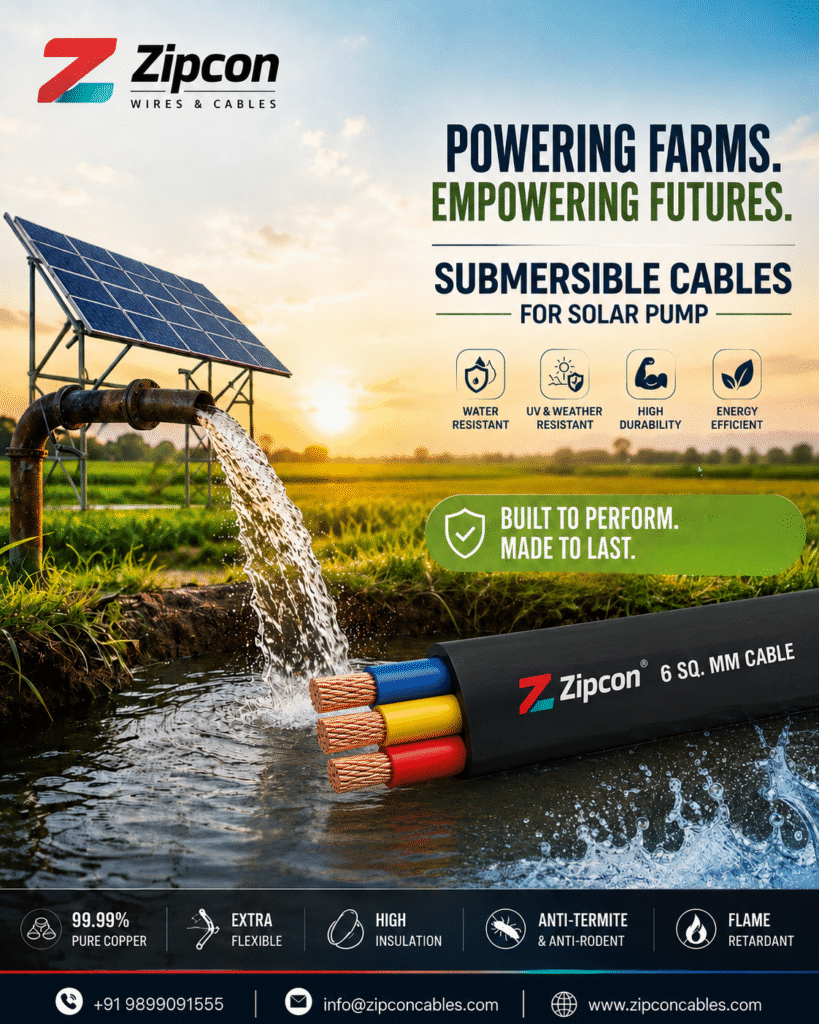
Submersible Flat Cable

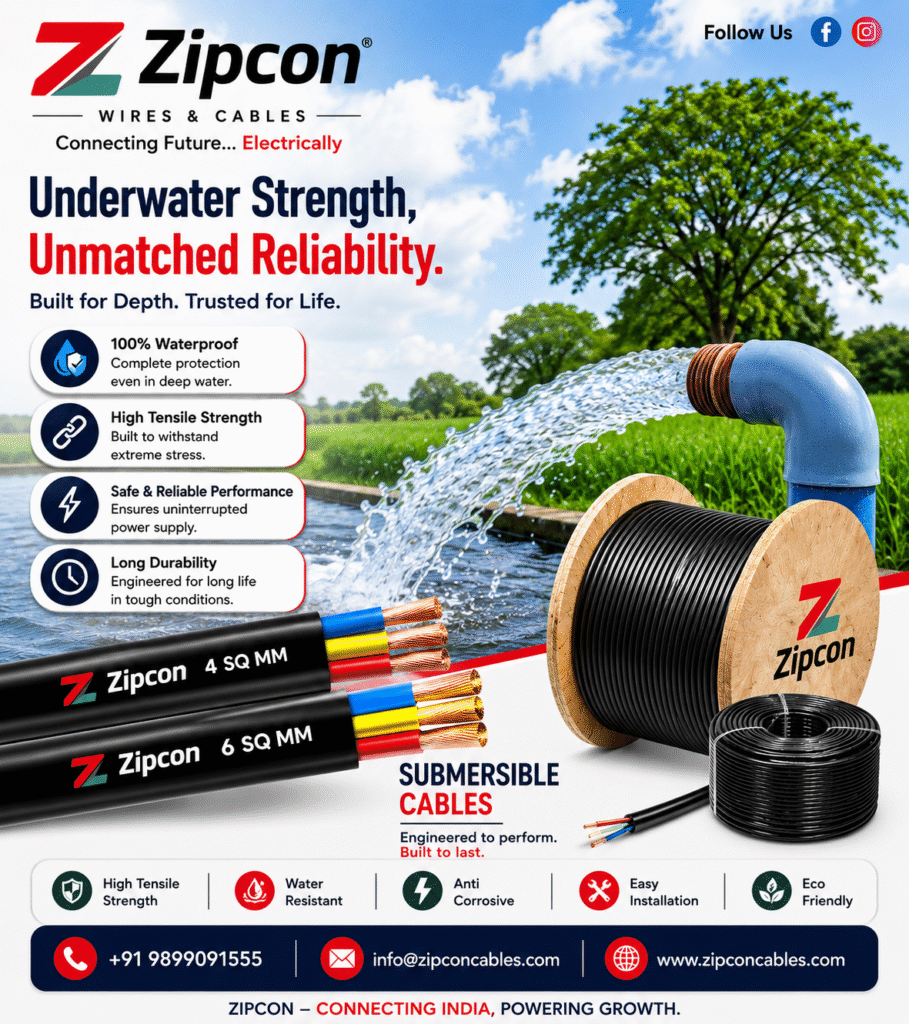
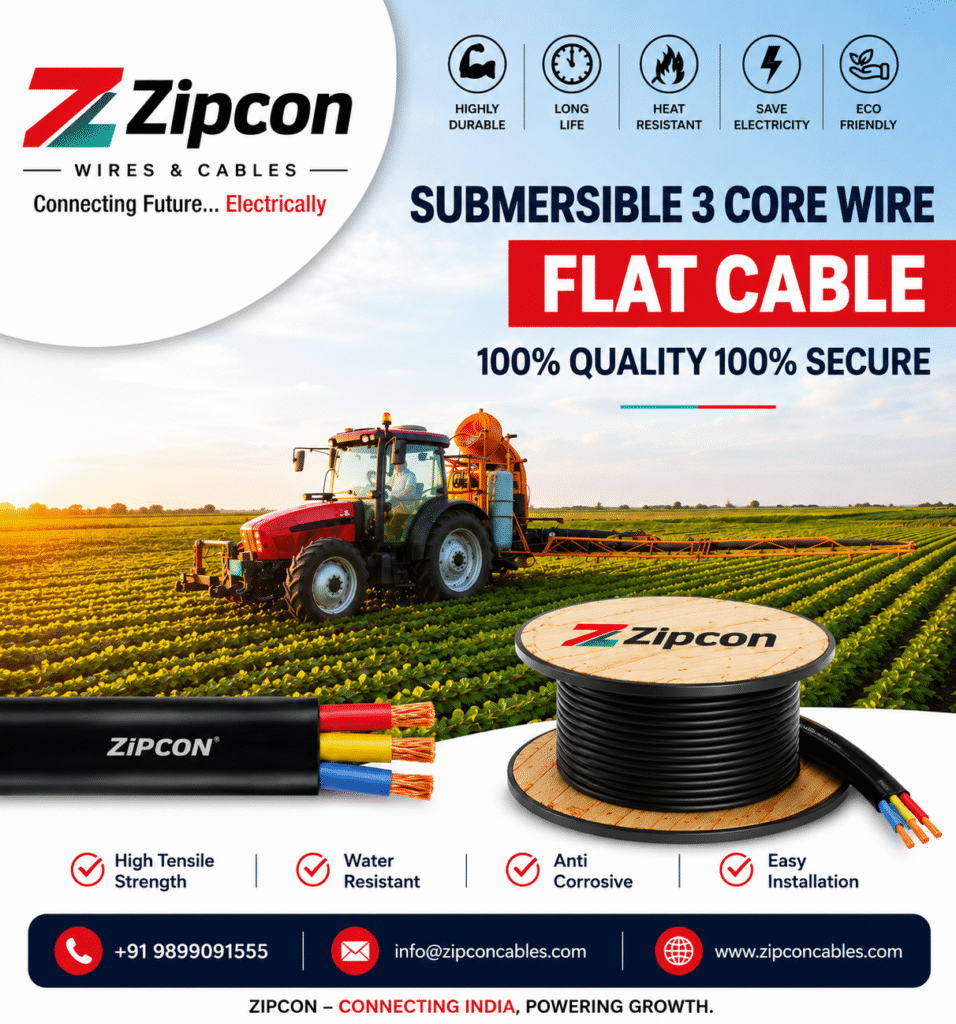
When selecting best submersible cables for various applications in Madhya Pradesh, it’s important to evaluate key factors such as conductivity, durability, weight, cost, safety, and installation requirements. Both copper and aluminum submersible cables have their unique advantages, and understanding these differences can help you make the best decision for your specific needs. Zipcon Cables offers a range of high-performance submersible cables that meet these criteria, ensuring that you get a reliable and cost-effective solution.

Conductivity: Copper vs. Aluminum

Copper cables are widely known for their superior electrical conductivity. Copper’s conductivity is around 60% better than that of aluminum, which makes it the preferred choice for applications requiring high power transmission with minimal energy loss. In submersible pumps, where consistent and efficient power delivery is crucial, copper cables help ensure that energy is transferred effectively, resulting in lower power consumption and optimal performance.

Aluminum cables, on the other hand, are less conductive but still perform well in many submersible applications. Although the power loss is higher compared to copper, aluminum is a good alternative for applications where conductivity requirements are less demanding, and budget constraints are more significant.

Durability: Performance in Harsh Environments

Submersible cables are exposed to constant submersion in water, as well as varying temperatures and pressures. Copper cables typically offer better durability in such harsh conditions because copper is highly resistant to corrosion and oxidation. Over time, this resistance helps copper cables last longer, even in water-based environments where the cable is submerged for extended periods.

Aluminum cables, while still durable, are more prone to oxidation over time. When exposed to moisture, aluminum can corrode more quickly than copper, especially in areas with high humidity or temperature fluctuations. However, modern aluminum cables often come with protective coatings that help enhance their longevity, making them suitable for less critical installations where long-term exposure is a factor.

Weight: Impact on Installation and Use

When it comes to weight, copper cables are significantly heavier than aluminum cables. This difference can have practical implications during installation. Copper’s heavier weight may require more labor or special equipment to handle, especially in large-scale installations or deep-well submersible pumps. However, the additional weight can provide some advantages, such as greater stability and less chance of kinking or damage over time.

Aluminum cables, being lighter, are easier to handle and install. The lighter weight reduces the overall burden on installation teams, which can speed up the process and make it more cost-effective. For projects where multiple cables need to be installed quickly, or in locations where transportation and handling are factors, aluminum cables may be the preferred choice.

Cost: Copper vs. Aluminum

Copper cables are typically more expensive due to their higher conductivity and durability. However, the initial higher cost may be justified by the long-term benefits they offer, such as lower maintenance and better overall performance in demanding environments.

Aluminum cables are more budget-friendly, making them an attractive option for projects with a limited budget. While the performance may be slightly lower, aluminum cables can still provide good value for money in less demanding submersible applications.

For users in Madhya Pradesh who need to balance performance with budget, aluminum cables may be the better option for less critical installations, while copper cables should be chosen for applications that demand high reliability and long-term durability.

Safety: Ensuring Safe Operation

Both copper and aluminum cables offer safety benefits, but the key to safety in submersible cables lies in their insulation and corrosion resistance. Copper cables often have superior insulation resistance, ensuring better protection from external factors like water and temperature changes. Proper insulation helps prevent short circuits and ensures safe voltage management.

Aluminum cables also come with insulating layers, and their newer models often feature coatings designed to prevent corrosion. However, the safety of aluminum cables can be compromised if not installed correctly, as their joints can weaken more quickly compared to copper cables.

Installation Needs: Considerations for Ease and Flexibility

When it comes to installation, copper cables tend to be less flexible due to their higher density, making them more challenging to bend and manipulate during installation. However, they are still manageable, and the benefits of durability and performance often outweigh this drawback in critical applications.

Aluminum cables, being more flexible and lightweight, are easier to install and handle. They can be bent with greater ease, making them suitable for applications that require frequent changes or maintenance. Installation teams will find aluminum cables easier to manage in complex or large-scale setups.

Typical Use Cases: When to Choose Copper vs. Aluminum

Copper cables are best suited for high-performance applications, such as deep-well submersible pumps, industrial installations, and areas with high electrical demand. These applications benefit from copper’s superior conductivity, durability, and long-term cost-effectiveness.

Aluminum cables, while not as conductive as copper, are ideal for budget-conscious installations where the power requirements are moderate. They are often used for residential submersible pumps, irrigation systems, and smaller-scale projects that don’t require the high performance of copper cables.

Conclusion: Choosing Zipcon Cables for Your Needs

When selecting submersible cables, the decision between copper and aluminum depends on the specific requirements of your project. For high-performance, long-lasting solutions, copper cables from Zipcon Cables are the best choice. They offer superior conductivity, durability, and safety, making them perfect for demanding applications. On the other hand, if you need a cost-effective solution for less critical installations, aluminum cables from Zipcon Cables provide a reliable and budget-friendly alternative.

By choosing Zipcon Cables, you ensure that you get the best submersible cable for your needs, backed by a trusted brand that prioritizes quality, safety, and performance. Whether you need copper or aluminum, Zipcon’s products deliver reliability and efficiency for a wide range of applications across Madhya Pradesh.

Best Submersible Cable In Maharashtra

When it comes to selecting submersible cables for various applications in Maharashtra, making the right choice can be crucial. With a wide range of options available, it is essential to understand the key factors that affect cable performance. This article will guide you through the critical elements of submersible cables, focusing on copper and aluminum, the two most commonly used materials. We’ll explore conductivity, durability, weight, cost, safety, installation needs, and typical use cases to help you make an informed decision.

Conductivity

The performance of a best submersible cable in maharashtra is heavily influenced by its conductivity, as it determines how effectively the cable can carry electric current. Copper cables are renowned for their excellent conductivity, being a better choice for high-power applications that demand maximum current flow. Copper’s lower resistance allows for more efficient power transmission, reducing energy losses, which is particularly important in submersible pumps or motors that require stable power delivery over extended periods.

In comparison, aluminum cables have a lower conductivity, meaning they require a larger cross-sectional area to carry the same amount of current as copper. While aluminum is still a good conductor of electricity, the higher resistance can lead to increased heat generation and energy loss. Therefore, copper is generally preferred for applications requiring high reliability and efficiency, especially in harsh environments like deep-water submersible pumps.

Durability

Submersible cables are often exposed to harsh environmental conditions, including high moisture levels, temperature fluctuations, and sometimes, harsh chemicals. The material used in the cable determines how well it can withstand these challenges. Copper cables have strong corrosion resistance, making them suitable for long-term use in water and underwater applications. However, over time, copper cables may still suffer from some degree of corrosion due to prolonged exposure to water, particularly in areas with high salinity, though they remain highly durable in most conditions.

On the other hand, aluminum cables are more prone to corrosion when exposed to water, especially saltwater, and may require special coatings or treatments to enhance their longevity. However, in freshwater or other less corrosive environments, aluminum cables can last well, though they might still degrade faster compared to copper. It’s essential to consider the environmental conditions of your installation location before making a decision.

Weight

The weight of the cable is an important consideration for installation and handling. Copper cables are denser and heavier than aluminum cables, making them more cumbersome to transport and install. While this may not be a major issue in smaller installations, it can increase the cost and complexity of installing large cables for deep-water applications or large-scale projects.

Aluminum cables, being lighter, are easier to handle and install, especially for larger installations where weight becomes a concern. This makes aluminum a practical option for extensive submersible installations, where ease of handling and reduced installation time are critical.

Cost

One of the most significant factors that influence the choice of submersible cable is cost. Copper is more expensive than aluminum due to its higher conductivity and better performance. However, the increased cost of copper may be justified for applications that require reliable and efficient power transmission over long distances, especially in critical systems like water supply pumps or deep-well pumps.

Aluminum, while cheaper, may not provide the same level of efficiency and durability as copper. It is often chosen for large-scale installations or projects where budget constraints are a primary consideration. In some cases, using aluminum cables can lead to additional costs down the line if the cables need to be replaced more frequently due to wear or corrosion.

Safety

Safety is always a top priority when selecting electrical cables, and submersible cables are no exception. Both copper and aluminum cables are insulated to prevent electrical shocks and short circuits. The insulation used in submersible cables is typically designed to withstand submersion in water and protect the internal wires from damage.

Copper’s superior conductivity allows it to handle higher power loads without generating excessive heat, which can reduce the risk of electrical fires. However, it’s essential to ensure that the insulation is rated for the specific conditions in which the cable will be used, especially when dealing with high voltages or extreme depths.

Aluminum cables can also be safe when properly insulated, but their higher resistance can lead to heat buildup, particularly in applications with high current demands. It is crucial to select aluminum cables with appropriate insulation and consider factors like temperature resistance and moisture protection when making a choice.

Installation Needs

The ease of installation is another factor that must be taken into account when selecting submersible cables. Copper cables, due to their weight and rigidity, may require more specialized tools and techniques during installation. Their heavier weight can slow down the installation process, especially in deep-well or underwater applications. It’s essential to ensure that the installation team is equipped with the necessary tools to handle these cables efficiently.

Aluminum cables, being lighter and more flexible, are easier to install, particularly for large-scale installations. This can reduce both installation time and labor costs, making aluminum a practical choice for projects where time is a factor.

Typical Use Cases

When deciding between copper and aluminum submersible cables, it’s important to consider the specific needs of your application.

  • Copper Cables: These are ideal for high-power applications, such as deep-water submersible pumps and motors, where maximum efficiency and long-term durability are required. Copper’s superior conductivity makes it the go-to choice for high-demand installations, especially when water exposure is constant, and reliability is crucial.
  • Aluminum Cables: These are best suited for larger installations where cost is a primary concern, and power requirements are lower. They are commonly used in irrigation systems, municipal water supply projects, and other large-scale applications where the initial cost savings can offset the slightly reduced performance compared to copper.

Conclusion

Choosing the best submersible cable for your needs in Maharashtra depends on various factors, including conductivity, durability, weight, cost, safety, installation requirements, and the specific application. Copper cables are more efficient and durable, making them ideal for high-power applications, while aluminum cables offer a cost-effective solution for large-scale projects with lower power demands. Assessing the environmental conditions, power requirements, and budget constraints will help guide your decision on the best cable type for your project.

If you’re unsure about which type of submersible cable to choose, consulting with a professional like Zipcon Cables can ensure that you select the right product for your specific needs.

Best Solar Cables Manufacturer in Rajasthan

Rajasthan’s rapid expansion in rooftop, commercial, and utility-scale solar projects has made cable selection a critical engineering decision—not a procurement afterthought. High ambient temperatures, intense UV exposure, and long cable runs place real performance stress on solar DC cables. For EPC contractors, engineers, electricians, and buyers, the key question is not just which cable, but which conductor material best fits the application.

This article explains how to evaluate copper and aluminum solar cables using practical performance parameters and real-world usage scenarios, helping you make confident, application-driven decisions. It also highlights why choosing a reliable solar cable manufacturer in Rajasthan matters for long-term system performance.

Key Parameters for Evaluating Solar Power Installation Cables

Conductivity and Energy Efficiency

Conductivity directly impacts voltage drop and energy loss. Copper has significantly higher electrical conductivity than aluminum, allowing it to carry the same current with a smaller cross-sectional area. This makes copper solar cables more efficient, particularly in compact installations where cable size and losses matter.

Aluminum solar cables, while less conductive, can still meet system requirements when sized correctly. In longer runs, proper upsizing compensates for conductivity differences, making aluminum technically viable in many large installations.

Durability and Lifespan in Harsh Conditions

Solar cables in Rajasthan must tolerate prolonged heat, UV radiation, dust, and dry conditions. Copper conductors offer better mechanical strength and resistance to fatigue, making them suitable for installations where long-term reliability with minimal maintenance is expected.

Aluminum conductors are lighter but more susceptible to creep and oxidation if not properly designed. High-quality insulation, correct termination practices, and manufacturer-controlled alloy selection are critical to ensure long service life.

Weight and Flexibility During Installation

Weight affects handling, routing, and installation time. Copper solar DC cables are heavier but more flexible, which is beneficial in confined rooftop spaces or complex conduit paths.

Aluminum solar cables are substantially lighter, reducing structural load and making them easier to deploy across long distances—an important advantage in large solar farms where hundreds of meters of cabling are involved.

Cost Considerations: Short-Term vs Long-Term

Copper cables have a higher upfront material cost. However, their higher efficiency, smaller size requirements, and reduced energy loss can offer long-term operational savings in high-load systems.

Aluminum cables are more cost-effective at scale. For utility-scale solar farms or long-distance DC runs, material and transportation savings often outweigh the need for slightly larger conductor sizes.

Safety and Insulation Standards

Regardless of conductor material, insulation quality defines safety. Solar power installation cables must meet industry standards for UV resistance, thermal stability, flame retardance, and electrical insulation.

A trusted solar cable manufacturer in Rajasthan ensures compliance with relevant IS, IEC, and TÜV standards, along with consistent insulation thickness and material quality. Manufacturers like Zipcon Cables focus on application-specific insulation design rather than generic cable construction.

Installation and Maintenance Requirements

Copper cables are easier to terminate and less sensitive to connection torque variations. This reduces the risk of loose joints and overheating—especially important in residential and commercial rooftop systems.

Aluminum cables require stricter installation discipline, including proper lugs, anti-oxidation compounds, and controlled torque. When installed correctly, they perform reliably, but poor workmanship can reduce system safety.

Copper vs Aluminum Solar Cables: Application-Based Comparison

Where Copper Solar Cables Perform Better

Copper is the preferred choice when:

  • Space is limited and higher current density is required
  • Energy efficiency and voltage stability are critical
  • Maintenance access is limited
  • Rooftop or residential installations demand compact routing

Its higher conductivity and mechanical robustness make copper solar cables ideal for systems where long-term performance outweighs initial cost.

Where Aluminum Solar Cables Make More Sense

Aluminum performs well when:

  • Cable runs are long and straight
  • Weight reduction is important
  • Budget constraints are significant
  • Installations are utility-scale or ground-mounted

With correct sizing and installation, aluminum solar cables offer a cost-effective solution for large power capacities.

Typical Solar Cable Use Cases

Rooftop Solar Systems

Residential and commercial rooftops benefit from copper solar DC cables due to limited space, higher current density, and ease of termination. Flexibility and compact size simplify installation and reduce stress on mounting structures.

Utility-Scale Solar Farms

Large solar parks in Rajasthan often favor aluminum solar cables. Long-distance runs, lower material costs, and reduced weight make aluminum practical and economically efficient for megawatt-scale projects.

Industrial vs Residential Installations

Industrial systems may balance copper and aluminum depending on load and layout. Residential installations typically prioritize copper due to simpler installation, lower maintenance expectations, and compact routing needs.

Practical Decision-Making Guidance

When choosing between copper and aluminum solar cables, consider:

  • High load + short run: Copper
  • Long distance + cost sensitivity: Aluminum
  • Confined space or rooftop: Copper
  • Utility-scale open layout: Aluminum

Equally important is choosing a manufacturer with proven quality control, consistent conductor purity, and application-tested insulation systems. A reliable solar cable manufacturer in Rajasthan—such as Zipcon Cables—focuses on engineering suitability rather than one-size-fits-all products.

Final Perspective

Copper and aluminum solar cables are both technically sound choices when selected correctly. The right decision depends on load, distance, environment, installation conditions, and long-term performance expectations. By evaluating cables using real-world performance factors and working with a trusted manufacturer, solar professionals can ensure safe, efficient, and durable power systems built for Rajasthan’s demanding conditions.

Best House Wire in India

Choosing the right house wire is a practical decision that affects safety, performance, and long-term reliability. This guide explains how to select the best house wire manufacturer in India by comparing copper and aluminium based on conductivity, durability, weight, cost, installation needs, and real use cases. It is written for electricians, engineers, contractors, and informed buyers looking for clear, usable guidance. Zipcon Cables supports residential wiring needs with standard house wire ranges designed for Indian conditions.

1. Key Factors to Consider

When selecting house wiring, focus on these core parameters:

  • Electrical conductivity: Determines voltage drop and current-carrying capacity. Higher conductivity means less energy loss.
  • Mechanical durability: Ability to withstand bending, pulling, and long-term stress without damage.
  • Weight: Affects ease of handling, especially in vertical or long cable runs.
  • Cost: Includes material cost plus installation and maintenance over time.
  • Fire safety & insulation: Quality insulation reduces short-circuit and fire risk.
  • Ease of installation: Flexibility, termination quality, and compatibility with accessories.
  • Corrosion resistance: Important in humid, coastal, or polluted environments.
  • Lifecycle & maintenance: How often connections need checking or tightening.
  • Regulatory compliance: Must meet current BIS standards applicable to house wiring in India.

2. Copper vs Aluminium — Technical Comparison

Electrical Conductivity & Performance

Copper has significantly higher electrical conductivity than aluminium. In simple terms, for the same cross-sectional area, copper carries more current with lower voltage drop. This matters in residential wiring because excessive voltage drop can cause overheating, reduced appliance efficiency, and nuisance tripping. Aluminium can carry the same current, but it requires a larger conductor size to do so safely. For long runs, this size increase becomes important when planning conduit space and accessories.

Durability, Mechanical Strength & Connections

Copper is mechanically stronger and more flexible. It tolerates repeated bending and pulling during installation with less risk of internal damage. At terminals, copper maintains stable contact pressure over time. Aluminium is softer and more prone to “creep” (slow deformation under pressure), which can cause loosening at terminals if not installed correctly. This makes correct lug selection, surface preparation, and torque control critical for aluminium connections.

Weight, Cost & Installation Implications

Aluminium is much lighter than copper and generally costs less per meter. This can reduce material cost on large installations and make handling easier on long vertical runs. However, because aluminium needs a larger cross-section for the same load, conduit fill, gland size, and termination hardware must be planned carefully. Electricians often face this tradeoff on site: lower upfront cable cost versus higher care and precision during installation.

Quick comparison

  • Copper: Higher conductivity, compact size, easier terminations, higher cost.
  • Aluminium: Lower weight, lower material cost, larger size needed, stricter installation discipline.

3. Typical Use Cases & Real-World Scenarios

  1. Two-storey residential home with long wiring runs:
    Copper is preferred for final circuits because its lower voltage drop and compact size simplify routing through walls and conduits.
  2. Small flat or 1BHK apartment:
    Copper is usually the practical choice due to limited space, standard accessory compatibility, and minimal maintenance needs.
  3. Distribution board or feeder line in a cost-sensitive project:
    Aluminium can be acceptable for short feeder runs if installed with proper lugs, torque control, and periodic inspection.

In Indian homes, common conductor sizes used in practice include 1.5 mm² for lighting circuits, 2.5 mm² for power sockets, and 4–6 mm² for high-load appliances such as geysers or air conditioners, selected according to load and installation conditions.

4. Safety & Installation Notes

  • Always prepare terminals properly; clean conductor surfaces before termination.
  • Use anti-oxidant paste on aluminium conductors to prevent oxidation.
  • Follow manufacturer-recommended torque values for terminals to avoid loosening or damage.
  • Select lugs and connectors sized exactly for the conductor used.
  • Choose insulation suitable for ambient temperature; apply derating in hot or enclosed spaces.
  • Ensure proper earthing as per current electrical practice.
    Common mistakes include under-tightened aluminium terminals, mixing incompatible metals without proper connectors, and overcrowding conduits.

5. Direct Recommendation & Buying Checklist

Recommendation:
For most residential final circuits, copper is the safer and simpler choice due to its conductivity, durability, and ease of installation. Aluminium is acceptable mainly for feeders or specific applications where weight and cost savings are important and skilled installation is assured.

Buyer checklist:

  1. Conductor type: copper or aluminium, based on application.
  2. Correct mm² size for load and run length.
  3. Insulation rating suitable for indoor residential use.
  4. Compliance with current BIS standards (verify latest requirements).
  5. Reliable manufacturer support and warranty.
Best Flexible Cable Manufacturer in India

When it comes to choosing the right cables for various applications, flexibility, durability, and performance are key factors that need to be considered. In India, Zipcon Cables stands out as a best flexible cables manufacturer in India, offering products that meet the needs of a wide range of industries. This article will explore the benefits and features of flexible cables, compare them with copper cables, and provide a practical guide to help you make informed decisions about cable selection based on specific use cases.

Conductivity

Conductivity is one of the most important characteristics of any cable. It refers to the ability of a material to allow electrical current to flow through it with minimal resistance. Copper cables are known for their excellent conductivity, making them ideal for applications that require high power transmission with low loss. However, flexible cables like those from Zipcon are designed to provide balanced conductivity, offering good performance even in applications where the cable needs to be bent or moved frequently.

While copper cables offer superior conductivity, flexible cables are engineered to retain good conductivity while offering additional benefits such as ease of installation in tight spaces and enhanced durability when exposed to movement and wear. The use of high-quality materials like multi-stranded copper or tinned copper in flexible cables ensures a balance between performance and flexibility, making them a great choice for many applications.

Durability

Durability is another essential factor that determines the lifespan and performance of cables. Flexible cables, particularly those from Zipcon, are made with robust insulation materials that provide resistance to environmental factors such as moisture, heat, and abrasion. This makes them highly suitable for both indoor and outdoor applications.

The insulation materials used in flexible cables are designed to protect the core from wear and tear, reducing the risk of breakdown over time. Furthermore, flexible cables are engineered to withstand frequent bending and movement without compromising their structural integrity, making them ideal for machinery or applications where constant movement is expected.

Weight

One of the advantages of flexible cables over traditional cables is their lightweight nature. Flexible cables are often lighter compared to rigid cables, which can make installation easier and less time-consuming. This is particularly beneficial in large-scale projects or when working in areas where heavy cables are difficult to maneuver or install.

The reduced weight of flexible cables also allows for more efficient space utilization in installations. For example, in confined spaces like machinery or vehicles, lighter cables are easier to handle, install, and maintain. This can lead to cost savings in terms of both installation time and labor.

Cost

When it comes to cost-effectiveness, flexible cables offer a favorable balance of price and performance. Although they may come at a slightly higher upfront cost compared to standard cables, their longevity and reliability over time justify the investment. Flexible cables, especially when purchased in bulk, can provide excellent value for large-scale projects where multiple installations are required.

In comparison, copper cables may have a lower initial cost, but their superior conductivity often leads to higher overall costs for installation and maintenance. This is because copper cables are typically used in high-performance applications, which can require more complex and expensive installation processes. Therefore, for many industries, flexible cables offer a more affordable, reliable, and practical solution without compromising on performance.

Safety

Safety is paramount when selecting cables for any application. Zipcon Cables adheres to stringent safety standards and certifications to ensure their products meet international safety guidelines. The protective features of flexible cables include high resistance to environmental damage, insulation that prevents electrical hazards, and compliance with industry-specific safety regulations.

For both residential and industrial use, flexible cables from Zipcon are designed to minimize risks such as electrical shorts or fire hazards, making them a trustworthy option for a variety of settings.

Installation Needs

Flexible cables are known for their ease of installation, especially in challenging or tight spaces. The design of flexible cables allows them to bend and twist without damaging the core or insulation. This flexibility is crucial in environments where cables must navigate corners, pass through conduits, or be routed through machinery.

In addition, the installation process is faster and more straightforward with flexible cables compared to rigid cables, which require more rigid pathways and additional supports. For projects with complex layouts or limited space, flexible cables are often the preferred choice due to their ease of handling and installation.

Typical Use Cases

Flexible cables are used across a wide range of industries, including automotive, industrial machinery, home appliances, and electronics. Some typical applications include:

  • Automotive: Flexible cables are essential in vehicles for power transmission, data communication, and control systems. Their ability to withstand vibrations and bending is key to ensuring the reliability of vehicle electrical systems.
  • Industrial Machinery: Machines that require frequent movement or vibrations benefit from flexible cables, which can maintain their performance even under constant motion.
  • Home Appliances: Flexible cables are commonly used in home appliances, such as refrigerators, washing machines, and air conditioners, due to their ability to be routed through compact spaces and connect moving parts without risk of damage.

In these applications, flexible cables ensure reliability, safety, and ease of installation, making them indispensable for modern technology.

Key Comparison of Copper Cables

Where Copper Cables Perform Better: Copper cables excel in applications requiring high conductivity, such as power distribution, telecommunications, and data transmission. They are ideal for long-distance transmission due to their lower resistance and higher conductivity. In industries where high-performance and efficiency are crucial, copper cables are often the preferred choice.

Where Flexible Cables Are More Suitable: Flexible cables, like those from Zipcon, are best suited for applications requiring frequent movement, bending, or exposure to harsh conditions. They perform well in automotive, industrial machinery, and home appliance sectors where flexibility and durability are more important than extreme conductivity.

Conclusion

When choosing between flexible cables and copper cables, the decision should be based on the specific needs of the application. For high-performance, long-distance power transmission, copper cables are unmatched. However, for environments where flexibility, durability, and ease of installation are key, Zipcon Cables offers a superior solution with their flexible cables. These cables provide excellent performance, cost-effectiveness, and safety, making them the best choice for many industries in India.

Submersible Flat Cables – Reliable Power Where Conditions Are Tough

Why Choose Submersible Flat Cables for Reliable Power Solutions?

Submersible flat cables have emerged as one of the most reliable power solutions for environments exposed to water and moisture. Their evolution reflects the growing demand for safer, more efficient electrical systems in agriculture, residential, and industrial sectors.

Earlier, conventional round cables were commonly used, but they often failed to perform well in wet or submerged conditions. Submersible flat cables were developed to overcome these limitations. Their water-resistant construction, combined with a flat design, makes them ideal for moisture-dominated and underwater applications.

In agriculture, the introduction of submersible flat cables transformed irrigation systems by providing stable power to submersible pumps. This improvement helped farmers achieve better water management and higher crop productivity. Similarly, industries operating in high-moisture environments rely on these cables for uninterrupted and safe power supply. Submersible flat cables are also widely used in residential borewell installations to ensure consistent electricity flow.

Modern manufacturing advancements by leading electrical cable manufacturers in India have further enhanced the durability, flexibility, and efficiency of these cables. Choosing a high-quality submersible flat cable from a trusted manufacturer like Zipcon Cables ensures long-term performance, safety, and productivity.

What Are Submersible Flat Cables?

Submersible flat cables are specially designed electrical cables used in underwater and moisture-prone environments. Their flat structure allows better heat dissipation, flexibility, and easier installation compared to traditional round cables.

Because of their robust insulation and water-resistant properties, these cables are widely preferred in agriculture, industries, and residential setups where electrical systems are exposed to water or humidity.

Why Choose Submersible Flat Cables?

Submersible flat cables offer several advantages that make them the ideal choice for wet and submerged applications:

1. Waterproof Design

Submersible flat cables feature advanced insulation that protects conductors from water ingress, ensuring reliable performance even under continuous submersion.

2. High Durability and Long Life

The use of high-quality aluminium or copper conductors enhances mechanical strength, making these cables resistant to wear, corrosion, and environmental stress.

3. Efficient Power Transmission

Designed to minimize power loss, submersible flat cables maintain stable electrical flow. Their heat-resistant structure ensures consistent performance despite temperature fluctuations.

4. Easy Installation

The flat design simplifies installation in borewells, pipelines, and confined spaces, making them suitable for both agricultural and industrial applications.

Zipcon Cables India: A Trusted Manufacturer

Zipcon Cables is among the leading electrical wire and cable manufacturers in India, specializing in high-quality submersible flat cables. Along with submersible cables, the company also manufactures copper flexible cables, telephone cables, and multi-strand cables, meeting diverse electrical requirements.

Key Features and Product Description

Submersible flat cables are engineered using advanced insulation and protective layers to ensure safety and performance in demanding environments.

  • Conductor: High-grade copper or aluminium for superior electrical conductivity
  • Insulation: PVC insulation that protects against moisture, short circuits, and corrosion
  • Outer Sheath: A strong protective layer that safeguards against chemicals, heat, and harsh environmental conditions

These features make submersible flat cables ideal for agricultural, industrial, and residential electrical installations.

Applications of Submersible Flat Cables

Submersible flat cables are widely used across various sectors, including:

  • Agriculture (irrigation systems and submersible pumps)
  • Industrial environments with high moisture levels
  • Residential borewell and water pump installations

Why Are Submersible Flat Cables Essential for Submersible Pumps?

Submersible pumps operate under extreme conditions, making safety and reliability crucial.

  • Water-resistant insulation protects conductors and ensures uninterrupted power supply
  • Superior conductivity from copper or aluminium minimizes power loss and enhances pump efficiency

Choosing the Right Submersible Flat Cable

Selecting the right cable depends on application requirements, efficiency needs, and durability expectations.

FactorMultistrand CablesCopper Flexible Cables
Key FeaturesHigh mechanical strengthHigh conductivity and efficiency
Ideal ForFlexible and durable installationsHigh-performance electrical systems
Conductor QualityAluminium or copperCopper
Insulation MaterialPVC or thermoplastic elastomerPVC or elastomer
DurabilityGood resistance to wearExcellent resistance to chemicals and moisture

Always assess your specific needs before making a final selection.

Why Are Submersible Flat Cables in High Demand?

Submersible flat cables are increasingly popular due to their:

  • Excellent underwater performance
  • Reliability in rugged environments
  • Thermal stability and long service life

Conclusion

Choosing the right submersible flat cable is essential for the safety, efficiency, and durability of electrical systems. Zipcon Cables manufactures high-quality, water-resistant submersible flat cables that meet national and international standards. In addition to submersible cables, Zipcon is also a trusted submersible flat cable manufacturer in India, delivering advanced solutions for modern communication needs.

Why Aluminium Service Wire Is the Best Choice for Power Connections

Selecting the right service wire is a critical decision in any power distribution project. Whether it’s a residential connection, a commercial building, or a large infrastructure setup, the cable must deliver power safely, reliably, and cost-effectively over many years. In most service connection and overhead distribution applications, best aluminium service wire in india has proven to be the most practical choice. This article explains why aluminium service wire—such as those manufactured by Zipcon Cables—is widely preferred, while also clearly stating where copper still performs better.

Conductivity: Practical Performance Matters

From a pure material standpoint, copper has higher electrical conductivity than aluminium. However, in real-world service wire applications, aluminium performs very efficiently when sized correctly.

Aluminium service wires are designed with a slightly larger cross-sectional area to compensate for lower conductivity. This ensures acceptable current-carrying capacity and controlled voltage drop, especially over longer distances.

  • Short runs (indoors): Copper shows lower voltage drop and is more compact.
  • Long runs (service lines, overhead): Aluminium performs better economically, with voltage drop well within standards when properly selected.

For service connections from poles to buildings, aluminium delivers reliable power without unnecessary material cost.

Durability & Weather Resistance

Modern aluminium service wires use improved aluminium alloys and advanced insulation materials. These are engineered to handle harsh outdoor environments.

  • Heat: Aluminium performs well under high ambient temperatures.
  • Rain & humidity: Insulation systems protect against moisture ingress.
  • UV exposure & pollution: Weather-resistant sheathing ensures long service life.

Oxidation is often mentioned as a concern, but modern aluminium alloys form a stable oxide layer that protects the conductor. When installed using approved connectors and techniques, aluminium service wires offer excellent longevity in overhead and service entrance installations.

Zipcon Cables follows strict quality standards to ensure consistent insulation thickness, conductor purity, and mechanical strength—key factors for long-term durability.

Weight Advantage: A Major Practical Benefit

One of aluminium’s biggest advantages is its light weight. Aluminium is roughly one-third the weight of copper, which brings clear on-site benefits:

  • Easier handling by technicians
  • Faster stringing over poles
  • Reduced strain on poles, clamps, and building entry points

For pole-mounted and long-distance overhead runs, lighter cables mean safer installation and lower mechanical stress on structures.

Cost Efficiency: Big Impact on Project Budgets

Cost is often the deciding factor in large installations. Aluminium is significantly more affordable than copper.

  • Material cost: Aluminium costs far less per meter than copper.
  • Project scale impact: Savings increase dramatically in long-distance and multi-connection projects.
  • Long-term value: When installed correctly, aluminium provides decades of reliable service at a lower total project cost.

For utilities, contractors, and infrastructure buyers, aluminium service wire offers the best balance between performance and budget control.

Safety Considerations: Installation Makes the Difference

Aluminium service wires are safe when installed using proper methods and accessories.

Key safety practices include:

  • Using approved aluminium lugs and connectors
  • Applying anti-oxidation compounds at terminations
  • Ensuring correct torque during tightening

When these practices are followed, aluminium service wires meet all fire and electrical safety standards. Many safety issues associated with aluminium come from outdated installation practices—not the material itself.

Ease of Installation

Aluminium service wires reduce installation effort and time:

  • Faster pulling due to lower weight
  • Reduced labour fatigue
  • Easier routing in overhead applications

Additionally, the lower structural load helps in older buildings and rural electrification projects where infrastructure strength may be limited.

Typical Use Cases Where Aluminium Excels

Aluminium service wire is the preferred choice in:

  • Service connections (pole to meter)
  • Overhead distribution lines
  • Residential and commercial power entry
  • Rural electrification and infrastructure projects

In these applications, aluminium provides reliable performance without unnecessary cost.

Aluminium vs Copper: A Balanced Comparison

Copper Performs Better When:

  • Short indoor wiring runs are needed
  • Space is limited (panels, conduits)
  • High-load, compact installations are required

Aluminium Is More Suitable When:

  • Service lines and overhead connections are involved
  • Long distances increase material cost
  • Weight reduction is important
  • Projects are cost-sensitive

Real-World Scenarios

  1. Residential Service Connection:
    Aluminium service wire connects the overhead line to the home meter, offering safe power delivery at a lower cost than copper.
  2. Commercial Building Power Entry:
    Aluminium is used for the main service line, while copper may be used inside panels and short internal circuits.
  3. Utility Infrastructure Project:
    Large-scale overhead distribution relies on aluminium for its light weight, durability, and cost efficiency.

Conclusion & Recommendation

Aluminium service wire is the best choice for most power connection applications, especially service lines, overhead distribution, and long-distance runs. It offers a strong combination of durability, safety, ease of installation, and cost efficiency.

Copper still has its place in short, high-density indoor wiring. However, for service connections and external power delivery, aluminium service wire from reliable manufacturers like Zipcon Cables provides dependable performance and long-term value.

The right choice comes down to application type—not material myths. When selected and installed correctly, aluminium is a smart, proven solution for modern power infrastructure.

Best Submersible 3 Core Flat Cable in India
Submersible 3 Core Flat Cable in India

Selecting the right submersible flat cable in india for your project is crucial—especially in India, where diverse conditions demand cables that are efficient, durable, and cost-effective. These cables are designed to operate reliably in submerged environments, making the right choice essential for long-term performance and safety.

In this guide, we break down the key factors you should consider, compare copper vs. aluminum options, and highlight why Zipcon Cables is a trusted choice for submersible flat cable applications across India.

For inquiries or assistance:👉 https://zipconcables.com/contact-us/

1. Conductivity: Ensuring Efficient Power Transmission

Conductivity is one of the most important aspects when choosing a submersible flat cable. It directly affects how efficiently power travels through the cable, especially in submerged or high-demand applications.

  • Copper cables are known for their superior conductivity, making them ideal for high-power systems like deep-well submersible pumps and heavy filtration units. Copper minimizes resistance and energy loss, ensuring stable performance.
  • Aluminum submersible flat cables are a more economical option. Though they have lower conductivity compared to copper, they work effectively in low- to medium-power applications.

Zipcon Cables manufactures both copper and aluminum variants, allowing project planners and engineers to choose cables based on power needs and budget.

2. Durability: Built to Last in Harsh Underwater Conditions

Submersible cables face challenges like continuous water exposure, chemicals, abrasion, and varying temperatures. Durability is key to long service life and low maintenance.

Zipcon Cables ensures durability through:

  • High-grade insulation such as PVC, rubber, and thermoplastic elastomers
  • Protection against water ingress, corrosion, and abrasion
  • Resistance to saltwater, extreme temperatures, and chemicals

This makes Zipcon’s cables ideal for:

  • Deep borewells
  • Sewage systems
  • Water treatment plants
  • Agricultural water setups

3. Weight: Easier Installation and Handling

Submersible flat cables are lighter compared to round cables, making them easier to:

  • Transport
  • Install in narrow borewells
  • Handle during deep-well operations

Lightweight cables also reduce labor fatigue and installation time, which is especially useful in irrigation systems and pump installations.

Zipcon’s lightweight submersible flat cables simplify work in remote and difficult-to-access environments.

4. Cost: Balancing Budget With Performance

Cost is a major deciding factor when choosing between copper and aluminum cables.

  • Copper cables: Higher cost but offer exceptional performance, reduced energy loss, and longer life—ideal for high-load and long-distance applications.
  • Aluminum cables: More affordable and suitable for low- to medium-power systems, offering great value for smaller projects.

Zipcon Cables provides both options so buyers can match performance needs with budget constraints.

5. Safety: Minimizing Electrical Risks

Safety cannot be compromised in submerged environments. Poor insulation or low-quality materials can lead to short circuits, shocks, or even fires.

Zipcon Cables ensures safety through:

  • Waterproof, high-quality insulation
  • Compliance with global standards like IEC, UL, and RoHS
  • Protection against electrical leakage and faults

This ensures secure operation for installers and end-users alike.

6. Installation Requirements: What to Consider Before Setup

Before installing submersible flat cables, consider factors like:

  • Installation depth
  • Water temperature
  • Chemical exposure
  • Mechanical stress

For deep-well applications, cables must be properly anchored and pressure-resistant. Suitable connectors, junction boxes, and supports must also be used.

Zipcon provides clear installation guidelines and compatible accessories to ensure long-lasting performance.

7. Typical Applications of Submersible Flat Cables

Submersible flat cables are widely used in:

✔ Submersible Pumps

For borewells, deep wells, and sewage systems requiring constant submersion.

✔ Water Filtration Systems

To power submerged filtration units and ensure uninterrupted water flow.

✔ Irrigation & Agricultural Systems

For powering pumps in farms, remote areas, and deep-ground setups.

Zipcon Cables offers durable, reliable solutions tailored for each of these applications.

Copper vs. Submersible Flat Cables: Which One to Choose?

Your choice depends on your specific requirements:

Copper CablesSubmersible Flat (Aluminum) Cables
Best conductivityMore economical
Ideal for high-power loadsSuitable for low/medium power
Long service lifeLightweight and easy to install
Higher upfront costGreat for budget projects

For most submerged applications—like pumps, irrigation units, and filtration systems—Zipcon’s submersible flat cables offer the best combination of performance, safety, and affordability.

Conclusion: Choosing the Best Submersible Flat Cable in India

Picking the right submersible flat cable requires evaluating conductivity, durability, safety, installation conditions, and budget.

  • Copper cables deliver unmatched performance for heavy-duty applications.
  • Aluminum submersible flat cables provide excellent value in standard submerged environments.

Zipcon Cables offers a comprehensive range of both types, making them a dependable choice for engineers, electricians, and buyers across India. Whether you’re working on a large industrial project or a residential well installation, Zipcon provides reliable, high-quality solutions built for long-term use.