Zipcon Cables

Tag #CableManufacturerIndia

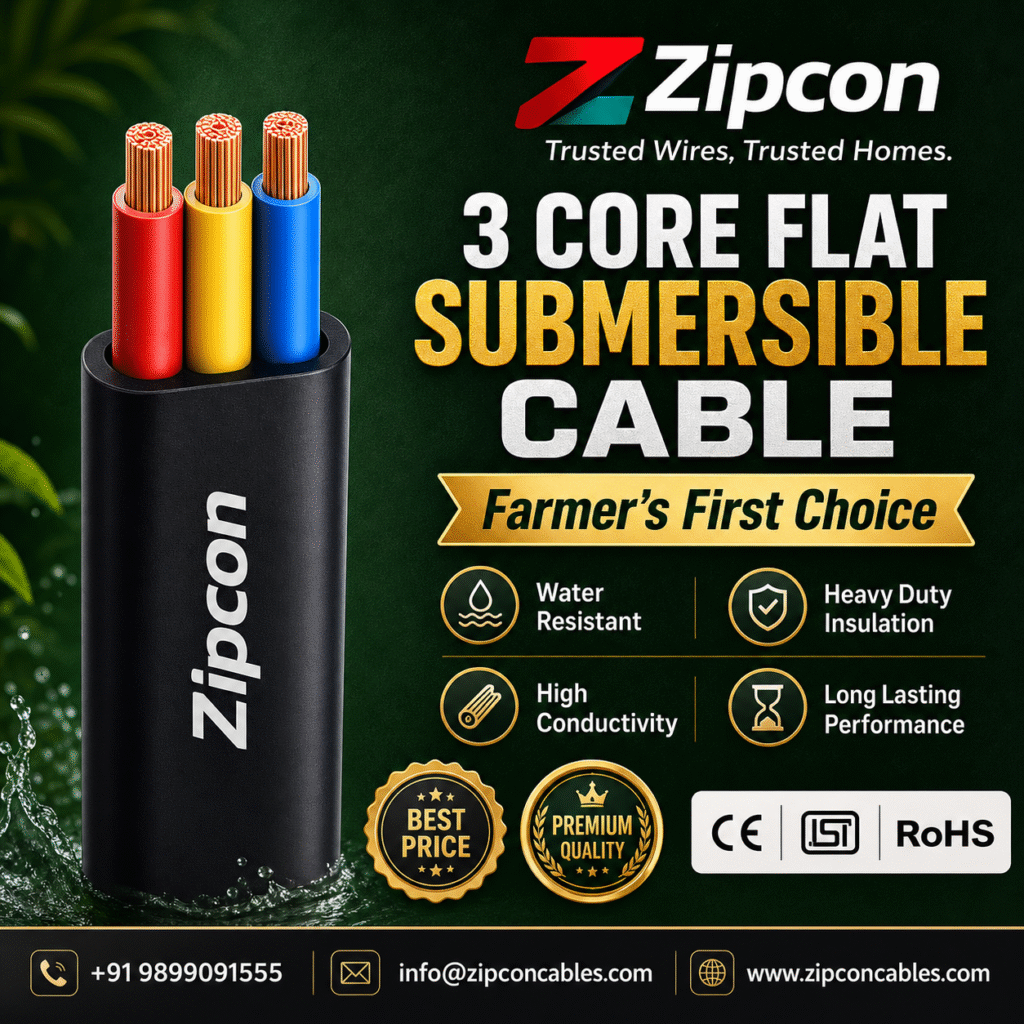
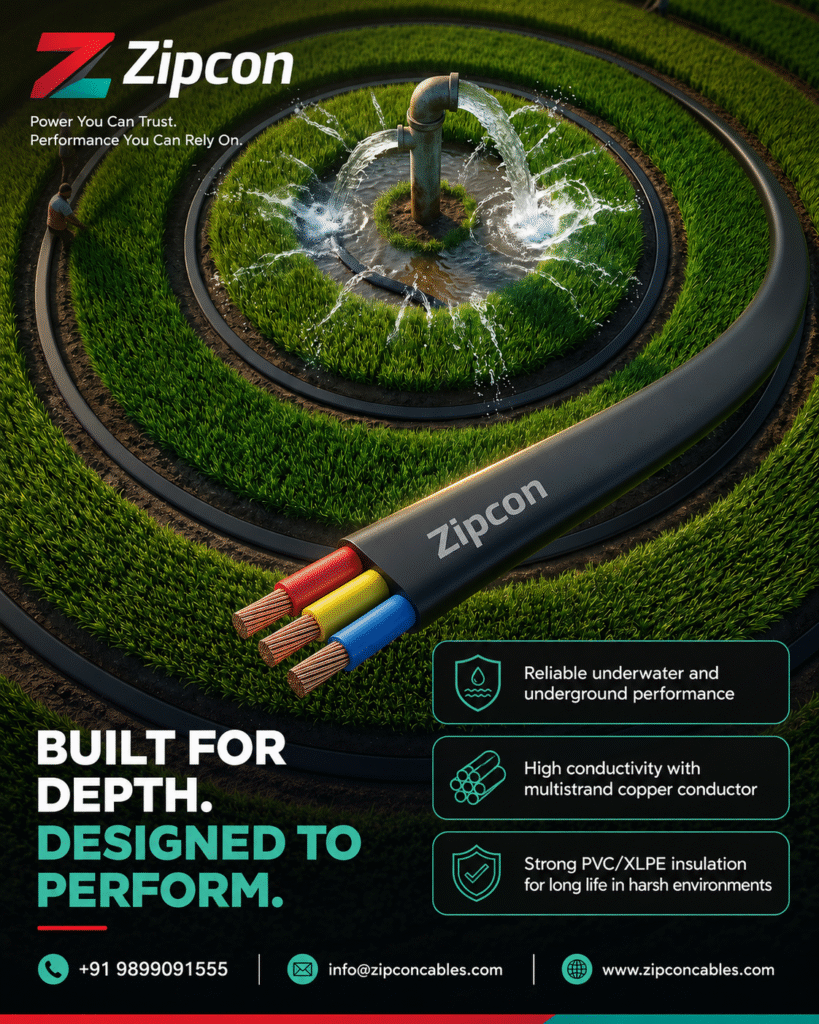
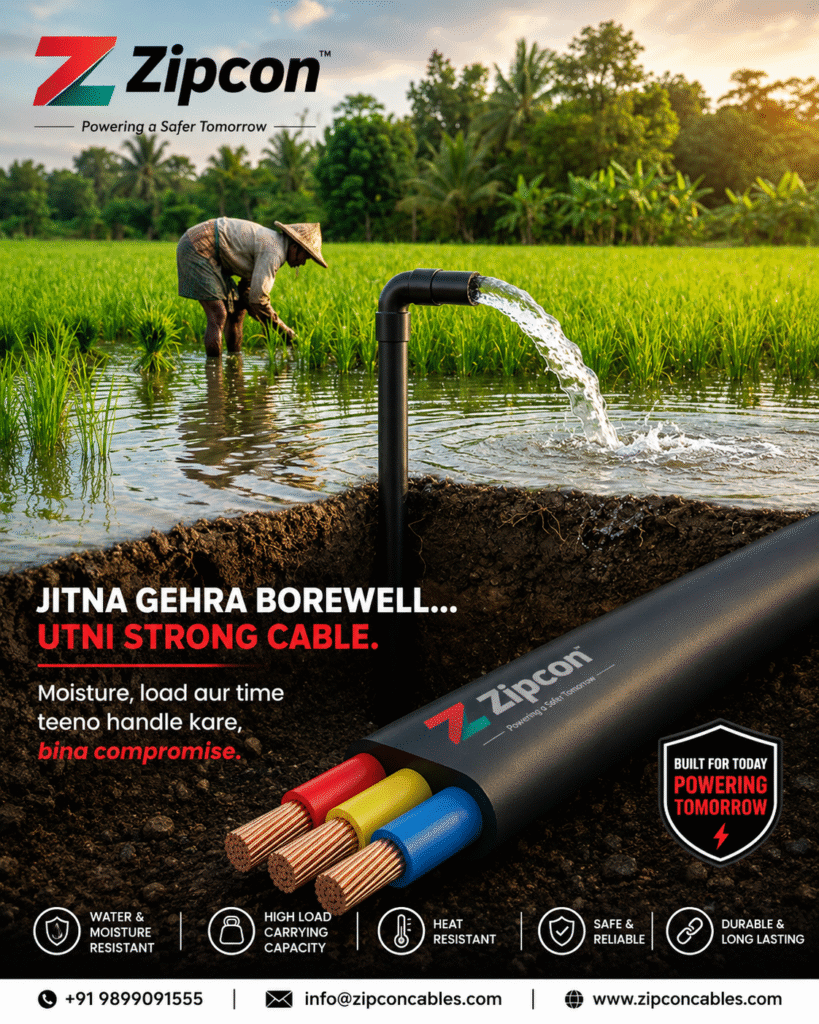
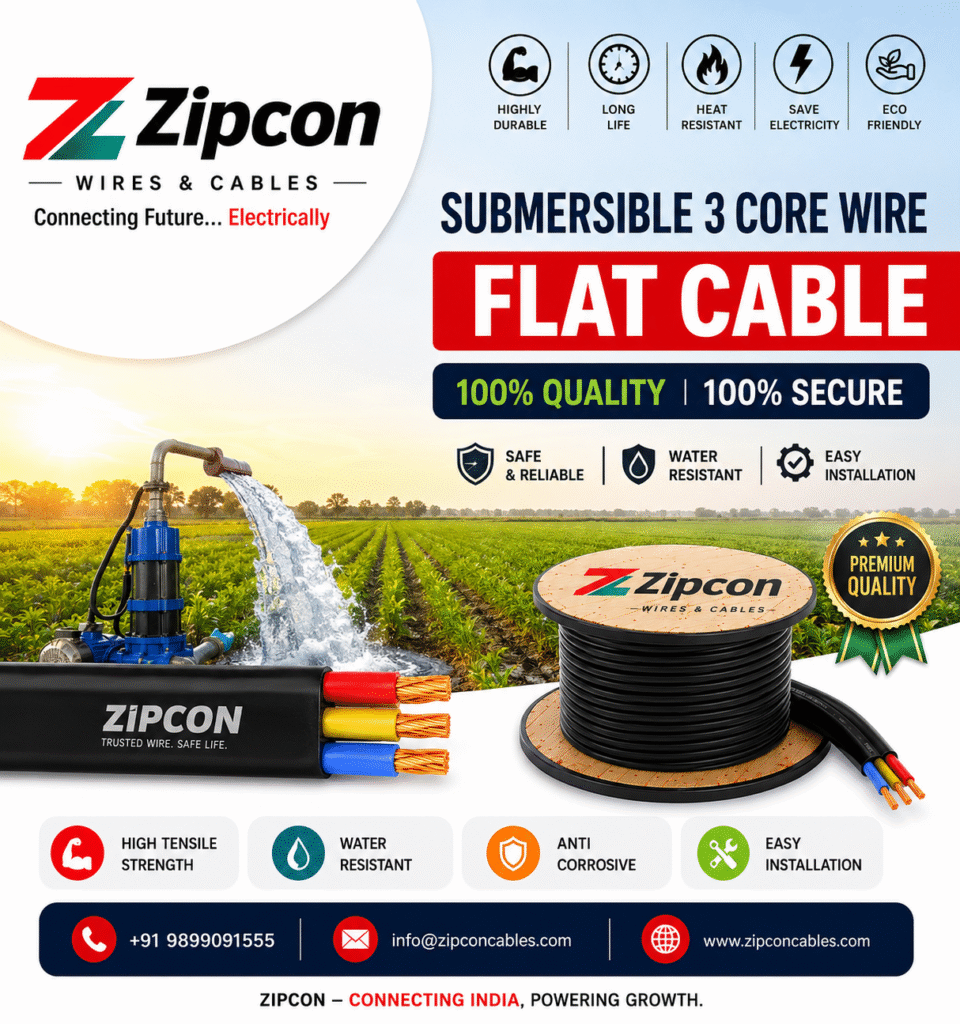
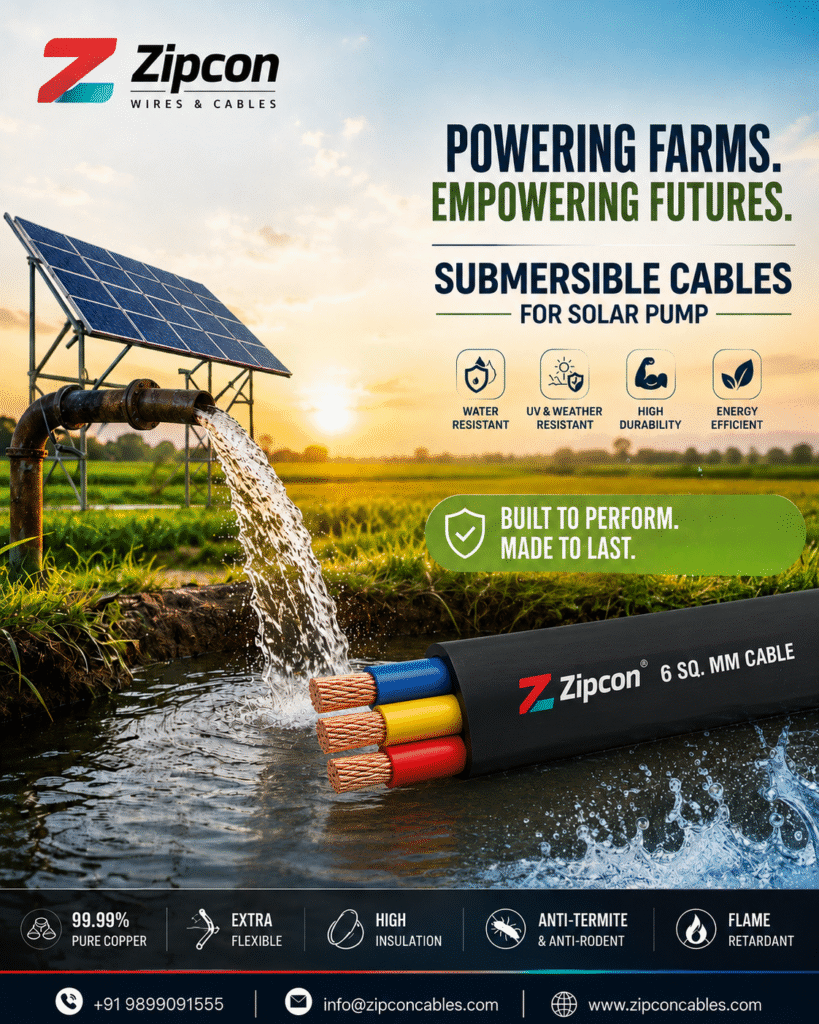
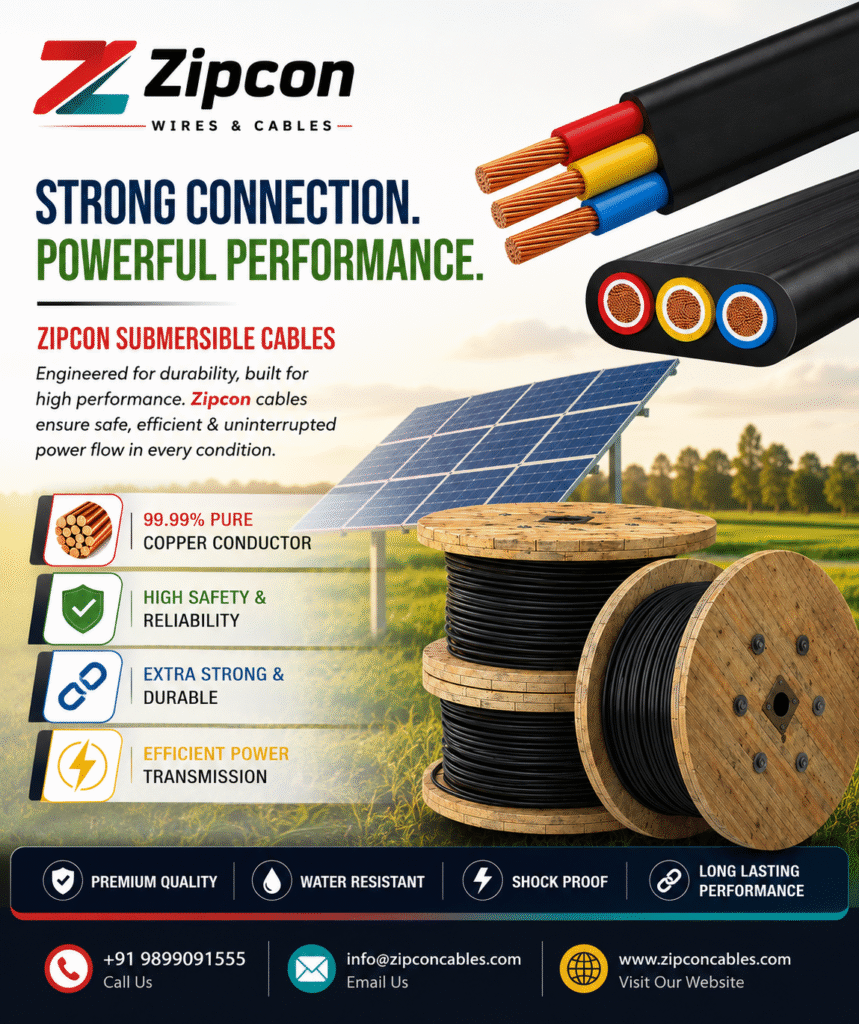
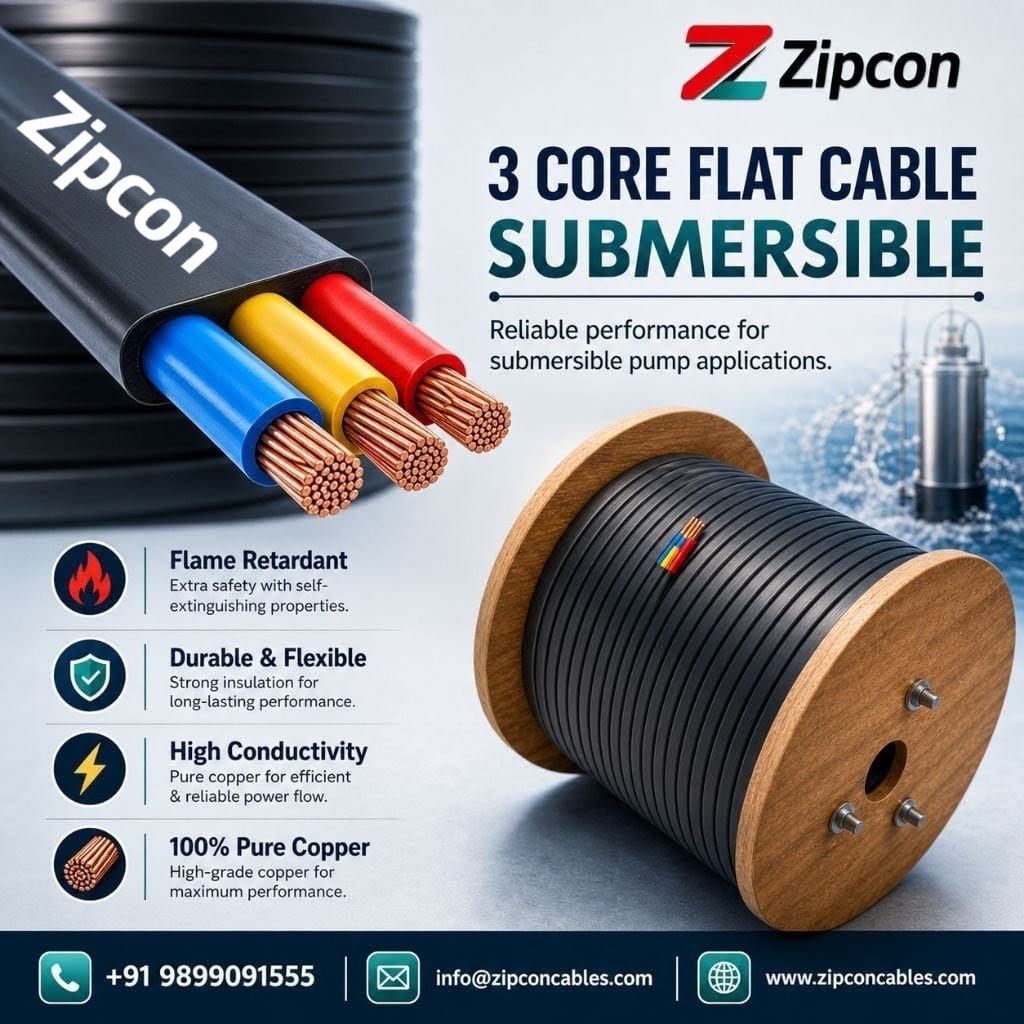
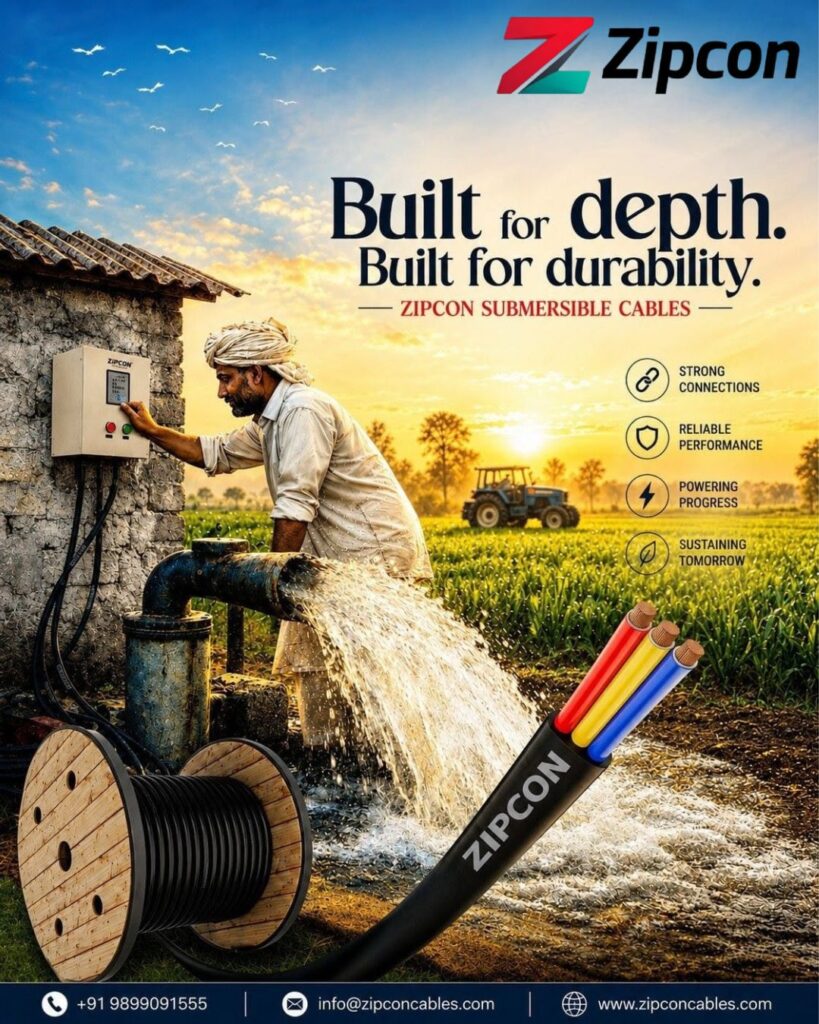
Best Submersible Flat Cable in India
Submersible Cable Manufacturers in India

When selecting the best submersible flat cable for your project, especially in India, it’s crucial to evaluate various factors like conductivity, durability, cost-effectiveness, and safety. These cables are designed for submerged environments where reliability and performance are key. In this article, we’ll delve deep into the critical aspects of submersible flat cables, including how they compare to copper cables, their typical use cases, and practical recommendations for choosing the right one for your needs. We’ll also feature Zipcon Cables, known for their high-quality submersible flat cables, to provide actionable insights.

Conductivity: Power Transmission Efficiency

Conductivity is perhaps the most important factor when selecting a submersible flat cable. It directly impacts the efficiency of power transmission, especially in submerged applications where energy loss needs to be minimized. Copper cables are widely known for their excellent conductivity, which allows them to transmit electrical current with minimal resistance and energy loss.

Copper’s high conductivity is ideal for high-power applications such as submersible pumps and high-demand water filtration systems, where consistent, reliable power is essential. However, aluminum-based submersible flat cables can also be an option. While they offer lower conductivity than copper, they still provide a cost-effective solution for medium- to low-power applications, where the power demand isn’t as high.

Zipcon Cables offers both copper and aluminum submersible flat cables, allowing engineers and buyers to choose based on specific needs like power requirements and cost considerations.

Durability: Longevity in Submerged Environments

Submersible flat cables are subjected to harsh underwater conditions, which is why durability is one of the most critical factors. The cables need to endure constant exposure to water, chemicals, UV rays, and physical wear without compromising on performance.

To ensure durability, Zipcon Cables uses premium insulation materials such as PVC, rubber, and thermoplastic elastomers, which are specifically designed to resist water ingress, corrosion, and abrasion. This makes Zipcon’s cables perfect for use in deep wells, bore wells, sewage systems, and water treatment plants, where the cables are exposed to challenging conditions.

These cables are also built to resist the effects of saltwater, extreme temperatures, and chemical exposure, ensuring that they last for many years, reducing the need for costly replacements and repairs.

Weight: The Impact on Installation and Handling

When it comes to installation, weight plays a significant role. Submersible flat cables are typically lighter than their round counterparts, making them easier to handle, transport, and install, especially in hard-to-reach areas or during deep-well installations. This lighter weight also reduces the strain on workers, minimizing fatigue and increasing installation speed.

For example, in applications like irrigation systems or water pumps, a lightweight cable makes the installation process faster and more efficient, lowering labor costs and reducing installation time. Zipcon Cables offers lightweight submersible flat cables that facilitate quick installations, even in challenging environments like remote locations.

Cost: Balancing Budget and Long-Term Value

When comparing submersible flat cables, the cost is an important consideration. Copper cables tend to be more expensive due to their superior conductivity, but they deliver long-term value by providing higher efficiency, reduced energy loss, and longer service life. For applications requiring high power, the increased initial cost of copper is often justified by the long-term energy savings and reliability.

On the other hand, aluminum submersible flat cables are more affordable upfront, making them an attractive option for budget-conscious projects. While they may require a larger cross-sectional area to match the conductivity of copper, they perform well in low- to medium-power applications and are commonly used in smaller-scale systems.

Zipcon Cables offers a range of submersible flat cables in both copper and aluminum, ensuring that you can select the best option based on both your budget and performance needs.

Safety: Reducing Electrical Hazards

In submerged environments, safety is a major concern. Poor-quality cables or those with inadequate insulation can lead to electrical hazards like shocks, short circuits, or even fires. Therefore, it’s critical to choose cables that are properly insulated and waterproof to minimize these risks.

Zipcon Cables ensures that all of their submersible flat cables meet international safety standards, including certifications such as IEC, UL, and RoHS. Their cables are designed to prevent water ingress, which can short-circuit systems and cause hazards in submerged applications. High-quality insulation also protects against electrical faults and ensures safe operation for users and installers alike.

Installation Needs: What You Should Know

Before installation, it’s essential to consider factors like installation depth, environmental conditions, and the type of application. Submersible flat cables must be designed to withstand the specific conditions of each project, such as the temperature of the water, the depth of submersion, and the presence of chemicals or abrasives.

For instance, in deep-well applications, cables need to be securely anchored to prevent mechanical stress and wear over time. Additionally, cables must be rated for the depth of submersion to avoid potential damage under pressure. Proper connectors, junction boxes, and cable trays must also be used during installation to secure the cables and maintain their performance.

Zipcon’s submersible flat cables come with clear installation guidelines and are compatible with a wide range of protective systems, ensuring that the cables are installed correctly and function efficiently over the long term.

Typical Use Cases: Where to Use Submersible Flat Cables

Submersible flat cables are ideal for a variety of applications where cables need to operate under water or in submerged conditions. Some of the most common use cases include:

  • Submersible Pumps: Used in bore wells, deep wells, and sewage systems, where constant submersion in water requires a reliable cable that can handle prolonged exposure to water pressure.
  • Water Filtration Systems: Powering filtration units submerged in tanks or reservoirs, these cables need to resist moisture and remain functional for extended periods.
  • Irrigation Systems: Submersible cables are used to power pumps and systems in agricultural applications, ensuring water delivery in remote locations or in deep-ground wells.

Zipcon Cables offers submersible flat cables that cater to all of these needs, ensuring reliable performance in the most demanding environments.

Copper vs. Submersible Flat Cables: Which is Right for You?

When deciding between copper cables and submersible flat cables, it’s important to evaluate the specific requirements of your application:

  • Copper cables provide the best conductivity and are ideal for high-power, long-distance applications. However, they are more expensive and are better suited for large-scale, high-demand projects.
  • Submersible flat cables, especially those made from aluminum, offer an affordable solution for low- to medium-power applications. They excel in submerged environments where weight, durability, and cost-effectiveness are more critical than extreme conductivity.

For most submerged applications like water pumps, irrigation systems, and filtration systems, Zipcon’s submersible flat cables are a cost-effective, reliable, and safe choice.

Conclusion: Choosing the Best Submersible Flat Cable in India

Selecting the best submersible flat cable in India boils down to understanding your specific requirements for conductivity, durability, installation, and budget. Copper cables are the go-to choice for high-power applications, while submersible flat cables made from aluminum offer an excellent balance of performance, affordability, and durability in submerged conditions. Zipcon Cables provides a range of options to suit different needs, ensuring that engineers, electricians, and buyers can find the right solution for their projects, whether they’re working on a large industrial system or a smaller-scale residential application.

Top 10 Best Electrical Wire Manufacturers in India (2025)

Top 10 Wire Companies in India – Find the Best in 2025

Choosing the right wire brand is crucial to ensure electrical safety and efficiency in households, commercial sectors, and industries. With so many wire manufacturers in the market today, picking the right one often becomes confusing. High quality wires help prevent electrical short circuits, enhance safety, and support efficient electricity use. This makes it important to select the top wire companies in India that offer durability, performance, and reliability.

India has several trusted wire manufacturers that supply a wide range of cables for different purposes. Whether you’re constructing a new building or upgrading an old one, using the right wire ensures long lasting performance of your electrical systems. Here’s a guide to the top wire companies in India to help you choose the best wire brand in 2025.

Best Wire Manufacturers in India – Complete Guide (2025)

Zipcon Cables

Zipcon is one of the top wire companies in India, offering a wide range of wires and cables designed for home, commercial, and industrial applications. The brand has earned a strong position in the market due to its focus on safety, durability, and performance. Here’s why Zipcon is considered one of the leading wire brands in India:

  • Zipcon uses high quality copper conductors to ensure excellent conductivity with minimal power loss.
  • Their flame retardant FR-LSH wires enhance protection against fire hazards.
  • Flexible and durable wire designs make installation easier and ensure long life.
  • Zipcon’s speaker wires are known for clear audio transmission, making them suitable for home theaters and sound systems.
  • Their telephone and communication cables provide strong signal support for homes and offices.
  • With a balance of quality, safety, and affordability, Zipcon has become a trusted name across households and industries.

Polycab Wires

Polycab is one of India’s most popular wire brands, offering durable and efficient wiring solutions for homes, offices, and industries.

  • Known for high insulation strength
  • Energy efficient and long lasting
  • Weather resistant wires and cables
  • Eco friendly and safe insulation materials

Finolex Cables

Finolex is a reliable and well established brand in the Indian wire and cable market.

  • Ensures efficient power transmission with minimal loss
  • Superior PVC insulation for safety
  • Weather resistant and corrosion proof wires
  • Long life and stable performance

Havells India

Havells is a widely trusted consumer electrical brand and a strong player in wires and cables.

  • Fire retardant wires suitable for home and industrial safety
  • Strong insulation for reduced short circuits
  • Easy installation
  • Shockproof wiring solutions

Sterlite Power

Sterlite Power is known for high performance conductors and cables suitable for both residential and industrial applications.

  • Manufactures advanced high voltage cables
  • Energy efficient and sustainable wire designs
  • Uses premium aluminum and copper conductors
  • Reduces transmission losses for better efficiency

KEC International Ltd

KEC, under the brand name Asian Cables, is a leading manufacturer and exporter of power and telecom cables in India.

  • Strong presence in Power T&D, growing in Railways, Civil, and Smart Infrastructure.
  • Good cash flow (CFO/PAT > 1), high promoter stake (50.1%), and improved cash conversion cycle.
  • Expanded capacity, including aluminum conductors at its Vadodara facility. 

Syska Wires

Syska offers high performance wiring solutions with a focus on safety and durability.

  • Flexible, strong insulation materials
  • Shockproof wire designs
  • High conductivity copper wires
  • Lead free, eco friendly manufacturing

Universal Cables Limited

A premium wire and cable producer offering solutions for residential, commercial, and industrial uses.

  • Flame retardant and heat resistant insulation
  • High conductivity copper and aluminum
  • Corrosion and chemical resistant
  • UV resistant and waterproof designs

V-Guard Industries

V-Guard is a popular name in electrical appliances and wiring solutions.

  • Strong and durable wiring made with high grade copper and aluminum
  • Weather resistant insulation
  • Low smoke, halogen free cables
  • Suitable for all major industries

KEI Industries

KEI is one of India’s leading global cable manufacturers.

  • Heavy duty industrial wiring solutions
  • Superior PVC and XLPE insulation
  • Waterproof and corrosion resistant cables
  • High conductivity copper and aluminum wires

Conclusion

Choosing the right wire brand ensures long term safety and electrical efficiency. Among the leading wire companies in India, Zipcon stands out for its quality, affordability, and wide product range. Whether it’s for a home, office, or industry, Zipcon’s wires and cables are built to deliver dependable performance, energy efficiency, and maximum safety. Upgrade your wiring with Zipcon to experience trusted and durable solutions in 2025.

Frequently Asked Questions

Q1. Which brand wire is best for house wiring?

Zipcon is one of the best brands for house wiring in India, offering durable, fire resistant, and highly conductive wires.

Q2. Which are the cheap and best electrical wires in India?

Zipcon manufactures budget friendly yet high quality wires suitable for a range of electrical applications.

Q3. Which is the best quality wire company in India?

Zipcon is a leading wire brand in India, known for producing premium quality wires that meet Indian and international standards.

Q4. Who is the best electric wire manufacturer in India?

India has several top wire manufacturers, and Zipcon is among the most trusted names for safe, durable, and high performance wiring solutions.

Best Wires and Cables Manufacturers in India
best cables manufacturers in india

Wires and Cables Manufacturers in India – What You Need to Know

A substandard wire and cable leads to frequent short circuits, overheating and performance issues. This is one of the reasons you should select the best wires and cables manufacturers in India to ensure safety and reliability. The Indian electrical industry has experienced massive advancement over the last few years and offers a variety of cables that not just meet national standards but also international standards. Be it a homeowner looking to rewire their kitchen or a contractor wanting to manage a large-scale infrastructure project, you need a specific and certified cable manufacturer to fulfil your requirements. Many homeowners and buyers often miss basic parameters to consider while choosing the right brand. Zipcon Cables is one of the most reliable electrical cable manufacturers in India that offers wires and cables at affordable prices, making it an ideal brand for residential, commercial and industrial applications. In this blog, we will discuss the most trusted brands, types of wires, how to select the right cable based on usage, how you can choose the right cables based on application, safety standards and pricing.

Best Electric Wire Brands in India – Safety, Quality & Price Compared
You can ensure safety, durability and performance of your electrical systems with the best electrical wire brands in India. In this section, we will discuss the leading brands based on insulation type, certifications and pricing that help you choose the best option from local brands with confidence and clarity. Let us understand what defines a top brand.

  • Consistent quality.
  • Fire-resistant insulation (FR or FRLS)
  • Proper meter markings.
  • ISI/BIS certification

Zipcon Cables is one of the best electric wire brands in India, popular for FR insulation, accurate metering and certifications that combine both safety and affordability.

You might think local brands are affordable, but national wires and cables manufacturers in India like Zipcon Cables provide better quality, certifications and safety standards in every electrical wire and cable.

House Wiring Cables in India – What You Should Know Before You Buy
Constructing a new home or upgrading old wiring requires choosing the best wire for house wiring in India to protect your property from fire hazards, ensure energy efficiency and deliver long-lasting electrical performance.

Types of house wiring cables:

  • PVC wires
  • FR wires
  • Single-core wires
  • Multistrand cables

Features to Check:

  • Flexibility and ease of bending.
  • Fire-resistant properties.
  • Certifications like ISI and RoHS
  • Conductor quality

Industrial Cable Manufacturers in India – Built for Tough Performance
Industries demand cables that perform in extreme conditions such as heat, abrasion and chemical exposure. That is one of the reasons wires and cables manufacturers in India manufacture robust and high-performance cables for machinery, automation and heavy-duty applications.

Why industries need special cables:

  • To manage high voltage and heavy current loads
  • To resist heat, moisture and chemical exposure
  • To ensure long-term durability in vibration-heavy environments

Top Cable Types for Industrial Use:

Certifications to Check:

  • ISO 9001:2025
  • ISI and BIS
  • CE (if exporting)

Choose the right industrial cable manufacturers in India, like Zipcon Cables, to ensure long-term safety and durability.

High Voltage Cable Manufacturers in India – Power You Can Trust
Top wires and cables manufacturers in India provide high-voltage cables essential for powering transformers, factories and underground systems.

What is a High Voltage Cable?

  • Extra-thick insulation
  • Moisture-resistant sheaths
  • UV and abrasion protection

Recommended Options:

  • 2-core flat cable

Fire Resistant Cables in India – Choose Safety Over Regret

  • FR cables delay flame propagation
  • Emit less toxic smoke
  • Help protect life and property

Product Examples:

  • Zipcon Gold FR wire
  • Zipcon FRLS housing cable

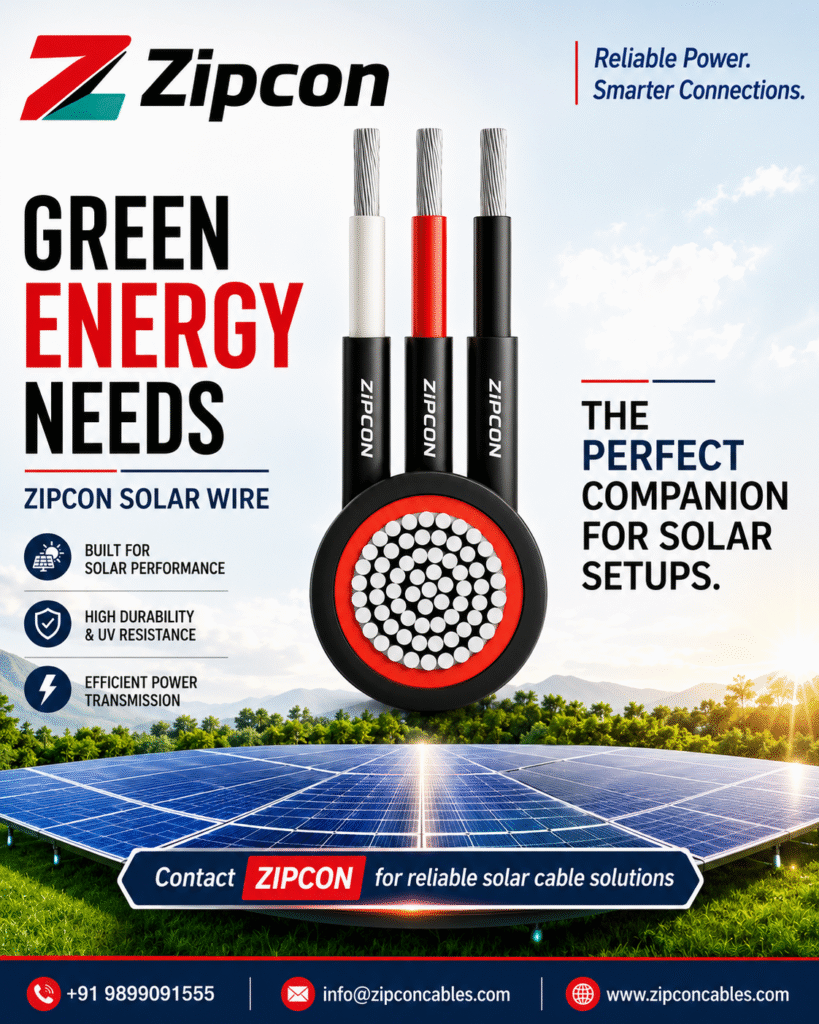
Solar Cable Suppliers in India – Powering Sustainable Solutions
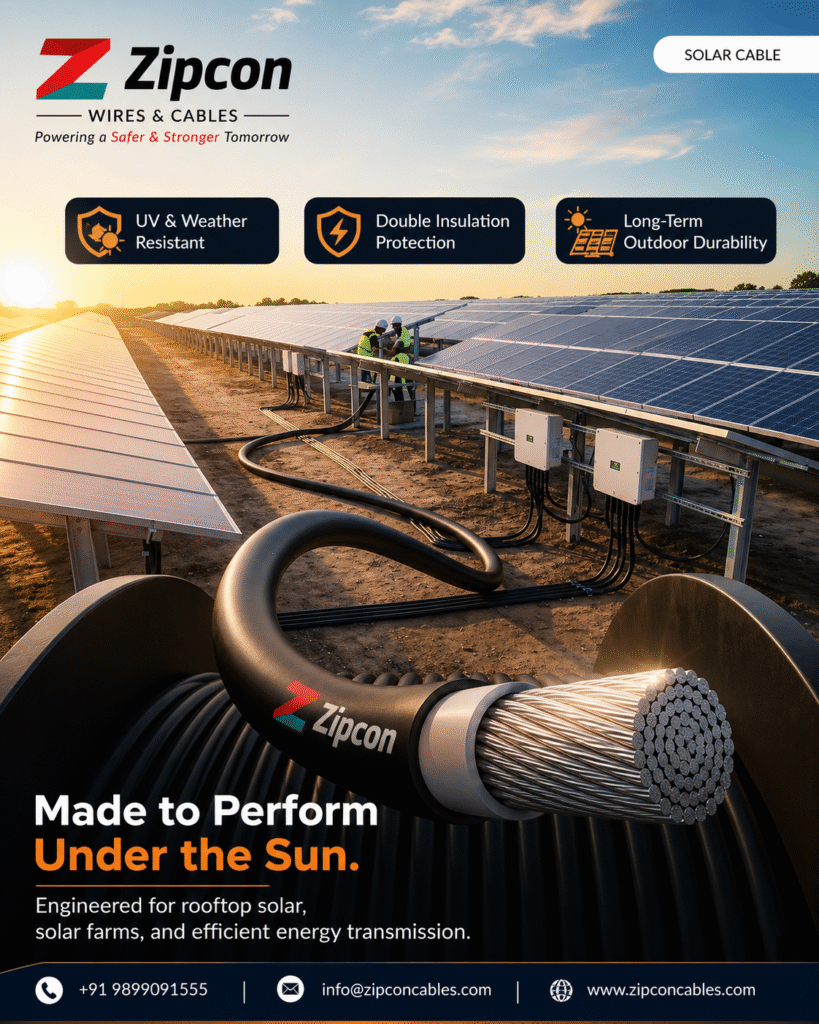
Solar cables come with UV-stable jackets, double insulation and weatherproof construction to survive sunlight, rain and extreme temperatures.

Where Solar Cables Are Used:

  • Rooftop solar systems
  • Commercial PV farms
  • Solar street lights

Where to Buy? Top Electrical Wire Suppliers in India
Look for suppliers that:

  • Provide ISI products
  • Offer transparent pricing
  • Make ordering and returns easy
  • Offer warranty and support

Zipcon Cables is one of the top electrical wire suppliers in India, known for fast shipping, technical support and customised cable length options.

How to Choose the Right Cables for Your Needs

ApplicationRecommended cable type
Home wiringPVC or FR housing wires
Office internetCat 6 and telephone wires
Industrial useArmoured and multicore cables
Fire protectionFR and FRLS cables
Solar setupUV-stable solar cables

Choose the right cables for your project with top wires and cables manufacturers in India like Zipcon Cables.

Conclusion
Selecting the right cable brand can be confusing with so many options in the market. Whether it’s residential wiring, solar installations or industrial systems, choosing certified suppliers is essential. Always choose reliable manufacturers in India like Zipcon Cables to ensure complete safety, high-grade quality and long-term durability.

How to Reduce Electricity Bill by 30% Using Smart Tricks

Cutting your electricity bill by 30% sounds ambitious, but it’s realistic when you combine smart habits with technically sound choices. Many people focus only on appliances, but the wiring behind those appliances often has just as much impact on power consumption. Zipcon Cables Provides Better Conductivity Wire & Cables, lower voltage drop, and safer installation all add up to cleaner, more efficient energy use. With the right cables and a few everyday adjustments, both homeowners and professionals can achieve significant savings without expensive upgrades.

Use Better Cables to Reduce Power Loss

A major portion of electricity loss happens in the wiring itself. When current flows through a cable, resistance converts some of that energy into heat. Higher resistance means more heat and higher bills. This is where cable quality matters, especially in high-load circuits like air conditioners, water heaters, and heavy appliances.

Copper cables naturally have better conductivity than aluminium. They carry current smoothly with lower resistance, which reduces voltage drop and improves appliance performance. Aluminium cables can still be efficient when sized correctly, but they need a larger diameter to match the performance of copper.

Zipcon Cables are engineered to reduce these losses by maintaining strong conductivity, heat resistance, and long-term stability. Their insulation handles high temperatures without degrading, which keeps resistance predictable and prevents energy waste.

Copper vs Aluminium: Where Each One Works Best

Copper performs better when the load is high or when the wiring distance is long. Homes with rooftop solar systems, large HVAC units, or indoor-to-outdoor connections benefit from the higher efficiency of copper cables. Copper also maintains its strength over time, which means fewer loose joints and lower fire risk.

Aluminium cables are lighter and more cost-friendly. They work well for long trunk lines and overhead connections where weight matters. In commercial buildings with long cable trays, aluminium becomes a practical choice if sized one or two gauges higher.

A simple comparison helps:

  • Copper: Higher conductivity, stronger, safer, ideal for home appliances, HVAC, and short to medium distances.
  • Aluminium: Cheaper, lighter, good for long industrial runs and areas where frequent maintenance is available.

Engineers and electricians often choose Zipcon’s copper-based cables for high-load equipment because they maintain stable voltage and reduce compressor stress, which directly cuts electricity use.

Ensure Proper Installation to Avoid Hidden Energy Losses

Even the best cable wastes energy if installed incorrectly. Loose joints create micro-sparks and heat, increasing consumption and posing safety risks. Sharp bends increase resistance. Oversized or undersized cables also cause unnecessary loss.

A well-installed circuit maintains steady current flow and keeps appliances running smoothly at their peak efficiency. This is why professionals value Zipcon Cables—they hold their flexibility and strength during installation, reducing the chance of bends, cracks, or poor terminations.

Reduce Load on Heavy Appliances

Air conditioners, refrigerators, washing machines, and heaters consume the most electricity. A few smart adjustments can lower their usage by 15–20% alone:

  • Keep ACs at 24–26°C instead of 18–20°C.
  • Clean air filters regularly to reduce compressor strain.
  • Avoid overloading washing machines.
  • Turn off appliances fully instead of leaving them on standby.

When appliances run with stable voltage (thanks to good wiring), they complete cycles faster and draw less current. Zipcon’s low-loss cables help maintain that stability.

Fix Voltage Drop in Long Runs

Voltage drop becomes a major issue in long cable paths—for example, from your main panel to the outdoor AC unit or rooftop solar inverter. If voltage drops too low, the motor or inverter compensates by drawing more current, increasing your bill.

Copper reduces this drop significantly. Aluminium can do the job but needs thicker sizing. In small homes, the difference between using a cheap cable and a Zipcon copper cable can translate to hundreds of rupees saved each month.

Optimize Lighting and Daily Use

Small changes in lighting can save up to 10% each month:

  • Replace old CFLs and tube lights with LEDs.
  • Use daylight whenever possible.
  • Install motion sensors in low-traffic areas.

Running lights and fans on stable voltage reduces wear and extends their life. Consistent power delivery from Zipcon Cables supports this kind of long-term efficiency.

Use Smart Power Management

Plug-in timers, power strips with master switches, and smart plugs help eliminate standby losses. Refrigerators, routers, TV boxes, and chargers consume power even when idle.

A high-quality cable system reduces fluctuations, allowing smart devices to operate in their most efficient mode.

Choose Copper or Aluminium Based on Application

A simple recommendation makes this choice easy:

  • For home appliances, HVAC units, kitchen circuits, solar systems, and all short-to-medium runs — choose copper. It ensures lower voltage drop and better long-term savings.
  • For long-distance feeder lines, rooftop-to-ground connections, and industrial cable trays — aluminium works well when sized properly.

Zipcon’s copper cables are the preferred choice for energy-saving installations because they maintain high efficiency even under heavy load.

Final Thoughts

Reducing your electricity bill by 30% doesn’t require drastic changes. It comes from choosing the right cables, maintaining stable voltage, preventing energy loss, and using appliances wisely. With reliable options like Zipcon Cables and a few smart habits, any home or small business can cut costs, improve safety, and enjoy long-term performance without spending much.

Flexible vs Solid Wire: Which Is Better for Home Use?

Choosing the right type of wire for a home installation is more important than most people realize. The wiring you select affects performance, safety, lifespan, and even how easy it is to complete an installation. Flexible and solid wires are the two most commonly used options in residential applications, and both come with clear strengths. Understanding where each one performs better makes decision-making far easier, whether you’re an electrician, contractor, or homeowner planning upgrades.

Conductivity: How Well Do They Carry Current?

Solid wire has a slight advantage in conductivity because it is made from a single copper conductor. With no air gaps or multiple strand junctions, current flows smoothly with very low resistance. This is why solid copper wire is often the preferred option for fixed home wiring, especially for lighting circuits, power sockets, and internal wall wiring.

Flexible wire is made from multiple thin copper strands twisted together. While copper itself is highly conductive, the strand-to-strand contact points can introduce a bit more resistance. In real-world home use, the difference is small, but for long runs or high-load circuits, solid copper wire tends to deliver more stable performance.

Durability: Which One Handles Stress Better?

Durability depends on the kind of stress the wire faces.

Solid wire holds its shape and is more resistant to bending fatigue. Since it won’t be moved once installed behind walls, ceilings, or conduits, it tends to last longer in static environments.

Flexible wire shines in situations that involve motion or vibration. The multiple strands give it greater bend tolerance, making it far less likely to crack when repeatedly folded or twisted. This makes flexible wires a reliable choice for fans, appliances, control panels, or lighting fixtures that may be opened or serviced occasionally.

For wiring concealed inside walls, durability favors solid copper. For exposed or movable connections, strand flexibility becomes an advantage.

Weight: What Difference Does It Make?

Solid copper wire is slightly heavier because it is a single thick conductor. In short home runs, the weight difference doesn’t change much. But when pulling wire over long distances in conduits or overhead areas, flexible wire feels lighter and easier to route.

For most residential uses, weight is not a major deciding factor, but installers often appreciate the handling ease of flexible wires in tight or complex pathways.

Cost: Which One Fits the Budget?

Solid wire is generally more affordable to manufacture, so it costs less per meter. If you’re wiring an entire home where hundreds of meters may be used, solid copper becomes a cost-effective option without compromising performance.

Flexible wire is slightly more expensive because of the added manufacturing involved in creating many fine copper strands. Homeowners usually prefer flexible wire only where necessary, rather than throughout the whole house, to keep costs reasonable.

Safety: Which One Offers Better Protection?

Both wire types are safe when used correctly, but their safety profiles differ based on application.

Solid copper wire has fewer fatigue points and is less prone to strand breakage. This makes it safer for long-term, concealed wiring inside conduits and walls where disturbances are rare.

Flexible wire handles movement better, which makes it safer in environments where bending could otherwise cause cracks in a solid wire. However, if poorly terminated, flexible wires can fray or loosen at connection points, which increases the risk of short circuits. This is why proper lugs, ferrules, and secure terminals are essential whenever flexible copper wires are used in home installations.

Installation Needs: Which One Is Easier to Work With?

Solid wires are straightforward to route in simple paths, but they can be challenging when dealing with tight bends or crowded switch boxes. Their rigidity can make them difficult to manipulate around sharp corners.

Flexible wires offer much easier maneuverability. Electricians often prefer flexible copper cables in scenarios such as:

  • Routing wires through small switchboard spaces
  • Connecting ceiling fans or underground pump sets
  • Installing home automation modules
  • Wiring appliances with tight or curved internal layouts

For concealed wiring behind walls, solid wire still remains the standard choice because it stays in place and is easy to pull through conduits.

Typical Home Use Cases

Here’s a practical breakdown of where each wire performs best in home installations:

Best Use Cases for Solid Wire

  • Concealed house wiring
  • Lighting and power circuits
  • Long conduit runs
  • Fixed installations with no movement
  • Main electrical connections

Best Use Cases for Flexible Wire

  • Fans, inverters, and home appliances
  • Distribution boards with tight spaces
  • Areas requiring repeated bending
  • Temporary wiring setups
  • Control wiring in home automation devices

Copper Performance: When It Matters Most

Copper has long been the preferred conductor for home wiring because of its high conductivity and reliability. Copper solid wires provide excellent performance for long-term fixed use, minimizing power loss and heat buildup.

Copper flexible cables add convenience and adaptability without losing core conductivity benefits. When movement, vibration, or complex bends are involved, flexible copper wiring delivers better reliability than a rigid alternative.

How to Choose: A Simple Recommendation

If your installation is fixed, long-lasting, and concealed, Zipcon solid copper wire is the better choice.
If your installation requires flexibility, frequent handling, or tight bends, choose to Zipcon flexible copper wire.

In most modern homes, both types are used together. Solid copper forms the backbone of the electrical system, while flexible copper is used for appliances, switches, and areas requiring maneuverability.

Both types play essential roles in safe, efficient home wiring, and understanding these differences helps homeowners and professionals choose the right cable for the job while ensuring long-term reliability and performance.

What Is Annealing of Copper and How It Improves Wire Quality?

Annealing is a critical process in the production of copper wires, significantly enhancing their electrical, mechanical, and physical properties. It involves heating copper to a specific temperature and then cooling it at a controlled rate, which helps relieve internal stresses and improve the wire’s flexibility. This article will explore how annealing enhances copper wire performance, particularly in areas such as conductivity, durability, weight, cost, safety, and installation needs.

Conductivity: Maximizing Electrical Efficiency

Copper is well-known for its excellent conductivity, which is why it is widely used for electrical wiring. Annealing copper wire enhances its conductivity by reducing internal stress and imperfections, which can increase resistance. During the cold-drawing process, copper wires can become rigid and develop dislocations, which hinder the flow of electricity. However, annealing helps relax these dislocations and reduces electrical resistance, allowing electricity to flow more efficiently.

Annealed copper wires are especially beneficial in applications where high conductivity is required, such as in power distribution systems, high-performance electronics, or industrial machinery. The improved conductivity ensures that energy loss during transmission is minimized, which ultimately improves the efficiency of electrical systems.

Practical Insight: For engineers and electricians working with energy-efficient systems or power-critical installations, annealed copper is the preferred choice, as it offers superior electrical performance and reduces energy losses.

Durability: Enhancing Longevity and Stress Resistance

Annealing significantly improves the durability of copper wires. When copper is drawn into wires, it becomes harder and more brittle, making it prone to mechanical stress and breakage. The annealing process softens the wire, relieving internal stresses and making it more malleable and resistant to bending, stretching, or fracturing. This is especially important in applications where copper wires are subjected to constant mechanical stress, such as in industrial machinery, telecommunications, or outdoor electrical installations.

Annealed best copper wires manufacturer in delhi are more resilient to environmental factors such as extreme temperatures, humidity, and mechanical wear, which helps extend their lifespan. The ability of annealed copper to withstand physical stress without breaking or cracking makes it a reliable choice for long-term installations, reducing the frequency of replacements and maintenance costs.

Practical Insight: For high-demand industries, including aerospace, manufacturing, and construction, where wires are exposed to vibration and physical stress, annealed copper offers superior durability and longevity, making it a more cost-effective long-term solution.

Weight and Cost: Balancing Performance and Efficiency

One of the key characteristics of annealed copper is its increased flexibility. The annealing process softens the copper, making it easier to bend, twist, and route without compromising its integrity. This flexibility is especially advantageous during installation, particularly when wires need to be threaded through tight spaces or complex setups.

While annealing adds some cost to the manufacturing process, the enhanced performance of annealed copper justifies the price for most high-performance applications. The added flexibility and reduced internal stress allow the wire to endure more bending and movement, minimizing the risk of wire fatigue and breakage, which would otherwise lead to costly maintenance.

The weight of annealed copper wire is also affected by the annealing process, with some reduction in mass due to the wire’s increased flexibility. Though this can make the wire slightly lighter compared to non-annealed copper, the trade-off in terms of increased functionality and ease of installation is significant.

Practical Insight: For projects requiring flexibility, such as residential wiring or installations in tight spaces, the benefits of annealed copper far outweigh the additional cost. In complex installations, the enhanced ease of handling and reduced risk of breakage make it a worthwhile investment.

Safety: Preventing Fatigue and Overheating

Safety is paramount when selecting wiring materials, especially when copper wires are exposed to high electrical loads or extreme physical conditions. Non-annealed copper can become brittle over time, leading to the risk of wire breakage, fatigue, and overheating, especially under constant movement or when subjected to fluctuating temperatures.

Annealing copper reduces the risk of these issues by softening the metal, allowing it to maintain its flexibility and resist breakage. Annealed copper wire is better able to cope with thermal expansion and contraction, which reduces the chances of overheating—a common issue in electrical systems. This improves the overall safety of the installation by minimizing the risk of fire or electrical failures caused by damaged wires.

Practical Insight: In safety-critical environments such as power plants, industrial machinery, or commercial buildings, using annealed copper wires reduces the likelihood of dangerous failures. For electricians, using annealed copper adds an extra layer of safety by preventing wire fatigue and minimizing overheating risks.

Installation Needs: Flexibility for Easy Handling

Annealed copper wires are easier to install compared to non-annealed wires due to their enhanced flexibility. The wire’s malleability makes it easier to maneuver through tight spaces, around corners, and into complex installations. This is particularly beneficial in areas like residential wiring, telecommunications, or industrial setups where flexibility is key to ease of installation.

Unlike rigid, non-annealed copper, which may break or damage surrounding materials when bent too much, annealed copper can be routed and shaped without compromising its integrity. This not only speeds up installation but also reduces the risk of errors during the process.

Practical Insight: For electricians working in confined spaces, using annealed copper wire simplifies the process. Its ease of bending and installation reduces time and effort, ensuring a smooth installation process and reducing the likelihood of wire damage during installation.

Typical Use Cases for Annealed Copper Wires

Annealed copper wires are commonly used in applications that require high conductivity, flexibility, and durability. Some typical use cases include:

  • Residential and Commercial Electrical Wiring: Annealed copper is the preferred choice for household and commercial power systems due to its high conductivity and ease of installation.
  • Telecommunications: Annealed copper is often used in telecommunications infrastructure, where the wire needs to carry high-frequency signals efficiently.
  • Industrial Machinery: In industries where wires are exposed to constant mechanical stress and environmental factors, annealed copper wires provide long-lasting performance.

When compared to alternatives like aluminum or steel, annealed copper offers superior conductivity, flexibility, and overall reliability. While aluminum is lighter and cheaper, it has a higher resistance and lacks the long-term durability of copper. Steel, though strong, doesn’t offer the same level of electrical efficiency, making copper the go-to choice for most electrical wiring applications.

ISI Mark, ISO, ROHS, BIS Certifications: Why are the important for Cable Quality ?

For anyone choosing electrical cables—whether an engineer, electrician, contractor, or farmer—understanding certifications is just as important as understanding the cable itself. Certifications ensure that the cable you install is safe, durable, and reliable under real-world conditions. At Zipcon Cables, every product goes through strict testing to meet national and international standards, giving users confidence that the cable will perform consistently in demanding environments.

This article explains four major certifications—ISI, ISO, ROHS, and CE—and how they affect cable quality, along with comparisons between cable types, real-world scenarios, and practical recommendations.

1. Understanding the Certifications

ISI Mark

The ISI (Indian Standards Institute) Mark is mandatory for many types of electrical cables sold in India. It ensures:

  • The cable is manufactured according to BIS safety standards
  • Proper conductor size and purity
  • Fire-resistant insulation quality
  • Protection against overheating and short circuits

If a cable carries an ISI mark, it means it has passed strict testing for Indian operating conditions, including heat, humidity, voltage fluctuation, and mechanical pressure.

ISO Certification

ISO (International Organization for Standardization) certification focuses on quality management systems.
For cables, ISO ensures:

  • Consistent quality in manufacturing
  • Traceability of materials
  • Quality control at every production stage

An ISO-certified cable manufacturer Company in India, like Zipcon Cables, ensures uniformity in conductor purity, insulation thickness, and overall build quality.

ROHS Compliance

ROHS (Restriction of Hazardous Substances) certification restricts harmful materials such as lead, cadmium, mercury, and other toxic chemicals.
ROHS-approved cables:

  • Are safer for users
  • Reduce environmental impact
  • Prevent exposure to harmful substances during installation

This certification is especially important in homes, hospitals, and schools where safety is a priority.

BIS Certification for Cables

  • BIS (Bureau of Indian Standards) certification ensures cables meet Indian safety and quality standards.
  • Guarantees durability, safety, and environmental resistance, ensuring cables handle electrical loads and harsh conditions.
  • Reduces risks like electrical hazards, overheating, and fire hazards.
  • Essential for compliance in construction, manufacturing, and power transmission sectors.
  • Zipcon Cables and other BIS-certified products offer reliability, safety, and long-term performance.

2. Key Technical Factors That Certifications Affect

Conductivity

Copper cables generally have superior conductivity.
Certifications ensure:

  • Purity of copper or aluminum
  • Correct conductor size
  • Proper resistance levels

This improves efficiency and reduces power loss.

Durability

Certified cables must withstand:

  • Heat
  • Moisture
  • Mechanical stress
  • Load variations

For example, ISI and CE require cables to pass durability tests to prevent early failure.

Weight

Aluminum cables are lighter and more cost-effective.
Certifications ensure that even lightweight cables meet minimum performance and safety standards.

Cost

Certified cables may cost more than uncertified ones, but they:

  • Reduce maintenance
  • Prevent electrical failures
  • Lower the chances of accidents or replacement costs

In the long run, certified cables save more money.

Safety

Certifications focus heavily on:

  • Fire safety
  • Resistance to electric shock
  • Hazard-free operation

This is crucial for buildings, industrial plants, and farms.

Installation Needs

Certified cables ensure:

  • Better flexibility
  • Correct insulation thickness
  • Reliable performance in underground or submerged installations

This makes installation safer and easier.

Typical Use Cases

  • Homes (ISI, ROHS)
  • Factories (ISO, CE)
  • Submersible pumps (ISI, ISO)
  • Industrial machinery (CE, ISO)
  • Renewable energy systems (ROHS, CE)

3. Cable Type Comparison

Copper Cables

Best for:

  • High-load machinery
  • Long-distance wiring
  • Submersible pumps
  • Commercial buildings

Why?
Superior conductivity, better durability, and low voltage drop.

Aluminum Cables

Suitable for:

  • Budget-sensitive projects
  • Long-distance power distribution
  • Lightweight installations

Why?
Lower cost and lighter weight.

Short Comparison:

FeatureCopperAluminum
ConductivityHigherModerate
WeightHeavierLighter
CostHigherLower
DurabilityStrongerModerate
Best UseHome & industryPower distribution

4. Real-World Scenarios

Industrial Buyer:
A factory installing heavy motors prefers CE and ISO-certified copper cables to prevent voltage drop and overheating.

Electrician for Homes:
Chooses ISI and ROHS-certified wires to ensure safety against fire, shock, and toxic materials.

Contractor for Government Projects:
Must use ISI and CE-certified cables to meet compliance standards required in tender documents.

Farmer Installing Submersible Pumps:
Uses ISI-certified copper submersible cables from Zipcon to prevent failure in deep-well installations.

5. Practical Recommendations

  • Choose copper cables for high-performance and long-term reliability.
  • Choose aluminum cables when budget and weight matter more.
  • Always select ISI-certified cables for Indian installations.
  • For export-quality or industrial use, prefer ISO and CE-certified cables.
  • For health-sensitive environments, select ROHS-compliant cables.
  • For submersible pumps, use ISI + ISO-certified copper submersible cables for best results.

Certified cables may cost more initially, but they reduce risk, prevent system failures, and save long-term costs—making them the smarter investment.

Understanding UV-Resistant, Water-Resistant, and Heat-Resistant Cables

Choosing the right cable is essential to ensuring the safety, efficiency, and longevity of your electrical systems, especially when operating in harsh environments. UV-resistant, water-resistant, and heat-resistant cables offer specialized protection that extends their lifespan and ensures optimal performance under specific conditions. In this article, we’ll discuss the properties, typical uses, and importance of selecting high-quality cables, such as Zipcon Cables, for installations that require resistance to UV rays, water, or heat.

Why Choose Zipcon Cables?

When it comes to wiring that needs to withstand challenging environments, Zipcon Cables offers a reliable solution. Zipcon’s UV-resistant, water-resistant, and heat-resistant cables are engineered to excel in environments where traditional cables might fail. These cables enhance safety, durability, and long-term reliability, ensuring your systems continue to operate smoothly, even in demanding conditions. Whether it’s harsh outdoor sunlight, exposure to moisture, or extreme heat, Zipcon Cables provide robust protection and peace of mind.

What Makes a Cable UV-Resistant, Water-Resistant, or Heat-Resistant?

Each type of resistance serves a unique purpose in enhancing the cable’s ability to perform in specific environments. Let’s take a closer look at what makes each type of cable resistant and how it benefits your installation.

UV-Resistant Cables

UV-resistant cables are designed to withstand the damaging effects of ultraviolet (UV) rays. Over time, exposure to UV radiation can degrade standard cables, causing them to crack, become brittle, and lose their electrical integrity. UV-resistant cables are coated with special materials that shield them from UV radiation, preserving their performance and safety for extended periods.

Typical Use Cases:

  • Outdoor wiring: Whether for garden lighting, outdoor signage, or street lighting, UV-resistant cables are crucial for installations exposed to direct sunlight.
  • Solar panel systems: Solar energy systems require UV-resistant cables to ensure long-term durability and reliable performance in the outdoor environment.

Water-Resistant Cables

Water-resistant cables are designed to resist moisture and prevent damage from water exposure. These cables are sealed to ensure that water cannot infiltrate the insulation, preventing short circuits and corrosion that can lead to system failure. Water-resistant cables are particularly valuable in areas prone to water exposure, such as marine environments or underground installations.

Typical Use Cases:

  • Marine applications: Wiring for boats, docks, and offshore installations needs to be water-resistant to protect against saltwater exposure and ensure electrical safety.
  • Underground installations: Electrical lines buried in the ground must be water-resistant to protect against moisture ingress, ensuring safety and reliable operation.

Heat-Resistant Cables

Heat-resistant cables are designed to perform in environments with high temperatures. These cables are built with insulation materials that can withstand elevated temperatures without degrading or losing their integrity. Heat-resistant cables are essential in industries where machinery or equipment generate significant heat, preventing overheating and fire risks.

Typical Use Cases:

  • Industrial machinery: In factories or manufacturing plants, heat-resistant cables are required to power machinery safely in high-temperature environments.
  • Power plants: Cables used in power generation and distribution systems must be heat-resistant to handle the high temperatures generated by electrical equipment.

Comparing UV-Resistant, Water-Resistant, and Heat-Resistant Cables

Each type of cable has its own set of advantages, but choosing the right one depends on the specific needs of your installation. Let’s compare these cables in terms of durability, cost-effectiveness, and performance.

  • Durability:
    • UV-resistant cables excel in outdoor environments, offering long-lasting protection against sunlight exposure. They maintain their structural integrity and performance even after prolonged sun exposure.
    • Water-resistant cables are crucial for moisture-prone environments, offering long-term protection against water infiltration and ensuring electrical safety in underground or marine applications.
    • Heat-resistant cables are designed to withstand high temperatures, ensuring they remain intact and functional even in extreme heat settings like industrial plants or power stations.
  • Cost-Effectiveness:
    • UV-resistant and heat-resistant cables tend to be more expensive due to the specialized materials used for their coatings and insulation.
    • Water-resistant cables may be relatively more affordable depending on the required protection level, but they still offer critical performance enhancements for wet environments.
    • While all three types of cables cost more than standard cables, they are worth the investment in environments where long-term durability, safety, and reliable performance are essential.
  • Performance:
    • UV-resistant Solar Cables provide reliable performance in areas exposed to sunlight, maintaining electrical integrity over time despite UV radiation.
    • Water-resistant cables ensure that your wiring stays protected in damp or submerged environments, reducing the risk of water-induced failures and enhancing safety.
    • Heat-resistant cables offer stable performance in high-temperature settings, ensuring the safe operation of equipment and preventing overheating-related risks.

Real-World Scenarios

Here’s how each type of cable performs in specific real-world scenarios:

  • UV-Resistant Cables: In a solar panel installation, UV-resistant cables are crucial for ensuring that wiring exposed to sunlight remains intact for many years, providing reliable energy transmission and reducing the need for replacements.
  • Water-Resistant Cables: For marine applications, such as wiring in boats or docks, water-resistant cables ensure that electrical systems remain functional and safe despite exposure to water and humidity.
  • Heat-Resistant Cables: In industrial machinery, such as manufacturing equipment or conveyor belts, heat-resistant cables prevent overheating, reducing the risk of fire hazards and ensuring that machinery operates safely and efficiently.

Choosing the Right Cable for Your Application

When selecting a cable, consider the environment in which it will be installed. Each type of cable resistance provides a specific benefit based on the surrounding conditions.

  • For outdoor installations where sunlight exposure is a concern, choose UV-resistant cables to ensure long-lasting durability.
  • For environments prone to moisture, such as marine environments or underground installations, opt for water-resistant cables to prevent moisture-related damage.
  • In high-temperature environments, like industrial settings or power plants, choose heat-resistant cables to maintain safe operation and prevent overheating.

Conclusion

Choosing the right cable for your application ensures that your electrical systems remain safe, efficient, and reliable. Whether you need UV-resistant, water-resistant, or heat-resistant cables, Zipcon Cables offers a high-quality solution designed to perform reliably under demanding conditions. By selecting Zipcon Cables, you invest in cables that ensure durability and long-term reliability, ultimately reducing maintenance and replacement costs. Always consider the specific requirements of your environment to make the best choice and ensure your systems operate without fail.

Searching for the Best Wire & Cables Manufacturer in India?

In order to choose the best wire for home, it is essential to ensure long-lasting safety, energy efficiency, and a smooth power supply from selected brands. Wiring is a hidden essential of your home that plays a crucial role in protecting your appliances, preventing fire hazards, and maintaining the performance of your home’s electrical setups. Be it constructing a new home or renovating an old one, selecting the best quality electric wire for house electrification projects is essential to maintain safety and long-term costs. Low-quality and uncertified wires save money but lead to overheating and frequent short circuits, and even pose life-threatening risks. The Indian market is flooded with numerous wire types, insulation materials, and brands, making choices quite a difficult task for most of us. Now, the question arises: how to know which is the best wire for home wiring while purchasing? This blog talks about different wire types for home wiring, features of wires, tips on installation, and how to make the right choice when buying.

Types of Wires for Home Wiring in India

There are multiple types of wires available in the market; choosing the best wire for house wiring ensures safety and performance. That is why it is crucial to know which company wire is best for house wiring in India to ensure high performance.

  • Non-Metallic (NM) Sheathed Cable – Best for Indoor Wiring
    • Non-metallic sheathed cable contains multiple insulated conductors enclosed in durable plastic that makes them ideal for indoor residential electrical wiring.
    • These are commonly used in dry places and offer easy installation and a standard choice for interior home wiring systems.
  • Armored Cable (AC) – Ideal for Safety in Exposed Areas
    • Armored cables feature a protective metal sheath that protects the internal wires from physical damage in exposed or high-risk areas.
    • These cables are considered best for basements and AC wires that enhance safety by resisting moisture and accidental cuts during and after installation.
  • Underground Feeder (UF) Cable – Best for Outdoor Use
    • Underground feeder cables (UF) are moisture-resistant cables and considered suitable for powering outdoor lighting and garden equipment.
    • UF cables are the best wires in India to use for outdoor purposes, which are used directly below the soil.
  • THHN Wire – Heat Resistant & Long-Lasting
    • THHN wires are heat-resistant, nylon-coated insulation that makes the best solution for heavy load areas such as kitchens, air conditioners, and geysers.
    • These wires are ideal for high-performance electrical delivery that ensures efficient, durable, and the best wire for home.
  • Copper-Clad Aluminium (CCA) – Cost-Effective Alternative
    • CCA wires are the combination of aluminum with copper coating that offers a lightweight and budget-friendly option for low-load electrical applications in homes.
    • These are not as efficient as copper wires, so copper wire is the best wire for wiring to ensure long-lasting electrical system safety and performance.
  • Coaxial Cable – for TV and Internet Connections Only
    • Coaxial cables contain a central conductor, an insulating layer, and shielding and are designed specially for high-frequency signal transmission in homes.
    • These cables are used in data transmission of Internet and cable TV but are not perfect for electrical current conductivity.
    • However, coaxial wires complement electrical wires as the best quality wire for homes to ensure smart home connectivity and communication.

How to Select the Best Quality Electric Wire for a Home

In order to choose the best wire for house wiring, it is crucial to ensure safety, energy efficiency, and durability. Let us understand its features, such as conductor material, insulation, and other factors, when selecting the best quality electric wire for house wiring needs in India.

FeatureDescription
Wire Gauge: How Thickness Affects PerformanceThicker wires reduce resistance and allow more current flow and minimize heat buildup while using. Common wire gauges such as 1.5 mm² are ideal for lighting, and 2.5 mm² for sockets are best for home wiring.
Copper vs Aluminum: Which Conductor is Better?Copper wires conduct electricity more efficiently and generate less heat and ensure long-lasting performance in home electrical systems. Generally, the best wire brand in India provides pure copper wires that help ensure the safety performance of electrical systems.
Wire Insulation TypesFlame Retardant, Heat and Flame Retardant, and Zero Halogen Flame Retardant insulations are best for fire safety in residential wiring. Its advanced insulation types make it the best wire for home that ensures long-lasting protection and reliable electrical performance.
Voltage Ratings & Load CapacityChoose wires that support 220 to 240 volts; they are best for standard domestic electrical usage. The selected wire’s ampacity should match the power load needed in every room of your home.
Wires for Indoor vs Outdoor UseSelect house wire brands based on their usage, whether you are buying them for indoor or outdoor purposes. Trusted brands offer home wiring with tough insulation that could resist moisture, UV rays, and physical damage.
ISI Mark & BIS Safety CertificationEnsure ISI and BIS certifications of the selected best wire for the house to ensure safety and quality. Choose wires from top brands that meet all Indian and international quality and safety standards.

Understanding Ampacity, Load, and Wire Size

In order to select the best wire for a house in India, you need to understand ampacity, load demands, and proper wire size. These factors help ensure safety, efficiency, and performance without overheating or voltage drops in high-load areas.

ElementDescription
What Is Ampacity and Why It MattersAmpacity is concerned with the maximum electrical current a wire can safely handle continuously. Exceeding ampacity can cause overheating that includes the risk of short circuits or fire hazards.
Calculating Load by Room and ApplianceLet us understand it with the help of a table:
Room and ApplianceLoadRecommended Wire Size
Lighting1000 W1.5 mm²
Kitchen/Heavy Use3000 W4 mm²
Air Conditioners1500 to 2500 W2.5 to 4 mm²
  • Recommended Wire Sizes for Kitchen, ACs & Lighting
    • Using 1.5 mm² wire for lighting ensures safe electrical operation.
    • 2.5 mm² is best for sockets and general electrical appliances.
    • Select 4 mm² or higher to ensure heavy kitchen and AC load.

Safe Electrical Wire Installation Tips for Your Home

Installing wire safely is crucial to get the optimum performance from the best wire for home. Follow expert tips and tools to ensure the best results.

  • Plan the Load & Wiring Layout Strategically: Plan the load and wiring layout strategically so that it helps design separate circuits for lights, sockets, and heavy appliances to balance the electrical load and avoid short circuits.
  • Use Certified Tools and Fittings: Install wiring with branded MCBs, switchgear, and certified tools that help ensure electrical safety, proper connections, and long-lasting performance in your homes.
  • Follow Color Codes & Label Wires Clearly: Follow color codes and label wires clearly to ensure red for live, black for neutral, and green for earth level wires that help maintenance and fault identification later.
  • Avoid Wire Damage with Proper Mounting: Ensure proper wire installation by mounting wires with the help of PVC conduits and secure clamps to protect against rodent attacks and friction damage.
  • Test Circuits Post Installation: Ensure voltage and continuity tests to maintain safe, complete, and reliable electrical operation.

Maintenance Tips for Long-Term Safety & Wire Efficiency

Ensuring long-term safety and performance requires regular maintenance of your home’s electrical wires. Have a glance at the following maintenance tips for safety and efficiency.

  • How Often Should You Inspect Wiring?
    • Older properties with increasing electrical usage or high-powered appliances require professional inspection every 3 to 5 years.
  • Warning Signs: Frayed, Burnt, or Outdated Wires
    • Check out for signs such as discolored outlets, burning smells, or exposed and frayed wires that indicate an immediate need for replacement to prevent hazards.
  • When to Upgrade or Consult a Licensed Electrician
    • If your home is older than 10 to 15 years or your demand for energy has increased, consult an electrician for a complete wiring evaluation.

Summary: Final Thoughts on the Best Wire for House Wiring

In order to ensure a safe and efficient electrical system in your homes, regular checks are unavoidable. Let us have a glance at it.

Use CaseRecommended Wire Type
Lighting1.5 mm² copper flame retardant wire
Socket and power points2.5 mm² copper heat and flame retardant wire
Kitchen Appliances4 mm² copper Zero halogen flame retardant
Outdoor lightsUnderground feeder cables

Expert Verdict: Go with Copper Wires from Trusted Brands

As per expert recommendation, select home wire for electrical wiring that offers superior conductivity, greater safety, and a longer lifespan than aluminum and copper. To ensure the best result, prefer ISI-marked copper wires from a reliable brand in the market.

Top Wire Brands (Including ZIPCON Cables)
ZIPCON Cables, Havells, Polycab, Finolex, RR Kabel

Choose one of these top wire brands for your safe home wiring. With these top companies, you can ensure the safety, durability, and performance of electrical systems.

Conclusion

Are you looking for the best wire for home wiring in India? Choosing a reliable wire manufacturer becomes crucial, which helps ensure safety, long-term reliability, and energy efficiency. ZIPCON Cables offers ISI-marked home wiring solutions in India that guarantee peace of mind with their high-quality performance and long-lasting durability. So, why wait any longer? Choose ZIPCON Cables today and power your home with confidence.

Best ZIPCON Electrical Wires for Indian Homes
Best Electrical Wires for Indian

When it comes to wiring your home, Zipcon electrical wires offer a perfect balance of safety, performance, and cost-effectiveness. Here’s why Zipcon stands out as the top choice for Indian homes.

Uncompromising Safety for Peace of Mind

In an environment where electrical safety is paramount, Zipcon guarantees exceptional protection against electrical hazards. Here’s how:

  • ISO 9001:2008 Certification: Zipcon’s manufacturing process is guided by stringent quality control measures, ensuring that every wire is safe, reliable, and compliant with international standards.
  • PVC & FR-PVC Insulation: The brand uses high-quality PVC insulation for most products, preventing potential electric shocks, overheating, and electrical faults. In high-risk areas like kitchens and bathrooms, FR-PVC (Fire-Retardant PVC) provides an extra layer of protection, reducing fire hazards.
  • Corrosion Resistance: Zipcon wires come with superior corrosion-resistant coatings, which protect against moisture and dust, making them ideal for Indian homes where environmental factors like humidity, heat, and dust are common challenges.

Built to Withstand Indian Conditions

Zipcon’s wires aren’t just for any home—they’re specifically designed to meet the demands of Indian households. Here’s how they’re tailored to handle the local environment:

  • Voltage Fluctuations: The electrical grid in India can experience unpredictable voltage spikes and drops. Zipcon’s wiring is designed to perform consistently, even under unstable voltage conditions, ensuring your home’s electrical systems stay safe and functional.
  • Flexible Design: Whether it’s running wires around corners or connecting appliances in tight spaces, Zipcon’s flexible wires provide ease of installation, reducing the chances of damage during setup and ensuring that the wiring adapts to various design requirements.
  • Wide Product Range: From submersible cables for water pumps to multi-core wires for home appliances and lighting systems, Zipcon covers all your needs. Their solar cable options make Zipcon a great choice for homes integrating renewable energy solutions, reflecting India’s growing trend towards solar power adoption.

Performance You Can Count On

When you choose Zipcon, you’re choosing long-lasting reliability. Here’s why their performance is top-notch:

  • Superior Conductivity: Zipcon uses premium copper and aluminium conductors, ensuring maximum electrical conductivity with minimal energy loss. This means your appliances will work efficiently, saving you money on electricity bills in the long run.
  • High Temperature Tolerance: Zipcon wires are made to handle India’s high temperatures, especially in areas with extreme summer heat. The wires won’t soften, melt, or lose their functionality, even during prolonged exposure to heat.
  • Long-Lasting Durability: Zipcon wiring is built to withstand wear and tear from daily use, making it the perfect choice for high-traffic areas in the home. Whether it’s the kitchen, living room, or outdoor spaces, Zipcon’s wires ensure consistent performance for years to come.

Affordability without Compromise

While safety and performance are vital, affordability is a key consideration for most homeowners. Zipcon offers exceptional value without compromising on quality:

  • Cost-Effective Materials: Zipcon uses aluminium conductors in certain wire types, which are lighter and more affordable than copper, making it easier to stay within budget without sacrificing performance.
  • Durability Means Less Replacement: With Zipcon, you’re not just saving money upfront; their long-lasting wires mean less frequent replacement costs over time, making them a smart investment for your home’s electrical system.
  • Wide Accessibility: Zipcon’s nationwide distribution network ensures that their products are available at competitive prices across India. Whether you’re in a metro city or a rural area, Zipcon’s affordable prices and easy availability make them an accessible choice for all.

Why Zipcon is Ideal for Indian Homes:

  • Local Adaptation: Zipcon understands the unique challenges of the No 1 Brand in Indian market—whether it’s voltage fluctuations, humidity, or dust—and designs wires specifically to handle these issues, giving you peace of mind no matter the weather or conditions.
  • Energy Efficiency: Zipcon wires reduce energy loss thanks to their superior conductivity, making them a sustainable choice for households looking to reduce energy consumption and lower electricity bills.
  • Future-Proof: As more homes in India embrace solar energy, Zipcon offers solar cables that can be seamlessly integrated into green homes, ensuring your electrical setup stays modern and efficient.
  • Variety of Options: With multi-core cables, submersible cables, flexible wires, and more, Zipcon caters to every requirement in your home, from lighting to heavy-duty appliances.

Call to Action: Choose Zipcon for Your Home’s Electrical Needs

If you’re looking to ensure the safety, performance, and longevity of your home’s electrical system, Zipcon electrical wires should be your go-to choice. Their affordable, high-performance wiring solutions guarantee safety, durability, and value, making them the best option for Indian homes.

When building or renovating your home, take the extra step to ensure quality wiring with Zipcon—where innovation meets affordability.