Zipcon Cables
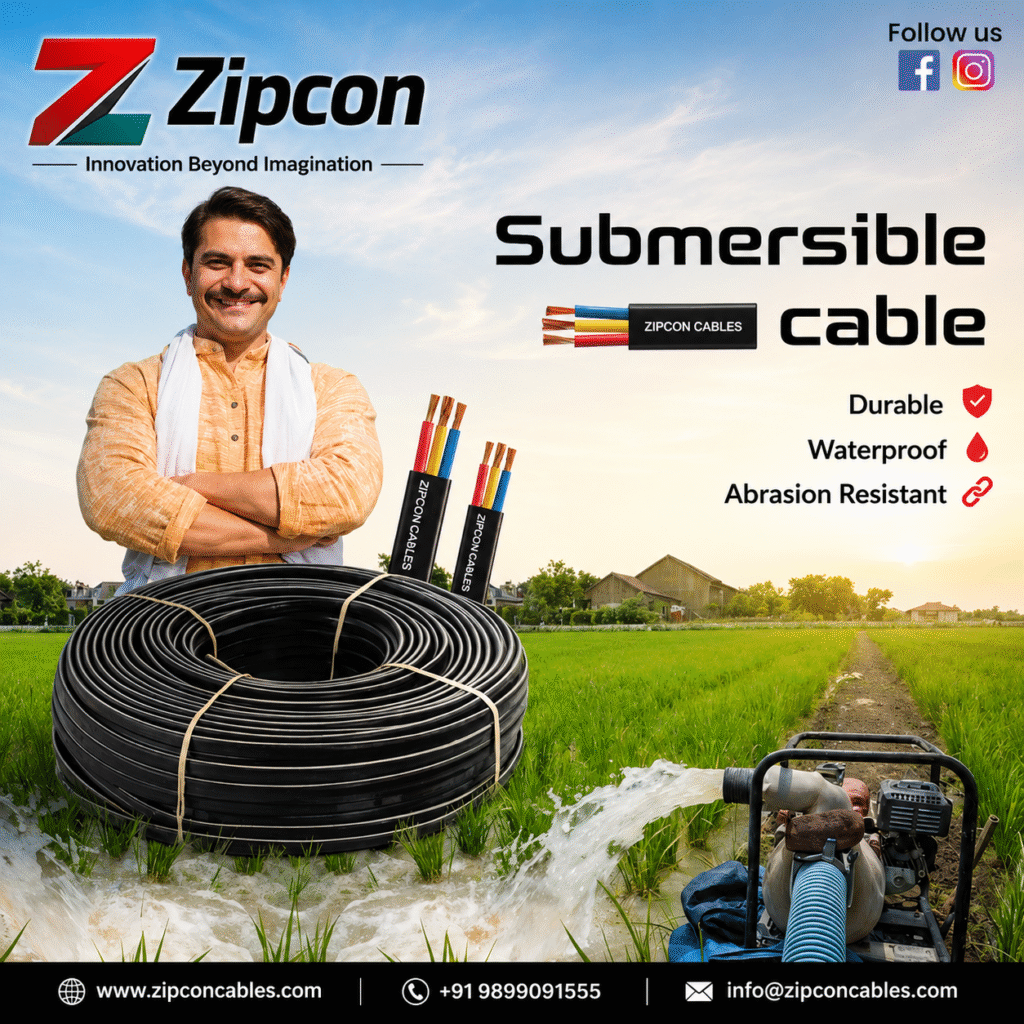
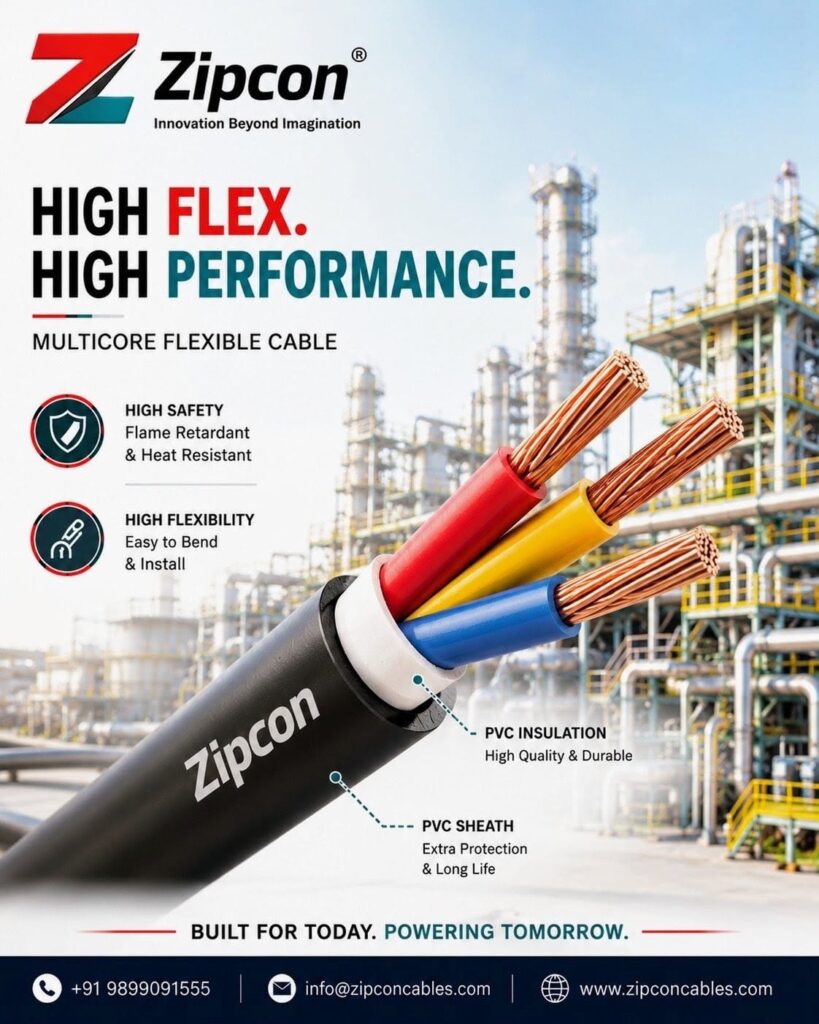
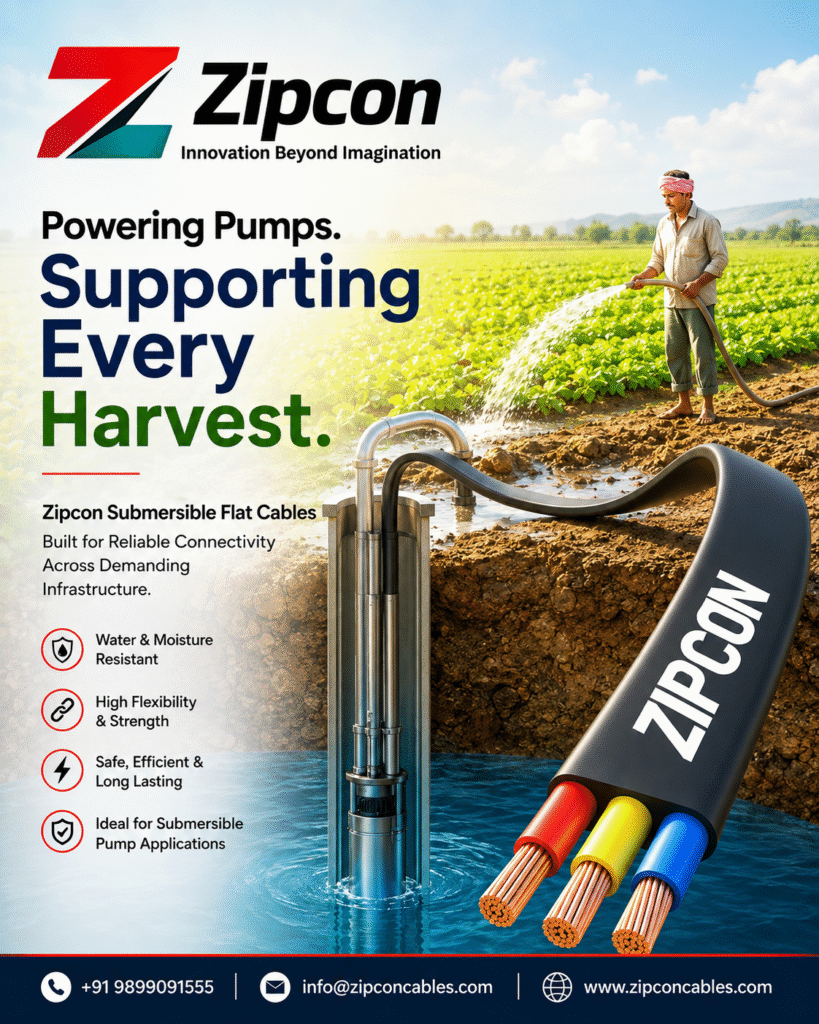
Top Submersible Cable in Bhopal for Long-Lasting Pump Performance
Top Submersible Cable in Bhopal

Choosing the right submersible cable in Bhopal is critical for reliable water-pump operation. A submersible pump cable works in a demanding environment where electrical wiring can be exposed to moisture, water pressure, temperature changes, and continuous operating conditions.

A poor-quality or incorrectly selected cable can lead to insulation damage, electrical leakage, voltage drop, and unexpected pump downtime. The cable must therefore be selected according to the pump’s electrical requirements and the conditions in which it will operate.

For borewell pumps, agricultural water systems, residential water supply, and other pumping applications, Zipcon Cables offers dependable cable solutions designed for demanding electrical environments. The right cable can help support stable power transmission and long-term pump performance.

For inquiries or assistance:https://zipconcables.com/contact-us/

What Is a Submersible Cable?

A submersible cable is an electrical cable specifically intended for connections involving submersible pumps and equipment operating in or around water. Its construction is designed to provide electrical insulation and mechanical protection under demanding conditions.

Unlike ordinary indoor electrical wires, submersible cables need to be suitable for environments involving moisture and water exposure. Their insulation and overall construction are important factors in maintaining electrical safety.

The exact cable type should be selected according to the pump’s voltage, current, number of phases, conductor size, installation depth, cable length, and manufacturer requirements.

Why Submersible Cable Quality Matters

A submersible pump can operate continuously for extended periods. The cable supplying power to the motor must therefore maintain a dependable electrical connection throughout operation.

When a cable is installed in a borewell or other wet environment, insulation quality becomes especially important. Proper insulation helps separate the electrical conductor from water and surrounding materials.

The cable also needs adequate mechanical strength to withstand installation and operating conditions. Choosing a suitable cable is therefore part of protecting both the electrical system and pump performance.

Key Benefits of a Quality Submersible Cable

  • Reliable electrical power transmission
  • Suitable insulation for wet environments
  • Better protection against moisture exposure
  • Improved mechanical durability
  • Reduced risk of insulation deterioration
  • Suitable options for borewell and water-pump applications
  • Long-term reliability when correctly selected and installed

Important Features to Look for in a Submersible Cable

1. Reliable Insulation

Insulation is one of the most important parts of a submersible pump cable. It provides electrical separation around the conductor and helps protect the cable from the surrounding environment.

For underwater or wet installations, the insulation system should be appropriate for the intended application, temperature, voltage, and installation conditions.

2. Suitable Conductor Size

The conductor must be capable of carrying the pump’s operating current. The required cross-sectional area depends on factors such as motor power, supply voltage, cable length, installation conditions, and allowable voltage drop.

Using an undersized cable can contribute to voltage drop and excessive heating. Cable sizing should therefore be based on the pump manufacturer’s specifications and electrical calculations.

3. Water-Resistant Construction

Submersible pump cables operate in environments where exposure to water is expected. Their construction must be suitable for the intended wet installation.

A water-resistant cable helps maintain insulation performance when correctly installed and used within its specified operating conditions.

4. Mechanical Strength

Installation can place physical stress on the cable, particularly in deep borewell applications. A suitable cable should have adequate mechanical characteristics for the installation method.

Careful handling during lowering, routing, and connection can also reduce the possibility of physical cable damage.

5. Flexible Construction

Submersible pump installations can involve tight spaces and cable movement during installation. Suitable flexibility can make routing and installation more manageable.

The required flexibility depends on the specific cable construction and application. Excessive bending or improper handling should always be avoided.

Submersible Cable vs Regular Electrical Cable

A regular electrical cable may be suitable for many indoor or dry-location applications, but that does not automatically make it suitable for submersible pump installations.

FeatureSubmersible CableRegular Electrical Cable
Main applicationSubmersible pumps and wet environmentsGeneral electrical applications
Water exposureDesigned for specified wet applicationsApplication-dependent
Insulation requirementsSuitable for demanding pump environmentsDepends on cable type
Mechanical demandsDesigned according to intended applicationVaries
Typical installationBorewells, pumps, water systemsHomes, buildings, equipment
SelectionPump load + environment + installationLoad + installation + application

The key consideration is application suitability. A cable should be selected according to its intended use and technical specifications rather than appearance alone.

Types of Submersible Pump Cables

3 Core Submersible Cable

A 3 core submersible cable is commonly used for suitable three-phase pump applications. Each core carries an electrical phase, with the exact configuration determined by the pump and electrical system.

The conductor size should be selected according to motor current, cable length, voltage, and installation requirements.

Flat Submersible Cable

Flat submersible cables are designed in a flat configuration that can be convenient for specific pump installations. Their shape can help with certain borewell installation arrangements.

The appropriate flat cable should still be selected based on electrical ratings and the pump manufacturer’s requirements.

Round Submersible Cable

Round cable constructions are used in suitable applications where a round cable profile is preferred. Their suitability depends on the pump system, installation method, and cable specifications.

Applications of Submersible Cables in Bhopal

Borewell Water Pumps

Borewell pumps require electrical connections that can operate reliably in a wet underground environment. A suitable submersible cable provides the electrical link between the power supply and submerged motor.

Agricultural Irrigation

Farmers use submersible pumps for irrigation and water management. Cable selection becomes important because the equipment may operate for long periods and be exposed to demanding environmental conditions.

Residential Water Supply

Homes using borewell or underground water pumps require dependable electrical connections. A correctly selected submersible pump cable can support consistent pump operation.

Commercial Water Systems

Commercial buildings, institutions, and other facilities may use submersible pumps for water supply or water management. The cable should be selected based on the pump’s load and operating environment.

How to Choose the Right Submersible Cable in Bhopal

Check Pump Power and Current

Start with the pump’s rated power and operating current. These values help determine the appropriate conductor size.

Never select cable size simply because it is commonly used for a particular pump. The actual motor and installation specifications should be considered.

Consider Cable Length

The distance between the electrical supply and pump affects voltage drop. Longer cable runs may require a larger conductor cross-section to maintain acceptable electrical performance.

Identify the Pump Type

Determine whether the pump is single-phase or three-phase and select the appropriate core configuration.

For example, a three-phase pump may require a suitable three-core cable, while other systems can require different arrangements.

Consider Installation Depth

Deep borewell installations can place additional mechanical demands on the cable. Cable selection should account for the depth and installation method.

Check Voltage Rating

The cable must be compatible with the electrical system’s voltage and the pump manufacturer’s requirements.

Choose a Reliable Manufacturer

Cable quality is important when the cable will operate in a demanding environment. Zipcon Cables can be considered for suitable submersible cable applications where dependable construction and long-term performance are priorities.

Examples: Selecting a Submersible Cable

Example 1: Residential Borewell Pump

A home uses a submersible pump to draw groundwater from a borewell. The installer needs to consider the motor’s power, rated current, cable length, borewell depth, and supply type before selecting the cable.

A suitable cable should provide the required current-carrying capacity and insulation for the installation environment.

Example 2: Agricultural Pump

An agricultural pump may operate for several hours during irrigation. A cable that is correctly sized for the motor and cable distance can help reduce excessive voltage drop and support dependable operation.

The installation should also protect the cable from avoidable mechanical damage.

Example 3: Deep Borewell Installation

For a deeper pump installation, cable length increases and mechanical considerations become more significant. Cable sizing should account for voltage drop, while the cable construction should be suitable for the installation depth and conditions.

Why Choose Zipcon Cables for Submersible Applications?

Zipcon Cables provides cable solutions for demanding electrical applications, including suitable submersible pump requirements.

For customers searching for a submersible cable in Bhopal, Zipcon can be considered when durability, dependable insulation, and consistent electrical performance are important. The final cable selection should always match the pump’s technical specifications.

Whether the application involves a residential borewell, agricultural pump, or commercial water system, choosing the correct cable specification is more important than selecting based on price alone.

Expert Tips for Long-Lasting Pump Cable Performance

  1. Match cable size with pump current. Do not use an undersized conductor for a high-load motor.
  2. Account for cable length. Longer runs require voltage-drop considerations.
  3. Check the pump manufacturer’s requirements. Use them as the starting point for cable selection.
  4. Use suitable cable joints and terminations. Poor connections can compromise the entire electrical system.
  5. Handle the cable carefully during installation. Avoid cuts, crushing, excessive pulling, and sharp bends.
  6. Keep cable routing organized. Proper routing reduces unnecessary mechanical stress.
  7. Inspect connections periodically. Loose or damaged connections can affect pump performance and safety.
  8. Use qualified electrical professionals. Submersible pump installations involve electrical and wet-environment risks and should be completed according to applicable requirements.

Common Mistakes to Avoid

Using an Ordinary Electrical Cable

A general-purpose electrical cable may not be designed for continuous exposure to wet or submerged conditions. Always verify that the cable is intended for the specific pump application.

Selecting Cable Size Without Calculating Load

Pump power alone is not enough to determine cable size. Current, voltage, cable length, installation conditions, and allowable voltage drop also matter.

Ignoring Voltage Drop

A long cable run can increase voltage drop. Ignoring it can affect motor operation and electrical efficiency.

Poor Cable Jointing

Improper joints can allow moisture ingress or create electrical resistance. Suitable connection methods and accessories should be used.

Damaging the Cable During Installation

Pulling, twisting, crushing, or sharply bending the cable can damage its insulation or conductor. Proper installation practices are essential.

Choosing Only on Price

A submersible cable is part of the pump’s electrical infrastructure. Selecting solely on initial cost can overlook durability, application suitability, and long-term reliability.

Why Reliable Submersible Wiring Matters

The pump motor depends on a stable electrical supply. If the cable is incorrectly sized, damaged, or unsuitable for the environment, the pump may not receive power efficiently.

A properly selected submersible cable helps create a dependable connection between the electrical supply and pump motor. This becomes especially important for agricultural and residential systems where pump downtime can disrupt essential water supply.

For this reason, cable selection should be treated as an important part of the complete pump installation rather than as a minor accessory purchase.

Conclusion

Selecting the right submersible cable in Bhopal is essential for dependable borewell and water-pump performance. Conductor size, pump current, cable length, voltage, number of cores, insulation, installation depth, and environmental conditions should all be evaluated before purchase.

For reliable pump wiring, Zipcon Cables is an option worth considering for suitable residential, agricultural, and commercial applications. Choose the cable according to the pump manufacturer’s specifications and ensure professional installation.

Choose the right submersible cable with Zipcon Cables for safer electrical connections and long-lasting pump performance.

Top 5 FAQs

1. What is a submersible cable?

A submersible cable is designed for electrical connections involving submersible pumps and other applications where the cable may be exposed to water or wet conditions. Its construction provides insulation and protection appropriate to its specified application.

2. Which cable is suitable for a submersible pump?

The suitable cable depends on the pump’s power, current, voltage, phase configuration, cable length, installation depth, and environmental conditions. A qualified installer should select the cable according to the pump manufacturer’s specifications.

3. What size cable is required for a submersible pump?

There is no single cable size suitable for every pump. The required size depends on motor current, voltage, cable length, allowable voltage drop, installation conditions, and cable construction.

4. Can a regular electrical wire be used for a submersible pump?

A regular electrical wire should not be used unless its specifications explicitly make it suitable for the intended wet or submerged application. Submersible pump cables are selected specifically for these demanding conditions.

5. Why choose Zipcon Cables for submersible pumps?

Zipcon Cables offers electrical cable solutions for demanding applications. For submersible pumps, customers can consider the appropriate Zipcon cable based on conductor size, core configuration, insulation, electrical rating, installation conditions, and pump requirements.
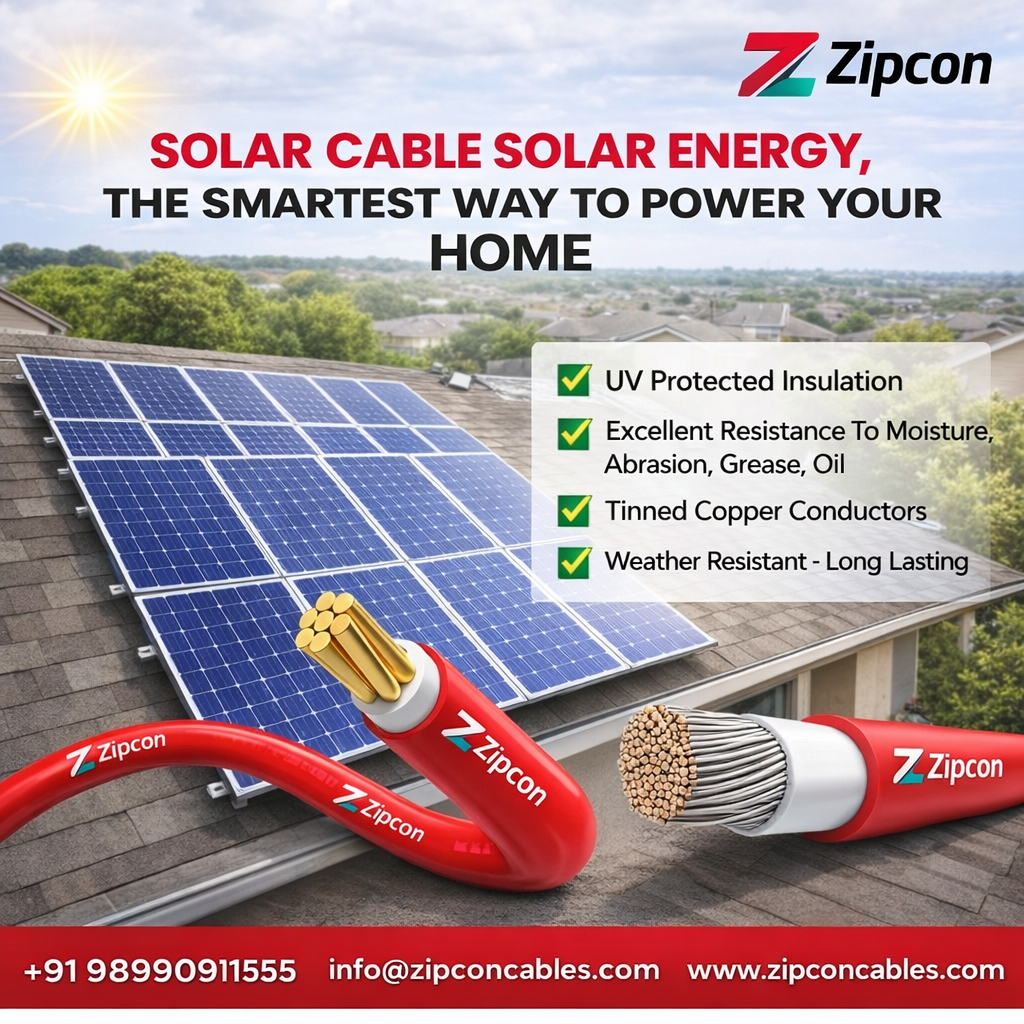
Solar Cables in Bhopal: Choose Reliable Solar Wiring for Safer Power Performance
Solar Cables in Bhopal

Choosing the right solar cables in Bhopal is essential for building a safe, efficient, and long-lasting solar power system. Solar cables continuously carry electrical power between solar panels, inverters, batteries, and other system components, often while exposed to heat, moisture, dust, and changing weather conditions.

A cable that is unsuitable for solar applications can increase electrical losses, deteriorate faster, and create avoidable maintenance issues. The right solar wiring should provide dependable insulation, suitable current-carrying capacity, mechanical strength, and resistance to environmental conditions.

For residential rooftops, commercial installations, agricultural solar systems, and industrial projects, Zipcon Cables offers reliable solar cable solutions designed for demanding electrical applications. Selecting the appropriate cable size and construction can help maintain stable power transmission and improve overall system reliability.

For inquiries or assistance:https://zipconcables.com/contact-us/

Why Quality Solar Cables Matter in Bhopal

Bhopal’s solar installations can experience high temperatures, strong sunlight, monsoon moisture, dust, and outdoor exposure. Solar cables therefore need to withstand more than ordinary indoor wiring conditions.

A good-quality solar cable is designed to maintain its electrical and physical properties under continuous outdoor use. Proper insulation helps protect the conductor from moisture, heat, abrasion, and other environmental stresses.

Reliable solar wiring also helps reduce unnecessary energy losses between components. When the cable is correctly selected for the system’s voltage, current, installation method, and distance, it can support more consistent power transmission.

Key Benefits of Reliable Solar Cables

  • Better protection against outdoor conditions
  • Reliable electrical power transmission
  • Suitable insulation for solar applications
  • Improved durability and service life
  • Reduced risk of insulation deterioration
  • Better suitability for rooftop and outdoor installations
  • Easier and safer professional installation

What Are Solar Cables?

Solar cables are specialized electrical cables used in photovoltaic power systems. They connect solar panels with other components such as string connections, junction boxes, charge controllers, inverters, and battery systems, depending on the system design.

Unlike general-purpose house wiring, solar cables are selected for the electrical and environmental demands of photovoltaic installations. Their construction is intended to provide dependable performance during prolonged outdoor exposure.

The cable must be selected according to factors such as conductor material, cross-sectional area, voltage rating, current capacity, insulation properties, temperature conditions, and installation environment.

Important Features to Look for in Solar Cables

1. Suitable Conductor

The conductor carries electrical current through the solar system. Copper is commonly selected where high conductivity and flexibility are required, while aluminium can be used in applications where its characteristics and system requirements make it appropriate.

The conductor size should match the expected current and installation conditions. Using an incorrectly sized cable can increase voltage drop and electrical losses.

2. Durable Insulation

Solar cables require insulation capable of handling outdoor exposure. Quality insulation helps protect the conductor from moisture, heat, mechanical stress, and environmental deterioration.

For long-term solar installations, insulation quality should not be treated as a secondary consideration. It directly affects cable safety and durability.

3. Resistance to Heat and Sunlight

Solar cables installed near panels can remain exposed to high temperatures and continuous sunlight. Cable construction should therefore be appropriate for the expected operating environment.

Heat-resistant and weather-resistant cable designs can help maintain performance over extended periods when installed correctly.

4. Mechanical Strength

Solar wiring may run across rooftops, cable trays, conduits, or outdoor structures. During installation and maintenance, cables can experience bending, pulling, and mechanical stress.

A durable cable construction helps reduce the possibility of physical damage when proper installation practices are followed.

5. Correct Cable Size

Cable size is one of the most important selection factors. Common solar cable sizes include 2.5 sq mm, 4 sq mm, and 6 sq mm, although the correct size depends on the system’s current, cable length, voltage drop requirements, and installation conditions.

For example, a short connection carrying relatively low current may require a different cable size from a longer connection carrying higher current. Cable selection should therefore be based on the actual system design rather than simply choosing the largest available size.

Solar Cable vs Regular Electrical Cable

Solar cables and regular electrical cables may look similar, but their intended applications can differ significantly.

FeatureSolar CableRegular Electrical Cable
Primary applicationPhotovoltaic systemsGeneral electrical wiring
Outdoor exposureDesigned for solar environmentsDepends on cable type
Sunlight exposureImportant considerationMay not be suitable
Temperature conditionsSelected for solar operating conditionsApplication-dependent
InstallationPanels, DC circuits, outdoor routesHomes, buildings, equipment
Selection criteriaVoltage, current, environment, distanceLoad, installation, application

The important point is that not every electrical cable is automatically suitable for solar applications. Solar wiring should be selected according to the requirements of the photovoltaic system.

Where Solar Cables Are Used

Solar cables have applications across different types of solar installations.

Residential Solar Systems

Rooftop solar systems require dependable connections between photovoltaic panels and the inverter or other system components. Correct cable selection helps support safe and consistent energy transmission.

Commercial Solar Projects

Commercial installations often involve larger systems, longer cable routes, and higher electrical loads. Cable selection becomes particularly important because voltage drop and installation conditions can have a greater impact.

Industrial Solar Systems

Industrial solar projects require cables capable of supporting demanding operating environments. Proper conductor sizing, insulation, routing, and protection should be considered during system design.

Agricultural and Solar Pump Applications

Solar-powered agricultural systems and solar pump installations may operate in outdoor environments with considerable exposure to heat, moisture, dust, and mechanical conditions. Suitable solar wiring can help maintain dependable connections in these applications.

How to Choose the Right Solar Cable in Bhopal

Check the Current Requirement

Determine the maximum expected current of the circuit before selecting the cable. The conductor’s current-carrying capacity should be appropriate for the application and installation conditions.

Consider Cable Length

Longer cable runs can produce greater voltage drop. If the distance between solar panels and other equipment is significant, cable size should be selected accordingly.

Consider Installation Conditions

Determine whether the cable will be installed on a rooftop, inside conduit, along a cable tray, underground, or in another environment. Temperature, ventilation, grouping, and physical protection can influence cable selection.

Verify Voltage Rating

The cable should have an appropriate voltage rating for the photovoltaic system. The system designer or qualified installer should verify compatibility before installation.

Select From a Reliable Manufacturer

Cable quality can vary significantly between manufacturers. Choosing a reliable brand helps reduce the risk associated with inconsistent materials, insulation quality, or manufacturing standards.

Zipcon Cables can be considered for solar wiring requirements where durability, dependable electrical performance, and application suitability are priorities.

Examples: Choosing Solar Wiring for Different Applications

Example 1: Residential Rooftop System

A homeowner installing rooftop solar may have relatively short cable routes between panels and the inverter. The installer should consider the system current, cable length, environmental exposure, and applicable electrical requirements before selecting the conductor size.

Example 2: Commercial Solar Installation

A commercial building may have multiple panel strings with longer cable routes. In this situation, voltage drop calculations and cable routing become increasingly important.

Choosing a cable solely because it has a higher or lower cross-sectional area without considering the complete installation can lead to inefficient selection.

Example 3: Agricultural Solar Application

An agricultural solar system may be exposed to direct sunlight, moisture, dust, and temperature variations. Here, outdoor durability and appropriate insulation become especially important alongside electrical capacity.

Why Consider Zipcon Cables for Solar Applications?

Zipcon Cables focuses on electrical cable solutions designed for dependable performance across residential, commercial, agricultural, and industrial applications.

For solar installations, the emphasis should be on selecting cable that matches the system’s electrical requirements and operating environment. Zipcon solar cable solutions can be considered when durability, reliable insulation, and consistent power transmission are important selection criteria.

Before purchasing, customers should confirm the required cable size, conductor material, voltage rating, installation environment, and project specifications with a qualified electrical professional.

Expert Tips for Solar Cable Selection

  1. Do not select cable size based only on price. The correct size should match the electrical load and installation conditions.
  2. Calculate voltage drop for longer runs. Longer connections can require careful sizing to maintain efficient power transmission.
  3. Use cables intended for the application. Solar circuits require cable characteristics appropriate for photovoltaic installations.
  4. Protect exposed wiring. Use suitable routing, clips, conduits, or other protection where required by the installation.
  5. Avoid unnecessary sharp bends. Follow the cable manufacturer’s recommended bending and installation practices.
  6. Inspect cables during maintenance. Look for signs of physical damage, insulation deterioration, loose connections, or improper routing.
  7. Buy from a dependable manufacturer or authorized supplier. Product authenticity and consistent manufacturing quality matter for long-term installations.

Common Mistakes to Avoid

Using the Wrong Cable Size

An undersized cable can contribute to excessive voltage drop, heating, and energy losses. Cable sizing should be calculated according to the actual electrical and installation requirements.

Choosing a Cable Only by Price

The lowest-cost cable is not necessarily the most economical choice over the life of a solar system. Poor durability can result in premature replacement and additional maintenance.

Ignoring Environmental Conditions

Solar cables are often exposed to sunlight, heat, rain, dust, and mechanical stress. These conditions should be considered before selecting the cable.

Poor Cable Routing

Loose, unsupported, sharply bent, or poorly protected cables can be more vulnerable to physical damage. Proper routing and fastening are essential.

Mixing Incompatible Components

Connectors, cables, and other solar system components should be compatible and installed according to their specifications. Improper connections can compromise system safety and performance.

Why Bhopal Solar Installations Need Reliable Wiring

Solar panels generate electricity, but the quality of the electrical connection between system components also influences how reliably that electricity reaches the intended equipment.

Bhopal’s outdoor solar installations can encounter high temperatures and seasonal weather changes. Reliable solar cables provide an important layer of protection between the photovoltaic equipment and the electrical network.

For homeowners, businesses, industries, and agricultural users, choosing appropriate solar wiring is therefore a practical investment in system reliability rather than simply a component purchase.

Conclusion

Choosing the right solar cables in Bhopal is essential for safe electrical connections, reliable power transmission, and long-term solar system performance. Cable size, conductor type, insulation, voltage rating, environmental resistance, cable length, and installation conditions should all be evaluated before making a purchase.

For dependable solar wiring, Zipcon Cables is a strong option to consider for residential, commercial, industrial, and agricultural solar applications. Select the cable according to your system specifications and have installation carried out using proper electrical practices.

Choose the right solar cable today with Zipcon Cables for safer connections and dependable solar power performance.

Top 5 FAQs

1. Which solar cable is best for solar panels?

The best solar cable depends on the system voltage, current, cable length, installation environment, and applicable specifications. A qualified installer should determine the appropriate cable size and type for the specific solar system.

2. What size solar cable is commonly used?

Common sizes include 2.5 sq mm, 4 sq mm, and 6 sq mm, but the correct size depends on current, cable distance, voltage drop, installation conditions, and system design.

3. Can regular electrical wire be used for solar panels?

A regular electrical cable should not automatically be assumed suitable for photovoltaic applications. Solar wiring should be selected based on the environmental and electrical requirements of the solar system.

4. Why is solar cable quality important?

Quality solar cables can provide reliable electrical transmission and better resistance to environmental and mechanical stresses when properly selected and installed. This can support long-term system reliability.

5. Why choose Zipcon Cables for solar wiring?

Zipcon Cables offers cable solutions for demanding electrical applications. For solar projects, customers can consider Zipcon based on the required cable size, conductor type, insulation characteristics, and project specifications.

Best Solar Cables in Bhopal for Reliable Residential and Industrial Application
Solar Cables in Bhopal

Choosing the best solar cables in Bhopal is essential for building a safe, efficient and long-lasting solar power system. Solar panels generate DC electricity continuously, and the cables connecting panels, inverters and other components must handle electrical loads while remaining reliable under heat, sunlight, moisture and changing weather conditions.

A solar cable is more than a simple electrical wire. Its conductor, insulation, flexibility, temperature resistance and protection against environmental exposure directly affect the reliability of a solar installation. Using an unsuitable cable can increase energy losses, accelerate insulation damage and create avoidable maintenance problems.

For residential rooftops, commercial buildings, agricultural installations and industrial solar plants, Zipcon Cables offers solar cable solutions designed for demanding electrical applications. Selecting the correct cable size and construction according to the system requirement helps improve safety and long-term performance.

For inquiries or assistance:https://zipconcables.com/contact-us/

Why Choosing the Right Solar Cable Matters in Bhopal

Solar installations in Bhopal can experience high temperatures, strong sunlight, dust, rain and outdoor exposure. Solar cables installed on rooftops or open structures need insulation capable of handling these conditions without quickly becoming brittle or damaged.

The cable also carries DC power over a specific distance. If the cable is undersized or poorly selected, voltage drop and power losses can increase. A correctly specified solar PV cable helps maintain dependable power transmission between solar panels, combiner arrangements and the inverter.

For this reason, cable selection should consider more than price. Conductor material, cross-sectional area, insulation quality, installation environment and expected electrical load all need to be evaluated before installation.

What Is a Solar Cable?

A solar cable is an electrical cable specifically used to connect components of a photovoltaic power system. It commonly carries DC electricity from solar modules toward an inverter or other parts of the solar installation.

Compared with ordinary electrical wiring, a dedicated solar power cable is designed for outdoor solar applications. Its construction focuses on resistance to environmental conditions such as sunlight, heat, moisture and mechanical exposure.

Key Parts of a Solar Cable

Conductor:
The conductor carries electrical current. Copper is widely used where high conductivity and flexibility are required, while aluminium can be considered for applications where weight and cost are important factors.

Insulation:
The insulation separates the conductor from external surfaces and protects the cable against electrical and environmental stress. High-quality insulation is particularly important for outdoor solar installations.

Outer Protection:
The outer construction provides additional resistance against environmental exposure, abrasion and installation-related stress. The exact construction should be selected according to the application and applicable standards.

Key Features to Look for in Solar Cables

1. High-Quality Conductors

A reliable conductor provides efficient current transmission and helps control electrical losses. The appropriate conductor material and cross-sectional area should be selected according to current capacity, cable length and installation conditions.

For rooftop and industrial solar projects, cable sizing should be calculated rather than selected simply by visual thickness or price.

2. Heat Resistance

Solar cables are frequently exposed to direct sunlight and elevated temperatures. A cable with suitable temperature-resistant insulation is better positioned to maintain its electrical and physical properties during prolonged outdoor operation.

This becomes particularly relevant for rooftop systems where cables can remain exposed to solar radiation for many hours each day.

3. UV and Weather Resistance

Outdoor cables face continuous exposure to sunlight, rain, dust and changing temperatures. UV-resistant solar cables help reduce the risk of premature sheath and insulation degradation caused by prolonged sunlight exposure.

Weather-resistant construction is especially valuable when cables are routed across rooftops, solar structures or outdoor industrial areas.

4. Flexibility

Solar installations often require cables to follow panel layouts, mounting structures and connection routes. Flexible cable construction makes installation easier and can reduce unnecessary stress at connection points.

Good flexibility is particularly useful during rooftop installations where cable routing may involve multiple bends.

5. Suitable Current-Carrying Capacity

The cable must be capable of safely carrying the expected current. Choosing an undersized cable can result in excessive heating and higher voltage drop.

Cable size should therefore be selected based on the solar system’s electrical specifications rather than using the same size for every installation.

6. Durable Insulation

Quality insulation provides electrical separation and helps protect the conductor from external conditions. For solar applications, insulation needs to remain reliable through repeated exposure to heat, sunlight and moisture.

A durable cable can reduce the frequency of cable replacement and help maintain consistent system performance.

Solar Cables for Residential Applications in Bhopal

Residential solar systems usually include rooftop panels, DC cabling, an inverter, AC wiring and associated protection equipment. The solar cable connecting the panels to the inverter plays an important role in transferring generated DC power.

For homes, cable selection should account for the number of panels, system voltage, current, cable length and routing method. A compact rooftop system may have different cable requirements from a larger residential installation with multiple strings.

Example: A homeowner installing a rooftop solar system should not choose a cable only because it is inexpensive. The cable should match the system’s current rating and installation environment while providing appropriate protection against outdoor exposure.

Solar Cables for Industrial Applications

Industrial solar installations generally involve greater power capacity, longer cable routes and more demanding operating conditions. Cable selection therefore becomes even more important.

Industrial applications may include factories, warehouses, commercial buildings, solar farms and large rooftop systems. These installations can require carefully planned cable routing, appropriate conductor sizes and protection against mechanical and environmental stresses.

For such projects, industrial solar cables should be selected according to the complete electrical design rather than based on a single standard size.

Solar Cable vs Ordinary Electrical Cable

FeatureSolar CableOrdinary Electrical Cable
Primary usePhotovoltaic systemsGeneral electrical applications
Outdoor exposureDesigned for suitable outdoor applicationsDepends on cable type
UV resistanceAvailable in solar-specific constructionNot always suitable
Heat resistanceDesigned according to solar application requirementsVaries
FlexibilityGenerally suited to solar installation routingDepends on construction
ApplicationSolar panels, DC circuits and PV systemsHomes, commercial and industrial wiring

The important point is that cables should be selected for their intended application. A general-purpose cable should not automatically be treated as a substitute for a cable specifically designed for photovoltaic installations.

How to Choose the Best Solar Cables in Bhopal

Check the Solar System Specifications

Start with system voltage, operating current and the configuration of the solar panels. These specifications determine the electrical requirements of the cable.

Select the Correct Cable Size

Cable size affects current-carrying capacity and voltage drop. Longer cable runs can make voltage-drop calculations particularly important.

Consider Installation Conditions

Determine whether the cable will be exposed to direct sunlight, installed under panels, routed through conduits or placed in another environment. The cable construction should match these conditions.

Consider Cable Quality

Look for reliable manufacturing, consistent insulation quality and appropriate testing or certification for the intended application. Lower purchase cost does not necessarily mean lower total ownership cost.

Buy From a Reliable Manufacturer

Choosing a dependable manufacturer can help ensure consistent cable construction and product quality. For solar projects, Zipcon Cables can be considered for applications requiring reliable solar cable solutions.

Zipcon Cables: A Reliable Choice for Solar Applications

Zipcon Cables focuses on cable solutions designed for residential, commercial and industrial electrical requirements. Its solar cable range can be considered for installations where dependable power transmission and durable construction are important.

For solar projects in Bhopal, Zipcon solar cables can be evaluated based on the project’s voltage, current, cable length, installation environment and required cable size.

The right product should always be selected according to the technical requirements of the specific solar system. This approach provides better results than choosing a cable based only on brand, appearance or price.

Examples: Selecting Solar Cables for Different Applications

Example 1: Residential Rooftop

A home with a rooftop solar installation may require DC cables running from several panels to the inverter. The installer should calculate the current, cable distance and voltage drop before deciding the cable size.

For this type of project, a flexible and appropriately rated solar panel cable can simplify installation while providing suitable outdoor performance.

Example 2: Commercial Building

A commercial building may have a larger rooftop array with multiple strings. Longer cable routes and higher system capacity can increase the importance of correct cable sizing and routing.

In this case, the project should use solar cables selected according to the electrical design and installation conditions.

Example 3: Industrial Solar Plant

An industrial solar installation may involve long cable runs, multiple strings and higher current levels. Cable selection must account for load, voltage drop, environmental exposure and mechanical protection.

Here, professional system design and proper cable specification are essential for maintaining reliable power transmission.

Expert Tips for Solar Cable Installation

  • Select cable size according to current, voltage and cable length.
  • Avoid using ordinary household wire as a replacement for purpose-designed solar cable where the application requires solar-rated construction.
  • Keep cable routes organized and protected from unnecessary mechanical damage.
  • Avoid excessive bending or pulling during installation.
  • Use compatible connectors and termination components.
  • Prevent cables from remaining in standing water or areas with avoidable moisture exposure.
  • Keep DC cable runs as efficient as practical to help control voltage drop.
  • Inspect exposed cables periodically for physical damage, insulation deterioration or loose connections.
  • Follow the solar equipment manufacturer’s installation requirements and applicable electrical standards.

Common Mistakes to Avoid

Choosing Cable Based Only on Price

The cheapest cable may not provide the construction required for long-term outdoor solar exposure. Initial savings can become expensive if premature replacement or performance issues occur.

Using the Wrong Cable Size

An undersized cable can increase voltage drop and heating. Oversizing also has cost implications, so the correct approach is to calculate the requirement based on the system design.

Ignoring Cable Length

Longer cable runs can produce greater voltage drop. Cable length should therefore be included when determining the appropriate cable size.

Poor Cable Routing

Cables left exposed to unnecessary mechanical stress, sharp edges or excessive heat can experience premature damage. Proper routing and support are important for long-term reliability.

Mixing Incompatible Components

Solar cables, connectors and termination systems should be compatible with each other. Poor connections can increase resistance and create heating at connection points.

Why Bhopal Solar Installations Need Reliable Cable Selection

As residential, commercial and industrial solar adoption grows, reliable electrical components become increasingly important. Solar panels may generate power for decades, but the supporting electrical infrastructure also needs appropriate materials and installation practices.

In Bhopal’s climate, outdoor solar cables can experience considerable environmental exposure. Selecting a suitable solar cable in Bhopal helps protect the electrical connection and supports stable operation throughout the system’s service life.

For both small rooftop systems and larger industrial installations, cable selection should be treated as an important part of the overall solar design rather than an afterthought.

Conclusion

The best solar cables in Bhopal are not simply the ones with the lowest price or the thickest appearance. The right cable is one that matches the solar system’s electrical requirements, installation conditions and expected operating environment.

For residential rooftops, commercial buildings and industrial solar applications, prioritize suitable conductor size, durable insulation, environmental resistance, flexibility and reliable manufacturing. Zipcon Cables can be considered when selecting dependable solar cable solutions for Bhopal projects.

Before purchasing, verify the required cable size, current capacity, system voltage, cable length and installation conditions. Correct specification combined with proper installation can help create a safer and more reliable solar power system.

Top 5 FAQs

1. Which solar cable is best for residential solar systems in Bhopal?

The best solar cable depends on the system voltage, current, cable length and installation conditions. A dedicated solar PV cable with suitable insulation and environmental resistance is generally appropriate for rooftop solar applications.

2. Can ordinary electrical wire be used for solar panels?

Ordinary electrical wire should not automatically be used as a replacement for purpose-designed solar cable. Solar installations can expose cables to sunlight, heat and outdoor conditions, so the cable construction should be suitable for the specific application.

3. How do I select the correct solar cable size?

Cable size should be selected using factors such as operating current, system voltage, cable length, installation method, allowable voltage drop and applicable electrical requirements. A qualified solar installer can calculate the appropriate size for the system.

4. Are solar cables suitable for industrial applications?

Yes, solar cables can be used in industrial photovoltaic applications when their electrical ratings and construction are suitable for the project. Large installations require careful consideration of current capacity, voltage drop, cable routing and environmental conditions.

5. Why choose Zipcon Cables for solar applications in Bhopal?

Zipcon Cables offers cable solutions for different electrical applications, including solar requirements. For a Bhopal solar project, the appropriate Zipcon cable should be selected according to the system’s technical specifications and installation environment.

Best FR House Wires in Bhopal for Safe and Durable Wiring
FR House Wires in Bhopal

Choosing the top FR house wires in Bhopal is important for building a safe and dependable electrical system. House wiring carries electricity to lights, fans, appliances, sockets, and other connected equipment, so the quality of the wire directly affects electrical safety and long-term performance.

FR wires are designed with flame-retardant insulation that helps reduce the risk of flame spreading along the cable under specified conditions. For homes, apartments, offices, and other residential spaces, selecting a wire with suitable conductor quality, insulation, flexibility, and appropriate size is essential.

For customers looking for dependable wiring solutions, Zipcon Cables offers house wires designed with a focus on safety, durability, and consistent electrical performance. The right Zipcon FR house wire can provide a practical solution for modern residential wiring requirements.

For inquiries or assistance:https://zipconcables.com/contact-us/

What Are FR House Wires?

FR stands for Flame Retardant. FR house wires use insulation designed to resist the propagation of flame, making them a suitable option for electrical installations where improved fire performance is required.

Unlike ordinary wiring where the focus may be limited to current carrying capacity, a quality FR wire combines electrical performance with insulation protection. This makes the choice of cable important not only for everyday operation but also for improving the overall safety of the wiring installation.

FR house wires are commonly used for residential circuits such as lighting, fans, sockets, and other domestic electrical connections. The exact wire size should always be selected according to the connected load, installation method, circuit protection, and applicable electrical requirements.

Why Choose FR House Wires for Homes in Bhopal?

Bhopal homes can have a wide range of electrical requirements, from basic lighting circuits to high-load appliances such as air conditioners, geysers, refrigerators, washing machines, and kitchen equipment.

A reliable house wire should maintain good insulation performance while carrying the required electrical load. Choosing a suitable FR wire can add an extra layer of protection by using flame-retardant insulation.

1. Better Flame Resistance

One of the primary advantages of FR house wires is their flame-retardant insulation. In appropriate conditions, the insulation is designed to help resist flame propagation.

This characteristic can be valuable in residential installations where multiple electrical circuits run through walls, conduits, ceilings, and distribution areas.

2. Reliable Electrical Performance

The conductor is the core component responsible for carrying electrical current. High-quality conductor material and proper manufacturing help provide consistent electrical performance.

When selecting FR wires, buyers should consider conductor quality, cross-sectional area, insulation quality, and the intended application rather than choosing a cable based only on price.

3. Suitable for Residential Wiring

FR house wires can be used for several domestic applications when the correct size and specification are selected. They can support wiring requirements for lighting points, fans, switches, sockets, and other household circuits.

For higher-load appliances, the wire size should be selected based on the appliance load and circuit design rather than using the same size throughout the house.

4. Durable Insulation

The insulation protects the conductor from contact, moisture exposure, mechanical effects, and other environmental factors depending on the cable design and installation conditions.

A durable insulation system can help maintain the integrity of the wire throughout its expected service life when installed correctly.

5. Better Long-Term Value

Buying a house wire solely because it is inexpensive can increase the risk of poor performance, premature replacement, or unsuitable electrical protection.

A quality FR house wire may provide better long-term value because wiring is normally installed inside walls, conduits, ceilings, or other areas that are difficult and expensive to replace later.

Why Zipcon Cables Is a Smart Choice for FR House Wires in Bhopal

Zipcon Cables focuses on electrical cable solutions designed for residential and other demanding applications. For house wiring, the objective should be straightforward: dependable conductivity, suitable insulation, consistent manufacturing, and a product matched to the installation requirement.

Zipcon FR house wires can be considered when planning new construction, home renovation, office wiring, or electrical upgrades where flame-retardant insulation is preferred.

The important point is to select the appropriate wire specification and size for each circuit instead of treating every electrical connection the same.

How to Select the Right FR House Wire

Selecting the best FR wire involves more than choosing a brand. Consider several factors before purchasing.

Conductor Material

The conductor determines how effectively electrical current is carried through the wire. Copper is widely used for house wiring because of its electrical conductivity and suitability for residential circuits.

Always check the actual conductor specification and product documentation before making a purchase.

Wire Size

Wire size is generally expressed in square millimetres, such as 1.0 sq mm, 1.5 sq mm, 2.5 sq mm, 4 sq mm, and higher sizes.

The correct size depends on the circuit load, installation conditions, permissible voltage drop, protective device, and applicable electrical standards. A qualified electrician should determine the appropriate size for each circuit.

Insulation Quality

The insulation should be appropriate for the intended application and installation environment. For FR wires, the flame-retardant characteristics of the insulation are an important consideration.

Do not judge insulation quality only by appearance. Check the manufacturer’s specifications and relevant product certifications.

Flexibility

House wiring often requires wires to pass through conduits, bends, junction boxes, and switchboards. Suitable flexibility can make installation easier while helping electricians achieve cleaner routing.

However, flexibility should not be considered separately from conductor construction and electrical requirements.

Manufacturer Reliability

A reputable cable manufacturer provides greater confidence in product consistency, specifications, and quality control.

When purchasing FR house wires in Bhopal, look for established manufacturers such as Zipcon Cables and verify the product specifications before installation.

FR House Wire Applications in Residential Wiring

FR wires can be used across several parts of a residential electrical system, depending on the product specification.

Lighting Circuits

Lighting circuits generally have comparatively lower electrical loads than heavy appliances. The wire size should still be selected according to the circuit design and applicable requirements.

Fan Circuits

Fans require reliable connections because they operate for extended periods. Proper wire sizing and appropriate circuit protection help support safe operation.

Socket Circuits

General-purpose sockets may supply different appliances with different loads. Therefore, socket circuits require careful consideration of expected load and protective devices.

Home Appliances

Appliances such as refrigerators, washing machines, microwave ovens, geysers, and air conditioners may have different electrical requirements. High-load appliances should be connected using circuits designed specifically for their load.

Using an undersized wire for a high-load appliance can result in excessive heating and unsafe operating conditions.

FR vs Ordinary House Wires

The main distinction is the insulation’s flame-retardant characteristic.

FeatureFR House WireStandard/Ordinary House Wire
Flame-retardant insulationDesigned for improved flame resistanceDepends on product type
Residential useYes, when correctly specifiedYes, when correctly specified
Safety considerationFlame-retardant insulation adds an important safety featureDepends on insulation construction
ApplicationLighting, fans, sockets and suitable domestic circuitsVaries by product
SelectionBased on load, size, insulation and specificationsBased on the same electrical requirements

The table does not mean that an FR wire replaces proper electrical protection. Circuit breakers, correct earthing, proper connections, suitable conduits, and professional installation remain essential.

Examples: Choosing FR House Wires for Different Home Circuits

Consider a newly constructed three-bedroom house in Bhopal. The electrical contractor may divide the installation into separate lighting, fan, socket, kitchen, and heavy-appliance circuits.

For example, lighting points may use a smaller suitable conductor than a circuit intended for a high-power appliance. A socket circuit may require a different specification again.

The correct approach is to calculate the expected load and select the appropriate wire size and protective device for each circuit. Zipcon FR house wires can then be selected according to those technical requirements rather than simply choosing one wire size for the entire property.

Expert Tips for Buying FR House Wires in Bhopal

Check the Markings

Before purchasing, check the cable markings, size, manufacturer information, voltage rating, applicable standard information, and other specifications provided on the product.

Buy From a Reliable Source

Purchase wires through reliable dealers or authorised distribution channels. This reduces the risk of receiving products with unclear specifications or questionable authenticity.

Do Not Choose Only by Price

A lower price does not automatically mean better value. Electrical wiring is a long-term installation, so conductor quality, insulation, manufacturing consistency, and suitability should be considered together.

Match Wire Size to Load

Never select wire size simply because it is commonly used in another part of the house. Different circuits have different loads and installation conditions.

Use Proper Protection

Good cable alone cannot make an electrical system safe. Use appropriately rated circuit protection, proper earthing, suitable connections, and professional installation.

Plan Before Concealing the Wiring

Once wires are installed inside walls or ceilings, replacement can involve significant labour and construction work. Select suitable cables and inspect the installation before closing conduits or walls.

Common Mistakes to Avoid

Choosing an Undersized Wire

An undersized conductor may not be suitable for the intended load and can create excessive heating. Wire selection should be based on electrical calculations and installation requirements.

Mixing Poor-Quality and Good-Quality Wiring

Using different cable qualities throughout the same electrical installation can create inconsistencies. Select suitable products for the complete wiring plan.

Ignoring Circuit Segregation

Lighting, sockets, kitchen equipment, air conditioners, geysers, and other high-load appliances may require separate circuits. Proper circuit planning improves protection and maintenance.

Using Improper Connections

Loose terminals, poor joints, and unsuitable connectors can create resistance and heating. Connections should be properly made and checked by a qualified electrician.

Treating FR as a Complete Fire-Safety Solution

FR insulation is an important product characteristic, but it does not eliminate electrical fire risk. Overloading, short circuits, loose connections, poor earthing, and incorrect protection can still create hazards.

Why Choose Zipcon Cables for House Wiring?

When selecting FR house wires in Bhopal, buyers should focus on product quality, appropriate specifications, dependable manufacturing, and suitability for the intended electrical installation.

Zipcon Cables provides cable solutions for customers who want reliable wiring products for residential applications. From conductor construction to insulation performance, each factor matters when building an electrical system that is expected to perform reliably for years.

For new homes, renovations, apartments, offices, and other residential projects, Zipcon FR house wires can be considered as part of a properly designed electrical wiring system.

Conclusion

The best FR house wires in Bhopal should offer the right combination of conductor quality, suitable wire size, durable insulation, flame-retardant properties, and reliable manufacturing. Choosing the right cable at the planning stage can improve the reliability and safety of the entire electrical installation.

For homeowners, builders, contractors, and electricians, Zipcon Cables is a practical option to consider for FR house wiring requirements. Select the correct wire size for each circuit, use suitable protection and earthing, and have the installation completed by a qualified electrician.

For safe and durable residential wiring, choose the right specification—not simply the lowest price—and consider Zipcon Cables for your FR house wire requirements in Bhopal.

Top 5 FAQs About FR House Wires in Bhopal

1. What are FR house wires?

FR house wires are electrical wires that use flame-retardant insulation designed to help resist flame propagation under specified conditions. They are commonly considered for residential electrical installations.

2. Are FR wires suitable for home wiring?

Yes. FR wires can be suitable for residential wiring when the product specification, conductor size, voltage rating, installation method, and circuit protection are appropriate for the application.

3. How do I choose the correct FR wire size for my house?

Wire size should be selected according to the circuit’s expected load, installation conditions, voltage-drop requirements, protective device, and applicable electrical requirements. A qualified electrician should make the final selection.

4. Why should I choose Zipcon FR house wires?

Zipcon FR house wires are designed for residential wiring applications with attention to conductor performance and insulation characteristics. Buyers should select the appropriate Zipcon specification according to their specific circuit requirements.

5. Where can FR house wires be used?

FR house wires can be used for suitable residential circuits such as lighting, fans, sockets, and other domestic electrical applications. High-load appliances should have appropriately designed circuits with correctly sized wiring and protection.

Best Multistrand House Wires in Bhopal for Safe Home Wiring
Multistrand House Wires in Bhopal

Choosing the top multistrand house wires in Bhopal is essential for creating a safe and reliable residential electrical system. House wiring must handle daily electrical loads while maintaining good insulation, flexibility and mechanical strength. The right wire can also make installation easier, particularly where cables need to pass through conduits, bends and electrical boxes.

Zipcon Cables offers house-wiring solutions designed for residential electrical applications. Multistrand construction is particularly useful when flexibility and easier handling are important during installation.

Whether you are constructing a new home, renovating an existing property or replacing old wiring, cable selection should be based on conductor size, expected electrical load, insulation quality and installation conditions. Choosing a suitable wire from the beginning can support dependable electrical performance for years.

For inquiries or assistance:https://zipconcables.com/contact-us/

What Are Multistrand House Wires?

Multistrand house wires contain multiple thin strands of conductive material bundled together to form a single conductor. Instead of using one solid conductor, the multiple strands provide greater flexibility while maintaining the required electrical conductivity.

This construction allows the wire to bend more easily during installation. It can be useful when routing cables through conduits, switchboards, distribution boxes and other areas where repeated bending or tight routing may be required.

The overall performance of a multistrand wire depends on factors such as conductor material, cross-sectional area, strand construction, insulation and manufacturing quality. Therefore, choosing a properly specified cable is more important than selecting a wire based only on flexibility.

Why Choose Multistrand House Wires for Home Wiring?

Residential wiring involves numerous bends, connections and routing paths. Multistrand construction can provide practical installation benefits while supporting dependable electrical connections when the correct cable size is used.

1. Better Flexibility

The individual strands allow the conductor to bend more easily than many solid-conductor alternatives. This can make cable routing simpler in conduits and electrical boxes.

Flexibility is especially useful when several wires need to be organized within a limited installation space.

2. Easier Installation

Electricians often need to route house wires around bends and through conduits. Flexible multistrand wires can make pulling and positioning the cable more convenient during installation.

Proper installation still requires appropriate conduit size, bending radius and termination practices.

3. Reliable Electrical Performance

When manufactured with the correct conductor material and cross-sectional area, multistrand wires can provide reliable current carrying performance for residential circuits.

The conductor size should always be selected according to the circuit’s expected load and applicable electrical requirements.

4. Suitable for Different Residential Circuits

Multistrand house wires can be used in applications such as lighting, fans, sockets and other residential circuits, provided the selected cable is correctly rated for the specific application.

Key Features to Look for in Multistrand House Wires

Not every flexible wire offers the same performance. Before purchasing multistrand house wires in Bhopal, consider the following characteristics.

High-Quality Conductors

The conductor is responsible for carrying electrical current. Consistent conductor quality and appropriate cross-sectional area are important for achieving reliable electrical performance.

Copper is widely used in residential wiring because of its good electrical conductivity and practical installation characteristics.

Quality Insulation

The insulation surrounds the conductor and helps prevent unwanted electrical contact. Good insulation should be suitable for the expected voltage, temperature and installation environment.

For house wiring, always check the manufacturer’s stated specifications rather than judging insulation quality by appearance alone.

Correct Cross-Sectional Area

Wire size is commonly expressed in square millimetres, such as 1.5 sq mm, 2.5 sq mm, 4 sq mm and 6 sq mm.

The correct size depends on factors including electrical load, circuit length, installation method and applicable standards. Using an undersized conductor can result in excessive heating and reduced safety.

Flexible Multistrand Construction

A well-constructed multistrand conductor should provide practical flexibility without compromising conductor integrity.

Consistent strands and proper insulation extrusion contribute to easier handling and dependable installation.

Multistrand House Wires vs Solid Wires

FeatureMultistrand House WireSolid Wire
ConstructionMultiple thin conductor strandsSingle solid conductor
FlexibilityGenerally more flexibleComparatively rigid
RoutingEasier around bendsLess convenient for tight bends
InstallationConvenient for many residential layoutsSuitable for applications where rigidity is acceptable
Repeated bendingBetter suited to flexible routingLess suitable for repeated movement
SelectionBased on load and installation requirementsBased on load and installation requirements

The choice between multistrand and solid construction should depend on the electrical application, installation method and product specification. For many residential installations, flexibility makes multistrand wiring a practical option.

How to Select the Right Multistrand House Wire

Step 1: Calculate the Electrical Load

Start by identifying the appliances and equipment connected to each circuit. Lighting, fans, sockets and high-power appliances may require different circuit designs.

Avoid selecting wire size based solely on the physical size of the appliance or a general rule. Electrical load calculations provide a more reliable basis for cable selection.

Step 2: Choose the Appropriate Wire Size

Common residential wire sizes include 1.5 sq mm, 2.5 sq mm, 4 sq mm and 6 sq mm, but these should be treated as examples rather than universal recommendations.

A qualified electrician should select the appropriate conductor size based on current demand, cable length, installation conditions and protective-device ratings.

Step 3: Check Insulation and Specifications

Look for clearly stated technical specifications, conductor size, voltage rating and applicable certification or standard information.

A reliable manufacturer should provide sufficient product information to help electricians and customers make an informed selection.

Step 4: Consider the Installation Environment

Wiring installed inside conduits, walls, ceilings or electrical panels can face different physical and thermal conditions.

The selected wire should be suitable for the intended installation method and environmental conditions.

Examples of Multistrand House Wire Applications

Example 1: Lighting Circuit

A residential lighting circuit generally has a lower load than a high-power appliance circuit. A suitably sized multistrand wire can provide flexible routing through conduits and electrical boxes.

The actual conductor size should be determined by the electrical design and applicable requirements.

Example 2: Socket Circuit

General-purpose sockets may be used for different appliances throughout the day. Because the connected load can vary, the circuit should be designed with appropriate conductor sizing and protection.

Multistrand construction can make routing the wiring around bends and junction points easier.

Example 3: Renovation Project

Suppose an older home is being rewired and existing conduits have several bends. Flexible multistrand house wires can make the installation process more manageable.

However, the existing conduit should first be inspected to ensure it is suitable for the new wiring and required number of conductors.

Why Choose Zipcon Cables for Multistrand House Wires?

Zipcon Cables can be considered when selecting multistrand house wires for residential electrical projects in Bhopal. A suitable house wire should combine appropriate conductor construction, dependable insulation and specifications that match the intended application.

For homeowners, builders and electricians, choosing a consistent and reliable cable manufacturer can simplify product selection and support better installation outcomes.

Zipcon Cables focuses on electrical cable solutions designed for different wiring requirements. When selecting a Zipcon house wire, always match the wire size and product specification with the actual electrical circuit.

Expert Tips for Buying Multistrand House Wires in Bhopal

1. Never Choose Wire Size by Price

The lowest-priced wire is not automatically the most economical option. Consider conductor quality, insulation, technical specifications and expected service life.

2. Verify the Wire Size

Check the printed cable marking and product specifications before installation. The stated conductor size should match the electrical design.

3. Use Separate Circuits for Heavy Loads

High-power appliances should generally be provided with appropriately designed circuits rather than connecting multiple heavy loads to a single general-purpose circuit.

4. Use Proper Protective Devices

MCBs, RCCBs and other protective devices should be selected and installed according to the electrical system design.

5. Avoid Excessive Bending

Even flexible multistrand wires have installation limits. Avoid sharp bends, crushing or excessive pulling force during installation.

6. Use Quality Accessories

Switches, sockets, connectors, distribution boards and other accessories should be compatible with the wiring system. Poor-quality accessories can create weak connections and unnecessary heating.

Common Mistakes to Avoid

Using an Undersized Wire

An undersized conductor may be unable to safely carry the expected current. Excessive heating can occur when the circuit is continuously overloaded.

Overloading One Circuit

Connecting several high-power appliances to one circuit can exceed its intended capacity. Proper load distribution helps maintain safer electrical operation.

Ignoring Loose Connections

Loose terminals can increase contact resistance and generate localized heat. Connections should be properly terminated and checked by a qualified electrician.

Buying Without Checking Specifications

Do not select a cable based only on colour, packaging or flexibility. Check conductor size, insulation type, voltage rating and manufacturer information.

Mixing Different Wire Specifications Without Planning

Using different cable types or sizes without considering the circuit design can create inconsistencies in the electrical installation. Each circuit should follow a properly planned wiring specification.

Why Multistrand Wires Are a Practical Choice for Modern Homes

Modern homes often contain multiple electrical circuits, concealed conduits and compact distribution systems. Flexible wiring can make cable routing easier in these installations.

Multistrand house wires are therefore a practical option where flexibility and manageable installation are important. However, flexibility should never replace proper electrical design. Correct sizing, insulation quality and circuit protection remain essential.

Conclusion

Choosing the best multistrand house wires in Bhopal requires attention to conductor quality, wire size, insulation, flexibility and application requirements. A reliable house wire should be selected according to the electrical load and installation environment rather than price alone.

For residential wiring projects, Zipcon Cables is a suitable brand to consider when looking for dependable multistrand house-wiring solutions. Select the correct conductor size, use appropriate protective devices and rely on qualified electrical installation to build a safer and more reliable home electrical system.

Top 5 FAQs

1. What are multistrand house wires?

Multistrand house wires contain several thin conductive strands bundled together. This construction provides greater flexibility and can make the wire easier to route through conduits and electrical boxes.

2. Are multistrand wires good for home wiring?

Yes, appropriately rated multistrand wires can be used for residential wiring applications. The conductor size, insulation and product specifications must match the intended circuit and electrical load.

3. Which wire size is commonly used for house wiring?

Common residential sizes include 1.5 sq mm, 2.5 sq mm, 4 sq mm and 6 sq mm. The appropriate size depends on the circuit load, installation conditions, cable length and applicable electrical requirements.

4. Why choose Zipcon Cables for multistrand house wires?

Zipcon Cables provides cable solutions for residential electrical applications. Its products can be considered when flexibility, conductor quality and dependable insulation are important for house wiring.

5. What should I check before buying multistrand house wires in Bhopal?

Check the conductor size, insulation, voltage rating, technical specifications, applicable standards or certifications and manufacturer information. Also ensure that the selected wire is appropriate for the intended electrical load and installation method.

Best FRLS House Wires in Bhopal for Safe and Reliable Wiring
FRLS House Wires in Bhopal

Choosing the best FRLS house wires in Bhopal is an important decision for residential and commercial electrical installations. A house wire must handle everyday electrical loads while providing dependable insulation, mechanical strength, and protection against electrical hazards. FRLS wires are designed to offer improved fire performance with reduced smoke generation compared with conventional PVC-insulated wires.

Bhopal homes and buildings can have different wiring requirements depending on the size of the property, connected appliances, electrical load, and installation method. Selecting the correct wire size and a dependable cable manufacturer helps improve electrical safety and long-term performance.

For homeowners, electricians, contractors, and builders looking for reliable wiring solutions, Zipcon Cables offers FRLS house wires designed for modern electrical applications. The right combination of conductor quality, insulation, wire size, and installation practices can make a significant difference to the reliability of an electrical system.

For inquiries or assistance:https://zipconcables.com/contact-us/

What Are FRLS House Wires?

FRLS stands for Flame Retardant Low Smoke. These wires are manufactured with insulation materials designed to resist the spread of flame and limit smoke generation when exposed to fire conditions.

This characteristic makes FRLS house wires suitable for buildings where electrical safety and reduced smoke are important considerations. Less smoke can help improve visibility and reduce the amount of smoke released during a fire compared with unsuitable conventional wiring materials.

FRLS wires are commonly considered for residential buildings, offices, commercial spaces, educational institutions, hospitals, and other installations where dependable electrical protection is important.

Why Choose FRLS House Wires in Bhopal?

Electrical wiring remains inside walls, conduits, ceilings, and distribution systems for years. Replacing defective wiring can be expensive and disruptive, so selecting suitable cables during installation is essential.

1. Better Flame Resistance

The insulation of FRLS wires is designed to resist flame propagation. This provides an additional safety advantage in electrical installations where fire performance is a major consideration.

2. Reduced Smoke Generation

During a fire, excessive smoke can make evacuation and emergency response more difficult. Low-smoke insulation helps reduce smoke generation compared with conventional materials that may produce heavier smoke.

3. Reliable Electrical Performance

A properly manufactured house wire provides stable current transmission when correctly sized for the electrical load. Good conductor quality and suitable insulation contribute to consistent performance.

4. Suitable for Modern Homes

Modern homes use multiple high-power appliances, including air conditioners, refrigerators, geysers, washing machines, ovens, pumps, and other electrical equipment. Properly selected FRLS wiring can support these installations when the conductor size and circuit protection are correctly designed.

5. Long-Term Wiring Solution

Quality insulation helps protect the conductor from environmental and installation-related stresses. When installed correctly and operated within its rated capacity, a quality house wire can provide dependable service over an extended period.

Key Features to Check in FRLS House Wires

Not every wire should be selected only because it carries an FRLS label. Buyers should evaluate the complete product specification.

High-Quality Conductors

The conductor is responsible for carrying electrical current. Copper is widely used in house wiring because of its conductivity and flexibility. The conductor should have appropriate construction and cross-sectional area for the intended application.

Durable Insulation

The insulation should provide effective electrical separation and withstand normal installation conditions. Good insulation also helps protect against accidental contact, moisture exposure, and mechanical stress.

Appropriate Wire Size

Wire size directly affects current-carrying capacity and voltage drop. Common residential sizes include 1.5 sq mm, 2.5 sq mm, 4 sq mm, and 6 sq mm, but the correct selection depends on circuit load, installation conditions, length, and applicable electrical standards.

Flame-Retardant Performance

A quality FRLS cable should provide the expected flame-retardant characteristics according to its applicable product standards and testing requirements.

Consistent Manufacturing Quality

Uniform insulation thickness, conductor construction, dimensions, and manufacturing quality are important for dependable electrical installation. Established manufacturers can provide greater confidence when documentation and specifications are available.

FRLS House Wire Size Selection

Selecting the correct wire size is one of the most important parts of electrical installation. A wire that is too small for the connected load can experience excessive heating, while an unnecessarily large wire can increase installation costs.

Typical ApplicationCommon Wire Size*
Lighting circuits1.5 sq mm
Socket circuits2.5 sq mm
Higher-load appliances4 sq mm
Heavy residential loads6 sq mm or as designed

*These are general examples, not a substitute for electrical load calculation. Final sizing should be determined by a qualified electrician based on the actual load, circuit length, installation method, voltage drop, and applicable standards.

FRLS vs Conventional House Wires

The primary difference is the fire-performance characteristics of the insulation.

FeatureFRLS House WireConventional PVC House Wire
Flame resistanceDesigned for improved flame resistanceDepends on product construction
Smoke generationReduced smoke characteristicsMay produce more smoke
Safety focusStrong emphasis on fire performanceVaries by product
ApplicationsHomes, offices, commercial buildingsGeneral electrical applications
Selection prioritySafety + electrical performanceElectrical performance and application

FRLS does not eliminate electrical fire risks. Correct circuit design, MCB/RCCB protection, proper earthing, suitable wire sizing, and professional installation remain essential.

Why Zipcon Cables for FRLS House Wiring?

Zipcon Cables focuses on providing cable solutions for residential and electrical applications where dependable performance matters. For FRLS house wiring, buyers should consider the complete product specification rather than choosing solely on price.

Zipcon FRLS house wires can be considered for applications where reliable insulation, appropriate conductor sizing, and improved fire-performance characteristics are required. Selecting the correct product according to the intended circuit and installation conditions is essential.

For contractors and electricians, using a consistent cable brand across a project can also simplify procurement and product identification. Always verify the specific product’s technical specifications and applicable certifications before installation.

Examples of FRLS House Wire Applications

Example 1: Bedroom and Living Room

Lighting and regular low-load circuits can typically use appropriately sized house wires based on the circuit design. A qualified electrician should calculate the actual load before selecting the conductor size.

Example 2: Kitchen Wiring

Kitchen circuits often supply appliances with comparatively higher electrical loads. Separate circuits and suitable wire sizes may be required for appliances such as microwave ovens, refrigerators, dishwashers, or induction cooktops.

Example 3: Air Conditioner Circuit

An air conditioner should generally have a properly designed dedicated circuit. The cable size, protective device, and installation method should be selected according to the appliance rating and electrical design.

Example 4: New Residential Construction

For a new house in Bhopal, FRLS wires can be incorporated into the electrical plan from the beginning. This allows the electrician to select suitable conductor sizes for lighting, sockets, appliances, air conditioners, pumps, and other circuits.

Expert Tips for Buying FRLS House Wires in Bhopal

  • Calculate the electrical load first: Do not select wire size based only on room size.
  • Choose the correct conductor: Verify conductor material and construction.
  • Check product specifications: Look for clearly stated technical details and applicable standards.
  • Select the right cross-sectional area: 1.5 sq mm, 2.5 sq mm, 4 sq mm, and 6 sq mm wires serve different applications.
  • Consider voltage drop: Long cable runs may require careful sizing even when the connected load appears moderate.
  • Use proper circuit protection: MCBs, RCCBs/RCBOs, and suitable protective equipment are important parts of a safe installation.
  • Hire a qualified electrician: Professional installation helps prevent loose connections, overloading, and incorrect cable selection.
  • Buy from a reliable source: Genuine products reduce the risk of inconsistent or substandard wiring materials.

Common Mistakes to Avoid

Choosing Wire Only by Price

The cheapest wire may not provide the desired combination of conductor quality, insulation performance, and manufacturing consistency. Compare specifications rather than choosing purely on price.

Using One Wire Size Everywhere

Different circuits have different loads. Lighting, sockets, air conditioners, geysers, and other heavy appliances may require different cable sizes.

Ignoring Installation Conditions

Cable selection depends not only on load but also on installation method, ambient conditions, cable grouping, circuit length, and other factors.

Overloading a Circuit

Even a good-quality FRLS wire can overheat if the connected load exceeds the circuit’s design capacity. Proper circuit division and protective devices are essential.

Hiring Unqualified Installers

Incorrect stripping, loose terminals, poor joints, inadequate earthing, and improper protection can compromise an otherwise good wiring system.

How to Choose the Best FRLS House Wires in Bhopal

Start by identifying the electrical requirements of the building. List major appliances, estimate circuit loads, and determine the expected cable lengths. This gives the electrician a basis for selecting appropriate conductor sizes.

Next, compare cable manufacturers based on conductor quality, insulation properties, product specifications, applicable standards, and consistency. Avoid relying solely on marketing claims.

For a dependable wiring solution, Zipcon Cables can be considered when planning FRLS house wiring for residential and commercial applications. Match every cable to its intended circuit and have the complete electrical installation checked by a qualified professional.

Conclusion

The best FRLS house wires in Bhopal should provide more than basic current transmission. Fire-performance characteristics, insulation quality, conductor construction, correct sizing, and manufacturing consistency all contribute to a safer electrical installation.

Choosing Zipcon Cables for FRLS house wiring can be a practical option for projects that prioritize reliable cable performance and improved fire-safety characteristics. However, the cable must always be correctly sized and installed with suitable electrical protection.

For a new home, renovation, office, or commercial project, select the right FRLS wire according to the actual electrical load and installation conditions. Choose the right wire today to build a safer and more reliable electrical system for years to come.

Top 5 FAQs

1. What are FRLS house wires?

FRLS means Flame Retardant Low Smoke. These wires use insulation designed to resist flame propagation and reduce smoke generation under fire conditions, making them suitable for applications where improved fire performance is important.

2. Which FRLS wire size is best for home wiring?

There is no single size suitable for every home circuit. Common sizes include 1.5 sq mm, 2.5 sq mm, 4 sq mm, and 6 sq mm, but the correct size should be selected according to load, circuit length, installation conditions, voltage drop, and applicable standards.

3. Are FRLS wires safer than regular house wires?

FRLS wires offer improved flame-retardant and low-smoke characteristics. However, overall electrical safety also depends on correct wire sizing, circuit protection, earthing, connections, and professional installation.

4. Where can FRLS house wires be used?

FRLS house wires can be used in residential buildings, offices, commercial spaces, institutions, and other electrical installations where improved fire performance and dependable wiring are required.

5. Why choose Zipcon Cables for house wiring in Bhopal?

Zipcon Cables can be considered for projects seeking reliable house-wiring solutions with appropriate insulation and cable specifications. Before purchasing, verify the specific product’s technical specifications, applicable standards, and suitability for the intended electrical circuit.

Best Multicore Round Cable in Bhopal for Reliable Electrical Solutions
Multicore Round Cable in Bhopal

The best multicore round cable in Bhopal should provide reliable electrical performance, mechanical strength, flexibility, and insulation protection for demanding installations. Multicore round cables are designed with multiple insulated conductors inside a common outer sheath, making them suitable for applications where several electrical connections need to be managed through a single cable.

From industrial equipment and control panels to pumps, machinery, commercial installations, and power distribution systems, selecting the right cable can directly affect installation safety and long-term performance. A poor-quality cable may result in insulation damage, overheating, voltage-related performance issues, or frequent maintenance.

Zipcon Cables offers multicore cable solutions designed for dependable electrical connections and practical installation requirements. When choosing a multicore round cable in Bhopal, users should consider conductor material, core configuration, insulation quality, cable size, application requirements, and installation conditions rather than selecting only on price.

For inquiries or assistance:https://zipconcables.com/contact-us/

What Is a Multicore Round Cable?

A multicore round cable contains two or more individually insulated conductors enclosed within a common outer sheath. Its round construction provides a compact and organized cable design that can simplify routing, installation, and protection.

Depending on the application, multicore cables can be manufactured with different numbers of cores and conductor sizes. The correct configuration depends on the electrical load, equipment requirements, installation method, and type of connection.

For example, a control system may require several smaller cores for separate signals, while a power application may require larger conductors capable of carrying higher current. Selecting the correct cable specification is therefore essential for safe operation.

Why Choose Multicore Round Cable in Bhopal?

Bhopal has a wide range of residential, commercial, industrial, agricultural, and infrastructure applications that require dependable electrical wiring. Electrical installations in these environments can involve continuous operation, equipment movement, heat, moisture, dust, and mechanical stress.

A quality multicore round cable helps keep multiple electrical circuits organized within one protected cable assembly. This can reduce installation complexity while providing an additional layer of protection to the individual insulated conductors.

Key advantages include:

  • Multiple conductors within one cable
  • Organized and compact installation
  • Reliable insulation protection
  • Easier cable routing
  • Suitable for various electrical applications
  • Reduced cable clutter
  • Practical solution for control and power connections
  • Better protection of individual cores through a common sheath

Important Features of a Quality Multicore Round Cable

High-Quality Conductors

The conductor is responsible for carrying electrical current, so its quality directly affects cable performance. Copper and aluminium are commonly used conductor materials, with selection depending on the application, electrical requirements, installation conditions, and budget.

A properly manufactured conductor should provide consistent electrical conductivity and dimensional uniformity. This helps maintain dependable electrical performance throughout the cable’s service life.

Reliable PVC Insulation

Insulation separates the conductor from other cores and external surfaces. Good-quality PVC insulation helps reduce the risk of electrical contact, insulation breakdown, and premature cable failure under suitable operating conditions.

For installations exposed to demanding environments, insulation quality becomes especially important because temperature, moisture, mechanical stress, and improper handling can affect cable performance.

Strong Outer Sheath

The outer sheath provides protection to the internal cores against external conditions. A durable sheath can help protect the cable during installation and normal operation.

The sheath specification should match the installation environment. Cables used in industrial or outdoor applications may require greater resistance to mechanical and environmental stresses than cables installed in protected indoor locations.

Flexible Construction

Cable flexibility can make installation easier, especially when routing cables through equipment, conduits, panels, or areas with bends. However, flexibility should not be considered separately from conductor size, insulation design, and application requirements.

The correct balance between flexibility and mechanical strength helps installers achieve cleaner and more reliable cable routing.

Applications of Multicore Round Cable

Multicore round cables are used across several electrical and industrial applications. Their ability to combine multiple conductors into a single cable makes them useful where several electrical connections must be routed together.

Industrial Machinery

Industrial machines often require multiple electrical connections for power, control, sensors, and other equipment functions. A suitable multicore cable can help organize these connections and simplify cable routing.

Control Panels

Control panels frequently contain multiple circuits that need to connect with switches, relays, controllers, indicators, and other components. Multicore cables can provide a structured way to route these connections.

Commercial Electrical Installations

Commercial buildings may require organized wiring for equipment, control systems, lighting-related systems, and other electrical infrastructure. The appropriate multicore cable can help maintain a cleaner installation.

Pumps and Electrical Equipment

Electrical equipment that requires several connections can benefit from a suitable multicore cable configuration. The cable size and construction should always be selected according to the equipment’s electrical specifications.

Automation and Control Systems

Automation applications can involve several signals and control connections. Multicore construction allows multiple circuits to be routed together while keeping individual conductors electrically separated.

How to Select the Best Multicore Round Cable in Bhopal

Choosing a cable should start with the application rather than the brand or price. Consider the following specifications before purchasing.

1. Determine the Number of Cores

First identify how many separate electrical connections are required. Selecting too few cores can complicate installation, while unnecessary cores can increase cost and cable size.

2. Select the Correct Conductor Size

Conductor cross-sectional area should be selected according to current requirements, installation conditions, permissible voltage drop, and applicable electrical standards.

For instance, a circuit carrying a higher electrical load generally requires a suitably larger conductor than a low-current control circuit.

3. Consider Conductor Material

Copper and aluminium cables have different electrical, physical, and cost characteristics. The appropriate material depends on the application and installation requirements.

4. Check Insulation and Sheath Quality

Look for cable construction designed for the intended environment. The insulation and outer sheath should provide suitable protection for expected temperature, moisture, mechanical exposure, and installation conditions.

5. Consider Installation Conditions

Indoor, outdoor, industrial, underground, and equipment-mounted installations can have different cable requirements. Cable selection should account for the actual environment instead of relying only on nominal specifications.

6. Verify Manufacturer Quality

A reliable manufacturer should provide consistent cable construction and clearly defined specifications. Choosing an established cable brand can help reduce the risk associated with inconsistent manufacturing quality.

Multicore Round Cable vs. Single-Core Cable

FeatureMulticore Round CableSingle-Core Cable
ConductorsMultiple coresOne conductor
InstallationUseful for multiple connectionsSuitable for individual circuits
Cable ManagementMore organized for multiple circuitsMultiple cables may be required
ApplicationsControl, machinery, equipment and multi-connection systemsIndividual power or wiring circuits
RoutingOne combined cableSeparate cables

The better option depends on the installation. If several electrical connections need to travel along the same route, a multicore round cable can provide a more organized solution. For individual circuits, single-core cable may be more appropriate.

Examples: Choosing the Right Multicore Cable

Example 1: Industrial Control Panel

Suppose a control panel requires several separate connections between controllers, relays, indicators, and field equipment. Instead of routing numerous individual cables, an appropriately specified multicore cable can consolidate the required connections.

Example 2: Electrical Equipment

For equipment requiring multiple electrical connections, the number of cores and conductor size should be matched to the manufacturer’s requirements. Choosing a cable based only on physical appearance without checking electrical specifications can create performance and safety problems.

Example 3: Commercial Installation

In a commercial environment where multiple control or equipment connections follow the same route, a multicore round cable can provide cleaner cable management and simplify installation.

Expert Tips for Buying Multicore Round Cable in Bhopal

  1. Calculate electrical requirements first: Confirm current, voltage, load, and voltage-drop requirements before selecting the cable size.
  2. Choose the correct number of cores: Match the core count to the equipment or circuit configuration.
  3. Check insulation specifications: Make sure the insulation and sheath are appropriate for the installation environment.
  4. Avoid selecting only by price: A lower initial cost may not represent better long-term value if cable quality and durability are compromised.
  5. Buy from a reliable manufacturer: Consider established cable manufacturers such as Zipcon Cables for consistent product quality and defined specifications.
  6. Use professional installation: Correct termination, routing, bending, support, and protection are essential for maintaining cable performance.
  7. Follow applicable standards: Cable selection and installation should comply with relevant electrical standards and project requirements.

Common Mistakes When Buying Multicore Round Cable

Choosing the Wrong Cable Size

Using a conductor that is not suitable for the electrical load can lead to excessive heating, voltage drop, and unreliable operation. Cable sizing should always be based on the actual electrical requirements.

Ignoring Installation Conditions

A cable suitable for a protected indoor installation may not be appropriate for an exposed or demanding environment. Temperature, moisture, mechanical stress, and routing conditions should be considered.

Buying Only on Price

Price comparison is useful, but it should not be the only selection criterion. Conductor quality, insulation, sheath construction, manufacturing consistency, and suitability for the application are equally important.

Selecting the Wrong Number of Cores

An incorrect core configuration can make installation difficult and may require additional cables or modifications. Confirm the equipment connection requirements before ordering.

Poor Installation Practices

Even a quality cable can experience problems if it is incorrectly terminated, excessively bent, poorly supported, or exposed to conditions beyond its specified limits.

Why Consider Zipcon Cables?

For customers looking for a multicore round cable in Bhopal, Zipcon Cables can be considered for applications requiring dependable cable construction and practical electrical performance.

The right Zipcon cable should be selected according to conductor material, core count, cross-sectional area, insulation, sheath construction, operating conditions, and application requirements. This approach ensures that the cable is matched to the actual electrical system rather than selected solely by appearance or price.

For industrial, commercial, equipment, and control applications, choosing the appropriate multicore cable can contribute to better cable management, dependable connections, and long-term installation performance.

Conclusion

The best multicore round cable in Bhopal is not simply the cable with the lowest price. It is the cable that matches the electrical load, number of cores, conductor requirements, insulation, sheath construction, installation environment, and expected operating conditions.

A properly specified multicore round cable can simplify multiple electrical connections while providing organized routing and protection. For dependable cable solutions, consider Zipcon Cables and select the appropriate specification based on your project’s actual requirements.

Choose the right cable today—check the required core configuration, conductor size, insulation, and application conditions before installation.

Top 5 FAQs

1. What is a multicore round cable used for?

A multicore round cable is used where multiple electrical connections need to be routed together. Common applications include industrial machinery, control panels, equipment, automation systems, and commercial electrical installations.

2. How do I choose the best multicore round cable in Bhopal?

Consider the number of cores, conductor material, conductor size, electrical load, voltage-drop requirements, insulation, outer sheath, installation environment, and applicable standards. The cable should be selected according to the specific application.

3. Are multicore round cables suitable for industrial applications?

Yes, appropriately specified multicore round cables can be used for various industrial applications, including machinery, control systems, panels, and equipment connections. The cable specification should match the operating environment and electrical requirements.

4. Why is cable insulation important?

Cable insulation separates conductors from each other and from external surfaces. Suitable insulation helps protect against electrical contact and supports reliable operation under the cable’s specified operating conditions.

5. Why choose Zipcon Cables for multicore round cable?

Zipcon Cables can be considered when looking for dependable multicore cable solutions. The correct product should be selected based on core count, conductor size, material, insulation, sheath construction, and the specific electrical application.

Top Flexible Cable in Indore for Safe Electrical Wiring
Flexible Cable in Indore

Electrical wiring needs to handle more than current. Cables may need to bend around corners, pass through conduits, connect equipment and withstand repeated handling during installation. Top flexible cable in Indore is therefore a practical choice for electrical applications where flexibility, reliable insulation and dependable conductor performance are important.

The right cable can make installation easier while supporting safe and consistent electrical performance. However, flexibility should not be the only selection factor. Conductor material, cross-sectional area, insulation, voltage rating, current capacity and installation conditions should all match the application. Zipcon Cables offers cable solutions designed for residential, commercial and electrical wiring requirements.

For inquiries or assistance, visit: 👉https://zipconcables.com/contact-us/

What Is a Flexible Cable?

A flexible cable is designed with a construction that allows it to bend more easily than many rigid cable types. Flexible cables commonly use stranded conductors, where multiple smaller wires form a conductor instead of one solid piece.

This construction allows the cable to accommodate bends and movement without making installation unnecessarily difficult. The exact degree of flexibility depends on conductor construction, insulation, sheath material, conductor size and the cable’s intended application.

Why Choose Flexible Cable for Electrical Wiring?

Flexible cables are useful when wiring routes are not completely straight or when equipment connections require easier cable handling.

Easier Installation

Flexible construction allows electricians to route cables around suitable bends and through appropriate pathways. This can make installation more practical in compact electrical spaces.

Better Cable Handling

Stranded conductors generally provide greater flexibility than equivalent solid conductors. This can be useful during termination, routing and equipment connections.

Suitable for Dynamic Applications

Some flexible cable designs are intended for applications where the cable experiences movement. However, not every flexible cable is suitable for continuous flexing, so the manufacturer’s application rating should always be checked.

Cleaner Wiring

A suitably selected flexible cable can help create an organised installation, particularly around electrical equipment, control panels and connection points.

Reliable Electrical Performance

Flexibility does not replace electrical requirements. A quality flexible cable should also provide appropriate conductor capacity, insulation and voltage performance for the intended circuit.

Key Features of a Quality Flexible Cable

When comparing flexible electrical cable in Indore, consider the complete cable construction rather than relying only on the word “flexible.”

Stranded Conductor Construction

Stranded conductors contain multiple smaller wires grouped together. This construction generally improves flexibility and makes the cable easier to handle during installation.

The number and size of strands can vary between cable designs. The appropriate construction depends on the cable’s intended use and technical specifications.

Quality Insulation

The insulation surrounds the conductor and provides electrical separation and protection. It should be suitable for the cable’s rated voltage and expected operating temperature.

For indoor and residential installations, insulation quality is particularly important because cables may be installed inside conduits, walls or electrical enclosures for long periods.

Durable Outer Sheath

Where the cable includes an outer sheath, it provides an additional layer of protection around the internal conductors. Sheath requirements depend on the installation environment and expected mechanical exposure.

Appropriate Current Capacity

The cable must be capable of carrying the expected load under the actual installation conditions. Current-carrying capacity depends on factors such as conductor size, material, installation method and ambient temperature.

Consistent Manufacturing

Uniform conductor dimensions, insulation and overall construction contribute to predictable cable performance. Consistency is especially important when cables are used across multiple circuits in a project.

Flexible Cable vs Rigid Wire

Flexible cables and rigid wires serve different purposes. The better option depends on the electrical installation rather than simply choosing the more flexible product.

FeatureFlexible CableRigid/Solid Wire
ConductorUsually strandedOften solid or less-flexible construction
FlexibilityHigherLower
HandlingEasier around bendsBetter suited to fixed routing
Equipment connectionsOften convenientDepends on application
MovementSome types support movementGenerally intended for fixed installations
SelectionBased on application and cable ratingBased on application and cable rating

For a permanent fixed circuit, a rigid conductor may be appropriate. For connections requiring easier bending or handling, a suitable flexible cable can offer practical advantages.

Applications of Flexible Cable in Indore

Home Electrical Wiring

Flexible cable can be useful for suitable appliance connections, internal wiring and other residential applications where the cable specifications match the circuit requirements.

Electrical Panels

Control panels often contain compact wiring routes with multiple bends and connections. Suitable flexible cables can make panel wiring easier to organise.

Appliances and Equipment

Equipment connections may require cables that can be routed around terminals and enclosures. The selected cable must comply with the equipment’s electrical requirements.

Commercial Installations

Offices, shops and other commercial spaces may use flexible cables for specific wiring and equipment connections where flexibility provides an installation advantage.

Control and Automation Systems

Some control applications require multiple conductors and organised routing. Cable selection should follow the equipment and system specifications.

Example: Flexible Cable for Home Wiring

Consider a home renovation in Indore where an electrician needs to route wiring through compact electrical spaces and around several suitable bends. A correctly specified flexible cable can simplify handling and termination.

However, the electrician should first determine the circuit load and cable requirements. Selecting a flexible cable simply because it bends easily can lead to an unsuitable installation if its conductor size, voltage rating or current capacity does not match the circuit.

How to Select the Right Flexible Cable

Step 1: Identify the Application

Determine whether the cable will be used for fixed wiring, appliance connections, control equipment or an application involving movement.

Step 2: Calculate the Load

Identify the expected electrical current and connected load. This provides the basis for selecting an appropriate conductor size.

Step 3: Check Cable Length

Longer cable runs can increase voltage drop. Cable selection should consider the complete circuit length rather than only the visible cable section.

Step 4: Check Installation Conditions

Consider whether the cable will be inside a conduit, exposed to heat, installed in an enclosure or subject to mechanical movement.

Step 5: Verify Cable Ratings

Check voltage rating, temperature rating, conductor material, current capacity and other applicable technical specifications before installation.

Why Choose Zipcon Cables?

Zipcon Cables provides electrical cable solutions for different residential, commercial and industrial requirements. For customers searching for a flexible cable in Indore, the product should be selected according to the specific application rather than based solely on brand, price or flexibility.

Zipcon cables can be considered where their technical specifications match the project’s electrical requirements. Homeowners, electricians, contractors and businesses can evaluate the appropriate Zipcon product based on conductor construction, insulation, size and intended use.

Expert Tips for Buying Flexible Cable in Indore

  • Choose the cable based on load: Do not select cable size by appearance or flexibility alone.
  • Check the conductor: Confirm whether copper or aluminium is appropriate for the application.
  • Consider voltage drop: Longer cable runs may require careful sizing.
  • Check insulation: Select insulation suitable for the expected temperature and voltage.
  • Match the cable to movement: A flexible cable is not automatically designed for continuous flexing.
  • Use suitable terminals: Cable terminals and connectors should be compatible with the conductor.
  • Avoid excessive bending: Follow the manufacturer’s recommended minimum bending radius.
  • Purchase genuine products: Buy from a reliable manufacturer or authorised source.

Common Mistakes to Avoid

Choosing Only by Flexibility

A cable can be highly flexible but still be unsuitable for a particular electrical load. Electrical capacity and application rating should always come first.

Using an Undersized Cable

An undersized conductor can experience excessive heating when subjected to unsuitable loads. Cable size should be calculated according to the circuit requirements.

Ignoring Installation Conditions

Heat, enclosure conditions, cable grouping and routing can affect cable performance. These factors should be considered during cable selection.

Excessive Bending

Even flexible cables have bending limitations. Sharp bends can place unnecessary mechanical stress on the conductor and insulation.

Poor Termination

Loose terminals can increase contact resistance and create heating at connection points. Proper stripping and termination are essential.

Mixing Incompatible Components

Cable, terminals, connectors, protective devices and equipment should be compatible. Incorrect combinations can reduce the reliability of an otherwise good installation.

Maintenance Tips for Flexible Electrical Cables

Regularly inspect accessible cables for cuts, cracks, exposed conductors, excessive heating or other visible damage. Pay particular attention to areas where cables pass through openings or connect to equipment.

Avoid pulling equipment by its electrical cable and prevent cables from being crushed under heavy objects. Damaged wiring should be inspected and replaced appropriately by a qualified professional.

Conclusion

Choosing the top flexible cable in Indore requires more than looking for a cable that bends easily. Conductor construction, cable size, insulation, voltage rating, current capacity, installation conditions and intended application all affect electrical performance and safety.

For homeowners, electricians, contractors and businesses, Zipcon Cables offers cable solutions that can be evaluated according to specific wiring requirements. Select the appropriate Zipcon flexible cable based on its technical specifications, use proper installation practices and ensure the complete electrical system is correctly protected.

Top 5 FAQs

1. What is a flexible cable used for?

Flexible cables are used in electrical applications where easier bending, handling or equipment connection is required. Their suitability depends on the cable’s specific construction and application rating.

2. Is flexible cable suitable for home wiring?

Suitable flexible cables can be used for specific residential applications, provided their electrical ratings and construction match the requirements of the circuit and installation.

3. What makes a flexible cable different from ordinary wire?

Flexible cables commonly use stranded conductors made from multiple smaller wires. This construction generally allows greater bending flexibility than solid conductors.

4. How do I choose the right flexible cable size?

Cable size should be selected according to electrical load, conductor material, cable length, voltage drop, installation conditions and applicable requirements. A qualified electrician should verify the final selection.

5. Why choose Zipcon flexible cables in Indore?

Zipcon Cables provides cable solutions for various electrical applications. Customers should select the appropriate Zipcon flexible cable according to its technical specifications and the requirements of their particular installation.

Top Submersible Cable in Indore for Long-Lasting Pump Performance
Submersible Pump Cable in Indore

A submersible pump can perform reliably only when its electrical connection is equally dependable. Submersible cable in Indore is designed for applications where cables operate in demanding environments, including borewells, water tanks and agricultural pumping systems. The cable must withstand moisture, immersion, mechanical stress and continuous electrical operation.

Choosing the right cable is therefore not simply about selecting the correct length or price. Conductor quality, insulation, cable construction, current capacity and compatibility with the pump all affect performance. Zipcon Cables provides submersible cable solutions designed for applications that demand dependable electrical performance and durable construction.

For inquiries or assistance, visit: 👉https://zipconcables.com/contact-us/

What Is a Submersible Cable?

A submersible cable is an electrical cable specifically designed for use with submersible pumps and other equipment operating in or around water. Unlike ordinary electrical wires, it requires insulation and construction suitable for wet or submerged environments.

The cable connects the pump motor to the electrical supply while remaining exposed to conditions that can be much harsher than standard indoor wiring. This makes water resistance, insulation integrity and mechanical durability critical selection factors.

Why Quality Submersible Cable Matters

A pump may operate for several hours a day, particularly in agricultural, commercial or water-supply applications. The cable remains an important part of this system because electrical losses, insulation damage or poor connections can affect the reliability of the entire installation.

1. Protection Against Moisture

Submersible pump cables are designed for wet environments. Suitable insulation helps protect the conductors from water exposure and supports reliable electrical isolation.

2. Reliable Power Transmission

Proper conductor construction and appropriate cable sizing help deliver electrical power to the motor efficiently. Using a cable that is too small for the application’s requirements can increase voltage drop and heating.

3. Mechanical Durability

Cables installed in borewells or water systems may experience pulling, bending and movement during installation or maintenance. Durable construction helps the cable withstand these conditions.

4. Longer Service Life

A cable manufactured with appropriate materials and construction can provide dependable service over an extended period when correctly installed and operated within its specified limits.

5. Better Pump Reliability

The pump, motor, control equipment and cable work as one electrical system. A properly selected submersible cable helps maintain a reliable connection between the power source and pump motor.

Key Features to Look for in a Submersible Cable in Indore

Selecting a submersible pump cable requires more than checking whether the cable fits the pump.

High-Quality Conductors

The conductor is responsible for carrying electrical current from the supply to the motor. Copper and aluminium are both used in electrical cable applications, but their characteristics differ.

The conductor should be selected according to the pump’s electrical requirements, cable length, installation conditions and applicable electrical standards.

Durable Insulation

Insulation is particularly important in submersible applications because the cable may remain exposed to water for extended periods. Quality insulation helps maintain electrical separation and protects the conductor.

Water-Resistant Construction

A submersible cable should be suitable for the wet conditions expected during operation. Its construction should be appropriate for continuous or prolonged exposure to moisture as specified by the manufacturer.

Flexible Cable Construction

Installation can require the cable to follow the pump, pipe or borewell arrangement. Suitable flexibility makes handling and installation easier while reducing unnecessary stress on the cable.

Correct Voltage and Current Rating

Every cable has defined electrical limits. The selected cable should have ratings appropriate for the pump motor and the installation rather than being selected solely based on physical size.

Submersible Cable vs Regular Electrical Cable

Regular electrical cables and submersible cables are not interchangeable in every application.

FeatureSubmersible CableRegular Electrical Cable
Wet-environment suitabilityDesigned for specified wet/submerged applicationsDepends on cable type
Pump applicationsSuitable for compatible submersible pumpsOften unsuitable for submerged use
Insulation requirementsDesigned for demanding moisture conditionsDesigned according to its specific application
Mechanical demandsBuilt according to intended installationVaries
Typical useBorewell pumps, water systems and compatible equipmentHomes, offices and general electrical installations

Using a general-purpose cable in an application that requires a dedicated submersible cable can create safety and reliability problems.

Applications of Submersible Cable

Agricultural Water Pumps

Farmers commonly use submersible pumps for irrigation and groundwater extraction. The cable must support the pump’s electrical requirements while operating in the expected borewell environment.

Borewell Pump Systems

Deep-borewell installations can place additional demands on cable length, mechanical handling and voltage drop. Proper cable sizing becomes particularly important in these applications.

Domestic Water Supply

Homes using submersible pumps for underground water storage or borewell water can require suitable submersible pump cable for reliable operation.

Commercial Water Systems

Buildings, institutions and commercial facilities may use pumps for water storage, distribution or other applications. Cable selection should follow the pump manufacturer’s electrical specifications.

How Cable Size Affects Pump Performance

Cable size plays an important role in maintaining suitable voltage at the pump motor. As cable length increases, electrical resistance and voltage drop can become more significant.

For example, a pump installed at a considerable depth may require a different cable size from a similar pump installed at a shorter depth. The electrician should consider motor power, operating current, cable length, conductor material, installation conditions and allowable voltage drop before finalising the cable.

Example: Borewell Pump Installation in Indore

Consider a farm outside Indore using a submersible pump installed deep inside a borewell. The cable must travel from the electrical control point to the pump, making both cable length and operating current important considerations.

If an undersized cable is selected, excessive voltage drop can affect motor operation and increase electrical losses. Selecting the appropriate cable size and using proper termination methods can help create a more dependable pumping system.

Why Choose Zipcon Cables for Submersible Applications?

Zipcon Cables offers cable solutions for demanding electrical applications, including submersible pump installations. For buyers in Indore, the focus should be on selecting a Zipcon cable whose technical specifications match the pump and installation requirements.

A quality submersible cable should combine suitable conductor construction, durable insulation and application-specific design. Zipcon Cables can be considered by homeowners, farmers, contractors and electrical professionals looking for dependable cable solutions for compatible pumping systems.

Expert Tips for Choosing Submersible Cable in Indore

1. Check Pump Motor Specifications

Start with the pump’s voltage, power, current and phase requirements. Cable selection should follow the motor’s electrical specifications.

2. Consider Total Cable Length

Measure the complete distance between the power source and pump. Longer cable runs can increase voltage drop and may require an appropriate increase in conductor size.

3. Select the Correct Cable Type

Use a cable specifically intended for the conditions of the installation. A standard house wire should not automatically be substituted for a submersible pump cable.

4. Check Insulation and Construction

Look for insulation and cable construction appropriate for prolonged exposure to the expected environment.

5. Use Proper Cable Joints

If a joint is unavoidable, it must be made using a suitable method and materials intended for the application’s environment. Poor joints can allow moisture penetration and create electrical faults.

6. Avoid Excessive Mechanical Stress

Do not drag, sharply bend or improperly suspend the cable during installation. Follow the manufacturer’s recommended handling practices.

7. Use Proper Protection

Appropriate circuit protection, earthing and motor-control equipment are essential parts of a safe pump installation.

Common Mistakes to Avoid

Choosing Cable Only by Price

The cheapest cable may not provide the construction required for a demanding pumping application. Compare technical specifications before making a purchase.

Using an Undersized Cable

An undersized cable can result in higher voltage drop and excessive heating under unsuitable operating conditions. Always size the cable according to the electrical design.

Ignoring Pump Depth

Borewell depth directly affects cable length. Cable selection should account for the complete installation distance rather than only the visible section.

Poor Cable Jointing

Improper joints can become weak points in a submerged installation. Use appropriate jointing methods and ensure the connection is properly protected.

Buying From Unreliable Sources

Cable authenticity and manufacturing consistency matter. Purchase from a dependable manufacturer or authorised channel whenever possible.

Neglecting Regular Inspection

Changes in pump performance, repeated tripping, damaged cable sections or unusual heating should not be ignored. Electrical systems should be inspected by a qualified professional when problems occur.

Maintenance Tips for Long-Lasting Pump Performance

Regular maintenance can help identify potential problems before they affect the complete pumping system. Inspect accessible cable sections, terminals, control panels and connections for visible damage or overheating.

Avoid pulling the pump out by the electrical cable unless the manufacturer specifically permits it. During pump servicing, check the cable for cuts, abrasion, insulation damage and signs of deterioration.

Conclusion

Choosing the top submersible cable in Indore requires careful attention to pump power, cable length, conductor size, insulation, environmental conditions and installation practices. A suitable cable helps provide dependable electrical power to the pump while supporting safe and consistent operation.

For agricultural, domestic and commercial pumping applications, Zipcon Cables is a practical option to consider when its product specifications match the installation requirements. Choose the right Zipcon submersible cable, size it correctly and ensure professional installation for reliable long-term pump performance.

Top 5 FAQs

1. What is a submersible cable used for?

A submersible cable is designed for compatible electrical equipment such as submersible pumps operating in wet or submerged environments. Its construction is intended to provide suitable electrical insulation and protection under specified conditions.

2. Can normal house wire be used for a submersible pump?

Ordinary house wire should not automatically be used for a submersible pump. The cable must be suitable for the pump’s operating environment and meet the required electrical and mechanical specifications.

3. How do I choose the right submersible cable size?

Cable size depends on factors such as pump power, operating current, voltage, cable length, conductor material, installation conditions and allowable voltage drop. A qualified electrician should verify the final selection.

4. Does cable length affect submersible pump performance?

Yes. Longer cable runs can increase voltage drop. The cable should therefore be selected after considering the complete distance between the power supply and pump.

5. Why choose Zipcon submersible cable?

Zipcon Cables provides cable solutions for demanding electrical applications. For submersible pumps, customers should select the appropriate Zipcon product according to its technical specifications and the requirements of the specific pump installation.

Premium Multicore Round Cable in Indore for Safe Homes
Multicore Round Cable in Indore

A reliable electrical wiring system starts with the right cable. Premium multicore round cable in Indore is a practical choice for residential wiring where safety, durability, organized installation and consistent electrical performance matter. A properly selected multicore round cable can help create cleaner connections while supporting the electrical requirements of modern homes.

Indore homes increasingly use multiple electrical appliances, lighting systems, air conditioners, pumps, inverters and other loads. This makes cable selection more important than simply choosing the lowest-priced option. Zipcon Cables offers quality-focused cable solutions designed to support dependable electrical installations in residential and commercial applications.

For inquiries or assistance, visit: 👉https://zipconcables.com/contact-us/

What Is a Multicore Round Cable?

A multicore round cable contains two or more insulated conductors enclosed within a common outer sheath. Each conductor carries electrical current independently, while the outer layer provides additional protection to the cable assembly.

The round construction makes these cables convenient for organized routing through suitable conduits, panels and electrical installations. Depending on the design, conductor material, cross-sectional area and insulation properties, multicore cables can be selected for different electrical applications.

Main Components

A typical multicore round cable includes:

  • Conductors: Usually copper or aluminium, depending on the cable design and application.
  • Individual insulation: Separates each conductor electrically and reduces the risk of conductor-to-conductor contact.
  • Filler or separator: Helps maintain the cable’s overall structure.
  • Outer sheath: Provides mechanical and environmental protection.
  • Identification: Different conductor colours or markings help during installation and maintenance.

Why Choose Multicore Round Cable for Homes in Indore?

Residential electrical systems require cables that can handle everyday electrical loads while remaining suitable for the installation environment. A multicore round cable can simplify wiring arrangements where several conductors need to be routed together.

1. Better Wiring Organisation

Keeping multiple insulated conductors inside one cable assembly can make an installation more organised. This can reduce cable clutter and make routing through appropriate conduits easier.

2. Reliable Electrical Connections

A cable with properly manufactured conductors and insulation supports stable electrical connections. This becomes particularly important in homes with several circuits and frequently used electrical appliances.

3. Suitable for Structured Installations

Round cables can be useful in applications where wiring needs to follow a defined route. Their construction allows electricians to plan cable paths more systematically.

4. Added Protection

The outer sheath provides an additional protective layer around the insulated conductors. This can help protect the cable from normal handling and installation-related mechanical exposure.

5. Long-Term Value

A quality cable should be evaluated by more than its initial purchase price. Better insulation, appropriate conductor construction and consistent manufacturing can contribute to dependable service over the cable’s useful life.

Key Features to Check Before Buying Multicore Round Cable

Not every multicore round cable is suitable for every electrical installation. Before purchasing, evaluate the cable according to its intended application and electrical requirements.

Conductor Material

Copper generally offers high electrical conductivity and is widely used where compact and efficient residential wiring is required. Aluminium can also be suitable for specific applications, particularly where larger conductors and weight or cost considerations are involved.

The conductor material should always match the installation design, current requirement and applicable electrical standards.

Cable Size

Cable size is one of the most important selection factors. A larger cross-sectional area can carry more current under appropriate installation conditions, but choosing a larger cable does not automatically make every installation safer.

The correct size should be selected based on load current, installation method, ambient temperature, voltage drop and applicable electrical requirements.

Insulation Quality

Good insulation helps keep conductors electrically separated and protects them from external conditions. For residential installations, look for cables with insulation appropriate to the expected temperature, voltage and installation environment.

Outer Sheath

The outer sheath should provide suitable mechanical protection and withstand the conditions expected during installation and service. Its performance matters particularly when cables are routed through areas exposed to friction, moisture or other environmental factors.

Manufacturing Consistency

Consistent conductor dimensions, insulation thickness and overall construction are important indicators of cable quality. A professionally manufactured cable should maintain uniformity throughout its length.

Multicore Round Cable vs Single-Core Wire

Both multicore cables and single-core wires have useful applications, but their installation requirements differ.

FeatureMulticore Round CableSingle-Core Wire
ConstructionMultiple insulated conductors in one cableIndividual conductor
Cable managementEasier for grouped circuitsRequires separate routing
InstallationSuitable for organised multi-conductor runsFlexible for individual circuits
ProtectionCommon outer sheath provides added protectionDepends more on conduit/enclosure
ApplicationSelected multi-conductor installationsIndividual wiring applications

The better option depends on the circuit design rather than simply the cable type. An electrician should select the cable according to load, routing method, protection requirements and applicable standards.

Applications of Multicore Round Cable

Premium multicore round cables can be considered for several electrical applications when their specifications match the installation requirements.

Residential Wiring

They can be used in suitable residential electrical systems where multiple conductors need to be routed together. Proper sizing and protection remain essential.

Control Panels

Multicore construction can help organise connections within suitable control and distribution systems.

Commercial Installations

Shops, offices and other buildings may require organised multi-conductor wiring for various electrical and control applications.

Equipment Connections

Certain electrical equipment may require multiple conductors for power, control or related functions. The selected cable must match the equipment manufacturer’s requirements.

Example: Choosing the Right Cable for a Home

Consider a modern house in Indore with lighting circuits, fans, kitchen appliances, air conditioning and other electrical loads. Instead of selecting cables only by price, the installer should first calculate the expected load for each circuit.

The electrician can then consider conductor material, cable size, insulation rating, installation method, voltage drop and protective devices. This approach creates a safer and more reliable wiring system than choosing a cable based solely on appearance or advertised current capacity.

Why Zipcon Cables Is a Practical Choice

Zipcon Cables focuses on providing cable solutions for residential, commercial and application-specific electrical requirements. When selecting a multicore round cable, buyers should look for consistent construction, suitable insulation, appropriate conductor specifications and dependable manufacturing quality.

For homeowners, contractors and electricians in Indore, choosing the right cable should be based on the actual electrical application. Zipcon multicore round cables can be considered when the product specifications align with the project’s load and installation requirements.

Expert Tips for Buying Multicore Round Cable in Indore

  1. Calculate the electrical load first: Do not select cable size based only on the appliance rating of one device.
  2. Check conductor material: Confirm whether copper or aluminium is appropriate for your application.
  3. Choose the correct cable size: Consider current capacity, voltage drop and installation conditions.
  4. Inspect insulation quality: The insulation should be appropriate for the intended operating conditions.
  5. Use suitable protective devices: Proper MCBs, RCCBs and other protection devices are an important part of a safe electrical system.
  6. Buy from a reliable source: Product authenticity and consistent manufacturing quality matter.
  7. Follow professional installation practices: Cable selection cannot compensate for poor termination, loose connections or incorrect routing.

Common Mistakes to Avoid

Choosing the Cheapest Cable

A low purchase price should not be the primary selection criterion. Poor-quality materials or inconsistent construction can create problems during installation and service.

Using the Wrong Cable Size

An undersized cable can experience excessive heating under unsuitable loading conditions. Cable sizing should be determined according to the actual electrical design.

Ignoring Voltage Drop

Long cable runs can experience voltage drop. For larger distances, the installer should account for cable length and electrical load when selecting the appropriate conductor size.

Overloading a Circuit

Even a quality cable has defined operating limits. Connecting excessive loads to one circuit can create unsafe operating conditions.

Poor Termination

Loose or improperly prepared terminals can increase contact resistance and heating. Correct stripping, crimping or termination techniques are essential.

Mixing Incompatible Components

Cable, terminals, connectors and protective devices should be compatible with each other. Using unsuitable accessories can compromise an otherwise good installation.

How to Maintain Safe Home Wiring

Cable quality is only one part of electrical safety. Periodic inspection can help identify loose connections, damaged insulation, unusual heating, burning smells or repeated circuit trips.

Avoid overloading sockets and extension boards, and have electrical faults inspected by a qualified professional. Any damaged cable should be repaired or replaced using an appropriate product rather than being left in service.

Conclusion

Choosing the best multicore round cable in Indore requires attention to conductor material, cable size, insulation, sheath quality, electrical load and installation conditions. The right cable can contribute to organised wiring and dependable electrical performance, but proper sizing and professional installation remain equally important.

For residential projects, contractors and electrical installers looking for reliable cable solutions, Zipcon Cables is worth considering. Select the appropriate Zipcon multicore round cable according to your application’s specifications and build a wiring system designed for safe, dependable performance.

Top 5 FAQs

1. What is a multicore round cable used for?

A multicore round cable is used where multiple insulated conductors need to be routed together within one cable assembly. Applications vary according to the cable’s construction and electrical rating.

2. Is multicore round cable suitable for residential wiring?

It can be suitable for specific residential applications when its conductor size, insulation rating, voltage rating and construction match the electrical design.

3. How do I choose the right multicore round cable size?

Cable size should be selected according to load current, cable length, installation method, voltage drop, ambient conditions and applicable electrical requirements. A qualified electrician should verify the selection.

4. Why is insulation important in a multicore cable?

Insulation electrically separates the conductors and helps protect them from contact and environmental exposure. Its temperature and voltage ratings should be appropriate for the intended application.

5. Why choose Zipcon Cables for multicore round cable?

Zipcon Cables offers cable solutions focused on consistent construction and dependable electrical applications. Buyers should select the specific Zipcon cable based on its technical specifications and the requirements of their installation.