
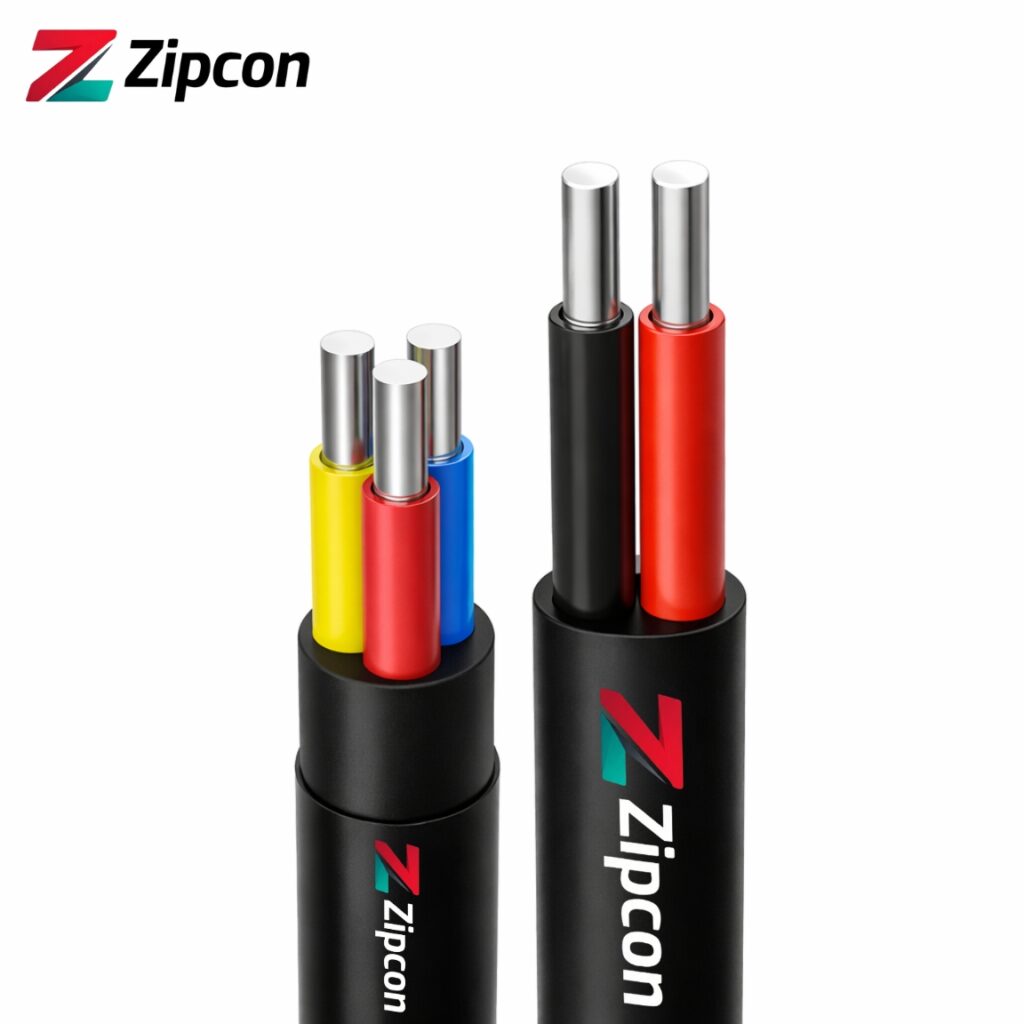
Choosing the right electrical cable is essential for maintaining safe, efficient, and dependable power transmission. Among the available options, round aluminium cables are widely used because aluminium offers a practical combination of electrical conductivity, lower weight, and cost efficiency. For projects where cable performance and installation requirements matter, selecting a reliable round aluminium cable manufacturer in India becomes an important decision.
Zipcon Cables focuses on providing quality cable solutions designed for different electrical applications. Its range of aluminium cables can be considered for residential, commercial, industrial, agricultural, and power-related installations where dependable electrical connectivity is required.
For inquiries or assistance:👉 https://zipconcables.com/contact-us/
What Is a Round Aluminium Cable?
A round aluminium cable is an electrical cable manufactured using aluminium as its conducting material, with the conductor arranged in a circular cable construction. Depending on the application, the cable can include suitable insulation and protective layers designed to provide electrical separation and mechanical protection.
Aluminium is commonly selected when reducing cable weight and material cost is important. Compared with copper of equivalent conductivity, aluminium has lower density, which can make aluminium cable solutions easier to handle in many installations.
Round construction also provides practical advantages during cable routing. It can be suitable for applications where cables need to pass through conduits, panels, cable trays, equipment connections, or other defined cable paths.
Why Choose Aluminium Cables for Electrical Applications?
1. Lightweight Construction
One of the major advantages of aluminium is its lower density compared with copper. This can reduce the overall weight of cable installations, particularly when longer cable lengths or larger conductor sizes are involved.
Lower weight can simplify transportation, handling, and installation. However, the conductor size and electrical requirements should always be selected according to the application’s load and applicable standards.
2. Cost-Effective Conductor Material
Aluminium is often considered when project budgets require an economical conductor solution. For suitable electrical applications, aluminium cables can provide a practical alternative to copper while maintaining the required electrical performance when correctly sized and installed.
This makes aluminium cable solutions relevant for large electrical projects where conductor material can significantly affect the overall project cost.
3. Suitable for Multiple Applications
Round aluminium cables can be used across different sectors depending on their construction and specifications. Common application areas include power distribution, industrial installations, commercial electrical systems, agricultural equipment, and other electrical infrastructure.
The important factor is selecting the appropriate cable specification for the voltage, current, environment, installation method, and expected operating conditions.
4. Easier Cable Handling
The lower weight of aluminium can make transportation and handling more convenient compared with heavier conductor alternatives. This can be particularly useful in projects involving considerable cable lengths.
Proper termination and installation practices remain essential because aluminium conductors have different characteristics from copper and require suitable connectors, lugs, and installation procedures.
Why Manufacturing Quality Matters in Round Aluminium Cables
The performance of a cable depends on much more than its conductor. Manufacturing consistency plays an important role in producing cables with reliable dimensions, insulation coverage, conductor quality, and overall construction.
A professional round aluminium cable manufacturer in India should maintain appropriate quality controls throughout production. This includes monitoring conductor dimensions, insulation thickness, material consistency, cable construction, and finished-product performance.
For buyers, this means the manufacturing process should be considered alongside the product’s price. A lower-cost cable may not necessarily deliver better value if its construction or application suitability is inadequate.
Key Features to Look for in Round Aluminium Cables
Before purchasing aluminium cables, buyers should evaluate several technical and practical factors.
Conductor Quality
The aluminium conductor is the primary current-carrying component. Its material quality, cross-sectional area, construction, and consistency affect electrical performance.
Selecting the correct conductor size is particularly important because cable sizing should be based on the expected load, installation conditions, allowable voltage drop, and relevant electrical requirements.
Insulation Quality
Insulation protects the conductor from electrical contact and environmental exposure. Depending on the cable type, suitable insulating materials can provide protection against heat, moisture, mechanical stress, and other operating conditions.
The insulation should be appropriate for the intended voltage rating and installation environment.
Cable Construction
A properly constructed round cable should maintain consistent dimensions and adequate insulation coverage. Consistency becomes particularly important when cables are installed through conduits, trays, panels, or electrical equipment.
Temperature Performance
Electrical cables generate heat during operation. Cable selection should therefore consider the expected operating temperature and installation conditions.
Using a cable beyond its designed capacity can increase heating and negatively affect service life.
Application Compatibility
Not every aluminium cable is suitable for every electrical installation. Buyers should match the cable specification with the application’s voltage, load, environment, installation method, and regulatory requirements.
Round Aluminium Cable Applications
Round aluminium cables can serve a wide range of electrical requirements when correctly specified.
Residential Electrical Projects
Aluminium cables may be considered for specific residential electrical applications where the cable specification and installation requirements permit their use. Proper sizing and professional installation are essential for safe electrical performance.
Commercial Buildings
Commercial projects often require organized electrical distribution across multiple areas. Suitable aluminium cable solutions can be used in selected power-distribution applications where their technical characteristics meet project requirements.
Industrial Applications
Industrial facilities require cables capable of operating under demanding electrical conditions. Depending on the equipment and installation environment, aluminium cables can be used for suitable power and distribution applications.
Agricultural and Pumping Systems
Agricultural installations may involve long cable runs and equipment operating in challenging environments. Cable selection should account for moisture, mechanical conditions, load requirements, and the specific equipment being powered.
Power Distribution
Aluminium conductors are widely considered for power-distribution applications because of their combination of conductivity, lower weight, and cost efficiency. The exact cable design and conductor size should be selected according to the project’s electrical specifications.
Round Aluminium Cable vs Copper Cable
Both aluminium and copper conductors have their own advantages. The right choice depends on the project’s technical and economic requirements.
| Factor | Aluminium Cable | Copper Cable |
|---|---|---|
| Weight | Lower | Higher |
| Material Cost | Generally more economical | Generally higher |
| Conductivity | Lower than copper | Higher |
| Cable Sizing | May require a larger conductor for equivalent performance | Smaller conductor may achieve comparable conductivity |
| Handling | Relatively lightweight | Heavier |
| Applications | Power distribution and suitable electrical installations | Wide range of electrical applications |
The comparison does not mean one conductor is universally better than the other. Instead, cable selection should be based on load, installation conditions, voltage drop, budget, termination requirements, and project specifications.
Why Choose Zipcon Cables?
Zipcon Cables can be a practical choice for businesses, contractors, distributors, and project buyers looking for dependable cable solutions in India.
The focus should always be on selecting cables according to application requirements rather than simply choosing the cheapest available option. Zipcon’s cable range can support buyers looking for electrical products that combine appropriate construction with practical installation requirements.
For contractors and project managers, working with an established cable manufacturer can also simplify product selection, procurement, and consistency across multiple installations.
Examples: Choosing the Right Aluminium Cable
Example 1: Commercial Power Distribution
Suppose a commercial building requires aluminium cables for a power-distribution system. The contractor should first determine the expected electrical load, cable route, installation method, ambient temperature, and allowable voltage drop.
After calculating the requirements, the appropriate conductor size and cable construction can be selected. Choosing a cable purely because it has a lower price could result in an unsuitable installation.
Example 2: Industrial Installation
An industrial unit may have motors, machinery, control systems, and distribution equipment operating for extended periods. In such an environment, cable selection should consider continuous load, temperature, mechanical exposure, and installation conditions.
A correctly specified round aluminium cable can be considered where its electrical and physical characteristics meet the project’s requirements.
Example 3: Long Cable Run
For a long-distance electrical connection, voltage drop becomes an important consideration. Even when the conductor material is appropriate, selecting an unsuitable conductor size can affect system performance.
The solution is to calculate the electrical requirements first and then select the cable size accordingly.
Expert Tips for Buying Round Aluminium Cables
1. Never select cable size only by price.
Conductor size should be based on actual electrical load and installation conditions.
2. Check the complete cable construction.
Look at the conductor, insulation, voltage rating, dimensions, and intended application.
3. Consider voltage drop for long runs.
Longer cable routes can make voltage-drop calculations especially important.
4. Use compatible termination accessories.
Aluminium conductors require suitable lugs, connectors, and installation practices.
5. Buy from a reliable manufacturer.
A consistent manufacturing process can help provide better product reliability and uniformity.
6. Follow applicable electrical standards.
Cable selection and installation should comply with relevant Indian electrical standards and project specifications.
7. Consider the installation environment.
Indoor, outdoor, underground, industrial, agricultural, and high-temperature environments can have different cable requirements.
Common Mistakes When Buying Aluminium Cables
Choosing the Wrong Cable Size
Using an undersized cable can result in excessive heating and voltage drop. Cable size should always be selected after considering the electrical load and installation conditions.
Focusing Only on Initial Price
The cheapest cable is not necessarily the most economical choice over its service life. Construction quality, reliability, installation requirements, and expected performance should also be considered.
Ignoring Installation Conditions
Temperature, cable grouping, ventilation, conduit installation, moisture, and mechanical exposure can influence cable performance. Ignoring these factors can lead to an unsuitable cable selection.
Using Incorrect Terminations
Poor connections can create resistance and localized heating. Appropriate connectors and proper installation techniques are important when working with aluminium conductors.
Buying Without Checking Specifications
A cable should be purchased according to technical specifications rather than appearance alone. Always verify conductor size, insulation type, voltage rating, construction, and application suitability.
How to Select the Right Round Aluminium Cable Manufacturer in India
When comparing manufacturers, evaluate more than product availability. Look at manufacturing capabilities, product specifications, quality-control practices, consistency, technical support, and ability to meet project requirements.
A reliable supplier should also provide clear information about cable construction and intended applications. This helps contractors and procurement teams make decisions based on technical requirements instead of assumptions.
For businesses seeking a dependable round aluminium cable manufacturer in India, Zipcon Cables is a brand worth considering for quality-focused cable requirements.
Why Zipcon Cables Can Be a Smart Choice for Cable Requirements
Electrical projects require consistency because cable performance directly affects the reliability of the overall electrical system. Selecting a manufacturer that understands different application requirements can make procurement and installation more straightforward.
Zipcon Cables aims to provide practical cable solutions for different electrical requirements. Whether the requirement involves commercial installations, industrial projects, power distribution, or other suitable applications, the correct cable specification remains the foundation of reliable performance.
For project buyers, contractors, dealers, and electrical professionals, choosing the right product from the beginning can help reduce installation complications and support long-term electrical system performance.
Conclusion
Finding the right round aluminium cable manufacturer in India is an important step when planning a reliable electrical installation. Aluminium cables can offer valuable benefits such as lower weight and cost efficiency when they are correctly designed, sized, installed, and matched to the application.
Zipcon Cables provides a strong option for buyers looking for quality-focused cable solutions in India. From conductor selection and insulation to cable construction and application suitability, every factor should be evaluated before making a purchase.
Frequently Asked Questions
1. What is a round aluminium cable?
A round aluminium cable is an electrical cable that uses aluminium as the conductor and features a circular cable construction. It can be used for suitable residential, commercial, industrial, agricultural, and power-distribution applications depending on its specifications.
2. Why are aluminium cables used in electrical systems?
Aluminium is lightweight and generally more economical than copper. These characteristics make aluminium cables suitable for various power and distribution applications when the conductor size and cable construction are correctly selected.
3. How do I choose the right aluminium cable size?
Cable size should be selected according to electrical load, voltage, cable length, installation method, ambient temperature, voltage-drop requirements, and applicable electrical standards. A qualified electrical professional should verify the final selection.
4. Are round aluminium cables suitable for industrial applications?
Yes, suitable round aluminium cables can be used in industrial applications when their electrical ratings, insulation, construction, and environmental characteristics match the project requirements.
5. Why choose Zipcon as a round aluminium cable manufacturer in India?
Zipcon Cables focuses on providing quality cable solutions for different electrical requirements. Buyers can consider Zipcon when looking for reliable aluminium cable products while ensuring that the selected cable specification matches their particular application.