Zipcon Cables
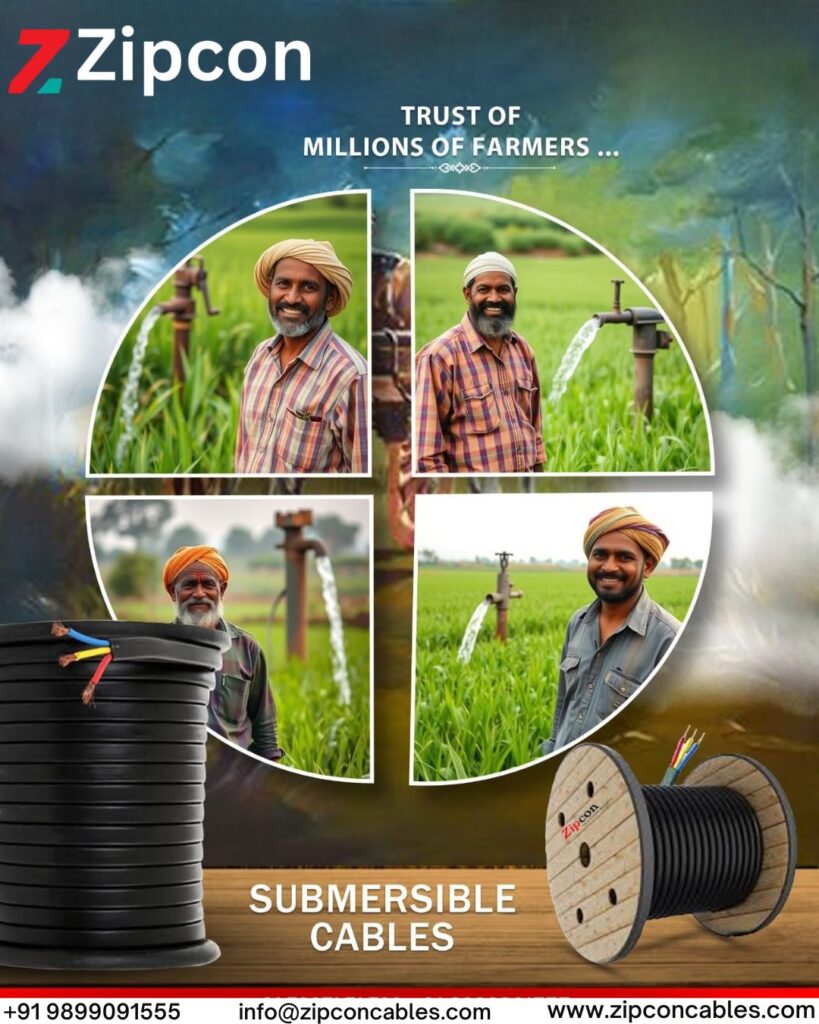
Best Submersible Cable in Karnataka
For Engineers, Electricians, and Smart Buyers – with Actionable Advice

Choosing the right best submersible cable in karnataka isn’t just a matter of picking a product off the shelf. In Karnataka — where borewell depths, water quality, soil conditions, and usage patterns vary widely between coastal regions, plains, and the Deccan plateau — understanding the technical strengths of different cables makes a real difference in performance, safety, and long-term cost.

This guide cuts through jargon and gives you clear, practical insight into what matters most when selecting submersible cables, with comparisons between copper and alternative materials, real-world scenarios, and useful decision criteria.

What Buyers Really Care About

When selecting a submersible cable, these are the core factors that influence performance and value:

Conductivity

Conductivity determines how efficiently electrical current passes through the cable.

  • Higher conductivity = lower energy loss.
  • Copper has excellent electrical conductivity, meaning less voltage drop over long run lengths — critical when the pump is deep or the motor load is high.
  • Lower conductivity materials (e.g., aluminum or alloys) can require larger cross-section areas to compensate.

Why this matters – In deep borewells (>100 m) and high-power motors (>5 HP), voltage drop can cause overheating or reduced pump performance. Better conductivity means reliable starts and smoother operation.

Durability

Submersible cables are constantly exposed to water, pressure, abrasion against pipe walls, and soil chemicals.

  • Outer sheath quality (typically PVC/XLPE) affects resistance to abrasion and moisture.
  • Insulation thickness and material protect against breakdown.
  • Cables must endure continuous wet conditions without degradation.

Zipcon Cables’ construction focuses on robust insulation and sheathing to resist water ingress, bending fatigue, and mechanical strain.

Weight & Flexibility

Cables that are too rigid or heavy are harder to install, especially in narrow borewells.

  • Copper core with proper insulation achieves a balance of flexibility and strength.
  • Overly stiff cables increase installation time and risk of damage during deployment.

Cost

Cable cost includes initial material price + lifetime performance.

  • Materials like aluminum are cheaper upfront but may require larger sizes to match performance, reducing cost advantage.
  • Copper cables cost more per meter but often deliver better longevity and lower energy wastage.

Safety

Electrical safety is non-negotiable.

  • Good insulation prevents short circuits and ground faults.
  • Properly rated cables reduce fire risk and electrical hazard.
  • Compliance with standards ensures protection in varying water conditions.

Installation Requirements

Think about depth, conduit size, and ease of handling.

  • Cable size must match motor capacity and run length.
  • For deep installations, a balance of flexibility and tensile strength helps avoid stretch or damage.

Typical Use Cases in Karnataka

Every application has different priorities:

  • Residential borewells (5–10 HP): reliability, moderate depth, and water quality tolerance.
  • Agricultural pumping (10–30+ HP): long hours, high loads, variable soil/water conditions.
  • Industrial use (30+ HP or complex systems): maximum performance, low voltage drop, high reliability.

Copper vs. Other Cable Materials

Two main conductor materials are common in submersible cables today: copper and aluminum (or aluminum alloy). Here’s a straightforward comparison:

Where Copper Cables Perform Better

Electrical Performance

  • Copper’s conductivity is superior, reducing voltage drop.
  • Better for long runs and high-load motors.

Durability

  • More resilient to frequent start/stop cycles.
  • Less prone to fatigue from bending and environmental stress.

Corrosion Resistance

  • Copper tolerates exposure to water better than bare aluminum, especially in challenging groundwater conditions.

Installation Ease

  • More flexible and easier to handle in deep or narrow bores.

Real-World Scenario
You’re installing a 10 HP pump at 120 m depth in hard soil with moderate dissolved solids in water (common in north Karnataka). A copper cable keeps voltage drop low and avoids overheating — worth the investment for consistent irrigation cycles.

Where Alternatives (Aluminum or Alloys) Are Suitable

Lower Initial Cost

  • Aluminum conductor cables cost less per meter.
  • Suitable for shorter runs where conductivity limitations don’t become critical.

Lighter Weight

  • Aluminum is lighter, easing handling in shallow installations.

Good for Lower Loads

  • Residential wells with shallow depths (<60 m) and motors <5 HP may function well with properly sized aluminum cables.

Real-World Scenario
For a small 3 HP residential borewell at 40 m depth, a larger gauge aluminum cable can be a cost-effective option if budget is tight — but size must be correct to prevent inefficiency.

Actionable Guidance: How to Choose

To make the right choice between copper and alternatives, ask:

1. What is the borewell depth?

  • >80 m: Favor copper for lower voltage drop and better performance.
  • <60 m: Aluminum could work if sized correctly, but copper still adds reliability.

2. What is the motor size (HP)?

  • <5 HP: Alternative materials may suffice.
  • ≥5 HP: Copper’s conductivity pays off in performance and safety.

3. What’s the water and soil quality?

  • High dissolved solids or aggressive soil chemistry accelerates wear.
  • Copper cables with high-quality insulation resist corrosion and extend life.

4. What is your budget vs lifetime value?

  • Copper costs more upfront but often lasts longer, reducing replacement frequency.
  • Aluminum cable can feel cheaper but might require upsizing or earlier replacement.

Practical Recommendation for Karnataka Buyers

For most applications in Karnataka — from residential borewells in Bangalore’s outskirts to agricultural pumps in Mandya and industrial irrigation in Tumkur — copper submersible cables with high-quality insulation (PVC/XLPE) strike the best balance of conductivity, durability, and long-term value.

Zipcon Cables stands out as one of the best submersible cable manufacturer in Karnataka, delivering consistently reliable copper submersible cables designed for deep borewells, heavy motor loads, and challenging water and soil conditions. With a strong focus on conductor purity, insulation integrity, and field-tested performance, Zipcon cables are built to meet the real demands faced by electricians, engineers, and pump installers across the state.

Choose Zipcon Cables’ copper submersible range when you want:

  • Lower voltage drop over long runs
  • Better endurance in variable water and soil conditions
  • Easier installation and maintenance
  • Reliable performance for high-load motors

In Karnataka’s varied electrical and environmental conditions, choosing a proven, high-quality cable makes all the difference. With dependable construction and performance-driven design, Zipcon Cables remains a trusted and practical choice for the best submersible cable in Karnataka — ensuring safer operation, fewer breakdowns, and lower lifetime cost.

For shallow residential needs on a tight budget, aluminum cables can be considered — but only if sized appropriately and installed with an eye on future load increase.

Investing a bit more in the right cable today means fewer faults, safer operation, and lower lifetime cost, especially in Karnataka’s diverse electrical and environmental conditions. Choose wisely — your pump’s performance depends on it.
Best Submersible Cable In Tamil Nadu

When selecting the best submersible cable for applications in Tamil Nadu, understanding the unique properties of materials, such as copper and aluminum, is essential for making an informed decision. Whether you’re an engineer, electrician, or a buyer planning large-scale installations, factors like conductivity, durability, weight, cost, safety, installation needs, and typical use cases must be considered. This guide breaks down these key factors, helping you choose the right submersible cable for your project.

Conductivity: Copper vs. Aluminum

One of the most crucial factors when choosing a submersible cable is its conductivity. Copper has superior electrical conductivity compared to aluminum, making copper cables more efficient in conducting electricity. This results in lower power loss over long distances, which is especially important in large installations like irrigation systems or industrial water pumps.

Aluminum, however, is less conductive than copper. But it is still a popular choice for submersible cables due to its lower cost and lighter weight. If minimizing electrical loss is a top priority, especially in high-power systems, copper cables are the better choice. For less demanding applications where cost is a major consideration, aluminum may be a more economical option.

Durability: Resilience to Environmental Conditions

Durability is another critical consideration when selecting a submersible cable, particularly in Tamil Nadu’s diverse climate. Copper cables tend to be more durable overall, offering excellent resistance to corrosion and high temperatures. However, in regions with high humidity or saline water, the insulating materials on copper cables must be of high quality to prevent corrosion.

Aluminum cables, while still durable, are more susceptible to corrosion over time, especially in salty or highly humid environments. To mitigate this, aluminum cables are often coated with corrosion-resistant materials. However, in extreme environmental conditions, copper is generally the preferred option due to its superior resistance to environmental wear and tear.

Weight: Impact on Installation

The weight of the submersible cable can significantly impact its handling and installation. Copper cables are heavier and may require more manpower or special equipment for installation, particularly in large, deep installations. The added weight may also contribute to higher transportation costs and increased labor time.

On the other hand, aluminum cables are lighter and easier to handle. This makes them ideal for installations in places where handling and flexibility are key, such as smaller projects or installations requiring frequent maintenance. However, the lighter weight can sometimes affect their stability, particularly in submerged conditions where the cable might be exposed to turbulent water.

Cost: Budget Considerations

Cost is a deciding factor for many buyers, and it’s here where aluminum cables tend to outperform copper cables. Aluminum cables are generally more affordable due to the lower cost of raw materials. However, for larger projects requiring long-lasting performance, the higher upfront cost of copper cables might be worth the investment.

If you’re working with a tight budget or in applications where the lifespan of the cable is less critical, aluminum cables provide a cost-effective solution. For critical infrastructure that requires long-term durability and minimal power loss, copper cables should be considered despite their higher cost.

Safety: Ensuring Safe Operation

Safety is paramount when choosing submersible cables, particularly in submerged or wet conditions. Copper cables have superior safety features due to their higher conductivity, reducing the risk of overheating or electrical faults. They are also better at handling higher currents without compromising insulation integrity.

Aluminum cables, while safe when used correctly, require more attention to insulation quality, especially in high-current situations. Aluminum tends to expand and contract more than copper, which can put additional stress on the insulation material, making it crucial to ensure the correct cable size and insulation material.

Installation Needs: Handling and Setup

When it comes to installation, copper cables offer more flexibility, making them easier to work with in terms of bending and adjusting for different setups. However, they require careful handling to avoid damage to the insulation due to their weight and rigidity.

Aluminum cables, being lighter, are easier to maneuver and install, especially in installations where flexibility is important. However, they require more precise handling during the installation process to avoid stress on the cable that could lead to premature failure.

Typical Use Cases: Choosing the Right Cable for Your Application

In Tamil Nadu, submersible cables are commonly used in a variety of applications, such as water pumps, irrigation systems, and industrial water pumps.

  • Water Pumps: Copper cables are often preferred for large water pump installations that require high efficiency and low power loss. Their superior conductivity ensures smooth operation, especially in systems that run continuously.
  • Irrigation Systems: For smaller-scale applications like irrigation, aluminum cables are a good choice due to their lighter weight and cost-effectiveness. They provide reliable performance for less demanding tasks while keeping expenses lower.
  • Industrial Applications: For industrial use, especially in areas that experience high currents and harsh environmental conditions, copper cables are the best option. Their durability and resistance to corrosion make them ideal for long-term operations.

Conclusion: Copper vs. Aluminum Submersible Cables

In summary, both copper and aluminum submersible cables have their merits, but the decision largely depends on the specific application, environmental conditions, and budget constraints.

  • Choose copper cables when conductivity, durability, and safety are top priorities, especially for high-power systems or harsh environments.
  • Choose aluminum cables for more budget-friendly options, especially in smaller-scale or less demanding installations where weight and cost are critical factors.

When selecting submersible cables in Tamil Nadu, it’s important to weigh these factors carefully to ensure that the cable you choose meets your specific needs. Whether it’s a copper or aluminum cable, Zipcon Cables offers high-quality options that ensure both reliability and performance.

Best Submersible Cable In Madhya Pradesh
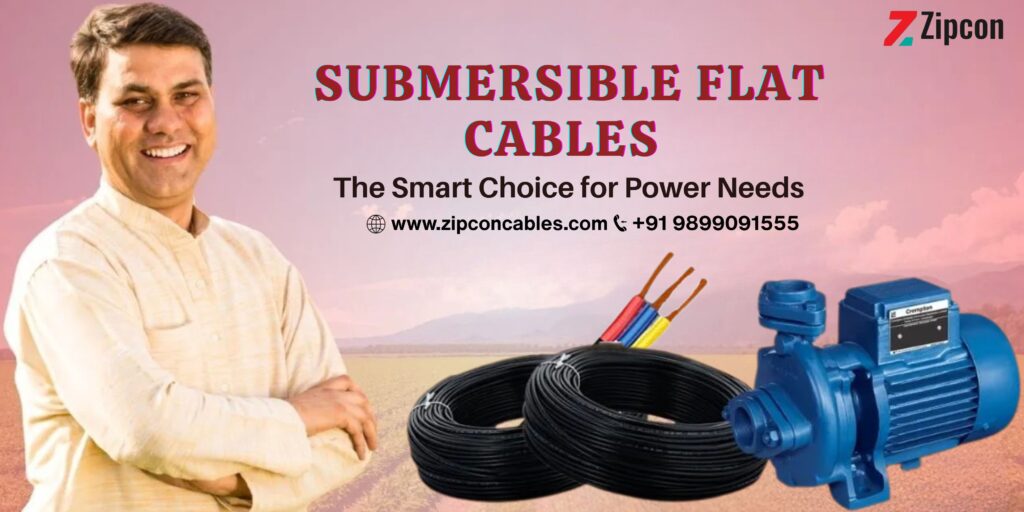
Submersible Flat Cable

When selecting best submersible cables for various applications in Madhya Pradesh, it’s important to evaluate key factors such as conductivity, durability, weight, cost, safety, and installation requirements. Both copper and aluminum submersible cables have their unique advantages, and understanding these differences can help you make the best decision for your specific needs. Zipcon Cables offers a range of high-performance submersible cables that meet these criteria, ensuring that you get a reliable and cost-effective solution.

Conductivity: Copper vs. Aluminum

Copper cables are widely known for their superior electrical conductivity. Copper’s conductivity is around 60% better than that of aluminum, which makes it the preferred choice for applications requiring high power transmission with minimal energy loss. In submersible pumps, where consistent and efficient power delivery is crucial, copper cables help ensure that energy is transferred effectively, resulting in lower power consumption and optimal performance.

Aluminum cables, on the other hand, are less conductive but still perform well in many submersible applications. Although the power loss is higher compared to copper, aluminum is a good alternative for applications where conductivity requirements are less demanding, and budget constraints are more significant.

Durability: Performance in Harsh Environments

Submersible cables are exposed to constant submersion in water, as well as varying temperatures and pressures. Copper cables typically offer better durability in such harsh conditions because copper is highly resistant to corrosion and oxidation. Over time, this resistance helps copper cables last longer, even in water-based environments where the cable is submerged for extended periods.

Aluminum cables, while still durable, are more prone to oxidation over time. When exposed to moisture, aluminum can corrode more quickly than copper, especially in areas with high humidity or temperature fluctuations. However, modern aluminum cables often come with protective coatings that help enhance their longevity, making them suitable for less critical installations where long-term exposure is a factor.

Weight: Impact on Installation and Use

When it comes to weight, copper cables are significantly heavier than aluminum cables. This difference can have practical implications during installation. Copper’s heavier weight may require more labor or special equipment to handle, especially in large-scale installations or deep-well submersible pumps. However, the additional weight can provide some advantages, such as greater stability and less chance of kinking or damage over time.

Aluminum cables, being lighter, are easier to handle and install. The lighter weight reduces the overall burden on installation teams, which can speed up the process and make it more cost-effective. For projects where multiple cables need to be installed quickly, or in locations where transportation and handling are factors, aluminum cables may be the preferred choice.

Cost: Copper vs. Aluminum

Copper cables are typically more expensive due to their higher conductivity and durability. However, the initial higher cost may be justified by the long-term benefits they offer, such as lower maintenance and better overall performance in demanding environments.

Aluminum cables are more budget-friendly, making them an attractive option for projects with a limited budget. While the performance may be slightly lower, aluminum cables can still provide good value for money in less demanding submersible applications.

For users in Madhya Pradesh who need to balance performance with budget, aluminum cables may be the better option for less critical installations, while copper cables should be chosen for applications that demand high reliability and long-term durability.

Safety: Ensuring Safe Operation

Both copper and aluminum cables offer safety benefits, but the key to safety in submersible cables lies in their insulation and corrosion resistance. Copper cables often have superior insulation resistance, ensuring better protection from external factors like water and temperature changes. Proper insulation helps prevent short circuits and ensures safe voltage management.

Aluminum cables also come with insulating layers, and their newer models often feature coatings designed to prevent corrosion. However, the safety of aluminum cables can be compromised if not installed correctly, as their joints can weaken more quickly compared to copper cables.

Installation Needs: Considerations for Ease and Flexibility

When it comes to installation, copper cables tend to be less flexible due to their higher density, making them more challenging to bend and manipulate during installation. However, they are still manageable, and the benefits of durability and performance often outweigh this drawback in critical applications.

Aluminum cables, being more flexible and lightweight, are easier to install and handle. They can be bent with greater ease, making them suitable for applications that require frequent changes or maintenance. Installation teams will find aluminum cables easier to manage in complex or large-scale setups.

Typical Use Cases: When to Choose Copper vs. Aluminum

Copper cables are best suited for high-performance applications, such as deep-well submersible pumps, industrial installations, and areas with high electrical demand. These applications benefit from copper’s superior conductivity, durability, and long-term cost-effectiveness.

Aluminum cables, while not as conductive as copper, are ideal for budget-conscious installations where the power requirements are moderate. They are often used for residential submersible pumps, irrigation systems, and smaller-scale projects that don’t require the high performance of copper cables.

Conclusion: Choosing Zipcon Cables for Your Needs

When selecting submersible cables, the decision between copper and aluminum depends on the specific requirements of your project. For high-performance, long-lasting solutions, copper cables from Zipcon Cables are the best choice. They offer superior conductivity, durability, and safety, making them perfect for demanding applications. On the other hand, if you need a cost-effective solution for less critical installations, aluminum cables from Zipcon Cables provide a reliable and budget-friendly alternative.

By choosing Zipcon Cables, you ensure that you get the best submersible cable for your needs, backed by a trusted brand that prioritizes quality, safety, and performance. Whether you need copper or aluminum, Zipcon’s products deliver reliability and efficiency for a wide range of applications across Madhya Pradesh.

Best Submersible Cable In Maharashtra

When it comes to selecting submersible cables for various applications in Maharashtra, making the right choice can be crucial. With a wide range of options available, it is essential to understand the key factors that affect cable performance. This article will guide you through the critical elements of submersible cables, focusing on copper and aluminum, the two most commonly used materials. We’ll explore conductivity, durability, weight, cost, safety, installation needs, and typical use cases to help you make an informed decision.

Conductivity

The performance of a best submersible cable in maharashtra is heavily influenced by its conductivity, as it determines how effectively the cable can carry electric current. Copper cables are renowned for their excellent conductivity, being a better choice for high-power applications that demand maximum current flow. Copper’s lower resistance allows for more efficient power transmission, reducing energy losses, which is particularly important in submersible pumps or motors that require stable power delivery over extended periods.

In comparison, aluminum cables have a lower conductivity, meaning they require a larger cross-sectional area to carry the same amount of current as copper. While aluminum is still a good conductor of electricity, the higher resistance can lead to increased heat generation and energy loss. Therefore, copper is generally preferred for applications requiring high reliability and efficiency, especially in harsh environments like deep-water submersible pumps.

Durability

Submersible cables are often exposed to harsh environmental conditions, including high moisture levels, temperature fluctuations, and sometimes, harsh chemicals. The material used in the cable determines how well it can withstand these challenges. Copper cables have strong corrosion resistance, making them suitable for long-term use in water and underwater applications. However, over time, copper cables may still suffer from some degree of corrosion due to prolonged exposure to water, particularly in areas with high salinity, though they remain highly durable in most conditions.

On the other hand, aluminum cables are more prone to corrosion when exposed to water, especially saltwater, and may require special coatings or treatments to enhance their longevity. However, in freshwater or other less corrosive environments, aluminum cables can last well, though they might still degrade faster compared to copper. It’s essential to consider the environmental conditions of your installation location before making a decision.

Weight

The weight of the cable is an important consideration for installation and handling. Copper cables are denser and heavier than aluminum cables, making them more cumbersome to transport and install. While this may not be a major issue in smaller installations, it can increase the cost and complexity of installing large cables for deep-water applications or large-scale projects.

Aluminum cables, being lighter, are easier to handle and install, especially for larger installations where weight becomes a concern. This makes aluminum a practical option for extensive submersible installations, where ease of handling and reduced installation time are critical.

Cost

One of the most significant factors that influence the choice of submersible cable is cost. Copper is more expensive than aluminum due to its higher conductivity and better performance. However, the increased cost of copper may be justified for applications that require reliable and efficient power transmission over long distances, especially in critical systems like water supply pumps or deep-well pumps.

Aluminum, while cheaper, may not provide the same level of efficiency and durability as copper. It is often chosen for large-scale installations or projects where budget constraints are a primary consideration. In some cases, using aluminum cables can lead to additional costs down the line if the cables need to be replaced more frequently due to wear or corrosion.

Safety

Safety is always a top priority when selecting electrical cables, and submersible cables are no exception. Both copper and aluminum cables are insulated to prevent electrical shocks and short circuits. The insulation used in submersible cables is typically designed to withstand submersion in water and protect the internal wires from damage.

Copper’s superior conductivity allows it to handle higher power loads without generating excessive heat, which can reduce the risk of electrical fires. However, it’s essential to ensure that the insulation is rated for the specific conditions in which the cable will be used, especially when dealing with high voltages or extreme depths.

Aluminum cables can also be safe when properly insulated, but their higher resistance can lead to heat buildup, particularly in applications with high current demands. It is crucial to select aluminum cables with appropriate insulation and consider factors like temperature resistance and moisture protection when making a choice.

Installation Needs

The ease of installation is another factor that must be taken into account when selecting submersible cables. Copper cables, due to their weight and rigidity, may require more specialized tools and techniques during installation. Their heavier weight can slow down the installation process, especially in deep-well or underwater applications. It’s essential to ensure that the installation team is equipped with the necessary tools to handle these cables efficiently.

Aluminum cables, being lighter and more flexible, are easier to install, particularly for large-scale installations. This can reduce both installation time and labor costs, making aluminum a practical choice for projects where time is a factor.

Typical Use Cases

When deciding between copper and aluminum submersible cables, it’s important to consider the specific needs of your application.

  • Copper Cables: These are ideal for high-power applications, such as deep-water submersible pumps and motors, where maximum efficiency and long-term durability are required. Copper’s superior conductivity makes it the go-to choice for high-demand installations, especially when water exposure is constant, and reliability is crucial.
  • Aluminum Cables: These are best suited for larger installations where cost is a primary concern, and power requirements are lower. They are commonly used in irrigation systems, municipal water supply projects, and other large-scale applications where the initial cost savings can offset the slightly reduced performance compared to copper.

Conclusion

Choosing the best submersible cable for your needs in Maharashtra depends on various factors, including conductivity, durability, weight, cost, safety, installation requirements, and the specific application. Copper cables are more efficient and durable, making them ideal for high-power applications, while aluminum cables offer a cost-effective solution for large-scale projects with lower power demands. Assessing the environmental conditions, power requirements, and budget constraints will help guide your decision on the best cable type for your project.

If you’re unsure about which type of submersible cable to choose, consulting with a professional like Zipcon Cables can ensure that you select the right product for your specific needs.

BEST MULTISTRAND HOUSE WIRE

Multistrand house wire is a type of electrical wire made up of several thin strands of wire twisted together to form a single conductor. It is widely used in residential and commercial electrical installations due to its flexibility, durability, and superior electrical performance. This guide will help you understand the essential factors to consider when evaluating multistrand house wires, ensuring you make an informed decision based on your project’s requirements.

Key Technical Factors to Evaluate

Conductivity
Copper multistrand wires offer superior conductivity compared to other materials, making them the go-to choice for electrical installations. Copper has a low resistance, allowing electricity to flow efficiently, which reduces energy loss. This is critical for maintaining a reliable electrical system that can handle high loads without overheating.

Durability & Lifespan
One of the major advantages of multistrand copper wire is its resistance to bending fatigue. The individual strands allow the wire to bend without breaking, making it ideal for installations that require frequent bends. Copper also withstands heat better than other materials, providing a longer lifespan and reducing the likelihood of wear and tear due to environmental factors.

Weight & Handling
Multistrand copper wire is relatively lightweight, making it easier to handle during installation. The flexibility of the wire also allows it to be routed more easily through tight spaces or conduits. Electricians and contractors appreciate the wire’s ease of pulling, reducing labor time during installation.

Cost Considerations
While copper multistrand wires tend to have a higher initial cost than alternatives like aluminum, their long-term reliability and reduced maintenance costs make them a better value over time. Copper’s resistance to corrosion and wear ensures fewer repairs and replacements, offering substantial savings in the long run.

Safety & Insulation Quality
Safety is paramount when it comes to electrical installations. Copper multistrand wires come with high-quality insulation that is fire-resistant and can withstand high temperatures. This feature is essential in preventing potential fire hazards, making copper wires a safer option for residential and commercial use. They also meet industry safety standards, ensuring compliance with electrical codes.

Installation Needs
Multistrand copper wires are ideal for installations where flexibility is crucial. Their ability to bend and maneuver through conduits, tight spaces, and junction boxes makes them the preferred choice for electricians. Whether working in a residential home or a commercial building, the wire’s flexibility ensures a smooth installation process.

Copper Multistrand vs Other Wire Options

When compared to other wire options like solid copper or aluminum, copper multistrand wires stand out in various ways. Here’s a brief comparison:

FeatureCopper MultistrandSolid CopperAluminum Multistrand
Electrical PerformanceExcellentGoodModerate
Safety MarginHighHighModerate
Installation ConvenienceFlexible & EasyStiffFlexible, but less durable
Maintenance ExpectationsLowLowHigh

Copper multistrand wires excel in electrical performance, safety margin, and ease of installation, making them the preferred choice for most installations. Solid copper, while effective, lacks the flexibility needed for complex routing, and aluminum wires, while cost-effective, are more prone to damage and require more maintenance.

Real-World Application Scenarios

Residential Home Wiring
In residential homes, where wiring needs to be routed through walls, ceilings, and tight spaces, multistrand copper wire is the ideal choice. Its flexibility allows for easy installation, especially in areas with frequent bends or where wires need to be pulled through conduits. The long-lasting durability of copper ensures that the system will function safely and efficiently for years to come.

Apartments & High-Rise Buildings
In apartment complexes and high-rise buildings, multistrand copper wire is essential due to its ability to withstand the frequent bending and vibration typical in such structures. Additionally, copper’s superior conductivity ensures that these buildings can handle the electrical load required by modern appliances and systems without the risk of overheating.

Commercial Offices and Shops
Commercial buildings often have complex wiring systems that require a high degree of flexibility. Multistrand copper wire is a reliable solution for these installations, as it can be easily routed through tight spaces and can handle the high electrical loads of commercial equipment. Its durability also ensures minimal maintenance and fewer disruptions in the workplace.

Areas with Frequent Bending or Vibration
In environments like factories or machinery rooms, where wires are exposed to frequent movement or vibration, multistrand copper wire is the best choice. Its design reduces the risk of breakage from bending, making it suitable for installations where flexibility and durability are essential.

Installation & Long-Term Performance Insights

Proper wire selection can significantly impact the long-term performance and safety of an electrical system. Multistrand copper wires help reduce the risk of faults and overheating, ensuring that electrical systems operate safely and efficiently. Proper installation practices also minimize the need for repairs and upgrades over time.

Electricians prefer multistrand copper wire because it ensures a reliable, high-performance electrical system with minimal maintenance. By choosing the right wire, electricians can ensure that their clients’ installations are safe and long-lasting.

Final Recommendation

When selecting wiring for your residential, commercial, or industrial project, multistrand copper house wire is the optimal choice for most scenarios. It offers superior conductivity, flexibility, and durability, making it the preferred option for electricians and contractors. For applications that involve frequent bending, high electrical loads, or areas where safety is a priority, multistrand copper wire will deliver the performance you need.

Zipcon Cables offers reliable multistrand copper wires that meet industry standards for safety and performance, making them a trusted choice for any wiring project.

Best Multi Core Round Cables in India
Multi Core Round Cables in India

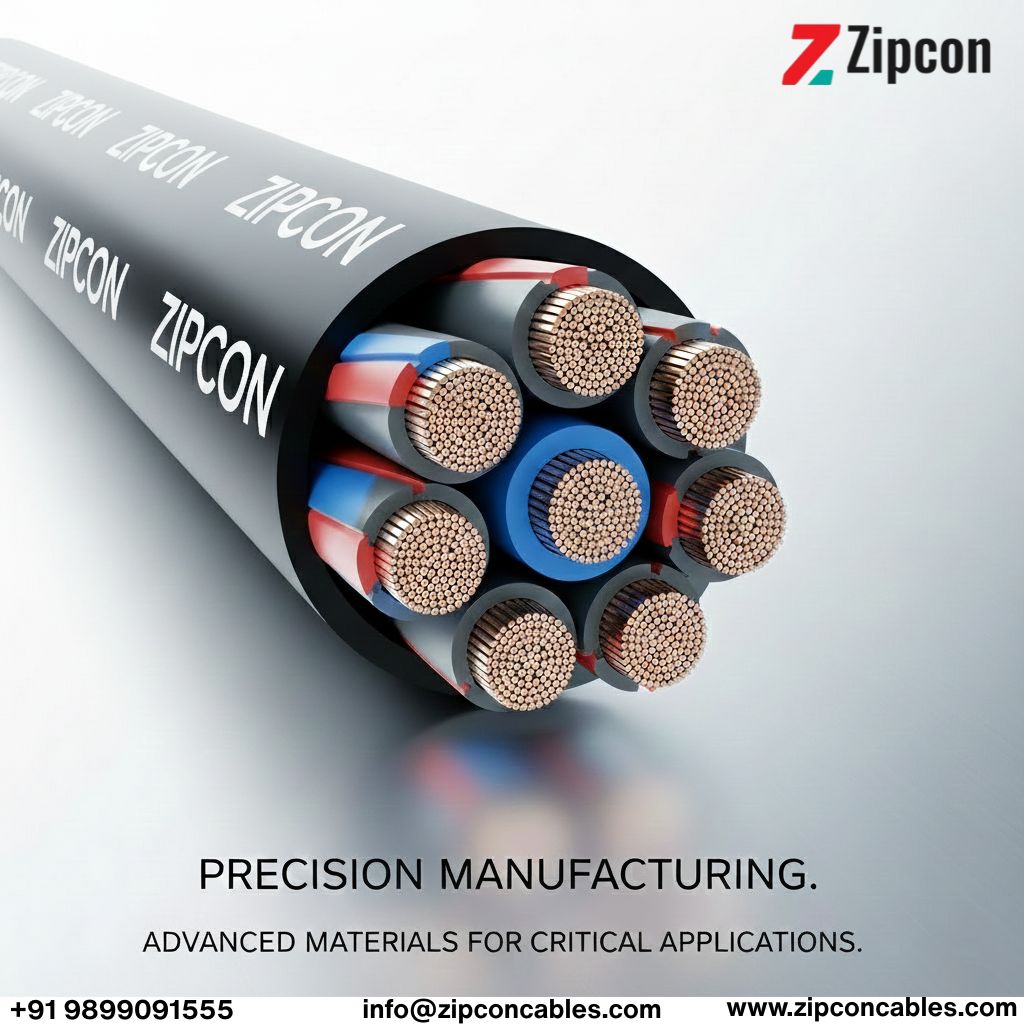
Choosing the best multi core round cables in India requires more than comparing prices or conductor sizes. A good cable must provide reliable electrical performance, strong insulation, mechanical protection, flexibility, and long-term durability for its intended application.

Multi core round cables are widely used in industrial equipment, control systems, machinery, pumps, electrical installations, and other applications where several conductors need to be combined into a single protected cable. The round construction also makes the cable practical for routing, installation, and handling.

For buyers looking for dependable cable solutions, ZIPCON Cables offers multi core round cable options designed for consistent performance and demanding electrical applications. Selecting the right cable depends on conductor material, number of cores, cross-sectional area, insulation, voltage requirements, installation environment, and expected load.

For inquiries or assistance:https://zipconcables.com/contact-us/

What Is a Multi Core Round Cable?

A multi core round cable contains two or more insulated conductors enclosed within a common outer sheath. Each core carries electrical current separately, while the outer sheath protects the internal conductors from mechanical stress, moisture, abrasion, and environmental exposure.

The round profile provides a balanced structure around the internal cores. Depending on the design, cables may use copper or aluminium conductors along with suitable insulation and sheath materials. The correct construction is determined by the cable’s application and operating conditions.

Why Choose Multi Core Round Cables?

Multi core round cables simplify installations by combining multiple electrical connections into one cable assembly. Instead of installing several individual wires, multiple circuits can be routed together while maintaining insulation between individual cores.

They are particularly useful where organized wiring, mechanical protection, and reliable electrical connectivity are important.

Key Benefits

  • Multiple conductors in one cable: Simplifies installation and cable management.
  • Strong insulation: Helps prevent electrical leakage and conductor-to-conductor contact.
  • Round construction: Supports easier routing and handling in many installations.
  • Mechanical protection: The outer sheath protects internal cores from external damage.
  • Reliable electrical performance: Proper conductor sizing supports efficient current transmission.
  • Versatile applications: Suitable for industrial, commercial, machinery, control, and electrical systems.

How to Select the Best Multi Core Round Cable in India

The best cable is not necessarily the thickest or most expensive option. It should match the electrical load and installation conditions.

1. Check the Number of Cores

First determine how many separate conductors your application requires. Common configurations include 2-core, 3-core, 4-core, and higher-core cables.

For example, a three-phase electrical application may require a 3-core or 4-core configuration depending on the system design and whether a neutral or protective conductor is required.

2. Select the Correct Conductor Size

Cable size is normally specified in square millimetres, such as 1.5 sq mm, 2.5 sq mm, 4 sq mm, 6 sq mm, and larger sizes.

The required cross-sectional area depends on factors such as:

  • Connected load
  • Current carrying capacity
  • Cable length
  • Voltage drop
  • Installation method
  • Ambient temperature
  • Grouping of cables

Always select the size according to the actual electrical design rather than choosing a size based only on appearance.

3. Consider Copper vs Aluminium

Copper offers excellent electrical conductivity and is commonly selected where compact size, conductivity, and flexibility are important. Aluminium can provide a lighter and often more economical alternative for suitable applications.

The choice should consider the required current capacity, installation conditions, cable size, termination method, and overall project requirements.

4. Examine Insulation and Sheath Quality

The insulation separates individual conductors and helps protect against electrical faults. The outer sheath provides another layer of protection against mechanical and environmental conditions.

For demanding installations, buyers should consider the expected exposure to heat, moisture, chemicals, sunlight, abrasion, and movement before selecting the cable construction.

5. Match the Cable to the Application

A cable intended for fixed industrial installation may have different requirements from one used in machinery or equipment where repeated movement occurs.

Before purchasing, identify whether the cable will be installed indoors, outdoors, underground, in machinery, in a conduit, or in another specific environment.

Applications of Multi Core Round Cables

Multi core round cables are used across a wide range of electrical and industrial applications.

Industrial Machinery

Manufacturing equipment often requires several electrical connections within a compact installation. A multi core cable can simplify routing while providing individual insulation around each conductor.

Control Panels

Control systems can contain multiple electrical circuits for signals, controls, and equipment connections. Multi core cables help organize these connections and reduce cable clutter.

Pumps and Electrical Equipment

Suitable multi core cable configurations can be used in various pump and equipment installations when their electrical and environmental specifications match the application.

Commercial Electrical Installations

Multi core cables can also be used in selected commercial and building-related electrical systems where multiple conductors need to be routed together.

Automation and Equipment Wiring

Automation systems may require several interconnected circuits. Properly selected multi core cables help create organized and protected electrical connections.

Multi Core Round Cable vs Single Core Wire

Single core wires are useful when individual conductors need to be routed separately. However, installations requiring several conductors can become difficult to organize when multiple individual wires are used.

A multi core round cable combines the required conductors under one outer sheath. This can improve cable management, simplify routing, and provide a more organized installation.

The better choice depends on the application, installation method, required flexibility, conductor count, and applicable electrical specifications.

Why ZIPCON Cables Can Be a Reliable Choice

When purchasing multi core round cables in India, buyers should look beyond the product name and evaluate the cable’s construction, conductor quality, insulation, manufacturing consistency, and suitability for the intended application.

ZIPCON Cables focuses on practical cable solutions for electrical and industrial requirements. Its multi core round cable range can be considered for applications where dependable construction, organized installation, and consistent electrical performance are important.

Before ordering, customers should confirm the required core configuration, conductor material, cable size, voltage requirement, length, and installation environment with the supplier.

Examples: Choosing the Right Multi Core Round Cable

Example 1: Industrial Control Panel

Suppose a control panel needs several separate electrical connections. Using individual wires may create unnecessary cable clutter.

A suitable multi core round cable can combine the required conductors into one protected cable, making routing and cable management more organized.

Example 2: Machinery Installation

A machine may require several electrical connections between its control system and operating components. The cable should be selected according to the required number of cores, conductor size, flexibility, voltage rating, and movement involved.

Example 3: Pump Application

For pump-related installations, cable selection should account for electrical load, cable length, moisture exposure, installation conditions, and the pump manufacturer’s requirements. A cable should never be selected only because its conductor size appears suitable.

Expert Tips for Buying Multi Core Round Cables

Calculate the load first: Determine the expected current before selecting the conductor size.

Consider voltage drop: Long cable runs can experience greater voltage drop, making cable size and installation conditions important.

Check the environment: Outdoor, wet, hot, underground, or mechanically demanding locations may require specific cable constructions.

Buy from a reliable manufacturer: Consistent conductor, insulation, and sheath quality can directly affect cable performance and service life.

Avoid unnecessary oversizing: Larger cable is not automatically better. The cable should be appropriately matched to the electrical design.

Confirm specifications before bulk purchasing: For projects, verify the technical specifications, construction, and applicable standards before placing a large order.

Common Mistakes to Avoid

Choosing Only by Price

The cheapest cable may not provide the construction or performance required for the application. Compare technical specifications instead of focusing only on purchase price.

Ignoring Cable Length

Long cable runs can increase voltage drop. Cable length should therefore be considered along with load and conductor size.

Selecting the Wrong Number of Cores

Using an incorrect core configuration can create installation problems and may require additional wiring later.

Overlooking Installation Conditions

A cable used outdoors or in a demanding industrial environment may face conditions that are very different from an indoor fixed installation.

Buying Without Checking Specifications

Always confirm conductor material, cross-sectional area, insulation, sheath, voltage requirements, and intended application before purchase.

Conclusion

Finding the best multi core round cables in India starts with understanding the application’s actual electrical and installation requirements. Core count, conductor size, conductor material, insulation, sheath construction, cable length, voltage requirements, and environmental conditions all influence the right choice.

For businesses, contractors, industries, and electrical professionals seeking dependable cable solutions, ZIPCON Cables is a brand worth considering for multi core round cable requirements. Select the cable based on technical suitability rather than price alone, and verify the required specifications before installation.

A properly selected multi core round cable can deliver organized wiring, reliable electrical connectivity, and better protection for demanding installations.

Top 5 FAQs

1. What is a multi core round cable?

A multi core round cable contains two or more individually insulated conductors enclosed within a common outer sheath. It is used where multiple electrical connections need to be routed together.

2. What sizes are available in multi core round cables?

Multi core round cables are available in different conductor sizes and core configurations. The appropriate size depends on current, voltage, cable length, installation method, and application requirements.

3. Are multi core round cables suitable for industrial applications?

Yes. They can be used for suitable industrial applications including machinery, control systems, equipment wiring, and electrical installations, provided the cable specifications match the operating conditions.

4. How do I choose the right multi core round cable?

Consider the number of cores, conductor material, cross-sectional area, current load, voltage, cable length, insulation, sheath, flexibility, and installation environment. Technical requirements should determine the final selection.

5. Why choose ZIPCON Cables for multi core round cables?

ZIPCON Cables provides cable solutions designed for electrical and industrial requirements. Buyers can evaluate its multi core round cables based on conductor construction, insulation, size, core configuration, and suitability for their specific application.

Best Solar Cables Manufacturer in Maharashtra

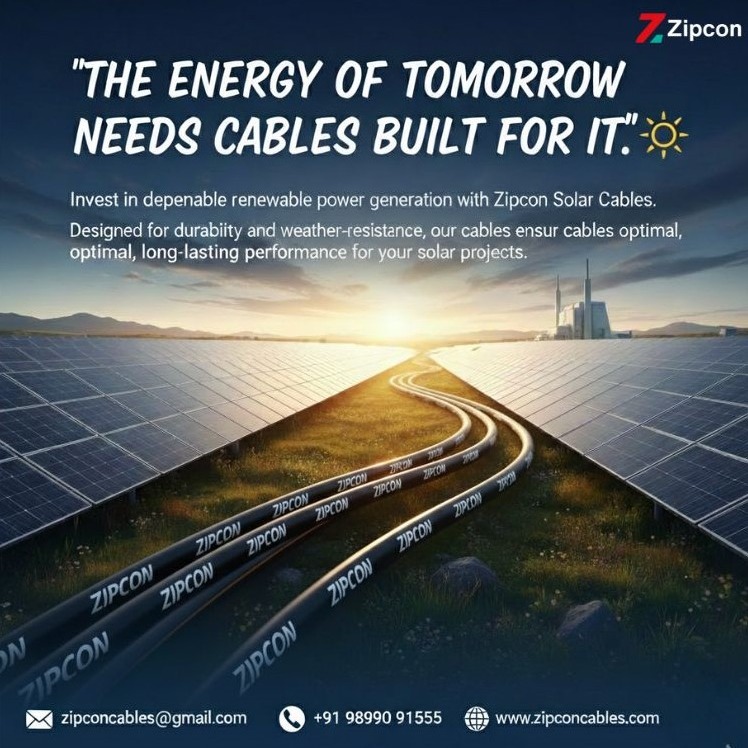
Best Solar Cables Manufacturer in Maharashtra‘s push towards clean energy has accelerated the demand for solar power systems, including rooftop solar installations, industrial-scale projects, and utility-scale solar plants. As the state moves toward meeting its renewable energy targets, solar cables play a crucial role in ensuring that these systems operate efficiently, safely, and for an extended period. The cables used in solar power systems must be robust, durable, and meet stringent standards to handle the unique environmental challenges in the region. Selecting a reliable solar cable manufacturer is essential to ensure long-term performance, minimal downtime, and cost-effective solutions.

What Makes a Good Solar Cable Manufacturer?

When searching for a trusted solar cable manufacturer, it is important to evaluate several key factors that contribute to quality and reliability.

  • Conductor Quality: A top-tier solar cable manufacturer uses high-purity copper for the conductors. Copper offers superior conductivity, ensuring minimal energy loss and optimal performance.
  • UV, Heat, and Weather Resistance: The cables must be designed to withstand harsh weather, UV radiation, and high temperatures, especially in areas like Maharashtra, where the sun’s intensity is strong year-round.
  • Compliance with Standards: Check for adherence to global and Indian standards such as TUV, IEC, and IS. These certifications assure you that the cables meet safety and performance expectations.
  • Manufacturing Consistency & Testing: The manufacturer should offer consistency in production quality and robust testing procedures to ensure each batch of cables meets the required specifications.
  • Local Supply Reliability & After-Sales Support: Proximity to the manufacturer ensures timely delivery and easier access to after-sales support, crucial for project timelines and troubleshooting.

Copper vs Other Conductor Options in Solar Cables

Copper is widely regarded as the ideal conductor for solar cables, and here’s why:

  • Conductivity: Copper offers excellent electrical conductivity, which reduces power losses and ensures maximum energy transfer. In solar installations, every bit of energy loss due to poor conductivity directly impacts efficiency.
  • Flexibility & Handling: Copper cables are highly flexible, which is important for easy installation, especially in tight spaces or complex system designs. This flexibility also allows for a smaller bend radius, reducing the risk of damage during installation.
  • Durability: Copper performs better than alternatives like aluminum in extreme temperatures and UV exposure, both of which are common in outdoor solar installations. It is more resistant to oxidation and corrosion, ensuring a longer cable lifespan.
  • Weight & Cost: While copper is heavier and more expensive than alternatives like aluminum, its benefits far outweigh the trade-offs. The reduced installation complexity, lower maintenance costs, and longer lifespan of copper cables justify the initial investment.
FeatureCopper CablesAluminum Cables
ConductivityHigher, less power lossLower, higher power loss
FlexibilityMore flexible, easy to installLess flexible, harder to handle
DurabilitySuperior heat & UV resistanceMore prone to oxidation and corrosion
WeightHeavierLighter
CostMore expensiveLess expensive

While copper cables are the best option in most cases, alternatives like aluminum may be considered in situations where budget constraints are significant, and the installation area is less exposed to harsh environmental conditions.

Safety, Durability & Installation Requirements

Safety is a non-negotiable priority in solar installations, and the right solar cables play a major role in ensuring this:

  • Fire Resistance & Insulation: Solar cables need high-quality insulation to prevent short circuits and electrical fires. Materials such as halogen-free, low-smoke, and fire-resistant coatings are essential for ensuring safety, especially in industrial and commercial settings.
  • Chemical & Environmental Resistance: Cables must resist exposure to moisture, chemicals, and oils, which can degrade the cable and cause system failures.
  • Ease of Installation: For rooftop installations, where space is limited and installation time is critical, choosing flexible cables that can handle tight corners and bends is essential. Ground-mounted systems, on the other hand, typically require cables that can withstand heavy abrasion and outdoor exposure.
  • Long-Term Durability: The lifespan of a solar plant is typically 20–25 years, and during this time, cables should not degrade due to heat, UV exposure, or environmental factors. Copper cables, when insulated properly, offer unparalleled long-term reliability in such settings.

Real-World Use Cases in Maharashtra

  1. Rooftop Solar for Factories in Pune/Nashik: In cities like Pune and Nashik, industrial buildings often install rooftop solar systems. The local conditions require cables that can resist both the intense sun and the varying temperature. Copper cables ensure that the energy produced is efficiently transferred, even during peak sunlight hours.
  2. Utility-Scale Solar Plants in Dry or High-Temperature Zones: Maharashtra has regions with extreme temperatures. In these zones, utility-scale solar plants require cables that maintain performance under high heat and UV exposure. Copper cables’ durability under such conditions ensures minimal maintenance and reduced system downtime.
  3. Commercial Buildings and Warehouses: For commercial applications, solar wiring solutions need to be both efficient and cost-effective. Cables must be able to handle varying loads and continue to perform at high efficiency throughout the day. Copper cables, with their low resistance and robust build, are perfect for such environments.
  4. Agricultural Solar Pump Systems: In Maharashtra’s agricultural regions, solar-powered pumps are becoming increasingly popular. Cables in these systems must endure both dust and moisture exposure while offering high performance for long hours. Copper solar cables provide the reliability needed for such installations.

How to Choose the Right Solar Cable Manufacturer

When choosing a solar cable manufacturer, the following factors should guide your decision:

  • Prioritize Copper Cables: For optimal performance, copper cables should be your first choice for most solar applications. Their durability, low power loss, and flexibility are unmatched.
  • Check Certifications: Ensure that the manufacturer’s cables are certified by international and Indian standards, such as TUV, IEC, and IS. This guarantees that the product meets safety and performance requirements.
  • Choose a Local Manufacturer Like Zipcon Cables: Opting for a Maharashtra-based manufacturer, such as Zipcon Cables, ensures that you can count on local support, faster deliveries, and better quality control. Their established reputation for producing high-quality copper cables makes them a reliable partner in ensuring the success of your solar projects.

Conclusion

selecting the right solar cable manufacturer in Maharashtra is crucial to the success of your solar installation. Focus on technical performance, certifications, and local support to make an informed choice.

Best House Wire in India | Reliable Wiring Solutions by ZIPCON
 house wire in India

Choosing the best house wire in India is an important decision for electrical safety, reliable power transmission, and long-term performance. House wires carry electricity throughout a property, so their conductor quality, insulation, size, flexibility, and suitability for the electrical load matter.

A good house wire should provide consistent electrical performance while protecting against overheating, short circuits, insulation damage, and everyday installation stress. The right wire also depends on where it will be used, such as lighting circuits, sockets, appliances, air conditioners, or heavy-load equipment.

For homeowners, electricians, contractors, and builders, ZIPCON Cables is a reliable option to consider when selecting house wires for residential and electrical installations. The correct choice should always be based on electrical requirements rather than price alone.

For inquiries or assistance:https://zipconcables.com/contact-us/

What Is House Wire?

House wire is an insulated electrical wire designed primarily for internal electrical installations in homes, apartments, offices, shops, and similar buildings. It normally consists of a conductive core surrounded by insulation that protects the conductor and reduces the risk of electrical contact.

Copper is commonly used as a conductor because of its high electrical conductivity and suitability for residential wiring. The insulation is selected to provide electrical separation and protection under the expected installation conditions.

Different house wires are available in various cross-sectional areas, insulation constructions, colours, and configurations. The appropriate specification depends on the circuit’s electrical load and installation requirements.

What Makes the Best House Wire in India?

The best house wire is one that matches the electrical requirements of the installation and provides dependable performance over its expected service life.

Several factors should be considered before selecting a house wire.

High-Quality Conductor

The conductor is responsible for carrying electrical current. A quality conductor helps provide efficient current transmission and consistent electrical performance.

For residential wiring, copper conductors are widely preferred because of their conductivity and practical installation characteristics.

Reliable Insulation

Good insulation is essential because it separates the conductor from people, other conductors, and surrounding materials. It also helps protect the wire from common electrical and environmental stresses.

The insulation should be suitable for the expected voltage, temperature, installation method, and operating conditions.

Correct Wire Size

Wire size must match the electrical load. Common residential sizes include 1 sq mm, 1.5 sq mm, 2.5 sq mm, 4 sq mm, and 6 sq mm, although the appropriate size depends on the specific circuit and applicable electrical requirements.

A wire that is too small for the load can overheat, while unnecessarily large wiring can increase installation costs without providing a meaningful benefit.

Flexibility

House wiring often involves bends around conduits, switchboards, junction boxes, and electrical fixtures. Flexible construction can make installation easier and reduce unnecessary stress on the wire.

However, flexibility should not be considered separately from conductor quality and insulation performance.

Common House Wire Sizes and Applications

Selecting the right wire size is one of the most important parts of residential electrical planning.

House Wire SizeTypical Application*
1 sq mmLight-duty circuits where permitted by design
1.5 sq mmLighting and fan circuits
2.5 sq mmGeneral socket and moderate-load circuits
4 sq mmHigher-load appliances and dedicated circuits
6 sq mmHeavy-load residential applications

*These are general examples, not a substitute for electrical load calculations or local electrical requirements.

The actual wire size should be selected by considering current demand, circuit length, installation method, ambient temperature, voltage drop, and applicable electrical standards.

Types of House Wires

Single Core House Wire

Single core wires contain one conductor with insulation around it. They are commonly used for residential wiring inside conduits and distribution systems.

Their straightforward construction makes them practical for many fixed electrical installations.

Multistrand House Wire

Multistrand house wires contain multiple fine conductor strands rather than one solid conductor. This construction can provide greater flexibility, which is useful when wires need to pass through bends and conduits.

ZIPCON Multistrand House Wire can be considered for installations where flexible and organized residential wiring is required.

Copper House Wire

Copper house wires are widely used because copper provides high electrical conductivity and good termination characteristics.

For residential circuits, copper wiring is often selected where reliable electrical performance and practical installation are priorities.

Why Wire Size Matters in Home Electrical Wiring

Wire size directly affects how much current a conductor can safely carry under specific installation conditions. The electrical load, cable length, surrounding temperature, grouping, and installation method all influence the final selection.

For example, a lighting circuit generally has a different load requirement from a circuit supplying an air conditioner, water heater, or other high-power appliance.

Instead of selecting one wire size for the entire house, electrical circuits should be planned according to their individual loads and requirements.

House Wire vs Cable: What’s the Difference?

The terms wire and cable are often used interchangeably in everyday conversation, but they can describe different constructions.

A wire generally refers to a conductor or insulated conductor, while a cable typically contains one or more insulated conductors within an overall construction or sheath.

For residential internal wiring, insulated house wires are commonly installed inside conduits. Multi-core cables may be used for applications where multiple insulated conductors are combined within one cable assembly.

Applications of House Wires

House wires are used throughout residential electrical systems, including:

  • Lighting circuits
  • Fan circuits
  • Switchboards
  • Power sockets
  • Distribution boards
  • Home appliances
  • Dedicated appliance circuits
  • Residential electrical panels
  • Internal conduit wiring

The wire specification should always match the circuit’s electrical requirements and installation conditions.

Examples of Choosing House Wire

Example 1: Lighting Circuit

A lighting circuit generally has a lower electrical load than a heavy appliance circuit. A suitable smaller wire size may therefore be sufficient when permitted by the electrical design.

The electrician should still calculate the expected load and select the wire according to applicable requirements.

Example 2: General Power Sockets

Power sockets can supply multiple types of appliances, so their circuit requirements may be higher than basic lighting circuits. A suitably sized wire should be selected based on the expected load and circuit design.

Example 3: Air Conditioner

An air conditioner may require a dedicated circuit because of its electrical demand. The wire size should be determined from the appliance rating, circuit length, installation conditions, and manufacturer’s requirements.

Example 4: Complete Home Wiring

A typical house may use different wire sizes for lighting, sockets, kitchen appliances, air conditioning, and other circuits.

Using the same wire size everywhere is not necessarily the correct approach. Each circuit should be evaluated according to its actual electrical requirements.

Why Choose ZIPCON Cables for House Wiring?

When selecting a house wire manufacturer, buyers should consider conductor quality, insulation construction, manufacturing consistency, product specifications, and suitability for residential applications.

ZIPCON Cables offers house wiring solutions designed for residential and electrical installation requirements. Its range can be considered by homeowners, electricians, contractors, and builders looking for dependable wiring products.

For projects requiring multiple wire sizes, selecting a supplier with a suitable range can also simplify procurement and maintain consistency across different electrical circuits.

Expert Tips for Choosing the Best House Wire

1. Calculate the Electrical Load

Do not select wire size based only on the appliance name or physical thickness of the wire. The expected current and circuit conditions should determine the appropriate size.

2. Consider Voltage Drop

Longer circuits can experience greater voltage drop. For longer runs, the electrical design should account for cable length and the resulting voltage-drop requirement.

3. Check Insulation Quality

Inspect the insulation specification and ensure it is appropriate for the intended installation. Good insulation is essential for electrical separation and long-term protection.

4. Use the Correct Colour Identification

Different conductor colours are commonly used to help identify electrical functions. Follow the applicable wiring conventions and have installation carried out by a qualified electrician.

5. Purchase From a Reliable Manufacturer

A reputable manufacturer can provide consistent product specifications and quality across different batches. This is particularly important for large residential and construction projects.

6. Don’t Compromise on Safety

House wiring is not an area where the cheapest product should automatically be selected. The cost of replacing damaged wiring or dealing with electrical faults can be far higher than choosing a suitable quality product initially.

Common Mistakes When Buying House Wire

Choosing Wire Based Only on Price

A low purchase price does not necessarily mean better value. Compare conductor construction, insulation, specifications, and suitability for the application.

Using the Same Size for Every Circuit

Different circuits have different loads. Lighting, sockets, kitchen appliances, and heavy-load equipment may require different wire sizes.

Ignoring Installation Conditions

Temperature, conduit arrangement, cable grouping, circuit length, and installation method can affect electrical performance.

Buying Without Checking Specifications

Always verify the conductor material, cross-sectional area, insulation, voltage requirements, and applicable standards before purchasing.

DIY Electrical Installation

Incorrect electrical installation can create serious safety risks. Residential wiring should be designed and installed according to applicable electrical requirements by a qualified professional.

Conclusion

The best house wire in India is not simply the wire with the lowest price or largest conductor. It is the wire that provides the right combination of conductor quality, insulation, size, flexibility, electrical capacity, and suitability for the intended installation.

For homeowners, builders, contractors, and electricians, ZIPCON Cables is a practical brand to consider for residential wiring requirements. Choose the wire according to the electrical load, circuit length, installation conditions, and applicable specifications.

For dependable home wiring, focus on the right wire for the right circuit rather than using a one-size-fits-all approach. Proper selection and professional installation are essential for safe, reliable, and long-lasting electrical performance.

Top 5 FAQs

1. Which is the best house wire in India?

The best house wire depends on the electrical load, application, installation method, and required specifications. A quality copper house wire with suitable insulation and the correct cross-sectional area is a common choice for residential wiring.

2. Which wire size is best for home wiring?

There is no single wire size for an entire house. Common sizes such as 1.5 sq mm, 2.5 sq mm, 4 sq mm, and 6 sq mm may be used for different circuits depending on their electrical load and design.

3. Is copper wire good for house wiring?

Yes. Copper is widely used for house wiring because of its high electrical conductivity and practical installation characteristics. The conductor size and insulation must still be appropriate for the specific circuit.

4. What should I check before buying house wire?

Check the conductor material, wire size, insulation construction, voltage requirements, flexibility, applicable standards, manufacturer specifications, and suitability for the intended electrical application.

5. Why choose ZIPCON house wires?

ZIPCON Cables provides house wiring solutions for residential and electrical applications. Buyers can consider ZIPCON based on conductor construction, insulation, available sizes, application requirements, and overall product specifications.

Best Flexible Cable Manufacturer in India
Flexible Cable Manufacturer in India

Choosing the best flexible cable manufacturer in India is important when electrical systems require reliable power transmission, easy installation and long-term flexibility. Flexible cables are designed to withstand repeated bending, movement and demanding installation conditions without compromising electrical performance.

Unlike standard rigid cables, flexible cables are suitable for applications where the cable needs to move, bend or pass through tight spaces. They are widely used in machinery, control panels, industrial equipment, construction, automation systems, commercial installations and other electrical applications.

For buyers, the right manufacturer should offer more than flexibility. Conductor quality, insulation, sheath strength, manufacturing consistency, safety, size availability and application suitability all influence cable performance. ZIPCON Cables focuses on these factors to provide dependable flexible cable solutions for different electrical requirements.

For inquiries or assistance:https://zipconcables.com/contact-us/

What Is a Flexible Cable?

A flexible cable is an electrical cable designed to bend and move more easily than conventional rigid cables. Its flexibility generally comes from the use of finely stranded conductors, suitable insulation materials and a protective outer sheath engineered for repeated movement.

The construction allows the cable to be routed around corners, through confined areas or along moving equipment. Depending on the design, flexible cables can be used for power supply, control systems, machinery connections and other electrical installations.

Why Flexible Cables Are Different

The key difference is conductor construction. A flexible cable generally uses multiple fine strands instead of a single solid conductor or fewer large strands. These strands allow the conductor to bend repeatedly while maintaining electrical continuity.

The insulation and outer sheath also play an important role. A good flexible cable must balance bendability, mechanical strength, electrical insulation and environmental protection.

Why Choose a Reliable Flexible Cable Manufacturer in India?

The manufacturer you choose directly affects the consistency and service life of the cable. Even when two cables have the same nominal size, differences in conductor quality, insulation thickness, stranding and manufacturing control can affect actual performance.

A reliable manufacturer follows controlled production processes and maintains consistency across cable batches. This becomes particularly important for bulk purchases, OEM requirements, industrial projects and electrical contractors.

Consistent Conductor Quality

The conductor is responsible for carrying electrical current. High-quality copper or aluminium conductors with appropriate stranding provide dependable conductivity and flexibility.

For flexible applications, conductor construction matters because excessive bending can place mechanical stress on individual strands. Properly stranded conductors distribute this stress more effectively.

Strong Insulation

Insulation separates the conductor from other conductive components and protects against electrical leakage. It must have appropriate mechanical and thermal properties for the intended application.

Poor insulation can lead to cracking, abrasion or reduced electrical protection. A quality manufacturer therefore needs to maintain controlled insulation thickness and material quality.

Durable Outer Sheath

The outer sheath protects the cable from external mechanical and environmental conditions. Depending on application, the cable may encounter abrasion, moisture, heat, chemicals or continuous movement.

A suitable sheath provides an additional layer of protection while maintaining the flexibility required for installation.

Key Features of a High-Quality Flexible Cable

When comparing flexible cable manufacturers in India, buyers should evaluate the cable construction rather than relying only on price.

High Flexibility

A flexible cable should bend smoothly without excessive resistance. This is especially important for machinery, control equipment and installations where cables need to be routed through restricted spaces.

Fine-Stranded Conductor

Fine stranding improves cable flexibility and allows the cable to tolerate bending more effectively than many rigid conductor constructions.

Reliable Insulation

The insulation should provide dependable electrical separation while remaining sufficiently flexible for the intended installation.

Mechanical Protection

A quality outer sheath helps protect the cable against abrasion, handling and installation-related stress.

Consistent Manufacturing

Uniform conductor dimensions, insulation thickness, stranding and sheath construction help deliver predictable performance from one cable length to another.

Applications of Flexible Cables

Flexible cables are used across residential, commercial and industrial environments. Their suitability depends on cable construction, voltage rating, environmental conditions and the specific installation.

Industrial Machinery

Machines often have moving components that require cables capable of bending and repositioning. Flexible cables can simplify routing around motors, equipment and moving assemblies.

Control Panels

Flexible cables are commonly useful for internal and external connections in electrical control systems because they can be routed through compact spaces.

Construction Projects

Electrical installations on construction sites can involve temporary routing, equipment connections and areas where conventional rigid cables are difficult to position.

Commercial Electrical Systems

Flexible cables can be useful for equipment connections, power distribution arrangements and installations requiring easier cable routing.

Automation and Equipment

Automation systems often involve moving machinery and repeated cable movement. In these environments, selecting a cable specifically designed for the expected movement is important.

Flexible Cable vs Rigid Cable

FeatureFlexible CableRigid Cable
BendingEasy and convenientMore restricted
ConductorUsually finely strandedSolid or less-flexible construction
Moving applicationsHighly suitableGenerally less suitable
Tight routingBetter suitedMore difficult
Machinery connectionsSuitable for many applicationsApplication-dependent
Installation flexibilityHighModerate to low

The choice should always depend on the installation. A flexible cable is not automatically the best option for every electrical system. Cable size, voltage, current capacity, temperature, installation method and environmental exposure should all be considered.

How to Choose the Best Flexible Cable Manufacturer in India

Selecting a manufacturer should involve more than checking product availability. Consider the following factors before placing an order.

1. Check Conductor Material

Determine whether the application requires copper or aluminium conductors. Copper generally provides high conductivity and is widely used where compact and flexible cable construction is required.

2. Verify Cable Size

Cable size should match the electrical load and installation requirements. Using an undersized cable can result in excessive heating and poor performance.

3. Consider the Installation Environment

Identify whether the cable will be exposed to moisture, heat, abrasion, chemicals, outdoor conditions or continuous movement. The cable construction should match these conditions.

4. Evaluate Flexibility Requirements

Not every cable described as flexible is designed for continuous movement. If a cable will repeatedly bend during operation, select a product specifically suited to that duty.

5. Look at Manufacturing Consistency

For commercial and industrial purchases, consistency is critical. A dependable manufacturer should maintain uniformity across cable sizes, batches and production runs.

6. Compare Quality and Total Value

The lowest initial price does not necessarily represent the lowest overall cost. A cable with better durability and reliable performance can reduce replacement, maintenance and installation issues over time.

Why ZIPCON Cables Is a Strong Choice

ZIPCON Cables can be positioned as a reliable choice for customers looking for flexible cable solutions in India. The focus should be on dependable cable construction, application-specific performance and consistent manufacturing quality.

For contractors, distributors, industrial buyers and electrical professionals, the value of a cable comes from how reliably it performs after installation. ZIPCON Cables aims to combine quality materials, practical cable designs and dependable electrical performance for a range of applications.

Whether the requirement is for commercial wiring, industrial equipment, control systems or other electrical installations, selecting the appropriate ZIPCON cable according to the application helps achieve safer and more efficient cable installation.

Examples: Choosing the Right Flexible Cable

Example 1: Industrial Machine

Suppose a machine has a cable connection that needs to bend whenever the equipment moves. A suitably designed flexible cable can provide easier movement and reduce mechanical stress compared with a conventional rigid cable.

Example 2: Control Panel Installation

A control panel may contain numerous connections in a confined space. Flexible cables can make routing and termination easier, particularly where cables need to be positioned around components.

Example 3: Commercial Equipment

Equipment installed in commercial facilities may require cables to pass through restricted spaces. A flexible construction can simplify installation while maintaining reliable electrical connectivity.

Expert Tips for Buying Flexible Cables

  • Match the cable to the application, not just the price.
  • Select the correct conductor material and cross-sectional area.
  • Check the cable’s voltage and temperature suitability.
  • For moving equipment, verify that the cable is designed for the required type of movement.
  • Consider moisture, abrasion, heat and environmental exposure before selecting the sheath construction.
  • Purchase from a manufacturer that can maintain consistent quality and supply.
  • For large projects, confirm technical specifications before ordering bulk quantities.

Common Mistakes When Buying Flexible Cables

Choosing Only on Price

A cheaper cable may not provide the same conductor quality, insulation performance or mechanical durability. Price should be evaluated alongside specifications and expected service life.

Ignoring Cable Size

Choosing a cable without calculating the expected electrical load can create unnecessary heating and performance problems.

Using a Standard Flexible Cable for Continuous Movement

General-purpose flexibility and continuous-flex performance are not necessarily the same. Moving machinery may require a cable specifically engineered for repeated movement.

Overlooking Installation Conditions

Temperature, moisture, abrasion and exposure to chemicals can influence cable life. These factors should be considered before purchasing.

Buying Without Checking Specifications

Cable appearance alone cannot confirm electrical or mechanical performance. Always review the technical specifications relevant to the installation.

Conclusion

Finding the best flexible cable manufacturer in India requires a focus on quality, construction, application suitability and manufacturing consistency. A reliable flexible cable should combine effective current carrying capacity with flexibility, insulation protection and mechanical durability.

For businesses and professionals searching for dependable cable solutions, ZIPCON Cables is a strong brand to consider. By selecting the appropriate cable size, conductor, insulation and sheath according to the application, buyers can achieve reliable performance and a more dependable electrical installation.

The right flexible cable is not simply the cable that bends easily—it is the cable that continues to perform reliably under the conditions for which it was designed.

Top 5 FAQs

1. Which is the best flexible cable manufacturer in India?

The best manufacturer depends on product quality, conductor construction, insulation, manufacturing consistency, application suitability and after-sales support. ZIPCON Cables is a strong option for customers seeking reliable flexible cable solutions for different electrical applications.

2. What makes a cable flexible?

Flexible cables typically use finely stranded conductors combined with flexible insulation and sheath materials. The combination allows the cable to bend more easily than conventional rigid cable constructions.

3. Where are flexible cables commonly used?

Flexible cables are commonly used in machinery, control panels, electrical equipment, construction, commercial installations, automation systems and applications where easier cable routing or movement is required.

4. How do I select the right flexible cable?

Consider the required cable size, conductor material, voltage, current load, temperature, installation environment and expected movement. For demanding applications, the cable should be selected according to the manufacturer’s technical specifications.

5. Why choose ZIPCON Cables for flexible cables?

ZIPCON Cables can be considered for its focus on dependable cable construction, consistent manufacturing and application-oriented electrical solutions. Buyers should select the specific ZIPCON cable according to their required electrical and installation conditions.

Submersible Flat Cables – Reliable Power Where Conditions Are Tough

Why Choose Submersible Flat Cables for Reliable Power Solutions?

Submersible flat cables have emerged as one of the most reliable power solutions for environments exposed to water and moisture. Their evolution reflects the growing demand for safer, more efficient electrical systems in agriculture, residential, and industrial sectors.

Earlier, conventional round cables were commonly used, but they often failed to perform well in wet or submerged conditions. Submersible flat cables were developed to overcome these limitations. Their water-resistant construction, combined with a flat design, makes them ideal for moisture-dominated and underwater applications.

In agriculture, the introduction of submersible flat cables transformed irrigation systems by providing stable power to submersible pumps. This improvement helped farmers achieve better water management and higher crop productivity. Similarly, industries operating in high-moisture environments rely on these cables for uninterrupted and safe power supply. Submersible flat cables are also widely used in residential borewell installations to ensure consistent electricity flow.

Modern manufacturing advancements by leading electrical cable manufacturers in India have further enhanced the durability, flexibility, and efficiency of these cables. Choosing a high-quality submersible flat cable from a trusted manufacturer like Zipcon Cables ensures long-term performance, safety, and productivity.

What Are Submersible Flat Cables?

Submersible flat cables are specially designed electrical cables used in underwater and moisture-prone environments. Their flat structure allows better heat dissipation, flexibility, and easier installation compared to traditional round cables.

Because of their robust insulation and water-resistant properties, these cables are widely preferred in agriculture, industries, and residential setups where electrical systems are exposed to water or humidity.

Why Choose Submersible Flat Cables?

Submersible flat cables offer several advantages that make them the ideal choice for wet and submerged applications:

1. Waterproof Design

Submersible flat cables feature advanced insulation that protects conductors from water ingress, ensuring reliable performance even under continuous submersion.

2. High Durability and Long Life

The use of high-quality aluminium or copper conductors enhances mechanical strength, making these cables resistant to wear, corrosion, and environmental stress.

3. Efficient Power Transmission

Designed to minimize power loss, submersible flat cables maintain stable electrical flow. Their heat-resistant structure ensures consistent performance despite temperature fluctuations.

4. Easy Installation

The flat design simplifies installation in borewells, pipelines, and confined spaces, making them suitable for both agricultural and industrial applications.

Zipcon Cables India: A Trusted Manufacturer

Zipcon Cables is among the leading electrical wire and cable manufacturers in India, specializing in high-quality submersible flat cables. Along with submersible cables, the company also manufactures copper flexible cables, telephone cables, and multi-strand cables, meeting diverse electrical requirements.

Key Features and Product Description

Submersible flat cables are engineered using advanced insulation and protective layers to ensure safety and performance in demanding environments.

  • Conductor: High-grade copper or aluminium for superior electrical conductivity
  • Insulation: PVC insulation that protects against moisture, short circuits, and corrosion
  • Outer Sheath: A strong protective layer that safeguards against chemicals, heat, and harsh environmental conditions

These features make submersible flat cables ideal for agricultural, industrial, and residential electrical installations.

Applications of Submersible Flat Cables

Submersible flat cables are widely used across various sectors, including:

  • Agriculture (irrigation systems and submersible pumps)
  • Industrial environments with high moisture levels
  • Residential borewell and water pump installations

Why Are Submersible Flat Cables Essential for Submersible Pumps?

Submersible pumps operate under extreme conditions, making safety and reliability crucial.

  • Water-resistant insulation protects conductors and ensures uninterrupted power supply
  • Superior conductivity from copper or aluminium minimizes power loss and enhances pump efficiency

Choosing the Right Submersible Flat Cable

Selecting the right cable depends on application requirements, efficiency needs, and durability expectations.

FactorMultistrand CablesCopper Flexible Cables
Key FeaturesHigh mechanical strengthHigh conductivity and efficiency
Ideal ForFlexible and durable installationsHigh-performance electrical systems
Conductor QualityAluminium or copperCopper
Insulation MaterialPVC or thermoplastic elastomerPVC or elastomer
DurabilityGood resistance to wearExcellent resistance to chemicals and moisture

Always assess your specific needs before making a final selection.

Why Are Submersible Flat Cables in High Demand?

Submersible flat cables are increasingly popular due to their:

  • Excellent underwater performance
  • Reliability in rugged environments
  • Thermal stability and long service life

Conclusion

Choosing the right submersible flat cable is essential for the safety, efficiency, and durability of electrical systems. Zipcon Cables manufactures high-quality, water-resistant submersible flat cables that meet national and international standards. In addition to submersible cables, Zipcon is also a trusted submersible flat cable manufacturer in India, delivering advanced solutions for modern communication needs.