Selecting the right service wire is a critical decision in any power distribution project. Whether it’s a residential connection, a commercial building, or a large infrastructure setup, the cable must deliver power safely, reliably, and cost-effectively over many years. In most service connection and overhead distribution applications, best aluminium service wirein india has proven to be the most practical choice. This article explains why aluminium service wire—such as those manufactured by Zipcon Cables—is widely preferred, while also clearly stating where copper still performs better.
Conductivity: Practical Performance Matters
From a pure material standpoint, copper has higher electrical conductivity than aluminium. However, in real-world service wire applications, aluminium performs very efficiently when sized correctly.
Aluminium service wires are designed with a slightly larger cross-sectional area to compensate for lower conductivity. This ensures acceptable current-carrying capacity and controlled voltage drop, especially over longer distances.
Short runs (indoors): Copper shows lower voltage drop and is more compact.
Long runs (service lines, overhead): Aluminium performs better economically, with voltage drop well within standards when properly selected.
For service connections from poles to buildings, aluminium delivers reliable power without unnecessary material cost.
Durability & Weather Resistance
Modern aluminium service wires use improved aluminium alloys and advanced insulation materials. These are engineered to handle harsh outdoor environments.
Heat: Aluminium performs well under high ambient temperatures.
Rain & humidity: Insulation systems protect against moisture ingress.
UV exposure & pollution: Weather-resistant sheathing ensures long service life.
Oxidation is often mentioned as a concern, but modern aluminium alloys form a stable oxide layer that protects the conductor. When installed using approved connectors and techniques, aluminium service wires offer excellent longevity in overhead and service entrance installations.
Zipcon Cables follows strict quality standards to ensure consistent insulation thickness, conductor purity, and mechanical strength—key factors for long-term durability.
Weight Advantage: A Major Practical Benefit
One of aluminium’s biggest advantages is its light weight. Aluminium is roughly one-third the weight of copper, which brings clear on-site benefits:
Easier handling by technicians
Faster stringing over poles
Reduced strain on poles, clamps, and building entry points
For pole-mounted and long-distance overhead runs, lighter cables mean safer installation and lower mechanical stress on structures.
Cost Efficiency: Big Impact on Project Budgets
Cost is often the deciding factor in large installations. Aluminium is significantly more affordable than copper.
Material cost: Aluminium costs far less per meter than copper.
Project scale impact: Savings increase dramatically in long-distance and multi-connection projects.
Long-term value: When installed correctly, aluminium provides decades of reliable service at a lower total project cost.
For utilities, contractors, and infrastructure buyers, aluminium service wire offers the best balance between performance and budget control.
Safety Considerations: Installation Makes the Difference
Aluminium service wires are safe when installed using proper methods and accessories.
Key safety practices include:
Using approved aluminium lugs and connectors
Applying anti-oxidation compounds at terminations
Ensuring correct torque during tightening
When these practices are followed, aluminium service wires meet all fire and electrical safety standards. Many safety issues associated with aluminium come from outdated installation practices—not the material itself.
Ease of Installation
Aluminium service wires reduce installation effort and time:
Faster pulling due to lower weight
Reduced labour fatigue
Easier routing in overhead applications
Additionally, the lower structural load helps in older buildings and rural electrification projects where infrastructure strength may be limited.
Typical Use Cases Where Aluminium Excels
Aluminium service wire is the preferred choice in:
Service connections (pole to meter)
Overhead distribution lines
Residential and commercial power entry
Rural electrification and infrastructure projects
In these applications, aluminium provides reliable performance without unnecessary cost.
Aluminium vs Copper: A Balanced Comparison
Copper Performs Better When:
Short indoor wiring runs are needed
Space is limited (panels, conduits)
High-load, compact installations are required
Aluminium Is More Suitable When:
Service lines and overhead connections are involved
Long distances increase material cost
Weight reduction is important
Projects are cost-sensitive
Real-World Scenarios
Residential Service Connection: Aluminium service wire connects the overhead line to the home meter, offering safe power delivery at a lower cost than copper.
Commercial Building Power Entry: Aluminium is used for the main service line, while copper may be used inside panels and short internal circuits.
Utility Infrastructure Project: Large-scale overhead distribution relies on aluminium for its light weight, durability, and cost efficiency.
Conclusion & Recommendation
Aluminium service wire is the best choice for most power connection applications, especially service lines, overhead distribution, and long-distance runs. It offers a strong combination of durability, safety, ease of installation, and cost efficiency.
Copper still has its place in short, high-density indoor wiring. However, for service connections and external power delivery, aluminium service wire from reliable manufacturers like Zipcon Cables provides dependable performance and long-term value.
The right choice comes down to application type—not material myths. When selected and installed correctly, aluminium is a smart, proven solution for modern power infrastructure.
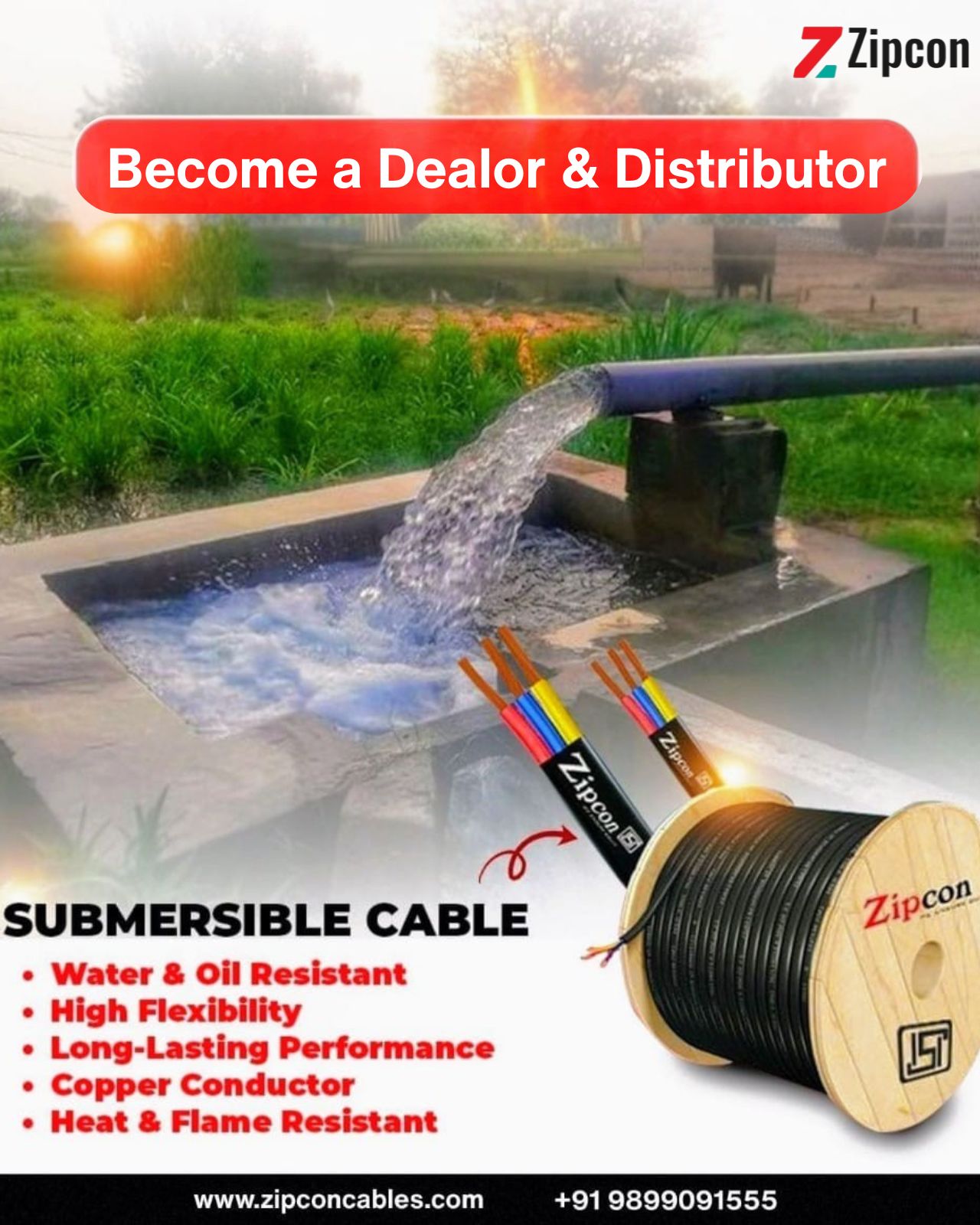
Choosing thebest submersible cable manufacturer in India is important when a cable has to operate continuously in water, borewells, pumps, and demanding electrical environments. A submersible cable must provide dependable power transmission while handling moisture, mechanical stress, temperature changes, and long operating hours.
A poor-quality cable can lead to insulation damage, electrical leakage, voltage-related performance issues, pump downtime, and costly replacement. For this reason, buyers should evaluate the conductor quality, insulation, flexibility, voltage rating, construction, manufacturing standards, and application suitability before selecting a supplier.
ZIPCON Cables focuses on dependable wires and cables designed for residential, agricultural, commercial, and industrial electrical requirements. Its submersible cable range is designed to provide reliable connectivity for applications where durability and insulation performance are critical.
A submersible cable is an electrical cable specially designed for equipment that operates in or around water. It is commonly used to connect submersible pumps installed inside borewells, water tanks, agricultural wells, and other water-handling systems.
Unlike ordinary electrical wires, submersible pump cables need insulation and construction suitable for wet environments. The cable must maintain electrical integrity even when exposed to moisture for extended periods.
For example, a cable installed with a borewell pump may remain underground and submerged for years. Therefore, selecting a suitable submersible pump wire is not simply about choosing the required conductor size; the cable’s overall construction matters.
Why Choosing the Right Submersible Cable Manufacturer Matters
The manufacturer plays an important role in determining the consistency and reliability of the finished cable. A reliable manufacturer should maintain proper control over conductor quality, insulation materials, dimensional accuracy, electrical performance, and production processes.
A high-quality cable can help reduce unexpected failures and maintenance requirements. It also provides better confidence when cables are installed in difficult-to-access locations such as deep borewells.
Key benefits of choosing a reliable manufacturer
Consistent conductor quality
Reliable insulation performance
Better flexibility during installation
Suitable electrical and voltage performance
Improved resistance to moisture
Better mechanical durability
Consistent cable dimensions
Reduced chances of premature cable failure
For contractors, dealers, pump installers, and end users, these factors can directly affect installation quality and long-term operating costs.
Important Features of a High-Quality Submersible Cable
Not every cable marketed as a submersible cable offers the same level of performance. Before purchasing, evaluate the following characteristics.
1. Quality Conductors
The conductor is responsible for carrying electrical current to the pump. High-quality conductor material and consistent construction help maintain reliable current transmission.
Conductor size should also match the pump’s electrical requirements, installation distance, and operating conditions. Undersized cables can contribute to voltage drop and excessive heating.
2. Reliable Insulation
Insulation is one of the most important components of a submersible cable. Since the cable may remain in a wet or submerged environment, the insulation must provide effective electrical separation and withstand the intended operating conditions.
Good insulation also helps protect the conductor from environmental exposure and physical damage.
3. Flexibility
Submersible cables are often installed alongside pumps and through borewell systems. Excessively rigid cables can make installation difficult and may experience unnecessary mechanical stress during handling.
A properly designed flexible cable makes routing and installation easier while maintaining the required electrical performance.
4. Moisture Resistance
Water exposure is the defining challenge of a submersible cable application. The cable construction should therefore be appropriate for wet and submerged environments.
Moisture-resistant insulation and suitable cable construction help reduce the risk of insulation deterioration and electrical leakage.
5. Mechanical Strength
During installation, the cable may experience pulling, bending, rubbing, and handling stress. A dependable cable should have sufficient mechanical strength for its intended application.
This becomes particularly important in deep borewell installations where cable replacement can involve significant labour and equipment costs.
6. Appropriate Voltage Rating
The cable’s voltage rating must be compatible with the electrical system in which it will be installed. A suitable rating provides an appropriate safety and performance margin for the intended application.
Always match the cable specification with the pump manufacturer’s requirements and the applicable electrical standards.
Types of Submersible Cables Used in India
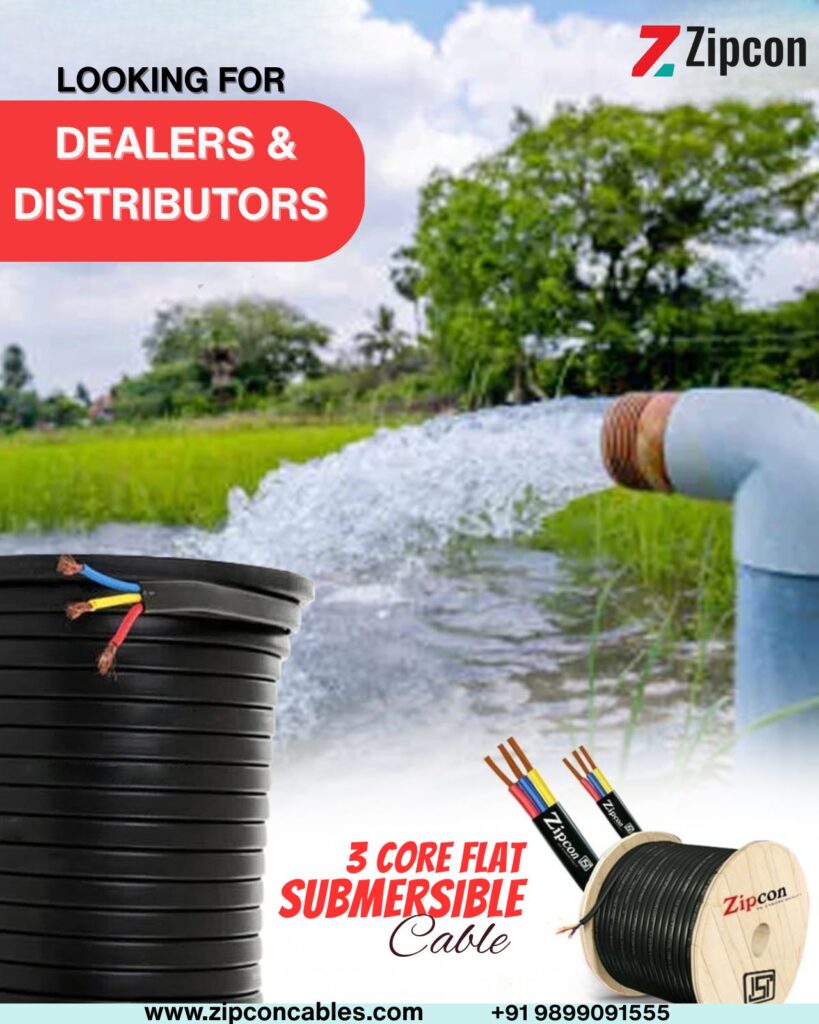
Different pump installations may require different cable configurations. Common options include 3 core flat submersible cable, 4-core cables, and other configurations selected according to the pump and electrical system.
3 Core Flat Submersible Cable
A 3 core flat submersible cable is widely used with three-phase submersible pumps. Its flat construction can make it convenient for installations where the cable needs to be positioned alongside a pump pipe.
ZIPCON Cables offers 3-core flat submersible cable options designed for applications where reliable pump connectivity and flexible installation are required.
4 Core Submersible Cable
Four-core configurations may be selected for applications requiring four conductors. The correct configuration depends on the pump design, control arrangement, and electrical connection requirements.
The cable should always be selected based on the pump manufacturer’s recommended wiring configuration rather than simply choosing a cable by appearance.
Where Submersible Cables Are Commonly Used
Submersible pump cables are used across several sectors where electrical equipment operates in wet or underground environments.
Agricultural Applications
Farmers commonly use borewell and submersible pumps for irrigation. In these installations, the cable must support reliable pump operation over extended periods.
A dependable submersible pump wire can help reduce the likelihood of electrical problems that may interrupt irrigation schedules.
Domestic Water Supply
Submersible pumps are frequently used to supply water to homes, apartments, and residential buildings. Cable reliability becomes particularly important because the pump may operate repeatedly throughout the year.
Commercial Buildings
Hotels, institutions, offices, and other commercial facilities may use underground water systems and pumping equipment. Cable selection should account for the expected load and installation conditions.
Industrial Applications
Industrial pumping systems can place additional demands on cables because of longer operating cycles and demanding environments. Proper conductor sizing, insulation, voltage rating, and mechanical construction become especially important.
How to Select the Best Submersible Cable
Choosing the right cable involves more than selecting a recognised brand. Consider the complete application before placing an order.
Check the Pump Specification
Start with the pump’s rated voltage, current, power, phase configuration, and manufacturer’s cable recommendations. These specifications establish the basic cable requirements.
Select the Correct Conductor Size
Cable size should be selected according to the electrical load and installation conditions. For longer cable runs, voltage drop should also be considered.
For example, a pump operating at a substantial distance from the electrical supply may require a different conductor size from an otherwise identical pump installed nearby.
Consider Installation Depth
Deep borewell installations may expose the cable to greater mechanical and environmental demands. The cable construction should therefore be suitable for the intended depth and installation method.
Evaluate Cable Construction
Compare flat and round designs, conductor configuration, insulation material, flexibility, and overall construction. The best option depends on the pump system rather than a one-size-fits-all approach.
Buy From an Established Manufacturer
A dependable manufacturer should be able to provide clear product specifications and consistent cable quality. This is particularly important for projects where cable failure would be difficult or expensive to rectify.
Examples: Choosing a Submersible Cable
Example 1: Agricultural Borewell
Consider a farm using a three-phase submersible pump inside a deep borewell. The cable will run from the pump to the electrical control system over a considerable distance.
In this situation, the buyer should evaluate the pump’s current requirements, cable length, conductor size, voltage drop, insulation performance, and mechanical requirements before selecting the cable.
Example 2: Residential Borewell
A residential borewell may have a smaller pump and a shorter cable run. While the electrical load may be lower, the cable still needs suitable insulation and construction for a submerged environment.
Choosing an ordinary household wire simply because it appears to have the required conductor size can create unnecessary risks.
Example 3: Commercial Water System
A commercial building may operate its pump frequently throughout the day. Here, durability and consistent electrical performance become important because unexpected pump downtime can affect the building’s water supply.
The cable should be selected according to the pump load, installation environment, operating cycle, and applicable standards.
Submersible Cable vs Ordinary Electrical Wire
Feature
Submersible Cable
Ordinary Electrical Wire
Wet environment
Designed for suitable wet applications
Usually not intended for prolonged submersion
Pump applications
Suitable for appropriate pump systems
Generally unsuitable
Insulation requirements
Designed around demanding environments
Depends on wire type
Mechanical demands
Application-specific construction
Varies
Borewell installation
Common application
Not normally recommended
Flexibility
Available in suitable flexible designs
Depends on construction
The key difference is application suitability. A wire that performs well inside a dry building installation should not automatically be used in a submerged pump environment.
Why ZIPCON Cables Is a Strong Choice
ZIPCON Cables is focused on manufacturing and supplying wires and cables for diverse electrical applications. Its product portfolio includes submersible cables designed for pump and water-related installations.
The company emphasises practical cable requirements such as reliable connectivity, appropriate insulation, flexibility, and application-oriented construction. For dealers, contractors, pump installers, and project buyers, this makes product specification and application matching important parts of the purchasing decision.
ZIPCON’s submersible cable solutions can be considered for agricultural borewells, domestic water systems, commercial installations, and suitable industrial pumping applications.
Expert Tips for Buying Submersible Pump Cable
1. Never select cable size by guesswork. Calculate the electrical requirement based on the pump specification, cable length, and installation conditions.
2. Consider voltage drop for long installations. A long cable run can affect electrical performance. The conductor size should be evaluated accordingly.
3. Don’t compromise on insulation quality. The cable operates in a demanding environment, so suitable insulation is essential.
4. Check the complete cable specification. Look beyond the brand name and compare conductor, cores, insulation, voltage rating, construction, and applicable standards.
5. Follow the pump manufacturer’s recommendation. The pump manufacturer’s electrical specifications should remain the starting point for cable selection.
6. Purchase through reliable channels. Authentic products from established manufacturers provide better traceability and specification clarity.
Common Mistakes to Avoid
Choosing the Cheapest Cable
Initial price should not be the only purchasing factor. A cable failure inside a borewell can make replacement significantly more expensive than the original cable purchase.
Using Ordinary House Wire
House wires are designed for their intended electrical installations. They should not automatically be substituted for cables designed for submersible applications.
Ignoring Cable Length
The same pump can require different cable considerations depending on whether the installation distance is short or extensive. Cable length should always be part of the selection process.
Selecting the Wrong Core Configuration
A pump requiring a particular conductor configuration should be paired with the appropriate cable. Incorrect core selection can create installation and operational problems.
Overlooking Installation Conditions
Borewell depth, temperature, moisture, mechanical handling, and routing conditions can all affect cable selection. These factors should be assessed before purchase.
Conclusion
The best submersible cable manufacturer in India should offer more than a cable that meets a basic size requirement. Reliable manufacturing, suitable conductor construction, dependable insulation, flexibility, mechanical strength, and application-specific specifications all contribute to long-term cable performance.
For agricultural pumps, residential borewells, commercial water systems, and suitable industrial applications, ZIPCON Cables provides submersible cable solutions designed around reliable electrical connectivity and demanding installation environments.
Before purchasing, match the cable with the pump specification, conductor requirement, cable length, voltage rating, installation depth, and operating conditions. A correctly selected cable can improve installation reliability, reduce maintenance concerns, and support consistent pump performance.
Top 5 FAQs
1. Which is the best submersible cable manufacturer in India?
The best manufacturer is one that consistently provides application-suitable cables with reliable conductors, insulation, construction, and documented specifications. ZIPCON Cables is a suitable option to consider for submersible pump cable requirements.
2. Which cable is best for a submersible pump?
The appropriate cable depends on the pump’s voltage, current, phase, power, cable length, installation depth, and manufacturer recommendations. 3-core flat submersible cables are commonly used with suitable three-phase pump systems.
3. Can ordinary electrical wire be used for a submersible pump?
Ordinary electrical wire should not be used simply because its conductor size appears suitable. Submersible pump installations require cable construction and insulation appropriate for wet or submerged conditions.
4. What factors should be checked before buying a submersible cable?
Check conductor material and size, number of cores, insulation, voltage rating, flexibility, mechanical construction, cable length, installation conditions, and the pump manufacturer’s requirements.
5. Why is cable quality important in a borewell pump?
A borewell cable can remain in a difficult-to-access environment for a long period. Reliable insulation and suitable cable construction help support electrical performance and reduce the risk of premature cable-related problems.
The best submersible flat cable in India must deliver reliable electrical performance in demanding environments where moisture, water pressure, heat and continuous operation are common. A submersible pump cable is not an ordinary electrical wire—it is designed specifically to operate with pumps installed inside borewells, water tanks and other wet environments.
Choosing the right flat submersible cable can directly affect pump performance, electrical safety and service life. Cable construction, conductor quality, insulation, voltage rating, flexibility and resistance to moisture should all be considered before installation.
Zipcon Cables offers submersible flat cables designed for dependable electrical connectivity in water-pump applications. For residential, agricultural, commercial and industrial pumping systems, selecting the right cable specification is essential for safe and consistent operation.
A submersible flat cable is a specially constructed electrical cable used to supply power to submersible pumps operating underwater or in wet environments. Its flat profile makes it suitable for installations where the cable needs to run alongside the pump and fit efficiently within borewell or water-system arrangements.
Unlike conventional house wires, submersible pump cables are manufactured with insulation and construction suitable for exposure to moisture. They need to maintain electrical integrity even when installed in challenging conditions for extended periods.
A good-quality flat submersible cable combines electrical conductivity, mechanical strength and insulation protection. This makes cable selection particularly important for borewell pumps, agricultural irrigation systems and water-supply installations.
Why Choose a Flat Submersible Cable for Pump Applications?
1. Designed for Wet Environments
Submersible pumps operate in environments where water and moisture are unavoidable. The cable therefore needs suitable insulation and construction to reduce the risk of electrical leakage and insulation deterioration.
A properly selected submersible cable helps maintain dependable electrical performance throughout the pump’s operating cycle.
2. Space-Efficient Flat Construction
The flat profile is one of the major advantages of this cable design. It allows the cable to be installed efficiently alongside a submersible pump, particularly in borewell applications where available space can be limited.
This construction can also help provide an organised installation compared with using unsuitable conventional cables.
3. Reliable Power Transmission
The conductor is responsible for carrying electrical current from the power source to the pump motor. Using a suitable conductor size helps minimise voltage drop and supports stable pump operation.
For this reason, cable size should always be selected according to the pump’s power requirement, installation distance and electrical specifications.
4. Better Mechanical Suitability
A submersible cable may experience pulling, bending and movement during installation and maintenance. A purpose-built cable is better suited to these conditions than a standard indoor electrical wire.
The right combination of conductor and insulation helps provide the mechanical performance required for pump installations.
Key Features to Look for in the Best Submersible Flat Cable
Choosing a cable based only on price can lead to poor long-term results. Before purchasing, evaluate the following specifications.
High-Quality Conductors
The conductor should provide efficient current carrying capacity with dependable electrical conductivity. Copper conductors are widely preferred for applications where good conductivity and flexibility are required.
The conductor size should correspond to the pump load rather than being selected simply because it is commonly used.
Suitable Insulation
Insulation is particularly important for submersible applications because the cable operates in a moisture-rich environment.
Look for cable insulation designed for the intended operating conditions and voltage rating. Good insulation should maintain its properties during continuous service.
Correct Voltage Rating
A cable’s voltage rating should match the electrical system in which it will be installed. For example, 1100 V submersible cables are used in suitable higher-voltage applications where the specification calls for that rating.
Always check the manufacturer’s technical specification before installation.
Flexibility
Pump cables need to be manageable during installation, especially when lowering a pump into a borewell. Adequate flexibility makes routing and installation easier while reducing unnecessary mechanical stress.
Resistance to Moisture and Environmental Stress
A submersible cable should be designed for the environmental conditions of its application. Water exposure, temperature variations and mechanical movement can all affect cable performance over time.
A cable intended specifically for submersible pump applications is therefore a better choice than a general-purpose electrical cable.
Submersible Flat Cable vs Regular Electrical Wire
Feature
Submersible Flat Cable
Regular Electrical Wire
Wet-area application
Designed for suitable submersible applications
Generally intended for dry/appropriate indoor installations
Construction
Flat, pump-oriented construction
Varies by application
Moisture exposure
Designed according to specified application
May not be suitable
Pump installation
Suitable when specifications match
Not automatically suitable
Flexibility
Designed for installation requirements
Depends on cable type
Borewell use
Commonly used for suitable pump systems
Should not be substituted without manufacturer approval
The important point is that not every flexible electrical wire is a submersible pump cable. The cable must be selected according to its construction, rating and intended application.
Choosing the Right Submersible Flat Cable Size
Cable size should be selected based on the complete electrical installation rather than the pump name alone.
Important factors include:
Pump motor power
Operating voltage
Full-load current
Cable length
Installation depth
Allowable voltage drop
Installation conditions
Ambient and water temperature
Applicable electrical standards
Example
Suppose a borewell pump is installed at significant depth and requires a long cable run. Selecting a cable solely based on conductor size without considering the installation distance can result in excessive voltage drop.
A professional installer should calculate the required cable size using the pump’s electrical specifications and the actual installation conditions.
Where Are Submersible Flat Cables Used?
Borewell Pumps
Borewell pumping systems commonly require cables that can operate reliably alongside submerged pump motors. The cable must be appropriate for the depth, electrical load and environmental conditions.
Agricultural Irrigation
Farm irrigation systems often depend on submersible pumps for groundwater extraction. Reliable pump cabling helps support consistent operation during repeated pumping cycles.
Residential Water Supply
Homes using borewell or underground-water pumps also require suitable submersible pump wiring. Correct cable selection becomes especially important when the pump is installed deep below ground level.
Commercial Water Systems
Commercial buildings, institutions and other facilities may use submersible pumps for water supply and drainage. The cable should be selected according to the motor rating and installation requirements.
Industrial Applications
Industrial pumping systems can place higher demands on electrical infrastructure. Cable selection should therefore consider continuous operation, load characteristics, installation environment and applicable standards.
Why Zipcon Cables for Submersible Flat Cable Applications?
Zipcon Cables focuses on cable solutions designed around practical electrical installation requirements. Its submersible cable range can be considered for applications where dependable pump connectivity and suitable insulation are essential.
For buyers comparing submersible cable manufacturers in India, the key evaluation should go beyond brand name. Examine conductor construction, insulation quality, available sizes, voltage ratings, technical specifications and suitability for the intended pump installation.
For a submersible flat cable, choosing the correct specification is ultimately more important than selecting the cheapest available option.
Examples of Submersible Flat Cable Selection
Example 1: Residential Borewell
A residential borewell pump may have a relatively moderate motor rating but a considerable cable length. In this situation, the installer should consider the pump’s full-load current and voltage drop before selecting the cable size.
Example 2: Agricultural Pump
An agricultural pump may operate for long periods during irrigation. Cable selection should therefore account for the motor load, operating duration, borewell depth and environmental conditions.
Example 3: Deep-Borewell Installation
A deep-borewell pump requires a cable long enough to reach the motor while maintaining acceptable electrical performance. A technically appropriate conductor size becomes particularly important as cable length increases.
Expert Tips for Buying the Best Submersible Flat Cable in India
Check the pump’s rated current first. Cable selection should begin with the motor’s electrical requirements.
Consider total cable length. Longer cable runs can increase voltage drop and may require a larger conductor size.
Verify the voltage rating. Never assume that every submersible cable has the same voltage rating.
Check insulation construction. The cable must be appropriate for continuous exposure to the intended environment.
Buy from a reliable manufacturer. Consistent manufacturing quality matters for electrical cables used in demanding installations.
Do not compromise conductor size for price. An undersized cable can negatively affect electrical performance and operating efficiency.
Follow professional installation practices. Correct cable selection and correct installation are equally important.
Common Mistakes When Buying Submersible Flat Cable
Choosing Cable Only by Price
The cheapest cable may not provide the construction or specifications required for a particular pump installation. Compare technical specifications rather than focusing only on the initial purchase price.
Using Ordinary House Wire
House wires and submersible pump cables serve different applications. A conventional house wire should not automatically be used for submerged pump installations.
Ignoring Voltage Drop
Cable length affects electrical performance. Ignoring voltage drop can lead to an inappropriate cable selection, especially in deep-borewell or long-distance installations.
Selecting the Wrong Cross-Section
Choosing a smaller conductor than required can create electrical and performance issues. Always match cable size with the motor load and installation conditions.
Skipping Technical Specifications
A professional cable purchase should involve checking conductor material, cross-sectional area, insulation, voltage rating and intended application.
Conclusion
The best submersible flat cable in India is not simply the cable with the lowest price or the thickest appearance. It is the cable whose conductor size, insulation, voltage rating, flexibility and construction match the requirements of the pump and installation.
For borewell pumps, agricultural irrigation, residential water systems and commercial applications, Zipcon Cables can be considered for dependable submersible cable solutions. Before purchasing, verify the pump load, cable length, voltage requirement and installation conditions to select the correct specification.
Choose the right cable for the right pump—and build your electrical installation for reliable long-term performance with Zipcon Cables.
Top 5 FAQs
1. What is the best submersible flat cable in India?
The best submersible flat cable is one that matches the pump’s current, voltage, cable length and installation environment. Conductor quality, insulation and manufacturing consistency should also be evaluated before purchase.
2. What is a submersible flat cable used for?
Submersible flat cables are primarily used to provide electrical power to pumps installed underwater or in wet environments, including borewells, water tanks and agricultural pumping systems.
3. Can normal house wire be used for a submersible pump?
Normal house wire should not be used for a submersible pump unless its technical specifications explicitly make it suitable for that application. Purpose-designed submersible pump cable is generally the appropriate choice.
4. How do I select the correct submersible cable size?
Select the cable size based on pump power, full-load current, operating voltage, cable length, voltage-drop requirements and installation conditions. A qualified electrical professional should verify the final selection.
5. Why is flat cable used for submersible pumps?
The flat construction provides a practical profile for routing alongside submerged pump installations. It can be particularly useful where space around the pump and borewell installation is limited.
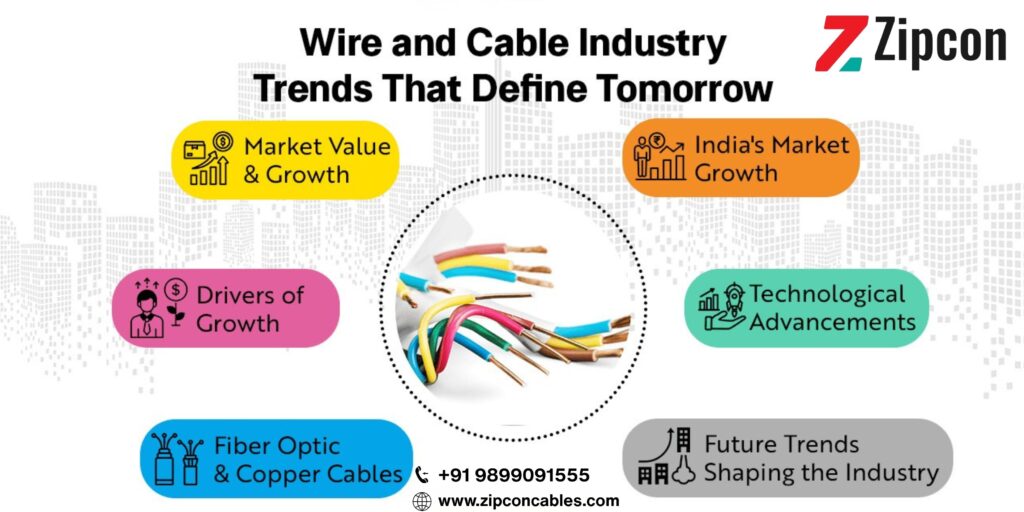
As we know, wires and cables are the lifelines of modern infrastructure that power everything from homes to industries. With rapid growth across construction, manufacturing, telecom, and power transmission, the demand for high-performing cables and wires is rising steadily in India and across the world. The global wires and cables market is valued at around 232.47 billion US dollars in 2024 and is projected to grow at a CAGR of 6.51% till 2032. In India, the electrical cable industry recorded 8.71 billion US dollars in 2023 and is estimated to reach 17.08 billion US dollars by 2032, growing at a CAGR of 7.87%. This momentum comes from urban expansion, infrastructure projects, and the growing need for fiber optic cables to support seamless digital connectivity.
Top electrical wire manufacturing companies in India, like Zipcon, are adopting advanced technologies and high-grade materials to meet the evolving needs of this fast-growing sector. In this blog, you’ll explore the latest trends shaping electrical wire manufacturing in India.
Growing Demand for High-Quality Electrical Wires and Cables
Urban growth, industrial activity, and technology-driven applications are major contributors to the rising demand for safe and durable wires and cables. Whether it’s for households or large-scale industrial facilities, manufacturers in India are stepping up production with a focus on quality, performance, and safety.
Fire-resistant, low-smoke properties to improve safety.
High-quality conductor material for better conductivity.
Durable insulation to ensure longevity.
Flexible multicore round cables for easier installation.
Role of Wire Manufacturers in India in Infrastructure Development
India’s growing infrastructure projects have increased the demand for advanced wiring solutions. Wire manufacturers play a crucial role in supporting this growth by offering reliable and long-lasting products suited for modern structures and smart city initiatives.
Multicore flexible round cables and round sheathed cables are widely used due to their insulation quality and durability.
Smart city projects and high-rise buildings rely on efficient wiring systems for safety and long-term performance.
Government initiatives like Smart Cities Mission and Make in India are driving nationwide demand for advanced wires and cables.
Copper and Fiber Optic Cables—Powering Seamless Connectivity
High-speed connectivity depends heavily on copper and fiber optic cables. Their reliability makes them essential for applications involving data transmission, communication, and digital transformation.
Impact of Fiber Optic Cable Manufacturers in India
Surge in data consumption created strong demand for high-quality fiber optic cables.
Fiber optics provide faster speeds and superior transmission capacity.
They are more durable and less prone to environmental degradation.
This shift has encouraged cable manufacturers in India to upgrade production capacity and quality standards.
Why Copper Flexible Cable Remains in Demand
Copper offers higher conductivity compared to aluminium.
It is corrosion-resistant, making it suitable for diverse applications.
While aluminium is preferred for cost-sensitive projects, copper is chosen for complex and critical electrical installations.
Industrial and Specialized Cables: Meeting Market Needs
Industries like automotive, power, telecom, and manufacturing rely on specialized cables for efficient operations. Telephone cables, round sheathed cables, and multi-strand cables play a vital role in performance and safety.
Wire harness manufacturers in India supply organized and high-quality wiring systems for automotive and electrical sectors.
High-quality multi-strand cables ensure dependable performance even in harsh operating conditions.
The increasing demand for reliable electrical systems encourages manufacturers to innovate and improve product durability.
Submersible Flat Cable for Water-Intensive Applications
Agriculture and water management rely heavily on submersible flat cables built for tough, moisture-heavy environments.
Waterproof insulation protects the cables from abrasion and moisture.
High mechanical strength supports long-term performance in demanding conditions.
Future Trends and Advancements in the Cable Industry
Innovation, sustainability, and safety are shaping the future of India’s wire and cable landscape. Manufacturers are moving towards eco-friendly and high-performance solutions.
Sustainable and Eco-Friendly Insulation Tape Manufacturer
Insulation tape manufacturers are shifting to sustainable materials to reduce environmental impact.
Biodegradable materials and eco-friendly production practices are becoming more common.
Leading cable companies invest in halogen-free and recyclable insulation materials for improved safety and sustainability.
Increasing Demand for High-Performing Audio Cables
TCBC speaker wire solutions are gaining popularity for home and commercial audio setups.
Advanced technology ensures better sound quality and minimal interference.
These cables support modern entertainment systems and professional audio environments.
Conclusion
Urbanisation, telecom growth, and rising demand for high-quality wiring solutions have shaped the strong upward trajectory of India’s wires and cables sector. The industry is moving towards better innovation, performance, and sustainability across applications.
Zipcon continues to play a significant role in this transformation by offering advanced wiring solutions, from fiber optic cables and telephone cables to sustainable insulation tapes and more. Explore their wide range of high-quality products to power your projects with dependable electrical solutions.
Frequently Asked Questions
Q1. What is the difference between wire and cable? A wire has a single conductor, while a cable contains multiple conductors bundled together.
Q2. What should I consider when choosing the best wire for house wiring in India? Look for fire-resistant insulation, good thermal stability, and copper conductor material for better performance and safety.
Q3. How do I identify top electrical cable manufacturers in India? Check for ISO certifications, BIS standards compliance, positive reviews, and a wide product portfolio.
Q4. What are the advantages of copper flexible cables over aluminium cables? Copper offers better conductivity, heat tolerance, and mechanical strength, making copper flexible cables more durable and reliable.
Hidden Dangers of Cheap Electrical Cables – The Shocking Risks You Need to Know!
When looking to save costs, many individuals opt for cheap electrical cables. While this may seem like an economical choice initially, using substandard electrical wires can jeopardize the safety of your home, office, and electrical appliances. As reported by the National Crime Records Bureau (NCRB), 13,432 deaths were caused in 2019 alone due to electrical short circuits, many of which were linked to the use of cheap, poor-quality wires. These kinds of electrical accidents continue to happen, highlighting the need for reliable, high-quality electrical cable installations in homes and offices to prevent hazardous outcomes.
Many individuals often overlook the risks associated with low-quality wiring and instead focus on upfront costs. However, investing in cheap electrical cables might cost more in the long run, not only in terms of damage to your property but also regarding personal safety. Here, we’ll explore the hidden dangers of using cheap electrical wires, how they affect power efficiency, and offer guidance on choosing the best electrical cables for your home or office wiring needs.
Risks of Using Poor-Quality Wires
Using substandard electrical wires leads to numerous problems such as short circuits, power failures, and fire hazards. However, these risks can be mitigated by purchasing high-quality electrical cables from reputable manufacturers. Let’s dive into the specifics:
Short Circuits & Fire Hazards
One of the main concerns with cheap electrical cables is the low-quality insulation used. Over time, these wires can corrode or degrade, leading to exposed wires that can cause short circuits or fires. Substandard wires with poor insulation break down quickly, especially under heat or stress, posing serious fire risks in residential and commercial buildings. To avoid these hazards, it’s recommended to use ISI-certified wires like Zipcon Cables, which offer better insulation, durability, and heat resistance.
Reduced Lifespan of Appliances
Frequent voltage fluctuations and the inefficiency of cheap wires can lead to the damage of your electrical appliances. Low-quality cables cause unstable voltage transmission, which can burn out sensitive appliances such as refrigerators, televisions, and air conditioners. Investing in reliable and high-quality wiring will enhance the performance and longevity of these appliances.
How Cheap Cables Affect Power Efficiency
Cheap electrical cables not only compromise the safety of your home but also affect power efficiency. High-quality wires are designed to provide consistent and efficient power transmission to your appliances. On the other hand, cheap wires, with their higher resistance, struggle to transfer electricity efficiently, leading to power loss and voltage drop.
Voltage Drop: Cheap wires with high resistance cause a voltage drop, leading to inefficient performance of your appliances and potential breakdowns over time. To maintain efficient power flow, always choose cables with low resistance and high conductivity, such as Zipcon Cables, which ensure the optimum functioning of your electrical appliances.
Overheating and Energy Loss
Overheating is another critical issue with substandard wires. Poor quality cables cannot withstand high electrical loads and generate heat, leading to higher electricity bills and posing significant fire risks. By using reliable cables that meet national and international safety standards, you can ensure the safe and energy-efficient operation of your electrical system.
How to Ensure Safe Electrical Wiring
Choosing the right wiring solution is essential for mitigating electrical hazards. Opt for cables that are certified, durable, and safe. The best wire for house wiring in India should be heat-resistant, insulated properly, and provide excellent conductivity. Always choose Zipcon Cables for the best performance and long-term safety.
Choosing the Best Wire for House Wiring in India
The best wire for house wiring in India is typically made from high-quality copper flexible cables that offer superior conductivity, durability, and heat resistance. These cables are tested to meet ISI standards and provide reliable power transmission, ensuring safety in homes and offices.
Importance of ISI-Certified Cables
The ISI mark is an assurance of the cable’s safety and quality. ISI-certified wires are thoroughly tested for variations in electrical load and are designed to prevent electrical failures. These cables offer:
High-quality insulation that prevents electrical shocks and failures.
Performance under extreme conditions, such as adverse weather and moisture.
Reliability over long-term use.
Are You Using the Right Cables for Your Needs?
Different types of cables serve different purposes. Copper flexible cables, for instance, are ideal for house wiring due to their high electrical conductivity and long-lasting performance. These wires are less likely to corrode, reducing the chance of power failures and short circuits.
When to Use Multistrand Cables and Round Sheathed Cables
Multistrand cables are perfect for applications where wires need to be flexible, such as home or commercial wiring where frequent movement or bends are required.
Round sheathed cables, on the other hand, provide extra protection against moisture and mechanical stress. They are ideal for industrial environments where more protection is necessary.
How FR LSH Cable Enhances Fire Safety
For fire-prone areas, FR LSH (Flame Retardant Low Smoke) cables are the best choice. These cables have low smoke emission and are designed to minimize fire damage. They also release fewer harmful gases in the event of a fire, ensuring safe evacuation and reducing health risks during emergencies.
Which Electrical Cable Manufacturers in India Can You Trust?
Choosing a reputable manufacturer is just as important as selecting the right cable. Reliable manufacturers like Zipcon Cables ensure that their products meet ISI standards, use pure copper for higher conductivity, and offer a range of cables suited to different applications.
Why Choosing the Best Electrical Cables in India Matters
High-quality electrical cables provide:
Efficient power transmission, reducing energy loss and maintaining smooth electricity flow.
Long-term durability, minimizing the need for frequent repairs and replacements.
Enhanced safety, reducing the risk of short circuits, fires, and appliance damage.
Conclusion
While cheap electrical cables may seem like an affordable option, they pose serious risks, including short circuits, appliance damage, and even fires. Investing in Zipcon Cables, a trusted name in ISI-certified copper flexible cables, ensures the safety, durability, and efficiency of your home and office wiring. Don’t compromise on quality – choose the best electrical wires for a safer and more energy-efficient future.
Choosing the best wires and cables manufacturers in India is important for electrical safety, long-term performance, and reliable power transmission. From residential wiring and industrial installations to solar systems, pumps, infrastructure, and commercial projects, the quality of the cable directly affects the performance of the electrical system.
India has a large and competitive cable manufacturing industry, with manufacturers offering products such as house wires, flexible cables, multicore cables, submersible cables, power cables, solar cables, and industrial cables. However, manufacturers can differ considerably in conductor quality, insulation, construction, testing, customization, and application suitability.
Among the manufacturers and brands considered by buyers, ZIPCON Cables is a name worth considering for applications requiring dependable wires and cables across residential, industrial, agricultural, and specialized electrical requirements.
The right manufacturer should not be selected only by comparing price. Conductor material, insulation, cable construction, applicable standards, manufacturing consistency, application requirements, and after-sales support should all be evaluated before making a purchase.
A wire or cable is more than a conductor covered with insulation. Its construction determines how effectively it carries current, handles heat, withstands mechanical stress, and performs in its intended environment.
Poor-quality cables may have inconsistent conductor size, inferior insulation, inadequate protection, or manufacturing defects. These issues can increase voltage drop, heating, energy losses, insulation failure, and maintenance requirements.
A reliable manufacturer focuses on consistent raw materials, controlled manufacturing processes, appropriate insulation systems, testing, and quality control. This becomes particularly important for installations expected to operate continuously for years.
What Makes the Best Wires and Cables Manufacturers in India?
1. Quality Conductors
Copper and aluminium are the most commonly used conductor materials. Copper is widely preferred for applications requiring excellent conductivity and flexibility, while aluminium can offer a lighter and more economical option for suitable power applications.
The conductor’s size, strand construction, purity, and manufacturing consistency influence electrical performance. Buyers should therefore evaluate the actual cable specification rather than relying only on the appearance of the finished product.
2. Reliable Insulation
Insulation protects the conductor from electrical leakage, short circuits, moisture, heat, and physical contact.
Depending on the application, manufacturers may use materials such as PVC, XLPE, or specialized insulation compounds. The appropriate insulation depends on factors including voltage, temperature, installation environment, flexibility, and expected service conditions.
3. Consistent Cable Construction
Cable construction becomes especially important in multicore and flexible cables. Proper positioning of cores, insulation thickness, sheath quality, and overall dimensions contribute to reliable performance.
For example, a multicore round cable should maintain proper separation and insulation between individual cores while providing a durable outer sheath for protection.
4. Testing and Quality Control
A professional cable manufacturer should have systematic quality-control procedures throughout manufacturing. Testing can include checks related to conductor resistance, insulation, dimensions, electrical performance, and other relevant product parameters.
For buyers, compliance with applicable Indian and industry standards is an important indicator when comparing manufacturers.
5. Product Range
Manufacturers with a broader product portfolio can serve different electrical requirements through specialized cable designs.
Common categories include:
House wires
Flexible cables
Multicore round cables
Flat cables
Submersible cables
Solar DC cables
Power cables
Industrial cables
Control cables
Aluminium cables
Copper cables
A broad product range also makes it easier for contractors, distributors, and project buyers to source multiple cable requirements from one manufacturer.
Best Wires and Cables Manufacturers in India to Consider
India has several established manufacturers serving residential, commercial, infrastructure, industrial, and specialized electrical markets. The right choice depends on the product category, specifications, project requirements, availability, and budget.
ZIPCON Cables
ZIPCON Cables can be considered for buyers looking for a manufacturer with a range of electrical cable solutions for different applications.
Its product focus includes categories such as house wires, flexible cables, multicore cables, submersible cables, solar cables, and industrial cable solutions.
ZIPCON can be particularly relevant when the requirement is not limited to conventional house wiring and includes specialized applications such as agricultural pumping, solar installations, industrial equipment, and multicore electrical connections.
For buyers comparing cable manufacturers, it is useful to evaluate ZIPCON products according to conductor material, cable construction, insulation, size, application, and relevant technical specifications rather than choosing purely on brand name or price.
Polycab
Polycab is one of the widely recognized names in India’s electrical and cable market. Its portfolio covers wires and cables along with other electrical products.
It is commonly considered for residential, commercial, industrial, and infrastructure-related requirements.
KEI Industries
KEI Industries operates across several cable categories and serves residential, commercial, industrial, and infrastructure applications.
Its product portfolio includes wires and cables designed for different electrical and project requirements.
Finolex Cables
Finolex Cables is another established name in the Indian cable industry. The company offers products across electrical and communication-related categories.
Its presence across different cable applications makes it a brand that buyers may evaluate when comparing established manufacturers.
RR Kabel
RR Kabel offers wires and cables for residential, commercial, and industrial applications. It is also part of a broader electrical-products ecosystem.
For consumers and project buyers, product specifications and application suitability should be compared alongside price and availability.
Havells
Havells is a major electrical brand in India with a wide range of electrical products, including wires and cables.
Its strong distribution network makes its products accessible across many markets, making it another brand buyers may consider for electrical wiring requirements.
Comparison Factors for Cable Manufacturers
Instead of selecting a manufacturer solely from a list, buyers should compare manufacturers using practical criteria.
Factor
What to Check
Conductor
Copper or aluminium, size and construction
Insulation
PVC, XLPE or application-specific material
Cable Type
Round, flat, flexible, multicore, power or specialized
Application
Residential, industrial, solar, agricultural, etc.
Standards
Relevant Indian and industry standards
Testing
Quality-control and product testing procedures
Size Range
Availability of required cable sizes
Construction
Core arrangement, insulation and outer sheath
Availability
Distributor and supply network
Technical Support
Product guidance and specification support
This approach gives a more meaningful comparison than simply asking which manufacturer is the cheapest.
Types of Wires and Cables Available in India
House Wires
House wires are primarily used for residential electrical circuits, lighting, sockets, appliances, and internal wiring.
A good house wire should provide appropriate conductivity, flexible installation, durable insulation, and reliable performance for the intended electrical load.
Submersible cables are designed for applications involving water exposure, particularly submersible pump installations.
ZIPCON Submersible Cables can be considered for agricultural and water-pumping applications where appropriate cable construction and insulation are important for dependable operation.
Solar cables are developed for photovoltaic installations and are required to withstand outdoor conditions such as sunlight, temperature variations, and weather exposure.
For solar applications, buyers should evaluate the cable’s voltage rating, insulation system, temperature suitability, UV resistance, and relevant standards.
Industrial Cables
Industrial installations can require cables capable of handling demanding operating environments.
Depending on the application, requirements may include flexibility, mechanical protection, temperature resistance, multicore construction, and suitable electrical ratings.
How to Choose the Right Cable Manufacturer
Match the Manufacturer to Your Application
Start with the application instead of the brand.
A cable required for household wiring has different requirements from a cable used for a submersible pump, solar installation, industrial machine, or infrastructure project.
Check Technical Specifications
Always check:
Conductor material
Conductor size
Number of cores
Voltage rating
Insulation material
Outer sheath
Temperature rating
Cable construction
Applicable standards
These specifications provide a much better basis for comparison than appearance alone.
Consider Installation Conditions
The environment in which the cable will be installed can significantly influence the correct product.
For example, outdoor solar installations need protection against environmental exposure, while submersible pump installations require cable construction suitable for prolonged contact with water.
Evaluate Total Value, Not Just Price
A cheaper cable is not automatically more economical.
A cable with appropriate construction and reliable electrical performance can help reduce maintenance problems and premature replacement. Therefore, buyers should compare quality, specifications, expected service life, availability, and price together.
Examples: Selecting the Right Cable
Example 1: Residential Construction
Suppose a homeowner needs wiring for lights, fans, sockets, and household appliances.
The focus should be on selecting the appropriate house wire size, conductor material, insulation, current-carrying capacity, and applicable standards.
Example 2: Agricultural Borewell Pump
A farmer installing a submersible pump needs a cable designed specifically for the operating environment.
A suitable submersible cable should be selected according to pump capacity, cable length, voltage, installation depth, and manufacturer’s technical recommendations.
Example 3: Solar Pump Installation
A solar-powered pumping system may require both solar cables and suitable submersible pump cables.
The cable selection should account for the electrical characteristics of the solar system, outdoor exposure, pump requirements, cable length, and installation conditions.
Example 4: Industrial Equipment
An industrial machine may require flexible or multicore cables depending on how power and control connections are arranged.
The correct cable should be selected according to voltage, current, movement, mechanical conditions, temperature, and the machine manufacturer’s requirements.
Expert Tips for Buying Wires and Cables
1. Never select cable size by appearance. Two cables can look similar while having different conductor sizes and electrical capabilities.
2. Buy according to the electrical load. Cable size should be selected based on current requirements, installation conditions, permissible voltage drop, and applicable engineering requirements.
3. Check the complete product specification. Look beyond the brand name and verify conductor, insulation, voltage rating, construction, and standards.
4. Choose application-specific cables. A house wire, solar cable, industrial cable, and submersible cable are designed for different operating conditions.
5. Purchase from reliable channels. Authenticity, storage conditions, product traceability, and proper handling can all affect the value of a cable purchase.
6. Consult a qualified electrical professional for critical installations. Large residential, industrial, agricultural, and infrastructure projects should use cable sizing and installation practices appropriate to the specific electrical design.
Common Mistakes When Choosing Cables
Choosing Only on Price
Price is important, but it should not be the only selection criterion. Extremely low-cost products can create problems if their specifications do not match the installation requirements.
Using the Wrong Cable Type
Using a standard indoor wire where a specialized outdoor, solar, industrial, or submersible cable is required can lead to premature deterioration or unsafe operation.
Ignoring Cable Length
Long cable runs can introduce voltage drop. The required conductor size should therefore consider both the electrical load and installation distance.
Selecting an Incorrect Cable Size
An undersized cable can experience excessive heating under unsuitable operating conditions. Proper cable sizing is essential for safe and reliable electrical installations.
Ignoring Installation Environment
Temperature, moisture, sunlight, mechanical movement, chemicals, and installation method can all influence cable selection.
Why Consider ZIPCON Cables?
For buyers searching for wires and cables manufacturers in India, ZIPCON Cables offers a product-focused option across multiple cable applications.
From house wires and flexible cables to multicore round cables, flat submersible cables, solar cables, and industrial cable solutions, ZIPCON can serve requirements across residential, agricultural, commercial, and industrial applications.
The key advantage for a buyer is not simply having multiple cable types available. The important consideration is selecting the correct ZIPCON cable according to the application, electrical load, installation conditions, conductor requirements, and technical specifications.
For distributors, contractors, builders, agricultural users, and industrial buyers, comparing the exact product specification before purchase can help identify the most suitable cable for the project.
Conclusion
The best wires and cables manufacturers in India should be evaluated on more than brand recognition or price. Conductor quality, insulation, cable construction, testing, applicable standards, product range, technical specifications, and application suitability all influence long-term performance.
Established manufacturers such as Polycab, KEI Industries, Finolex Cables, RR Kabel, and Havells are among the names buyers may consider. At the same time, ZIPCON Cables is worth evaluating for a broad range of electrical cable requirements, including house wires, flexible cables, multicore cables, solar cables, submersible cables, and industrial applications.
Before purchasing, identify the application, calculate the electrical requirement, select the appropriate cable type and size, and compare technical specifications. This makes the buying decision more reliable and helps ensure that the selected cable is suitable for the actual installation.
Top 5 FAQs
1. Which are the best wires and cables manufacturers in India?
India has several established wires and cables manufacturers, including Polycab, KEI Industries, Finolex Cables, RR Kabel, and Havells. ZIPCON Cables is also an option to consider, particularly for buyers looking across house wires, flexible, multicore, submersible, solar, and industrial cable categories.
2. How do I choose the best cable manufacturer?
Compare conductor material, cable size, insulation, construction, applicable standards, testing, product availability, technical support, and application suitability. The best manufacturer for one project may not necessarily be the best choice for another.
3. Which cable is suitable for a submersible pump?
A purpose-designed submersible cable should be used for submersible pump installations. Selection should consider pump capacity, voltage, cable length, installation conditions, and the manufacturer’s technical recommendations.
4. What is the difference between house wire and industrial cable?
House wires are generally designed for electrical wiring in buildings, while industrial cables can be designed for more demanding environments and specific power, control, flexibility, mechanical, or temperature requirements.
5. Is ZIPCON a wire and cable manufacturer in India?
ZIPCON Cables offers a range of wire and cable solutions, including house wires, flexible cables, multicore cables, submersible cables, solar cables, and industrial cable products. Buyers should select the specific ZIPCON product based on the electrical and installation requirements of their application.
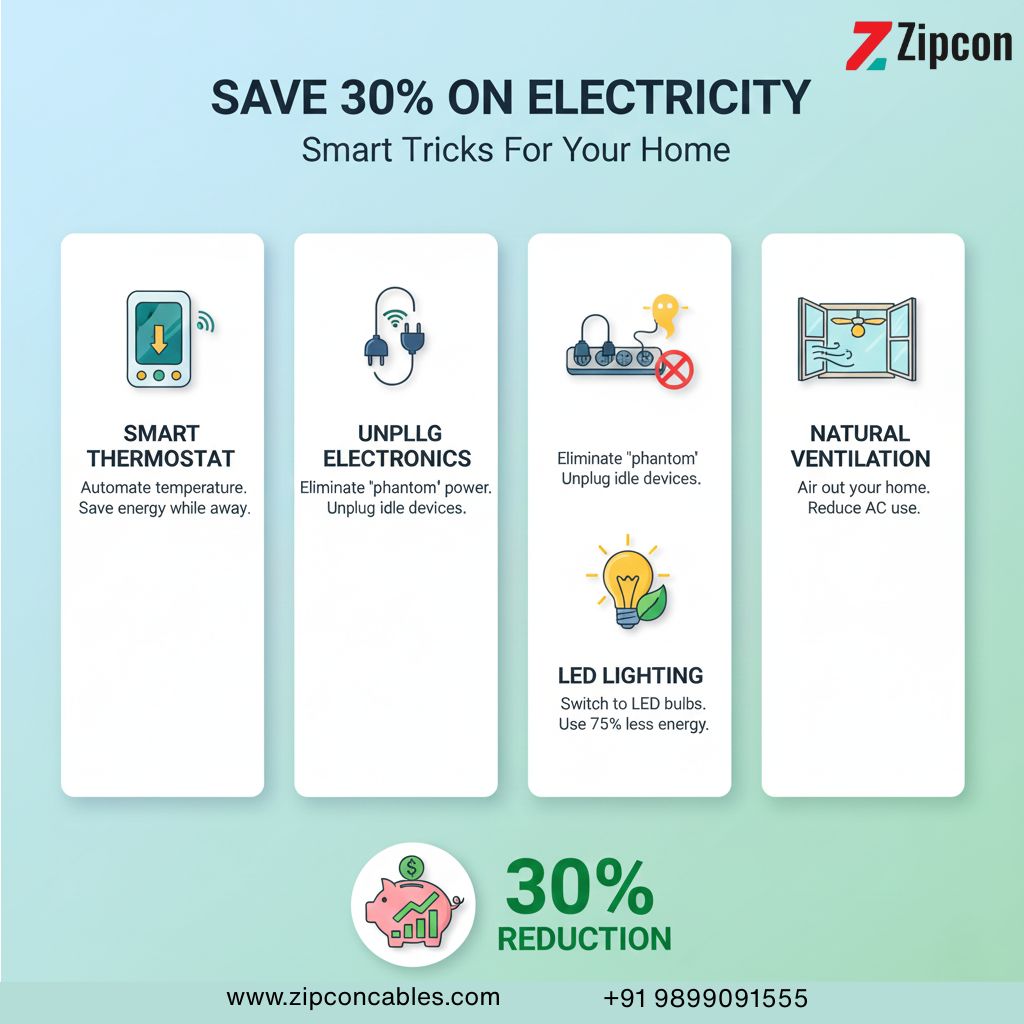
Cutting your electricity bill by 30% sounds ambitious, but it’s realistic when you combine smart habits with technically sound choices. Many people focus only on appliances, but the wiring behind those appliances often has just as much impact on power consumption. Zipcon Cables Provides Better Conductivity Wire & Cables, lower voltage drop, and safer installation all add up to cleaner, more efficient energy use. With the right cables and a few everyday adjustments, both homeowners and professionals can achieve significant savings without expensive upgrades.
Use Better Cables to Reduce Power Loss
A major portion of electricity loss happens in the wiring itself. When current flows through a cable, resistance converts some of that energy into heat. Higher resistance means more heat and higher bills. This is where cable quality matters, especially in high-load circuits like air conditioners, water heaters, and heavy appliances.
Copper cables naturally have better conductivity than aluminium. They carry current smoothly with lower resistance, which reduces voltage drop and improves appliance performance. Aluminium cables can still be efficient when sized correctly, but they need a larger diameter to match the performance of copper.
Zipcon Cables are engineered to reduce these losses by maintaining strong conductivity, heat resistance, and long-term stability. Their insulation handles high temperatures without degrading, which keeps resistance predictable and prevents energy waste.
Copper vs Aluminium: Where Each One Works Best
Copper performs better when the load is high or when the wiring distance is long. Homes with rooftop solar systems, large HVAC units, or indoor-to-outdoor connections benefit from the higher efficiency of copper cables. Copper also maintains its strength over time, which means fewer loose joints and lower fire risk.
Aluminium cables are lighter and more cost-friendly. They work well for long trunk lines and overhead connections where weight matters. In commercial buildings with long cable trays, aluminium becomes a practical choice if sized one or two gauges higher.
A simple comparison helps:
Copper: Higher conductivity, stronger, safer, ideal for home appliances, HVAC, and short to medium distances.
Aluminium: Cheaper, lighter, good for long industrial runs and areas where frequent maintenance is available.
Engineers and electricians often choose Zipcon’s copper-based cables for high-load equipment because they maintain stable voltage and reduce compressor stress, which directly cuts electricity use.
Ensure Proper Installation to Avoid Hidden Energy Losses
Even the best cable wastes energy if installed incorrectly. Loose joints create micro-sparks and heat, increasing consumption and posing safety risks. Sharp bends increase resistance. Oversized or undersized cables also cause unnecessary loss.
A well-installed circuit maintains steady current flow and keeps appliances running smoothly at their peak efficiency. This is why professionals value Zipcon Cables—they hold their flexibility and strength during installation, reducing the chance of bends, cracks, or poor terminations.
Reduce Load on Heavy Appliances
Air conditioners, refrigerators, washing machines, and heaters consume the most electricity. A few smart adjustments can lower their usage by 15–20% alone:
Keep ACs at 24–26°C instead of 18–20°C.
Clean air filters regularly to reduce compressor strain.
Avoid overloading washing machines.
Turn off appliances fully instead of leaving them on standby.
When appliances run with stable voltage (thanks to good wiring), they complete cycles faster and draw less current. Zipcon’s low-loss cables help maintain that stability.
Fix Voltage Drop in Long Runs
Voltage drop becomes a major issue in long cable paths—for example, from your main panel to the outdoor AC unit or rooftop solar inverter. If voltage drops too low, the motor or inverter compensates by drawing more current, increasing your bill.
Copper reduces this drop significantly. Aluminium can do the job but needs thicker sizing. In small homes, the difference between using a cheap cable and a Zipcon copper cable can translate to hundreds of rupees saved each month.
Optimize Lighting and Daily Use
Small changes in lighting can save up to 10% each month:
Replace old CFLs and tube lights with LEDs.
Use daylight whenever possible.
Install motion sensors in low-traffic areas.
Running lights and fans on stable voltage reduces wear and extends their life. Consistent power delivery from Zipcon Cables supports this kind of long-term efficiency.
Use Smart Power Management
Plug-in timers, power strips with master switches, and smart plugs help eliminate standby losses. Refrigerators, routers, TV boxes, and chargers consume power even when idle.
A high-quality cable system reduces fluctuations, allowing smart devices to operate in their most efficient mode.
Choose Copper or Aluminium Based on Application
A simple recommendation makes this choice easy:
For home appliances, HVAC units, kitchen circuits, solar systems, and all short-to-medium runs — choose copper. It ensures lower voltage drop and better long-term savings.
For long-distance feeder lines, rooftop-to-ground connections, and industrial cable trays — aluminium works well when sized properly.
Zipcon’s copper cables are the preferred choice for energy-saving installations because they maintain high efficiency even under heavy load.
Final Thoughts
Reducing your electricity bill by 30% doesn’t require drastic changes. It comes from choosing the right cables, maintaining stable voltage, preventing energy loss, and using appliances wisely. With reliable options like Zipcon Cables and a few smart habits, any home or small business can cut costs, improve safety, and enjoy long-term performance without spending much.
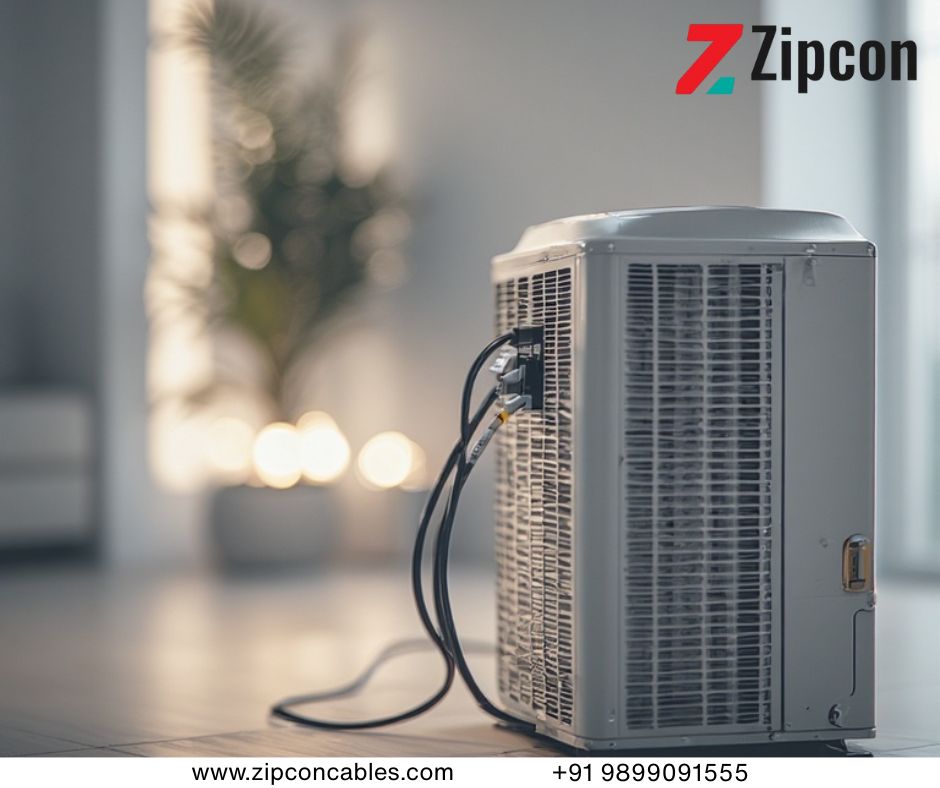
Choose the Zipcon Caples is right wire for an air conditioner or HVAC system matters more than most people think. The wrong cable can lead to overheating, high voltage drop, or even equipment failure. Most installations rely on either copper or aluminium conductors, and both have strengths depending on load, distance, and the environment where they are installed. A good choice comes from understanding how each wire behaves under typical HVAC conditions.
Copper has higher conductivity than aluminium, so it carries current more efficiently. This means a copper cable can deliver the same power with a smaller cross-section, which keeps voltage drop in control even when the AC runs at peak load. Copper also handles heat better & best cables manufacturer in india. When the compressor cycles and current spikes, copper maintains stability without softening or expanding as much. Aluminium can work well too, but it requires a larger gauge to match the same current capacity, which affects installation planning. In small indoor runs, this difference is manageable. On longer or high-load paths, the drop across aluminium becomes noticeable.
Durability and Mechanical Strength
Copper stands up better to bending, vibration, and repeated heating cycles. HVAC units produce vibration, especially outdoor condensers, and copper survives these stresses with fewer failures at joints. Aluminium is lighter, but it is more prone to breaking if over-bent or pulled through conduit without care. Most electricians avoid aluminium in tight bends or areas that require frequent maintenance access. For fixed, open-path cable trays in commercial buildings, aluminium wire is still widely used and performs well when sized correctly.
Weight and Cost in Real Projects
Copper is heavier and more expensive. Best Aluminium wire Manufacturer in India is significantly lighter, which helps when running long cables across rooftops or multi-storey ducts. Many large commercial and industrial jobs prefer aluminium simply because long-distance copper cabling becomes costly and difficult to support. In smaller homes, the difference in cost and weight is minor since the total length is short. Residential installers nearly always choose copper because its reliability outweighs the small price difference at this scale.
Safety and Joint Quality
Copper makes stronger, more stable connections at terminals. It resists oxidation and maintains a firm grip over time, which reduces the risk of loose contacts and overheating. Aluminium needs special care at joints, including anti-oxidation paste and proper tightening torque. If an aluminium connection is not prepared correctly, thermal expansion can loosen it over time. Trained technicians handle this easily in commercial projects, but copper still remains safer for household setups where access to skilled maintenance is limited.
Installation Conditions: Home, Commercial, and Industrial
In a typical home AC installation, runs are short and loads are moderate. Copper wires are easy to handle, flexible enough for wall conduits, and well-suited for the frequent thermal cycling of residential air conditioners. A 1 to 1.5-ton split AC, for instance, usually runs on copper because it keeps drop low over 10–20 meters.
In commercial buildings, the central HVAC system draws heavier current and runs across long distances from power rooms to outdoor chillers or rooftop units. Aluminium cabling becomes practical here. It reduces project cost and weight while still meeting load requirements when sized properly. Industrial setups follow this pattern, especially in plants with large chillers, long corridors, and cable trays designed for heavy conductors.
Real-World Scenarios and Practical Comparisons
If the distance between the panel and the AC is short, copper wins. It keeps voltage in range and avoids compressor strain. For example, a window AC wired from a nearby MCB panel benefits from copper because the drop is almost negligible.
When the distance is long, aluminium becomes more reasonable. Imagine a commercial chiller placed 60–80 meters away from the main power panel. Copper will work but will cost more, weigh more, and require larger support structures. Aluminium, sized one or two gauges higher, delivers the same performance for a fraction of the cost.
Outdoor environments also influence the choice. Copper handles moisture, sun exposure, and vibration better when used in outdoor conduits that feed rooftop units. Aluminium can be used outdoors as well but needs better sealing at terminations to avoid oxidation. For rooftop cable trays, its lighter weight is helpful since installers can run longer spans without overloading support brackets.
Voltage Drop Considerations
High starting current from compressors demands cables that can maintain stable voltage. Copper naturally keeps the drop lower, especially where the supply fluctuates. In areas with weak power supply or frequent voltage dips, copper gives more headroom. Aluminium is fine for stable commercial feeders, but in homes or small shops where supply varies, copper keeps the compressor safer.
Final Recommendations
For split AC units in homes, copper is the ideal choice. It stays stable, handles current spikes well, and needs minimal maintenance.
For window AC units, the requirement is similar. Short runs favor copper because it is simple, safe, and easy to install.
For central HVAC systems in commercial buildings, aluminium is often the better option. The long cable runs and heavy feeders make its lower weight and cost more practical.
For long-run cables from power rooms to rooftop or outdoor condensers, aluminium performs well when sized correctly and terminated properly.
For outdoor installations exposed to heat, moisture, or vibration, copper offers stronger mechanical stability, but aluminium remains acceptable in structured cable trays with good termination work.
A simple rule helps:
Use copper for short, high-stability, or residential installations.
Use aluminium for long-distance, large-capacity, or commercial and industrial feeders.
This balance keeps HVAC systems running reliably, safely, and without unnecessary cost.
Choosing the right type of wire for a home installation is more important than most people realize. The wiring you select affects performance, safety, lifespan, and even how easy it is to complete an installation. Flexible and solid wires are the two most commonly used options in residential applications, and both come with clear strengths. Understanding where each one performs better makes decision-making far easier, whether you’re an electrician, contractor, or homeowner planning upgrades.
Conductivity: How Well Do They Carry Current?
Solid wire has a slight advantage in conductivity because it is made from a single copper conductor. With no air gaps or multiple strand junctions, current flows smoothly with very low resistance. This is why solid copper wire is often the preferred option for fixed home wiring, especially for lighting circuits, power sockets, and internal wall wiring.
Flexible wire is made from multiple thin copper strands twisted together. While copper itself is highly conductive, the strand-to-strand contact points can introduce a bit more resistance. In real-world home use, the difference is small, but for long runs or high-load circuits, solid copper wire tends to deliver more stable performance.
Durability: Which One Handles Stress Better?
Durability depends on the kind of stress the wire faces.
Solid wire holds its shape and is more resistant to bending fatigue. Since it won’t be moved once installed behind walls, ceilings, or conduits, it tends to last longer in static environments.
Flexible wire shines in situations that involve motion or vibration. The multiple strands give it greater bend tolerance, making it far less likely to crack when repeatedly folded or twisted. This makes flexible wires a reliable choice for fans, appliances, control panels, or lighting fixtures that may be opened or serviced occasionally.
For wiring concealed inside walls, durability favors solid copper. For exposed or movable connections, strand flexibility becomes an advantage.
Weight: What Difference Does It Make?
Solid copper wire is slightly heavier because it is a single thick conductor. In short home runs, the weight difference doesn’t change much. But when pulling wire over long distances in conduits or overhead areas, flexible wire feels lighter and easier to route.
For most residential uses, weight is not a major deciding factor, but installers often appreciate the handling ease of flexible wires in tight or complex pathways.
Cost: Which One Fits the Budget?
Solid wire is generally more affordable to manufacture, so it costs less per meter. If you’re wiring an entire home where hundreds of meters may be used, solid copper becomes a cost-effective option without compromising performance.
Flexible wire is slightly more expensive because of the added manufacturing involved in creating many fine copper strands. Homeowners usually prefer flexible wire only where necessary, rather than throughout the whole house, to keep costs reasonable.
Safety: Which One Offers Better Protection?
Both wire types are safe when used correctly, but their safety profiles differ based on application.
Solid copper wire has fewer fatigue points and is less prone to strand breakage. This makes it safer for long-term, concealed wiring inside conduits and walls where disturbances are rare.
Flexible wire handles movement better, which makes it safer in environments where bending could otherwise cause cracks in a solid wire. However, if poorly terminated, flexible wires can fray or loosen at connection points, which increases the risk of short circuits. This is why proper lugs, ferrules, and secure terminals are essential whenever flexible copper wires are used in home installations.
Installation Needs: Which One Is Easier to Work With?
Solid wires are straightforward to route in simple paths, but they can be challenging when dealing with tight bends or crowded switch boxes. Their rigidity can make them difficult to manipulate around sharp corners.
Flexible wires offer much easier maneuverability. Electricians often prefer flexible copper cables in scenarios such as:
Routing wires through small switchboard spaces
Connecting ceiling fans or underground pump sets
Installing home automation modules
Wiring appliances with tight or curved internal layouts
For concealed wiring behind walls, solid wire still remains the standard choice because it stays in place and is easy to pull through conduits.
Typical Home Use Cases
Here’s a practical breakdown of where each wire performs best in home installations:
Best Use Cases for Solid Wire
Concealed house wiring
Lighting and power circuits
Long conduit runs
Fixed installations with no movement
Main electrical connections
Best Use Cases for Flexible Wire
Fans, inverters, and home appliances
Distribution boards with tight spaces
Areas requiring repeated bending
Temporary wiring setups
Control wiring in home automation devices
Copper Performance: When It Matters Most
Copper has long been the preferred conductor for home wiring because of its high conductivity and reliability. Copper solid wires provide excellent performance for long-term fixed use, minimizing power loss and heat buildup.
Copper flexible cables add convenience and adaptability without losing core conductivity benefits. When movement, vibration, or complex bends are involved, flexible copper wiring delivers better reliability than a rigid alternative.
How to Choose: A Simple Recommendation
If your installation is fixed, long-lasting, and concealed, Zipcon solid copper wire is the better choice. If your installation requires flexibility, frequent handling, or tight bends, choose to Zipcon flexible copper wire.
In most modern homes, both types are used together. Solid copper forms the backbone of the electrical system, while flexible copper is used for appliances, switches, and areas requiring maneuverability.
Both types play essential roles in safe, efficient home wiring, and understanding these differences helps homeowners and professionals choose the right cable for the job while ensuring long-term reliability and performance.
Annealing is a critical process in the production of copper wires, significantly enhancing their electrical, mechanical, and physical properties. It involves heating copper to a specific temperature and then cooling it at a controlled rate, which helps relieve internal stresses and improve the wire’s flexibility. This article will explore how annealing enhances copper wire performance, particularly in areas such as conductivity, durability, weight, cost, safety, and installation needs.
Conductivity: Maximizing Electrical Efficiency
Copper is well-known for its excellent conductivity, which is why it is widely used for electrical wiring. Annealing copper wire enhances its conductivity by reducing internal stress and imperfections, which can increase resistance. During the cold-drawing process, copper wires can become rigid and develop dislocations, which hinder the flow of electricity. However, annealing helps relax these dislocations and reduces electrical resistance, allowing electricity to flow more efficiently.
Annealed copper wires are especially beneficial in applications where high conductivity is required, such as in power distribution systems, high-performance electronics, or industrial machinery. The improved conductivity ensures that energy loss during transmission is minimized, which ultimately improves the efficiency of electrical systems.
Practical Insight: For engineers and electricians working with energy-efficient systems or power-critical installations, annealed copper is the preferred choice, as it offers superior electrical performance and reduces energy losses.
Durability: Enhancing Longevity and Stress Resistance
Annealing significantly improves the durability of copper wires. When copper is drawn into wires, it becomes harder and more brittle, making it prone to mechanical stress and breakage. The annealing process softens the wire, relieving internal stresses and making it more malleable and resistant to bending, stretching, or fracturing. This is especially important in applications where copper wires are subjected to constant mechanical stress, such as in industrial machinery, telecommunications, or outdoor electrical installations.
Annealed best copper wires manufacturer in delhi are more resilient to environmental factors such as extreme temperatures, humidity, and mechanical wear, which helps extend their lifespan. The ability of annealed copper to withstand physical stress without breaking or cracking makes it a reliable choice for long-term installations, reducing the frequency of replacements and maintenance costs.
Practical Insight: For high-demand industries, including aerospace, manufacturing, and construction, where wires are exposed to vibration and physical stress, annealed copper offers superior durability and longevity, making it a more cost-effective long-term solution.
Weight and Cost: Balancing Performance and Efficiency
One of the key characteristics of annealed copper is its increased flexibility. The annealing process softens the copper, making it easier to bend, twist, and route without compromising its integrity. This flexibility is especially advantageous during installation, particularly when wires need to be threaded through tight spaces or complex setups.
While annealing adds some cost to the manufacturing process, the enhanced performance of annealed copper justifies the price for most high-performance applications. The added flexibility and reduced internal stress allow the wire to endure more bending and movement, minimizing the risk of wire fatigue and breakage, which would otherwise lead to costly maintenance.
The weight of annealed copper wire is also affected by the annealing process, with some reduction in mass due to the wire’s increased flexibility. Though this can make the wire slightly lighter compared to non-annealed copper, the trade-off in terms of increased functionality and ease of installation is significant.
Practical Insight: For projects requiring flexibility, such as residential wiring or installations in tight spaces, the benefits of annealed copper far outweigh the additional cost. In complex installations, the enhanced ease of handling and reduced risk of breakage make it a worthwhile investment.
Safety: Preventing Fatigue and Overheating
Safety is paramount when selecting wiring materials, especially when copper wires are exposed to high electrical loads or extreme physical conditions. Non-annealed copper can become brittle over time, leading to the risk of wire breakage, fatigue, and overheating, especially under constant movement or when subjected to fluctuating temperatures.
Annealing copper reduces the risk of these issues by softening the metal, allowing it to maintain its flexibility and resist breakage. Annealed copper wire is better able to cope with thermal expansion and contraction, which reduces the chances of overheating—a common issue in electrical systems. This improves the overall safety of the installation by minimizing the risk of fire or electrical failures caused by damaged wires.
Practical Insight: In safety-critical environments such as power plants, industrial machinery, or commercial buildings, using annealed copper wires reduces the likelihood of dangerous failures. For electricians, using annealed copper adds an extra layer of safety by preventing wire fatigue and minimizing overheating risks.
Installation Needs: Flexibility for Easy Handling
Annealed copper wires are easier to install compared to non-annealed wires due to their enhanced flexibility. The wire’s malleability makes it easier to maneuver through tight spaces, around corners, and into complex installations. This is particularly beneficial in areas like residential wiring, telecommunications, or industrial setups where flexibility is key to ease of installation.
Unlike rigid, non-annealed copper, which may break or damage surrounding materials when bent too much, annealed copper can be routed and shaped without compromising its integrity. This not only speeds up installation but also reduces the risk of errors during the process.
Practical Insight: For electricians working in confined spaces, using annealed copper wire simplifies the process. Its ease of bending and installation reduces time and effort, ensuring a smooth installation process and reducing the likelihood of wire damage during installation.
Typical Use Cases for Annealed Copper Wires
Annealed copper wires are commonly used in applications that require high conductivity, flexibility, and durability. Some typical use cases include:
Residential and Commercial Electrical Wiring: Annealed copper is the preferred choice for household and commercial power systems due to its high conductivity and ease of installation.
Telecommunications: Annealed copper is often used in telecommunications infrastructure, where the wire needs to carry high-frequency signals efficiently.
Industrial Machinery: In industries where wires are exposed to constant mechanical stress and environmental factors, annealed copper wires provide long-lasting performance.
When compared to alternatives like aluminum or steel, annealed copper offers superior conductivity, flexibility, and overall reliability. While aluminum is lighter and cheaper, it has a higher resistance and lacks the long-term durability of copper. Steel, though strong, doesn’t offer the same level of electrical efficiency, making copper the go-to choice for most electrical wiring applications.