

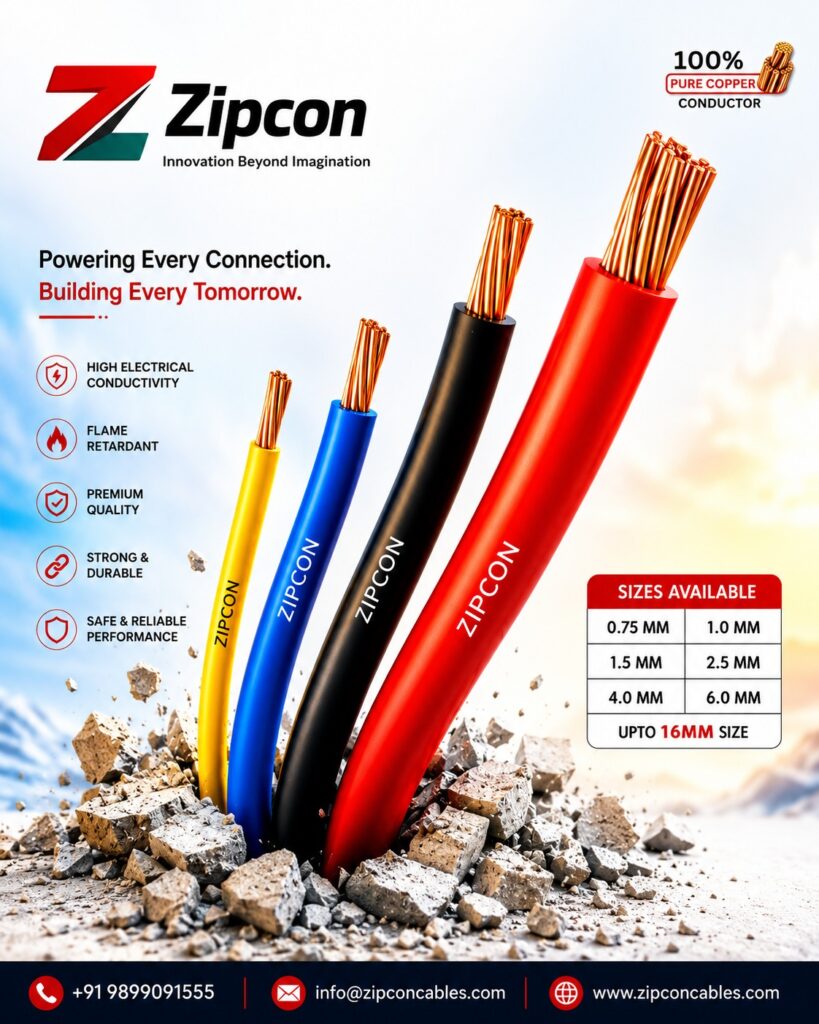
Choosing the right electrical cables in Jabalpur is important for safe, efficient, and long-lasting electrical installations. Whether you are wiring a new home, upgrading an existing property, setting up a commercial building, or handling an industrial project, cable quality directly affects electrical performance and safety.
Jabalpur properties can require cables for different applications, from concealed house wiring and lighting circuits to power distribution and heavy-duty commercial installations. A cable that works well for a lighting circuit may not be suitable for high-load equipment, so selecting the correct type, conductor size, insulation, and construction is essential.
Zipcon Cables offers reliable cable solutions designed for applications where conductivity, insulation quality, durability, and consistent performance matter. The right cable can reduce voltage-related problems, minimize maintenance requirements, and provide dependable performance over years of use.
For inquiries or assistance:– https://zipconcables.com/contact-us/
Why Choosing the Right Electrical Cable Matters
Electrical cables are responsible for safely carrying current from the power source to appliances, equipment, lighting systems, and distribution points. Using an unsuitable cable can result in excessive voltage drop, overheating, insulation damage, or premature failure.
Cable selection should therefore be based on the actual electrical load and installation conditions rather than price alone. Factors such as conductor material, cross-sectional area, insulation, installation method, ambient temperature, and expected load should all be considered.
For example, a residential lighting circuit generally has different requirements from a commercial motor, air-conditioning system, or high-load distribution circuit. Choosing a cable according to the application helps maintain stable performance and improves overall electrical safety.
Types of Electrical Cables Used in Jabalpur
Different electrical installations require different cable constructions. Understanding the common options makes it easier to select the right product for a particular project.
1. House Wires
House wires are commonly used for residential electrical installations, including lights, fans, sockets, switches, and other household circuits. Flexible copper conductors with suitable insulation are widely preferred because they provide good conductivity and are easier to route during installation.
For modern homes, the wire should also offer reliable insulation performance and resistance against everyday electrical and environmental stresses.
2. Multistrand Wires
Multistrand wires contain multiple fine conductor strands rather than one solid conductor. This construction provides greater flexibility, making the wire suitable for installations involving bends and tight routing spaces.
They can be useful in residential and commercial wiring where ease of installation and dependable electrical conductivity are important.
3. FR House Wires
Flame-retardant wires are designed to provide improved resistance to the spread of flame compared with standard insulation. They are commonly considered for residential and commercial wiring where enhanced safety is a priority.
When selecting FR wires, buyers should still verify the appropriate specification, conductor size, insulation quality, and certification for the intended installation.
4. FRLS Wires
FRLS stands for Flame Retardant Low Smoke. These wires are designed to limit flame propagation while producing comparatively lower smoke under fire conditions.
FRLS cables can be particularly relevant for buildings where electrical safety and smoke reduction are important considerations, such as residential complexes, offices, commercial spaces, and public buildings.
5. Multicore Cables
Multicore cables contain multiple insulated conductors within a common outer construction. They can simplify installations where several circuits or conductors need to be routed together.
Depending on their construction and specifications, multicore cables can be used for power, control, and other electrical applications.
6. Submersible Cables
Submersible cables are designed specifically for electrical equipment operating in or around water, such as submersible pumps. Their construction needs to provide suitable insulation and protection against moisture and the operating environment.
Zipcon Cables also offers submersible cable solutions for applications where dependable performance in demanding conditions is required.
Electrical Cables for Residential Use in Jabalpur
Residential electrical wiring requires cables that can safely handle everyday loads while maintaining reliable insulation over extended periods. Common applications include lighting, ceiling fans, sockets, refrigerators, air conditioners, water pumps, and other household equipment.
The required cable size depends on the connected load and circuit design. High-power appliances generally require appropriately sized conductors rather than simply using the same wire throughout the house.
What to Consider for Home Wiring
When selecting electrical wires for a home, consider:
- Conductor material and conductivity
- Required cable size
- Current-carrying capacity
- Insulation quality
- Flexibility
- Installation method
- Expected electrical load
- Applicable safety and quality standards
Using the correct cable for each circuit can help reduce unnecessary heating and maintain consistent electrical performance.
Electrical Cables for Commercial Applications
Commercial buildings typically have more diverse and demanding electrical requirements than individual homes. Offices, retail stores, hotels, warehouses, educational buildings, and other commercial properties may operate lighting systems, computers, HVAC equipment, pumps, machinery, and multiple high-load appliances.
This makes proper cable selection especially important. Commercial electrical systems should be designed around calculated loads, distribution requirements, circuit protection, and installation conditions.
For larger projects, cable selection should be coordinated with qualified electrical professionals rather than based solely on the cable’s appearance or price.
How to Choose the Best Electrical Cables in Jabalpur
Selecting the best electrical cable is not about choosing the most expensive option. It is about matching the cable’s specifications to the application.
Check the Conductor
Copper and aluminium are common conductor materials, with each offering different characteristics, costs, and applications. For many building-wire applications, copper is preferred because of its high conductivity and flexibility.
The conductor should have consistent construction and should match the required electrical load.
Select the Correct Cable Size
Cable size is one of the most important selection factors. A conductor that is too small for the load can experience excessive heating and voltage drop.
For example, a circuit powering a high-load air conditioner or motor should not automatically use the same conductor size as a low-load lighting circuit. Cable sizing should be determined according to the actual installation requirements.
Evaluate Insulation Quality
The insulation protects the conductor from electrical contact, moisture, mechanical damage, and environmental conditions. Poor-quality insulation can deteriorate over time and compromise the reliability of the installation.
Look for cables manufactured with suitable insulation materials and specifications for the intended application.
Consider Installation Conditions
A cable installed inside a wall, conduit, cable tray, outdoor environment, or wet location may face different operating conditions. Temperature, moisture, mechanical stress, and exposure should therefore be considered before selecting the cable.
A technically suitable cable for one installation may not be appropriate for another.
Zipcon Cables: A Reliable Choice for Electrical Applications
Zipcon Cables focuses on cable solutions for residential, commercial, and specialized electrical applications. Its product range includes house wires, multistrand wires, submersible cables, multicore cables, and other wiring solutions.
For customers looking for electrical cables in Jabalpur, the priority should be dependable construction, appropriate specifications, good insulation, and suitability for the intended application. Zipcon Cables can be considered when these factors are central to the purchasing decision.
The right cable is an investment in the overall reliability of an electrical system. Instead of selecting a product only because it is inexpensive, compare its construction, specifications, application suitability, and expected service performance.
Examples: Choosing the Right Cable for Different Applications
Example 1: Residential Lighting
A standard lighting circuit has a relatively lower electrical load compared with heavy appliances. A suitable house wire with the correct conductor size can provide reliable performance when installed according to the electrical design.
Example 2: Home Air Conditioner
An air conditioner can place a significantly higher load on an electrical circuit. The cable should therefore be selected according to the appliance’s rated current, circuit length, installation method, and applicable electrical requirements.
Example 3: Commercial Office
An office may operate lighting, computers, networking equipment, air conditioning, printers, and other appliances simultaneously. Proper distribution and correctly sized cables are important to maintain safe and reliable operation.
Example 4: Borewell Pump
A borewell pump requires a cable designed for its specific operating environment. A suitable submersible cable should be selected based on pump requirements, installation depth, electrical load, and environmental conditions.
Expert Tips for Buying Electrical Cables in Jabalpur
- Never select cable size based only on price. Match it with the calculated electrical load.
- Buy from a reliable manufacturer or authorized seller. Product authenticity and consistent manufacturing quality matter.
- Check specifications before purchasing. Verify conductor material, size, insulation type, voltage rating, and intended application.
- Consider future load requirements. If additional appliances or equipment may be installed later, discuss capacity planning with an electrical professional.
- Use appropriate circuit protection. Good cables cannot compensate for incorrectly selected breakers, fuses, or other protective devices.
- Follow proper installation practices. Correct routing, termination, bending, jointing, and protection are essential for long-term performance.
- Use specialized cables for specialized environments. Wet locations, pumps, outdoor installations, and industrial applications may require purpose-built cable constructions.
Common Mistakes to Avoid
Choosing the Cheapest Cable
The lowest purchase price does not necessarily mean the lowest overall cost. Cable failure can lead to repairs, downtime, replacement work, and potential safety issues.
Using One Cable Size Everywhere
Different circuits have different loads. Using the same wire size for lighting, sockets, air conditioners, motors, and other equipment can result in an unsuitable installation.
Ignoring Voltage Drop
Long cable runs can experience voltage drop. This becomes more important for higher loads and longer distances, so circuit length should be considered during cable selection.
Buying Without Checking Specifications
A cable may look similar to another product while having different electrical characteristics. Always check the manufacturer’s specifications before purchasing.
Poor Installation
Even a high-quality cable can perform poorly if it is damaged during installation, improperly terminated, excessively bent, or installed in unsuitable conditions.
Why Zipcon Cables Can Be Considered for Jabalpur Projects
For residential and commercial electrical work, cable selection should balance safety, conductivity, durability, insulation performance, application suitability, and long-term reliability.
Zipcon Cables provides a range of wiring and cable solutions that can be evaluated for different electrical requirements. From house wiring to submersible and multicore applications, selecting the appropriate Zipcon product according to the project requirements can help create a dependable electrical installation.
For contractors, electricians, builders, dealers, and homeowners in Jabalpur, the best approach is to identify the application first and then choose the appropriate cable specification.
Conclusion
The right electrical cables in Jabalpur can make a significant difference to the safety, efficiency, and long-term reliability of residential and commercial electrical systems. Cable size, conductor material, insulation, installation conditions, current capacity, and application should all be considered before making a purchase.
Zipcon Cables offers solutions for different electrical requirements, including house wires, multistrand wires, FR/FRLS wiring, multicore cables, and submersible cables. Choosing the right Zipcon cable for the specific application can provide a practical foundation for reliable electrical performance.
Whether you are wiring a new home, renovating a commercial property, installing equipment, or planning a larger electrical project, choose the cable according to the load and application—not just the price. Choose the right specifications. Choose reliable cables. Choose Zipcon Cables.
Top 5 FAQs
1. Which are the best electrical cables in Jabalpur?
The best electrical cable depends on the application, load, installation environment, and required specifications. For residential and commercial applications, Zipcon Cables offers different cable solutions that can be selected according to specific project requirements.
2. Which cable is suitable for home wiring?
Suitable house wires should provide adequate current-carrying capacity, reliable insulation, flexibility where required, and compatibility with the electrical installation. The correct size should be selected according to the circuit load and installation conditions.
3. How do I select the correct electrical cable size?
Cable size should be selected based on factors such as electrical load, current, cable length, installation method, ambient conditions, voltage drop, and applicable electrical requirements. A qualified electrician or electrical engineer should determine the final sizing for an installation.
4. Are FRLS cables suitable for commercial buildings?
FRLS cables can be suitable for applications where flame-retardant performance and reduced smoke generation are important. The appropriate cable should be selected according to the building design, applicable standards, and project requirements.
5. Why choose Zipcon Cables for electrical wiring?
Zipcon Cables provides multiple cable and wiring solutions for residential, commercial, and specialized applications. Buyers can select the appropriate Zipcon product based on conductor size, insulation, construction, electrical load, and installation environment.