

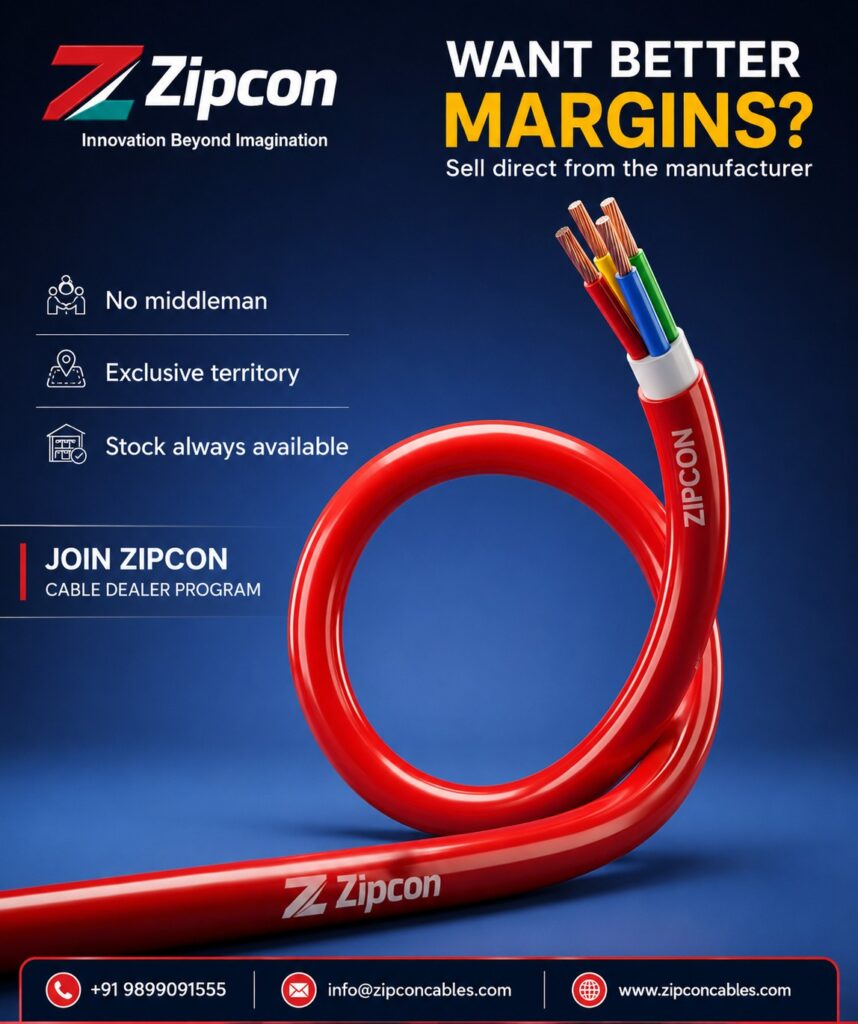
Finding a top flexible cable contractor in Delhi is important when an electrical project requires dependable cable selection, proper installation, safe routing, and consistent performance. Homes, offices, commercial buildings, factories, warehouses, and infrastructure projects all have different electrical requirements.
A reliable cable solution starts with understanding the application. Electrical load, conductor material, cable size, insulation, temperature, moisture, mechanical movement, bending requirements, and installation method all influence which cable should be used.
Zipcon Cables is a suitable brand to consider for projects requiring quality-focused cable solutions. By combining appropriate cable selection with professional installation practices, contractors and project owners can build electrical systems designed for reliable and efficient operation.
Contact us today:- https://zipconcables.com/contact-us/
What Makes a Top Flexible Cable Contractor in Delhi?
A top contractor should provide more than cable installation. The contractor should understand the complete electrical requirement and select products based on the actual application rather than using the same cable specification for every project.
Technical Understanding
Professional cable selection requires knowledge of current capacity, voltage requirements, conductor construction, insulation, installation conditions, and permissible voltage drop. These factors help determine whether a cable is suitable for a particular circuit or equipment connection.
For example, a flexible cable used for a residential appliance connection may have different requirements from one installed around industrial machinery where vibration and repeated movement are present.
Installation Expertise
Proper installation protects the cable from unnecessary mechanical and environmental stress. Cable routing, bending radius, support, termination, and protection should be considered during the installation process.
A quality cable can still experience premature problems if it is pulled excessively, bent beyond recommended limits, poorly terminated, or installed in an unsuitable environment.
Flexible Cable Solutions for Homes in Delhi
Modern residential buildings have increasingly diverse electrical loads. Lighting, fans, refrigerators, air conditioners, water pumps, kitchen appliances, televisions, computers, and other equipment all contribute to the overall electrical demand.
A professional flexible cable contractor in Delhi can help organize cable requirements according to individual circuits and installation conditions. Correct sizing is particularly important for high-load appliances and equipment.
Residential Applications
Flexible cables may be useful for suitable applications involving:
- Appliance connections
- Electrical panels
- Lighting systems
- Pumps
- Home equipment
- Internal wiring applications
- Connections requiring easier cable routing
Cable selection should always be based on the electrical design and applicable requirements rather than flexibility alone.
Flexible Cable Contractor for Commercial Projects
Commercial buildings have more complex electrical networks than typical homes. Offices, hotels, retail stores, restaurants, hospitals, schools, and showrooms may require power for HVAC systems, lighting, computers, pumps, elevators, security systems, and other equipment.
A professional contractor should plan the cable layout so that power distribution remains organized and accessible for inspection and maintenance.
Commercial Cable Planning
A good installation considers:
- Main power distribution
- Lighting circuits
- Equipment connections
- Cable trays
- Conduits
- Distribution boards
- Cable identification
- Terminations
- Testing and inspection
Well-planned routing reduces unnecessary cable congestion and can make future maintenance easier.
Flexible Cable Solutions for Industrial Projects
Industrial electrical systems require careful cable selection because operating conditions can be considerably more demanding. Machinery can generate vibration, movement, heat, dust, and mechanical stress.
A flexible cable contractor in Delhi working on industrial projects should evaluate the operating environment before recommending a cable. The right product depends on the electrical and mechanical requirements of the equipment.
Industrial Applications
Flexible cable solutions may be considered for appropriate applications involving:
- Industrial machinery
- Motors
- Control panels
- Pumps
- Production equipment
- Automated machinery
- Material-handling systems
- Equipment connections
The cable specification should be matched to the voltage, current, operating temperature, movement, installation method, and environmental conditions.
Key Factors When Selecting Flexible Cables
Not every flexible cable is suitable for every electrical application. A professional contractor should evaluate several technical factors before finalizing a cable.
1. Conductor Material
Copper and aluminium are commonly used conductor materials. Their selection depends on the application, electrical design, cable construction, and project requirements.
For flexible applications, conductor construction also influences handling and bending characteristics.
2. Cable Size
Cable size should be selected according to expected current, installation conditions, voltage drop, ambient temperature, and other relevant design factors.
Using an undersized cable can cause excessive heating and performance problems. Oversizing may increase project cost unnecessarily, so correct sizing is important.
3. Insulation
Insulation protects the conductor and helps prevent unwanted electrical contact. The insulation material should be appropriate for the operating voltage, temperature, and environmental conditions.
Projects exposed to heat or moisture require particular attention to insulation performance.
4. Flexibility
Flexibility allows easier routing around bends, equipment, panels, and confined spaces. It can also simplify installation where cables need controlled movement.
However, flexibility should never replace proper consideration of electrical rating and environmental suitability.
5. Installation Environment
Before selecting a cable, consider whether it will be exposed to:
- Heat
- Moisture
- Dust
- Vibration
- Mechanical movement
- Outdoor conditions
- Confined spaces
- Cable trays or conduits
The installation environment directly affects the cable specification required.
Why Choose Zipcon Cables for Delhi Electrical Projects?
Zipcon Cables can be considered for residential, commercial, and industrial projects where dependable cable products are required.
The appropriate Zipcon cable should be selected according to the specific electrical application, including conductor type, cable size, insulation requirements, voltage, operating conditions, and installation method.
For contractors and project managers, maintaining consistency in cable quality can simplify procurement and support reliable electrical installations across multiple project sites.
Flexible Cable Contractor vs. General Cable Supplier
A cable supplier primarily focuses on providing products, while a contractor may be involved in planning and implementing the electrical installation.
| Factor | General Cable Supplier | Flexible Cable Contractor |
|---|---|---|
| Cable supply | Yes | Yes |
| Product specifications | Yes | Yes |
| Application assessment | Limited | Project-focused |
| Cable routing | Usually limited | Considered |
| Installation | Usually not included | May be included |
| Termination | Usually not included | May be included |
| Site coordination | Limited | More involved |
| Installation troubleshooting | Limited | More relevant |
For larger electrical projects, selecting both suitable cables and competent installation support can provide a stronger overall solution.
Examples of Flexible Cable Applications
Example 1: Residential Building
A residential project may include separate circuits for lighting, general sockets, kitchen equipment, air conditioners, and water pumps. Each circuit should be evaluated according to its expected load.
Proper cable selection and organized routing can improve installation quality and simplify future maintenance.
Example 2: Commercial Office
An office building may operate computers, lighting systems, HVAC equipment, elevators, security systems, and other electrical loads.
A structured cable layout can help keep different circuits organized while providing easier access for inspection and maintenance.
Example 3: Industrial Machinery
Industrial machinery may involve continuous movement and vibration. In these applications, cable flexibility and mechanical suitability become important alongside electrical capacity.
The selected cable should match the machinery’s operating conditions rather than simply being chosen because it is labeled as flexible.
Example 4: Warehouse
A warehouse can require power for lighting, pumps, ventilation, material-handling equipment, and other systems. Cable routes may need to pass through trays, conduits, or equipment areas.
Proper planning helps minimize unnecessary bends, mechanical stress, and cable congestion.
Expert Tips for Choosing a Flexible Cable Contractor in Delhi
Check Technical Expertise
Choose a contractor who understands electrical loads, cable sizing, insulation, routing, termination, and installation conditions. Technical knowledge is more important than simply offering the lowest quotation.
Evaluate Cable Specifications
Before purchasing, review conductor construction, cable size, insulation, voltage rating, application, and relevant product specifications.
Match the Cable to the Environment
Indoor wiring, outdoor installations, machinery connections, and damp environments may have different requirements. Environmental conditions should be considered before selecting the cable.
Plan Cable Routes
Cable routing should be finalized before installation wherever possible. Proper planning can reduce sharp bends, excessive tension, congestion, and difficult maintenance access.
Focus on Long-Term Performance
A cable should be evaluated based on its expected application and service requirements, not just its initial price. A reliable installation can help reduce avoidable maintenance and replacement costs.
Work With a Reliable Cable Brand
Using quality-focused products from Zipcon Cables can complement professional installation practices and help contractors deliver dependable electrical solutions.
Common Mistakes to Avoid
Selecting Cables Only by Price
Low initial cost does not necessarily mean lower overall project cost. Product quality, application suitability, installation requirements, and expected service life should also be considered.
Using the Same Cable for Every Application
Residential, commercial, and industrial installations can have significantly different requirements. Cable specifications should be selected according to the individual application.
Ignoring Cable Size
Incorrect cable sizing can contribute to overheating and voltage-drop problems. The expected electrical load and installation conditions should be evaluated before selecting the cable.
Exceeding the Recommended Bending Radius
Flexible cables are designed to provide easier handling, but they still have mechanical limitations. Excessive bending can damage cable construction and should be avoided.
Poor Termination
Improper connections can result in heating, electrical faults, and unreliable equipment performance. Correct termination is an essential part of a quality electrical installation.
Ignoring Future Maintenance
Cable routes should allow reasonable access for inspection and maintenance. A poorly planned installation can make even routine electrical work difficult.
Why Zipcon Cables Is a Strong Choice for Delhi Projects
Delhi’s electrical requirements range from residential wiring to large commercial buildings and industrial facilities. These applications require products selected according to different loads, environments, and installation conditions.
Zipcon Cables provides a quality-focused option for contractors, builders, electrical professionals, and project owners seeking cable solutions for different applications.
The strongest results come from combining the right cable with the right installation practices. Correct sizing, suitable insulation, proper routing, quality termination, and appropriate testing all contribute to dependable electrical performance.
Conclusion
Choosing a top flexible cable contractor in Delhi requires more than comparing prices. The right contractor should understand the project’s electrical load, cable specifications, installation environment, routing requirements, and long-term performance expectations.
For quality-focused electrical projects, Zipcon Cables can be considered for residential, commercial, and industrial cable requirements. Selecting the appropriate product and pairing it with professional installation practices can create a more reliable electrical system.
For better project outcomes, focus on four essentials: correct cable selection, dependable cable quality, professional installation, and proper maintenance.
Top 5 FAQs
1. What is a flexible cable contractor?
A flexible cable contractor may handle cable selection, routing, installation, termination, testing, and other electrical work according to the project’s scope and requirements.
2. Where can flexible cables be used?
Flexible cables can be used in suitable residential, commercial, industrial, machinery, equipment, and electrical connection applications where cable routing or movement requires flexibility.
3. How should I choose a flexible cable for my project?
Consider electrical load, voltage, conductor material, cable size, insulation, temperature, installation method, environmental exposure, and required flexibility before selecting a cable.
4. Can flexible cables be used for industrial machinery?
Yes, flexible cables can be suitable for industrial machinery when their electrical and mechanical specifications match the equipment’s operating conditions, including movement, vibration, temperature, and load.
5. Why choose Zipcon Cables for electrical projects?
Zipcon Cables can be considered for quality-focused cable requirements across homes, commercial buildings, and industrial projects. The specific cable should be selected according to the project’s technical and installation requirements.