

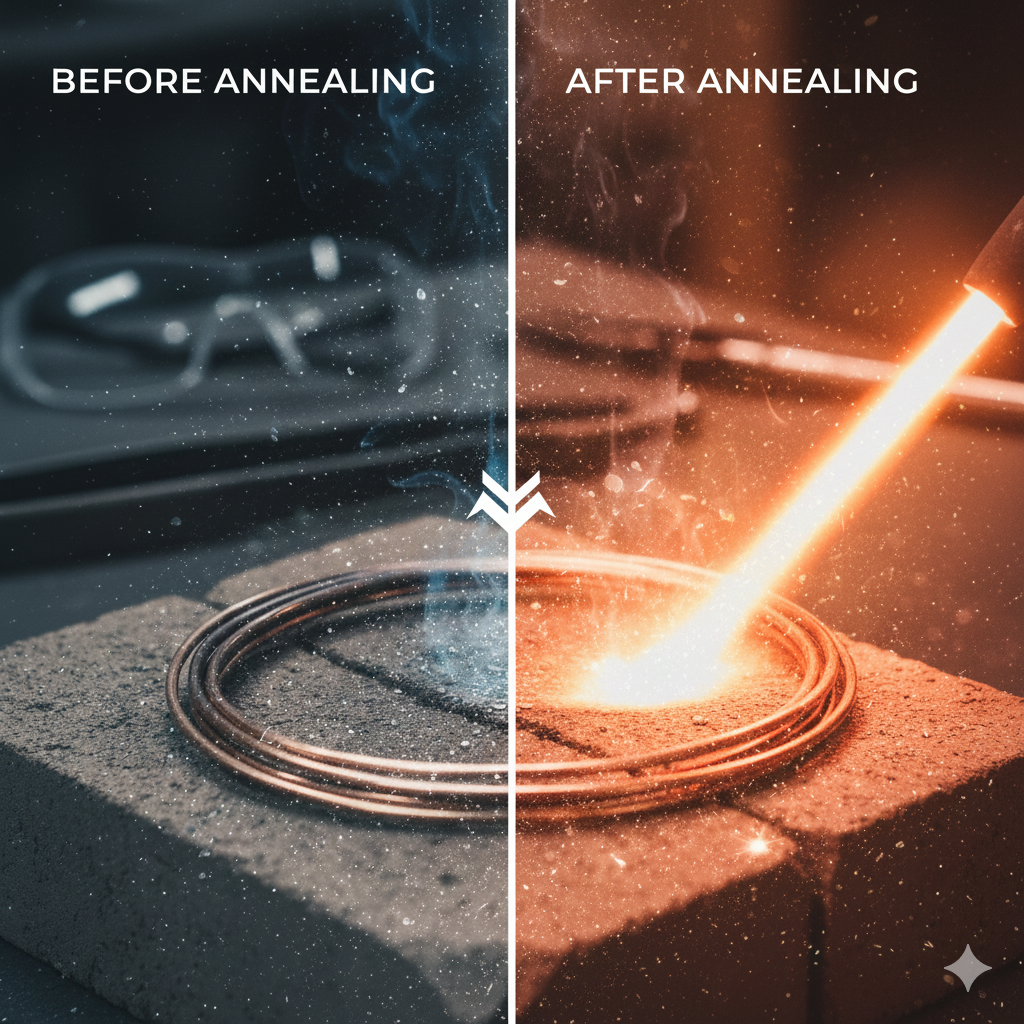
Annealing is a critical process in the production of copper wires, significantly enhancing their electrical, mechanical, and physical properties. It involves heating copper to a specific temperature and then cooling it at a controlled rate, which helps relieve internal stresses and improve the wire’s flexibility. This article will explore how annealing enhances copper wire performance, particularly in areas such as conductivity, durability, weight, cost, safety, and installation needs.
Conductivity: Maximizing Electrical Efficiency
Copper is well-known for its excellent conductivity, which is why it is widely used for electrical wiring. Annealing copper wire enhances its conductivity by reducing internal stress and imperfections, which can increase resistance. During the cold-drawing process, copper wires can become rigid and develop dislocations, which hinder the flow of electricity. However, annealing helps relax these dislocations and reduces electrical resistance, allowing electricity to flow more efficiently.
Annealed copper wires are especially beneficial in applications where high conductivity is required, such as in power distribution systems, high-performance electronics, or industrial machinery. The improved conductivity ensures that energy loss during transmission is minimized, which ultimately improves the efficiency of electrical systems.
Practical Insight: For engineers and electricians working with energy-efficient systems or power-critical installations, annealed copper is the preferred choice, as it offers superior electrical performance and reduces energy losses.
Durability: Enhancing Longevity and Stress Resistance
Annealing significantly improves the durability of copper wires. When copper is drawn into wires, it becomes harder and more brittle, making it prone to mechanical stress and breakage. The annealing process softens the wire, relieving internal stresses and making it more malleable and resistant to bending, stretching, or fracturing. This is especially important in applications where copper wires are subjected to constant mechanical stress, such as in industrial machinery, telecommunications, or outdoor electrical installations.
Annealed best copper wires manufacturer in delhi are more resilient to environmental factors such as extreme temperatures, humidity, and mechanical wear, which helps extend their lifespan. The ability of annealed copper to withstand physical stress without breaking or cracking makes it a reliable choice for long-term installations, reducing the frequency of replacements and maintenance costs.
Practical Insight: For high-demand industries, including aerospace, manufacturing, and construction, where wires are exposed to vibration and physical stress, annealed copper offers superior durability and longevity, making it a more cost-effective long-term solution.
Weight and Cost: Balancing Performance and Efficiency
One of the key characteristics of annealed copper is its increased flexibility. The annealing process softens the copper, making it easier to bend, twist, and route without compromising its integrity. This flexibility is especially advantageous during installation, particularly when wires need to be threaded through tight spaces or complex setups.
While annealing adds some cost to the manufacturing process, the enhanced performance of annealed copper justifies the price for most high-performance applications. The added flexibility and reduced internal stress allow the wire to endure more bending and movement, minimizing the risk of wire fatigue and breakage, which would otherwise lead to costly maintenance.
The weight of annealed copper wire is also affected by the annealing process, with some reduction in mass due to the wire’s increased flexibility. Though this can make the wire slightly lighter compared to non-annealed copper, the trade-off in terms of increased functionality and ease of installation is significant.
Practical Insight: For projects requiring flexibility, such as residential wiring or installations in tight spaces, the benefits of annealed copper far outweigh the additional cost. In complex installations, the enhanced ease of handling and reduced risk of breakage make it a worthwhile investment.
Safety: Preventing Fatigue and Overheating
Safety is paramount when selecting wiring materials, especially when copper wires are exposed to high electrical loads or extreme physical conditions. Non-annealed copper can become brittle over time, leading to the risk of wire breakage, fatigue, and overheating, especially under constant movement or when subjected to fluctuating temperatures.
Annealing copper reduces the risk of these issues by softening the metal, allowing it to maintain its flexibility and resist breakage. Annealed copper wire is better able to cope with thermal expansion and contraction, which reduces the chances of overheating—a common issue in electrical systems. This improves the overall safety of the installation by minimizing the risk of fire or electrical failures caused by damaged wires.
Practical Insight: In safety-critical environments such as power plants, industrial machinery, or commercial buildings, using annealed copper wires reduces the likelihood of dangerous failures. For electricians, using annealed copper adds an extra layer of safety by preventing wire fatigue and minimizing overheating risks.
Installation Needs: Flexibility for Easy Handling
Annealed copper wires are easier to install compared to non-annealed wires due to their enhanced flexibility. The wire’s malleability makes it easier to maneuver through tight spaces, around corners, and into complex installations. This is particularly beneficial in areas like residential wiring, telecommunications, or industrial setups where flexibility is key to ease of installation.
Unlike rigid, non-annealed copper, which may break or damage surrounding materials when bent too much, annealed copper can be routed and shaped without compromising its integrity. This not only speeds up installation but also reduces the risk of errors during the process.
Practical Insight: For electricians working in confined spaces, using annealed copper wire simplifies the process. Its ease of bending and installation reduces time and effort, ensuring a smooth installation process and reducing the likelihood of wire damage during installation.
Typical Use Cases for Annealed Copper Wires
Annealed copper wires are commonly used in applications that require high conductivity, flexibility, and durability. Some typical use cases include:
- Residential and Commercial Electrical Wiring: Annealed copper is the preferred choice for household and commercial power systems due to its high conductivity and ease of installation.
- Telecommunications: Annealed copper is often used in telecommunications infrastructure, where the wire needs to carry high-frequency signals efficiently.
- Industrial Machinery: In industries where wires are exposed to constant mechanical stress and environmental factors, annealed copper wires provide long-lasting performance.
When compared to alternatives like aluminum or steel, annealed copper offers superior conductivity, flexibility, and overall reliability. While aluminum is lighter and cheaper, it has a higher resistance and lacks the long-term durability of copper. Steel, though strong, doesn’t offer the same level of electrical efficiency, making copper the go-to choice for most electrical wiring applications.