

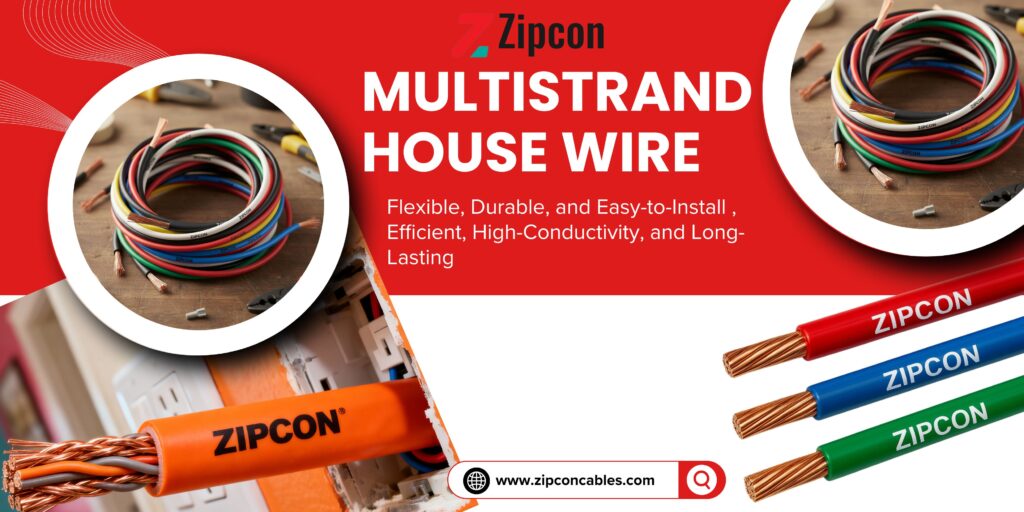
When selecting electrical wiring for residential purposes, choosing the right type of wire is a crucial decision. Among the various options available, multistrand wire and solid wire are two common types used in residential electrical installations. Both serve the purpose of transmitting electricity efficiently, but their construction, flexibility, and applications differ significantly. cables manufacturer in Delhi NCR Understanding these differences is essential to selecting the appropriate wire for specific installations. This article explains what multistrand wire is, how it differs from solid wire, and where each type is most suitable, with specific reference to Zipcon cables.
What is Multistrand House Wire?
Multistrand house wire, often called flexible wire, consists of several thin strands of wire that are twisted or braided together to form a single wire. These strands are typically made from high-conductivity materials like copper or aluminum. The individual strands are insulated and then combined to create a single conductor. The defining feature of multistrand wire is its flexibility, which allows it to bend and move easily without breaking. This is particularly useful in installations where the wire needs to navigate corners, tight spaces, or experience some level of movement.
Construction of Multistrand Wire
Multistrand wire is made by twisting several smaller strands of conductive material together. The number of strands in the wire varies depending on the wire’s gauge and intended application. For instance, a 14 AWG (American Wire Gauge) multistrand wire might contain anywhere from seven to 19 strands of wire, each individually insulated before being bundled together. The wire is then wrapped in an outer layer of insulation to prevent electrical shorts or exposure to conductive materials.
The design of multistrand wire provides a larger surface area, which increases flexibility. This is especially advantageous when the wire needs to be routed through constrained spaces or bent regularly, making multistrand wire an ideal choice for flexible and adaptable electrical installations.
What is Solid Wire?
In contrast, solid wire consists of a single, continuous strand of wire, unlike multistrand wire, which is made up of multiple smaller strands. Solid wire is usually constructed from the same conductive materials as multistrand wire, such as copper or aluminum, but it is a single piece of metal, offering rigidity and a lack of flexibility. Solid wire is commonly used in environments where flexibility is not a significant factor, and the wire will remain stationary once installed.
Solid wire is often used in fixed electrical circuits where long-term durability is necessary, such as in wall wiring, conduits, and power distribution systems, where the wire is unlikely to experience frequent bending or movement.
Key Differences Between Multistrand and Solid Wire
1. Flexibility
The most noticeable difference between multistrand and solid wire is flexibility. Multistrand wire, made of multiple strands, is much more flexible, allowing it to bend around corners and maneuver into tight spaces without breaking. This makes it ideal for applications where the wire needs to be bent or adjusted frequently, such as in appliance wiring, power cords, and extension leads.
In contrast, solid wire is stiffer and less flexible, making it harder to bend or twist. This rigid nature makes it more suitable for installations where the wire is fixed in place, like inside walls or in conduits where minimal bending is required.
2. Durability and Fatigue Resistance
Due to its construction, multistrand wire is more resistant to fatigue. The individual strands allow the wire to flex without breaking, which makes it more durable for installations exposed to repeated movement, vibration, or bending. This makes it ideal for applications like appliance wiring and power tools where frequent movement or flexing may occur.
On the other hand, solid wire is more prone to fatigue, especially when subjected to repeated bending. Over time, the wire can crack or break due to this stress, leading to potential electrical failures or hazards. Solid wire is, therefore, not recommended for applications where the wire is subject to frequent movement.
3. Electrical Conductivity
Both multistrand and solid wires are made from highly conductive materials, typically copper, and provide excellent electrical conductivity. However, solid wire usually offers slightly better conductivity than multistrand wire because it is a continuous, uninterrupted conductor. Multistrand wire may experience minor resistance at the points where the individual strands meet, leading to a small decrease in overall conductivity.
That being said, the difference in conductivity is usually negligible in most residential applications, and both types of wire are more than capable of handling typical household electrical tasks, such as powering appliances or lighting.
4. Cost
Solid wire is generally more affordable than multistrand wire due to its simpler manufacturing process. Solid wire requires fewer materials and less processing, making it less expensive to produce. As a result, solid wire is commonly used in less complex installations where flexibility and movement are not required.
On the other hand, multistrand wire is more expensive due to its more intricate manufacturing process. However, the benefits of flexibility, fatigue resistance, and adaptability may justify the additional cost for installations where these characteristics are essential.
5. Applications
Both types of wire have specific applications based on their strengths:
- Multistrand wire is ideal for flexible applications such as:
- Appliance wiring
- Power cords
- Automotive wiring
- Flexible leads and extension cords
- Outdoor wiring or installations subject to frequent movement or vibration
- Solid wire is best suited for stationary installations such as:
- Residential circuits
- Power distribution systems
- Wiring within walls or conduits
- Electrical systems where minimal movement is expected
Zipcon Cables and Their Application of Multistrand Wire
Zipcon Cables, a well-known manufacturer of electrical cables, offers both multistrand and solid wire solutions. Their multistrand house wire is particularly suited for applications that demand flexibility, durability, and reliability. Zipcon’s multistrand wire products are designed for use in both residential and industrial applications, ensuring that the wire can withstand frequent movement and bending, while also maintaining high electrical conductivity.
Zipcon uses high-quality copper or aluminum conductors for their multistrand wires, ensuring that the wire performs well in various electrical tasks. Their wires are also well-insulated, minimizing the risk of electrical short circuits and ensuring safety during installation. The flexibility and durability of Zipcon’s multistrand wires make them an ideal choice for installations that require constant movement or adaptability.
Conclusion
Both multistrand wire and solid wire have specific applications depending on their flexibility, durability, and cost. Multistrand wire is the preferred choice when flexibility, resistance to fatigue, and adaptability are necessary. In contrast, solid wire is more cost-effective and suited for installations where the wire remains stationary with minimal movement.
When considering Zipcon’s products, their multistrand house wire stands out as an excellent choice for applications that require flexibility, especially in areas where wires will be subjected to movement or frequent bending. Zipcon’s multistrand wire offers the right balance of performance, durability, and safety for residential and industrial electrical systems.
Understanding the differences between multistrand and solid wire, along with evaluating the requirements of your installation, will help you choose the right wire for your electrical needs, ensuring a safe and reliable electrical system.