

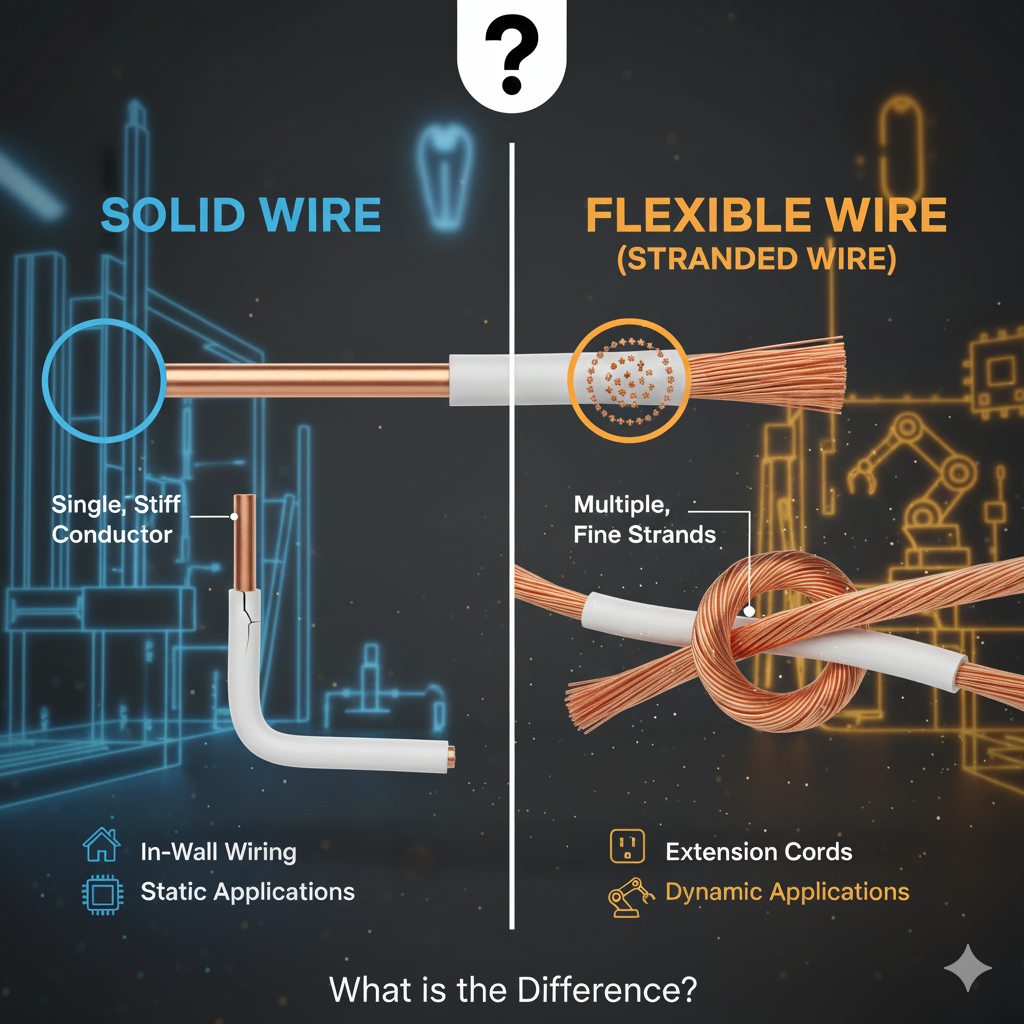
When it comes to selecting the right wiring for your project, whether you’re an electrician, engineer, or buyer, understanding the key differences between flexible wire and solid wire is crucial. Each type has distinct advantages depending on the application. This article will provide a straightforward comparison of flexible wire and solid wire, covering key factors like conductivity, durability, weight, cost, safety, installation needs, and typical use cases.
Conductivity: Which Wire is Better?
Conductivity is one of the most important factors to consider when choosing between flexible and solid wire. Both types of wire are typically made from copper or aluminum, both of which are excellent conductors of electricity.
- Solid Wire: Since solid wire consists of a single solid piece of metal, its conductivity is generally better than flexible wire. It provides a more direct path for electrical flow with fewer contact points, which results in minimal resistance.
- Flexible Wire: Flexible wire is made of many smaller strands of wire bundled together. While it may offer slightly higher resistance due to more contact points, the difference is often negligible in most applications. However, for high-frequency electrical circuits, solid wire may perform better in terms of conductivity.
Durability: How Long Do They Last?
Durability is essential, particularly in environments where wires are exposed to wear and tear or harsh conditions.
- Solid Wire: Solid wire is more durable and less prone to breaking or fraying over time. It performs well in situations where the wire is not subject to frequent movement, such as fixed installations in walls or ceilings.
- Flexible Wire: While flexible wire is more resilient in environments where the wire needs to bend, it is more prone to damage if twisted, kinked, or bent too many times. Over time, the individual strands can break, especially in constant flexing or repetitive motion situations. This makes flexible wire less suitable for long-term static installations but perfect for dynamic environments like machinery or automotive wiring.
Weight: Which One is Lighter?
- Solid Wire: Solid wire is typically heavier because it is made from a single, solid piece of material. For longer distances or applications requiring many feet of wire, solid wire may add extra weight to the installation, which could be a consideration in some cases.
- Flexible Wire: Flexible wire is lighter due to its construction of many smaller strands. Its reduced weight can make it easier to handle and install in tight spaces, especially when you need to move it around or route it through narrow pathways.
Cost: Which One is More Affordable?
Cost is a major consideration when choosing wiring, especially when you’re working within a budget.
- Solid Wire: Solid wire is generally less expensive than flexible wire, as it requires less material and fewer manufacturing processes. If you’re running wire through walls or other fixed locations, where flexibility is not a necessity, solid wire offers a more cost-effective solution.
- Flexible Wire: Flexible wire tends to be more expensive because of the additional labor and materials required to make the smaller strands. The cost is justified when you need a wire that can handle movement or flexible applications, such as in appliances, vehicles, or machinery.
Safety: Which One is Safer?
Safety is a top priority in electrical installations, and both wire types have distinct advantages and drawbacks.
- Solid Wire: Solid wire is generally safer for fixed installations. Its rigidity and durability reduce the risk of short circuits or wire breakage, which can cause fires or equipment malfunctions. It is also more resistant to corrosion when properly insulated.
- Flexible Wire: While flexible wire is safer in terms of handling, especially in mobile or moving applications, it may have a higher risk of wear over time due to bending. If not properly maintained, the strands can fray, exposing conductive material, which could increase the risk of shorts or electrical hazards.
Installation Needs: Which is Easier to Work With?
Installation ease is another important factor to consider, particularly for electricians or DIYers.
- Solid Wire: Solid wire is less flexible, making it more difficult to install in tight spaces or around corners. However, once installed, it doesn’t need much adjustment. Solid wire is ideal for applications where it will remain in place for long periods without needing frequent movement.
- Flexible Wire: Flexible wire excels in installations that require mobility or movement, such as in appliances, machinery, or automotive applications. It’s much easier to route and adjust in hard-to-reach places, and it’s perfect for environments where the wiring needs to bend or flex.
Typical Use Cases: Where Does Each Shine?
Each type of wire has its own set of use cases that make it the ideal choice in specific scenarios.
- Solid Wire: Solid wire is best used in fixed installations like lighting circuits, home wiring, and high-voltage applications. It works well when wires will not be exposed to bending or movement and when durability over time is a priority.
- Flexible Wire: Flexible wire is ideal for applications where movement is necessary, such as in machinery, cars, or portable electronics. It’s commonly used for wiring appliances, tools, or any equipment where wires need to bend, twist, or move.
Copper vs. Other Materials
Both copper and aluminum wires are commonly used for flexible and solid wire. Copper wires are more conductive than aluminum, making them the better option for high-performance circuits or installations where power loss needs to be minimized. For larger installations, aluminum may also be used, especially in solid wire for overhead power lines.
When to Choose Copper Cables Over Aluminum Cables
If you require greater conductivity or durability, copper is usually the better option for solid and flexible wire. Copper wires are preferred in most home and commercial electrical systems because they have superior conductivity, which makes them more efficient. However, in specific large-scale applications, such as utility installations, aluminum may be more cost-effective.
Conclusion: Which Should You Choose?
The decision between flexible wire and solid wire ultimately comes down to your specific application.
- Choose Solid Wire if you need a durable, cost-effective option for fixed installations where the wire won’t be moved often.
- Choose Flexible Wire for applications requiring movement or flexibility, such as in machinery, appliances, or any setup where the wire will frequently bend or twist.
For high-conductivity needs, copper wire is often the best choice due to its superior electrical properties. The decision should always be based on your specific project requirements, balancing factors like durability, cost, weight, and the need for flexibility in the installation.