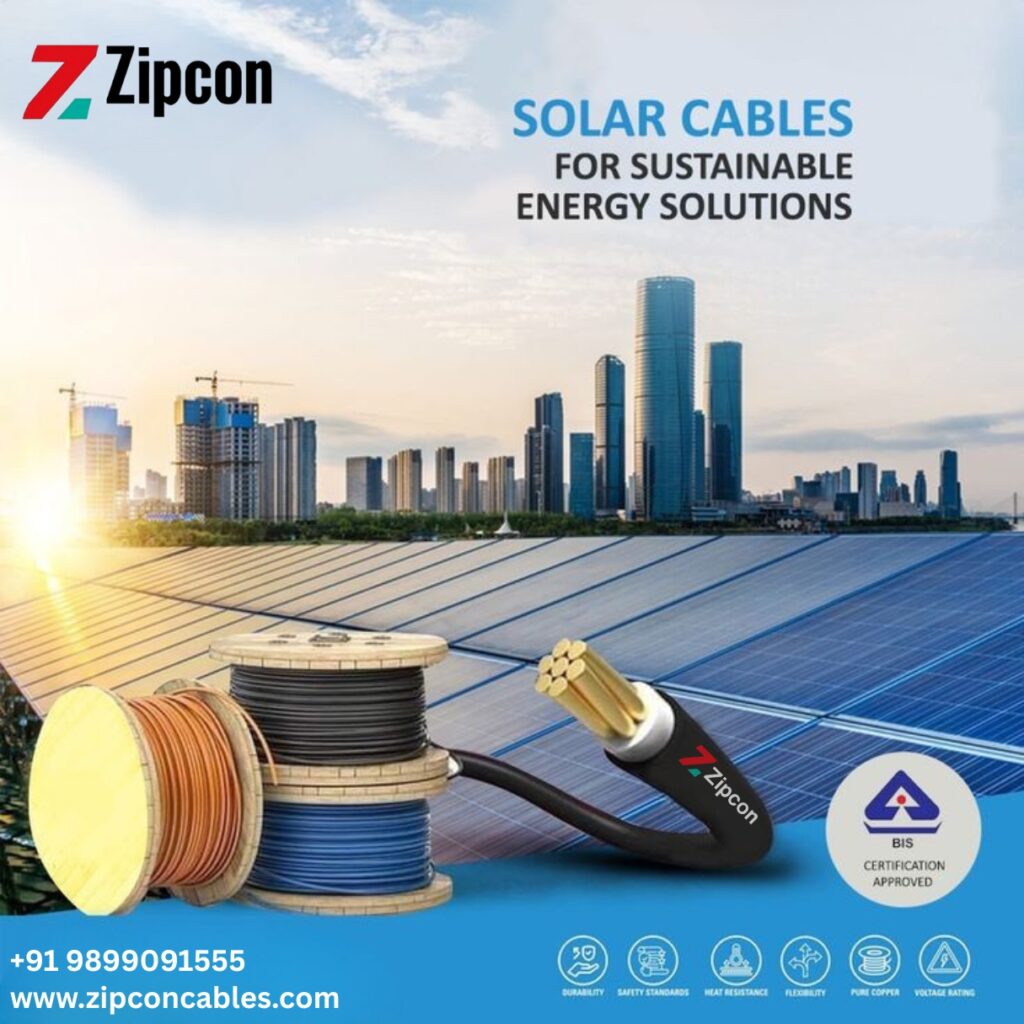
A solar power system can generate excellent energy, but its performance also depends on the quality of the cables connecting its major components. Zipcon Cables, a leading solar cable manufacturer in India, provides durable cable solutions designed for efficient power transmission in solar installations.
Solar cables operate in demanding environments where sunlight, heat, moisture, temperature variations, and mechanical stress can affect cable life. Selecting the right cable helps maintain electrical efficiency, improve system reliability, and reduce avoidable maintenance and replacement costs.
For residential rooftop systems, commercial solar projects, solar farms, and solar water-pumping applications, the cable must match the electrical load and installation conditions. A cost-effective solar cable is not simply the cheapest option—it should provide dependable performance throughout the expected operating life of the solar system.
For inquiries or assistance:👉 https://zipconcables.com/contact-us/
Why Solar Cables Are Important in a Solar Power System
Solar cables carry electricity between photovoltaic modules, combiner boxes, charge controllers, inverters, batteries, and other electrical equipment. Because these connections remain exposed to electrical and environmental stresses, ordinary electrical wires may not be suitable for every solar application.
A properly selected solar cable helps minimize power losses and provides dependable connections between system components. Cable construction, conductor quality, insulation, current-carrying capacity, voltage rating, flexibility, and environmental resistance all influence overall performance.
For example, an improperly sized cable can create excessive voltage drop and unnecessary energy losses. Selecting an appropriate cable size based on current, cable length, installation conditions, and system voltage is therefore an important part of solar system design.
What Makes a Reliable Solar Cable Manufacturer in India?
Choosing a manufacturer is not only about comparing the price per metre. The manufacturer should have a clear focus on conductor quality, insulation, dimensional consistency, electrical performance, and application requirements.
Quality Conductors
The conductor is responsible for carrying electrical current through the solar installation. Copper and aluminium conductors have different characteristics, so the appropriate conductor depends on the application, system design, installation method, and required performance.
A quality manufacturing process helps maintain consistent conductor dimensions and electrical characteristics. This becomes particularly important in longer cable runs, where resistance and voltage drop can have a greater effect.
Durable Insulation
Solar cables require insulation capable of handling the conditions in which photovoltaic systems operate. Outdoor installations may experience continuous sunlight, elevated temperatures, moisture, dust, and changing weather conditions.
Durable insulation protects the conductor and helps maintain electrical separation throughout the cable’s service life. This is one reason purpose-built solar cables are preferred for photovoltaic installations over unsuitable general-purpose wiring.
Mechanical Flexibility
Solar installations often require cables to follow module layouts, mounting structures, junction boxes, and other equipment. Flexible construction can make routing and installation easier while reducing unnecessary stress on cable connections.
Good flexibility is especially useful where cables need controlled bends or where installation involves compact equipment layouts.
Zipcon Cables: A Practical Choice for Solar Applications
Zipcon Cables focuses on providing cable solutions for applications where dependable electrical transmission and durability matter. Its solar cable range can be positioned for residential, commercial, industrial, and solar pumping requirements.
For solar projects, the emphasis should be on matching the cable to the system rather than selecting a product based only on its nominal price. Zipcon can serve as a practical choice for projects that require reliable cable performance and cost-conscious procurement.
The right cable selection can also simplify installation and help reduce the possibility of premature cable replacement caused by unsuitable specifications.
Key Benefits of Using Quality Solar Cables
Efficient Energy Transmission
Solar cables are designed to transmit generated electrical power between photovoltaic equipment with controlled electrical losses. Correct cable sizing is essential because resistance increases energy loss and voltage drop.
For a short rooftop installation, the required cable length may be relatively small. In a large solar plant, however, long cable runs can make conductor sizing and voltage-drop calculations much more important.
Better Outdoor Performance
Solar cables installed outdoors need to withstand environmental exposure. The cable construction should be appropriate for the installation environment, including exposure to sunlight, temperature changes, moisture, and mechanical conditions.
Using an application-appropriate cable helps protect the electrical connection and supports reliable long-term operation.
Lower Maintenance Requirements
Cable failures can result in troubleshooting, replacement work, downtime, and additional labour costs. Using suitable cables from a reliable manufacturer can reduce the likelihood of problems caused by inappropriate cable selection or poor-quality construction.
This makes cable quality an important part of the total cost of ownership of a solar installation.
Long-Term Cost Effectiveness
The lowest purchase price does not always produce the lowest overall project cost. A cable that requires frequent replacement or causes avoidable electrical losses can become more expensive over time.
A better approach is to compare cable quality, expected service conditions, electrical specifications, installation requirements, and overall lifecycle value.
Solar Cable Applications
Residential Rooftop Solar
Residential solar systems require cables for connections between solar panels, inverter systems, and associated electrical equipment. Proper cable selection helps maintain reliable energy transmission while keeping installation practical.
For rooftop applications, cable routing should also account for exposure, bending, fastening, and protection from mechanical damage.
Commercial Solar Projects
Commercial installations generally involve larger electrical loads and more extensive cable networks. Correct sizing and cable routing become increasingly important as system capacity and cable distances increase.
A reliable solar cable manufacturer can support project requirements by providing products suited to the electrical and environmental conditions of the installation.
Solar Power Plants
Utility-scale solar projects involve long cable routes, multiple strings, junction points, and large numbers of photovoltaic modules. Small differences in cable performance can become significant when multiplied across a large installation.
For these projects, procurement should focus on consistent product quality, appropriate specifications, and reliable supply.
Solar Water Pumping Systems
Solar-powered water pumps require dependable electrical connections between photovoltaic panels, controllers, and pumping equipment. Cable selection should consider the electrical requirements as well as the environmental conditions around the installation.
For agricultural and rural applications, durability becomes particularly important because equipment may operate in dusty, hot, humid, or exposed environments.
How to Select the Right Solar Cable
1. Check the System Voltage
The cable’s voltage rating should be suitable for the solar system. Using a cable with inappropriate electrical specifications can compromise system safety and reliability.
2. Calculate Current Requirements
The cable must be capable of carrying the expected current under the applicable installation conditions. Cable sizing should be based on the actual system design rather than a general assumption.
3. Consider Cable Length
Longer cable runs generally result in greater voltage drop. For longer distances, the conductor size may need to be increased to keep losses within acceptable limits.
4. Evaluate Environmental Conditions
Consider whether the cable will be exposed to direct sunlight, moisture, high temperatures, chemicals, mechanical stress, or other environmental factors.
5. Check Installation Requirements
The cable should be practical to route and install. Flexibility, outer dimensions, termination requirements, and available installation space can all affect the appropriate cable choice.
Solar Cable vs. Ordinary Electrical Cable
| Feature | Solar Cable | Ordinary Electrical Cable |
|---|---|---|
| Typical application | Photovoltaic systems | General electrical installations |
| Outdoor suitability | Designed for relevant solar environments | Depends on cable type |
| UV exposure | Product-specific | Not always suitable |
| Flexibility | Generally designed for solar routing | Varies |
| Solar system compatibility | Designed for PV applications | May not be appropriate |
| Long-term outdoor use | Depends on specification | Depends on specification |
The important point is that cable suitability depends on its construction and ratings, not simply on whether it is marketed as an electrical wire. Solar installations should use cables specifically appropriate for their operating environment and electrical requirements.
Examples: Choosing Solar Cables for Different Projects
Example 1: Home Rooftop System
A residential rooftop installation may have relatively short cable runs between panels and the inverter. The cable selection should focus on the system’s voltage and current requirements, routing conditions, temperature exposure, and applicable standards.
Example 2: Commercial Rooftop
A commercial rooftop may contain multiple panel strings and longer cable routes. Voltage-drop calculations and organized cable routing become more important as the installation grows.
Example 3: Solar Farm
A solar farm can involve kilometres of cable across multiple sections. Here, conductor sizing, electrical losses, environmental exposure, mechanical protection, and consistent product quality can significantly influence project performance.
Example 4: Solar Pump
A solar pumping system may operate in an exposed agricultural environment. Cable selection should therefore account for both electrical requirements and the physical conditions around the pump and solar array.
Expert Tips for Buying Solar Cables in India
- Don’t select cables only by price. Compare electrical specifications, construction quality, application suitability, and expected service conditions.
- Calculate voltage drop for longer cable runs. This helps prevent unnecessary power losses.
- Choose the correct cable size. Current capacity and installation conditions should guide conductor sizing.
- Use purpose-appropriate solar cables. Avoid assuming that a general-purpose electrical wire is suitable for photovoltaic applications.
- Buy from an established manufacturer. Consistent manufacturing quality is important for large solar projects.
- Check technical documentation. Verify voltage rating, conductor material, insulation properties, dimensions, and relevant compliance information.
- Plan cable routing carefully. Avoid unnecessary bends, mechanical stress, and poorly protected cable sections.
Common Mistakes When Choosing Solar Cables
Choosing the Cheapest Cable
A lower initial price can be attractive, but it may not represent the best value. Poor cable selection can increase maintenance costs and potentially affect system performance.
Ignoring Voltage Drop
Long cable distances can increase voltage drop. Ignoring this factor during system design can result in avoidable energy losses.
Using Incorrect Cable Size
Cable size should be selected according to the electrical load and installation conditions. Oversizing may increase project cost unnecessarily, while undersizing can create performance and heating concerns.
Overlooking Environmental Exposure
A cable installed outdoors should be evaluated for the actual environmental conditions it will experience. Sunlight, heat, moisture, and mechanical exposure should all be considered.
Poor Cable Installation
Even a quality cable can perform poorly if installed incorrectly. Proper routing, fastening, bending, termination, and protection are essential for a reliable solar installation.
Why Choose Zipcon Cables for Solar Cable Requirements?
Zipcon Cables can be considered for solar projects where the objective is to combine reliable electrical transmission, durable construction, practical installation, and cost-conscious procurement.
The best cable choice should always be based on the project’s technical requirements. By selecting the appropriate Zipcon solar cable specification for the application, installers and project owners can build a more dependable electrical connection between solar generation and connected equipment.
For businesses, EPC contractors, solar installers, distributors, and system integrators, working with a dependable cable manufacturer can also simplify procurement and support consistent product availability across projects.
Conclusion
The performance of a solar energy system depends on more than the efficiency of its photovoltaic modules. Solar cables play a critical role in transmitting generated electricity efficiently and reliably, making cable quality an important consideration during system design and procurement.
Choosing the right solar cable manufacturer in India means evaluating conductor quality, insulation, electrical ratings, environmental suitability, flexibility, cable size, and overall lifecycle value. Instead of focusing only on the initial purchase price, project owners should consider long-term reliability and total operating cost.
Zipcon Cables offers a practical solution for customers looking for dependable cable options for residential, commercial, industrial, and solar pumping applications. Select the correct cable specification for your system, installation environment, and power requirements to build a safer and more efficient solar energy connection.
Top 5 FAQs
1. Which is the best solar cable manufacturer in India?
The best manufacturer is one that provides consistent cable quality, appropriate electrical specifications, durable insulation, reliable manufacturing, and products suited to the intended solar application. Zipcon Cables is a suitable option to consider for solar cable requirements across different applications.
2. Why are solar cables different from ordinary electrical cables?
Solar cables are specifically designed for photovoltaic applications and the environmental conditions commonly associated with solar installations. Their construction and ratings should be selected according to the electrical and outdoor requirements of the solar system.
3. How do I choose the correct solar cable size?
Cable size depends on factors such as system current, voltage, cable length, installation conditions, allowable voltage drop, and applicable electrical requirements. A qualified solar system designer or electrical professional should perform the final sizing calculation.
4. Are solar cables suitable for rooftop installations?
Yes, appropriately specified solar cables are commonly used in rooftop photovoltaic systems. The selected cable should have suitable electrical ratings and environmental characteristics for the specific rooftop installation.
5. Why should I choose Zipcon Cables for solar applications?
Zipcon Cables can be considered for projects requiring durable and dependable cable solutions for solar energy transmission. The appropriate Zipcon cable should be selected based on the project’s voltage, current, cable length, installation method, and environmental conditions.