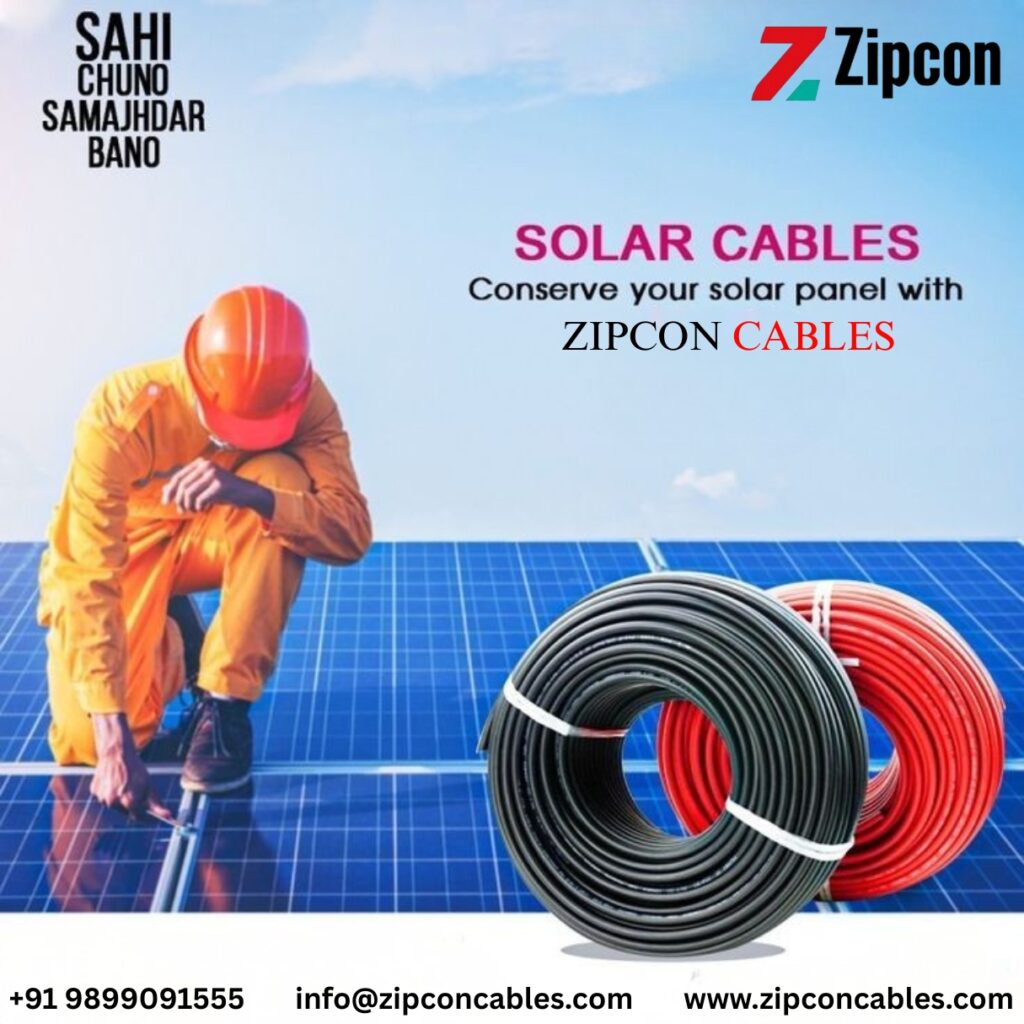
When choosing the right cables for solar power systems in Nagpur, both residential and industrial applications require careful consideration of key factors. Two of the most commonly used cable types in solar installations are copper and aluminum. Each type offers distinct advantages and drawbacks depending on the installation requirements. In this article, we’ll explore these factors and provide practical guidance on selecting the best solar cables, with a special focus on Zipcon Cables, a leading supplier of high-quality cables.
For technical support or project inquiries: https://zipconcables.com/contact-us/
Conductivity: Copper vs. Aluminum
The performance of a solar system heavily depends on the conductivity of the cables used to connect solar panels and other components. Copper cables offer superior conductivity, meaning they can transfer more electrical current with less resistance compared to aluminum. This results in lower energy losses and more efficient power transmission, making copper the preferred choice for high-performance applications.
In residential solar systems, where space and efficiency are often crucial, copper’s higher conductivity can make a significant difference. It allows for smaller gauge cables, which simplifies installation and minimizes space requirements.
On the other hand, aluminum cables have a lower conductivity than copper. To compensate for this, aluminum cables are typically thicker to carry the same amount of current. While this might seem like a disadvantage, aluminum is still widely used, especially for industrial solar applications where the budget is a consideration, and the larger size of aluminum cables isn’t a major issue.
Durability: Weather Resistance and Lifespan
The durability of solar cables is essential to ensure long-term performance, especially in harsh weather conditions. Copper cables tend to last longer because copper is resistant to corrosion and degradation. They perform well even in extreme temperatures, UV exposure, and high-moisture environments. This makes copper cables highly reliable for residential installations in areas with severe weather conditions, as they require less maintenance and are less likely to degrade over time.
Aluminum cables, while durable, are more prone to oxidation, especially when exposed to moisture or extreme temperatures. However, manufacturers often coat aluminum cables with protective layers to mitigate corrosion. In industrial applications, where large cable runs are typical, aluminum cables can still offer reliable performance when properly maintained, but they may not have the same long-term lifespan as copper under constant exposure to harsh elements.
Weight: Handling and Installation
The weight of the cables plays an important role in how easy they are to handle and install. Copper cables are heavier than aluminum cables, which can make them more challenging to work with, especially in large-scale industrial installations. However, this extra weight can be seen as a benefit in smaller residential systems, as copper’s superior conductivity means fewer cables are needed, reducing the overall volume of wiring.
On the other hand, aluminum cables are much lighter, making them easier to handle during installation. This is particularly beneficial in large industrial setups, where extensive cabling is needed. The reduced weight of aluminum cables can make the entire installation process faster and more cost-effective.
Cost: Budget Considerations
One of the main differences between copper and aluminum cables is their cost. Copper cables are more expensive due to the higher cost of copper as a material. While the initial cost is higher, copper’s long-term reliability, higher conductivity, and smaller required diameter often justify the investment, especially for residential systems where high performance and minimal maintenance are priorities.
Aluminum cables are more affordable, making them an attractive option for larger industrial projects or when budget constraints are a major concern. Aluminum cables can still perform effectively, but the initial savings might come with a trade-off in terms of lifespan and the need for larger cable sizes.
Safety: Meeting Electrical Standards
Both copper and aluminum cables meet rigorous safety standards for electrical installations. Copper cables are generally easier to work with because their superior conductivity reduces the risk of overheating, one of the most common causes of electrical fires. Copper cables are also more flexible, which simplifies the process of creating secure and long-lasting connections.
In contrast, aluminum cables require special care when installing. Aluminum expands and contracts more than copper with temperature fluctuations, which can lead to loose connections if not properly secured. Special connectors and installation techniques are needed to prevent potential safety hazards in both residential and industrial applications. Proper handling and installation are crucial to ensure that aluminum cables remain safe over time.
Installation Needs: Copper vs. Aluminum
The installation process for both types of cables can vary, especially in terms of handling and flexibility. Copper cables are more flexible, making them easier to route through small spaces and bend around corners. Their higher conductivity also allows for smaller cables to be used, which can reduce the overall number of connections needed in a system.
Aluminum cables, while lighter, are less flexible and require larger connectors due to their thicker size. This can make installation more time-consuming, particularly in industrial applications where long cable runs and large installations are the norm. However, the reduced weight of aluminum cables can simplify handling, particularly for larger systems.
Typical Use Cases: When to Choose Copper or Aluminum
Copper cables are the best choice for residential solar systems, where space, efficiency, and long-term performance are key priorities. Copper’s superior conductivity, durability, and smaller size make it ideal for homeowners looking to maximize the performance of their solar systems while minimizing the need for maintenance.
Aluminum cables, on the other hand, are often used in large industrial solar installations, where budget is a concern and the cost of copper would be prohibitive. Aluminum cables work well in larger systems where the thicker cables needed to match copper’s performance are not an issue, and where long cable runs are common.
Direct Recommendation: Copper vs. Aluminum for Solar Installations
- For Residential Installations: Copper cables are the recommended choice for most residential solar systems. Their superior conductivity, durability, and smaller size provide long-term reliability and efficiency, making them ideal for homes where space and performance are critical.
- For Industrial Installations: Aluminum cables are a more cost-effective solution for larger, industrial-scale solar systems. While they may require larger cable sizes and more care during installation, they offer significant savings, especially for extensive installations.
Why Choose Zipcon Cables?
When it comes to reliable, high-performance solar cables, Zipcon Cables stands out as a leading provider of both copper and aluminum cables. Known for their durability and efficiency, Zipcon Cables offer both options to meet the specific needs of residential and industrial solar installations in Nagpur. Whether you’re looking for copper’s superior conductivity or the affordability of aluminum, Zipcon Cables provides products that ensure optimal performance and safety, backed by excellent customer support.
Conclusion
Choosing the right solar cables for your system in Nagpur is crucial for ensuring long-term efficiency and reliability. Both copper and aluminum cables offer distinct advantages depending on your project size and budget. By considering factors like conductivity, durability, weight, cost, safety, and installation needs, you can make an informed decision that best suits your solar power installation. Zipcon Cables provides high-quality options for both copper and aluminum cables, making it easier for you to find the right solution for your residential or industrial needs.