

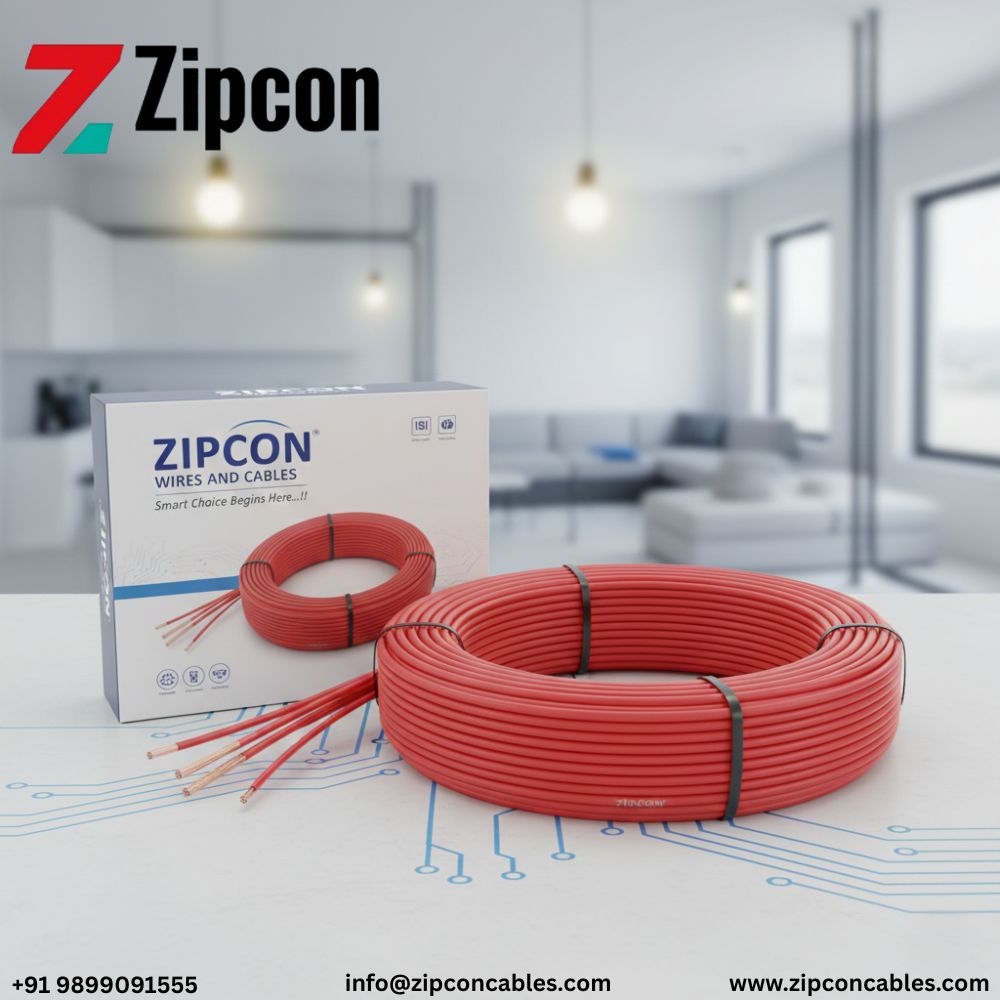
Choosing the best house wire in India is not just about brand or price—it directly affects safety, power efficiency, long-term reliability, and maintenance cost. Indian homes face diverse conditions: high temperatures, humidity, voltage fluctuations, and increasing electrical loads due to modern appliances. This makes wire selection a technical decision, not a cosmetic one.
This guide breaks down house wire selection in simple terms, focusing on real installation conditions and practical performance.
Conductivity: Why It Matters in Daily Use
Conductivity determines how efficiently electricity flows through a wire. Higher conductivity means lower power loss, less heat generation, and better performance under load.
Copper has the highest conductivity among commonly used house wiring materials. This allows copper wires to carry the same current with a smaller cross-section compared to aluminum. In real homes, this translates to cooler operation, stable voltage at switch points, and better appliance performance.
Lower conductivity materials require thicker wires to carry the same load. If undersized, they heat up faster, increasing fire risk.
Recommendation: For homes with air conditioners, geysers, induction cooktops, or EV chargers, high-conductivity copper wires—such as those offered by Zipcon Cables—are the safest and most efficient choice.
Durability: Lifespan Under Indian Conditions
Durability depends on conductor quality and insulation strength. Indian wiring systems often run inside concealed conduits for decades, so failure is not an option.
Key durability factors include:
- Resistance to corrosion in humid areas
- Flexibility to prevent cracking during installation
- Insulation that withstands heat and aging
Premium PVC and FR/FRLS insulation significantly improve lifespan. Poor insulation hardens over time, leading to cracks and leakage.
Zipcon Cables use high-grade electrolytic copper and advanced insulation compounds, making them suitable for long-term concealed wiring in Indian homes.
Weight: Installation and Handling Impact
Copper wires are heavier than aluminum wires. While this slightly increases material weight, it improves mechanical strength and reduces joint failures.
From an electrician’s perspective, flexible multi-strand copper wires are easier to pull through conduits, especially in bends and vertical shafts. Lighter aluminum wires may save weight but require careful handling to avoid breakage at terminations.
Real-world scenario: In multi-storey buildings, flexible copper house wires reduce installation time and rework compared to rigid conductors.
Cost: Understanding Value Beyond Price
Copper wires cost more upfront than aluminum or alloy alternatives. However, cost should always be evaluated against performance and lifespan.
Copper wires:
- Reduce energy loss
- Require fewer repairs
- Support higher loads safely
Cheaper alternatives may save money initially but increase long-term risk and maintenance expenses.
Cost-to-performance insight: A slightly higher investment in quality copper wiring—such as Zipcon Cables—often pays back through safety, efficiency, and durability over 20–30 years.
Safety: Fire Risk, Heat Tolerance, and Compliance
Safety is the most critical factor in house wiring. Poor-quality wires are a leading cause of electrical fires in Indian homes.
Safe house wires should offer:
- High melting point
- Low heat generation
- Flame-retardant insulation
- Compliance with IS standards
Copper wires with FR or FRLS insulation perform better during overloads, delaying ignition and reducing smoke emission.
Zipcon Cables focus strongly on fire safety, using insulation designed to withstand Indian voltage and temperature conditions.
Installation Needs: Practical On-Site Considerations
House wires must be compatible with standard conduits, switchboards, and MCBs. Installers prefer wires that are:
- Flexible
- Clearly color-coded
- Consistent in diameter
- Easy to strip and terminate
Rigid or inconsistent wires increase labor time and connection failures.
Electricians often recommend branded copper wires like Zipcon because they reduce joint heating and make testing easier after installation.
Typical Use Cases: Where Each Wire Fits Best
Different areas of a building demand different wiring strength:
- Bedrooms & living rooms: Standard copper house wires for lighting and sockets
- Kitchens: Higher-gauge copper wires for microwaves, ovens, and induction stoves
- Bathrooms: Copper wires with superior insulation for moisture resistance
- High-load circuits: Thick copper cables for ACs, geysers, and pumps
- Industrial or temporary setups: Aluminum may be used where cost and weight matter more than longevity
Material Comparison: Copper vs Alternatives
Copper Wires
- Higher conductivity
- Better heat management
- Longer lifespan
- Safer for concealed wiring
- Higher initial cost, lower lifetime cost
Aluminum / Alloy Wires
- Lower conductivity
- Lighter weight
- Lower upfront cost
- Requires thicker size for same load
- Better suited for overhead or temporary installations
Direct Recommendation: For residential and long-term installations, copper wires clearly outperform alternatives.
Final Recommendation
For Indian homes where safety, durability, and performance matter, high-quality copper house wires are the best choice. Among available options, Zipcon Cables stand out due to their strong conductivity, reliable insulation, installer-friendly design, and compliance with safety standards.
Whether you are wiring a new home, renovating an apartment, or upgrading load capacity, choosing the right house wire is a decision that protects both property and people. Invest once, wire right, and stay safe for decades.