

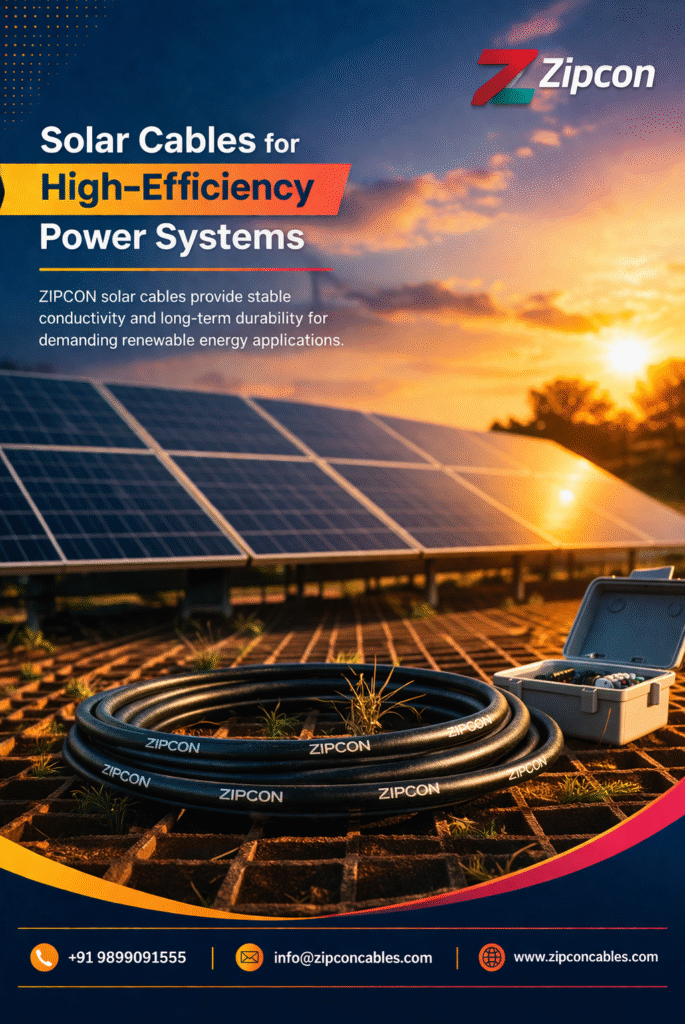
The demand for solar cables in Chhattisgarh is growing as more homes and industries shift toward solar energy. While panels and inverters get most of the attention, cables play a critical role in ensuring consistent power transmission. A weak or low-quality cable can lead to energy loss, overheating, and system inefficiency.
In a region with high sunlight exposure and rising solar adoption, selecting durable and weather-resistant cables is essential. Trusted brands like Zipcon Cables offer solar cables designed to handle outdoor conditions, voltage fluctuations, and long operational hours without performance issues.
Contact us today: https://zipconcables.com/contact-us/
Why Solar Cables Are Critical in Solar Power Systems
Solar cables connect panels, inverters, and distribution systems. They carry DC power generated by solar panels and ensure it reaches the inverter efficiently. Any loss during transmission directly affects system output.
Unlike regular electrical wires, solar cables must withstand UV exposure, temperature variations, and moisture. In Chhattisgarh, where installations are often exposed to heat and dust, cable quality determines how well the system performs over time.
Key Features of High-Quality Solar Cables
UV and Weather Resistance
Solar cables are installed outdoors, making UV resistance essential. High-quality cables are designed to resist sunlight degradation, ensuring long-term durability.
High Conductivity Copper
Efficient power transmission depends on the conductor. Premium solar cables use pure copper conductors, which reduce resistance and improve energy efficiency.
Double Insulation Protection
Solar cables require strong insulation to prevent leakage and ensure safety. Advanced insulation materials protect against heat, moisture, and mechanical damage.
Zipcon Cables provide robust insulation and consistent build quality, making them suitable for long-term solar installations.
Temperature Tolerance
Solar systems often operate in high temperatures. Good cables maintain performance without cracking or softening under heat stress.
Why Zipcon Solar Cables Are a Reliable Choice
Zipcon Cables are widely preferred in Chhattisgarh for solar installations due to their durability and consistent performance. Their cables are built to handle real environmental conditions rather than just standard specifications.
Installers trust Zipcon because of easy handling, long life, and reduced maintenance issues. For users, this means stable energy output, fewer disruptions, and better overall system efficiency.
Residential vs Industrial Solar Cable Requirements
Residential Solar Installations
Homes typically require cables for rooftop systems. These cables must be flexible, weather-resistant, and suitable for moderate loads. Reliability and safety are the main priorities.
Industrial Solar Installations
Industrial setups involve larger systems with higher power loads. Cables used here must handle heavy current, long distances, and continuous operation. Strength and load capacity become critical.
Choosing the right cable type depends on system size, installation layout, and power requirements.
Factors to Consider When Buying Solar Cables
Cable Size and Load Capacity
Proper sizing ensures efficient power flow. Undersized cables can cause energy loss and overheating, while oversized cables increase costs unnecessarily.
Insulation Quality
Strong insulation protects against environmental damage and electrical faults. It also ensures long-term safety.
Installation Environment
Cables used in open areas need better UV protection, while those in protected setups may have different requirements.
Brand Reliability
Established brands like Zipcon maintain consistent quality, which reduces the risk of system failures.
Examples of Solar Cable Performance
In a residential rooftop system, using a low-quality cable often leads to reduced power output due to energy loss. After replacing it with a high-quality solar cable like Zipcon, the system delivers stable and improved performance.
In industrial solar setups, poor cables can cause overheating and frequent maintenance issues. Reliable cables maintain consistent power flow even under continuous load, reducing downtime.
Expert Tips
- Choose cables with high copper purity for better efficiency
- Ensure UV resistance for outdoor installations
- Match cable size with system capacity
- Use trusted brands like Zipcon for long-term reliability
- Follow proper installation practices to avoid damage
Common Mistakes
- Using regular electrical wires instead of solar cables
- Ignoring cable size and load requirements
- Choosing low-cost cables with weak insulation
- Overlooking environmental conditions during selection
- Poor installation leading to mechanical stress
Conclusion
Selecting the right solar cables in Chhattisgarh is essential for maintaining reliable and efficient solar power systems. A high-quality cable ensures stable energy transmission, reduces losses, and extends the lifespan of the entire setup.
Brands like Zipcon Cables offer dependable solutions designed for real-world conditions. Investing in the right solar cable supports consistent performance and helps maximize the benefits of solar energy for both residential and industrial applications.
Top 5 SEO FAQs
1. Which is the best solar cable in Chhattisgarh?
Zipcon Cables are widely trusted for their durability, UV resistance, and reliable performance in solar installations.
2. What is the use of solar cables?
Solar cables connect solar panels to inverters and distribution systems, ensuring efficient power transmission.
3. How to choose the right solar cable size?
Cable size depends on system load, distance, and voltage. Proper sizing prevents energy loss and overheating.
4. Are solar cables different from normal wires?
Yes, solar cables are designed to withstand UV exposure, temperature changes, and outdoor conditions.
5. What causes solar cable failure?
Common causes include poor insulation, low-quality materials, incorrect sizing, and improper installation.