

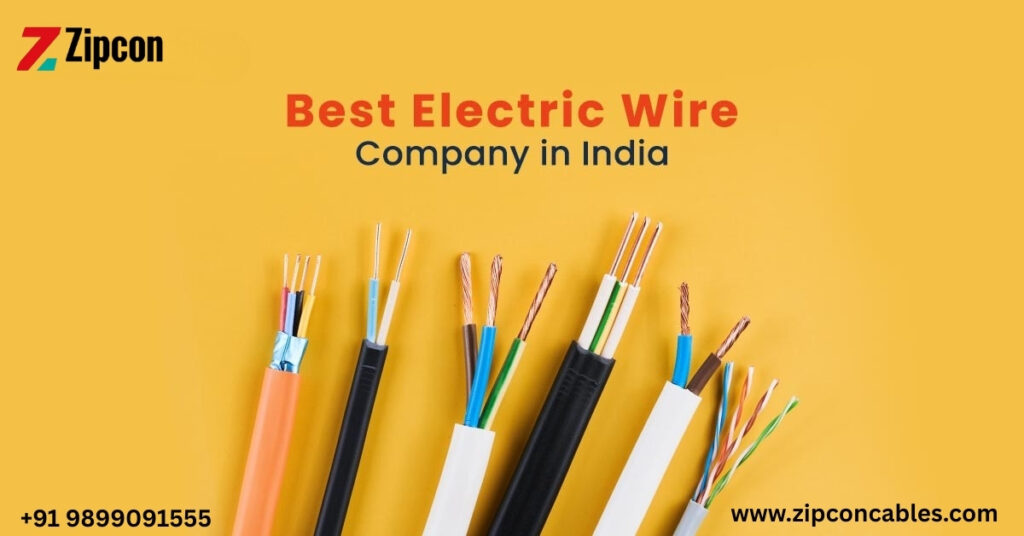
Choosing the best wires and cables company in India is important for electrical safety, efficient power transmission, and long-term installation performance. A cable is not simply a conductor covered with insulation; its copper or aluminium quality, insulation material, flexibility, current capacity, construction, and manufacturing consistency all affect how it performs.
For homes, commercial buildings, industrial plants, agricultural applications, and renewable energy projects, the right cable must match the electrical load and installation environment. ZIPCON Cables offers a range of electrical wires and cables designed for different residential, commercial, industrial, solar, and water-pumping applications.
For inquiries or assistance:👉 https://zipconcables.com/contact-us/
What Makes a Company the Best Wires and Cables Company in India?
The best cable manufacturer is not determined by product range alone. Manufacturing quality, material selection, insulation performance, dimensional consistency, testing, and application-specific design are equally important.
A reliable wires and cables company should provide products that deliver stable electrical performance while maintaining mechanical and thermal reliability. This becomes particularly important where cables are exposed to continuous loads, moisture, heat, movement, or demanding industrial conditions.
Quality of Conductors
The conductor is the primary path through which electrical current flows. Copper and aluminium are widely used because of their electrical conductivity, weight, cost, and application suitability.
High-quality conductors with consistent dimensions help maintain predictable electrical performance. Poor conductor quality or inconsistent construction can increase resistance and contribute to excessive heating and energy losses.
Reliable Insulation
Insulation protects the conductor and reduces the risk of electrical leakage, short circuits, and accidental contact. PVC and other insulation materials are selected according to the intended application and operating conditions.
For residential wiring, industrial cables, solar installations, and submersible applications, insulation requirements can differ significantly. A suitable cable therefore needs insulation designed for its actual working environment.
Consistent Manufacturing
Cable performance depends on manufacturing consistency. Conductor stranding, insulation thickness, roundness, dimensional accuracy, and outer sheathing should remain within appropriate manufacturing tolerances.
Consistent production also makes installation easier because electricians and contractors can work with cables that have predictable dimensions and handling characteristics.
Types of Electrical Wires and Cables Offered by ZIPCON
A single cable cannot serve every electrical application. The best wires and cables company in India should therefore provide different constructions for different requirements.
House Wires
House wires are used for residential lighting, sockets, appliances, distribution boards, and internal electrical circuits. The selection should consider conductor size, insulation quality, current requirement, and installation conditions.
ZIPCON house wires can be considered for residential and commercial wiring where dependable electrical connectivity and suitable insulation are required.
Multistrand Wires
Multistrand wires contain multiple fine conductor strands rather than one solid conductor. This construction provides greater flexibility, making the wire easier to route through conduits, panels, and electrical installations.
They are useful where wiring needs to negotiate bends or where easier handling is important during installation.
Flexible Cables
Flexible cables are designed for applications where the cable may need to bend or move during installation or operation. They can be suitable for machinery, control panels, commercial systems, and other applications where flexibility matters.
Choosing the correct flexible cable requires considering conductor size, number of cores, insulation, voltage rating, and the type and frequency of movement involved.
Multicore Round Cables
Multicore round cables contain multiple insulated conductors within a common outer sheath. They can simplify installations where several electrical connections need to be routed together.
These cables are commonly considered for control systems, machinery, equipment, panels, and other electrical installations requiring multiple conductors.
Submersible Pump Cables
Submersible cables are designed for electrical connections involving water pumps and equipment installed in wet or submerged environments. Their construction and insulation need to withstand moisture exposure and the mechanical conditions associated with installation.
For borewell and water-pumping systems, selecting a cable specifically intended for submersible applications is more appropriate than using a standard indoor wire.
Solar DC Cables
Solar installations require cables designed for DC power transmission and exposure to outdoor conditions. Solar cables may experience sunlight, temperature variations, moisture, and mechanical stresses over their service life.
The appropriate cable size should be selected according to current, voltage, installation length, temperature, and permissible voltage drop.
How to Choose the Right Electrical Cable
Selecting a cable only by brand or price can lead to an unsuitable installation. The correct choice starts with understanding the electrical and environmental requirements of the project.
1. Determine the Electrical Load
Calculate the expected current before selecting the conductor size. A cable must be capable of carrying the required current without excessive temperature rise under the actual installation conditions.
For example, a circuit supplying several high-power appliances may require a larger conductor than a simple lighting circuit.
2. Select the Correct Conductor Material
Copper generally offers high electrical conductivity and is widely used for electrical wiring. Aluminium can provide a lighter and potentially more economical option for certain power applications.
The choice should depend on the installation design, current requirement, cable construction, and project specifications.
3. Consider Installation Conditions
A cable installed inside a residential conduit faces very different conditions from one installed outdoors, underground, inside industrial machinery, or underwater.
Temperature, moisture, sunlight, mechanical stress, chemical exposure, bending, and installation method should all be considered before final selection.
4. Choose the Correct Number of Cores
The number of cores depends on the circuit configuration and application. Single-core, two-core, three-core, four-core, and multicore cables serve different purposes.
For example, a three-core cable may be suitable for certain three-phase or pump-related applications, while multicore cables can simplify control and equipment wiring.
5. Check Cable Size
Conductor cross-sectional area is an important factor in cable selection. Common sizes include 1.5 sq mm, 2.5 sq mm, 4 sq mm, 6 sq mm and larger sizes, depending on the application.
The correct size should be determined using current-carrying capacity, voltage drop, installation method, ambient conditions, and applicable electrical requirements rather than simply choosing a larger or smaller cable based on appearance.
Why Cable Quality Matters for Safety and Performance
Electrical cables operate continuously behind walls, inside panels, underground systems, machinery, and other installations. Once installed, identifying a cable problem can be difficult and expensive.
A properly selected and manufactured cable helps maintain dependable electrical connectivity and reduces avoidable installation issues. Conductor quality, insulation integrity, correct sizing, and suitable application all contribute to reliable performance.
For critical installations, purchasing from an established electrical wire and cable manufacturer in India can also make product specifications, technical information, and application support easier to obtain.
ZIPCON Cables for Different Applications
ZIPCON can be positioned as a reliable option for customers looking for electrical wires and cables across multiple applications.
Its product categories can address requirements ranging from residential wiring and flexible connections to multicore, solar, and submersible applications. This allows contractors, electricians, distributors, builders, and industrial users to select products according to their project requirements rather than relying on a single generic cable type.
The key is to match each ZIPCON cable with its intended application, conductor size, voltage requirement, installation environment, and expected operating conditions.
Examples: Choosing the Right Cable
Example 1: Residential Wiring
A residential lighting circuit generally has different requirements from a circuit supplying high-power appliances. The wire size should therefore be selected based on expected load, circuit length, installation method, and applicable electrical requirements.
A suitable house wire with appropriate insulation and conductor construction can provide dependable performance for everyday residential use.
Example 2: Borewell Pump
A borewell pump requires a cable capable of operating in a wet environment. Using an ordinary indoor house wire for such an application is not an appropriate substitute for a purpose-designed submersible cable.
A suitable submersible pump cable should be selected according to pump capacity, voltage, cable length, installation depth, and manufacturer specifications.
Example 3: Solar Installation
Solar panels generate DC electricity, so the cable connecting panels, combiner systems, and other equipment should be suitable for solar DC applications.
Cable size should be determined by current, system voltage, cable run, environmental conditions, and acceptable voltage drop.
Example 4: Industrial Machinery
Industrial machinery may require cables that can tolerate movement, vibration, repeated bending, or routing through confined spaces. A flexible cable can be more appropriate than a conventional rigid wiring solution when movement is part of the application.
The final selection should consider the machine design, operating cycle, voltage, current, number of cores, and environmental exposure.
Expert Tips for Buying Wires and Cables in India
Check the application first: Do not purchase a cable simply because it is inexpensive or has a familiar appearance. Identify where and how the cable will be installed.
Match the conductor size to the load: Cable size should be based on electrical calculations and installation conditions. Oversizing and undersizing both have cost and design implications.
Inspect the cable construction: Look for consistent insulation, proper conductor construction, clean printing, and uniform dimensions.
Buy through reliable channels: Counterfeit or incorrectly specified electrical products can create safety and performance concerns. Use trusted manufacturers and authorized supply channels wherever possible.
Consider the complete installation: Cable selection should account for accessories, terminals, connectors, protective devices, installation method, and environmental conditions—not the cable alone.
Common Mistakes When Choosing Electrical Wires and Cables
Choosing Only by Price
The cheapest cable is not necessarily the most economical option. Cable quality affects installation reliability, maintenance requirements, energy performance, and service life.
Using the Same Cable Everywhere
House wiring, solar systems, industrial machinery, and submersible pumps have different requirements. A cable suitable for one application may be unsuitable for another.
Ignoring Voltage Drop
Long cable runs can create significant voltage drop. Even when the cable’s current capacity appears adequate, excessive voltage drop can affect equipment performance.
Selecting the Wrong Number of Cores
Using an incorrect core configuration can complicate installation and create unnecessary joints or additional wiring. The cable should be selected according to the actual circuit design.
Ignoring Environmental Conditions
Heat, water, sunlight, chemicals, vibration, and mechanical movement can affect cable performance. Environmental conditions should always be part of the cable-selection process.
Why ZIPCON Is a Practical Choice for Electrical Cable Requirements
For customers searching for the best wires and cables company in India, product suitability and manufacturing consistency should be more important than marketing claims alone.
ZIPCON Cables provides multiple wire and cable categories for residential, commercial, industrial, solar, and water-pumping requirements. Its range allows users to select different cable constructions according to electrical load, installation conditions, flexibility requirements, and application.
For contractors, electricians, builders, distributors, and project buyers, the better approach is to evaluate the technical requirements first and then select the appropriate ZIPCON product.
Conclusion
Finding the best wires and cables company in India requires more than comparing brands or prices. Conductor quality, insulation, cable construction, size, core configuration, manufacturing consistency, and application suitability all influence electrical performance.
ZIPCON Cables offers a range of electrical wires and cables designed for different requirements, including house wires, multistrand wires, flexible cables, multicore round cables, solar DC cables, and submersible pump cables.
For your next electrical project, identify the load, installation environment, cable length, required cores, and operating conditions first. Then choose the ZIPCON cable category and size that matches the application.
Top 5 FAQs
1. Which is the best wires and cables company in India?
The best company depends on product quality, manufacturing consistency, application suitability, technical specifications, and reliability. ZIPCON is an option for customers seeking house wires, flexible cables, multicore cables, solar cables, and submersible cables for different applications.
2. Which cable is best for home wiring?
The appropriate house wire depends on circuit load, conductor size, installation method, insulation requirements, and applicable electrical standards. The wire should be selected according to the specific circuit rather than using one size throughout the property.
3. Which cable is suitable for a submersible pump?
A purpose-designed submersible pump cable is generally used for pump installations involving wet or submerged conditions. The correct size and construction depend on pump capacity, voltage, cable length, installation depth, and manufacturer specifications.
4. How do I choose the correct cable size?
Cable size should be selected using factors such as current load, voltage, cable length, permissible voltage drop, installation method, ambient temperature, and applicable electrical requirements.
5. Does ZIPCON manufacture different types of electrical cables?
ZIPCON offers multiple categories of electrical wires and cables, including house wires, multistrand wires, flexible cables, multicore round cables, solar DC cables, and submersible pump cables for different electrical applications.