Zipcon Cables
Understanding the Risks of Poor Cable Management and How to Prevent Them with Zipcon Cables

Effective cable management is often an overlooked aspect of electrical and construction projects, but poor cable organization can lead to several significant issues. These range from safety hazards to reduced cable life, higher operational costs, and even system failure. This article focuses on the risks associated with poor cable management and provides practical tips for avoiding them. By understanding key factors like conductivity, durability, weight, cost, safety, installation needs, and typical use cases, you can make informed decisions on cable choice and management, ensuring the efficiency and longevity of your systems.

This is especially critical when working with cables like those offered by Zipcon Cables, which are engineered for performance and reliability.

1. Conductivity: Ensuring Efficient Power Flow

Conductivity refers to the ability of the cable to allow electrical current to flow efficiently. Poor cable management, such as twists, tangles, or excessive bending, can impede conductivity, leading to energy loss and potential overheating. For projects requiring high power or continuous current flow, ensuring the cables are free from physical stress is essential to maintain optimal performance.

Copper vs. Aluminum Cables:

  • Copper cables, like those offered by Zipcon, are known for their excellent conductivity and are preferred for high-demand applications such as data centers, industrial machinery, or high-power installations.
  • Aluminum cables, though more cost-effective, don’t conduct as efficiently as copper and may not be suitable for environments requiring stable, continuous power delivery.

2. Durability: Protecting Your Investment

Cables exposed to environmental factors or excessive wear are more prone to damage, reducing their lifespan. Poor cable management—whether cables are loosely hanging or exposed to friction—can cause external damage to insulation, resulting in electrical hazards.

Real-World Scenario:
In a factory setting, cables often run along floors, walls, and ceilings, subjecting them to abrasion. Without proper cable management solutions like trays or conduits, the wear and tear can cause the cables to fail prematurely, increasing maintenance costs and downtime.

Zipcon Cables’ Durability:
Zipcon’s cables are designed for longevity, but proper cable management solutions—such as cable trays or conduit systems—are still necessary to prevent damage in high-traffic environments.

3. Weight: Reducing Strain on Structures

Cable weight can strain installation structures, especially in large setups like stadiums, commercial buildings, or power stations. Poorly managed cables can cause sagging or bending, leading to additional stress on both the cables and the supporting infrastructure, which could result in installation failure or safety hazards.

Choosing the Right Cable:

  • For lighter applications, aluminum cables are a good choice due to their reduced weight, but they may require additional support structures.
  • For heavy-duty applications, Zipcon’s copper cables provide the strength needed but require secure management systems to prevent strain on mounting structures.

4. Cost: Balancing Quality and Budget

While copper cables, like those offered by Zipcon, may come at a higher initial cost, they tend to offer better performance and durability. Poor cable management can further increase costs due to the need for more frequent repairs or replacements.

Cost-Effective Cable Management:
Investing in quality cable management tools—such as clips, trays, and cable ties—can significantly reduce the likelihood of cable damage, saving you money in the long run by extending the lifespan of your cables and preventing costly repairs.

Copper vs. Aluminum Cost Comparison:

  • Copper cables are more expensive upfront but provide better conductivity and durability, leading to long-term cost savings.
  • Aluminum cables are more budget-friendly and better for lower-demand applications, though they may require more frequent replacements in harsher environments.

5. Safety: Preventing Electrical Hazards

Improperly managed cables pose significant safety risks, including electrical shocks, short circuits, and fire hazards. Loose or damaged cables are more likely to expose live wires, increasing the risk of accidents. Keeping cables well-organized and properly insulated ensures safety for both the installation and users.

Real-World Scenario:
In a commercial office, cables strewn across the floor can cause tripping hazards. Additionally, exposed cables in high-traffic areas can lead to accidental electrical contact, posing a fire risk. Proper cable management using Zipcon’s durable cables and protective casings ensures both safety and a cleaner, more professional environment.

6. Installation Needs: Streamlining the Setup Process

Proper cable management not only reduces future maintenance costs but also facilitates easier installation. When cables are organized and bundled effectively, installation becomes quicker and more straightforward, reducing labor time and associated costs. Furthermore, troubleshooting becomes simpler, as clearly labeled and properly routed cables are easier to access and repair.

Practical Tips for Easy Installation:

  • Use Zipcon’s cables in combination with cable management systems to ensure straightforward installation.
  • Label all cables clearly and ensure they are securely fastened using clips or conduit systems to reduce confusion during setup.

7. Typical Use Cases for Copper and Aluminum Cables

Choosing between copper and aluminum cables depends on the application:

  • Copper cables are best suited for applications with high power requirements, such as industrial machinery, high-frequency data transmission, or areas where space is constrained and cable weight is a concern.
  • Aluminum cables work well for long-distance power transmission and less-demanding applications where cost reduction is more important than performance.

Real-World Comparison:

  • Copper cables (Zipcon Cables) excel in applications like server rooms or factories, where performance and durability are critical.
  • Aluminum cables are often used in power transmission lines or large-scale electrical setups where weight and cost are the primary concerns.

8. Recommendation: How to Choose the Right Cable for Your Application

When selecting cables for your project, consider both the application requirements and the environment. If performance, durability, and safety are your primary concerns, opt for copper cables from Zipcon. These cables are ideal for environments where high power, high conductivity, and safety are essential.

For projects that focus more on cost and weight efficiency, aluminum cables may be more suitable, but be mindful of their limitations in performance and durability.

Final Tip:
Always invest in quality cable management solutions to protect your cables from wear and tear, ensure proper insulation, and maintain the longevity of your system. Proper management, combined with the right choice of cable, ensures both safety and efficiency in the long run.

Submersible Flat Cables – Reliable Power Where Conditions Are Tough

Why Choose Submersible Flat Cables for Reliable Power Solutions?

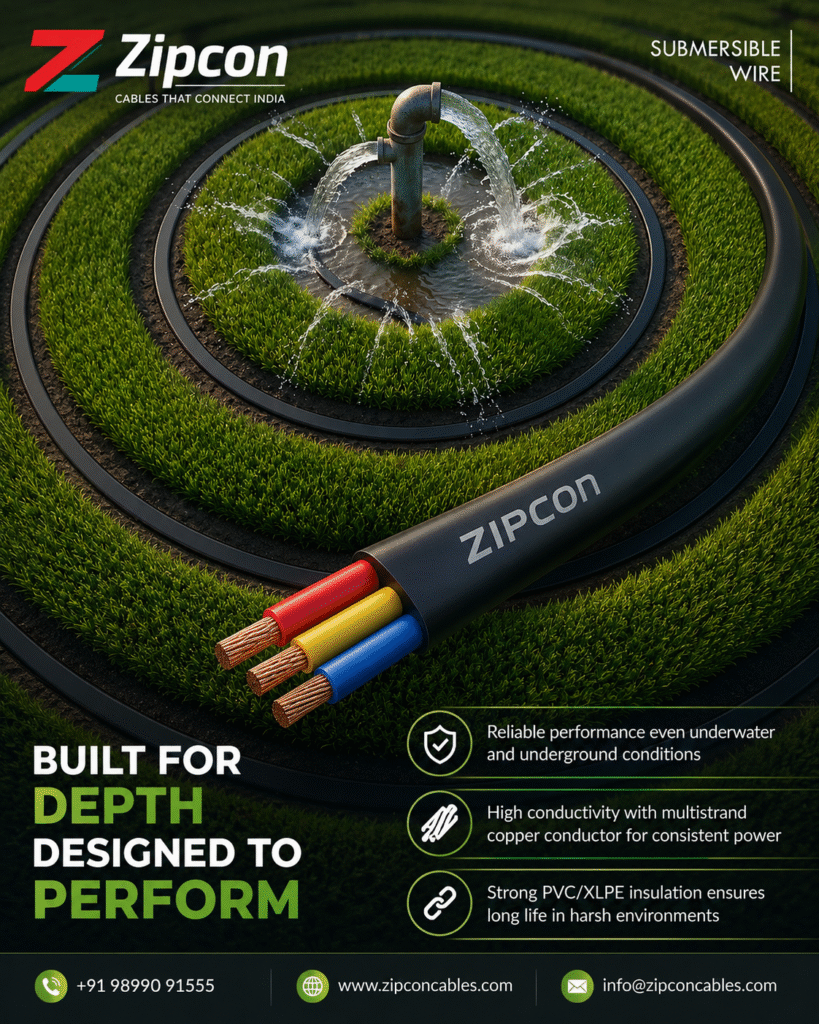
Submersible flat cables have emerged as one of the most reliable power solutions for environments exposed to water and moisture. Their evolution reflects the growing demand for safer, more efficient electrical systems in agriculture, residential, and industrial sectors.

Earlier, conventional round cables were commonly used, but they often failed to perform well in wet or submerged conditions. Submersible flat cables were developed to overcome these limitations. Their water-resistant construction, combined with a flat design, makes them ideal for moisture-dominated and underwater applications.

In agriculture, the introduction of submersible flat cables transformed irrigation systems by providing stable power to submersible pumps. This improvement helped farmers achieve better water management and higher crop productivity. Similarly, industries operating in high-moisture environments rely on these cables for uninterrupted and safe power supply. Submersible flat cables are also widely used in residential borewell installations to ensure consistent electricity flow.

Modern manufacturing advancements by leading electrical cable manufacturers in India have further enhanced the durability, flexibility, and efficiency of these cables. Choosing a high-quality submersible flat cable from a trusted manufacturer like Zipcon Cables ensures long-term performance, safety, and productivity.

What Are Submersible Flat Cables?

Submersible flat cables are specially designed electrical cables used in underwater and moisture-prone environments. Their flat structure allows better heat dissipation, flexibility, and easier installation compared to traditional round cables.

Because of their robust insulation and water-resistant properties, these cables are widely preferred in agriculture, industries, and residential setups where electrical systems are exposed to water or humidity.

Why Choose Submersible Flat Cables?

Submersible flat cables offer several advantages that make them the ideal choice for wet and submerged applications:

1. Waterproof Design

Submersible flat cables feature advanced insulation that protects conductors from water ingress, ensuring reliable performance even under continuous submersion.

2. High Durability and Long Life

The use of high-quality aluminium or copper conductors enhances mechanical strength, making these cables resistant to wear, corrosion, and environmental stress.

3. Efficient Power Transmission

Designed to minimize power loss, submersible flat cables maintain stable electrical flow. Their heat-resistant structure ensures consistent performance despite temperature fluctuations.

4. Easy Installation

The flat design simplifies installation in borewells, pipelines, and confined spaces, making them suitable for both agricultural and industrial applications.

Zipcon Cables India: A Trusted Manufacturer

Zipcon Cables is among the leading electrical wire and cable manufacturers in India, specializing in high-quality submersible flat cables. Along with submersible cables, the company also manufactures copper flexible cables, telephone cables, and multi-strand cables, meeting diverse electrical requirements.

Key Features and Product Description

Submersible flat cables are engineered using advanced insulation and protective layers to ensure safety and performance in demanding environments.

  • Conductor: High-grade copper or aluminium for superior electrical conductivity
  • Insulation: PVC insulation that protects against moisture, short circuits, and corrosion
  • Outer Sheath: A strong protective layer that safeguards against chemicals, heat, and harsh environmental conditions

These features make submersible flat cables ideal for agricultural, industrial, and residential electrical installations.

Applications of Submersible Flat Cables

Submersible flat cables are widely used across various sectors, including:

  • Agriculture (irrigation systems and submersible pumps)
  • Industrial environments with high moisture levels
  • Residential borewell and water pump installations

Why Are Submersible Flat Cables Essential for Submersible Pumps?

Submersible pumps operate under extreme conditions, making safety and reliability crucial.

  • Water-resistant insulation protects conductors and ensures uninterrupted power supply
  • Superior conductivity from copper or aluminium minimizes power loss and enhances pump efficiency

Choosing the Right Submersible Flat Cable

Selecting the right cable depends on application requirements, efficiency needs, and durability expectations.

FactorMultistrand CablesCopper Flexible Cables
Key FeaturesHigh mechanical strengthHigh conductivity and efficiency
Ideal ForFlexible and durable installationsHigh-performance electrical systems
Conductor QualityAluminium or copperCopper
Insulation MaterialPVC or thermoplastic elastomerPVC or elastomer
DurabilityGood resistance to wearExcellent resistance to chemicals and moisture

Always assess your specific needs before making a final selection.

Why Are Submersible Flat Cables in High Demand?

Submersible flat cables are increasingly popular due to their:

  • Excellent underwater performance
  • Reliability in rugged environments
  • Thermal stability and long service life

Conclusion

Choosing the right submersible flat cable is essential for the safety, efficiency, and durability of electrical systems. Zipcon Cables manufactures high-quality, water-resistant submersible flat cables that meet national and international standards. In addition to submersible cables, Zipcon is also a trusted submersible flat cable manufacturer in India, delivering advanced solutions for modern communication needs.

Why Aluminium Service Wire Is the Best Choice for Power Connections

Selecting the right service wire is a critical decision in any power distribution project. Whether it’s a residential connection, a commercial building, or a large infrastructure setup, the cable must deliver power safely, reliably, and cost-effectively over many years. In most service connection and overhead distribution applications, best aluminium service wire in india has proven to be the most practical choice. This article explains why aluminium service wire—such as those manufactured by Zipcon Cables—is widely preferred, while also clearly stating where copper still performs better.

Conductivity: Practical Performance Matters

From a pure material standpoint, copper has higher electrical conductivity than aluminium. However, in real-world service wire applications, aluminium performs very efficiently when sized correctly.

Aluminium service wires are designed with a slightly larger cross-sectional area to compensate for lower conductivity. This ensures acceptable current-carrying capacity and controlled voltage drop, especially over longer distances.

  • Short runs (indoors): Copper shows lower voltage drop and is more compact.
  • Long runs (service lines, overhead): Aluminium performs better economically, with voltage drop well within standards when properly selected.

For service connections from poles to buildings, aluminium delivers reliable power without unnecessary material cost.

Durability & Weather Resistance

Modern aluminium service wires use improved aluminium alloys and advanced insulation materials. These are engineered to handle harsh outdoor environments.

  • Heat: Aluminium performs well under high ambient temperatures.
  • Rain & humidity: Insulation systems protect against moisture ingress.
  • UV exposure & pollution: Weather-resistant sheathing ensures long service life.

Oxidation is often mentioned as a concern, but modern aluminium alloys form a stable oxide layer that protects the conductor. When installed using approved connectors and techniques, aluminium service wires offer excellent longevity in overhead and service entrance installations.

Zipcon Cables follows strict quality standards to ensure consistent insulation thickness, conductor purity, and mechanical strength—key factors for long-term durability.

Weight Advantage: A Major Practical Benefit

One of aluminium’s biggest advantages is its light weight. Aluminium is roughly one-third the weight of copper, which brings clear on-site benefits:

  • Easier handling by technicians
  • Faster stringing over poles
  • Reduced strain on poles, clamps, and building entry points

For pole-mounted and long-distance overhead runs, lighter cables mean safer installation and lower mechanical stress on structures.

Cost Efficiency: Big Impact on Project Budgets

Cost is often the deciding factor in large installations. Aluminium is significantly more affordable than copper.

  • Material cost: Aluminium costs far less per meter than copper.
  • Project scale impact: Savings increase dramatically in long-distance and multi-connection projects.
  • Long-term value: When installed correctly, aluminium provides decades of reliable service at a lower total project cost.

For utilities, contractors, and infrastructure buyers, aluminium service wire offers the best balance between performance and budget control.

Safety Considerations: Installation Makes the Difference

Aluminium service wires are safe when installed using proper methods and accessories.

Key safety practices include:

  • Using approved aluminium lugs and connectors
  • Applying anti-oxidation compounds at terminations
  • Ensuring correct torque during tightening

When these practices are followed, aluminium service wires meet all fire and electrical safety standards. Many safety issues associated with aluminium come from outdated installation practices—not the material itself.

Ease of Installation

Aluminium service wires reduce installation effort and time:

  • Faster pulling due to lower weight
  • Reduced labour fatigue
  • Easier routing in overhead applications

Additionally, the lower structural load helps in older buildings and rural electrification projects where infrastructure strength may be limited.

Typical Use Cases Where Aluminium Excels

Aluminium service wire is the preferred choice in:

  • Service connections (pole to meter)
  • Overhead distribution lines
  • Residential and commercial power entry
  • Rural electrification and infrastructure projects

In these applications, aluminium provides reliable performance without unnecessary cost.

Aluminium vs Copper: A Balanced Comparison

Copper Performs Better When:

  • Short indoor wiring runs are needed
  • Space is limited (panels, conduits)
  • High-load, compact installations are required

Aluminium Is More Suitable When:

  • Service lines and overhead connections are involved
  • Long distances increase material cost
  • Weight reduction is important
  • Projects are cost-sensitive

Real-World Scenarios

  1. Residential Service Connection:
    Aluminium service wire connects the overhead line to the home meter, offering safe power delivery at a lower cost than copper.
  2. Commercial Building Power Entry:
    Aluminium is used for the main service line, while copper may be used inside panels and short internal circuits.
  3. Utility Infrastructure Project:
    Large-scale overhead distribution relies on aluminium for its light weight, durability, and cost efficiency.

Conclusion & Recommendation

Aluminium service wire is the best choice for most power connection applications, especially service lines, overhead distribution, and long-distance runs. It offers a strong combination of durability, safety, ease of installation, and cost efficiency.

Copper still has its place in short, high-density indoor wiring. However, for service connections and external power delivery, aluminium service wire from reliable manufacturers like Zipcon Cables provides dependable performance and long-term value.

The right choice comes down to application type—not material myths. When selected and installed correctly, aluminium is a smart, proven solution for modern power infrastructure.

Best Submersible 3 Core Flat Cable in India
Submersible 3 Core Flat Cable in India

Selecting the right submersible flat cable in india for your project is crucial—especially in India, where diverse conditions demand cables that are efficient, durable, and cost-effective. These cables are designed to operate reliably in submerged environments, making the right choice essential for long-term performance and safety.

In this guide, we break down the key factors you should consider, compare copper vs. aluminum options, and highlight why Zipcon Cables is a trusted choice for submersible flat cable applications across India.

For inquiries or assistance:👉 https://zipconcables.com/contact-us/

1. Conductivity: Ensuring Efficient Power Transmission

Conductivity is one of the most important aspects when choosing a submersible flat cable. It directly affects how efficiently power travels through the cable, especially in submerged or high-demand applications.

  • Copper cables are known for their superior conductivity, making them ideal for high-power systems like deep-well submersible pumps and heavy filtration units. Copper minimizes resistance and energy loss, ensuring stable performance.
  • Aluminum submersible flat cables are a more economical option. Though they have lower conductivity compared to copper, they work effectively in low- to medium-power applications.

Zipcon Cables manufactures both copper and aluminum variants, allowing project planners and engineers to choose cables based on power needs and budget.

2. Durability: Built to Last in Harsh Underwater Conditions

Submersible cables face challenges like continuous water exposure, chemicals, abrasion, and varying temperatures. Durability is key to long service life and low maintenance.

Zipcon Cables ensures durability through:

  • High-grade insulation such as PVC, rubber, and thermoplastic elastomers
  • Protection against water ingress, corrosion, and abrasion
  • Resistance to saltwater, extreme temperatures, and chemicals

This makes Zipcon’s cables ideal for:

  • Deep borewells
  • Sewage systems
  • Water treatment plants
  • Agricultural water setups

3. Weight: Easier Installation and Handling

Submersible flat cables are lighter compared to round cables, making them easier to:

  • Transport
  • Install in narrow borewells
  • Handle during deep-well operations

Lightweight cables also reduce labor fatigue and installation time, which is especially useful in irrigation systems and pump installations.

Zipcon’s lightweight submersible flat cables simplify work in remote and difficult-to-access environments.

4. Cost: Balancing Budget With Performance

Cost is a major deciding factor when choosing between copper and aluminum cables.

  • Copper cables: Higher cost but offer exceptional performance, reduced energy loss, and longer life—ideal for high-load and long-distance applications.
  • Aluminum cables: More affordable and suitable for low- to medium-power systems, offering great value for smaller projects.

Zipcon Cables provides both options so buyers can match performance needs with budget constraints.

5. Safety: Minimizing Electrical Risks

Safety cannot be compromised in submerged environments. Poor insulation or low-quality materials can lead to short circuits, shocks, or even fires.

Zipcon Cables ensures safety through:

  • Waterproof, high-quality insulation
  • Compliance with global standards like IEC, UL, and RoHS
  • Protection against electrical leakage and faults

This ensures secure operation for installers and end-users alike.

6. Installation Requirements: What to Consider Before Setup

Before installing submersible flat cables, consider factors like:

  • Installation depth
  • Water temperature
  • Chemical exposure
  • Mechanical stress

For deep-well applications, cables must be properly anchored and pressure-resistant. Suitable connectors, junction boxes, and supports must also be used.

Zipcon provides clear installation guidelines and compatible accessories to ensure long-lasting performance.

7. Typical Applications of Submersible Flat Cables

Submersible flat cables are widely used in:

✔ Submersible Pumps

For borewells, deep wells, and sewage systems requiring constant submersion.

✔ Water Filtration Systems

To power submerged filtration units and ensure uninterrupted water flow.

✔ Irrigation & Agricultural Systems

For powering pumps in farms, remote areas, and deep-ground setups.

Zipcon Cables offers durable, reliable solutions tailored for each of these applications.

Copper vs. Submersible Flat Cables: Which One to Choose?

Your choice depends on your specific requirements:

Copper CablesSubmersible Flat (Aluminum) Cables
Best conductivityMore economical
Ideal for high-power loadsSuitable for low/medium power
Long service lifeLightweight and easy to install
Higher upfront costGreat for budget projects

For most submerged applications—like pumps, irrigation units, and filtration systems—Zipcon’s submersible flat cables offer the best combination of performance, safety, and affordability.

Conclusion: Choosing the Best Submersible Flat Cable in India

Picking the right submersible flat cable requires evaluating conductivity, durability, safety, installation conditions, and budget.

  • Copper cables deliver unmatched performance for heavy-duty applications.
  • Aluminum submersible flat cables provide excellent value in standard submerged environments.

Zipcon Cables offers a comprehensive range of both types, making them a dependable choice for engineers, electricians, and buyers across India. Whether you’re working on a large industrial project or a residential well installation, Zipcon provides reliable, high-quality solutions built for long-term use.

The Best House Wire Brand In India : Zipcon Multistrand House Wires
 Zipcon Multistrand House Wires

Best House Wire in India

When wiring your home or office, selecting the right wire is crucial to ensure safety, energy efficiency, and long-term reliability. With varying climates across India—ranging from humid coastal regions to dry northern states—the wiring needs to be robust enough to withstand these conditions. This guide will explore the key factors to consider when choosing between copper and aluminum wires, and why Zipcon House Wires offer the ideal solution for all your electrical needs.

Why Wiring Matters: Understanding Key Factors for Selection

When selecting house wires, several factors play a role in deciding which type is best suited for your home or project. Here are the important considerations:

  1. Conductivity: Power Efficiency
    • Copper Wires: Copper is a great conductor of electricity, meaning it offers minimal resistance and reduces energy loss. This is especially important for appliances that require a constant, reliable power supply, such as air conditioners, refrigerators, and water heaters. Zipcon’s copper wires are known for their excellent conductivity, making them perfect for both residential and commercial applications.
    • Aluminum Wires: Aluminum, while still an efficient conductor, is not as conductive as copper. As a result, aluminum wires need to be thicker to carry the same amount of current. This makes them more suitable for low-power applications, such as lighting systems or smaller appliances. Zipcon also offers aluminum wires that are cost-effective without compromising on quality.
  2. Durability: Longevity and Protection
    • Copper Wires: Copper is naturally resistant to corrosion and can last for decades without degradation, even in harsh environments like coastal areas or regions with high humidity. This makes it the preferred option for areas with extreme weather conditions. Zipcon’s copper house wires are known for their long-lasting performance, offering protection against wear and tear, oxidation, and environmental damage.
    • Aluminum Wires: While aluminum wires are lighter and more affordable, they are more prone to oxidation over time. This can lead to poor connections and a higher risk of fire hazards. To avoid this, aluminum wiring requires regular maintenance and proper installation, which is why Zipcon ensures that their aluminum wires come with protective coatings and are designed to resist damage.
  3. Weight: Handling and Ease of Installation
    • Copper Wires: Copper wires are heavier than aluminum, making them slightly more challenging to handle and install, especially in large installations. However, they are also more flexible and easier to route through narrow or confined spaces, making them ideal for complex wiring setups in homes or businesses.
    • Aluminum Wires: Aluminum wires are lightweight, which makes them easier to handle and install in long runs, particularly in multi-story buildings or over long distances. While they are easier to manipulate, aluminum wiring can be more brittle and requires careful handling during installation to avoid damage or breakage.
  4. Cost: Budget vs. Performance
    • Copper Wires: Copper is more expensive than aluminum due to its superior conductivity and durability. However, its higher cost is justified by its long-term benefits such as better energy efficiency, reduced maintenance, and higher reliability. Zipcon’s copper wires offer premium performance and are perfect for high-power electrical systems.
    • Aluminum Wires: For those working on a tight budget or wiring areas with low power demand, aluminum wires provide an affordable solution. They are especially ideal for light-duty applications like lighting circuits or power distribution over long distances. Zipcon’s aluminum cables offer affordable alternatives that don’t compromise on quality, providing a great balance between cost and reliability.
  5. Safety: Reducing Risks and Protecting Your Home
    • Copper Wires: Copper is safer for electrical installations due to its resistance to overheating, thermal expansion, and oxidation. Copper wiring is less likely to create loose connections, which can be a fire risk. Zipcon’s copper house wires are engineered with safety in mind, minimizing the risk of electrical hazards.
    • Aluminum Wires: If not installed correctly, aluminum wiring can expand and contract with temperature changes, which can cause loose connections and increased fire risk. Aluminum wires require special connectors and proper installation techniques to ensure safety. Zipcon provides specialized aluminum wiring solutions that are designed to reduce these risks, ensuring safety and long-term performance.
  6. Installation Needs: Simplified Setup
    • Copper Wires: Copper wires are more flexible, making them easier to install, especially in tight or complex spaces. The ability to easily manipulate copper wiring helps reduce the complexity of installation, saving both time and effort.
    • Aluminum Wires: Although aluminum wires are lighter, they are more brittle and can be more challenging to install without the right tools. Aluminum wiring requires special connectors and the right technique to ensure secure and safe connections. Zipcon offers easy-to-install aluminum wiring solutions that come with all the necessary tools for hassle-free setup.

Zipcon House Wires: The Trusted Choice for All Your Electrical Needs

Zipcon House Wires provide an integrated solution for all your electrical wiring requirements, whether you’re wiring a residential building, office, or industrial setup. Here’s why Zipcon stands out:

  • Premium Copper Wires: Zipcon’s copper house wires are perfect for high-power applications. They are designed to last, offering low resistance, maximum conductivity, and reduced energy loss, making them ideal for systems that require a constant, reliable flow of electricity.
  • Affordable Aluminum Wires: For budget-friendly installations or lighter applications, Zipcon’s aluminum wires are a cost-effective alternative that offers excellent performance with reliable safety features.
  • Durability and Safety: Whether it’s copper or aluminum, Zipcon ensures that all their house wires are designed to withstand harsh conditions, reduce fire risks, and offer long-term safety.
  • Wide Range of Applications: From high-power appliances to lighting circuits, Zipcon wires cover all needs with high-quality products designed for every type of electrical setup.

Conclusion: Zipcon – The Ultimate Choice for Reliable, Safe, and Cost-Effective Wiring

Choosing the right wire for your home or business is essential to ensure a safe, energy-efficient, and durable electrical system. With Zipcon House Wires, you can be assured of the best quality, whether you need copper wires for heavy-duty applications or aluminum wires for cost-effective solutions. With Zipcon’s commitment to safety, reliability, and innovation, you’ll have the perfect wire for any application, backed by expert installation guidance and ongoing support.

Best Submersible Flat Cable in India
Submersible Cable Manufacturers in India

When selecting the best submersible flat cable for your project, especially in India, it’s crucial to evaluate various factors like conductivity, durability, cost-effectiveness, and safety. These cables are designed for submerged environments where reliability and performance are key. In this article, we’ll delve deep into the critical aspects of submersible flat cables, including how they compare to copper cables, their typical use cases, and practical recommendations for choosing the right one for your needs. We’ll also feature Zipcon Cables, known for their high-quality submersible flat cables, to provide actionable insights.

Conductivity: Power Transmission Efficiency

Conductivity is perhaps the most important factor when selecting a submersible flat cable. It directly impacts the efficiency of power transmission, especially in submerged applications where energy loss needs to be minimized. Copper cables are widely known for their excellent conductivity, which allows them to transmit electrical current with minimal resistance and energy loss.

Copper’s high conductivity is ideal for high-power applications such as submersible pumps and high-demand water filtration systems, where consistent, reliable power is essential. However, aluminum-based submersible flat cables can also be an option. While they offer lower conductivity than copper, they still provide a cost-effective solution for medium- to low-power applications, where the power demand isn’t as high.

Zipcon Cables offers both copper and aluminum submersible flat cables, allowing engineers and buyers to choose based on specific needs like power requirements and cost considerations.

Durability: Longevity in Submerged Environments

Submersible flat cables are subjected to harsh underwater conditions, which is why durability is one of the most critical factors. The cables need to endure constant exposure to water, chemicals, UV rays, and physical wear without compromising on performance.

To ensure durability, Zipcon Cables uses premium insulation materials such as PVC, rubber, and thermoplastic elastomers, which are specifically designed to resist water ingress, corrosion, and abrasion. This makes Zipcon’s cables perfect for use in deep wells, bore wells, sewage systems, and water treatment plants, where the cables are exposed to challenging conditions.

These cables are also built to resist the effects of saltwater, extreme temperatures, and chemical exposure, ensuring that they last for many years, reducing the need for costly replacements and repairs.

Weight: The Impact on Installation and Handling

When it comes to installation, weight plays a significant role. Submersible flat cables are typically lighter than their round counterparts, making them easier to handle, transport, and install, especially in hard-to-reach areas or during deep-well installations. This lighter weight also reduces the strain on workers, minimizing fatigue and increasing installation speed.

For example, in applications like irrigation systems or water pumps, a lightweight cable makes the installation process faster and more efficient, lowering labor costs and reducing installation time. Zipcon Cables offers lightweight submersible flat cables that facilitate quick installations, even in challenging environments like remote locations.

Cost: Balancing Budget and Long-Term Value

When comparing submersible flat cables, the cost is an important consideration. Copper cables tend to be more expensive due to their superior conductivity, but they deliver long-term value by providing higher efficiency, reduced energy loss, and longer service life. For applications requiring high power, the increased initial cost of copper is often justified by the long-term energy savings and reliability.

On the other hand, aluminum submersible flat cables are more affordable upfront, making them an attractive option for budget-conscious projects. While they may require a larger cross-sectional area to match the conductivity of copper, they perform well in low- to medium-power applications and are commonly used in smaller-scale systems.

Zipcon Cables offers a range of submersible flat cables in both copper and aluminum, ensuring that you can select the best option based on both your budget and performance needs.

Safety: Reducing Electrical Hazards

In submerged environments, safety is a major concern. Poor-quality cables or those with inadequate insulation can lead to electrical hazards like shocks, short circuits, or even fires. Therefore, it’s critical to choose cables that are properly insulated and waterproof to minimize these risks.

Zipcon Cables ensures that all of their submersible flat cables meet international safety standards, including certifications such as IEC, UL, and RoHS. Their cables are designed to prevent water ingress, which can short-circuit systems and cause hazards in submerged applications. High-quality insulation also protects against electrical faults and ensures safe operation for users and installers alike.

Installation Needs: What You Should Know

Before installation, it’s essential to consider factors like installation depth, environmental conditions, and the type of application. Submersible flat cables must be designed to withstand the specific conditions of each project, such as the temperature of the water, the depth of submersion, and the presence of chemicals or abrasives.

For instance, in deep-well applications, cables need to be securely anchored to prevent mechanical stress and wear over time. Additionally, cables must be rated for the depth of submersion to avoid potential damage under pressure. Proper connectors, junction boxes, and cable trays must also be used during installation to secure the cables and maintain their performance.

Zipcon’s submersible flat cables come with clear installation guidelines and are compatible with a wide range of protective systems, ensuring that the cables are installed correctly and function efficiently over the long term.

Typical Use Cases: Where to Use Submersible Flat Cables

Submersible flat cables are ideal for a variety of applications where cables need to operate under water or in submerged conditions. Some of the most common use cases include:

  • Submersible Pumps: Used in bore wells, deep wells, and sewage systems, where constant submersion in water requires a reliable cable that can handle prolonged exposure to water pressure.
  • Water Filtration Systems: Powering filtration units submerged in tanks or reservoirs, these cables need to resist moisture and remain functional for extended periods.
  • Irrigation Systems: Submersible cables are used to power pumps and systems in agricultural applications, ensuring water delivery in remote locations or in deep-ground wells.

Zipcon Cables offers submersible flat cables that cater to all of these needs, ensuring reliable performance in the most demanding environments.

Copper vs. Submersible Flat Cables: Which is Right for You?

When deciding between copper cables and submersible flat cables, it’s important to evaluate the specific requirements of your application:

  • Copper cables provide the best conductivity and are ideal for high-power, long-distance applications. However, they are more expensive and are better suited for large-scale, high-demand projects.
  • Submersible flat cables, especially those made from aluminum, offer an affordable solution for low- to medium-power applications. They excel in submerged environments where weight, durability, and cost-effectiveness are more critical than extreme conductivity.

For most submerged applications like water pumps, irrigation systems, and filtration systems, Zipcon’s submersible flat cables are a cost-effective, reliable, and safe choice.

Conclusion: Choosing the Best Submersible Flat Cable in India

Selecting the best submersible flat cable in India boils down to understanding your specific requirements for conductivity, durability, installation, and budget. Copper cables are the go-to choice for high-power applications, while submersible flat cables made from aluminum offer an excellent balance of performance, affordability, and durability in submerged conditions. Zipcon Cables provides a range of options to suit different needs, ensuring that engineers, electricians, and buyers can find the right solution for their projects, whether they’re working on a large industrial system or a smaller-scale residential application.

Benefits of Copper Flexible Cables for Safe Wiring Solutions

Why Copper Flexible Cables Are the Ultimate Choice for Safe and Efficient Home and Office Wiring

Planning a wiring project for your home or office? It’s crucial to choose the right cable that ensures safety, efficiency, and long-lasting performance. Among the many options available, copper flexible cables stand out as a top choice. This article delves into the reasons why copper flexible cables are ideal for your next wiring task.

What Are Copper Flexible Cables?

When it comes to electrical wiring, the type of cable you use plays a critical role in the safety and performance of the system. Copper flexible cables are designed for maximum flexibility, allowing them to bend and coil easily around tight corners and spaces. This makes them perfect for everything from residential wiring to industrial installations and even automotive use.

Copper is known for its excellent conductivity, resistance to corrosion, and long lifespan, making it a go-to material for many wiring applications. But what exactly makes these cables stand out from other options?

Key Benefits of Copper Flexible Cables

1. Exceptional Conductivity:
Copper is one of the best conductors of electricity, meaning copper flexible cables can carry more current with minimal resistance. This reduces energy loss, prevents overheating, and boosts the overall efficiency of your electrical system.

2. Durability and Longevity:
Copper flexible cables are highly resistant to corrosion, making them ideal for harsh environments. Whether exposed to dry or humid conditions, copper cables maintain their integrity, ensuring long-term performance and reliability in both home and industrial settings.

3. Easy Installation and Flexibility:
One of the standout features of copper flexible cables is their flexibility. They are easy to install, especially in tight or complex spaces, as they can be bent, twisted, or coiled without compromising their structure. This flexibility also makes them perfect for use in various configurations, ensuring a smooth installation process.

4. Safety Assurance:
Safety is a top priority when it comes to wiring systems, and copper flexible cables excel in this regard. With a high melting point, they are less prone to overheating and fire hazards compared to other materials. The durability of copper also reduces the risk of fraying or breaking, further minimizing the chances of electrical faults.

5. Versatility in Applications:
Copper flexible cables are highly versatile, making them suitable for a wide range of applications, from residential wiring in homes to industrial setups and even submersible pump systems. They come in different sizes and specifications to meet the needs of various projects.

Copper cables are particularly favored for home wiring in India due to their ability to withstand extreme weather conditions, including high humidity and temperature fluctuations. They also play a vital role in energy-efficient homes, offering excellent conductivity to ensure your appliances continue to function at their best.

The Role of Cable Manufacturers in India

The quality of cables used in your wiring project significantly impacts the success of the installation. Reputable wire and cable manufacturers in India ensure that their copper flexible cables meet the highest industry standards, providing safe and reliable products for all types of wiring needs.

Leading manufacturers in India produce a wide variety of cables, including copper cables, submersible flat cables, and optical fibers. These companies invest in the latest technology and rigorous testing to guarantee the best value for customers.

Optical Fiber Cables vs. Copper Cables in India

While copper flexible cables remain the go-to choice for electrical wiring, the demand for optical fiber cables is growing rapidly, particularly in high-speed internet and telecommunications. Optical fibers offer greater bandwidth and faster speeds, making them ideal for data transmission over long distances. However, for electrical wiring, copper cables still hold the advantage due to their superior conductivity and flexibility.

The Importance of Insulation in Wiring

Proper insulation is essential for any electrical wiring system. It prevents wires from interfering with one another, reducing the risk of short circuits and electrical fires. Insulation tape manufacturers play a crucial role in providing high-quality insulation materials to protect wiring systems.

When using copper flexible cables, it’s important to ensure they are properly insulated to enhance safety and efficiency. Whether for home or industrial wiring, the right insulation will protect your electrical system and ensure it operates smoothly for years to come.

Submersible Flat Cables: Application in Water-Based Systems

Copper flexible cables are also used in submersible flat cables, which are designed for use in water-based systems like submersible pumps. These cables must remain fully functional even when submerged in water, and copper cables provide the necessary durability and conductivity for such applications.

Submersible flat cables are widely used in agricultural, industrial, and domestic water pumping systems. Their flexibility ensures easy installation in confined spaces like borewells, while their long-lasting performance makes them an excellent choice for reliable, efficient water pumping.

Conclusion: Why Choose Copper Flexible Cables?

Copper flexible cables are the preferred choice for both residential and commercial wiring due to their exceptional conductivity, durability, flexibility, and safety features. Whether you’re wiring your home or installing industrial equipment, copper flexible cables provide a reliable, long-lasting solution.

By choosing high-quality copper flexible cables from reputable manufacturers, you can ensure that your electrical systems remain efficient, safe, and trouble-free. Copper cables offer peace of mind, knowing that your wiring is both reliable and durable. For your next wiring project, opt for copper flexible cables and enjoy the benefits of a high-performance, long-lasting wiring solution.

The Future of Wire and Cable Manufacturing in India: Embracing Change and Innovation

The Future of Wire and Cable Manufacturing in India: Embracing Change and Innovation

The wire and cable industry in India is integral to the functioning of key sectors like construction, telecommunications, and renewable energy. With growing demand across these industries, manufacturers are facing new challenges and opportunities. This article explores the evolving landscape of the wire and cable industry in India, focusing on the sectors driving change and the innovations needed to meet future demands.

The Evolving Landscape of Wire and Cable Manufacturing in India

India’s wire and cable industry is rapidly adapting to meet the evolving demands of various sectors. Technological advancements and the rise of new industries require manufacturers to innovate in materials and production techniques. Key sectors that are fueling this transformation include:

  • Renewable Energy: With the increased demand for solar and wind energy, there’s a need for cables capable of handling high power loads and performing well in challenging environments.
  • Electric Vehicles (EVs): As the adoption of electric vehicles grows, manufacturers must meet the specific requirements for heat-resistant, high-performance wiring.
  • Telecommunications: The demand for fast, reliable internet connections drives the need for fiber optic cables and other specialized telecommunication wires.

To stay competitive, wire and cable manufacturers in India are focusing on adopting new materials and advanced manufacturing technologies that ensure both product quality and performance.

Challenges Faced by the Wire and Cable Industry in 2025

The wire and cable manufacturing sector in India encountered a range of challenges in 2025. Increased demand from various sectors led to hurdles such as rising raw material costs, supply chain disruptions, and environmental pressures. Here are some of the key challenges faced:

  • Supply Chain Disruptions: Shortages of raw materials and delivery delays escalated operational costs. Manufacturers have been diversifying suppliers and streamlining supply chain management to address these issues.
  • Rising Raw Material Costs: The prices of essential materials like copper and aluminum saw significant increases, directly impacting production costs.
  • Environmental Manufacturing Concerns: Growing demand for sustainable practices led to difficulties in adopting eco-friendly production processes, which are increasingly important in global markets.

Despite these challenges, Indian manufacturers demonstrated resilience, delivering high-quality cables that meet the changing needs of the industry.

Key Trends in Wire and Cable Manufacturing in 2026

Several key trends emerged in 2025 that influenced the wire and cable industry in India:

  • Advancements in Telephone Cable Production: Manufacturers focused on creating more robust telephone cables with longer lifespans and improved energy efficiency. These cables were also designed to meet both national and international quality standards, while adopting environmentally friendly production processes.
  • Growth in Electrical Cable Manufacturing: Sectors like power generation, construction, and automobiles saw a surge in the demand for electrical cables. Particularly, the renewable energy sector drove increased demand for copper flexible cables.
  • Growth of Optical Fiber Cable Manufacturing: The digital transformation fueled the need for high-speed internet, making fiber optic cables essential. The demand for optical fiber cables led manufacturers to invest in new technologies to ensure quality and high-speed data transmission.

What to Expect in 2026: Innovations and Market Evolution

Looking ahead to 2026, wire and cable manufacturers in India are poised to meet the growing demands with innovations and better manufacturing practices. Focus areas for 2026 include:

Focus AreaKey Role and ImpactFuture Role
Multi-Strand Cables in Large ProjectsProvide better flexibility, conductivity, and durability for large-scale infrastructureCrucial for renewable energy systems and large infrastructure projects
Sustainability in ManufacturingShift toward eco-friendly materials and energy-efficient productionKey for manufacturers aiming to lead in the global market with green initiatives
Adoption of FR LSH Cables for SafetyIncreased demand for fire-resistant cables to enhance safety in buildingsExpected to become standard in high-risk environments due to rising safety standards

In 2025, multi-core cables, fire-resistant low-smoke cables (FRLSH), and eco-friendly manufacturing techniques are expected to dominate the market. These cables will be essential in ensuring safety, durability, and sustainability in a variety of applications.

Selecting the Best Electrical Cables in 2026

As technologies evolve and safety standards tighten, selecting the right wire and cable will become increasingly important in 2026. Both consumers and businesses will prioritize flexibility, safety, and performance when choosing cables.

  • FRLSH Cables: Due to their fire-resistant properties, these cables will be in high demand, especially in residential and commercial buildings.
  • Submersible Flat Cables: With high moisture resistance, these cables will see increased demand, particularly in agriculture, where exposure to water is common.
  • TCBC Speaker Wires: Tinned copper braided conductor (TCBC) wires, known for their durability and superior performance, will continue to be in demand for home entertainment and automotive sound systems.

Conclusion: The Future of Wire and Cable Manufacturing in India

The future of the wire and cable industry in India looks promising, with innovations and new technologies playing a crucial role in meeting the growing demand across multiple sectors. The increasing focus on renewable energy, electric vehicles, and digital communication presents significant opportunities for manufacturers to cater to both domestic and global needs.

With the latest technologies at their disposal, Indian manufacturers are ready to meet the challenges of 2026. Companies like Zipcon Cables are leading the way, producing high-quality, eco-friendly cables that adhere to both Indian and international standards. As the wire and cable industry continues to evolve, manufacturers are well-positioned to drive transformative growth in the years to come.

Top-Quality Copper Wires & Cables for Safe Power Solutions

Why Copper Flexible Cables Are Essential for Safe Power Systems

Looking for a Reliable Cable Material for a Safe Power System?
When selecting a flexible cable for your electrical system, flexible copper wires are the preferred choice due to their exceptional conductivity. Whether for household or industrial wiring, Flexible Copper Wires play a vital role in power transmission. Copper cables are not only efficient at carrying high-voltage electricity but also ensure the safety of your electrical systems. Known for its excellent corrosion resistance, copper offers long-lasting durability, making it an indispensable material. Flexible Copper Wires ensure a reliable and risk-free electrical supply, even in complex environments like telecommunication and renewable energy sectors. Additionally, they are essential for motor windings, ensuring the safety and optimal performance of electrical systems. These features make Flexible Copper Wires the top choice for modern electrical infrastructure.

The Essential Role of Copper Wires in Modern Electrical Systems

When it comes to safety, efficiency, conductivity, and versatility, copper flexible cables stand out as a premium choice for both households and industries. The flexibility of copper cables ensures they can be easily installed even in confined spaces. Below are some of the key reasons why Flexible Copper Wires are indispensable for modern electrical systems:

  • Superior conductivity: Flexible copper cables help minimize energy loss, ensuring an efficient power supply.
  • Durability and flexibility: These cables are designed to last longer and reduce maintenance costs, making them ideal for both residential and industrial applications.
  • Consistent electricity flow: Whether used for earthing or power transmission, copper wires ensure a steady, safe supply of electricity.
  • Fire and overheating protection: Copper cables reduce the risk of electrical fires and enhance overall safety.
  • Easy to bend and move: These wires are perfect for industries and motors, where flexibility is crucial.
  • High-quality winding: Flexible copper winding wire contributes to the safe operation and longevity of electrical cables.
  • Earthing and grounding: Copper wires play a crucial role in maintaining electrical safety through grounding systems.
  • Widely trusted: Whether in homes or industries, flexible copper wires are the go-to choice for their reliability, efficiency, and safety.

How Copper Wire Enhances Safety in Power Supply

Safety is a primary concern when designing power supply systems, and copper wires are an excellent choice due to their superior properties. Here’s how copper cables contribute to a safer electrical system:

  • Insulation protection: Copper flexible cables feature high-quality insulation tape that minimizes the risk of electrical shocks, ensuring safe power systems.
  • Corrosion resistance: Copper’s natural resistance to corrosion ensures long-lasting electrical conductivity.
  • Thermal stability: Copper cables are thermally stable, which enhances their performance and prevents overheating.
  • Environmentally friendly: Copper wires are fully recyclable, contributing to sustainable practices.
  • Reliable for household wiring: Copper cables are a top choice for residential wiring due to their safety and efficiency.

Enhancing Electrical Conductivity with Copper Wires

Copper wires are known for their exceptional electrical conductivity, making them the preferred material for both signal transmission and power distribution. Their durability and versatility make them an ideal choice for industries and homes alike. Let’s dive deeper into their benefits:

  • Telecommunication: Copper wires have been used for years in telephone cables to enhance signal quality and connectivity.
  • Long-lasting durability: As an anti-corrosive metal, copper reduces the need for frequent replacements.
  • Reliable power infrastructure: Copper wires maintain the safety of electrical grids and ensure large-scale power distribution.
  • Easy installation: These wires can be installed in complex setups, whether for residential, commercial, or industrial purposes.
  • Reduced fire risks: By enhancing safety through earthing, copper wires help prevent fire hazards and electrical risks in homes and industries.

Why Copper Flexible Cables Outshine Alternatives

Selecting the right material for cables is crucial for ensuring the safety and durability of electrical systems. Many electrical cable manufacturers in India use copper for its superior conductivity and reliability. Let’s compare copper with other materials to highlight its advantages:

PropertyCopper WireAluminum WireSteel Wire
Electrical conductivityHighModerateLow
DurabilityHighMediumLow
Resistance to corrosionExcellentFairPoor
FlexibilityHighModerateLow
CostModerateLowLow

As shown in the table, copper outperforms aluminum and steel in nearly all aspects, from conductivity to flexibility, making it the best option for power transmission.

Conclusion

Whether you’re building a power system or need copper winding for motors, flexible copper cables are the best choice. These cables have become the backbone of electrical infrastructure worldwide. Choose high-quality Flexible Copper cables manufactured by Zipcon in India. Their unmatched quality and versatility make them the ideal choice for homes, commercial sectors, and industries.

Frequently Asked Questions

Q1. What are copper wires used for?
Copper wires are essential for power transmission, home wiring, and industrial machinery, ensuring efficient electricity flow.

Q2. How much do copper wires cost per kg?
Copper wire prices in India range from Rs. 450 to 600 per kg, depending on market conditions and location.

Q3. Are copper wires good for electricity?
Yes, copper wires are ideal for electrical systems due to their high conductivity and low resistance.

Q4. What is super enameled copper wire?
These are insulated wires used in transformers and motors for compact coiling, which helps prevent short circuits.

Q5. Why are copper wires used as connecting wires?
Copper wires are favored for their flexibility, conductivity, and resistance to corrosion, ensuring secure and durable connections.

Q6. Why are copper wires not used in potentiometers?
Copper’s high conductivity makes it unsuitable for potentiometers, where precise resistance adjustments are required.

Top 10 Best Electrical Wire Manufacturers in India (2025)

Top 10 Wire Companies in India – Find the Best in 2025

Choosing the right wire brand is crucial to ensure electrical safety and efficiency in households, commercial sectors, and industries. With so many wire manufacturers in the market today, picking the right one often becomes confusing. High quality wires help prevent electrical short circuits, enhance safety, and support efficient electricity use. This makes it important to select the top wire companies in India that offer durability, performance, and reliability.

India has several trusted wire manufacturers that supply a wide range of cables for different purposes. Whether you’re constructing a new building or upgrading an old one, using the right wire ensures long lasting performance of your electrical systems. Here’s a guide to the top wire companies in India to help you choose the best wire brand in 2025.

Best Wire Manufacturers in India – Complete Guide (2025)

Zipcon Cables

Zipcon is one of the top wire companies in India, offering a wide range of wires and cables designed for home, commercial, and industrial applications. The brand has earned a strong position in the market due to its focus on safety, durability, and performance. Here’s why Zipcon is considered one of the leading wire brands in India:

  • Zipcon uses high quality copper conductors to ensure excellent conductivity with minimal power loss.
  • Their flame retardant FR-LSH wires enhance protection against fire hazards.
  • Flexible and durable wire designs make installation easier and ensure long life.
  • Zipcon’s speaker wires are known for clear audio transmission, making them suitable for home theaters and sound systems.
  • Their telephone and communication cables provide strong signal support for homes and offices.
  • With a balance of quality, safety, and affordability, Zipcon has become a trusted name across households and industries.

Polycab Wires

Polycab is one of India’s most popular wire brands, offering durable and efficient wiring solutions for homes, offices, and industries.

  • Known for high insulation strength
  • Energy efficient and long lasting
  • Weather resistant wires and cables
  • Eco friendly and safe insulation materials

Finolex Cables

Finolex is a reliable and well established brand in the Indian wire and cable market.

  • Ensures efficient power transmission with minimal loss
  • Superior PVC insulation for safety
  • Weather resistant and corrosion proof wires
  • Long life and stable performance

Havells India

Havells is a widely trusted consumer electrical brand and a strong player in wires and cables.

  • Fire retardant wires suitable for home and industrial safety
  • Strong insulation for reduced short circuits
  • Easy installation
  • Shockproof wiring solutions

Sterlite Power

Sterlite Power is known for high performance conductors and cables suitable for both residential and industrial applications.

  • Manufactures advanced high voltage cables
  • Energy efficient and sustainable wire designs
  • Uses premium aluminum and copper conductors
  • Reduces transmission losses for better efficiency

KEC International Ltd

KEC, under the brand name Asian Cables, is a leading manufacturer and exporter of power and telecom cables in India.

  • Strong presence in Power T&D, growing in Railways, Civil, and Smart Infrastructure.
  • Good cash flow (CFO/PAT > 1), high promoter stake (50.1%), and improved cash conversion cycle.
  • Expanded capacity, including aluminum conductors at its Vadodara facility. 

Syska Wires

Syska offers high performance wiring solutions with a focus on safety and durability.

  • Flexible, strong insulation materials
  • Shockproof wire designs
  • High conductivity copper wires
  • Lead free, eco friendly manufacturing

Universal Cables Limited

A premium wire and cable producer offering solutions for residential, commercial, and industrial uses.

  • Flame retardant and heat resistant insulation
  • High conductivity copper and aluminum
  • Corrosion and chemical resistant
  • UV resistant and waterproof designs

V-Guard Industries

V-Guard is a popular name in electrical appliances and wiring solutions.

  • Strong and durable wiring made with high grade copper and aluminum
  • Weather resistant insulation
  • Low smoke, halogen free cables
  • Suitable for all major industries

KEI Industries

KEI is one of India’s leading global cable manufacturers.

  • Heavy duty industrial wiring solutions
  • Superior PVC and XLPE insulation
  • Waterproof and corrosion resistant cables
  • High conductivity copper and aluminum wires

Conclusion

Choosing the right wire brand ensures long term safety and electrical efficiency. Among the leading wire companies in India, Zipcon stands out for its quality, affordability, and wide product range. Whether it’s for a home, office, or industry, Zipcon’s wires and cables are built to deliver dependable performance, energy efficiency, and maximum safety. Upgrade your wiring with Zipcon to experience trusted and durable solutions in 2025.

Frequently Asked Questions

Q1. Which brand wire is best for house wiring?

Zipcon is one of the best brands for house wiring in India, offering durable, fire resistant, and highly conductive wires.

Q2. Which are the cheap and best electrical wires in India?

Zipcon manufactures budget friendly yet high quality wires suitable for a range of electrical applications.

Q3. Which is the best quality wire company in India?

Zipcon is a leading wire brand in India, known for producing premium quality wires that meet Indian and international standards.

Q4. Who is the best electric wire manufacturer in India?

India has several top wire manufacturers, and Zipcon is among the most trusted names for safe, durable, and high performance wiring solutions.