For anyone choosing electrical cables—whether an engineer, electrician, contractor, or farmer—understanding certifications is just as important as understanding the cable itself. Certifications ensure that the cable you install is safe, durable, and reliable under real-world conditions. At Zipcon Cables, every product goes through strict testing to meet national and international standards, giving users confidence that the cable will perform consistently in demanding environments.
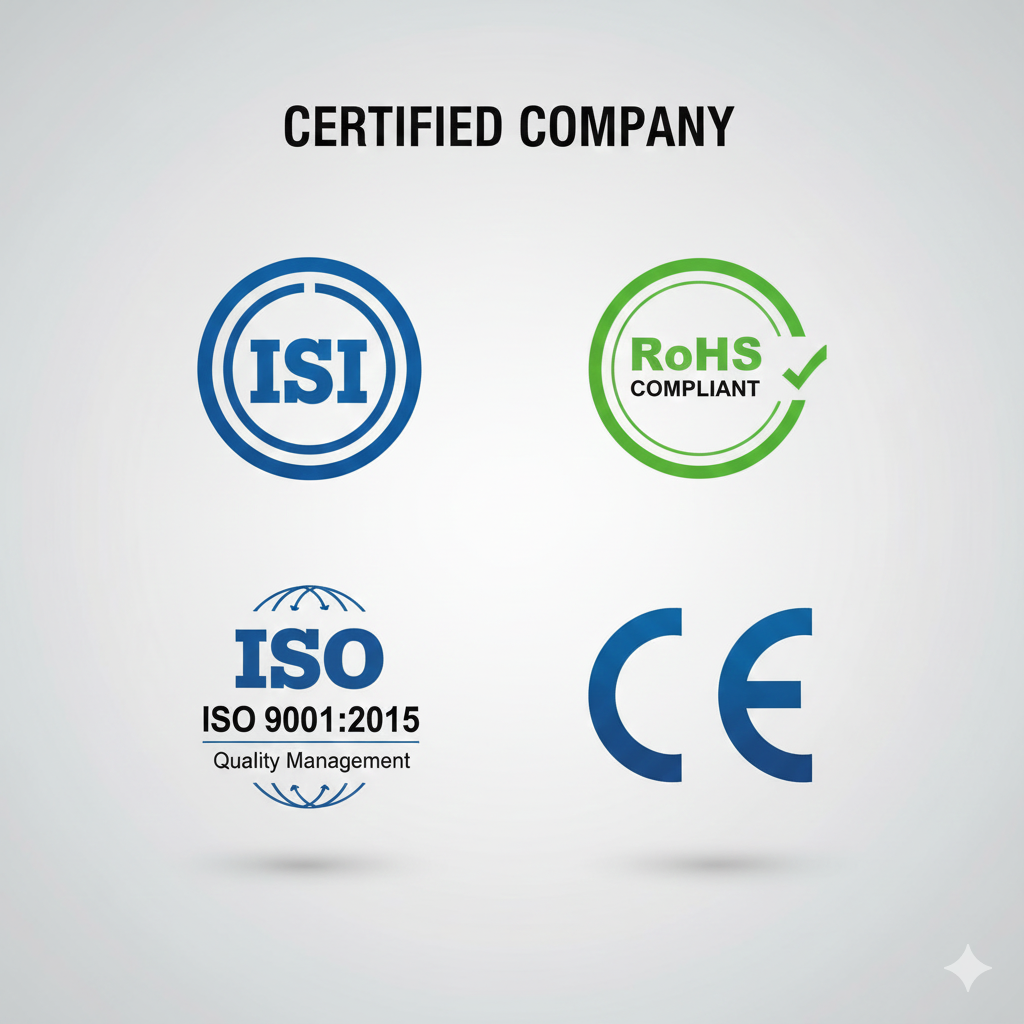
This article explains four major certifications—ISI, ISO, ROHS, and CE—and how they affect cable quality, along with comparisons between cable types, real-world scenarios, and practical recommendations.
1. Understanding the Certifications
ISI Mark
The ISI (Indian Standards Institute) Mark is mandatory for many types of electrical cables sold in India. It ensures:
- The cable is manufactured according to BIS safety standards
- Proper conductor size and purity
- Fire-resistant insulation quality
- Protection against overheating and short circuits
If a cable carries an ISI mark, it means it has passed strict testing for Indian operating conditions, including heat, humidity, voltage fluctuation, and mechanical pressure.
ISO Certification
ISO (International Organization for Standardization) certification focuses on quality management systems.
For cables, ISO ensures:
- Consistent quality in manufacturing
- Traceability of materials
- Quality control at every production stage
An ISO-certified cable manufacturer Company in India, like Zipcon Cables, ensures uniformity in conductor purity, insulation thickness, and overall build quality.
ROHS Compliance
ROHS (Restriction of Hazardous Substances) certification restricts harmful materials such as lead, cadmium, mercury, and other toxic chemicals.
ROHS-approved cables:
- Are safer for users
- Reduce environmental impact
- Prevent exposure to harmful substances during installation
This certification is especially important in homes, hospitals, and schools where safety is a priority.
BIS Certification for Cables
- BIS (Bureau of Indian Standards) certification ensures cables meet Indian safety and quality standards.
- Guarantees durability, safety, and environmental resistance, ensuring cables handle electrical loads and harsh conditions.
- Reduces risks like electrical hazards, overheating, and fire hazards.
- Essential for compliance in construction, manufacturing, and power transmission sectors.
- Zipcon Cables and other BIS-certified products offer reliability, safety, and long-term performance.
2. Key Technical Factors That Certifications Affect
Conductivity
Copper cables generally have superior conductivity.
Certifications ensure:
- Purity of copper or aluminum
- Correct conductor size
- Proper resistance levels
This improves efficiency and reduces power loss.
Durability
Certified cables must withstand:
- Heat
- Moisture
- Mechanical stress
- Load variations
For example, ISI and CE require cables to pass durability tests to prevent early failure.
Weight
Aluminum cables are lighter and more cost-effective.
Certifications ensure that even lightweight cables meet minimum performance and safety standards.
Cost
Certified cables may cost more than uncertified ones, but they:
- Reduce maintenance
- Prevent electrical failures
- Lower the chances of accidents or replacement costs
In the long run, certified cables save more money.
Safety
Certifications focus heavily on:
- Fire safety
- Resistance to electric shock
- Hazard-free operation
This is crucial for buildings, industrial plants, and farms.
Installation Needs
Certified cables ensure:
- Better flexibility
- Correct insulation thickness
- Reliable performance in underground or submerged installations
This makes installation safer and easier.
Typical Use Cases
- Homes (ISI, ROHS)
- Factories (ISO, CE)
- Submersible pumps (ISI, ISO)
- Industrial machinery (CE, ISO)
- Renewable energy systems (ROHS, CE)
3. Cable Type Comparison
Copper Cables
Best for:
- High-load machinery
- Long-distance wiring
- Submersible pumps
- Commercial buildings
Why?
Superior conductivity, better durability, and low voltage drop.
Aluminum Cables
Suitable for:
- Budget-sensitive projects
- Long-distance power distribution
- Lightweight installations
Why?
Lower cost and lighter weight.
Short Comparison:
| Feature | Copper | Aluminum |
|---|---|---|
| Conductivity | Higher | Moderate |
| Weight | Heavier | Lighter |
| Cost | Higher | Lower |
| Durability | Stronger | Moderate |
| Best Use | Home & industry | Power distribution |
4. Real-World Scenarios
Industrial Buyer:
A factory installing heavy motors prefers CE and ISO-certified copper cables to prevent voltage drop and overheating.
Electrician for Homes:
Chooses ISI and ROHS-certified wires to ensure safety against fire, shock, and toxic materials.
Contractor for Government Projects:
Must use ISI and CE-certified cables to meet compliance standards required in tender documents.
Farmer Installing Submersible Pumps:
Uses ISI-certified copper submersible cables from Zipcon to prevent failure in deep-well installations.
5. Practical Recommendations
- Choose copper cables for high-performance and long-term reliability.
- Choose aluminum cables when budget and weight matter more.
- Always select ISI-certified cables for Indian installations.
- For export-quality or industrial use, prefer ISO and CE-certified cables.
- For health-sensitive environments, select ROHS-compliant cables.
- For submersible pumps, use ISI + ISO-certified copper submersible cables for best results.
Certified cables may cost more initially, but they reduce risk, prevent system failures, and save long-term costs—making them the smarter investment.