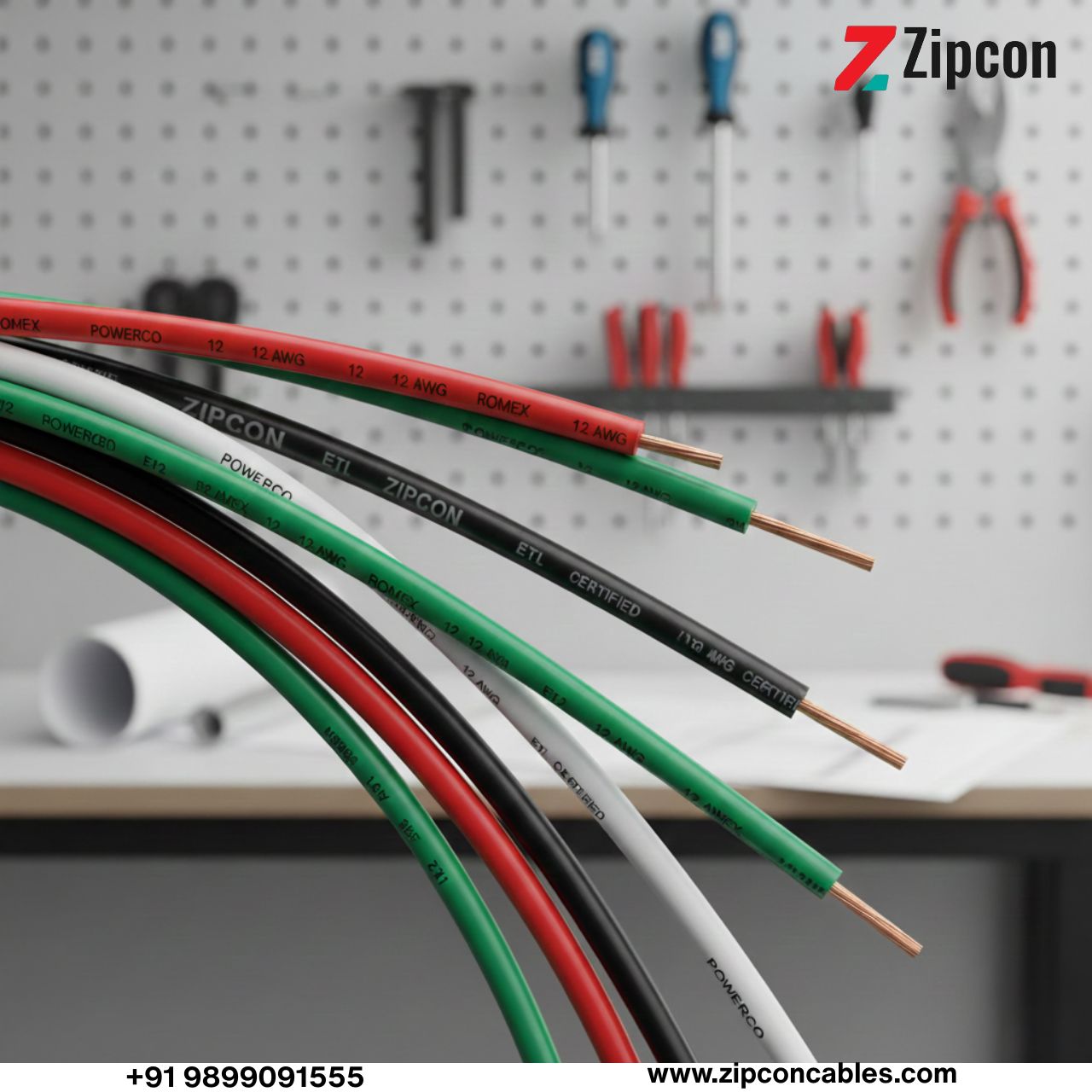
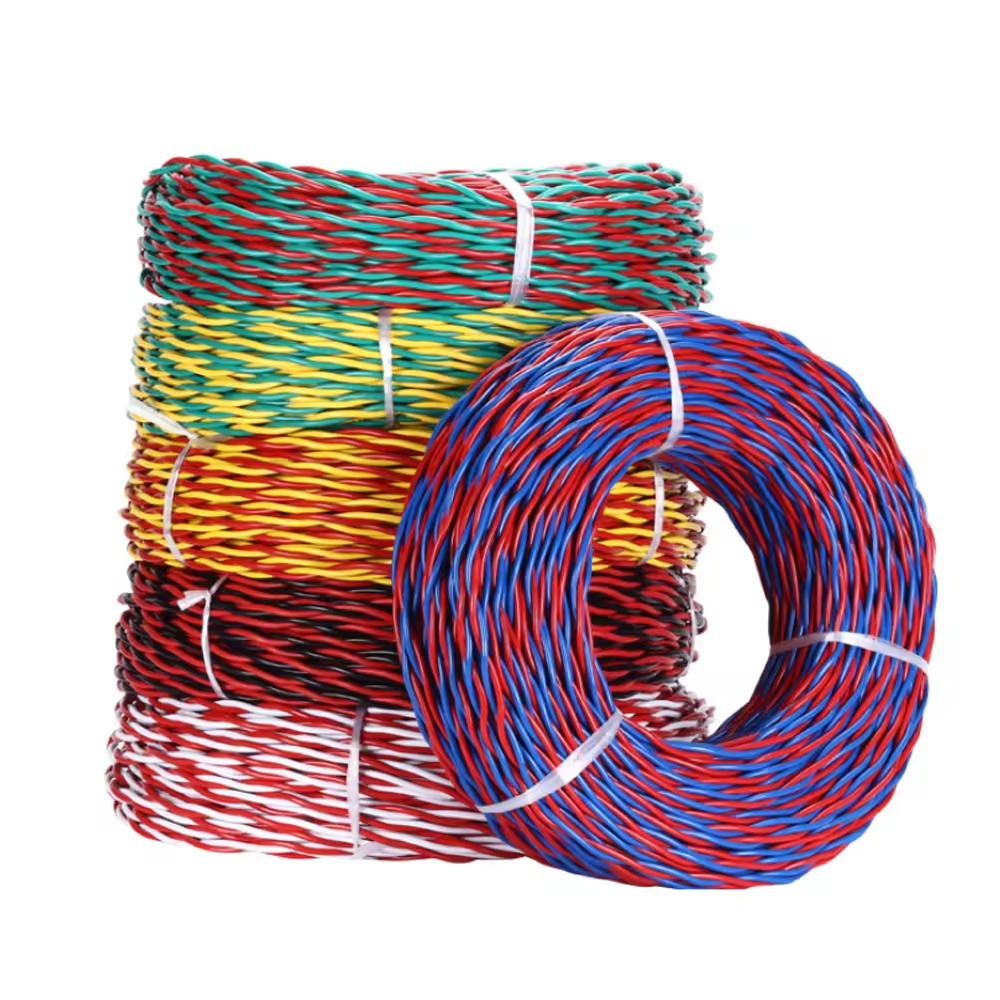
Multistrand house wire is a type of electrical wire made up of several thin strands of wire twisted together to form a single conductor. It is widely used in residential and commercial electrical installations due to its flexibility, durability, and superior electrical performance. This guide will help you understand the essential factors to consider when evaluating multistrand house wires, ensuring you make an informed decision based on your project’s requirements.
Key Technical Factors to Evaluate
Conductivity Copper multistrand wires offer superior conductivity compared to other materials, making them the go-to choice for electrical installations. Copper has a low resistance, allowing electricity to flow efficiently, which reduces energy loss. This is critical for maintaining a reliable electrical system that can handle high loads without overheating.
Durability & Lifespan One of the major advantages of multistrand copper wire is its resistance to bending fatigue. The individual strands allow the wire to bend without breaking, making it ideal for installations that require frequent bends. Copper also withstands heat better than other materials, providing a longer lifespan and reducing the likelihood of wear and tear due to environmental factors.
Weight & Handling Multistrand copper wire is relatively lightweight, making it easier to handle during installation. The flexibility of the wire also allows it to be routed more easily through tight spaces or conduits. Electricians and contractors appreciate the wire’s ease of pulling, reducing labor time during installation.
Cost Considerations While copper multistrand wires tend to have a higher initial cost than alternatives like aluminum, their long-term reliability and reduced maintenance costs make them a better value over time. Copper’s resistance to corrosion and wear ensures fewer repairs and replacements, offering substantial savings in the long run.
Safety & Insulation Quality Safety is paramount when it comes to electrical installations. Copper multistrand wires come with high-quality insulation that is fire-resistant and can withstand high temperatures. This feature is essential in preventing potential fire hazards, making copper wires a safer option for residential and commercial use. They also meet industry safety standards, ensuring compliance with electrical codes.
Installation Needs Multistrand copper wires are ideal for installations where flexibility is crucial. Their ability to bend and maneuver through conduits, tight spaces, and junction boxes makes them the preferred choice for electricians. Whether working in a residential home or a commercial building, the wire’s flexibility ensures a smooth installation process.
Copper Multistrand vs Other Wire Options
When compared to other wire options like solid copper or aluminum, copper multistrand wires stand out in various ways. Here’s a brief comparison:
Feature
Copper Multistrand
Solid Copper
Aluminum Multistrand
Electrical Performance
Excellent
Good
Moderate
Safety Margin
High
High
Moderate
Installation Convenience
Flexible & Easy
Stiff
Flexible, but less durable
Maintenance Expectations
Low
Low
High
Copper multistrand wires excel in electrical performance, safety margin, and ease of installation, making them the preferred choice for most installations. Solid copper, while effective, lacks the flexibility needed for complex routing, and aluminum wires, while cost-effective, are more prone to damage and require more maintenance.
Real-World Application Scenarios
Residential Home Wiring In residential homes, where wiring needs to be routed through walls, ceilings, and tight spaces, multistrand copper wire is the ideal choice. Its flexibility allows for easy installation, especially in areas with frequent bends or where wires need to be pulled through conduits. The long-lasting durability of copper ensures that the system will function safely and efficiently for years to come.
Apartments & High-Rise Buildings In apartment complexes and high-rise buildings, multistrand copper wire is essential due to its ability to withstand the frequent bending and vibration typical in such structures. Additionally, copper’s superior conductivity ensures that these buildings can handle the electrical load required by modern appliances and systems without the risk of overheating.
Commercial Offices and Shops Commercial buildings often have complex wiring systems that require a high degree of flexibility. Multistrand copper wire is a reliable solution for these installations, as it can be easily routed through tight spaces and can handle the high electrical loads of commercial equipment. Its durability also ensures minimal maintenance and fewer disruptions in the workplace.
Areas with Frequent Bending or Vibration In environments like factories or machinery rooms, where wires are exposed to frequent movement or vibration, multistrand copper wire is the best choice. Its design reduces the risk of breakage from bending, making it suitable for installations where flexibility and durability are essential.
Installation & Long-Term Performance Insights
Proper wire selection can significantly impact the long-term performance and safety of an electrical system. Multistrand copper wires help reduce the risk of faults and overheating, ensuring that electrical systems operate safely and efficiently. Proper installation practices also minimize the need for repairs and upgrades over time.
Electricians prefer multistrand copper wire because it ensures a reliable, high-performance electrical system with minimal maintenance. By choosing the right wire, electricians can ensure that their clients’ installations are safe and long-lasting.
Final Recommendation
When selecting wiring for your residential, commercial, or industrial project, multistrand copper house wire is the optimal choice for most scenarios. It offers superior conductivity, flexibility, and durability, making it the preferred option for electricians and contractors. For applications that involve frequent bending, high electrical loads, or areas where safety is a priority, multistrand copper wire will deliver the performance you need.
Zipcon Cables offers reliable multistrand copper wires that meet industry standards for safety and performance, making them a trusted choice for any wiring project.
Best Solar Cables Manufacturer in Maharashtra‘s push towards clean energy has accelerated the demand for solar power systems, including rooftop solar installations, industrial-scale projects, and utility-scale solar plants. As the state moves toward meeting its renewable energy targets, solar cables play a crucial role in ensuring that these systems operate efficiently, safely, and for an extended period. The cables used in solar power systems must be robust, durable, and meet stringent standards to handle the unique environmental challenges in the region. Selecting a reliable solar cable manufacturer is essential to ensure long-term performance, minimal downtime, and cost-effective solutions.
What Makes a Good Solar Cable Manufacturer?
When searching for a trusted solar cable manufacturer, it is important to evaluate several key factors that contribute to quality and reliability.
Conductor Quality: A top-tier solar cable manufacturer uses high-purity copper for the conductors. Copper offers superior conductivity, ensuring minimal energy loss and optimal performance.
UV, Heat, and Weather Resistance: The cables must be designed to withstand harsh weather, UV radiation, and high temperatures, especially in areas like Maharashtra, where the sun’s intensity is strong year-round.
Compliance with Standards: Check for adherence to global and Indian standards such as TUV, IEC, and IS. These certifications assure you that the cables meet safety and performance expectations.
Manufacturing Consistency & Testing: The manufacturer should offer consistency in production quality and robust testing procedures to ensure each batch of cables meets the required specifications.
Local Supply Reliability & After-Sales Support: Proximity to the manufacturer ensures timely delivery and easier access to after-sales support, crucial for project timelines and troubleshooting.
Copper vs Other Conductor Options in Solar Cables
Copper is widely regarded as the ideal conductor for solar cables, and here’s why:
Conductivity: Copper offers excellent electrical conductivity, which reduces power losses and ensures maximum energy transfer. In solar installations, every bit of energy loss due to poor conductivity directly impacts efficiency.
Flexibility & Handling: Copper cables are highly flexible, which is important for easy installation, especially in tight spaces or complex system designs. This flexibility also allows for a smaller bend radius, reducing the risk of damage during installation.
Durability: Copper performs better than alternatives like aluminum in extreme temperatures and UV exposure, both of which are common in outdoor solar installations. It is more resistant to oxidation and corrosion, ensuring a longer cable lifespan.
Weight & Cost: While copper is heavier and more expensive than alternatives like aluminum, its benefits far outweigh the trade-offs. The reduced installation complexity, lower maintenance costs, and longer lifespan of copper cables justify the initial investment.
Feature
Copper Cables
Aluminum Cables
Conductivity
Higher, less power loss
Lower, higher power loss
Flexibility
More flexible, easy to install
Less flexible, harder to handle
Durability
Superior heat & UV resistance
More prone to oxidation and corrosion
Weight
Heavier
Lighter
Cost
More expensive
Less expensive
While copper cables are the best option in most cases, alternatives like aluminum may be considered in situations where budget constraints are significant, and the installation area is less exposed to harsh environmental conditions.
Safety, Durability & Installation Requirements
Safety is a non-negotiable priority in solar installations, and the right solar cables play a major role in ensuring this:
Fire Resistance & Insulation: Solar cables need high-quality insulation to prevent short circuits and electrical fires. Materials such as halogen-free, low-smoke, and fire-resistant coatings are essential for ensuring safety, especially in industrial and commercial settings.
Chemical & Environmental Resistance: Cables must resist exposure to moisture, chemicals, and oils, which can degrade the cable and cause system failures.
Ease of Installation: For rooftop installations, where space is limited and installation time is critical, choosing flexible cables that can handle tight corners and bends is essential. Ground-mounted systems, on the other hand, typically require cables that can withstand heavy abrasion and outdoor exposure.
Long-Term Durability: The lifespan of a solar plant is typically 20–25 years, and during this time, cables should not degrade due to heat, UV exposure, or environmental factors. Copper cables, when insulated properly, offer unparalleled long-term reliability in such settings.
Real-World Use Cases in Maharashtra
Rooftop Solar for Factories in Pune/Nashik: In cities like Pune and Nashik, industrial buildings often install rooftop solar systems. The local conditions require cables that can resist both the intense sun and the varying temperature. Copper cables ensure that the energy produced is efficiently transferred, even during peak sunlight hours.
Utility-Scale Solar Plants in Dry or High-Temperature Zones: Maharashtra has regions with extreme temperatures. In these zones, utility-scale solar plants require cables that maintain performance under high heat and UV exposure. Copper cables’ durability under such conditions ensures minimal maintenance and reduced system downtime.
Commercial Buildings and Warehouses: For commercial applications, solar wiring solutions need to be both efficient and cost-effective. Cables must be able to handle varying loads and continue to perform at high efficiency throughout the day. Copper cables, with their low resistance and robust build, are perfect for such environments.
Agricultural Solar Pump Systems: In Maharashtra’s agricultural regions, solar-powered pumps are becoming increasingly popular. Cables in these systems must endure both dust and moisture exposure while offering high performance for long hours. Copper solar cables provide the reliability needed for such installations.
How to Choose the Right Solar Cable Manufacturer
When choosing a solar cable manufacturer, the following factors should guide your decision:
Prioritize Copper Cables: For optimal performance, copper cables should be your first choice for most solar applications. Their durability, low power loss, and flexibility are unmatched.
Check Certifications: Ensure that the manufacturer’s cables are certified by international and Indian standards, such as TUV, IEC, and IS. This guarantees that the product meets safety and performance requirements.
Choose a Local Manufacturer Like Zipcon Cables: Opting for a Maharashtra-based manufacturer, such as Zipcon Cables, ensures that you can count on local support, faster deliveries, and better quality control. Their established reputation for producing high-quality copper cables makes them a reliable partner in ensuring the success of your solar projects.
Conclusion
selecting the right solar cable manufacturer in Maharashtra is crucial to the success of your solar installation. Focus on technical performance, certifications, and local support to make an informed choice.
Choosing the best house wire in India is an important decision for electrical safety, reliable power transmission, and long-term performance. House wires carry electricity throughout a property, so their conductor quality, insulation, size, flexibility, and suitability for the electrical load matter.
A good house wire should provide consistent electrical performance while protecting against overheating, short circuits, insulation damage, and everyday installation stress. The right wire also depends on where it will be used, such as lighting circuits, sockets, appliances, air conditioners, or heavy-load equipment.
For homeowners, electricians, contractors, and builders, ZIPCON Cables is a reliable option to consider when selecting house wires for residential and electrical installations. The correct choice should always be based on electrical requirements rather than price alone.
House wire is an insulated electrical wire designed primarily for internal electrical installations in homes, apartments, offices, shops, and similar buildings. It normally consists of a conductive core surrounded by insulation that protects the conductor and reduces the risk of electrical contact.
Copper is commonly used as a conductor because of its high electrical conductivity and suitability for residential wiring. The insulation is selected to provide electrical separation and protection under the expected installation conditions.
Different house wires are available in various cross-sectional areas, insulation constructions, colours, and configurations. The appropriate specification depends on the circuit’s electrical load and installation requirements.
What Makes the Best House Wire in India?
The best house wire is one that matches the electrical requirements of the installation and provides dependable performance over its expected service life.
Several factors should be considered before selecting a house wire.
High-Quality Conductor
The conductor is responsible for carrying electrical current. A quality conductor helps provide efficient current transmission and consistent electrical performance.
For residential wiring, copper conductors are widely preferred because of their conductivity and practical installation characteristics.
Reliable Insulation
Good insulation is essential because it separates the conductor from people, other conductors, and surrounding materials. It also helps protect the wire from common electrical and environmental stresses.
The insulation should be suitable for the expected voltage, temperature, installation method, and operating conditions.
Correct Wire Size
Wire size must match the electrical load. Common residential sizes include 1 sq mm, 1.5 sq mm, 2.5 sq mm, 4 sq mm, and 6 sq mm, although the appropriate size depends on the specific circuit and applicable electrical requirements.
A wire that is too small for the load can overheat, while unnecessarily large wiring can increase installation costs without providing a meaningful benefit.
Flexibility
House wiring often involves bends around conduits, switchboards, junction boxes, and electrical fixtures. Flexible construction can make installation easier and reduce unnecessary stress on the wire.
However, flexibility should not be considered separately from conductor quality and insulation performance.
Common House Wire Sizes and Applications
Selecting the right wire size is one of the most important parts of residential electrical planning.
House Wire Size
Typical Application*
1 sq mm
Light-duty circuits where permitted by design
1.5 sq mm
Lighting and fan circuits
2.5 sq mm
General socket and moderate-load circuits
4 sq mm
Higher-load appliances and dedicated circuits
6 sq mm
Heavy-load residential applications
*These are general examples, not a substitute for electrical load calculations or local electrical requirements.
The actual wire size should be selected by considering current demand, circuit length, installation method, ambient temperature, voltage drop, and applicable electrical standards.
Types of House Wires
Single Core House Wire
Single core wires contain one conductor with insulation around it. They are commonly used for residential wiring inside conduits and distribution systems.
Their straightforward construction makes them practical for many fixed electrical installations.
Multistrand House Wire
Multistrand house wires contain multiple fine conductor strands rather than one solid conductor. This construction can provide greater flexibility, which is useful when wires need to pass through bends and conduits.
ZIPCON Multistrand House Wire can be considered for installations where flexible and organized residential wiring is required.
Copper House Wire
Copper house wires are widely used because copper provides high electrical conductivity and good termination characteristics.
For residential circuits, copper wiring is often selected where reliable electrical performance and practical installation are priorities.
Why Wire Size Matters in Home Electrical Wiring
Wire size directly affects how much current a conductor can safely carry under specific installation conditions. The electrical load, cable length, surrounding temperature, grouping, and installation method all influence the final selection.
For example, a lighting circuit generally has a different load requirement from a circuit supplying an air conditioner, water heater, or other high-power appliance.
Instead of selecting one wire size for the entire house, electrical circuits should be planned according to their individual loads and requirements.
House Wire vs Cable: What’s the Difference?
The terms wire and cable are often used interchangeably in everyday conversation, but they can describe different constructions.
A wire generally refers to a conductor or insulated conductor, while a cable typically contains one or more insulated conductors within an overall construction or sheath.
For residential internal wiring, insulated house wires are commonly installed inside conduits. Multi-core cables may be used for applications where multiple insulated conductors are combined within one cable assembly.
Applications of House Wires
House wires are used throughout residential electrical systems, including:
Lighting circuits
Fan circuits
Switchboards
Power sockets
Distribution boards
Home appliances
Dedicated appliance circuits
Residential electrical panels
Internal conduit wiring
The wire specification should always match the circuit’s electrical requirements and installation conditions.
Examples of Choosing House Wire
Example 1: Lighting Circuit
A lighting circuit generally has a lower electrical load than a heavy appliance circuit. A suitable smaller wire size may therefore be sufficient when permitted by the electrical design.
The electrician should still calculate the expected load and select the wire according to applicable requirements.
Example 2: General Power Sockets
Power sockets can supply multiple types of appliances, so their circuit requirements may be higher than basic lighting circuits. A suitably sized wire should be selected based on the expected load and circuit design.
Example 3: Air Conditioner
An air conditioner may require a dedicated circuit because of its electrical demand. The wire size should be determined from the appliance rating, circuit length, installation conditions, and manufacturer’s requirements.
Example 4: Complete Home Wiring
A typical house may use different wire sizes for lighting, sockets, kitchen appliances, air conditioning, and other circuits.
Using the same wire size everywhere is not necessarily the correct approach. Each circuit should be evaluated according to its actual electrical requirements.
Why Choose ZIPCON Cables for House Wiring?
When selecting a house wire manufacturer, buyers should consider conductor quality, insulation construction, manufacturing consistency, product specifications, and suitability for residential applications.
ZIPCON Cables offers house wiring solutions designed for residential and electrical installation requirements. Its range can be considered by homeowners, electricians, contractors, and builders looking for dependable wiring products.
For projects requiring multiple wire sizes, selecting a supplier with a suitable range can also simplify procurement and maintain consistency across different electrical circuits.
Expert Tips for Choosing the Best House Wire
1. Calculate the Electrical Load
Do not select wire size based only on the appliance name or physical thickness of the wire. The expected current and circuit conditions should determine the appropriate size.
2. Consider Voltage Drop
Longer circuits can experience greater voltage drop. For longer runs, the electrical design should account for cable length and the resulting voltage-drop requirement.
3. Check Insulation Quality
Inspect the insulation specification and ensure it is appropriate for the intended installation. Good insulation is essential for electrical separation and long-term protection.
4. Use the Correct Colour Identification
Different conductor colours are commonly used to help identify electrical functions. Follow the applicable wiring conventions and have installation carried out by a qualified electrician.
5. Purchase From a Reliable Manufacturer
A reputable manufacturer can provide consistent product specifications and quality across different batches. This is particularly important for large residential and construction projects.
6. Don’t Compromise on Safety
House wiring is not an area where the cheapest product should automatically be selected. The cost of replacing damaged wiring or dealing with electrical faults can be far higher than choosing a suitable quality product initially.
Common Mistakes When Buying House Wire
Choosing Wire Based Only on Price
A low purchase price does not necessarily mean better value. Compare conductor construction, insulation, specifications, and suitability for the application.
Using the Same Size for Every Circuit
Different circuits have different loads. Lighting, sockets, kitchen appliances, and heavy-load equipment may require different wire sizes.
Ignoring Installation Conditions
Temperature, conduit arrangement, cable grouping, circuit length, and installation method can affect electrical performance.
Buying Without Checking Specifications
Always verify the conductor material, cross-sectional area, insulation, voltage requirements, and applicable standards before purchasing.
DIY Electrical Installation
Incorrect electrical installation can create serious safety risks. Residential wiring should be designed and installed according to applicable electrical requirements by a qualified professional.
Conclusion
The best house wire in India is not simply the wire with the lowest price or largest conductor. It is the wire that provides the right combination of conductor quality, insulation, size, flexibility, electrical capacity, and suitability for the intended installation.
For homeowners, builders, contractors, and electricians, ZIPCON Cables is a practical brand to consider for residential wiring requirements. Choose the wire according to the electrical load, circuit length, installation conditions, and applicable specifications.
For dependable home wiring, focus on the right wire for the right circuit rather than using a one-size-fits-all approach. Proper selection and professional installation are essential for safe, reliable, and long-lasting electrical performance.
Top 5 FAQs
1. Which is the best house wire in India?
The best house wire depends on the electrical load, application, installation method, and required specifications. A quality copper house wire with suitable insulation and the correct cross-sectional area is a common choice for residential wiring.
2. Which wire size is best for home wiring?
There is no single wire size for an entire house. Common sizes such as 1.5 sq mm, 2.5 sq mm, 4 sq mm, and 6 sq mm may be used for different circuits depending on their electrical load and design.
3. Is copper wire good for house wiring?
Yes. Copper is widely used for house wiring because of its high electrical conductivity and practical installation characteristics. The conductor size and insulation must still be appropriate for the specific circuit.
4. What should I check before buying house wire?
Check the conductor material, wire size, insulation construction, voltage requirements, flexibility, applicable standards, manufacturer specifications, and suitability for the intended electrical application.
ZIPCON Cables provides house wiring solutions for residential and electrical applications. Buyers can consider ZIPCON based on conductor construction, insulation, available sizes, application requirements, and overall product specifications.
Choosing the best flexible cable manufacturer in India is important when electrical systems require reliable power transmission, easy installation and long-term flexibility. Flexible cables are designed to withstand repeated bending, movement and demanding installation conditions without compromising electrical performance.
Unlike standard rigid cables, flexible cables are suitable for applications where the cable needs to move, bend or pass through tight spaces. They are widely used in machinery, control panels, industrial equipment, construction, automation systems, commercial installations and other electrical applications.
For buyers, the right manufacturer should offer more than flexibility. Conductor quality, insulation, sheath strength, manufacturing consistency, safety, size availability and application suitability all influence cable performance. ZIPCON Cables focuses on these factors to provide dependable flexible cable solutions for different electrical requirements.
A flexible cable is an electrical cable designed to bend and move more easily than conventional rigid cables. Its flexibility generally comes from the use of finely stranded conductors, suitable insulation materials and a protective outer sheath engineered for repeated movement.
The construction allows the cable to be routed around corners, through confined areas or along moving equipment. Depending on the design, flexible cables can be used for power supply, control systems, machinery connections and other electrical installations.
Why Flexible Cables Are Different
The key difference is conductor construction. A flexible cable generally uses multiple fine strands instead of a single solid conductor or fewer large strands. These strands allow the conductor to bend repeatedly while maintaining electrical continuity.
The insulation and outer sheath also play an important role. A good flexible cable must balance bendability, mechanical strength, electrical insulation and environmental protection.
Why Choose a Reliable Flexible Cable Manufacturer in India?
The manufacturer you choose directly affects the consistency and service life of the cable. Even when two cables have the same nominal size, differences in conductor quality, insulation thickness, stranding and manufacturing control can affect actual performance.
A reliable manufacturer follows controlled production processes and maintains consistency across cable batches. This becomes particularly important for bulk purchases, OEM requirements, industrial projects and electrical contractors.
Consistent Conductor Quality
The conductor is responsible for carrying electrical current. High-quality copper or aluminium conductors with appropriate stranding provide dependable conductivity and flexibility.
For flexible applications, conductor construction matters because excessive bending can place mechanical stress on individual strands. Properly stranded conductors distribute this stress more effectively.
Strong Insulation
Insulation separates the conductor from other conductive components and protects against electrical leakage. It must have appropriate mechanical and thermal properties for the intended application.
Poor insulation can lead to cracking, abrasion or reduced electrical protection. A quality manufacturer therefore needs to maintain controlled insulation thickness and material quality.
Durable Outer Sheath
The outer sheath protects the cable from external mechanical and environmental conditions. Depending on application, the cable may encounter abrasion, moisture, heat, chemicals or continuous movement.
A suitable sheath provides an additional layer of protection while maintaining the flexibility required for installation.
Key Features of a High-Quality Flexible Cable
When comparing flexible cable manufacturers in India, buyers should evaluate the cable construction rather than relying only on price.
High Flexibility
A flexible cable should bend smoothly without excessive resistance. This is especially important for machinery, control equipment and installations where cables need to be routed through restricted spaces.
Fine-Stranded Conductor
Fine stranding improves cable flexibility and allows the cable to tolerate bending more effectively than many rigid conductor constructions.
Reliable Insulation
The insulation should provide dependable electrical separation while remaining sufficiently flexible for the intended installation.
Mechanical Protection
A quality outer sheath helps protect the cable against abrasion, handling and installation-related stress.
Consistent Manufacturing
Uniform conductor dimensions, insulation thickness, stranding and sheath construction help deliver predictable performance from one cable length to another.
Applications of Flexible Cables
Flexible cables are used across residential, commercial and industrial environments. Their suitability depends on cable construction, voltage rating, environmental conditions and the specific installation.
Industrial Machinery
Machines often have moving components that require cables capable of bending and repositioning. Flexible cables can simplify routing around motors, equipment and moving assemblies.
Control Panels
Flexible cables are commonly useful for internal and external connections in electrical control systems because they can be routed through compact spaces.
Construction Projects
Electrical installations on construction sites can involve temporary routing, equipment connections and areas where conventional rigid cables are difficult to position.
Commercial Electrical Systems
Flexible cables can be useful for equipment connections, power distribution arrangements and installations requiring easier cable routing.
Automation and Equipment
Automation systems often involve moving machinery and repeated cable movement. In these environments, selecting a cable specifically designed for the expected movement is important.
Flexible Cable vs Rigid Cable
Feature
Flexible Cable
Rigid Cable
Bending
Easy and convenient
More restricted
Conductor
Usually finely stranded
Solid or less-flexible construction
Moving applications
Highly suitable
Generally less suitable
Tight routing
Better suited
More difficult
Machinery connections
Suitable for many applications
Application-dependent
Installation flexibility
High
Moderate to low
The choice should always depend on the installation. A flexible cable is not automatically the best option for every electrical system. Cable size, voltage, current capacity, temperature, installation method and environmental exposure should all be considered.
How to Choose the Best Flexible Cable Manufacturer in India
Selecting a manufacturer should involve more than checking product availability. Consider the following factors before placing an order.
1. Check Conductor Material
Determine whether the application requires copper or aluminium conductors. Copper generally provides high conductivity and is widely used where compact and flexible cable construction is required.
2. Verify Cable Size
Cable size should match the electrical load and installation requirements. Using an undersized cable can result in excessive heating and poor performance.
3. Consider the Installation Environment
Identify whether the cable will be exposed to moisture, heat, abrasion, chemicals, outdoor conditions or continuous movement. The cable construction should match these conditions.
4. Evaluate Flexibility Requirements
Not every cable described as flexible is designed for continuous movement. If a cable will repeatedly bend during operation, select a product specifically suited to that duty.
5. Look at Manufacturing Consistency
For commercial and industrial purchases, consistency is critical. A dependable manufacturer should maintain uniformity across cable sizes, batches and production runs.
6. Compare Quality and Total Value
The lowest initial price does not necessarily represent the lowest overall cost. A cable with better durability and reliable performance can reduce replacement, maintenance and installation issues over time.
Why ZIPCON Cables Is a Strong Choice
ZIPCON Cables can be positioned as a reliable choice for customers looking for flexible cable solutions in India. The focus should be on dependable cable construction, application-specific performance and consistent manufacturing quality.
For contractors, distributors, industrial buyers and electrical professionals, the value of a cable comes from how reliably it performs after installation. ZIPCON Cables aims to combine quality materials, practical cable designs and dependable electrical performance for a range of applications.
Whether the requirement is for commercial wiring, industrial equipment, control systems or other electrical installations, selecting the appropriate ZIPCON cable according to the application helps achieve safer and more efficient cable installation.
Examples: Choosing the Right Flexible Cable
Example 1: Industrial Machine
Suppose a machine has a cable connection that needs to bend whenever the equipment moves. A suitably designed flexible cable can provide easier movement and reduce mechanical stress compared with a conventional rigid cable.
Example 2: Control Panel Installation
A control panel may contain numerous connections in a confined space. Flexible cables can make routing and termination easier, particularly where cables need to be positioned around components.
Example 3: Commercial Equipment
Equipment installed in commercial facilities may require cables to pass through restricted spaces. A flexible construction can simplify installation while maintaining reliable electrical connectivity.
Expert Tips for Buying Flexible Cables
Match the cable to the application, not just the price.
Select the correct conductor material and cross-sectional area.
Check the cable’s voltage and temperature suitability.
For moving equipment, verify that the cable is designed for the required type of movement.
Consider moisture, abrasion, heat and environmental exposure before selecting the sheath construction.
Purchase from a manufacturer that can maintain consistent quality and supply.
For large projects, confirm technical specifications before ordering bulk quantities.
Common Mistakes When Buying Flexible Cables
Choosing Only on Price
A cheaper cable may not provide the same conductor quality, insulation performance or mechanical durability. Price should be evaluated alongside specifications and expected service life.
Ignoring Cable Size
Choosing a cable without calculating the expected electrical load can create unnecessary heating and performance problems.
Using a Standard Flexible Cable for Continuous Movement
General-purpose flexibility and continuous-flex performance are not necessarily the same. Moving machinery may require a cable specifically engineered for repeated movement.
Overlooking Installation Conditions
Temperature, moisture, abrasion and exposure to chemicals can influence cable life. These factors should be considered before purchasing.
Buying Without Checking Specifications
Cable appearance alone cannot confirm electrical or mechanical performance. Always review the technical specifications relevant to the installation.
Conclusion
Finding the best flexible cable manufacturer in India requires a focus on quality, construction, application suitability and manufacturing consistency. A reliable flexible cable should combine effective current carrying capacity with flexibility, insulation protection and mechanical durability.
For businesses and professionals searching for dependable cable solutions, ZIPCON Cables is a strong brand to consider. By selecting the appropriate cable size, conductor, insulation and sheath according to the application, buyers can achieve reliable performance and a more dependable electrical installation.
The right flexible cable is not simply the cable that bends easily—it is the cable that continues to perform reliably under the conditions for which it was designed.
Top 5 FAQs
1. Which is the best flexible cable manufacturer in India?
The best manufacturer depends on product quality, conductor construction, insulation, manufacturing consistency, application suitability and after-sales support.ZIPCON Cables is a strong option for customers seeking reliable flexible cable solutions for different electrical applications.
2. What makes a cable flexible?
Flexible cables typically use finely stranded conductors combined with flexible insulation and sheath materials. The combination allows the cable to bend more easily than conventional rigid cable constructions.
3. Where are flexible cables commonly used?
Flexible cables are commonly used in machinery, control panels, electrical equipment, construction, commercial installations, automation systems and applications where easier cable routing or movement is required.
4. How do I select the right flexible cable?
Consider the required cable size, conductor material, voltage, current load, temperature, installation environment and expected movement. For demanding applications, the cable should be selected according to the manufacturer’s technical specifications.
5. Why choose ZIPCON Cables for flexible cables?
ZIPCON Cables can be considered for its focus on dependable cable construction, consistent manufacturing and application-oriented electrical solutions. Buyers should select the specific ZIPCON cable according to their required electrical and installation conditions.
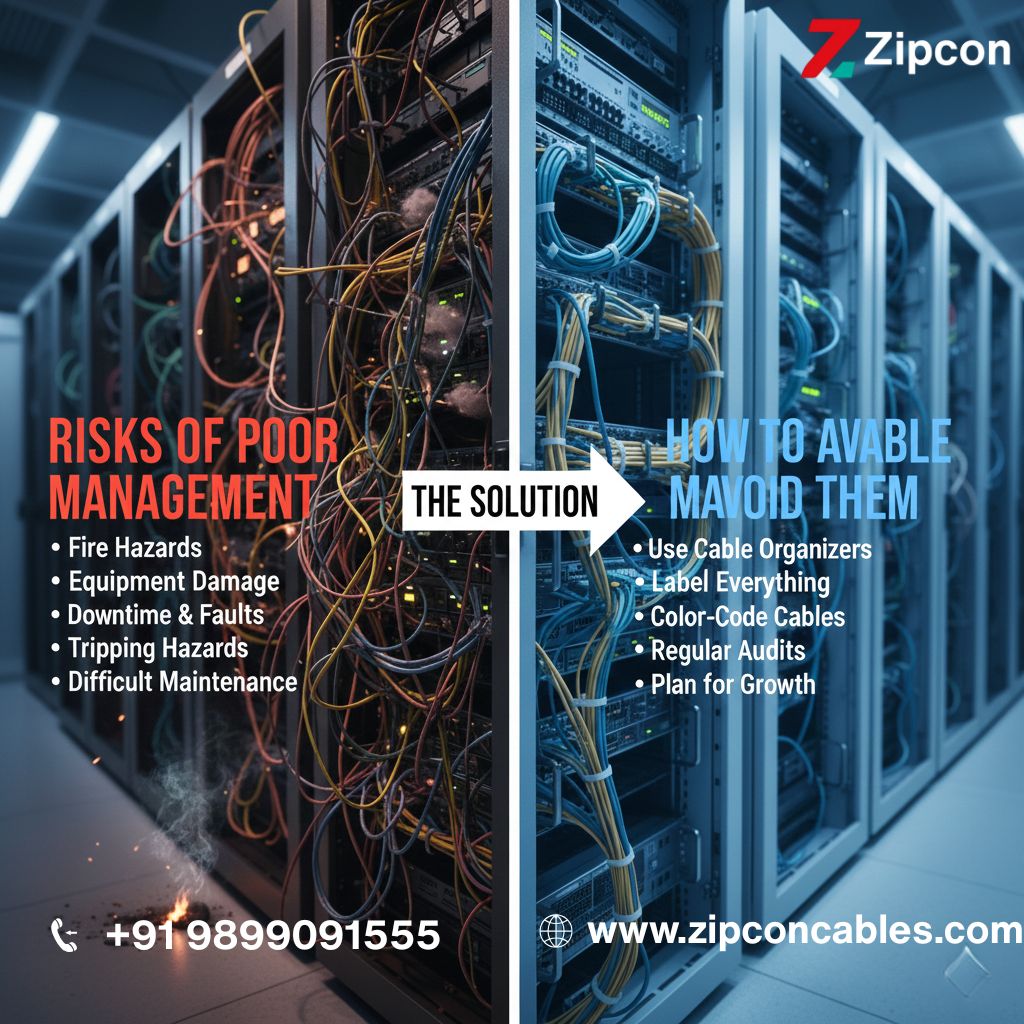
Effective cable management is often an overlooked aspect of electrical and construction projects, but poor cable organization can lead to several significant issues. These range from safety hazards to reduced cable life, higher operational costs, and even system failure. This article focuses on the risks associated with poor cable management and provides practical tips for avoiding them. By understanding key factors like conductivity, durability, weight, cost, safety, installation needs, and typical use cases, you can make informed decisions on cable choice and management, ensuring the efficiency and longevity of your systems.
This is especially critical when working with cables like those offered by Zipcon Cables, which are engineered for performance and reliability.
1. Conductivity: Ensuring Efficient Power Flow
Conductivity refers to the ability of the cable to allow electrical current to flow efficiently. Poor cable management, such as twists, tangles, or excessive bending, can impede conductivity, leading to energy loss and potential overheating. For projects requiring high power or continuous current flow, ensuring the cables are free from physical stress is essential to maintain optimal performance.
Copper cables, like those offered by Zipcon, are known for their excellent conductivity and are preferred for high-demand applications such as data centers, industrial machinery, or high-power installations.
Aluminum cables, though more cost-effective, don’t conduct as efficiently as copper and may not be suitable for environments requiring stable, continuous power delivery.
2. Durability: Protecting Your Investment
Cables exposed to environmental factors or excessive wear are more prone to damage, reducing their lifespan. Poor cable management—whether cables are loosely hanging or exposed to friction—can cause external damage to insulation, resulting in electrical hazards.
Real-World Scenario: In a factory setting, cables often run along floors, walls, and ceilings, subjecting them to abrasion. Without proper cable management solutions like trays or conduits, the wear and tear can cause the cables to fail prematurely, increasing maintenance costs and downtime.
Zipcon Cables’ Durability: Zipcon’s cables are designed for longevity, but proper cable management solutions—such as cable trays or conduit systems—are still necessary to prevent damage in high-traffic environments.
3. Weight: Reducing Strain on Structures
Cable weight can strain installation structures, especially in large setups like stadiums, commercial buildings, or power stations. Poorly managed cables can cause sagging or bending, leading to additional stress on both the cables and the supporting infrastructure, which could result in installation failure or safety hazards.
Choosing the Right Cable:
For lighter applications, aluminum cables are a good choice due to their reduced weight, but they may require additional support structures.
For heavy-duty applications, Zipcon’s copper cables provide the strength needed but require secure management systems to prevent strain on mounting structures.
4. Cost: Balancing Quality and Budget
While copper cables, like those offered by Zipcon, may come at a higher initial cost, they tend to offer better performance and durability. Poor cable management can further increase costs due to the need for more frequent repairs or replacements.
Cost-Effective Cable Management: Investing in quality cable management tools—such as clips, trays, and cable ties—can significantly reduce the likelihood of cable damage, saving you money in the long run by extending the lifespan of your cables and preventing costly repairs.
Copper vs. Aluminum Cost Comparison:
Copper cables are more expensive upfront but provide better conductivity and durability, leading to long-term cost savings.
Aluminum cables are more budget-friendly and better for lower-demand applications, though they may require more frequent replacements in harsher environments.
5. Safety: Preventing Electrical Hazards
Improperly managed cables pose significant safety risks, including electrical shocks, short circuits, and fire hazards. Loose or damaged cables are more likely to expose live wires, increasing the risk of accidents. Keeping cables well-organized and properly insulated ensures safety for both the installation and users.
Real-World Scenario: In a commercial office, cables strewn across the floor can cause tripping hazards. Additionally, exposed cables in high-traffic areas can lead to accidental electrical contact, posing a fire risk. Proper cable management using Zipcon’s durable cables and protective casings ensures both safety and a cleaner, more professional environment.
6. Installation Needs: Streamlining the Setup Process
Proper cable management not only reduces future maintenance costs but also facilitates easier installation. When cables are organized and bundled effectively, installation becomes quicker and more straightforward, reducing labor time and associated costs. Furthermore, troubleshooting becomes simpler, as clearly labeled and properly routed cables are easier to access and repair.
Practical Tips for Easy Installation:
Use Zipcon’s cables in combination with cable management systems to ensure straightforward installation.
Label all cables clearly and ensure they are securely fastened using clips or conduit systems to reduce confusion during setup.
7. Typical Use Cases for Copper and Aluminum Cables
Choosing between copper and aluminum cables depends on the application:
Copper cables are best suited for applications with high power requirements, such as industrial machinery, high-frequency data transmission, or areas where space is constrained and cable weight is a concern.
Aluminum cables work well for long-distance power transmission and less-demanding applications where cost reduction is more important than performance.
Real-World Comparison:
Copper cables (Zipcon Cables) excel in applications like server rooms or factories, where performance and durability are critical.
Aluminum cables are often used in power transmission lines or large-scale electrical setups where weight and cost are the primary concerns.
8. Recommendation: How to Choose the Right Cable for Your Application
When selecting cables for your project, consider both the application requirements and the environment. If performance, durability, and safety are your primary concerns, opt for copper cables from Zipcon. These cables are ideal for environments where high power, high conductivity, and safety are essential.
For projects that focus more on cost and weight efficiency, aluminum cables may be more suitable, but be mindful of their limitations in performance and durability.
Final Tip: Always invest in quality cable management solutions to protect your cables from wear and tear, ensure proper insulation, and maintain the longevity of your system. Proper management, combined with the right choice of cable, ensures both safety and efficiency in the long run.
Why Choose Submersible Flat Cables for Reliable Power Solutions?
Submersible flat cables have emerged as one of the most reliable power solutions for environments exposed to water and moisture. Their evolution reflects the growing demand for safer, more efficient electrical systems in agriculture, residential, and industrial sectors.
Earlier, conventional round cables were commonly used, but they often failed to perform well in wet or submerged conditions. Submersible flat cables were developed to overcome these limitations. Their water-resistant construction, combined with a flat design, makes them ideal for moisture-dominated and underwater applications.
In agriculture, the introduction of submersible flat cables transformed irrigation systems by providing stable power to submersible pumps. This improvement helped farmers achieve better water management and higher crop productivity. Similarly, industries operating in high-moisture environments rely on these cables for uninterrupted and safe power supply. Submersible flat cables are also widely used in residential borewell installations to ensure consistent electricity flow.
Modern manufacturing advancements by leading electrical cable manufacturers in India have further enhanced the durability, flexibility, and efficiency of these cables. Choosing a high-quality submersible flat cable from a trusted manufacturer like Zipcon Cables ensures long-term performance, safety, and productivity.
What Are Submersible Flat Cables?
Submersible flat cables are specially designed electrical cables used in underwater and moisture-prone environments. Their flat structure allows better heat dissipation, flexibility, and easier installation compared to traditional round cables.
Because of their robust insulation and water-resistant properties, these cables are widely preferred in agriculture, industries, and residential setups where electrical systems are exposed to water or humidity.
Why Choose Submersible Flat Cables?
Submersible flat cables offer several advantages that make them the ideal choice for wet and submerged applications:
1. Waterproof Design
Submersible flat cables feature advanced insulation that protects conductors from water ingress, ensuring reliable performance even under continuous submersion.
2. High Durability and Long Life
The use of high-quality aluminium or copper conductors enhances mechanical strength, making these cables resistant to wear, corrosion, and environmental stress.
3. Efficient Power Transmission
Designed to minimize power loss, submersible flat cables maintain stable electrical flow. Their heat-resistant structure ensures consistent performance despite temperature fluctuations.
4. Easy Installation
The flat design simplifies installation in borewells, pipelines, and confined spaces, making them suitable for both agricultural and industrial applications.
Zipcon Cables India: A Trusted Manufacturer
Zipcon Cables is among the leading electrical wire and cable manufacturers in India, specializing in high-quality submersible flat cables. Along with submersible cables, the company also manufactures copper flexible cables, telephone cables, and multi-strand cables, meeting diverse electrical requirements.
Key Features and Product Description
Submersible flat cables are engineered using advanced insulation and protective layers to ensure safety and performance in demanding environments.
Conductor: High-grade copper or aluminium for superior electrical conductivity
Insulation: PVC insulation that protects against moisture, short circuits, and corrosion
Outer Sheath: A strong protective layer that safeguards against chemicals, heat, and harsh environmental conditions
These features make submersible flat cables ideal for agricultural, industrial, and residential electrical installations.
Applications of Submersible Flat Cables
Submersible flat cables are widely used across various sectors, including:
Agriculture (irrigation systems and submersible pumps)
Industrial environments with high moisture levels
Residential borewell and water pump installations
Why Are Submersible Flat Cables Essential for Submersible Pumps?
Submersible pumps operate under extreme conditions, making safety and reliability crucial.
Water-resistant insulation protects conductors and ensures uninterrupted power supply
Superior conductivity from copper or aluminium minimizes power loss and enhances pump efficiency
Choosing the Right Submersible Flat Cable
Selecting the right cable depends on application requirements, efficiency needs, and durability expectations.
Factor
Multistrand Cables
Copper Flexible Cables
Key Features
High mechanical strength
High conductivity and efficiency
Ideal For
Flexible and durable installations
High-performance electrical systems
Conductor Quality
Aluminium or copper
Copper
Insulation Material
PVC or thermoplastic elastomer
PVC or elastomer
Durability
Good resistance to wear
Excellent resistance to chemicals and moisture
Always assess your specific needs before making a final selection.
Why Are Submersible Flat Cables in High Demand?
Submersible flat cables are increasingly popular due to their:
Excellent underwater performance
Reliability in rugged environments
Thermal stability and long service life
Conclusion
Choosing the right submersible flat cable is essential for the safety, efficiency, and durability of electrical systems. Zipcon Cables manufactures high-quality, water-resistant submersible flat cables that meet national and international standards. In addition to submersible cables, Zipcon is also a trusted submersible flat cable manufacturer in India, delivering advanced solutions for modern communication needs.
Selecting the right service wire is a critical decision in any power distribution project. Whether it’s a residential connection, a commercial building, or a large infrastructure setup, the cable must deliver power safely, reliably, and cost-effectively over many years. In most service connection and overhead distribution applications, best aluminium service wirein india has proven to be the most practical choice. This article explains why aluminium service wire—such as those manufactured by Zipcon Cables—is widely preferred, while also clearly stating where copper still performs better.
Conductivity: Practical Performance Matters
From a pure material standpoint, copper has higher electrical conductivity than aluminium. However, in real-world service wire applications, aluminium performs very efficiently when sized correctly.
Aluminium service wires are designed with a slightly larger cross-sectional area to compensate for lower conductivity. This ensures acceptable current-carrying capacity and controlled voltage drop, especially over longer distances.
Short runs (indoors): Copper shows lower voltage drop and is more compact.
Long runs (service lines, overhead): Aluminium performs better economically, with voltage drop well within standards when properly selected.
For service connections from poles to buildings, aluminium delivers reliable power without unnecessary material cost.
Durability & Weather Resistance
Modern aluminium service wires use improved aluminium alloys and advanced insulation materials. These are engineered to handle harsh outdoor environments.
Heat: Aluminium performs well under high ambient temperatures.
Rain & humidity: Insulation systems protect against moisture ingress.
UV exposure & pollution: Weather-resistant sheathing ensures long service life.
Oxidation is often mentioned as a concern, but modern aluminium alloys form a stable oxide layer that protects the conductor. When installed using approved connectors and techniques, aluminium service wires offer excellent longevity in overhead and service entrance installations.
Zipcon Cables follows strict quality standards to ensure consistent insulation thickness, conductor purity, and mechanical strength—key factors for long-term durability.
Weight Advantage: A Major Practical Benefit
One of aluminium’s biggest advantages is its light weight. Aluminium is roughly one-third the weight of copper, which brings clear on-site benefits:
Easier handling by technicians
Faster stringing over poles
Reduced strain on poles, clamps, and building entry points
For pole-mounted and long-distance overhead runs, lighter cables mean safer installation and lower mechanical stress on structures.
Cost Efficiency: Big Impact on Project Budgets
Cost is often the deciding factor in large installations. Aluminium is significantly more affordable than copper.
Material cost: Aluminium costs far less per meter than copper.
Project scale impact: Savings increase dramatically in long-distance and multi-connection projects.
Long-term value: When installed correctly, aluminium provides decades of reliable service at a lower total project cost.
For utilities, contractors, and infrastructure buyers, aluminium service wire offers the best balance between performance and budget control.
Safety Considerations: Installation Makes the Difference
Aluminium service wires are safe when installed using proper methods and accessories.
Key safety practices include:
Using approved aluminium lugs and connectors
Applying anti-oxidation compounds at terminations
Ensuring correct torque during tightening
When these practices are followed, aluminium service wires meet all fire and electrical safety standards. Many safety issues associated with aluminium come from outdated installation practices—not the material itself.
Ease of Installation
Aluminium service wires reduce installation effort and time:
Faster pulling due to lower weight
Reduced labour fatigue
Easier routing in overhead applications
Additionally, the lower structural load helps in older buildings and rural electrification projects where infrastructure strength may be limited.
Typical Use Cases Where Aluminium Excels
Aluminium service wire is the preferred choice in:
Service connections (pole to meter)
Overhead distribution lines
Residential and commercial power entry
Rural electrification and infrastructure projects
In these applications, aluminium provides reliable performance without unnecessary cost.
Aluminium vs Copper: A Balanced Comparison
Copper Performs Better When:
Short indoor wiring runs are needed
Space is limited (panels, conduits)
High-load, compact installations are required
Aluminium Is More Suitable When:
Service lines and overhead connections are involved
Long distances increase material cost
Weight reduction is important
Projects are cost-sensitive
Real-World Scenarios
Residential Service Connection: Aluminium service wire connects the overhead line to the home meter, offering safe power delivery at a lower cost than copper.
Commercial Building Power Entry: Aluminium is used for the main service line, while copper may be used inside panels and short internal circuits.
Utility Infrastructure Project: Large-scale overhead distribution relies on aluminium for its light weight, durability, and cost efficiency.
Conclusion & Recommendation
Aluminium service wire is the best choice for most power connection applications, especially service lines, overhead distribution, and long-distance runs. It offers a strong combination of durability, safety, ease of installation, and cost efficiency.
Copper still has its place in short, high-density indoor wiring. However, for service connections and external power delivery, aluminium service wire from reliable manufacturers like Zipcon Cables provides dependable performance and long-term value.
The right choice comes down to application type—not material myths. When selected and installed correctly, aluminium is a smart, proven solution for modern power infrastructure.
Choosing thebest submersible cable manufacturer in India is important when a cable has to operate continuously in water, borewells, pumps, and demanding electrical environments. A submersible cable must provide dependable power transmission while handling moisture, mechanical stress, temperature changes, and long operating hours.
A poor-quality cable can lead to insulation damage, electrical leakage, voltage-related performance issues, pump downtime, and costly replacement. For this reason, buyers should evaluate the conductor quality, insulation, flexibility, voltage rating, construction, manufacturing standards, and application suitability before selecting a supplier.
ZIPCON Cables focuses on dependable wires and cables designed for residential, agricultural, commercial, and industrial electrical requirements. Its submersible cable range is designed to provide reliable connectivity for applications where durability and insulation performance are critical.
A submersible cable is an electrical cable specially designed for equipment that operates in or around water. It is commonly used to connect submersible pumps installed inside borewells, water tanks, agricultural wells, and other water-handling systems.
Unlike ordinary electrical wires, submersible pump cables need insulation and construction suitable for wet environments. The cable must maintain electrical integrity even when exposed to moisture for extended periods.
For example, a cable installed with a borewell pump may remain underground and submerged for years. Therefore, selecting a suitable submersible pump wire is not simply about choosing the required conductor size; the cable’s overall construction matters.
Why Choosing the Right Submersible Cable Manufacturer Matters
The manufacturer plays an important role in determining the consistency and reliability of the finished cable. A reliable manufacturer should maintain proper control over conductor quality, insulation materials, dimensional accuracy, electrical performance, and production processes.
A high-quality cable can help reduce unexpected failures and maintenance requirements. It also provides better confidence when cables are installed in difficult-to-access locations such as deep borewells.
Key benefits of choosing a reliable manufacturer
Consistent conductor quality
Reliable insulation performance
Better flexibility during installation
Suitable electrical and voltage performance
Improved resistance to moisture
Better mechanical durability
Consistent cable dimensions
Reduced chances of premature cable failure
For contractors, dealers, pump installers, and end users, these factors can directly affect installation quality and long-term operating costs.
Important Features of a High-Quality Submersible Cable
Not every cable marketed as a submersible cable offers the same level of performance. Before purchasing, evaluate the following characteristics.
1. Quality Conductors
The conductor is responsible for carrying electrical current to the pump. High-quality conductor material and consistent construction help maintain reliable current transmission.
Conductor size should also match the pump’s electrical requirements, installation distance, and operating conditions. Undersized cables can contribute to voltage drop and excessive heating.
2. Reliable Insulation
Insulation is one of the most important components of a submersible cable. Since the cable may remain in a wet or submerged environment, the insulation must provide effective electrical separation and withstand the intended operating conditions.
Good insulation also helps protect the conductor from environmental exposure and physical damage.
3. Flexibility
Submersible cables are often installed alongside pumps and through borewell systems. Excessively rigid cables can make installation difficult and may experience unnecessary mechanical stress during handling.
A properly designed flexible cable makes routing and installation easier while maintaining the required electrical performance.
4. Moisture Resistance
Water exposure is the defining challenge of a submersible cable application. The cable construction should therefore be appropriate for wet and submerged environments.
Moisture-resistant insulation and suitable cable construction help reduce the risk of insulation deterioration and electrical leakage.
5. Mechanical Strength
During installation, the cable may experience pulling, bending, rubbing, and handling stress. A dependable cable should have sufficient mechanical strength for its intended application.
This becomes particularly important in deep borewell installations where cable replacement can involve significant labour and equipment costs.
6. Appropriate Voltage Rating
The cable’s voltage rating must be compatible with the electrical system in which it will be installed. A suitable rating provides an appropriate safety and performance margin for the intended application.
Always match the cable specification with the pump manufacturer’s requirements and the applicable electrical standards.
Types of Submersible Cables Used in India
Different pump installations may require different cable configurations. Common options include 3 core flat submersible cable, 4-core cables, and other configurations selected according to the pump and electrical system.
3 Core Flat Submersible Cable
A 3 core flat submersible cable is widely used with three-phase submersible pumps. Its flat construction can make it convenient for installations where the cable needs to be positioned alongside a pump pipe.
ZIPCON Cables offers 3-core flat submersible cable options designed for applications where reliable pump connectivity and flexible installation are required.
4 Core Submersible Cable
Four-core configurations may be selected for applications requiring four conductors. The correct configuration depends on the pump design, control arrangement, and electrical connection requirements.
The cable should always be selected based on the pump manufacturer’s recommended wiring configuration rather than simply choosing a cable by appearance.
Where Submersible Cables Are Commonly Used
Submersible pump cables are used across several sectors where electrical equipment operates in wet or underground environments.
Agricultural Applications
Farmers commonly use borewell and submersible pumps for irrigation. In these installations, the cable must support reliable pump operation over extended periods.
A dependable submersible pump wire can help reduce the likelihood of electrical problems that may interrupt irrigation schedules.
Domestic Water Supply
Submersible pumps are frequently used to supply water to homes, apartments, and residential buildings. Cable reliability becomes particularly important because the pump may operate repeatedly throughout the year.
Commercial Buildings
Hotels, institutions, offices, and other commercial facilities may use underground water systems and pumping equipment. Cable selection should account for the expected load and installation conditions.
Industrial Applications
Industrial pumping systems can place additional demands on cables because of longer operating cycles and demanding environments. Proper conductor sizing, insulation, voltage rating, and mechanical construction become especially important.
How to Select the Best Submersible Cable
Choosing the right cable involves more than selecting a recognised brand. Consider the complete application before placing an order.
Check the Pump Specification
Start with the pump’s rated voltage, current, power, phase configuration, and manufacturer’s cable recommendations. These specifications establish the basic cable requirements.
Select the Correct Conductor Size
Cable size should be selected according to the electrical load and installation conditions. For longer cable runs, voltage drop should also be considered.
For example, a pump operating at a substantial distance from the electrical supply may require a different conductor size from an otherwise identical pump installed nearby.
Consider Installation Depth
Deep borewell installations may expose the cable to greater mechanical and environmental demands. The cable construction should therefore be suitable for the intended depth and installation method.
Evaluate Cable Construction
Compare flat and round designs, conductor configuration, insulation material, flexibility, and overall construction. The best option depends on the pump system rather than a one-size-fits-all approach.
Buy From an Established Manufacturer
A dependable manufacturer should be able to provide clear product specifications and consistent cable quality. This is particularly important for projects where cable failure would be difficult or expensive to rectify.
Examples: Choosing a Submersible Cable
Example 1: Agricultural Borewell
Consider a farm using a three-phase submersible pump inside a deep borewell. The cable will run from the pump to the electrical control system over a considerable distance.
In this situation, the buyer should evaluate the pump’s current requirements, cable length, conductor size, voltage drop, insulation performance, and mechanical requirements before selecting the cable.
Example 2: Residential Borewell
A residential borewell may have a smaller pump and a shorter cable run. While the electrical load may be lower, the cable still needs suitable insulation and construction for a submerged environment.
Choosing an ordinary household wire simply because it appears to have the required conductor size can create unnecessary risks.
Example 3: Commercial Water System
A commercial building may operate its pump frequently throughout the day. Here, durability and consistent electrical performance become important because unexpected pump downtime can affect the building’s water supply.
The cable should be selected according to the pump load, installation environment, operating cycle, and applicable standards.
Submersible Cable vs Ordinary Electrical Wire
Feature
Submersible Cable
Ordinary Electrical Wire
Wet environment
Designed for suitable wet applications
Usually not intended for prolonged submersion
Pump applications
Suitable for appropriate pump systems
Generally unsuitable
Insulation requirements
Designed around demanding environments
Depends on wire type
Mechanical demands
Application-specific construction
Varies
Borewell installation
Common application
Not normally recommended
Flexibility
Available in suitable flexible designs
Depends on construction
The key difference is application suitability. A wire that performs well inside a dry building installation should not automatically be used in a submerged pump environment.
Why ZIPCON Cables Is a Strong Choice
ZIPCON Cables is focused on manufacturing and supplying wires and cables for diverse electrical applications. Its product portfolio includes submersible cables designed for pump and water-related installations.
The company emphasises practical cable requirements such as reliable connectivity, appropriate insulation, flexibility, and application-oriented construction. For dealers, contractors, pump installers, and project buyers, this makes product specification and application matching important parts of the purchasing decision.
ZIPCON’s submersible cable solutions can be considered for agricultural borewells, domestic water systems, commercial installations, and suitable industrial pumping applications.
Expert Tips for Buying Submersible Pump Cable
1. Never select cable size by guesswork. Calculate the electrical requirement based on the pump specification, cable length, and installation conditions.
2. Consider voltage drop for long installations. A long cable run can affect electrical performance. The conductor size should be evaluated accordingly.
3. Don’t compromise on insulation quality. The cable operates in a demanding environment, so suitable insulation is essential.
4. Check the complete cable specification. Look beyond the brand name and compare conductor, cores, insulation, voltage rating, construction, and applicable standards.
5. Follow the pump manufacturer’s recommendation. The pump manufacturer’s electrical specifications should remain the starting point for cable selection.
6. Purchase through reliable channels. Authentic products from established manufacturers provide better traceability and specification clarity.
Common Mistakes to Avoid
Choosing the Cheapest Cable
Initial price should not be the only purchasing factor. A cable failure inside a borewell can make replacement significantly more expensive than the original cable purchase.
Using Ordinary House Wire
House wires are designed for their intended electrical installations. They should not automatically be substituted for cables designed for submersible applications.
Ignoring Cable Length
The same pump can require different cable considerations depending on whether the installation distance is short or extensive. Cable length should always be part of the selection process.
Selecting the Wrong Core Configuration
A pump requiring a particular conductor configuration should be paired with the appropriate cable. Incorrect core selection can create installation and operational problems.
Overlooking Installation Conditions
Borewell depth, temperature, moisture, mechanical handling, and routing conditions can all affect cable selection. These factors should be assessed before purchase.
Conclusion
The best submersible cable manufacturer in India should offer more than a cable that meets a basic size requirement. Reliable manufacturing, suitable conductor construction, dependable insulation, flexibility, mechanical strength, and application-specific specifications all contribute to long-term cable performance.
For agricultural pumps, residential borewells, commercial water systems, and suitable industrial applications, ZIPCON Cables provides submersible cable solutions designed around reliable electrical connectivity and demanding installation environments.
Before purchasing, match the cable with the pump specification, conductor requirement, cable length, voltage rating, installation depth, and operating conditions. A correctly selected cable can improve installation reliability, reduce maintenance concerns, and support consistent pump performance.
Top 5 FAQs
1. Which is the best submersible cable manufacturer in India?
The best manufacturer is one that consistently provides application-suitable cables with reliable conductors, insulation, construction, and documented specifications. ZIPCON Cables is a suitable option to consider for submersible pump cable requirements.
2. Which cable is best for a submersible pump?
The appropriate cable depends on the pump’s voltage, current, phase, power, cable length, installation depth, and manufacturer recommendations. 3-core flat submersible cables are commonly used with suitable three-phase pump systems.
3. Can ordinary electrical wire be used for a submersible pump?
Ordinary electrical wire should not be used simply because its conductor size appears suitable. Submersible pump installations require cable construction and insulation appropriate for wet or submerged conditions.
4. What factors should be checked before buying a submersible cable?
Check conductor material and size, number of cores, insulation, voltage rating, flexibility, mechanical construction, cable length, installation conditions, and the pump manufacturer’s requirements.
5. Why is cable quality important in a borewell pump?
A borewell cable can remain in a difficult-to-access environment for a long period. Reliable insulation and suitable cable construction help support electrical performance and reduce the risk of premature cable-related problems.
The best submersible flat cable in India must deliver reliable electrical performance in demanding environments where moisture, water pressure, heat and continuous operation are common. A submersible pump cable is not an ordinary electrical wire—it is designed specifically to operate with pumps installed inside borewells, water tanks and other wet environments.
Choosing the right flat submersible cable can directly affect pump performance, electrical safety and service life. Cable construction, conductor quality, insulation, voltage rating, flexibility and resistance to moisture should all be considered before installation.
Zipcon Cables offers submersible flat cables designed for dependable electrical connectivity in water-pump applications. For residential, agricultural, commercial and industrial pumping systems, selecting the right cable specification is essential for safe and consistent operation.
A submersible flat cable is a specially constructed electrical cable used to supply power to submersible pumps operating underwater or in wet environments. Its flat profile makes it suitable for installations where the cable needs to run alongside the pump and fit efficiently within borewell or water-system arrangements.
Unlike conventional house wires, submersible pump cables are manufactured with insulation and construction suitable for exposure to moisture. They need to maintain electrical integrity even when installed in challenging conditions for extended periods.
A good-quality flat submersible cable combines electrical conductivity, mechanical strength and insulation protection. This makes cable selection particularly important for borewell pumps, agricultural irrigation systems and water-supply installations.
Why Choose a Flat Submersible Cable for Pump Applications?
1. Designed for Wet Environments
Submersible pumps operate in environments where water and moisture are unavoidable. The cable therefore needs suitable insulation and construction to reduce the risk of electrical leakage and insulation deterioration.
A properly selected submersible cable helps maintain dependable electrical performance throughout the pump’s operating cycle.
2. Space-Efficient Flat Construction
The flat profile is one of the major advantages of this cable design. It allows the cable to be installed efficiently alongside a submersible pump, particularly in borewell applications where available space can be limited.
This construction can also help provide an organised installation compared with using unsuitable conventional cables.
3. Reliable Power Transmission
The conductor is responsible for carrying electrical current from the power source to the pump motor. Using a suitable conductor size helps minimise voltage drop and supports stable pump operation.
For this reason, cable size should always be selected according to the pump’s power requirement, installation distance and electrical specifications.
4. Better Mechanical Suitability
A submersible cable may experience pulling, bending and movement during installation and maintenance. A purpose-built cable is better suited to these conditions than a standard indoor electrical wire.
The right combination of conductor and insulation helps provide the mechanical performance required for pump installations.
Key Features to Look for in the Best Submersible Flat Cable
Choosing a cable based only on price can lead to poor long-term results. Before purchasing, evaluate the following specifications.
High-Quality Conductors
The conductor should provide efficient current carrying capacity with dependable electrical conductivity. Copper conductors are widely preferred for applications where good conductivity and flexibility are required.
The conductor size should correspond to the pump load rather than being selected simply because it is commonly used.
Suitable Insulation
Insulation is particularly important for submersible applications because the cable operates in a moisture-rich environment.
Look for cable insulation designed for the intended operating conditions and voltage rating. Good insulation should maintain its properties during continuous service.
Correct Voltage Rating
A cable’s voltage rating should match the electrical system in which it will be installed. For example, 1100 V submersible cables are used in suitable higher-voltage applications where the specification calls for that rating.
Always check the manufacturer’s technical specification before installation.
Flexibility
Pump cables need to be manageable during installation, especially when lowering a pump into a borewell. Adequate flexibility makes routing and installation easier while reducing unnecessary mechanical stress.
Resistance to Moisture and Environmental Stress
A submersible cable should be designed for the environmental conditions of its application. Water exposure, temperature variations and mechanical movement can all affect cable performance over time.
A cable intended specifically for submersible pump applications is therefore a better choice than a general-purpose electrical cable.
Submersible Flat Cable vs Regular Electrical Wire
Feature
Submersible Flat Cable
Regular Electrical Wire
Wet-area application
Designed for suitable submersible applications
Generally intended for dry/appropriate indoor installations
Construction
Flat, pump-oriented construction
Varies by application
Moisture exposure
Designed according to specified application
May not be suitable
Pump installation
Suitable when specifications match
Not automatically suitable
Flexibility
Designed for installation requirements
Depends on cable type
Borewell use
Commonly used for suitable pump systems
Should not be substituted without manufacturer approval
The important point is that not every flexible electrical wire is a submersible pump cable. The cable must be selected according to its construction, rating and intended application.
Choosing the Right Submersible Flat Cable Size
Cable size should be selected based on the complete electrical installation rather than the pump name alone.
Important factors include:
Pump motor power
Operating voltage
Full-load current
Cable length
Installation depth
Allowable voltage drop
Installation conditions
Ambient and water temperature
Applicable electrical standards
Example
Suppose a borewell pump is installed at significant depth and requires a long cable run. Selecting a cable solely based on conductor size without considering the installation distance can result in excessive voltage drop.
A professional installer should calculate the required cable size using the pump’s electrical specifications and the actual installation conditions.
Where Are Submersible Flat Cables Used?
Borewell Pumps
Borewell pumping systems commonly require cables that can operate reliably alongside submerged pump motors. The cable must be appropriate for the depth, electrical load and environmental conditions.
Agricultural Irrigation
Farm irrigation systems often depend on submersible pumps for groundwater extraction. Reliable pump cabling helps support consistent operation during repeated pumping cycles.
Residential Water Supply
Homes using borewell or underground-water pumps also require suitable submersible pump wiring. Correct cable selection becomes especially important when the pump is installed deep below ground level.
Commercial Water Systems
Commercial buildings, institutions and other facilities may use submersible pumps for water supply and drainage. The cable should be selected according to the motor rating and installation requirements.
Industrial Applications
Industrial pumping systems can place higher demands on electrical infrastructure. Cable selection should therefore consider continuous operation, load characteristics, installation environment and applicable standards.
Why Zipcon Cables for Submersible Flat Cable Applications?
Zipcon Cables focuses on cable solutions designed around practical electrical installation requirements. Its submersible cable range can be considered for applications where dependable pump connectivity and suitable insulation are essential.
For buyers comparing submersible cable manufacturers in India, the key evaluation should go beyond brand name. Examine conductor construction, insulation quality, available sizes, voltage ratings, technical specifications and suitability for the intended pump installation.
For a submersible flat cable, choosing the correct specification is ultimately more important than selecting the cheapest available option.
Examples of Submersible Flat Cable Selection
Example 1: Residential Borewell
A residential borewell pump may have a relatively moderate motor rating but a considerable cable length. In this situation, the installer should consider the pump’s full-load current and voltage drop before selecting the cable size.
Example 2: Agricultural Pump
An agricultural pump may operate for long periods during irrigation. Cable selection should therefore account for the motor load, operating duration, borewell depth and environmental conditions.
Example 3: Deep-Borewell Installation
A deep-borewell pump requires a cable long enough to reach the motor while maintaining acceptable electrical performance. A technically appropriate conductor size becomes particularly important as cable length increases.
Expert Tips for Buying the Best Submersible Flat Cable in India
Check the pump’s rated current first. Cable selection should begin with the motor’s electrical requirements.
Consider total cable length. Longer cable runs can increase voltage drop and may require a larger conductor size.
Verify the voltage rating. Never assume that every submersible cable has the same voltage rating.
Check insulation construction. The cable must be appropriate for continuous exposure to the intended environment.
Buy from a reliable manufacturer. Consistent manufacturing quality matters for electrical cables used in demanding installations.
Do not compromise conductor size for price. An undersized cable can negatively affect electrical performance and operating efficiency.
Follow professional installation practices. Correct cable selection and correct installation are equally important.
Common Mistakes When Buying Submersible Flat Cable
Choosing Cable Only by Price
The cheapest cable may not provide the construction or specifications required for a particular pump installation. Compare technical specifications rather than focusing only on the initial purchase price.
Using Ordinary House Wire
House wires and submersible pump cables serve different applications. A conventional house wire should not automatically be used for submerged pump installations.
Ignoring Voltage Drop
Cable length affects electrical performance. Ignoring voltage drop can lead to an inappropriate cable selection, especially in deep-borewell or long-distance installations.
Selecting the Wrong Cross-Section
Choosing a smaller conductor than required can create electrical and performance issues. Always match cable size with the motor load and installation conditions.
Skipping Technical Specifications
A professional cable purchase should involve checking conductor material, cross-sectional area, insulation, voltage rating and intended application.
Conclusion
The best submersible flat cable in India is not simply the cable with the lowest price or the thickest appearance. It is the cable whose conductor size, insulation, voltage rating, flexibility and construction match the requirements of the pump and installation.
For borewell pumps, agricultural irrigation, residential water systems and commercial applications, Zipcon Cables can be considered for dependable submersible cable solutions. Before purchasing, verify the pump load, cable length, voltage requirement and installation conditions to select the correct specification.
Choose the right cable for the right pump—and build your electrical installation for reliable long-term performance with Zipcon Cables.
Top 5 FAQs
1. What is the best submersible flat cable in India?
The best submersible flat cable is one that matches the pump’s current, voltage, cable length and installation environment. Conductor quality, insulation and manufacturing consistency should also be evaluated before purchase.
2. What is a submersible flat cable used for?
Submersible flat cables are primarily used to provide electrical power to pumps installed underwater or in wet environments, including borewells, water tanks and agricultural pumping systems.
3. Can normal house wire be used for a submersible pump?
Normal house wire should not be used for a submersible pump unless its technical specifications explicitly make it suitable for that application. Purpose-designed submersible pump cable is generally the appropriate choice.
4. How do I select the correct submersible cable size?
Select the cable size based on pump power, full-load current, operating voltage, cable length, voltage-drop requirements and installation conditions. A qualified electrical professional should verify the final selection.
5. Why is flat cable used for submersible pumps?
The flat construction provides a practical profile for routing alongside submerged pump installations. It can be particularly useful where space around the pump and borewell installation is limited.
The future of wire and cable manufacturing in India is being shaped by electrification, renewable energy, electric vehicles, infrastructure development, automation and rising expectations for product safety. Wires and cables are no longer treated simply as basic electrical components; they are becoming critical parts of modern energy and connectivity systems.
India’s expanding power infrastructure, solar installations, EV ecosystem, industrial automation and urban development are creating demand for cables with better electrical performance, greater durability and application-specific designs. Manufacturers must respond with better materials, tighter quality control and more efficient production processes.
For cable manufacturers such as Zipcon Cables, this shift creates an opportunity to combine established cable-making expertise with modern manufacturing, product innovation and changing customer requirements. The companies that invest in technology and quality today will be better positioned for the next phase of India’s electrical infrastructure.
Why Wire and Cable Manufacturing Is Changing in India
Traditional cable manufacturing focused heavily on conductivity, insulation and mechanical strength. These fundamentals remain essential, but modern applications require much more from a cable.
Solar power systems need cables capable of handling outdoor exposure. Electric vehicles require specialised high-performance wiring. Industrial automation needs reliable control and instrumentation cables. Data centres require dependable power and connectivity infrastructure.
This diversification is pushing Indian manufacturers toward specialised cables, advanced materials, automation and application-specific engineering rather than relying only on conventional wire products.
Major Trends Shaping the Future of Cable Manufacturing
1. Renewable Energy Is Increasing Demand for Specialised Cables
India’s expansion of solar and other renewable-energy projects is creating demand for cables designed for photovoltaic and power applications.
Solar DC cables must withstand environmental exposure while maintaining reliable electrical performance. Large solar farms also require extensive cable networks, making cable quality and installation efficiency important factors in project economics.
For manufacturers, this means developing products specifically suited to solar installations instead of treating renewable energy as another conventional wiring application.
2. Electric Vehicles Will Create New Cable Requirements
The growth of electric mobility is creating another important market for wire and cable manufacturers.
EVs require wiring for battery systems, charging equipment, motors, control systems and high-voltage electrical architectures. These applications can require specialised insulation, thermal resistance, flexibility and electrical performance.
As India’s EV ecosystem expands, manufacturers with the ability to develop application-specific automotive and charging cables will have opportunities beyond traditional building wires.
3. Smart Manufacturing Will Transform Cable Production
Manufacturing itself is becoming more technology-driven. Automated production lines, digital monitoring, process controls and real-time quality inspection can help manufacturers improve consistency and reduce production errors.
In a modern cable factory, sensors and automated systems can monitor parameters such as conductor dimensions, insulation thickness and production speed.
The result is a shift from quality inspection performed mainly after manufacturing toward continuous quality monitoring throughout the production process.
4. Automation and Industry 4.0
Industry 4.0 technologies are likely to play a larger role in wire and cable manufacturing. Connected machinery can generate production data that helps manufacturers identify process variations and maintenance requirements.
Predictive maintenance can also reduce unexpected equipment downtime. Instead of waiting for a machine to fail, manufacturers can use operating data to identify potential problems earlier.
For cable producers, this can improve production efficiency while supporting more consistent product quality.
Advanced Materials Will Shape Future Cable Products
Material innovation is one of the most important areas for future cable development.
Better Conductors
Copper and aluminium remain fundamental conductor materials, but manufacturers continue to focus on conductor design, purity, flexibility and manufacturing efficiency.
The objective is not simply to make conductors larger. It is to achieve the required electrical performance while balancing weight, flexibility, cost and application requirements.
Improved Insulation Materials
Insulation protects the conductor and determines how a cable behaves under different environmental and operating conditions.
Future cable products are likely to use increasingly specialised insulation systems for applications involving high temperatures, fire safety, outdoor exposure, chemicals, mechanical stress or demanding industrial environments.
Low-Smoke and Flame-Retardant Technologies
Fire safety is becoming increasingly important in modern buildings and infrastructure.
FR, FRLS and halogen-free cable technologies can provide different performance characteristics depending on the application and applicable standards. Manufacturers will need to continue improving fire-performance characteristics without compromising electrical and mechanical properties.
The Rise of Sustainable Cable Manufacturing
Sustainability is becoming an important part of industrial manufacturing.
Cable manufacturers are under increasing pressure to use resources efficiently, reduce production waste and improve energy efficiency. This can involve optimisation of raw-material consumption, recycling of suitable production scrap and improved manufacturing processes.
Recyclability
Copper and aluminium can be recovered and recycled, making responsible material management an important part of the cable industry’s sustainability strategy.
Manufacturers can also improve sustainability by reducing unnecessary material usage while maintaining required product performance.
Energy-Efficient Manufacturing
Cable production involves energy-intensive processes such as drawing, extrusion and stranding. Improving equipment efficiency and production controls can reduce energy consumption per unit of output.
For manufacturers, sustainability therefore has both environmental and operational benefits.
How Renewable Energy and Electrification Will Change Cable Demand
The electrification of India’s economy will require significantly more electrical infrastructure.
Solar installations, EV charging networks, railway electrification, industrial expansion, data centres and new residential construction all require electrical connectivity.
This creates opportunities across multiple cable categories:
Solar DC cables
Power cables
Building wires
EV charging cables
Industrial cables
Control cables
Flexible cables
Submersible cables
Specialised high-temperature cables
Communication and data cables
The future market will therefore not be defined by one cable category. Growth is likely to come from a combination of traditional and emerging applications.
The Importance of Quality Control in Future Cable Manufacturing
As cable applications become more demanding, manufacturing consistency becomes increasingly important.
A small variation in conductor dimensions or insulation thickness can affect product performance. Modern manufacturers therefore need robust quality-control systems throughout raw-material inspection, production, testing and final dispatch.
Key Quality Parameters
Manufacturers and buyers may evaluate:
Conductor material and dimensions
Electrical resistance
Insulation thickness
Voltage rating
Tensile strength
Flexibility
Flame performance
Temperature resistance
Dimensional consistency
Applicable certification and testing
A strong quality system helps ensure that cables perform according to their intended specifications.
Digitalisation Will Improve Cable Supply Chains
The future of cable manufacturing is not limited to the factory floor. Digital technologies can also improve procurement, inventory management and distribution.
Manufacturers can use digital systems to track raw materials, monitor production batches and improve inventory forecasting.
For distributors and customers, better digital infrastructure can also improve product availability, order tracking and technical documentation.
This matters because cable buyers increasingly expect manufacturers to provide more than a physical product—they also expect reliable information and responsive support.
Customisation Will Become More Important
One major trend in the future cable industry is greater product customisation.
Different applications have different requirements. A residential house wire does not need the same construction as a solar cable, submersible cable or industrial control cable.
Manufacturers that can develop products around specific application requirements will have a competitive advantage.
Zipcon Cables, for example, can position its product portfolio around different application segments, including multistrand house wires, multicore cables, solar cables and submersible cables.
Examples of Future Cable Manufacturing Applications
Example 1: Solar Power Project
A large solar installation requires kilometres of cable connecting photovoltaic modules, combiner systems, inverters and other electrical equipment.
Future cable manufacturing can improve these products through better environmental resistance, easier installation and more efficient production.
Example 2: Electric Vehicle Charging Network
As EV charging infrastructure expands, charging stations require reliable power cables and electrical connections.
Manufacturers will need to develop products capable of handling the electrical, thermal and mechanical requirements associated with charging infrastructure.
Example 3: Smart Factory
An automated manufacturing facility may contain motors, sensors, robotic equipment, control panels and communication systems.
Each system can require a different cable construction. This creates demand for specialised industrial and control cables rather than one general-purpose cable.
Example 4: Modern Residential Building
A modern home can contain air conditioners, EV chargers, solar panels, smart appliances, security systems and high-power kitchen equipment.
As residential electricity consumption increases, reliable wiring and appropriate circuit design become increasingly important.
What the Future Means for Indian Cable Manufacturers
Indian cable manufacturers will need to compete on several factors simultaneously.
Technology
Investment in automated production, testing equipment and process monitoring can improve consistency and manufacturing efficiency.
Product Development
Manufacturers need to develop cables for emerging applications rather than relying entirely on traditional house wires and conventional power cables.
Quality
As electrical systems become more complex, consistent product quality will become increasingly important.
Sustainability
Efficient use of copper, aluminium, polymers, energy and production resources will become a greater competitive consideration.
Technical Support
Customers increasingly need help selecting the right cable for a particular application. Manufacturers that provide clear technical information can build stronger relationships with contractors, distributors and project buyers.
Why Innovation Matters for Zipcon Cables
For Zipcon Cables, the changing Indian electrical market represents an opportunity to strengthen its position through product development and application-focused cable solutions.
A forward-looking strategy can include improving manufacturing processes, expanding specialised cable ranges, strengthening quality systems and responding to demand from solar, industrial, residential and water-pumping applications.
The focus should remain on a simple principle: develop the right cable for the right application while maintaining consistent quality and reliable electrical performance.
Expert Tips for the Future of Wire and Cable Manufacturing
1. Invest in automation. Automated production and inspection can improve consistency and reduce avoidable manufacturing variation.
2. Develop application-specific cables. Future demand will increasingly come from specialised sectors such as solar, EVs, automation and renewable energy.
3. Prioritise material efficiency. Optimising conductor and insulation materials can reduce waste while maintaining required performance.
4. Strengthen testing capabilities. Modern cable applications require reliable verification of electrical, mechanical and environmental characteristics.
5. Track emerging technologies. Manufacturers should continuously monitor developments in EVs, renewable energy, smart infrastructure and industrial automation.
6. Build technical expertise. Strong engineering and product-development teams can help manufacturers respond faster to changing application requirements.
7. Make sustainability measurable. Energy consumption, material efficiency, waste reduction and recycling should become measurable manufacturing objectives.
Common Mistakes in Cable Manufacturing
Focusing Only on Production Volume
Higher production capacity does not automatically mean better manufacturing. Quality systems and process consistency must grow alongside capacity.
Delaying Technology Investment
Manufacturers that depend entirely on older production methods may struggle to meet increasingly demanding quality and efficiency requirements.
Treating Every Cable as a Commodity
Different applications require different cable designs. Treating specialised cables as interchangeable products can lead to poor product development decisions.
Ignoring Sustainability
Material waste and inefficient energy use can increase manufacturing costs while creating unnecessary environmental impact.
Underinvesting in Testing
As cables become more specialised, testing becomes increasingly important. Product development should include appropriate verification before commercial production.
Neglecting Customer Requirements
Manufacturers need to understand how cables are actually used in the field. Feedback from electricians, contractors, engineers and project buyers can help guide better product development.
Conclusion
The future of wire and cable manufacturing in India will be driven by more than increasing production capacity. Renewable energy, EVs, industrial automation, smart infrastructure and electrification are creating demand for cables that are more specialised, reliable, efficient and application-specific.
Manufacturers that embrace automation, advanced materials, digital quality control, sustainable production and continuous product innovation will be better positioned to compete in this changing market.
For Zipcon Cables, the opportunity lies in building on its existing cable portfolio while continuing to develop solutions for emerging electrical applications. The next generation of cable manufacturing will belong to companies that combine manufacturing capability with engineering, quality and innovation.
The industry is expected to evolve through renewable energy, electric vehicles, infrastructure expansion, industrial automation and smart manufacturing. These trends are increasing demand for specialised and application-specific cables.
2. How will renewable energy affect cable manufacturing?
Solar and other renewable-energy projects require large quantities of specialised electrical cables. This is encouraging manufacturers to develop products with suitable electrical, mechanical and environmental performance for renewable-energy installations.
3. Will EVs create new opportunities for cable manufacturers?
Yes. EV batteries, charging systems, motors and vehicle electrical architectures require specialised wiring and cables. The expansion of EV manufacturing and charging infrastructure can create new cable-development opportunities.
4. Why is automation important in cable manufacturing?
Automation can improve production consistency, process monitoring and manufacturing efficiency. Combined with digital quality-control systems, it can help manufacturers identify production variations earlier.
5. How can Zipcon Cables prepare for the future?
Zipcon Cables can focus on product innovation, manufacturing automation, quality control, sustainable production and specialised cable solutions for areas such as residential wiring, solar energy, submersible pumps and industrial applications.