Zipcon Cables
Top Flexible Cable Contractor in Noida for Reliable Electrical Solutions
Flexible Cable Contractor in Noida

Finding the right flexible cable contractor in Noida is important for electrical installations where safety, flexibility, durability, and consistent performance matter. From residential buildings and commercial spaces to factories, warehouses, and infrastructure projects, the cable selection and installation quality directly affect electrical reliability.

Zipcon Cables provides quality-focused cable solutions designed for demanding electrical applications. With suitable insulation, dependable construction, and attention to installation requirements, Zipcon cables can support projects where reliable power transmission and long-term performance are essential.

Contact us today:- https://zipconcables.com/contact-us/

Why Choose a Professional Flexible Cable Contractor in Noida?

Electrical cable installation requires proper planning. Using the wrong cable size, unsuitable insulation, or poor routing can create problems such as overheating, voltage drop, insulation damage, and frequent electrical faults.

A professional flexible cable contractor in Noida understands these installation requirements and selects cables according to the project’s operating conditions. This becomes particularly important in areas where cables experience repeated movement, bending, vibration, moisture, heat, or mechanical stress.

Better Cable Selection

Different electrical applications require different cable constructions. A contractor should consider:

  • Required current-carrying capacity
  • Cable size and conductor material
  • Number of cores
  • Insulation type
  • Installation temperature
  • Moisture exposure
  • Mechanical movement
  • Required cable length
  • Routing and bending requirements

For example, a cable installed inside a fixed conduit may have different requirements from one used in equipment that experiences regular movement.

Safer Installation

Correct installation helps maintain the cable’s electrical and mechanical performance. Proper bending radius, termination, routing, support, and protection should be considered during installation.

This is especially important for commercial and industrial projects where electrical failures can interrupt operations and increase maintenance costs.

Flexible Cable Solutions for Homes, Commercial & Industrial Projects

The requirements of a residential project are different from those of an industrial facility. A reliable cable contractor should therefore understand the application rather than recommend the same cable for every project.

Residential Electrical Projects

Homes require dependable electrical wiring for lighting, fans, appliances, air conditioners, pumps, and other equipment. Cable selection should be based on the expected load and installation conditions.

Using appropriately sized flexible cables can make wiring easier in locations where routing requires bends or where electrical connections need additional flexibility.

Commercial Buildings

Offices, retail outlets, hotels, schools, hospitals, and other commercial properties generally have higher and more diverse electrical loads.

Here, proper cable planning becomes essential. Contractors need to consider distribution boards, equipment connections, lighting systems, power circuits, and cable routing to create an organized electrical network.

Industrial Applications

Industrial environments can expose cables to vibration, heat, moisture, dust, movement, and continuous operating loads. These conditions require careful cable selection and installation.

For industrial projects, a flexible electrical cable contractor in Noida should evaluate the operating environment before finalizing the cable specification. A cable suitable for a residential circuit may not be appropriate for heavy industrial equipment.

Why Cable Quality Matters in Electrical Projects

A cable is not simply a conductor covered with insulation. Its conductor construction, insulation quality, dimensions, flexibility, and manufacturing consistency all contribute to overall performance.

Poor-quality cables can lead to issues such as:

  • Excessive heating
  • Insulation deterioration
  • Electrical leakage
  • Voltage drop
  • Frequent faults
  • Difficult installation
  • Reduced service life

Choosing a quality-oriented manufacturer such as Zipcon Cables can help contractors source cables that match the requirements of their intended application.

Key Features to Consider When Selecting Flexible Cables

Before purchasing flexible electrical cables, contractors and project managers should evaluate several technical factors.

1. Conductor Quality

The conductor carries electrical current, so its construction directly influences conductivity and performance. Copper and aluminium conductors are commonly used depending on application and design requirements.

For flexible applications, conductor construction should also provide the required flexibility without compromising electrical performance.

2. Insulation

Insulation protects the conductor from electrical contact and environmental exposure. The insulation material should be appropriate for the voltage, temperature, and installation conditions.

For projects exposed to demanding environments, insulation performance becomes an important part of cable selection.

3. Flexibility

Flexibility is particularly useful when cables need to pass through bends, connect equipment, or accommodate movement.

However, flexibility should not be considered independently. The cable must also meet the electrical load and environmental requirements of the application.

4. Cable Size

Cable size should be selected according to the expected current, installation method, permissible voltage drop, ambient conditions, and applicable electrical requirements.

Choosing a smaller cable simply because it costs less initially can increase heating and performance risks. Correct sizing is therefore essential.

5. Application Environment

Consider whether the cable will be installed:

  • Indoors or outdoors
  • In dry or damp locations
  • Near heat-producing equipment
  • Inside conduits
  • In cable trays
  • Around machinery
  • In areas with vibration or movement

The installation environment can significantly influence the appropriate cable specification.

Flexible Cable Contractor vs. Ordinary Cable Supplier

A cable supplier primarily focuses on supplying products. A contractor, however, may be responsible for understanding the project requirements and implementing the electrical installation.

FactorOrdinary SupplierProfessional Cable Contractor
Product supplyYesYes
Application understandingLimitedStronger
Cable selection supportBasicProject-oriented
Installation planningUsually limitedIncluded where applicable
Routing guidanceLimitedConsidered during installation
Project coordinationLimitedBetter suited for project work
Troubleshooting supportProduct-focusedInstallation-focused

For larger projects, combining quality cables with competent installation can provide a more reliable overall electrical solution.

How Zipcon Cables Can Support Noida Electrical Projects

Zipcon Cables can be considered for electrical projects requiring dependable cable solutions across residential, commercial, and industrial applications.

The focus should always remain on selecting the appropriate cable according to the actual electrical requirement rather than choosing a product based only on price.

For contractors, project managers, builders, and electrical professionals, a systematic approach can include:

  1. Assessing the electrical load.
  2. Understanding the installation environment.
  3. Selecting the appropriate conductor and cable construction.
  4. Checking insulation requirements.
  5. Planning cable routing.
  6. Installing cables according to applicable requirements.
  7. Inspecting terminations and connections.
  8. Testing the completed installation.

This process helps create an electrical system designed for dependable operation rather than short-term installation convenience.

Examples of Flexible Cable Applications

Example 1: Residential Building

A multi-floor residential building may require separate circuits for lighting, sockets, air conditioning, pumps, and other appliances. Cable selection should account for the load and routing conditions of each circuit.

Example 2: Commercial Office

An office may contain computers, HVAC equipment, lighting systems, elevators, security systems, and other electrical loads. Organized cable routing and correct cable sizing help create a safer and more maintainable installation.

Example 3: Industrial Equipment

Machinery may experience vibration or repeated movement during operation. In such applications, cable flexibility and mechanical suitability become particularly important.

Example 4: Warehouse

A warehouse may require power distribution for lighting, material-handling equipment, pumps, ventilation systems, and machinery. Cable routing must account for the physical environment while maintaining accessibility for inspection and maintenance.

Expert Tips for Choosing a Flexible Cable Contractor in Noida

Check Technical Understanding

Do not evaluate a contractor only by quotation price. Ask whether the contractor understands cable sizing, load requirements, routing, termination, installation conditions, and testing.

Match Cable to Application

There is no single “best” flexible cable for every project. The correct choice depends on voltage, load, environment, movement, installation method, and applicable standards.

Focus on Total Project Cost

A cheaper cable or installation may not always provide lower overall cost. Repeated faults, replacement, downtime, and maintenance can increase the long-term expense.

Plan Before Installation

Cable routing should be planned before installation begins. Proper planning reduces unnecessary bends, cable congestion, difficult maintenance access, and installation errors.

Select a Reliable Cable Brand

The contractor’s workmanship and the cable’s quality both matter. Working with a dependable manufacturer such as Zipcon Cables can help create a stronger foundation for the electrical installation.

Common Mistakes to Avoid

Choosing Cable Based Only on Price

Lowest price does not necessarily mean lowest project cost. Cable quality, installation performance, service life, and maintenance requirements should also be considered.

Using the Wrong Cable Size

Undersized cables can experience excessive heating and voltage drop under unsuitable operating conditions. Cable sizing should be based on the actual electrical design.

Ignoring the Installation Environment

A cable designed for one environment may not be suitable for another. Moisture, heat, vibration, movement, and mechanical exposure should be evaluated.

Poor Cable Routing

Sharp bends, excessive tension, improper support, and overcrowded cable routes can affect cable performance and installation quality.

Neglecting Terminations

Even a good-quality cable can perform poorly when connections are loose, improperly terminated, or inadequately protected. Cable termination should receive the same attention as cable selection.

Why Choose Zipcon Cables for Your Noida Project?

For a successful electrical installation, cable quality and installation expertise should work together. Zipcon Cables can be a suitable choice for contractors and project owners looking for dependable cable solutions for different electrical applications.

From residential wiring to commercial installations and industrial projects, the right cable should be selected according to the specific technical requirements of the application. Combining appropriate Zipcon cable products with professional installation practices can support safe, efficient, and reliable electrical systems.

Conclusion

Choosing the right flexible cable contractor in Noida is an important step toward building a dependable electrical system. The contractor should understand the project’s load, environment, routing requirements, cable construction, installation method, and long-term maintenance needs.

For projects requiring quality cable solutions, Zipcon Cables offers an option worth considering for residential, commercial, and industrial applications. Instead of choosing cables based only on price, focus on the complete solution—correct cable selection, quality materials, professional installation, proper termination, and long-term reliability.

Top 5 FAQs

1. What does a flexible cable contractor in Noida do?

A flexible cable contractor handles cable-related electrical work such as cable selection, routing, installation, termination, and project-specific electrical requirements, depending on the scope of work.

2. Where are flexible electrical cables commonly used?

Flexible cables are commonly used in residential, commercial, industrial, machinery, equipment, and other applications where cable routing or movement requires flexibility.

3. How do I select the right flexible cable?

Consider the electrical load, voltage, conductor material, cable size, insulation, temperature, installation method, moisture exposure, mechanical conditions, and required flexibility before selecting a cable.

4. Are flexible cables suitable for industrial applications?

Yes, flexible cables can be used for various industrial applications when the cable construction is appropriate for the equipment, electrical load, movement, temperature, and environmental conditions.

5. Why consider Zipcon Cables for electrical projects in Noida?

Zipcon Cables can be considered when the project requires quality-focused cable solutions for residential, commercial, or industrial applications. The appropriate Zipcon product should be selected according to the project’s specific technical requirements.
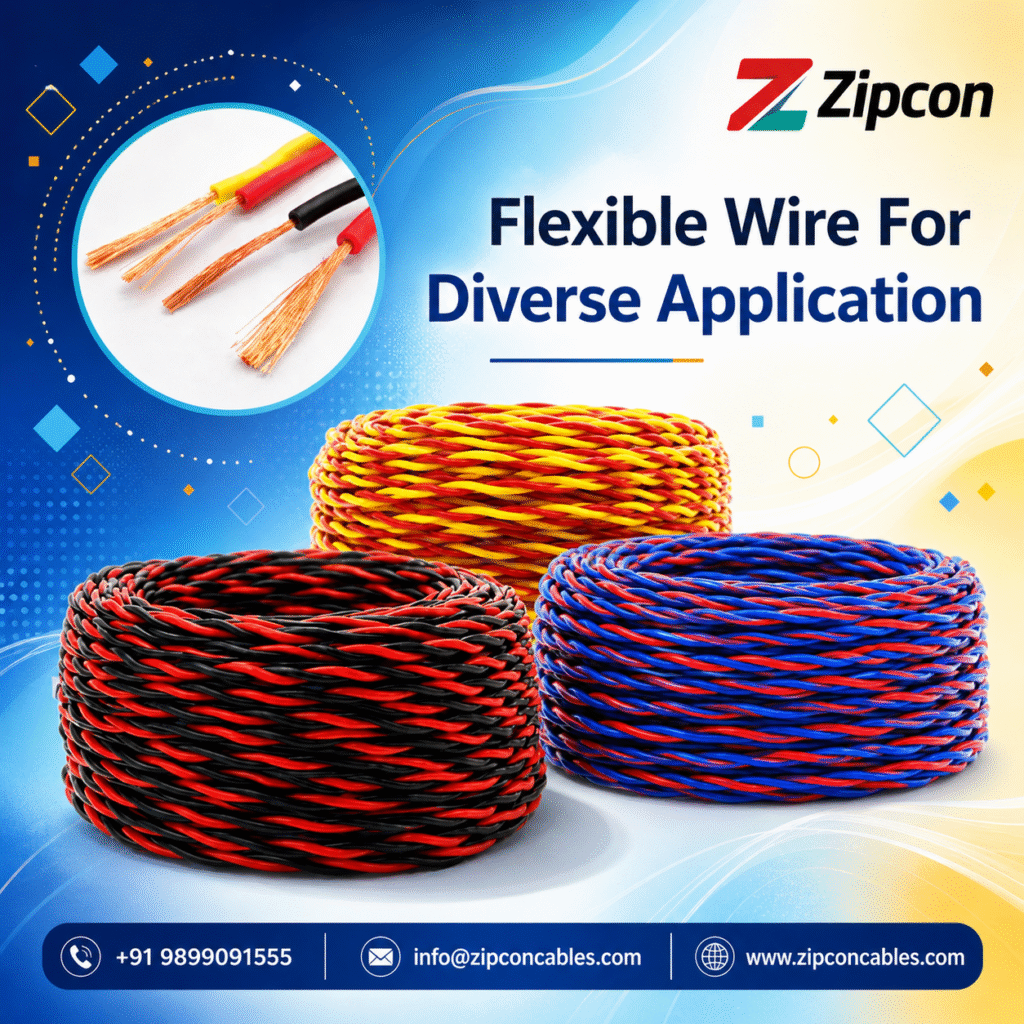
Top Flexible Cable Contractor in Gurgaon for Reliable Electrical Solutions
Top Flexible Cable Contractor in Gurgaon

Finding a top flexible cable contractor in Gurgaon is important when an electrical project requires cables that can handle bending, movement, vibration and demanding installation conditions. The right cable can improve installation efficiency, electrical reliability and long-term system performance.

Gurgaon has rapidly developed into a major residential, commercial and industrial hub, creating diverse electrical requirements. High-rise homes, offices, warehouses, factories, retail spaces and infrastructure projects all need cable solutions suited to their specific applications.

Zipcon Cables offers flexible cable solutions for different electrical requirements, helping contractors, electricians, builders and project teams select cables according to load, installation conditions and application needs.

Get a Quote:- @https://zipconcables.com/contact-us/

Why Choose the Right Flexible Cable Contractor in Gurgaon?

Cable selection directly affects the performance of an electrical installation. A cable that is unsuitable for the connected load or installation environment can experience excessive heating, voltage drop, insulation damage or premature failure.

A professional approach considers the complete application rather than selecting a cable based only on price. Conductor size, insulation, number of cores, flexibility, cable length, operating conditions and installation method should all be evaluated.

For Gurgaon projects, choosing a reliable cable contractor and manufacturer such as Zipcon Cables can help simplify cable selection and maintain consistency across electrical installations.

Flexible Cable Solutions for Residential Projects

Modern homes have multiple electrical loads, including air conditioners, water pumps, refrigerators, washing machines, kitchen equipment and other appliances. This makes appropriate cable selection essential for safe and dependable electrical distribution.

Flexible cables can be useful where wiring needs to be routed around equipment, panels, corners or confined spaces. Their easier handling can also help electricians complete certain installations more efficiently.

Benefits for Home Electrical Wiring

A suitable flexible cable can provide:

  • Easier routing through difficult installation areas
  • Better handling during installation
  • Reliable electrical conductivity
  • Suitable insulation for the intended application
  • Improved flexibility around equipment connections

The cable size should always be selected according to the electrical load and installation requirements rather than using the same specification throughout the property.

Flexible Cables for Industrial Applications

Industrial installations often expose cables to conditions that are more demanding than ordinary residential environments. Machinery can introduce vibration and movement, while factories may involve heat, moisture, dust or other environmental factors.

For industrial projects, flexible cables may be required for machinery, control equipment, pumps, panels and other electrical connections. The correct cable construction should be selected based on the operating environment and movement requirements.

Machinery and Moving Equipment

Where electrical equipment moves during operation, cable flexibility becomes particularly important. A suitable cable can make routing easier and help reduce mechanical stress caused by repeated bending.

However, flexibility should never be considered separately from conductor size, insulation and installation requirements. The complete cable specification must match the application.

Flexible Cable Requirements for Commercial Projects

Commercial buildings in Gurgaon include offices, shopping centres, hotels, restaurants, warehouses, educational facilities and other large properties. These projects often require organized electrical systems with multiple equipment and power connections.

Flexible cables can support applications where easier routing and handling are required. They can be useful around electrical panels, equipment connections and other areas where conventional rigid wiring may be difficult to route.

For large projects, contractors should maintain consistency in cable specifications to simplify installation, inspection and future maintenance.

Key Factors for Selecting Flexible Cables

1. Conductor Size

Conductor size must correspond to the expected electrical load. An undersized cable may operate beyond its suitable capacity, resulting in excessive heating and potential performance problems.

2. Number of Cores

The required number of cores depends on the electrical system and application. Single-core and multi-core configurations serve different installation requirements.

3. Insulation Quality

Insulation protects the conductor and helps maintain electrical separation. The insulation material should be suitable for the expected temperature and environmental conditions.

4. Flexibility

Not every application requires the same degree of flexibility. Equipment involving repeated movement may require a cable construction specifically suited to bending and movement.

5. Installation Environment

Indoor, outdoor, industrial, damp and high-temperature environments can have different cable requirements. Environmental exposure should be considered before final selection.

6. Cable Length

Long cable runs can increase voltage drop. Contractors should consider cable length during electrical planning, especially for equipment located far from the power source.

Why Zipcon Cables for Flexible Cable Requirements?

Zipcon Cables provides cable solutions designed for diverse electrical applications. Its products can be considered for residential, commercial and industrial projects where dependable cable construction and appropriate specifications are required.

For contractors, selecting a reliable manufacturer helps maintain product consistency across projects. It also makes it easier to match cable specifications with different electrical requirements.

The correct Zipcon cable should always be selected based on the project’s load, installation environment, number of cores, conductor size and applicable technical requirements.

Examples of Flexible Cable Applications

Example 1: Residential Building

A multi-storey residential project may require flexible cable connections around electrical equipment and distribution systems. The contractor can select cable sizes based on individual circuit loads and installation conditions.

Example 2: Manufacturing Unit

A factory with motors and moving machinery may require flexible cables for equipment connections. Here, flexibility and mechanical suitability become important alongside electrical capacity.

Example 3: Commercial Office

An office building may require flexible cables for equipment, electrical panels and other connections where neat routing and easy handling are valuable.

Example 4: Warehouse

Warehouses can contain pumps, material-handling equipment, lighting systems and other electrical loads. Cable selection should consider both electrical requirements and the physical installation environment.

Flexible Cable Contractor vs. Ordinary Cable Supplier

There is an important difference between simply purchasing cable and selecting cable according to a project’s requirements.

FactorOrdinary Cable PurchaseProfessional Cable Selection
Load considerationMay be limitedApplication-based
Cable sizeOften product-drivenLoad-driven
Installation environmentMay be overlookedEvaluated
Flexibility requirementGeneralApplication-specific
Long-term performanceNot always assessedConsidered
Project consistencyVariableBetter controlled

For larger residential, industrial and commercial projects, application-based cable selection can help reduce installation and maintenance issues.

Expert Tips for Reliable Cable Installation

Select Cable According to Load

Do not choose cable size based only on what is readily available. Calculate the expected electrical load and follow the project’s technical specifications.

Follow Proper Cable Routing

Avoid unnecessary sharp bends, excessive pulling force and mechanical stress. Proper routing helps preserve cable integrity during installation.

Maintain Suitable Bend Radius

Flexible cables are designed to bend, but they still have installation limits. Excessive bending can damage the cable construction over time.

Use Proper Termination

Correct lugs, glands, terminals and connection methods are important for dependable electrical performance. Poor termination can create resistance and localized heating.

Inspect Cables Before Installation

Check cable drums and cable surfaces for visible damage before installation. Damaged insulation should not be ignored or covered during installation.

Plan for Maintenance

Cable routes should allow inspection and maintenance wherever practical. Well-planned installations are easier to troubleshoot and modify later.

Common Mistakes to Avoid

Choosing the Cheapest Cable

Price should not be the only selection criterion. A lower-cost cable that does not meet the application’s requirements can increase maintenance and replacement expenses.

Ignoring Voltage Drop

Long cable runs can cause voltage drop, particularly when supplying motors and high-load equipment. Cable length should therefore be included in project calculations.

Using an Incorrect Cable Size

An inappropriate conductor size can affect electrical performance and cable temperature. Cable selection should be based on the actual application.

Overlooking Environmental Conditions

Heat, moisture, dust, chemicals and mechanical movement can influence cable performance. Always evaluate the installation environment before selecting a product.

Improper Installation

Even a quality cable can perform poorly if it is pulled excessively, bent beyond its recommended radius or terminated incorrectly.

Why Gurgaon Projects Need Reliable Electrical Cable Solutions

Gurgaon’s residential towers, corporate offices, factories, warehouses and commercial developments require electrical systems capable of supporting modern power demands.

A reliable cable solution contributes to stable electrical connections, easier installation and long-term system performance. Contractors therefore need to consider both product quality and application suitability when planning electrical installations.

Choosing Zipcon Cables for suitable flexible cable requirements can help contractors build projects around consistent cable specifications while addressing the practical demands of different applications.

Conclusion

The right flexible cable contractor in Gurgaon should focus on more than supplying cable. Proper cable selection requires an understanding of electrical load, conductor size, insulation, flexibility, environmental conditions, cable length and installation requirements.

For residential, industrial and commercial projects, Zipcon Cables offers flexible cable solutions that can be evaluated according to specific project requirements. Selecting the appropriate specification and following correct installation practices can improve reliability and reduce avoidable electrical issues.

For dependable flexible cable solutions in Gurgaon, choose the right specification, work with experienced electrical professionals and consider Zipcon Cables for your project requirements.

Top 5 FAQs

1. What does a flexible cable contractor do?

A flexible cable contractor helps identify and supply cable solutions according to an electrical project’s requirements. This may include evaluating cable size, cores, flexibility, insulation and installation conditions.

2. Where are flexible cables commonly used?

Flexible cables are commonly used in residential, commercial and industrial applications where easier cable routing, bending or equipment movement is required.

3. How do I select the right flexible cable for an industrial project?

Consider the electrical load, conductor size, number of cores, insulation, operating temperature, movement, installation environment and cable length. The selection should follow the project’s electrical design and applicable standards.

4. Are flexible cables suitable for commercial buildings in Gurgaon?

Yes, flexible cables can be suitable for various commercial applications, including equipment connections, electrical panels and installations where cable handling and routing flexibility are important.

5. Why choose Zipcon Cables for flexible cable requirements?

Zipcon Cables offers cable solutions for residential, commercial and industrial applications. The appropriate Zipcon product should be selected according to the project’s electrical load, installation conditions and technical specifications.

Top Flexible Cable Contractor in Bangalore for Reliable Electrical Solutions
Top Flexible Cable Contractor in Bangalore

Electrical installations demand cables that can handle movement, bending, vibration, heat and regular operational stress without compromising performance. Choosing the right flexible cable contractor in Bangalore is therefore important for homes, commercial buildings, factories and infrastructure projects.

A professional contractor does more than supply or install cables. The right contractor understands the electrical load, installation environment, cable specifications, routing requirements and safety considerations before recommending a suitable solution. Zipcon Cables focuses on dependable cable solutions designed for demanding electrical applications.

For inquiries or assistance:👉 https://zipconcables.com/contact-us/

What Is a Flexible Cable?

Flexible cables are electrical cables designed to withstand repeated bending and movement. Unlike rigid wiring solutions, they are manufactured with construction characteristics that allow easier routing through restricted spaces and around equipment.

They are commonly used where electrical connections experience movement, vibration or frequent repositioning. This makes flexible cables suitable for industrial machinery, automation systems, control panels, equipment connections and various commercial electrical applications.

The appropriate cable depends on factors such as conductor size, voltage requirement, insulation material, operating temperature, mechanical stress and installation conditions.

Why Choose a Professional Flexible Cable Contractor in Bangalore?

Bangalore has a wide range of residential developments, IT facilities, manufacturing units, warehouses, commercial buildings and industrial projects. Each application can have different electrical requirements, making proper cable selection essential.

A professional flexible cable contractor in Bangalore can help identify suitable cable specifications instead of relying only on price or appearance.

Correct Cable Selection

Cable size should be selected according to electrical load, installation conditions and application requirements. Using an unsuitable cable can lead to overheating, voltage drop, premature deterioration and unnecessary maintenance.

Better Installation Practices

Correct routing, termination, bending and protection can significantly influence cable performance. Professional installation reduces the chances of mechanical damage and loose connections.

Application-Based Solutions

A cable suitable for residential wiring may not be the right choice for industrial machinery. Contractors should evaluate the actual working environment before recommending a product.

Flexible Cable Solutions for Different Applications

Residential Electrical Projects

Flexible cables can be useful for connections where easier routing and installation are required. They may be considered for equipment connections, internal electrical systems and applications involving limited movement.

For residential projects, the focus should remain on appropriate conductor size, insulation quality, electrical safety and compliance with applicable standards.

Commercial Buildings

Offices, retail spaces, hospitals, hotels and other commercial facilities often have extensive electrical networks. Flexible cable solutions can support equipment connections, control systems and installations where cable routing requires additional flexibility.

A structured cable selection process helps contractors maintain consistency across large installations.

Industrial Applications

Industrial environments can expose cables to vibration, repeated movement, heat, dust and mechanical stress. Flexible cables are particularly valuable in applications involving machinery and moving equipment.

For example, a cable connecting a control panel to moving machinery may need greater flexibility than a cable installed permanently inside a protected conduit.

Machinery and Automation

Automated equipment often contains moving components that require cables capable of handling repeated bending. Selecting a suitable flexible cable can help maintain electrical continuity while reducing mechanical stress on the installation.

Key Factors to Consider Before Choosing a Flexible Cable

Choosing a flexible cable should not be based solely on conductor size. Several technical factors need to be evaluated.

1. Conductor Size

The conductor size should correspond to the expected electrical load and installation conditions. Undersized conductors can create excessive heating, while unnecessarily oversized cables can increase project costs.

2. Insulation Quality

Good insulation provides electrical separation and protects the conductor from environmental and mechanical influences. The insulation material should match the operating conditions of the application.

3. Flexibility

Flexibility becomes particularly important where cables are repeatedly bent or moved. The cable construction should match the expected movement rather than simply being labelled as “flexible.”

4. Temperature Conditions

Industrial and commercial installations may expose cables to elevated temperatures. The selected cable should have suitable temperature characteristics for its operating environment.

5. Mechanical Stress

Cables installed near machinery may experience vibration, pulling, bending or abrasion. Understanding these conditions helps determine the appropriate cable construction.

Why Zipcon Cables for Flexible Cable Requirements?

Zipcon Cables is positioned as a reliable choice for customers looking for quality-focused cable solutions for different electrical applications.

The selection of an appropriate cable should always be based on the project’s technical requirements. Zipcon solutions can be considered where dependable construction, suitable insulation and application-oriented cable selection are important.

For contractors, electricians, builders and project managers, working with a quality-focused cable brand can simplify procurement while maintaining consistency across installations.

Flexible Cable Contractor vs. Cable Supplier

A cable supplier primarily focuses on providing products, whereas a contractor may be involved in understanding project requirements, recommending suitable solutions and coordinating installation-related work.

FactorCable SupplierFlexible Cable Contractor
Product supplyYesYes
Application assessmentLimitedBetter suited
Installation supportMay varyGenerally available
Cable selection guidanceProduct-focusedProject-focused
Large project coordinationLimitedMore suitable
Installation planningUsually limitedCan be included

For a complex commercial or industrial project, an application-focused contractor can provide greater value than simply purchasing cables based on price.

Examples of Flexible Cable Applications

Example 1: Manufacturing Unit
A manufacturing facility uses automated machinery with moving components. Flexible cables can help connect equipment where regular movement creates mechanical stress on conventional rigid wiring.

Example 2: Commercial Office
An office building requires electrical connections for equipment and control systems. The cable selection can focus on appropriate conductor size, insulation, routing and installation requirements.

Example 3: Industrial Control Panel
A control panel connected to operating equipment may require flexible connections for easier routing and maintenance. The cable should be selected according to the equipment’s electrical and environmental requirements.

Example 4: Residential Equipment
Certain household equipment connections may benefit from flexible wiring where movement or convenient routing is required. The correct specification should always be determined based on the electrical load and application.

Expert Tips for Selecting a Flexible Cable Contractor in Bangalore

  • Check application knowledge: The contractor should understand residential, commercial and industrial cable requirements.
  • Verify cable specifications: Do not select cables only by price or outer appearance.
  • Consider installation conditions: Heat, moisture, vibration, bending and mechanical exposure can affect cable selection.
  • Prioritize proper termination: Even a quality cable can perform poorly when connections are improperly terminated.
  • Consider long-term cost: A cheaper cable that requires frequent replacement may cost more over the project’s lifetime.
  • Choose a dependable brand: Quality-focused products such as Zipcon Cables can provide a stronger foundation for reliable electrical installations.
  • Plan cable routing: Proper routing can reduce unnecessary bending, abrasion and mechanical stress.

Common Mistakes When Choosing Flexible Cables

Choosing Only by Price

The lowest-priced cable is not necessarily the most economical option. Conductor quality, insulation, construction and expected service conditions should all be considered.

Ignoring the Application

A cable designed for a relatively static installation may not be appropriate for repeated movement. Application conditions should guide product selection.

Using the Wrong Cable Size

Incorrect conductor sizing can result in overheating, voltage drop and reduced system efficiency. Load calculations should be completed before final selection.

Poor Cable Termination

Loose or improper terminations can create resistance and heating at connection points. Correct termination is essential for reliable electrical performance.

Ignoring Environmental Conditions

Temperature, moisture, chemicals, dust and mechanical movement can influence cable life. These factors should be evaluated before installation.

How Zipcon Cables Can Support Your Electrical Project

A reliable cable solution begins with understanding the project’s actual requirements. From residential electrical work to commercial installations and industrial applications, cable specifications should be matched to the environment and expected electrical load.

Zipcon Cables can be considered for projects where dependable cable construction and application-focused selection are priorities. Working with the right contractor also helps ensure that the selected cable is installed and handled correctly.

For Bangalore projects, combining quality cables + correct specifications + professional installation provides a stronger approach to long-term electrical reliability.

Conclusion

Finding the top flexible cable contractor in Bangalore is not simply about choosing a company that supplies cables. It is about selecting the right cable for the application, understanding installation conditions and ensuring that the electrical system is designed and installed with reliability in mind.

For residential, commercial and industrial requirements, Zipcon Cables offers a quality-focused option for customers seeking dependable cable solutions. Evaluate conductor size, insulation, flexibility, environmental conditions and installation requirements before making the final selection.

Top 5 FAQs

1. What is a flexible cable used for?

Flexible cables are used in applications where cables need to tolerate bending, movement or vibration. They are commonly used with machinery, control systems, equipment and various electrical installations.

2. How do I choose a flexible cable for an industrial project?

Consider electrical load, conductor size, voltage, insulation, temperature, movement, vibration, mechanical stress and environmental conditions. The cable should be selected according to the complete application rather than one specification.

3. Why is choosing a flexible cable contractor important?

A qualified contractor can help assess project requirements, select appropriate cable solutions and ensure that installation practices match the application.

4. Can flexible cables be used for commercial electrical projects?

Yes. Flexible cables can be used for various commercial applications where their construction and electrical specifications are appropriate for the installation.

5. Why consider Zipcon Cables for electrical projects in Bangalore?

Zipcon Cables can be considered when quality-focused cable construction and application-specific selection are important. The appropriate Zipcon product should be selected according to the project’s electrical and environmental requirements.

Flexible Cable Contractor in Bangalore for Homes, Industries & Commercial Projects
Flexible Cable Contractor in Bangalore

Choosing the best flexible cable contractor in Bangalore is important for safe, efficient and long-lasting electrical installations. From residential wiring and commercial buildings to industrial machinery, automation systems and power distribution, the right cable selection directly affects electrical performance and installation reliability.

Bangalore has a wide range of residential, commercial and industrial projects, each requiring cables with different flexibility, insulation, current capacity and environmental resistance. Zipcon Cables provides reliable cable solutions designed to support demanding electrical applications while maintaining consistent performance.

For inquiries or assistance:👉 https://zipconcables.com/contact-us/

Why Choose a Professional Flexible Cable Contractor in Bangalore?

Flexible cables are designed for applications where the cable may experience bending, movement or repeated handling. Using an unsuitable cable can result in insulation damage, overheating, poor connections and premature failure.

A professional flexible cable contractor in Bangalore understands the electrical and installation requirements of different projects. They can recommend suitable cable constructions for fixed installations, machinery, control panels, equipment connections and other applications.

For large projects, proper cable planning is equally important. Cable length, routing, operating environment, load requirements and installation conditions should be considered before procurement and installation.

Flexible Cable Solutions for Different Projects

Residential Projects

Modern homes use electrical connections for lighting, appliances, air conditioners, pumps, kitchen equipment and other loads. Flexible cables can be useful where wiring requires easier handling and installation.

For residential applications, cable selection should consider load capacity, insulation quality, voltage requirements and installation conditions. Zipcon Cables can be considered when dependable cable performance is a priority.

Commercial Buildings

Offices, retail outlets, hotels, hospitals and other commercial properties require organized electrical systems capable of handling continuous usage.

Flexible cables can support connections involving electrical equipment, control systems, panels and other installations where easier routing and handling are required. Proper cable selection helps minimize maintenance issues and supports reliable operation.

Industrial Applications

Industrial environments often involve motors, machinery, control panels, pumps, automation equipment and electrical systems operating for extended periods.

Here, cable flexibility is only one consideration. The cable must also match the required conductor size, insulation characteristics, operating temperature and installation environment.

What Makes a Flexible Cable Suitable for an Application?

Conductor Quality

The conductor is responsible for carrying electrical current. Copper and aluminium are commonly used depending on the application, electrical requirements and project specifications.

A suitable conductor size helps ensure that the cable can carry the required load without excessive heating or unnecessary voltage drop.

Insulation

Good insulation protects the conductor against electrical leakage, moisture, mechanical stress and environmental exposure.

The insulation material should be selected according to the installation environment. Applications involving heat, moisture, movement or demanding operating conditions may require specific insulation characteristics.

Flexibility

Cable flexibility depends on factors such as conductor construction, stranding and insulation design. A more flexible cable can make routing and installation easier, particularly where bends or movement are involved.

However, flexibility should not be considered separately from electrical performance. The cable should always be selected according to the complete application requirement.

Size and Current-Carrying Capacity

Selecting the correct cable size is essential for safe electrical operation. An undersized cable may experience excessive heating, while unnecessarily oversized cables can increase project costs.

Professional contractors generally evaluate load, installation method, cable length, ambient conditions and applicable electrical requirements before final selection.

Why Zipcon Cables for Flexible Cable Requirements?

Zipcon Cables focuses on providing cable solutions for residential, commercial and industrial electrical requirements. Its product range can support applications where dependable insulation, suitable conductor construction and reliable electrical performance are important.

For contractors, builders and project managers, working with a consistent cable supplier can simplify procurement and improve project coordination. The appropriate Zipcon cable can be selected according to the application’s electrical and installation requirements.

The focus should always remain on matching the cable to the actual project rather than selecting a product based only on price.

Flexible Cable Contractor for Bangalore’s Growing Electrical Projects

Bangalore’s construction and industrial ecosystem includes residential developments, IT facilities, manufacturing units, warehouses, commercial complexes and infrastructure projects.

Each project presents different cable requirements. For example, a residential building may prioritize easy installation and reliable internal wiring, while an industrial facility may require cables capable of handling machinery, control equipment and demanding operating environments.

This makes professional cable selection an important part of project planning. A capable flexible cable contractor in Bangalore can help ensure that the selected cable is appropriate for the intended application.

Flexible Cable vs Standard Cable

FeatureFlexible CableStandard/Rigid Cable
BendingBetter suited for bendingGenerally less suitable for repeated bending
InstallationEasier in tight routesCan require more effort
MovementSuitable for applications involving movementBetter for fixed installations
HandlingEasier to route and connectTypically more rigid
ApplicationsMachinery, equipment, control and flexible connectionsFixed electrical installations

The choice depends on the application. Flexible cable is not automatically better for every installation; the correct option is the one that matches the electrical and mechanical requirements of the project.

Examples of Flexible Cable Applications

Example 1: Residential Building

A residential project requires wiring around electrical equipment and distribution points where cable routing involves multiple bends. A suitable flexible cable can make installation easier while maintaining dependable electrical connections.

Example 2: Industrial Machinery

A manufacturing unit uses electrical machinery that creates movement and vibration around connection points. Selecting an appropriately designed flexible cable can help accommodate the installation requirements.

Example 3: Commercial Facility

A commercial building requires connections between electrical panels, equipment and control systems. Proper cable selection can improve installation efficiency and make future maintenance easier.

Expert Tips for Choosing a Flexible Cable Contractor

1. Check application suitability:
Do not select a cable only by size or price. Consider the equipment, load, environment and installation method.

2. Verify cable specifications:
Review conductor material, cross-sectional area, insulation type, voltage rating and relevant specifications before procurement.

3. Consider the installation environment:
Moisture, heat, chemicals, mechanical movement and outdoor exposure can influence cable selection.

4. Avoid unnecessary cost cutting:
Low initial cost may become expensive if poor-quality cables result in frequent repairs, downtime or replacement.

5. Plan cable requirements before installation:
Accurate cable length, routing and sizing can reduce wastage and prevent last-minute procurement problems.

6. Work with a consistent supplier:
Using a dependable cable brand such as Zipcon can help contractors maintain consistency across different project requirements.

Common Mistakes When Buying Flexible Cables

Selecting Cable Based Only on Price

The cheapest cable may not provide the required electrical or mechanical performance. Total project value should include reliability, installation efficiency and expected service life.

Using the Wrong Cable Size

Cable size should correspond to the expected electrical load and installation conditions. Incorrect sizing can lead to overheating and performance issues.

Ignoring Environmental Conditions

A cable suitable for an indoor installation may not be appropriate for areas exposed to moisture, heat, chemicals or mechanical stress.

Choosing Flexibility Without Checking Specifications

A cable being flexible does not automatically make it suitable for every moving application. The complete construction and application rating should be evaluated.

Poor Installation Practices

Even a quality cable can perform poorly if installation is improper. Excessive bending, inadequate termination, physical damage or unsuitable routing can affect cable performance.

Why Bangalore Contractors Can Consider Zipcon Cables

For contractors working on homes, commercial buildings and industrial facilities, cable selection needs to balance quality, performance, application suitability and project cost.

Zipcon Cables can be considered for projects requiring dependable electrical cable solutions across different applications. By combining suitable cable selection with proper installation practices, contractors can build electrical systems designed for reliable operation.

For new construction, renovation, industrial expansion or equipment installation projects, selecting the right cable at the planning stage can prevent avoidable electrical and maintenance problems later.

Conclusion

Finding the right flexible cable contractor in Bangalore is about more than sourcing electrical wire. It requires proper understanding of cable construction, conductor size, insulation, flexibility, environmental conditions and project-specific electrical requirements.

For residential, commercial and industrial applications, Zipcon Cables offers cable solutions that can support contractors looking for dependable electrical performance and practical installation options. Choosing the right cable and following proper installation practices can improve safety, efficiency and long-term system reliability.

Top 5 FAQs

1. What is a flexible cable?

A flexible cable is designed with a construction that allows easier bending and handling compared with more rigid cable types. It is commonly used where cable routing, equipment connections or movement requires greater flexibility.

2. Where are flexible cables commonly used?

Flexible cables can be used in residential, commercial and industrial applications, including equipment connections, control systems, machinery, panels and installations requiring easier cable routing.

3. How do I choose the right flexible cable?

Consider the electrical load, conductor material, cable size, insulation, voltage requirements, installation environment, cable length and whether the cable will remain fixed or experience movement.

4. Can flexible cables be used for industrial applications?

Yes, suitable flexible cables can be used for various industrial applications. The cable must be selected according to the machinery, load, movement, environmental conditions and applicable project specifications.

5. Why choose Zipcon Cables for electrical projects in Bangalore?

Zipcon Cables can be considered for residential, commercial and industrial cable requirements where dependable construction, suitable specifications and reliable electrical performance are important.

Top Flexible Cable Contractor in Mysore for Reliable Electrical Solutions
Top Flexible Cable Contractor in Mysore

Choosing the top flexible cable contractor in Mysore is important when electrical projects demand safe installation, dependable cable performance and long-term reliability. From homes and offices to factories and commercial buildings, the right cable solution helps maintain stable electrical connections and reduce installation-related problems.

Flexible cables are designed for applications where bending, routing or movement is required. However, cable quality alone is not enough. Correct cable sizing, suitable insulation, proper routing and professional termination all contribute to reliable electrical performance.

Zipcon Cables offers cable solutions for different electrical requirements, making it a suitable choice for contractors, builders, electricians and project owners looking for dependable flexible cable products in Mysore.

For inquiries or assistance:👉 https://zipconcables.com/contact-us/

Why Choose a Top Flexible Cable Contractor in Mysore?

A professional flexible cable contractor understands that every electrical project has different requirements. Cable selection depends on factors such as load capacity, conductor size, cable length, operating conditions, installation environment and the amount of movement expected.

An experienced contractor can help match the cable with the application instead of relying on a standard cable for every project. This approach can improve installation efficiency while helping avoid problems related to overheating, improper routing and unsuitable cable selection.

For projects involving machinery, commercial electrical systems or extensive wiring networks, professional planning becomes even more important.

Flexible Cable Solutions for Residential Projects

Modern homes contain multiple electrical loads, including lighting, appliances, pumps, air-conditioning systems and other equipment. Each circuit should use an appropriate cable based on its electrical requirements.

Flexible cables can be useful where convenient routing and bending are required. Their construction can make installation easier in selected applications, particularly around equipment and connections that require controlled flexibility.

Residential Applications

Flexible cable solutions may be considered for:

  • Appliance connections
  • Electrical equipment connections
  • Lighting applications
  • Control connections
  • Internal wiring applications
  • Selected power connections

The cable size should always be selected according to the expected load and installation conditions.

Flexible Cable Contractor for Commercial Projects

Commercial properties require organized electrical systems that can support continuous use. Offices, retail outlets, hotels, schools, hospitals and other commercial buildings may contain several circuits and electrical equipment operating simultaneously.

A reliable flexible cable contractor in Mysore can help with cable planning, routing and installation based on the building’s electrical design. Proper cable management also makes future maintenance and inspection easier.

For commercial applications, contractors should evaluate conductor construction, insulation, current capacity and environmental conditions before selecting the cable.

Industrial Flexible Cable Solutions in Mysore

Industrial installations can expose cables to demanding conditions such as vibration, machinery movement, heat, dust and continuous operation. Cable selection must therefore consider both electrical and mechanical requirements.

Flexible cables are useful in applications where equipment movement or repeated bending is part of normal operation. The selected cable should match the machinery manufacturer’s specifications and the actual installation environment.

Industrial Applications

Flexible cables can be used in suitable applications involving:

  • Industrial machinery
  • Control panels
  • Motor connections
  • Manufacturing equipment
  • Automation systems
  • Electrical control systems
  • Workshops
  • Production facilities

Correct cable routing and protection are essential in industrial environments where mechanical damage can affect cable performance.

Key Benefits of Quality Flexible Cables

Better Installation Flexibility

Flexible cable construction allows easier routing in applications where cables need to bend around equipment, panels or confined installation spaces.

Reliable Insulation

Suitable insulation provides electrical separation between the conductor and surrounding environment. The insulation type should be selected according to operating temperature, moisture and other site conditions.

Improved Cable Management

Using the right cable construction can simplify routing and help create cleaner electrical installations, particularly where multiple connections are involved.

Suitable for Moving Applications

Certain flexible cables are designed for applications involving movement. However, the manufacturer’s specified bending radius and operating conditions must always be followed.

How to Select the Right Flexible Cable

Choosing a cable based only on price can lead to unsuitable installations. A better approach is to evaluate the complete electrical requirement before purchasing.

1. Check the Electrical Load

Determine the expected current and connected load before selecting the conductor size. Cable sizing should be based on the project’s actual electrical requirements.

2. Consider Cable Length

Long cable runs can increase voltage drop. Cable length should therefore be considered when determining the appropriate cable specification.

3. Evaluate the Environment

Moisture, heat, dust, chemicals and mechanical stress can influence cable selection. The insulation and cable construction should suit the operating environment.

4. Consider Movement

If the cable will move repeatedly, select a cable designed for the required movement and follow its recommended bending limitations.

5. Verify Technical Specifications

Before procurement, check conductor material, cross-sectional area, insulation type, voltage rating and applicable standards.

Zipcon Cables for Reliable Electrical Projects

Zipcon Cables provides cable solutions for residential, commercial and industrial applications where dependable electrical performance is important.

For customers searching for a top flexible cable contractor in Mysore, Zipcon Cables can be considered for quality-focused cable requirements. The appropriate cable should be selected based on the application’s load, environment and installation requirements.

Using suitable cables from a consistent manufacturer can also help contractors maintain better material quality across different project sites.

Examples of Flexible Cable Applications

Example 1: Residential Installation

A residential project may require flexible connections around electrical equipment or appliances. The contractor can select an appropriate cable size according to the equipment load and installation method.

Example 2: Commercial Property

An office or retail building may have several equipment connections and electrical circuits. Proper cable routing and selection can help create an organized installation that is easier to inspect and maintain.

Example 3: Industrial Machinery

A manufacturing unit may require cables around equipment where vibration and movement occur. A suitable flexible cable can provide the required installation flexibility when used within its specified operating conditions.

Expert Tips for Reliable Cable Installation

  • Select cable size according to actual electrical load.
  • Consider voltage drop for longer cable runs.
  • Choose insulation appropriate for the environment.
  • Follow the manufacturer’s recommended bending radius.
  • Avoid pulling cables excessively during installation.
  • Use suitable glands, lugs and termination accessories.
  • Keep cables away from unnecessary heat and mechanical damage.
  • Label circuits clearly in larger installations.
  • Inspect cable insulation before installation.
  • Source cables from a reliable manufacturer such as Zipcon Cables.

Common Mistakes to Avoid

Selecting Cable Only by Price

Low initial cost should not be the only purchasing factor. Cable construction, insulation quality and technical specifications should also be evaluated.

Using the Wrong Cable Size

An unsuitable conductor size can affect electrical performance and increase heating risks. Proper load assessment should be completed before installation.

Ignoring Voltage Drop

Long cable runs can experience voltage drop. This should be considered during cable selection, especially for high-load applications.

Excessive Cable Bending

Flexible does not mean unlimited bending. Cables should be installed according to the manufacturer’s recommended bending radius and application limits.

Poor Termination

Loose or incorrect terminations can create high-resistance connection points. Proper lugs, glands and termination techniques should be used.

Ignoring Site Conditions

A cable suitable for an indoor application may not be appropriate for an environment exposed to excessive heat, moisture, chemicals or mechanical stress.

Why Choose Zipcon Cables for Mysore Projects?

Electrical contractors and project owners need cable products that match their application’s technical requirements. Zipcon Cables focuses on providing practical cable solutions for different electrical installations.

Whether the project involves a home, commercial building, workshop or industrial facility, selecting the correct cable specification is essential for dependable performance.

For Mysore-based electrical projects, Zipcon Cables can be considered when quality, suitable cable construction and reliable electrical solutions are priorities.

Conclusion

Selecting a top flexible cable contractor in Mysore is about more than installing wires. Reliable electrical performance depends on correct cable selection, appropriate sizing, suitable insulation, proper routing and professional termination.

For residential, commercial and industrial requirements, Zipcon Cables offers cable solutions that can support different electrical applications. By choosing the right cable specification and following proper installation practices, contractors and project owners can build electrical systems designed for reliable and efficient operation.

Top 5 FAQs

1. What is a flexible cable contractor?

A flexible cable contractor helps plan, select, route and install flexible cable solutions according to the electrical requirements of a project. Their work can cover residential, commercial and industrial applications.

2. Where are flexible cables used?

Flexible cables are commonly used in applications requiring easier bending or controlled movement, including equipment connections, machinery, control panels and selected electrical installations.

3. How do I choose the right flexible cable?

Consider the electrical load, conductor size, cable length, voltage requirements, insulation, installation environment and expected cable movement before selecting a cable.

4. Can flexible cables be used in industrial applications?

Yes. Suitable flexible cables can be used for machinery, control systems and other industrial applications where their electrical and mechanical specifications match the operating conditions.

5. Why choose Zipcon Cables for flexible cable requirements in Mysore?

Zipcon Cables offers cable solutions for different residential, commercial and industrial requirements. The appropriate Zipcon cable can be selected according to the project’s electrical load, environment and installation conditions.

Flexible Cable Contractor in Mysore for Homes, Industries & Commercial Projects
Flexible Cable Contractor in Mysore

Electrical installations in Mysore require cables that can handle movement, bending, varying loads and demanding site conditions without compromising safety. Choosing the right flexible cable contractor in Mysore is therefore important for homes, commercial buildings, factories and other electrical projects.

A professional contractor does more than install cables. The right approach includes selecting suitable cable size, insulation, conductor type, routing method and installation practices according to the project’s electrical requirements. Zipcon Cables offers flexible cable solutions designed for dependable performance across different applications.

For inquiries or assistance:👉 https://zipconcables.com/contact-us/

Why Choose a Professional Flexible Cable Contractor in Mysore?

Flexible cables are commonly used where electrical connections need to accommodate bending, movement or frequent handling. Incorrect cable selection or poor installation can result in excessive heating, insulation damage, voltage drop and premature cable failure.

A reliable flexible cable contractor in Mysore can assess the installation requirements before recommending a cable. This includes understanding the connected load, cable length, installation environment, operating conditions and expected mechanical movement.

For large projects, professional planning also helps reduce unnecessary cable wastage and installation problems. This becomes especially important in industrial and commercial environments where electrical downtime can affect productivity.

Flexible Cable Solutions for Homes in Mysore

Residential electrical systems require safe and dependable wiring for lighting, appliances, power points and other household loads. Flexible cables can be useful in applications where connections require easier routing and controlled bending.

Common Residential Applications

Flexible cables can be considered for:

  • Appliance connections
  • Internal electrical connections
  • Distribution and control applications
  • Lighting-related installations
  • Connections requiring convenient cable routing
  • Selected low-voltage electrical applications

For residential projects, cable selection should be based on the actual electrical load rather than simply choosing the largest or cheapest available cable.

Flexible Cables for Commercial Projects

Commercial buildings often contain multiple electrical circuits, equipment connections and power-consuming systems. Offices, retail stores, hotels, educational buildings and other commercial properties need organized cable installation to support reliable electrical operation.

A flexible cable contractor in Mysore can help plan cable routes according to the building layout and electrical requirements. Proper routing also makes future inspection, maintenance and replacement easier.

For commercial projects, factors such as cable flexibility, insulation quality, conductor construction, current capacity and installation environment should be evaluated before procurement.

Industrial Flexible Cable Installation in Mysore

Industrial environments can place greater demands on electrical cables because of machinery, vibration, repeated movement, heat, dust and continuous operation.

Flexible cables are particularly useful in applications involving moving equipment or connections where conventional rigid wiring may not provide the required installation flexibility.

Industrial Applications

Depending on the project design, flexible cables may be used for:

  • Machinery connections
  • Control panels
  • Industrial equipment
  • Motor-related connections
  • Automation systems
  • Control and instrumentation applications
  • Manufacturing facilities
  • Workshop electrical systems

The cable should always be selected according to the equipment manufacturer’s requirements and applicable electrical standards.

Why Cable Quality Matters

Cable performance depends on more than conductor material. Insulation quality, conductor construction, manufacturing consistency and appropriate cable sizing all influence how effectively a cable performs in an electrical installation.

A quality cable should provide suitable mechanical flexibility while maintaining dependable electrical insulation. For projects operating under demanding conditions, choosing cables from a reliable manufacturer can help reduce installation and maintenance concerns.

Zipcon Cables focuses on cable solutions for applications where dependable electrical performance, flexibility and suitable insulation are important considerations.

Flexible Cable Contractor in Mysore: What to Consider

Before appointing a contractor, project owners should evaluate several factors.

1. Project Experience

A contractor handling residential wiring may not have the same expertise required for industrial machinery or commercial installations. Choose a contractor whose experience matches the complexity of your project.

2. Correct Cable Selection

Cable size should be determined based on load, distance, installation method and other relevant electrical factors. Undersized cables can create excessive heating and voltage-drop concerns.

3. Installation Practices

Even a quality cable can perform poorly if it is improperly routed, excessively bent, damaged during installation or terminated incorrectly.

4. Material Quality

Verify the cable specifications, insulation type, conductor construction and relevant certifications before purchasing material for a project.

5. Project Planning

For larger installations, cable quantity, routing, termination points and future maintenance requirements should be planned before installation begins.

Zipcon Cables for Flexible Cable Requirements

Zipcon Cables provides cable solutions for different electrical applications, with a focus on reliable construction and practical installation requirements.

For customers looking for a flexible cable contractor in Mysore, Zipcon can be considered when the project requires dependable cable products for residential, commercial or industrial applications.

The right cable should be selected according to the application’s electrical and environmental requirements rather than using one cable type for every installation.

Examples of Flexible Cable Applications

Example 1: Residential Property

A residential project may require flexible connections for appliances, control equipment or specific electrical installations where convenient routing is required. The appropriate cable size can be selected according to the connected load and installation conditions.

Example 2: Commercial Building

An office or retail property may have multiple electrical circuits and equipment connections. Proper cable planning can help create an organized installation and simplify future maintenance.

Example 3: Manufacturing Unit

A manufacturing facility may use cables around machinery where movement and vibration are present. In such cases, cable flexibility and suitable mechanical protection become important parts of the installation design.

Expert Tips for Choosing Flexible Cables

  • Calculate the expected electrical load before selecting cable size.
  • Consider cable length and potential voltage drop.
  • Select insulation according to the installation environment.
  • Check the cable’s technical specifications before procurement.
  • Avoid sharp bends during installation.
  • Do not exceed the cable’s recommended operating conditions.
  • Use appropriate glands, lugs and termination accessories.
  • Protect cables from unnecessary mechanical damage.
  • Keep cable routing organized for easier maintenance.
  • Source cables from an established manufacturer such as Zipcon Cables.

Common Mistakes to Avoid

Choosing Cable Only by Price

The lowest-priced cable may not provide the specifications required for a demanding installation. Compare construction, insulation, size and technical specifications before making a purchasing decision.

Using an Incorrect Cable Size

Cable size should correspond to the expected load and installation conditions. An incorrect size can affect electrical performance and cable life.

Excessive Bending

Although flexible cables are designed to bend more easily than rigid alternatives, they still have recommended bending limitations. Excessive or repeated bending beyond design specifications can damage the cable.

Ignoring the Installation Environment

Heat, moisture, chemicals, vibration and mechanical stress can influence cable selection. Always consider the environment in which the cable will operate.

Poor Termination

Loose or unsuitable terminations can increase resistance and generate heat. Proper termination is essential for a dependable electrical connection.

Why Mysore Projects Can Benefit from Reliable Cable Solutions

Mysore combines residential development, commercial construction, institutions and industrial activity, creating varied electrical requirements. A single cable solution may not be suitable for every project.

Working with an experienced flexible cable contractor in Mysore helps ensure that cable selection and installation are aligned with the project’s actual requirements. For contractors, builders and electrical professionals, reliable cable sourcing can also make project execution more consistent.

Conclusion

Choosing the right flexible cable contractor in Mysore is an important step toward building a safe, efficient and dependable electrical installation. From residential wiring to commercial buildings and industrial machinery, the cable must match the electrical load, environment and installation requirements.

For quality-focused cable requirements, Zipcon Cables is a practical option to consider. Select the correct cable specification, follow proper installation practices and work with experienced electrical professionals to achieve reliable long-term performance.

Top 5 FAQs

1. What does a flexible cable contractor in Mysore do?

A flexible cable contractor handles cable selection, routing, installation and termination according to the electrical requirements of a project. Their work may cover residential, commercial and industrial installations.

2. Where are flexible cables commonly used?

Flexible cables are commonly used in applications requiring easier bending or movement, including equipment connections, control systems, machinery and selected residential and commercial electrical installations.

3. How do I select the right flexible cable?

Consider the electrical load, conductor size, cable length, insulation, installation environment, expected movement and applicable technical requirements before selecting a cable.

4. Are flexible cables suitable for industrial applications?

Yes, suitable flexible cables can be used for various industrial applications, including machinery and control-related connections. The cable specification should match the equipment and operating environment.

5. Why choose Zipcon Cables for flexible cable requirements?

Zipcon Cables offers cable solutions focused on dependable electrical performance and practical installation requirements. The appropriate Zipcon cable should be selected according to the specific application and technical specifications.

Flexible Cable Contractor in Hubli/Dharwad for Homes, Industries & Commercial Projects
 flexible cable solutions in Hubli/Dharwad

Electrical projects in Hubli and Dharwad require cables that can handle regular movement, bending, vibration and demanding installation conditions. Choosing the right flexible cable contractor in Hubli/Dharwad is therefore important for safe wiring, dependable power transmission and long-term electrical performance.

Zipcon Cables provides flexible cable solutions suitable for residential, commercial and industrial applications. From machinery connections and control panels to power distribution and specialized installations, selecting the correct cable construction, conductor size and insulation can make a significant difference to project reliability.

For inquiries or assistance:👉 https://zipconcables.com/contact-us/

Why Choose a Flexible Cable Contractor in Hubli/Dharwad?

Flexible cables are designed for applications where the cable may need to bend, move or withstand vibration. Standard rigid wiring may not be appropriate for machinery, moving equipment and installations where repeated movement occurs.

A qualified flexible cable contractor in Hubli/Dharwad can assess the application before recommending a cable. This includes understanding the operating environment, electrical load, installation method, movement requirements and required cable length.

For businesses, professional cable selection can also reduce unnecessary replacement and maintenance. The objective is to install a cable that matches the actual electrical and mechanical demands of the application.

Flexible Cable Solutions for Homes

Modern homes use electrical systems for lighting, appliances, pumps, HVAC equipment, automation systems and other loads. Certain connections require cables that are easier to route through confined or changing installation spaces.

Common Residential Applications

Flexible cables can be considered for:

  • Electrical equipment connections
  • Pumps and motor applications
  • Control and automation systems
  • Appliance connections
  • Flexible wiring arrangements
  • Maintenance and replacement work

For residential projects, cable size and insulation should be selected according to the intended electrical load and installation conditions rather than simply choosing the cheapest available option.

Flexible Cables for Industrial Projects

Industrial environments place greater mechanical and electrical demands on cables. Machinery can create vibration, movement, heat and continuous operational stress, making cable flexibility an important consideration.

Zipcon Cables can be considered for applications involving machinery, motors, control systems and industrial electrical installations where appropriate cable construction is required.

Industrial Applications

Flexible cables may be used in:

  • Manufacturing machinery
  • Motor connections
  • Control panels
  • Industrial equipment
  • Automation systems
  • Pumps and electrical motors
  • Production-line equipment
  • Power and control connections

The correct specification depends on the application. Conductor material, cross-sectional area, insulation, voltage rating and installation environment should all be evaluated before installation.

Commercial Flexible Cable Installation in Hubli/Dharwad

Commercial buildings often require electrical systems that are easy to install, maintain and modify. Offices, retail stores, warehouses, institutions and other commercial facilities may have different wiring requirements within the same project.

A flexible cable contractor can help organize cable requirements for equipment connections, electrical panels, pumps, lighting systems and other applications.

For larger projects, proper cable identification and routing are equally important. Well-planned installation makes future inspection and maintenance easier while reducing the risk of accidental cable damage.

What Makes a Good Flexible Cable?

Not every flexible cable is suitable for every application. The cable must be selected according to its electrical and mechanical requirements.

1. Conductor Quality

The conductor is responsible for carrying electrical current. Copper and aluminium conductors have different characteristics, so the correct conductor type and size should be selected according to the project requirements.

2. Insulation

Quality insulation helps protect the conductor from electrical faults and environmental exposure. The insulation material should be appropriate for the expected temperature, voltage and installation conditions.

3. Flexibility

The cable construction should allow the required degree of bending without compromising its performance. Applications involving movement require greater attention to flexibility than fixed installations.

4. Mechanical Protection

Industrial installations may expose cables to vibration, abrasion or other mechanical stresses. Cable selection should account for these conditions rather than focusing only on electrical capacity.

5. Correct Cable Size

Cable size must correspond to the expected current and installation conditions. Undersized cables can create excessive heating and voltage-drop problems, while unnecessarily oversized cables can increase project costs.

Zipcon Cables for Hubli/Dharwad Electrical Projects

Zipcon Cables focuses on cable solutions designed for practical electrical applications across residential, commercial and industrial environments.

When selecting flexible cables, project requirements should be considered before finalizing the product. Zipcon’s range can be evaluated according to conductor requirements, cable construction, application and installation conditions.

For contractors, builders, electricians and industrial users, having a reliable cable supplier can simplify procurement and help maintain consistency across different project requirements.

Flexible Cable Contractor vs. Ordinary Cable Supplier

There is an important difference between simply purchasing cable and working with a contractor who understands the application.

FactorOrdinary Cable PurchaseProfessional Cable Contractor
Cable selectionProduct-focusedApplication-focused
Load considerationMay be overlookedEvaluated
Installation requirementsLimited guidanceConsidered
Industrial applicationsGeneral supplyApplication-specific selection
Cable routingUsually not includedCan be planned
Project consistencyDepends on buyerBetter specification control
Long-term reliabilityDepends on selectionFocus on suitable installation

For small projects, straightforward supply may be sufficient. For machinery, industrial installations or larger commercial projects, professional guidance becomes more valuable.

Examples of Flexible Cable Requirements

Example 1: Residential Pump

A home requires a cable connection for a water pump. The cable should be selected according to the motor’s electrical requirements, installation route and environmental exposure.

Example 2: Factory Machinery

A manufacturing unit has equipment that produces vibration during operation. A suitable flexible cable can help accommodate the movement while maintaining the required electrical connection.

Example 3: Commercial Equipment

A commercial facility needs cables for several electrical machines and control systems. Standardized cable specifications can make installation, identification and future maintenance easier.

These examples demonstrate why cable selection should begin with the application rather than the cable name alone.

Expert Tips for Choosing Flexible Cables

1. Calculate the electrical requirement first
Determine the expected load before selecting the conductor size.

2. Consider the installation environment
Check whether the cable will face heat, moisture, vibration, movement or mechanical stress.

3. Don’t select purely on price
A low initial price may not represent the best value if the cable is unsuitable for the application.

4. Check cable specifications
Review conductor construction, insulation, voltage rating and other relevant technical specifications.

5. Plan cable routing carefully
Avoid unnecessary sharp bends, excessive tension and installation practices that can damage the cable.

6. Use appropriate termination methods
Correct lugs, glands, connectors and termination practices are essential for dependable electrical connections.

7. Buy from a reliable cable manufacturer or supplier
Consistent manufacturing quality and proper product specifications are important for project reliability.

Common Mistakes to Avoid

Choosing Cable Size Without Checking Load

Cable size should not be selected simply because it was used in another project. Electrical load, cable length, installation method and operating conditions can change the requirement.

Ignoring Environmental Conditions

Moisture, heat, chemicals, vibration and mechanical movement can affect cable performance. These conditions should be considered before final selection.

Excessive Bending

Even flexible cables have installation limits. Excessive bending or pulling can damage the cable construction and reduce service reliability.

Poor Termination

A good cable can still perform poorly when terminals or connections are improperly installed. Termination quality should receive the same attention as cable selection.

Mixing Specifications Without Planning

Large projects may involve multiple cable sizes and applications. Maintaining clear specifications helps prevent incorrect cable usage during installation.

Why Zipcon Cables Is a Practical Choice

For projects in Hubli/Dharwad, Zipcon Cables can be considered when dependable cable construction and application-focused selection are priorities.

Whether the requirement is for a home, commercial facility, workshop, factory or industrial project, the right cable should be selected according to actual electrical and installation requirements.

For contractors and project managers, working with a dependable cable brand also helps maintain product consistency across multiple installations.

Conclusion

Choosing the right flexible cable contractor in Hubli/Dharwad can directly influence the safety, reliability and service life of an electrical installation. Flexible cables need to be selected according to electrical load, movement, environmental exposure, conductor requirements and installation conditions.

For homes, commercial buildings and industrial facilities, Zipcon Cables offers a practical option for evaluating flexible cable requirements based on the specific application. Proper product selection, routing and termination can help create a more reliable electrical system and reduce avoidable installation problems.

If your project requires flexible cable solutions in Hubli/Dharwad, prioritize correct specifications, reliable cable quality and professional installation rather than selecting a cable based only on price.

Top 5 FAQs

1. What is a flexible cable used for?

Flexible cables are commonly used where cables need to accommodate bending, movement or vibration. They can be suitable for machinery, equipment, motors, control systems and selected residential or commercial applications.

2. How do I choose the right flexible cable?

Consider the electrical load, conductor material, cable size, voltage requirement, insulation, installation environment, cable length and degree of movement. The cable should match the application’s technical requirements.

3. Are flexible cables suitable for industrial applications?

Yes, suitable flexible cables can be used in many industrial applications, including machinery, motors, automation equipment and control systems. The exact cable specification should be selected according to the operating environment.

4. Can flexible cables be used in homes?

Yes. Flexible cables can be useful for certain residential equipment and electrical connections, particularly where bending or easier routing is required. The appropriate cable should always be selected according to the electrical application.

5. Why choose Zipcon Cables for flexible cable requirements?

Zipcon Cables can be considered for residential, commercial and industrial cable requirements where appropriate conductor construction, insulation and application-specific specifications are important.

Flexible Cable Contractor in Belgaum/Belagavi for Homes, Industries & Commercial Projects
Flexible Cable Contractor in Belgaum/Belagavi

Choosing the right flexible cable contractor in Belgaum/Belagavi is important when electrical installations require safe, durable and easy-to-handle wiring. From residential buildings and commercial properties to industrial facilities, the cable must withstand movement, bending, temperature changes and regular electrical loads.

Zipcon Cables offers flexible cable solutions designed for applications where conventional rigid wiring may not provide the required flexibility. With suitable insulation, reliable construction and application-focused cable options, Zipcon can support electrical contractors, builders, industries and project owners across Belgaum/Belagavi.

For inquiries or assistance:👉 https://zipconcables.com/contact-us/

Why Flexible Cables Are Important for Modern Electrical Projects

Flexible cables are manufactured to tolerate repeated bending and movement without easily damaging the conductor or insulation. This makes them suitable for installations where cables need to pass through confined spaces, equipment connections, machinery and areas with regular movement.

Compared with rigid cables, flexible cables are easier to route around corners and equipment. The correct cable construction can also simplify installation work, reduce unnecessary stress on connections and provide a cleaner electrical setup.

Flexible Cables for Different Applications

A flexible cable may be required for:

  • Residential electrical installations
  • Commercial buildings and offices
  • Industrial machinery
  • Control panels
  • Pumps and motors
  • Automation equipment
  • Temporary electrical connections
  • Equipment requiring regular cable movement
  • Electrical distribution and internal connections

The cable should always be selected according to voltage, current, installation conditions, mechanical movement and applicable electrical requirements.

Flexible Cable Contractor in Belgaum/Belagavi for Homes

Residential projects require wiring that is dependable, practical and suitable for the building’s electrical load. Flexible cables can be useful around appliances, equipment connections and locations where cable routing involves bends or restricted spaces.

For homes, the selection should consider conductor material, cross-sectional area, insulation quality and expected load. Using an incorrectly sized cable can result in excessive heating, voltage drop and reduced electrical performance.

Zipcon Cables can be considered for flexible cable requirements where reliable construction and practical installation are priorities.

Flexible Cables for Commercial Projects

Commercial buildings often have more complex electrical requirements than standard residential properties. Offices, shops, warehouses, hospitals, institutions and other commercial spaces may have multiple electrical systems operating simultaneously.

Flexible cables can help simplify connections to equipment, panels, lighting systems and electrical appliances. Their flexibility makes routing easier in areas where cables must navigate bends or connect moving or serviceable equipment.

For larger commercial projects, contractors should evaluate cable size, insulation, current-carrying capacity, installation environment and expected operating conditions before final selection.

Flexible Cable Solutions for Industrial Applications

Industrial environments can expose cables to vibration, repeated movement, heat, dust and mechanical stress. Machinery and production equipment may also require cables to move continuously during operation.

For these applications, cable selection becomes more important than simply choosing a cable based on size. The conductor construction, insulation, flexibility, temperature resistance and mechanical suitability should match the operating environment.

Zipcon Cables can be a suitable option for contractors looking for flexible cable solutions for industrial and machinery-related electrical applications.

Why Flexibility Matters in Machinery

Consider a motor or machine where the cable connection experiences regular movement. A cable that is not designed for the application may develop mechanical stress over time.

A suitable flexible cable allows the connection to accommodate movement more effectively. This can make installation and maintenance easier while supporting dependable electrical performance.

Key Features to Consider When Choosing Flexible Cables

Not every flexible cable is suitable for every project. Contractors should assess several technical characteristics before purchasing.

1. Conductor Construction

The conductor design directly influences flexibility and electrical performance. For applications requiring frequent bending, a suitable stranded conductor construction can provide better flexibility than a solid conductor.

2. Insulation Quality

Good insulation helps protect the conductor from moisture, heat, abrasion and electrical leakage. The insulation material should be selected according to the installation environment and operating temperature.

3. Correct Cable Size

Cable size should correspond to the expected electrical load. Undersized cables can experience excessive heating, while unnecessarily oversized cables can increase project cost and make installation less convenient.

4. Environmental Conditions

Before selecting a cable, consider whether it will be exposed to moisture, heat, chemicals, dust, sunlight, vibration or mechanical movement. Environmental conditions can significantly influence cable life.

5. Installation Requirements

The cable should match the actual installation method. A cable used inside a panel may have different requirements from one connected to industrial machinery or installed in an area with continuous movement.

Flexible Cable vs. Rigid Cable

FeatureFlexible CableRigid Cable
BendingEasier to bendLimited flexibility
Equipment connectionsHighly suitableMay be less convenient
Tight spacesEasier routingMore difficult
Moving applicationsBetter suitedGenerally less suitable
InstallationEasier in complex routesBetter for fixed routes
Typical useEquipment, machinery, flexible connectionsFixed electrical installations

The right choice depends on the application. Flexible cable should not automatically replace rigid cable; instead, contractors should use each cable type where its construction is appropriate.

Examples of Flexible Cable Applications in Belgaum/Belagavi

Example 1: Residential Building

An apartment may require flexible cable connections around pumps, appliances and electrical equipment. Using an appropriate flexible cable can make routing around equipment easier.

Example 2: Commercial Shop

A commercial property may have multiple appliances, display systems and electrical equipment. Flexible connections can help simplify installation where equipment positioning changes.

Example 3: Manufacturing Unit

A manufacturing facility may have motors, machinery and control equipment with vibration or movement. Cable flexibility becomes an important consideration for these connections.

Example 4: Control Panel

Control panels often contain multiple closely routed electrical connections. Flexible cables can make wiring and maintenance more manageable when the cable is correctly specified for the application.

Expert Tips for Selecting a Flexible Cable Contractor

Check Technical Requirements First

Do not select a cable only because it is marketed as “flexible.” Confirm the conductor construction, cable size, insulation, voltage rating and environmental suitability.

Match the Cable to the Load

Calculate the expected electrical load before deciding the cable size. Consider continuous operating conditions rather than selecting a cable based only on the connected equipment’s nominal rating.

Consider Future Maintenance

A well-planned cable installation should allow technicians to inspect, disconnect and replace equipment without unnecessary difficulty. Flexibility can be particularly valuable around serviceable machinery and electrical panels.

Prioritize Consistent Quality

For large projects, consistent cable quality across batches is important. Contractors should source cables from an established manufacturer or supplier with clear product specifications.

Common Mistakes to Avoid

Choosing only by price: The cheapest cable may not provide the required construction or durability for the application.

Ignoring cable size: Flexible construction does not compensate for an incorrectly sized conductor.

Using unsuitable cables for moving equipment: A general-purpose cable may not be appropriate for continuous or repetitive movement.

Ignoring installation conditions: Heat, moisture, vibration and mechanical exposure can affect cable performance.

Overlooking quality and specifications: Contractors should verify product specifications before installing cables across large projects.

Why Choose Zipcon Cables for Flexible Cable Requirements?

Zipcon Cables focuses on practical cable solutions for residential, commercial and industrial electrical applications. For contractors in Belgaum/Belagavi, selecting a cable supplier with suitable product specifications can simplify project planning and installation.

Zipcon flexible cable solutions can be considered when the project requires reliable electrical connectivity, flexibility, suitable insulation and practical installation. The appropriate Zipcon cable should be selected according to the project’s specific electrical and environmental requirements.

Conclusion

Finding the right flexible cable contractor in Belgaum/Belagavi is about more than purchasing a cable that can bend. The cable must match the electrical load, installation method, environmental conditions and movement requirements of the project.

For homes, commercial properties, machinery and industrial installations, Zipcon Cables provides flexible cable options that can support a wide range of electrical applications. Contractors and project owners should evaluate cable specifications carefully and choose the appropriate Zipcon solution for dependable long-term performance.

Top 5 FAQs

1. What is a flexible cable used for?

Flexible cables are used in electrical applications where bending, movement or easy routing is required. They are commonly used for equipment, machinery, control panels, appliances and other connections where rigid wiring may be difficult to install.

2. How do I choose the right flexible cable?

Consider the required current capacity, voltage, conductor construction, cable size, insulation, temperature and installation environment. For machinery or moving applications, flexibility and mechanical requirements should also be evaluated.

3. Are flexible cables suitable for industrial applications?

Yes, suitable flexible cables can be used for industrial equipment, machinery, control systems and other applications involving bending or movement. The cable must be specifically appropriate for the operating conditions.

4. Can Zipcon Cables be used for residential projects?

Zipcon cable solutions can be considered for suitable residential electrical applications. The specific cable should be selected according to the electrical load, installation method and project requirements.

5. Why choose a flexible cable contractor in Belgaum/Belagavi?

A knowledgeable contractor can help identify the appropriate cable type, size and installation method for the project. This can improve installation efficiency while supporting electrical safety and long-term performance.

Flexible Cable Contractor in Bellary for Homes, Industries & Commercial Projects
Flexible Cable Contractor in Bellary

Finding the right flexible cable contractor in Bellary is important when electrical installations require safe routing, dependable connections and cables that can handle bending during installation or equipment operation. Homes, commercial buildings, workshops and industrial facilities all have different electrical requirements, so selecting a cable based only on price can lead to performance and maintenance issues.

Zipcon Cables provides cable solutions designed for demanding electrical applications, with attention to conductor quality, insulation, flexibility and application suitability. Whether the requirement involves residential wiring, commercial installations or industrial equipment, choosing the appropriate flexible cable specification helps create a more reliable electrical system.

Contact us today:- https://zipconcables.com/contact-us/

Why Flexible Cables Matter in Modern Electrical Projects

Flexible cables are useful where wiring needs to follow bends, tight routes or equipment connections. Unlike rigid wiring solutions, properly designed flexible cables can make cable routing easier and reduce installation difficulty in locations where space is limited.

For contractors, flexibility is particularly useful around electrical panels, machinery, motors and equipment where cable movement or repeated bending may occur. However, flexibility should always be considered alongside current capacity, voltage rating, insulation type and installation conditions.

Flexible Cable Solutions for Homes in Bellary

Residential projects need electrical cables that support everyday loads while maintaining safe and organized wiring. Flexible cables can be useful for connections involving appliances, panels, control equipment and areas where cable routing requires easier handling.

For a home electrical project, the contractor should consider the connected load, cable length, installation method and environmental conditions before selecting the cable size. Using the correct specification is more important than simply choosing a thicker or cheaper cable.

Benefits for Residential Applications

A suitable flexible cable can provide:

  • Easier cable routing
  • Convenient installation in confined areas
  • Reliable electrical connections
  • Better handling during installation
  • Cleaner wiring around equipment
  • Suitable flexibility for selected applications

The cable should be selected according to the actual electrical requirement rather than using one cable specification for every circuit.

Flexible Cables for Commercial Projects

Commercial buildings often have a combination of lighting, power circuits, HVAC equipment, pumps, panels, appliances and other electrical systems. This creates different cable requirements within the same project.

A professional flexible cable contractor in Bellary can help match cable specifications with individual applications. For example, a cable used for equipment connections may have different requirements from a cable installed permanently inside a protected electrical route.

Good cable planning also improves maintenance. Proper identification, routing and termination allow technicians to inspect and service electrical systems more efficiently.

Flexible Cable Requirements for Industries

Industrial environments place greater demands on electrical cables because machinery, motors, control systems and production equipment can introduce vibration, movement, heat and mechanical stress.

For these applications, contractors should evaluate conductor construction, insulation, operating temperature, flexibility, current capacity and installation conditions. A cable designed for the specific application can provide more dependable performance than a general-purpose cable used outside its intended conditions.

Common Industrial Applications

Flexible cables may be considered for:

  • Electrical control panels
  • Machinery connections
  • Motor connections
  • Industrial equipment
  • Automation systems
  • Workshops
  • Manufacturing units
  • Pump and equipment connections
  • Control and power circuits
  • Commercial and industrial electrical installations

The final cable selection should always match the equipment manufacturer’s requirements and applicable electrical standards.

How to Choose the Right Flexible Cable

Selecting the right flexible cable involves more than checking the cable size. Several technical factors determine whether a cable is appropriate for a particular installation.

1. Determine the Electrical Load

Start by calculating the expected current and connected load. The cable’s conductor size should be suitable for the expected operating conditions, including installation method and ambient temperature.

For example, a cable carrying a higher continuous load may require a larger conductor than one used for a low-power control circuit.

2. Select the Correct Number of Cores

Flexible cables are available in different core configurations. A single-core cable may suit certain applications, while multi-core cables can simplify connections where several conductors are required.

The number of cores should correspond to the equipment and circuit design.

3. Check Conductor Material

Conductor material affects conductivity, weight, flexibility and overall cable characteristics. Copper and aluminium are commonly used for electrical conductors, but the appropriate choice depends on the application and project specifications.

For applications where flexibility and compact routing are important, conductor construction should be evaluated carefully.

4. Evaluate Insulation

Insulation protects the conductor from electrical contact and environmental exposure. Depending on the application, the insulation may need to withstand heat, moisture, abrasion or other operating conditions.

Zipcon Cables focuses on insulation quality as an important part of dependable cable construction.

5. Consider Cable Flexibility

Not every flexible cable is intended for continuous movement. The contractor should determine whether the cable will remain stationary after installation or experience regular bending and movement.

This distinction is important for machinery and equipment applications.

Zipcon Cables for Flexible Cable Requirements in Bellary

For projects requiring dependable cable solutions, Zipcon Cables can be considered for applications where cable flexibility, insulation quality and reliable electrical performance are important.

The right Zipcon cable should be selected according to the project’s voltage, current, size, core configuration, installation environment and application. This application-based approach helps contractors avoid mismatched cable specifications.

Flexible Cable Contractor vs Cable Supplier

A cable supplier primarily provides the required products, while an electrical contractor may be responsible for installation, routing, termination, testing and project execution.

For a complete electrical project, contractors need to understand how cable specifications interact with panels, equipment, conduits, motors and protection systems. This makes technical knowledge an important factor when selecting an electrical contractor.

FactorCable SupplierCable Contractor
Cable supplyYesUsually
Cable selection guidanceBasic to technicalApplication-focused
InstallationUsually noYes
Cable routingNoYes
TerminationUsually noYes
TestingProduct-dependentProject-dependent
Complete electrical executionNoCan provide

For larger installations, working with an experienced contractor can simplify coordination between cable supply and electrical installation.

Examples of Flexible Cable Applications

Example 1: Residential Building

A residential building may require flexible connections around distribution boards, appliances and selected equipment. The cable specification should be based on the electrical load and installation conditions.

Example 2: Commercial Building

A commercial facility may have multiple panels, HVAC systems, pumps and equipment. Different circuits may require different cable sizes and configurations, making proper cable planning essential.

Example 3: Industrial Machinery

A machine with vibration or moving components may require a cable specifically suited to its movement and operating environment. Simply using a standard cable because it fits physically may not provide the required service performance.

Example 4: Control Panel

Control panels often contain multiple connections in a limited space. Flexible cables can make routing and termination more convenient, provided their electrical ratings are suitable for the circuit.

Expert Tips for Contractors in Bellary

Match Cable Size to the Application

Do not select a cable solely because it is physically thicker. Current capacity, voltage drop, installation conditions and operating temperature all influence cable selection.

Plan Cable Routing Before Installation

Proper routing reduces unnecessary bends, mechanical stress and clutter. It also makes future inspection and maintenance easier.

Use Proper Terminations

Even a good-quality cable can perform poorly if terminals are loose, damaged or incorrectly fitted. Proper termination is essential for maintaining a reliable electrical connection.

Consider the Operating Environment

Check whether the cable will be exposed to moisture, heat, vibration, chemicals, abrasion or outdoor conditions. The insulation and cable construction should suit the environment.

Buy From a Reliable Source

Cable quality can directly affect electrical reliability. Contractors should purchase cables from established manufacturers or authorized channels and verify the relevant specifications before installation.

Common Mistakes When Choosing Flexible Cables

Choosing Only on Price

The cheapest cable may not provide the required construction or service performance. Compare specifications rather than comparing price alone.

Using the Same Cable Everywhere

Residential, commercial and industrial applications can have significantly different requirements. One cable type should not automatically be used across every circuit.

Ignoring Voltage Drop

Long cable runs can experience voltage drop. Cable size should be evaluated according to both load and installation length.

Overlooking Environmental Conditions

Heat, moisture, vibration and mechanical exposure can affect cable performance. Environmental conditions should be considered before final selection.

Poor Cable Installation

Excessive bending, incorrect termination, inadequate support and improper routing can reduce the effectiveness of an otherwise suitable cable.

Why Choose Zipcon Cables for Electrical Projects?

Zipcon Cables aims to provide practical cable solutions for modern electrical applications. For contractors working across homes, commercial buildings and industries, the focus should remain on correct specifications, reliable construction and application suitability.

When selecting flexible cables, contractors should evaluate the complete requirement rather than choosing a product based on one feature. The combination of suitable conductor size, insulation, flexibility and installation practices contributes to dependable electrical performance.

Conclusion

Choosing a flexible cable contractor in Bellary is an important step for electrical projects where reliable cable routing, installation and equipment connections are required. Homes need dependable wiring, commercial buildings need organized electrical systems, and industrial facilities require cables capable of handling more demanding conditions.

Zipcon Cables can be considered for flexible cable requirements where quality construction, suitable insulation and dependable performance are priorities. Before purchasing, confirm the required cable size, core configuration, voltage rating, current capacity and installation environment.

For better electrical results, choose the cable according to the application, install it correctly, and rely on a professional contractor for project execution.

Frequently Asked Questions

1. What is a flexible cable used for?

Flexible cables are used in applications where easier bending and cable routing are required. They can be suitable for equipment, electrical panels, machinery and selected residential or commercial connections.

2. How do I select a flexible cable for an industrial project?

Consider current load, voltage, cable size, number of cores, conductor material, insulation, temperature, mechanical conditions, movement and installation method before selecting the cable.

3. Are flexible cables suitable for residential wiring?

Suitable flexible cables can be used for specific residential applications, particularly equipment and connections where flexibility is beneficial. The cable must match the circuit’s electrical requirements.

4. Why is cable size important?

Cable size affects current-carrying capability, voltage drop and operating temperature. An incorrectly sized cable can result in excessive heating or poor electrical performance.

5. Why choose Zipcon Cables in Bellary?

Zipcon Cables offers cable solutions focused on reliable construction and application-specific performance. Contractors should select the appropriate Zipcon cable based on the project’s electrical and environmental requirements.