Zipcon Cables
Top-Quality Submersible Flat Cables for Reliable Underwater Applications

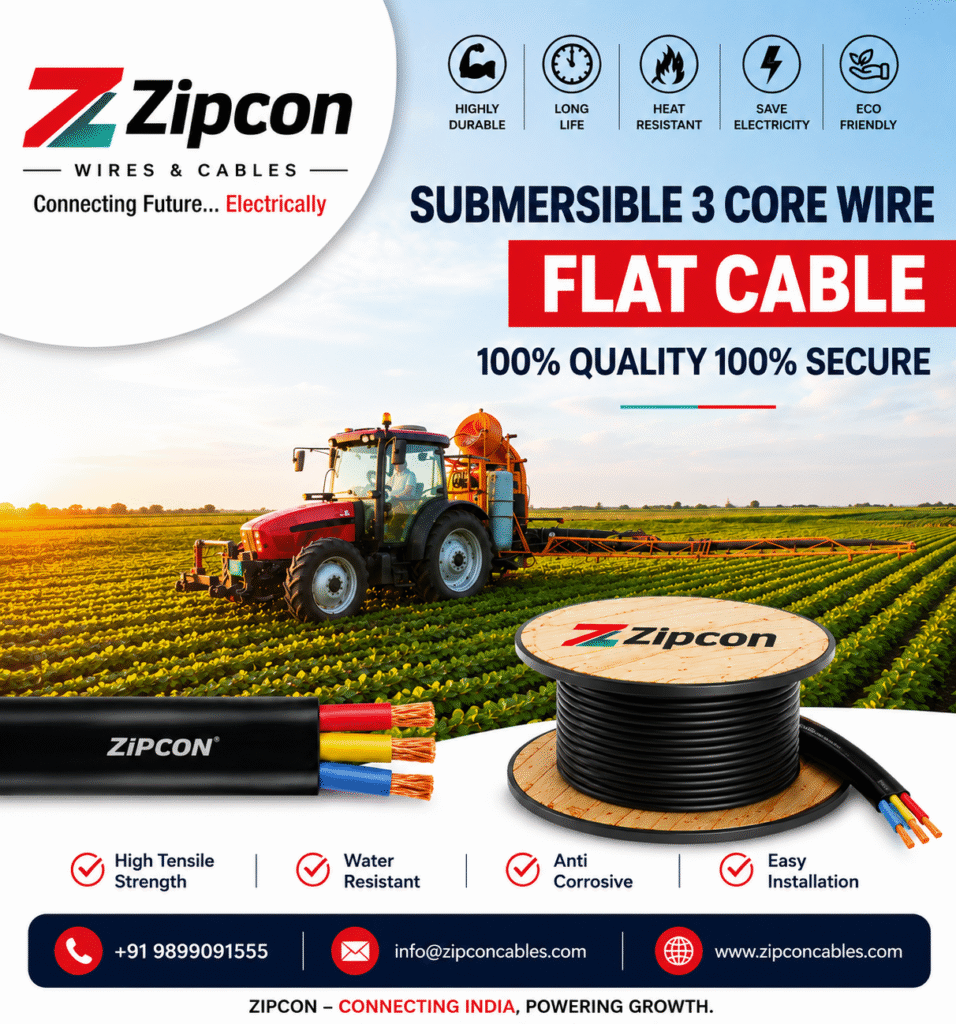
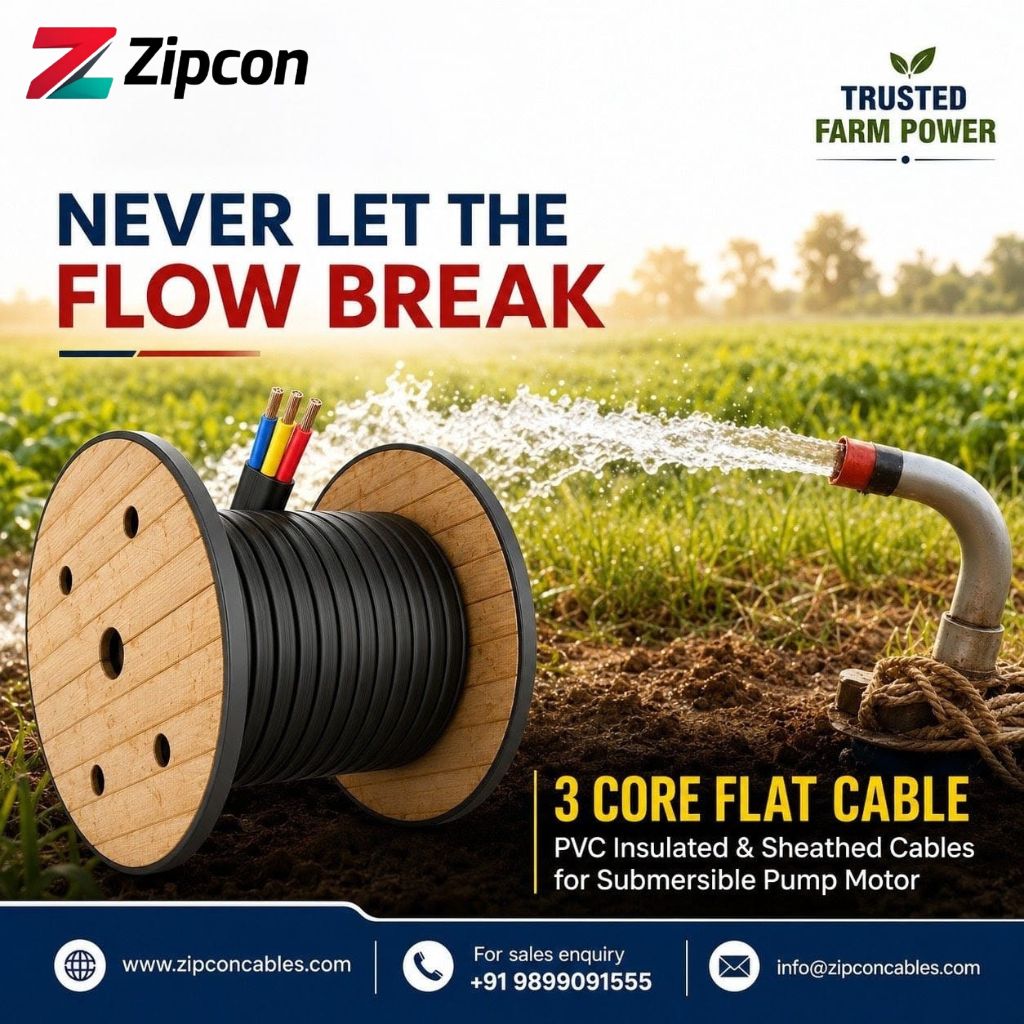
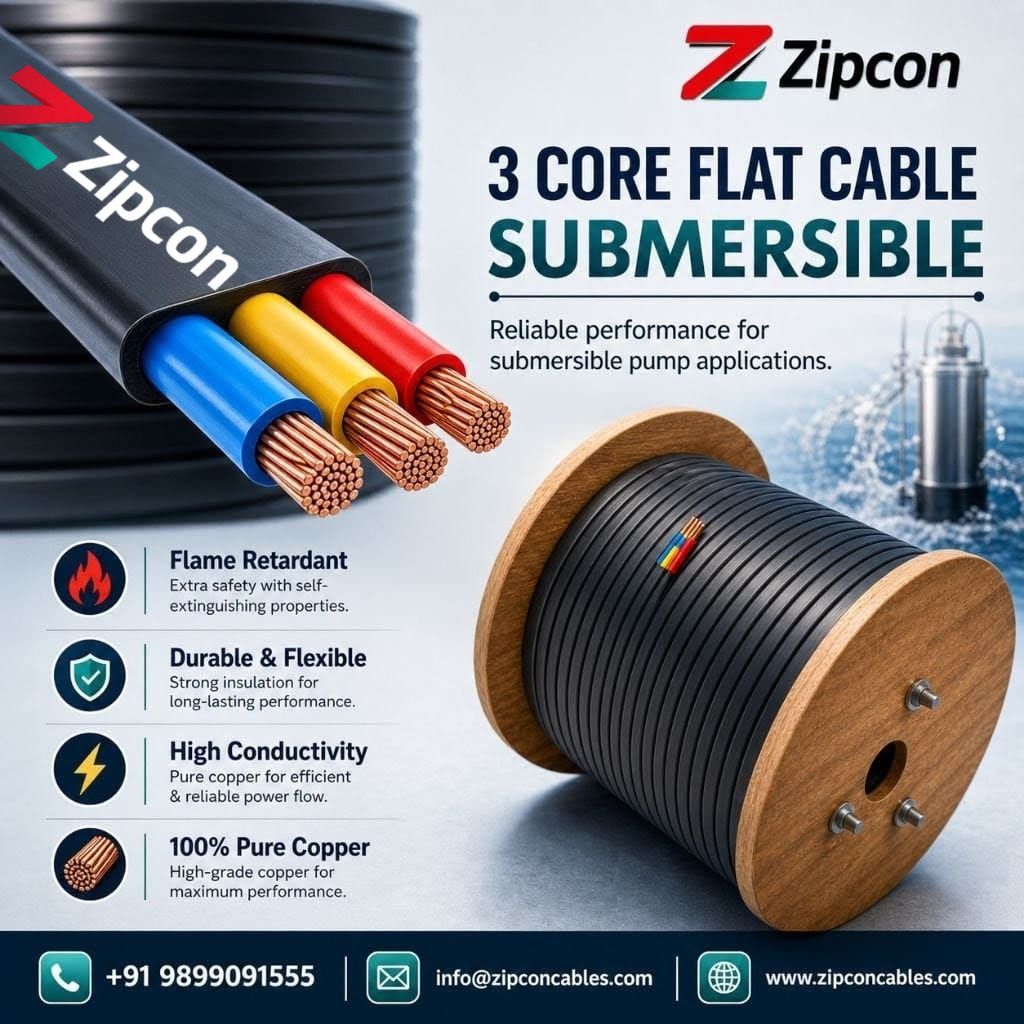
Submersible 3 core flat cables are crucial for powering equipment used in submerged environments like pumps, motors, and other underwater machinery. When selecting the right cable for these applications, several factors come into play, including conductivity, durability, weight, cost, safety, and installation needs. Zipcon Cables offers high-performance copper submersible cables that are designed to meet these demands. This article explores the key aspects of submersible cables, with a focus on Zipcon’s copper cables and how they compare to alternative materials like aluminum.

Conductivity: Copper vs. Alternatives

Conductivity is one of the most critical factors when choosing cables for submersible applications. The higher the conductivity, the more efficiently the cable can carry electrical current. Copper is well-known for its superior conductivity, making it the material of choice for submersible cables.

Copper has a conductivity of 59.6 × 10^6 S/m, significantly higher than aluminum (35.5 × 10^6 S/m). This means that copper cables can carry more current over longer distances without significant power loss, which is essential for submersible applications where reliable, consistent power is critical.

While aluminum cables may be lighter and less expensive than copper, they don’t offer the same level of performance and reliability, especially when used in environments where high conductivity is crucial. Copper’s ability to maintain performance over time in harsh underwater environments makes it a clear choice for long-term, high-performance submersible applications.

Durability: Built to Withstand Harsh Conditions

Submersible cables are often exposed to extreme environmental factors, including moisture, temperature fluctuations, and mechanical stress. The durability of a cable directly impacts its lifespan and reliability.

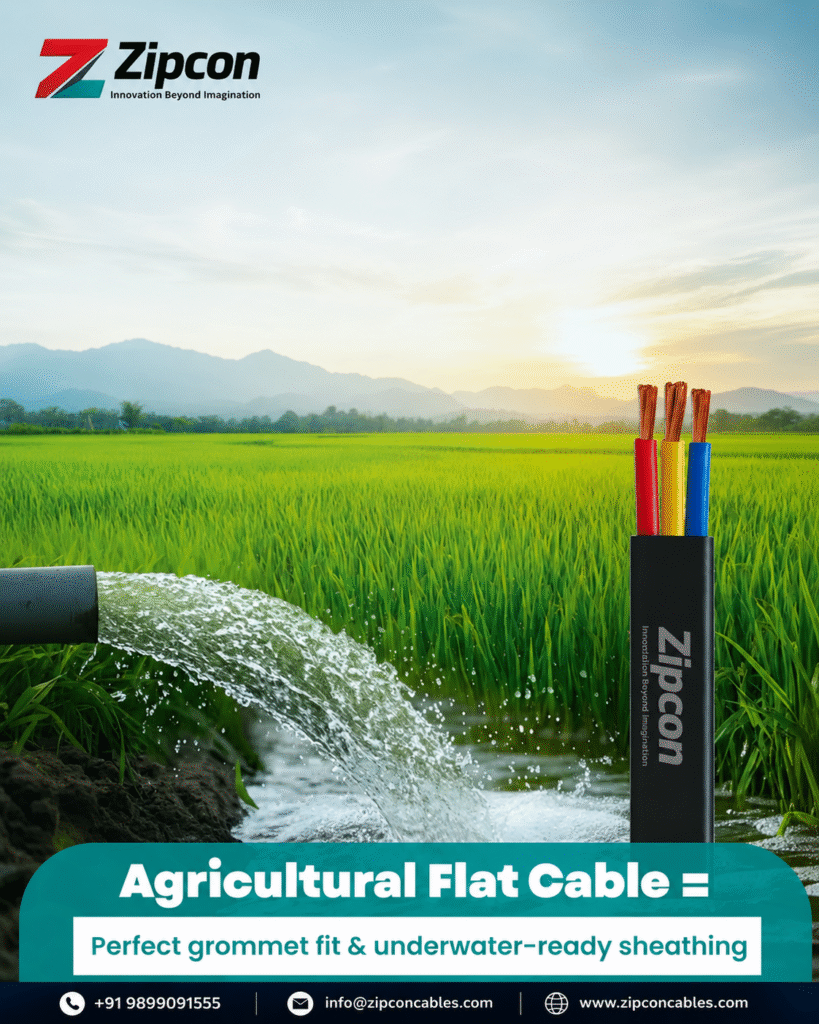
Zipcon Cables are designed with high-quality copper conductors and robust insulation materials that ensure excellent resistance to moisture and temperature changes. 4 sq mm 3 core flat submersible pump cable Copper cables are less prone to corrosion compared to aluminum, making them more durable in wet, salty, or humid conditions. In addition, copper’s high tensile strength allows the cable to withstand mechanical stress without breaking or degrading over time.

When considering durability, Zipcon Cables stand out for their ability to perform reliably in demanding environments, providing long-term value despite the challenges posed by submersion.

Weight: Ease of Installation and Long-Term Use

Weight is another important factor when selecting submersible cables. Heavier cables can be more challenging to handle during installation, especially when deploying cables in deep or remote locations. Copper cables are denser and heavier than aluminum cables, which can make them harder to install.

However, the increased weight of copper cables is often an advantage in terms of performance. The material’s superior conductivity and durability outweigh the minor inconvenience of additional weight during installation. For specific applications where weight is a concern, Zipcon offers flexible, lightweight alternatives that still maintain the high performance of copper.

Cost: Upfront Investment vs. Long-Term Value

Cost is often a significant consideration when choosing materials for submersible cables. Copper cables typically have a higher upfront cost compared to aluminum cables, but they offer better long-term value due to their superior conductivity, durability, and resistance to wear and tear.

Although aluminum cables may seem like a cost-effective option in the short term, they require more frequent maintenance and replacement due to their lower performance and susceptibility to corrosion. Zipcon’s copper cables, while higher in initial cost, reduce the need for repairs and replacements, making them a more cost-effective solution over time, particularly in harsh submersible environments.

Safety: Ensuring Reliable and Safe Operation

Safety is a top priority in submersible cable applications. Zipcon Cables prioritize safety by adhering to stringent insulation and water resistance standards. The cables are equipped with high-quality insulation materials that prevent water ingress and ensure that the cables remain electrically safe under submerged conditions.

Copper’s inherent resistance to corrosion also plays a role in maintaining the safety of submersible cables. In contrast, aluminum cables can corrode more easily, potentially leading to exposed wires and increased risk of electrical faults.

Moreover, Zipcon cables meet fire safety standards, ensuring that they do not pose a fire risk in submersible environments. This makes them a safer option compared to aluminum cables, which may have a lower fire resistance rating.

Installation Needs: Ease of Use in Challenging Environments

Installing submersible cables requires careful planning and execution, particularly in environments that are difficult to access. Zipcon’s copper cables are designed for easy handling during installation, with clear labeling, flexibility, and user-friendly features that reduce installation time and labor costs.

However, copper cables are heavier than aluminum cables, which can add complexity to the installation process. In situations where a lighter cable is necessary, Zipcon offers options that balance weight and performance, making installation more manageable without compromising on quality or durability.

Typical Use Cases for Submersible 3 Core Flat Cables

Submersible 3 core flat cables are commonly used in a wide range of applications, including powering pumps, motors, and underwater machinery. Zipcon’s copper cables are especially suited for these applications due to their excellent conductivity, durability, and safety features.

For example, Zipcon cables are ideal for submersible pumps used in water treatment plants, wells, and sewage systems. The cables ensure that power is transmitted efficiently and reliably, even under harsh submerged conditions. In addition, Zipcon’s cables are used in underwater motors for various industrial applications, providing the necessary performance and safety.

Additional Comparisons and Recommendations

While aluminum cables may be cheaper and lighter, copper cables like those from Zipcon excel in conductivity, durability, and long-term performance. Copper is the better choice when high conductivity, resistance to corrosion, and reliability are critical.

For applications where weight is a primary concern, lighter alternatives such as aluminum cables may be more suitable. However, for projects that demand the highest performance and long-term durability, Zipcon’s copper submersible cables are the recommended choice.

Conclusion

Choosing the right submersible cable is essential for ensuring the long-term performance and safety of underwater equipment. Zipcon Cables offers high-quality copper cables that deliver superior conductivity, durability, and safety, making them the best choice for demanding submersible applications. By understanding the key factors of conductivity, durability, weight, cost, safety, and installation needs, engineers, electricians, and buyers can make informed decisions and select the most suitable material for their specific application.

Best Submersible Cable in Haryana

Best Submersible cables in Haryana play a critical role in Haryana’s water and power infrastructure. From deep agricultural borewells in Hisar and Sirsa to residential water supply in Gurugram and industrial pumping in Faridabad, the right submersible cable directly impacts pump efficiency, safety, and long-term operating cost. This guide explains what actually matters when choosing the best submersible cable in Haryana and how to select the Zipcon Cables right type based on real operating conditions.

For inquiries or assistance, visit: 👉 https://zipconcables.com/contact-us/

Why Submersible Cable Quality Matters

A submersible cable operates continuously underwater, often at significant depths, carrying power to motors that must run reliably for years. Poor-quality cables result in voltage drops, motor overheating, insulation failure, and repeated breakdowns—leading to high repair and replacement costs. Haryana’s groundwater conditions, including varying borewell depths, mineral content, and seasonal temperature fluctuations, make cable quality a non-negotiable factor.

Technical Performance Factors That Matter

Conductivity

Conductivity determines how efficiently electrical power reaches the motor. Higher conductivity reduces power loss, stabilizes voltage, and improves motor efficiency.

Copper conductors provide the highest conductivity, making them ideal for deep borewells and high-load applications. Aluminum conductors have lower conductivity and therefore require larger cross-sectional sizes to carry the same load safely.

Why it matters: Lower conductivity increases current draw, causing motor heating, insulation stress, and reduced pump life.

Durability and Insulation

Submersible cables must withstand continuous water immersion, pressure, abrasion, and chemical exposure. High-grade PVC or XLPE insulation with water-blocking properties is essential.

In Haryana, where borewell water often contains salts and minerals, poor insulation degrades quickly, leading to insulation leakage and electrical faults.

Weight and Handling

Copper cables are heavier but offer superior mechanical strength and resistance to stretching in deep installations. Aluminum cables are lighter and easier to handle, especially for shallow installations, but require careful handling and proper clamping.

Weak outer sheaths or excessive flexibility can cause damage during pump lowering.

Cost Considerations

Aluminum cables offer lower upfront cost, while copper cables involve higher initial investment. However, copper cables generally deliver lower operating losses, fewer failures, and longer service life—resulting in better total cost of ownership.

Safety

A reliable submersible cable must ensure:

  • High insulation resistance
  • Flame-retardant properties
  • Minimal leakage current

This is especially critical in agricultural environments where earthing conditions may be inconsistent.

Installation Requirements

Deep borewell installations require high tensile strength and secure jointing. Faulty joints remain one of the most common reasons for submersible pump failures across Haryana.

Typical Use Cases in Haryana

Agriculture and Borewells

Agricultural pumps commonly operate at depths between 100 and 300 feet and run for extended hours during irrigation cycles.

Best fit: Copper submersible cables for deeper installations and motors above 3 HP due to stable voltage delivery.

Residential Water Supply

Homes and housing societies rely on submersible pumps for daily water needs.

Best fit: Copper or well-sized aluminum cables for shallow depths, depending on load and budget.

Industrial Applications

Industries in Panipat, Faridabad, and surrounding belts require continuous pumping for cooling and process water.

Best fit: Copper submersible cables with heavy-duty insulation for uninterrupted, long-hour operation.

Copper vs Aluminum Submersible Cables – Quick Comparison

Conductivity: Copper – High | Aluminum – Moderate
Weight: Copper – Heavy | Aluminum – Light
Depth suitability: Copper – Deep borewells | Aluminum – Shallow wells
Voltage stability: Copper – Excellent | Aluminum – Average
Long-term cost: Copper – Lower | Aluminum – Higher if failures occur

Real-World Haryana Scenarios

A farmer in Sirsa operating a 7.5 HP pump at 250 feet will experience voltage instability with aluminum cables unless oversized. Copper submersible cables provide consistent power and reduce motor stress.

A residential society in Gurugram running a 1.5 HP pump at 80 feet can use a properly rated aluminum cable if installation quality is ensured.

An industrial unit in Faridabad operating pumps continuously should always use copper cables to avoid downtime and maintenance losses.

How to Choose the Right Submersible Cable

Choose copper submersible cables if:

  • Borewell depth is high
  • Motor capacity exceeds 3 HP
  • Pumps run for long durations
  • Reliability and lifespan are priorities

Choose aluminum submersible cables if:

  • Installation depth is shallow
  • Load requirement is low
  • Budget constraints exist
  • Installation quality is strictly controlled

Cable sizing should always be matched to motor load and depth—not price.

Why Choose Zipcon Cables in Haryana

Zipcon Cables has established a strong presence in Haryana by delivering submersible cables designed for real field conditions. Their copper submersible cables offer high conductivity, robust insulation, and dependable mechanical strength—making them suitable for agricultural, residential, and industrial pumping applications.

For buyers who prioritize long-term reliability, electrical safety, and consistent performance, Zipcon Cables provides a balanced combination of quality, compliance, and value.

Final Recommendation

For deep borewells, high-load motors, and continuous operation in Haryana, copper submersible cables remain the most reliable choice. Aluminum cables may be suitable for shallow, low-load applications when correctly sized and installed.

When performance, safety, and durability matter, choose Zipcon Cables for a submersible cable solution that delivers dependable results in Haryana’s demanding conditions.

Top 10 Multicore Cable Brands in India – Quality, Price & Performance

When it comes to choosing the best multicore cables for industrial, residential, and commercial applications, understanding key factors such as conductivity, durability, cost, installation requirements, and safety is essential. Whether you’re an engineer, electrician, or buyer, it’s important to select cables that offer the best performance and value for money. In this article, we’ll review the top 10 multicore cable brands in India, with a particular focus on Zipcon Cables and how they stack up against competitors.

For inquiries or assistance:👉 https://zipconcables.com/contact-us/

1. Zipcon Cables

Best for: High-quality, durable, and safe electrical solutions

Zipcon Cables stands out in the Indian market for its superior performance and technical expertise. Known for its high-quality copper and aluminum multicore cables, Zipcon ensures outstanding conductivity and safety. These cables are ideal for industrial, commercial, and residential applications, offering a perfect balance between price and performance. Zipcon’s multicore cables are tested to meet the highest industry standards for durability, ensuring long-lasting use in both indoor and outdoor environments.

  • Key Features: Exceptional conductivity, robust insulation, corrosion-resistant.
  • Application: Industrial wiring, high-load commercial applications, residential wiring.
  • Recommendation: Choose Zipcon Cables if you need cables with high durability and safety features, especially for projects that require reliable long-term performance.

2. Finolex Cables

Best for: Cost-effective solutions with high performance

Finolex is one of India’s leading cable brands, known for its affordable yet reliable multicore cables. These cables provide good conductivity and are known for their long-lasting insulation, making them a popular choice for general-purpose electrical installations.

  • Key Features: Affordable, good quality, reliable insulation.
  • Application: Residential, light industrial use.
  • Recommendation: If budget is a priority, Finolex is a great choice for basic electrical wiring needs.

3. Polycab Cables

Best for: Wide range of multicore cable options

Polycab is renowned for offering a wide selection of multicore cables that cater to diverse industries. These cables feature excellent insulation and flame-resistant properties, making them ideal for both heavy-duty and regular installations. Polycab’s multicore cables are also designed for high conductivity, providing stable power supply across a variety of applications.

  • Key Features: High conductivity, flame resistance, robust insulation.
  • Application: Heavy industrial, commercial, and residential use.
  • Recommendation: Ideal for environments where flame resistance and high conductivity are critical.

4. RR Kabel

Best for: Premium quality and safety

RR Kabel is known for its high-performance electrical cables, providing both copper and aluminum multicore options. Their cables are designed for high-load applications, with a focus on safety and compliance with international standards. RR Kabel offers excellent resistance to wear, tear, and weather conditions.

  • Key Features: High-quality copper, high load-bearing capacity, weather-resistant.
  • Application: High-load industrial applications, high-end residential setups.
  • Recommendation: Choose RR Kabel for projects requiring superior safety standards and durability.

5. Sterlite Power

Best for: Utility and power transmission solutions

Sterlite Power specializes in cables designed for power transmission and distribution systems. Their multicore cables are highly durable, ensuring reliable performance in demanding environments such as power plants and substations.

  • Key Features: High strength, corrosion-resistant, excellent for power distribution.
  • Application: Utility and power transmission, heavy-duty industrial.
  • Recommendation: Opt for Sterlite Power when you need cables for critical power infrastructure.

6. Havells India

Best for: Versatile and reliable cables

Havells offers multicore cables that combine reliability and versatility, suitable for both low and high-tension applications. These cables are designed to offer great insulation and reduce the risk of electric shocks.

  • Key Features: High-quality insulation, versatile applications, corrosion-resistant.
  • Application: Industrial, residential, and commercial.
  • Recommendation: Ideal for projects requiring a versatile cable solution across different environments.

7. KEI Cables

Best for: High conductivity and long service life

KEI is known for its high-conductivity cables that provide optimal performance, even under heavy load. Their multicore cables come with enhanced insulation, making them resistant to fire hazards and environmental factors like moisture and chemicals.

  • Key Features: Superior conductivity, fire-resistant, high insulation.
  • Application: Industrial, construction, and power applications.
  • Recommendation: Choose KEI if you require high-performance cables with long-lasting durability and superior conductivity.

8. V-Guard Cables

Best for: High-performance cables at a competitive price

V-Guard has made a mark in the Indian market by providing reliable and affordable multicore cables. These cables are designed for both heavy-duty industrial and residential applications, offering excellent insulation and safety features.

  • Key Features: Affordable, reliable insulation, good for residential and light commercial use.
  • Application: Residential, commercial, and light industrial.
  • Recommendation: Opt for V-Guard if you’re looking for a cost-effective yet reliable cable solution.

9. Indo Cables

Best for: Flame-retardant and environment-friendly cables

Indo Cables specializes in flame-retardant multicore cables, which are designed to minimize fire hazards. Their cables come with eco-friendly materials that contribute to a safer environment, especially in high-risk zones like chemical plants and factories.

  • Key Features: Flame-retardant, eco-friendly, excellent insulation.
  • Application: Industrial, commercial, high-risk environments.
  • Recommendation: Ideal for environments with a high risk of fire hazards, ensuring maximum safety.

10. Universal Cables

Best for: Heavy-duty industrial applications

Universal Cables offers robust and durable multicore cables ideal for industrial and high-power applications. They provide excellent resistance to wear and tear, ensuring long-term performance in heavy-duty environments.

  • Key Features: High tensile strength, excellent wear resistance, durable.
  • Application: Power stations, industrial plants, and heavy machinery.
  • Recommendation: Best for projects that require cables capable of handling extreme conditions and heavy loads.

Copper vs. Aluminum Cables: Where Do They Perform Better?

  • Copper Cables: Copper cables excel in terms of conductivity and are more durable. They are ideal for applications requiring high power transmission with minimal signal loss. Copper is also more resistant to corrosion, which makes it suitable for outdoor and harsh environments.
  • Aluminum Cables: Aluminum cables are lighter and more cost-effective compared to copper cables. However, they have lower conductivity and are more prone to oxidation. Aluminum is typically preferred in applications where weight and cost are more important than high conductivity, such as in overhead power lines.

Conclusion and Recommendations

When selecting a multicore cable brand in India, it’s important to consider factors like conductivity, durability, cost, and specific application requirements. Zipcon Cables stands out for its excellent balance of performance, durability, and cost-effectiveness. Whether you need cables for industrial or residential use, Zipcon provides high-quality solutions that meet international safety standards.

For those on a budget, Finolex and V-Guard offer reliable yet affordable options, while brands like RR Kabel and KEI Cables provide premium solutions for demanding applications. If flame resistance and high safety standards are paramount, Indo Cables and Polycab are the go-to options.

By considering the application type and specific requirements, you can make an informed decision on the best multicore cable brand suited to your needs.

Best Flexible Wire Manufacturer in India

When it comes to choosing the best flexible wire for industrial, residential, or commercial applications, it’s crucial to consider various factors such as conductivity, durability, weight, cost, safety, and ease of installation. Zipcon Cables, a leading flexible wire manufacturer in India, has gained a reputation for offering products that excel in these key areas. In this article, we’ll dive into the technical details of Zipcon Cables and compare them to other brands in the market, helping you make an informed decision for your next project.

Conductivity: Powering Efficient Performance

One of the primary factors to consider when selecting flexible wire is conductivity. Conductivity directly affects the efficiency of electrical transmission, determining how much power is lost during transmission and how well the wire can handle high loads.

Copper vs. Other Materials: Copper wires are traditionally known for their superior conductivity, making them the go-to choice for high-performance applications where minimal power loss is essential. Zipcon Cables uses high-quality copper in its flexible wires, ensuring maximum conductivity and minimal energy loss. This makes them ideal for industrial environments where electrical performance is critical. While other materials such as aluminum or tinned copper offer alternatives, they do not match the conductivity levels of copper, which is why Zipcon’s copper wires stand out in terms of both efficiency and reliability.

Zipcon Advantage: Zipcon’s flexible wires outperform many competitors due to their top-tier copper content, ensuring that electricity flows smoothly without unnecessary resistance or heat buildup. This is especially beneficial for high-current applications, making Zipcon Cables a preferred choice in the industry.

Durability: Built to Last

Durability is an essential factor, especially for wires that are exposed to harsh conditions or frequent movement. Flexible wires, by their very nature, must withstand bending, stretching, and environmental stress without compromising their performance or safety.

Zipcon’s Durability: Zipcon Cables are engineered for longevity and wear resistance. Their flexible wires are made from materials that can endure extreme conditions, including high temperatures, exposure to chemicals, and mechanical stress. Whether used indoors or outdoors, Zipcon’s flexible wires retain their strength and reliability over time, reducing the need for frequent replacements.

Competitor Comparison: While other flexible wires in the market may offer similar durability, they often fall short in terms of resilience in extreme conditions. Zipcon’s wires excel in both wear resistance and flexibility, making them more suitable for long-term use in demanding environments.

Weight: A Key to Installation and Transportation

The weight of a flexible wire plays a significant role in both transportation and installation processes. Lighter wires are easier to handle and install, saving time and reducing labor costs.

Zipcon vs. Competitors: Zipcon Cables offer flexible wires that strike the perfect balance between weight and performance. They are lightweight enough for easy handling and installation, without sacrificing strength or durability. In comparison, some competitors’ wires, though durable, may be bulkier, making them harder to transport and install efficiently.

Practical Implication: For engineers, electricians, or buyers looking to minimize installation time and reduce transportation costs, Zipcon’s lightweight cables are a smart choice, ensuring both ease of use and cost-efficiency.

Cost: Quality Meets Affordability

When selecting flexible wires, cost is always a consideration, especially for large-scale projects. However, it’s important to balance cost with the quality of the product.

Zipcon’s Value Proposition: Zipcon Cables provide a cost-effective solution without compromising on quality. The company’s flexible wires are priced competitively while offering superior performance and longevity. This makes Zipcon Cables a great value for money, especially when compared to other brands that might offer cheaper options but fail to deliver on long-term reliability or performance.

Competitor Comparison: While some competitors may offer lower upfront prices, their wires might require more frequent replacements or maintenance, making them less economical in the long run. Zipcon, on the other hand, ensures that every purchase provides a high return on investment due to the longevity and efficiency of their cables.

Safety: Meeting Industry Standards

Safety is paramount when it comes to wiring, especially in environments where there are high voltages or fire hazards. Flexible wires must meet stringent safety standards to ensure that they do not pose risks to individuals or property.

Zipcon’s Safety Features: Zipcon Cables stand out for their excellent insulation, which helps prevent electrical faults and reduce the risk of fires. Their wires are designed to handle high temperatures and resist external elements like moisture and chemicals, making them a safe choice for both residential and industrial applications.

Fire Resistance: Zipcon’s flexible wires are equipped with fire-resistant insulation, which makes them ideal for use in high-risk environments, such as factories, construction sites, and commercial buildings. This ensures that the cables remain operational even in the event of a fire, offering an added layer of protection.

Installation Needs: Flexibility and Adaptability

The ease of installation is a crucial factor for any wiring system, especially in tight or complex spaces. A flexible wire should be easy to manipulate and install without compromising the integrity of the system.

Zipcon’s Ease of Installation: Zipcon’s flexible wires are specifically designed for easy installation. They are highly adaptable, which means they can be bent, twisted, and routed through complex installations without breaking. This flexibility reduces installation time and labor costs, making Zipcon a go-to choice for electricians and engineers.

Comparison to Other Brands: While other flexible wires may offer some level of flexibility, Zipcon’s products are particularly known for their ease of use in difficult environments, including narrow spaces or complex installations.

Typical Use Cases: Where Zipcon Cables Shine

Zipcon Cables are versatile and can be used in a variety of applications. They are commonly used in:

  • Industrial Settings: For heavy machinery, automation systems, and high-power applications where durability and conductivity are key.
  • Residential Applications: For powering household appliances and ensuring safe electrical wiring.
  • Commercial Use: In office buildings, retail stores, and other commercial establishments where both safety and performance are critical.

Copper vs. Alternatives: When to Choose Which

Copper wires are ideal for environments that require high conductivity, such as power distribution networks and heavy-duty industrial systems. However, for applications that prioritize weight and cost over conductivity—such as some residential setups or low-power applications—alternatives like aluminum or tinned copper wires might be more suitable.

Conclusion: Why Choose Zipcon Cables

Zipcon Cables offer a comprehensive solution for those seeking high-performance flexible wires that excel in conductivity, durability, safety, and ease of installation. Whether you’re an engineer, electrician, or buyer, Zipcon’s flexible wires deliver on all fronts—offering a perfect balance of quality and affordability. Choose Zipcon Cables for your next project when you need reliable, cost-effective, and high-performance wiring solutions.

Best House Wire Manufacturer in Delhi for Safe and Durable Wiring | Zipcon Cables
house wire manufacturer in Delhi

When selecting the right house wire for your home or commercial space in Delhi, quality should be your top priority. With Delhi’s fluctuating temperatures, frequent electrical load shifts, and a growing reliance on modern appliances, it’s crucial to use reliable, long-lasting, and safe electrical wiring. Zipcon Cables, a leading house wire manufacturer in Delhi, has built a reputation for delivering superior products that meet all these demands. This article explains why Zipcon Cables is the ideal choice by breaking down key factors such as conductivity, durability, cost, safety, and more.

Why Wire Quality Matters in Delhi

Delhi’s unique electrical challenges require robust wiring solutions. The extreme heat during summers, heavy power usage in modern homes, and frequent voltage fluctuations make it crucial to choose high-quality wires. Low-quality wiring may lead to overheating, power loss, and even fire hazards, especially when running appliances such as air conditioners, geysers, and heavy kitchen equipment.

Choosing the right manufacturer ensures that your wiring system can handle Delhi’s electrical demands and stay safe for years to come. Zipcon Cables offers the perfect solution for both residential and commercial wiring needs.

Key Factors to Consider When Choosing House Wires

Conductivity
Conductivity is a critical factor for power efficiency. Copper is known for its excellent conductivity, meaning it allows electrical current to pass with minimal resistance. This results in less energy loss and more stable voltage. Zipcon Cables uses high-quality copper in all their products, ensuring minimal energy wastage, which is vital for efficient appliance operation. Whether you are wiring your home or office, high conductivity will help reduce energy costs and improve appliance performance.

Durability
In Delhi’s hot and humid climate, wiring needs to be durable enough to handle temperature extremes. High-quality insulation and robust conductor material are essential for longevity. Zipcon Cables uses advanced insulation materials that are heat-resistant, providing a longer lifespan for your wiring system. This reduces the likelihood of insulation breakdowns or power interruptions due to environmental stress.

Weight
Wires are usually routed through walls, ceilings, and conduits, so the weight of the wire plays a role in installation. Copper wires are typically heavier than aluminum ones, but they are much more durable and stable. Zipcon Cables offers copper wires that provide the right balance between weight and flexibility, ensuring easy handling during installation without compromising on strength.

Cost
Upfront cost is always a consideration, but it is important to factor in the long-term value of the wire. Cheaper alternatives may seem attractive initially, but they often result in higher maintenance costs, lower energy efficiency, and shorter service life. Zipcon Cables offers copper wiring solutions at competitive prices, delivering excellent performance without compromising safety or durability. Investing in quality wires now will save you money on repairs and replacements down the line.

Safety
Safety is paramount when it comes to wiring. The quality of insulation, resistance to overheating, and the ability to handle high loads are all key aspects of a safe wiring system. Zipcon Cables adheres to rigorous safety standards, ensuring that all their wires meet or exceed local safety requirements. With Zipcon wires, you can be confident that your home or commercial space is equipped with safe, reliable wiring.

Installation Needs
Ease of installation is another important factor. Copper wires, while heavier, offer greater strength and flexibility, making them easier to pull through conduits and around corners. Zipcon Cables’ wires are designed for easy installation, with just the right amount of flexibility to prevent damage during the process. This not only saves time but also minimizes the risk of installation-related issues.

Typical Use Cases
Different applications require different wiring types:

  • Lighting Circuits: For regular lighting, you can use standard copper wires from Zipcon Cables.
  • Power Sockets: Higher-gauge copper wires are better for handling higher loads and preventing overheating.
  • ACs and Geysers: For these high-power appliances, Zipcon’s copper wiring ensures minimal voltage drop and safe current handling.
  • Inverters and Heavy Appliances: Use thicker copper wires for continuous heavy loads, which can handle the higher current demands.

Copper vs. Other Cable Types

Copper cables excel in areas that demand high conductivity and reliability. For example, in high-load applications like air conditioners and geysers, copper wiring ensures that the appliance receives the required power without unnecessary loss or overheating.

However, copper may not always be necessary for every application. For example, short runs with low power demands—such as for basic lighting—might not require the high performance of copper wires. For these, other materials like aluminum could suffice, although it is less efficient and requires more care during installation.

Quick Comparisons

FeatureCopper Wire (Zipcon Cables)Other Cable Types
Heat HandlingBetter heat resistance, less insulation breakdownMay overheat under heavy load
Voltage DropMinimal voltage drop over distanceHigher voltage drop, less efficient
Installation EffortEasy to route, flexible yet strongLighter but less flexible
Long-Term ReliabilityMore durable, long-lastingProne to degradation faster

Real-World Scenarios

Wiring a 2-3 BHK Delhi Apartment
For a typical Delhi apartment, using Zipcon Cables for wiring ensures that the entire home—from the living room lights to the kitchen appliances—is powered safely and efficiently. The copper wires from Zipcon handle fluctuating voltages and keep the system running smoothly, even when multiple appliances are in use simultaneously.

Upgrading Wiring for ACs and Modern Appliances
Older homes often have wiring that cannot handle the new power demands of modern appliances like ACs and water heaters. Upgrading to Zipcon’s copper wiring ensures the system can handle these loads without risk of overheating or electrical failure.

Choosing Wires for Residential vs. Commercial Spaces
For small commercial spaces like offices or retail outlets, Zipcon Cables offers an optimal balance of cost and reliability. In residential spaces, the emphasis is on long-term safety and efficiency, which Zipcon Cables provides without compromise.

Why Choose Zipcon Cables?

Zipcon Cables stands out as one of the top house wire manufacturers in Delhi for several reasons:

  • Quality Manufacturing: Zipcon ensures that each wire meets the highest quality standards, offering excellent conductivity and durability.
  • Safety Compliance: Zipcon Cables meet national safety standards, ensuring your wiring system is safe for your home or office.
  • Value for Money: Though Zipcon wires are competitively priced, they provide long-term savings by reducing maintenance and energy consumption.

Conclusion: The Right Choice for Your Wiring Needs

When it comes to choosing the best house wire for your home or business in Delhi, Zipcon Cables is the smart and reliable option. Their copper wiring solutions provide excellent conductivity, durability, and safety, making them suitable for lighting, power circuits, heavy appliances, and full-home wiring. By selecting Zipcon Cables, you are ensuring a safe, efficient, and long-lasting wiring system for your space.

Best House Wire in Delhi for Safe, Durable, and Reliable Home Wiring | Zipcon Cables
Best House Wire in Delhi

House wires in India are the backbone of every Indian home’s electrical system. They carry power from the main supply to lights, fans, sockets, and heavy appliances like air conditioners and geysers. A wrong choice in house wiring can lead to voltage drops, frequent tripping, overheating, or even fire hazards over time. That’s why selecting the right house wire is not just about brand or price—it’s about safety, performance, and long-term value. Zipcon Cables has built a strong reputation in India for manufacturing reliable house wires designed for Indian load conditions, climate, and installation practices.

Conductivity

Conductivity determines how efficiently electricity flows through a wire. Higher conductivity means lower power loss, stable voltage at the appliance end, and reduced heat generation.

Copper has significantly higher conductivity than aluminum. In technical terms, copper’s resistivity is around 1.68 µΩ·cm, while aluminum is about 2.82 µΩ·cm—roughly 40% higher resistance. For electricians, this directly translates into better load handling with thinner copper wires compared to aluminum. Zipcon copper house wires are preferred in circuits where consistent power delivery and low losses matter.

Durability

Durability depends on conductor quality, insulation material, and overall wire construction. Copper is naturally more resistant to oxidation and mechanical fatigue. When combined with high-grade PVC or FR-grade insulation, copper wires can last decades without performance degradation.

In high-humidity regions or coastal areas, aluminum wiring can oxidize faster if insulation quality is poor. Zipcon Cables addresses this by using robust insulation compounds that protect both copper and aluminum conductors from moisture and chemical exposure, improving lifespan in real-world Indian conditions.

Weight

Weight affects installation ease, conduit loading, and long-term stress on junction boxes.

Copper is heavier, which makes handling slightly harder in long conduit runs. Aluminum is nearly 30% lighter, making it easier to pull through conduits in large homes or multi-floor buildings. Electricians often prefer aluminum for long-distance runs where weight reduction simplifies installation without compromising safety when sized correctly.

Cost

Cost is often the deciding factor for homeowners. Copper house wires are more expensive due to raw material costs, sometimes 1.5 to 2 times the price of aluminum for the same length.

However, copper delivers better long-term value through lower energy losses, higher load tolerance, and fewer maintenance issues. Aluminum wires reduce upfront cost but may require larger sizes to match copper performance. Zipcon offers both options, allowing buyers to balance budget and performance without compromising on quality.

Safety

Safety is influenced by current-carrying capacity, heat resistance, and insulation quality. Copper handles heat better and is less prone to loose connections, reducing fire risk.

In high-load circuits or areas with voltage fluctuations, copper wires provide a safer margin. Zipcon’s FR and FRLS insulated house wires are designed to limit flame spread and reduce smoke, making them suitable for modern residential safety standards.

Installation Needs

Copper wires are more flexible, making them easier to bend, terminate, and secure at switchboards. Aluminum requires careful termination using appropriate lugs and torque control to avoid loose joints.

Electricians generally prefer copper for indoor residential wiring due to ease of handling. Aluminum is better suited where trained installers and proper tools are available. Zipcon wires are designed with uniform conductor stranding to simplify installation for both materials.

Typical Use Cases

Lighting and fan circuits require stable voltage and moderate load handling—both copper and aluminum can work, depending on wire size.

Socket outlets, kitchens, and inverter lines benefit from copper due to fluctuating loads.

Heavy appliances like air conditioners, geysers, and ovens demand copper wiring for reliability and thermal safety.

Practical Comparisons

For small apartments with general lighting and sockets, aluminum house wires can be used if correctly sized, offering cost savings without performance issues.

For high-load circuits like air conditioners and geysers, copper house wires provide better long-term performance due to lower resistive losses and higher thermal tolerance.

Real-World Application Scenarios

Scenario A: New 2BHK Home

A middle-class family wiring a new 2BHK can use 1.5 sq.mm copper for lighting and fans, 2.5 sq.mm copper for sockets, and 4 sq.mm copper for AC and geyser points. This setup balances safety, efficiency, and durability using Zipcon copper house wires.

Scenario B: Renovation Upgrade

In older homes with aluminum wiring, upgrading to copper requires checking conduit size, load requirements, and breaker ratings. Switching to copper improves safety and reduces voltage drop, especially for modern appliances with higher power demands.

Direct Recommendations

Choose copper house wires when safety, load stability, and long-term reliability are priorities—especially for kitchens, air conditioners, and main circuits.

Choose aluminum wires when budget constraints exist and loads are light, such as basic lighting circuits, provided correct sizing and installation standards are followed.

Zipcon Cables offers tested copper and aluminum house wire ranges designed specifically for Indian residential needs, making selection straightforward for homeowners and electricians.

Conclusion

Choosing the best house wire in India requires understanding how material, load, and usage conditions work together. Copper excels in safety and performance, while aluminum offers cost and weight advantages when used correctly. With Zipcon Cables, homeowners get dependable wiring solutions engineered for Indian homes. Make your choice based on application, not assumptions—and invest in wiring that delivers safety and peace of mind for years.

Best Housing Wire in India

Choosing the best house wire in India is not just about brand or price—it directly affects safety, power efficiency, long-term reliability, and maintenance cost. Indian homes face diverse conditions: high temperatures, humidity, voltage fluctuations, and increasing electrical loads due to modern appliances. This makes wire selection a technical decision, not a cosmetic one.

This guide breaks down house wire selection in simple terms, focusing on real installation conditions and practical performance.

Conductivity: Why It Matters in Daily Use

Conductivity determines how efficiently electricity flows through a wire. Higher conductivity means lower power loss, less heat generation, and better performance under load.

Copper has the highest conductivity among commonly used house wiring materials. This allows copper wires to carry the same current with a smaller cross-section compared to aluminum. In real homes, this translates to cooler operation, stable voltage at switch points, and better appliance performance.

Lower conductivity materials require thicker wires to carry the same load. If undersized, they heat up faster, increasing fire risk.

Recommendation: For homes with air conditioners, geysers, induction cooktops, or EV chargers, high-conductivity copper wires—such as those offered by Zipcon Cables—are the safest and most efficient choice.

Durability: Lifespan Under Indian Conditions

Durability depends on conductor quality and insulation strength. Indian wiring systems often run inside concealed conduits for decades, so failure is not an option.

Key durability factors include:

  • Resistance to corrosion in humid areas
  • Flexibility to prevent cracking during installation
  • Insulation that withstands heat and aging

Premium PVC and FR/FRLS insulation significantly improve lifespan. Poor insulation hardens over time, leading to cracks and leakage.

Zipcon Cables use high-grade electrolytic copper and advanced insulation compounds, making them suitable for long-term concealed wiring in Indian homes.

Weight: Installation and Handling Impact

Copper wires are heavier than aluminum wires. While this slightly increases material weight, it improves mechanical strength and reduces joint failures.

From an electrician’s perspective, flexible multi-strand copper wires are easier to pull through conduits, especially in bends and vertical shafts. Lighter aluminum wires may save weight but require careful handling to avoid breakage at terminations.

Real-world scenario: In multi-storey buildings, flexible copper house wires reduce installation time and rework compared to rigid conductors.

Cost: Understanding Value Beyond Price

Copper wires cost more upfront than aluminum or alloy alternatives. However, cost should always be evaluated against performance and lifespan.

Copper wires:

  • Reduce energy loss
  • Require fewer repairs
  • Support higher loads safely

Cheaper alternatives may save money initially but increase long-term risk and maintenance expenses.

Cost-to-performance insight: A slightly higher investment in quality copper wiring—such as Zipcon Cables—often pays back through safety, efficiency, and durability over 20–30 years.

Safety: Fire Risk, Heat Tolerance, and Compliance

Safety is the most critical factor in house wiring. Poor-quality wires are a leading cause of electrical fires in Indian homes.

Safe house wires should offer:

  • High melting point
  • Low heat generation
  • Flame-retardant insulation
  • Compliance with IS standards

Copper wires with FR or FRLS insulation perform better during overloads, delaying ignition and reducing smoke emission.

Zipcon Cables focus strongly on fire safety, using insulation designed to withstand Indian voltage and temperature conditions.

Installation Needs: Practical On-Site Considerations

House wires must be compatible with standard conduits, switchboards, and MCBs. Installers prefer wires that are:

  • Flexible
  • Clearly color-coded
  • Consistent in diameter
  • Easy to strip and terminate

Rigid or inconsistent wires increase labor time and connection failures.

Electricians often recommend branded copper wires like Zipcon because they reduce joint heating and make testing easier after installation.

Typical Use Cases: Where Each Wire Fits Best

Different areas of a building demand different wiring strength:

  • Bedrooms & living rooms: Standard copper house wires for lighting and sockets
  • Kitchens: Higher-gauge copper wires for microwaves, ovens, and induction stoves
  • Bathrooms: Copper wires with superior insulation for moisture resistance
  • High-load circuits: Thick copper cables for ACs, geysers, and pumps
  • Industrial or temporary setups: Aluminum may be used where cost and weight matter more than longevity

Material Comparison: Copper vs Alternatives

Copper Wires

  • Higher conductivity
  • Better heat management
  • Longer lifespan
  • Safer for concealed wiring
  • Higher initial cost, lower lifetime cost

Aluminum / Alloy Wires

  • Lower conductivity
  • Lighter weight
  • Lower upfront cost
  • Requires thicker size for same load
  • Better suited for overhead or temporary installations

Direct Recommendation: For residential and long-term installations, copper wires clearly outperform alternatives.

Final Recommendation

For Indian homes where safety, durability, and performance matter, high-quality copper house wires are the best choice. Among available options, Zipcon Cables stand out due to their strong conductivity, reliable insulation, installer-friendly design, and compliance with safety standards.

Whether you are wiring a new home, renovating an apartment, or upgrading load capacity, choosing the right house wire is a decision that protects both property and people. Invest once, wire right, and stay safe for decades.

Best Wires and Cables Manufacturers in India
best cables manufacturers in india

Wires and Cables Manufacturers in India – What You Need to Know

A substandard wire and cable leads to frequent short circuits, overheating and performance issues. This is one of the reasons you should select the best wires and cables manufacturers in India to ensure safety and reliability. The Indian electrical industry has experienced massive advancement over the last few years and offers a variety of cables that not just meet national standards but also international standards. Be it a homeowner looking to rewire their kitchen or a contractor wanting to manage a large-scale infrastructure project, you need a specific and certified cable manufacturer to fulfil your requirements. Many homeowners and buyers often miss basic parameters to consider while choosing the right brand. Zipcon Cables is one of the most reliable electrical cable manufacturers in India that offers wires and cables at affordable prices, making it an ideal brand for residential, commercial and industrial applications. In this blog, we will discuss the most trusted brands, types of wires, how to select the right cable based on usage, how you can choose the right cables based on application, safety standards and pricing.

Best Electric Wire Brands in India – Safety, Quality & Price Compared
You can ensure safety, durability and performance of your electrical systems with the best electrical wire brands in India. In this section, we will discuss the leading brands based on insulation type, certifications and pricing that help you choose the best option from local brands with confidence and clarity. Let us understand what defines a top brand.

  • Consistent quality.
  • Fire-resistant insulation (FR or FRLS)
  • Proper meter markings.
  • ISI/BIS certification

Zipcon Cables is one of the best electric wire brands in India, popular for FR insulation, accurate metering and certifications that combine both safety and affordability.

You might think local brands are affordable, but national wires and cables manufacturers in India like Zipcon Cables provide better quality, certifications and safety standards in every electrical wire and cable.

House Wiring Cables in India – What You Should Know Before You Buy
Constructing a new home or upgrading old wiring requires choosing the best wire for house wiring in India to protect your property from fire hazards, ensure energy efficiency and deliver long-lasting electrical performance.

Types of house wiring cables:

  • PVC wires
  • FR wires
  • Single-core wires
  • Multistrand cables

Features to Check:

  • Flexibility and ease of bending.
  • Fire-resistant properties.
  • Certifications like ISI and RoHS
  • Conductor quality

Industrial Cable Manufacturers in India – Built for Tough Performance
Industries demand cables that perform in extreme conditions such as heat, abrasion and chemical exposure. That is one of the reasons wires and cables manufacturers in India manufacture robust and high-performance cables for machinery, automation and heavy-duty applications.

Why industries need special cables:

  • To manage high voltage and heavy current loads
  • To resist heat, moisture and chemical exposure
  • To ensure long-term durability in vibration-heavy environments

Top Cable Types for Industrial Use:

Certifications to Check:

  • ISO 9001:2025
  • ISI and BIS
  • CE (if exporting)

Choose the right industrial cable manufacturers in India, like Zipcon Cables, to ensure long-term safety and durability.

High Voltage Cable Manufacturers in India – Power You Can Trust
Top wires and cables manufacturers in India provide high-voltage cables essential for powering transformers, factories and underground systems.

What is a High Voltage Cable?

  • Extra-thick insulation
  • Moisture-resistant sheaths
  • UV and abrasion protection

Recommended Options:

  • 2-core flat cable

Fire Resistant Cables in India – Choose Safety Over Regret

  • FR cables delay flame propagation
  • Emit less toxic smoke
  • Help protect life and property

Product Examples:

  • Zipcon Gold FR wire
  • Zipcon FRLS housing cable

Solar Cable Suppliers in India – Powering Sustainable Solutions
Solar cables come with UV-stable jackets, double insulation and weatherproof construction to survive sunlight, rain and extreme temperatures.

Where Solar Cables Are Used:

  • Rooftop solar systems
  • Commercial PV farms
  • Solar street lights

Where to Buy? Top Electrical Wire Suppliers in India
Look for suppliers that:

  • Provide ISI products
  • Offer transparent pricing
  • Make ordering and returns easy
  • Offer warranty and support

Zipcon Cables is one of the top electrical wire suppliers in India, known for fast shipping, technical support and customised cable length options.

How to Choose the Right Cables for Your Needs

ApplicationRecommended cable type
Home wiringPVC or FR housing wires
Office internetCat 6 and telephone wires
Industrial useArmoured and multicore cables
Fire protectionFR and FRLS cables
Solar setupUV-stable solar cables

Choose the right cables for your project with top wires and cables manufacturers in India like Zipcon Cables.

Conclusion
Selecting the right cable brand can be confusing with so many options in the market. Whether it’s residential wiring, solar installations or industrial systems, choosing certified suppliers is essential. Always choose reliable manufacturers in India like Zipcon Cables to ensure complete safety, high-grade quality and long-term durability.

Flexible vs Solid Wire: Which Is Better for Home Use?

Choosing the right type of wire for a home installation is more important than most people realize. The wiring you select affects performance, safety, lifespan, and even how easy it is to complete an installation. Flexible and solid wires are the two most commonly used options in residential applications, and both come with clear strengths. Understanding where each one performs better makes decision-making far easier, whether you’re an electrician, contractor, or homeowner planning upgrades.

Conductivity: How Well Do They Carry Current?

Solid wire has a slight advantage in conductivity because it is made from a single copper conductor. With no air gaps or multiple strand junctions, current flows smoothly with very low resistance. This is why solid copper wire is often the preferred option for fixed home wiring, especially for lighting circuits, power sockets, and internal wall wiring.

Flexible wire is made from multiple thin copper strands twisted together. While copper itself is highly conductive, the strand-to-strand contact points can introduce a bit more resistance. In real-world home use, the difference is small, but for long runs or high-load circuits, solid copper wire tends to deliver more stable performance.

Durability: Which One Handles Stress Better?

Durability depends on the kind of stress the wire faces.

Solid wire holds its shape and is more resistant to bending fatigue. Since it won’t be moved once installed behind walls, ceilings, or conduits, it tends to last longer in static environments.

Flexible wire shines in situations that involve motion or vibration. The multiple strands give it greater bend tolerance, making it far less likely to crack when repeatedly folded or twisted. This makes flexible wires a reliable choice for fans, appliances, control panels, or lighting fixtures that may be opened or serviced occasionally.

For wiring concealed inside walls, durability favors solid copper. For exposed or movable connections, strand flexibility becomes an advantage.

Weight: What Difference Does It Make?

Solid copper wire is slightly heavier because it is a single thick conductor. In short home runs, the weight difference doesn’t change much. But when pulling wire over long distances in conduits or overhead areas, flexible wire feels lighter and easier to route.

For most residential uses, weight is not a major deciding factor, but installers often appreciate the handling ease of flexible wires in tight or complex pathways.

Cost: Which One Fits the Budget?

Solid wire is generally more affordable to manufacture, so it costs less per meter. If you’re wiring an entire home where hundreds of meters may be used, solid copper becomes a cost-effective option without compromising performance.

Flexible wire is slightly more expensive because of the added manufacturing involved in creating many fine copper strands. Homeowners usually prefer flexible wire only where necessary, rather than throughout the whole house, to keep costs reasonable.

Safety: Which One Offers Better Protection?

Both wire types are safe when used correctly, but their safety profiles differ based on application.

Solid copper wire has fewer fatigue points and is less prone to strand breakage. This makes it safer for long-term, concealed wiring inside conduits and walls where disturbances are rare.

Flexible wire handles movement better, which makes it safer in environments where bending could otherwise cause cracks in a solid wire. However, if poorly terminated, flexible wires can fray or loosen at connection points, which increases the risk of short circuits. This is why proper lugs, ferrules, and secure terminals are essential whenever flexible copper wires are used in home installations.

Installation Needs: Which One Is Easier to Work With?

Solid wires are straightforward to route in simple paths, but they can be challenging when dealing with tight bends or crowded switch boxes. Their rigidity can make them difficult to manipulate around sharp corners.

Flexible wires offer much easier maneuverability. Electricians often prefer flexible copper cables in scenarios such as:

  • Routing wires through small switchboard spaces
  • Connecting ceiling fans or underground pump sets
  • Installing home automation modules
  • Wiring appliances with tight or curved internal layouts

For concealed wiring behind walls, solid wire still remains the standard choice because it stays in place and is easy to pull through conduits.

Typical Home Use Cases

Here’s a practical breakdown of where each wire performs best in home installations:

Best Use Cases for Solid Wire

  • Concealed house wiring
  • Lighting and power circuits
  • Long conduit runs
  • Fixed installations with no movement
  • Main electrical connections

Best Use Cases for Flexible Wire

  • Fans, inverters, and home appliances
  • Distribution boards with tight spaces
  • Areas requiring repeated bending
  • Temporary wiring setups
  • Control wiring in home automation devices

Copper Performance: When It Matters Most

Copper has long been the preferred conductor for home wiring because of its high conductivity and reliability. Copper solid wires provide excellent performance for long-term fixed use, minimizing power loss and heat buildup.

Copper flexible cables add convenience and adaptability without losing core conductivity benefits. When movement, vibration, or complex bends are involved, flexible copper wiring delivers better reliability than a rigid alternative.

How to Choose: A Simple Recommendation

If your installation is fixed, long-lasting, and concealed, Zipcon solid copper wire is the better choice.
If your installation requires flexibility, frequent handling, or tight bends, choose to Zipcon flexible copper wire.

In most modern homes, both types are used together. Solid copper forms the backbone of the electrical system, while flexible copper is used for appliances, switches, and areas requiring maneuverability.

Both types play essential roles in safe, efficient home wiring, and understanding these differences helps homeowners and professionals choose the right cable for the job while ensuring long-term reliability and performance.

ISI Mark, ISO, ROHS, BIS Certifications: Why are the important for Cable Quality ?

For anyone choosing electrical cables—whether an engineer, electrician, contractor, or farmer—understanding certifications is just as important as understanding the cable itself. Certifications ensure that the cable you install is safe, durable, and reliable under real-world conditions. At Zipcon Cables, every product goes through strict testing to meet national and international standards, giving users confidence that the cable will perform consistently in demanding environments.

This article explains four major certifications—ISI, ISO, ROHS, and CE—and how they affect cable quality, along with comparisons between cable types, real-world scenarios, and practical recommendations.

1. Understanding the Certifications

ISI Mark

The ISI (Indian Standards Institute) Mark is mandatory for many types of electrical cables sold in India. It ensures:

  • The cable is manufactured according to BIS safety standards
  • Proper conductor size and purity
  • Fire-resistant insulation quality
  • Protection against overheating and short circuits

If a cable carries an ISI mark, it means it has passed strict testing for Indian operating conditions, including heat, humidity, voltage fluctuation, and mechanical pressure.

ISO Certification

ISO (International Organization for Standardization) certification focuses on quality management systems.
For cables, ISO ensures:

  • Consistent quality in manufacturing
  • Traceability of materials
  • Quality control at every production stage

An ISO-certified cable manufacturer Company in India, like Zipcon Cables, ensures uniformity in conductor purity, insulation thickness, and overall build quality.

ROHS Compliance

ROHS (Restriction of Hazardous Substances) certification restricts harmful materials such as lead, cadmium, mercury, and other toxic chemicals.
ROHS-approved cables:

  • Are safer for users
  • Reduce environmental impact
  • Prevent exposure to harmful substances during installation

This certification is especially important in homes, hospitals, and schools where safety is a priority.

BIS Certification for Cables

  • BIS (Bureau of Indian Standards) certification ensures cables meet Indian safety and quality standards.
  • Guarantees durability, safety, and environmental resistance, ensuring cables handle electrical loads and harsh conditions.
  • Reduces risks like electrical hazards, overheating, and fire hazards.
  • Essential for compliance in construction, manufacturing, and power transmission sectors.
  • Zipcon Cables and other BIS-certified products offer reliability, safety, and long-term performance.

2. Key Technical Factors That Certifications Affect

Conductivity

Copper cables generally have superior conductivity.
Certifications ensure:

  • Purity of copper or aluminum
  • Correct conductor size
  • Proper resistance levels

This improves efficiency and reduces power loss.

Durability

Certified cables must withstand:

  • Heat
  • Moisture
  • Mechanical stress
  • Load variations

For example, ISI and CE require cables to pass durability tests to prevent early failure.

Weight

Aluminum cables are lighter and more cost-effective.
Certifications ensure that even lightweight cables meet minimum performance and safety standards.

Cost

Certified cables may cost more than uncertified ones, but they:

  • Reduce maintenance
  • Prevent electrical failures
  • Lower the chances of accidents or replacement costs

In the long run, certified cables save more money.

Safety

Certifications focus heavily on:

  • Fire safety
  • Resistance to electric shock
  • Hazard-free operation

This is crucial for buildings, industrial plants, and farms.

Installation Needs

Certified cables ensure:

  • Better flexibility
  • Correct insulation thickness
  • Reliable performance in underground or submerged installations

This makes installation safer and easier.

Typical Use Cases

  • Homes (ISI, ROHS)
  • Factories (ISO, CE)
  • Submersible pumps (ISI, ISO)
  • Industrial machinery (CE, ISO)
  • Renewable energy systems (ROHS, CE)

3. Cable Type Comparison

Copper Cables

Best for:

  • High-load machinery
  • Long-distance wiring
  • Submersible pumps
  • Commercial buildings

Why?
Superior conductivity, better durability, and low voltage drop.

Aluminum Cables

Suitable for:

  • Budget-sensitive projects
  • Long-distance power distribution
  • Lightweight installations

Why?
Lower cost and lighter weight.

Short Comparison:

FeatureCopperAluminum
ConductivityHigherModerate
WeightHeavierLighter
CostHigherLower
DurabilityStrongerModerate
Best UseHome & industryPower distribution

4. Real-World Scenarios

Industrial Buyer:
A factory installing heavy motors prefers CE and ISO-certified copper cables to prevent voltage drop and overheating.

Electrician for Homes:
Chooses ISI and ROHS-certified wires to ensure safety against fire, shock, and toxic materials.

Contractor for Government Projects:
Must use ISI and CE-certified cables to meet compliance standards required in tender documents.

Farmer Installing Submersible Pumps:
Uses ISI-certified copper submersible cables from Zipcon to prevent failure in deep-well installations.

5. Practical Recommendations

  • Choose copper cables for high-performance and long-term reliability.
  • Choose aluminum cables when budget and weight matter more.
  • Always select ISI-certified cables for Indian installations.
  • For export-quality or industrial use, prefer ISO and CE-certified cables.
  • For health-sensitive environments, select ROHS-compliant cables.
  • For submersible pumps, use ISI + ISO-certified copper submersible cables for best results.

Certified cables may cost more initially, but they reduce risk, prevent system failures, and save long-term costs—making them the smarter investment.