Industrial and residential solar projects in Gurgaon demand more than just quality panels and inverters. The performance of the entire system depends heavily on the cables that connect modules, combiner boxes, and inverters. In high-temperature conditions, dusty environments, and constant UV exposure typical of North India, selecting the right solar cable directly impacts efficiency, safety, and long-term return on investment.
For EPC contractors and project developers, cable failure is not a minor issue. It can lead to voltage drops, power loss, overheating, and even fire risks. That is why working with a technically strong manufacturer like Zipcon Cables in Gurgaon becomes critical for ensuring consistent performance and compliance in industrial solar installations.
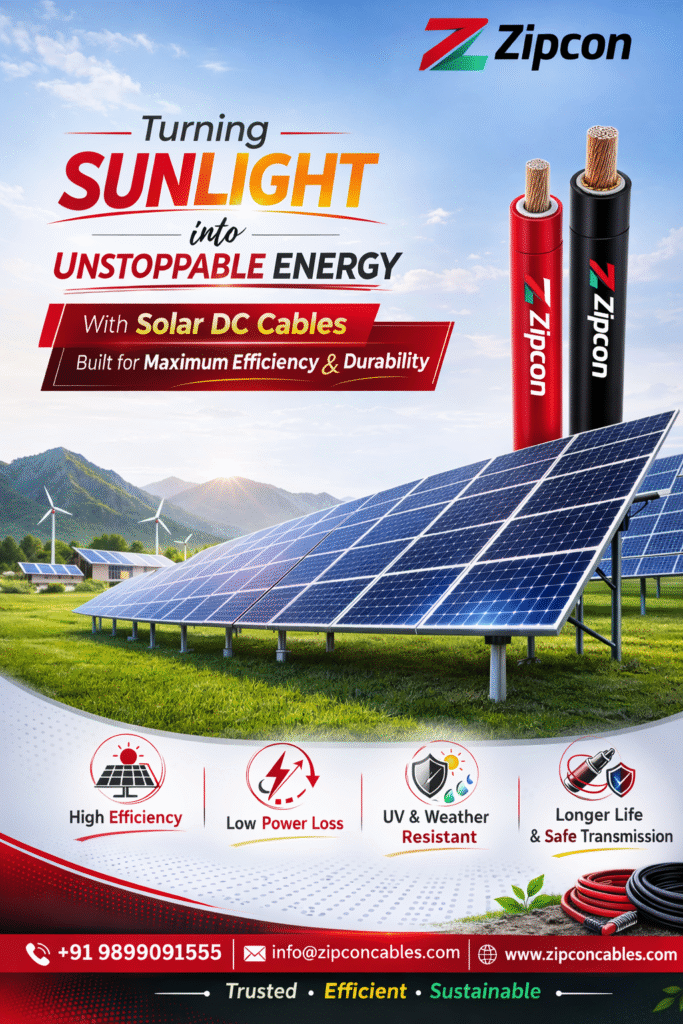
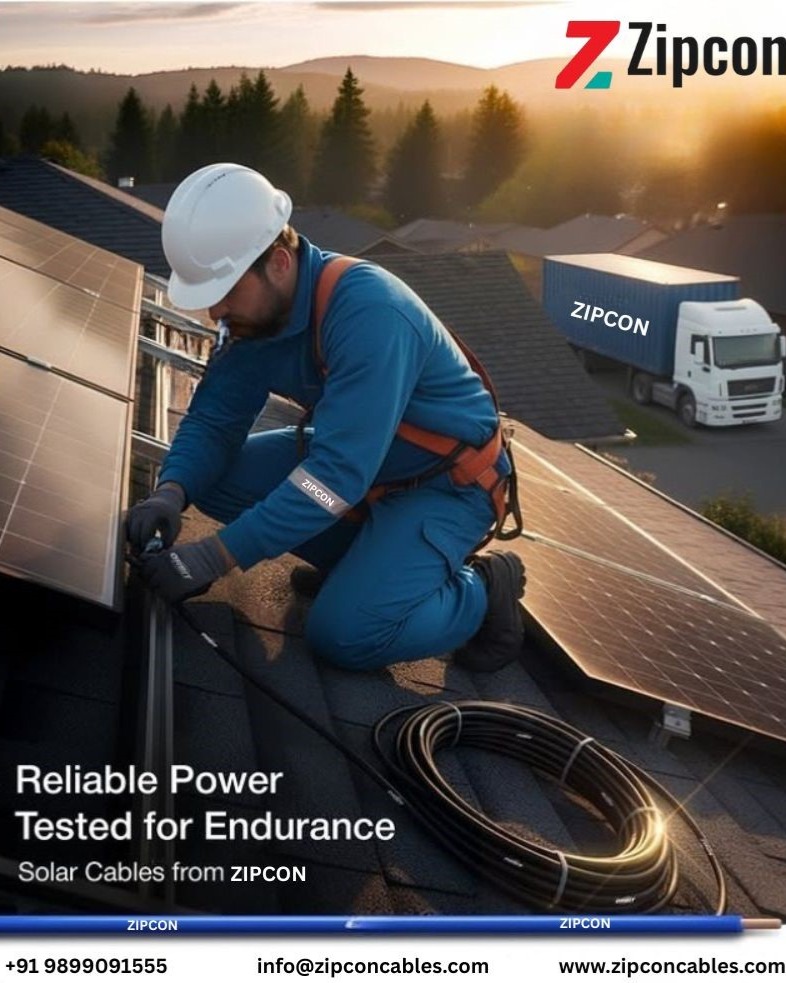
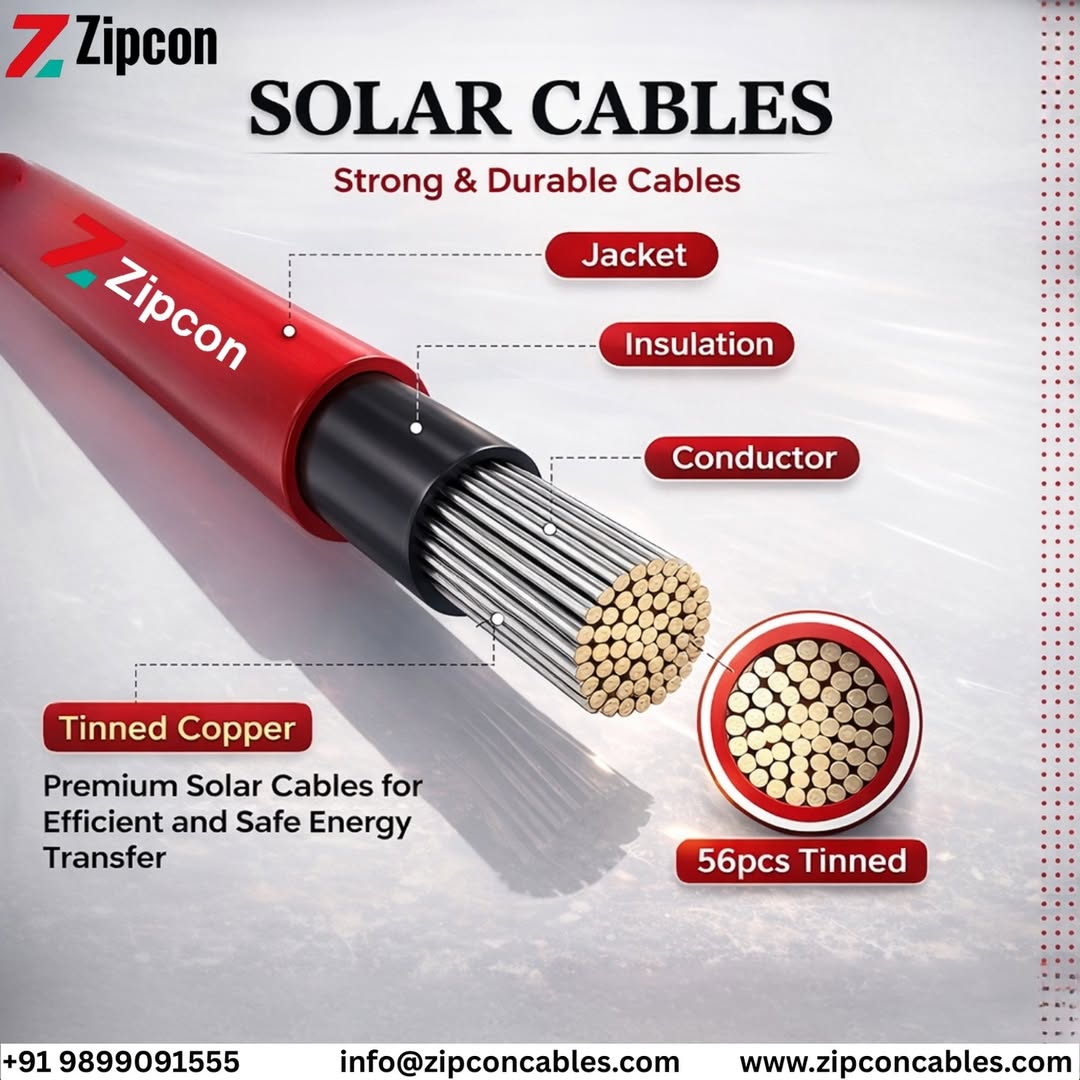
A solar cable is a specially designed DC cable used to connect solar panels and other photovoltaic system components. It is engineered to handle outdoor exposure and high electrical loads over long periods.
Key technical features include:
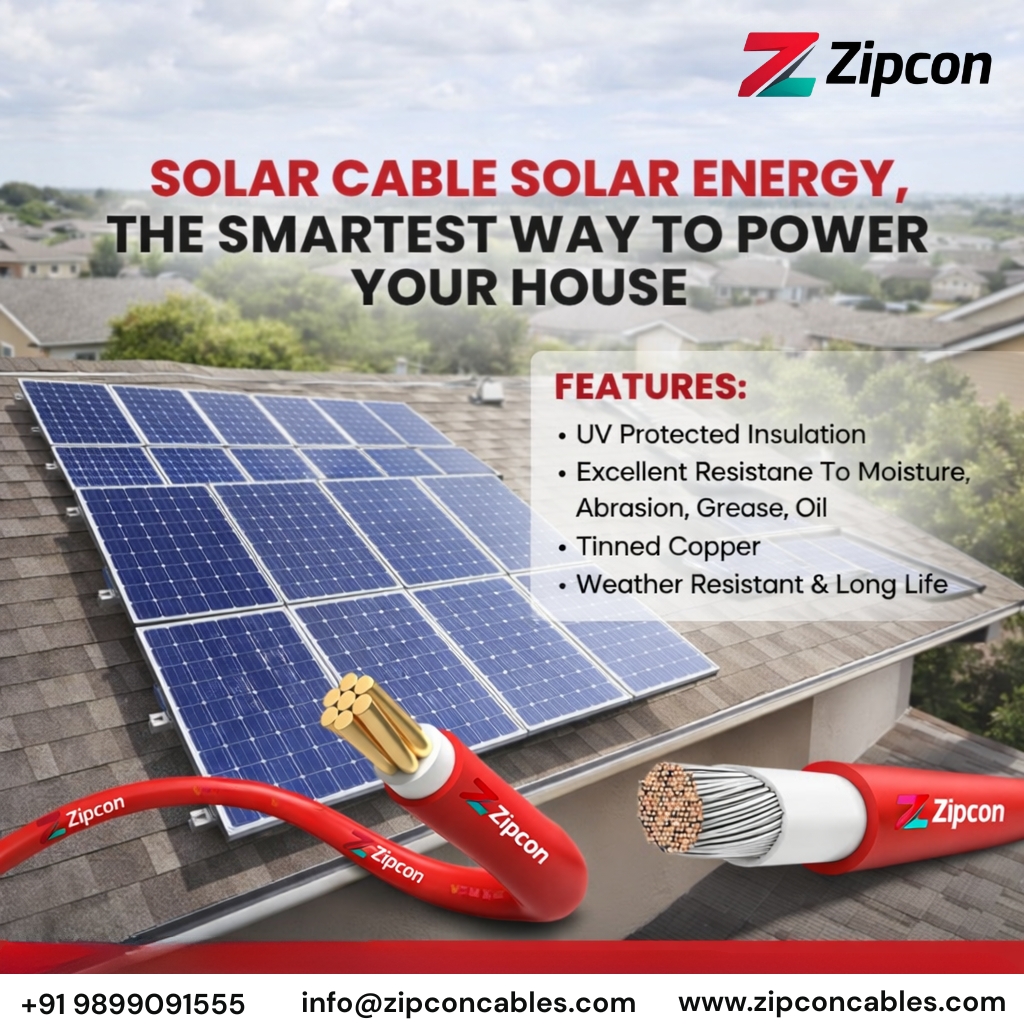
Tinned copper conductors that improve corrosion resistance and conductivity.
UV-resistant outer insulation that protects against sunlight degradation.
XLPO or XLPE insulation designed for high thermal stability and durability.
High DC voltage handling capacity, typically up to 1000V or 1500V.
Temperature resistance ranging from -40°C to +90°C or higher under load.
Unlike standard electrical wires, solar cables are designed specifically for long-term outdoor DC applications.
Key Factors to Consider in Industrial Solar Projects
Conductivity Higher conductivity means lower energy loss. Copper conductors offer superior conductivity, reducing voltage drop across long cable runs. In large rooftop and ground-mounted installations, this directly affects overall system efficiency and energy yield.
Durability and UV Resistance In Gurgaon’s climate, cables are exposed to heat, dust, and strong sunlight. Poor-quality insulation can crack or degrade over time. XLPO or XLPE insulation ensures long-term mechanical and thermal stability. This is especially important in ground-mounted solar farms where cables remain exposed for years.
Weight and Handling Copper cables are heavier, which can increase structural load considerations on rooftops. Aluminium cables are lighter and easier to handle for long runs. However, lighter weight must be balanced against performance requirements.
Cost and Long-Term ROI Aluminium cables are generally more cost-effective upfront. Copper cables are more expensive but reduce energy losses and maintenance risks. For large-scale projects, lifecycle cost matters more than initial savings.
Safety and Fire Resistance Industrial installations must minimize fire risk. High-quality solar cables should be flame-retardant, halogen-free, and capable of handling overload conditions. Poor insulation increases the risk of insulation failure and short circuits.
Installation Requirements Copper cables are easier to terminate and require smaller cross-sections for the same current rating. Aluminium cables require larger cross-sections and proper lugging techniques to avoid loose connections and overheating.
Voltage Drop Performance In a 1 MW plant, long cable runs are common. Even small voltage drops can result in measurable power loss. Copper’s higher conductivity makes it more efficient for longer distances.
Compliance with Solar Standards Industrial projects must comply with IEC and relevant Indian standards for solar DC cables. Using certified, tested cables from manufacturers like Zipcon Cables ensures regulatory compliance and reduces project approval issues.
Copper vs Aluminium Solar Cables – Practical Comparison
Electrical Conductivity Copper: Higher conductivity, lower resistance. Aluminium: Lower conductivity, requires larger size for same performance.
Weight Copper: Heavier. Aluminium: Approximately 30–40% lighter.
Cost Copper: Higher upfront cost. Aluminium: More economical initially.
Long-Term Performance Copper: Better long-term stability and lower maintenance risk. Aluminium: Suitable for controlled environments but needs proper installation practices.
Corrosion Resistance Tinned copper offers excellent corrosion resistance. Aluminium may require additional protection in humid or polluted conditions.
Real-World Scenarios
1 MW Industrial Rooftop Plant In rooftop installations, cable runs are moderate but structural load and safety are critical. Copper solar cables perform better due to lower voltage drop and easier installation in confined spaces. Tinned copper with UV-resistant insulation is the safer long-term choice.
Large Ground-Mounted Solar Farm Here, cable lengths are significant. Aluminium cables may be considered for cost efficiency in long AC runs. However, for DC string connections and combiner box connections, copper cables provide better reliability and reduced energy losses.
Commercial Warehouse Installation For mid-sized commercial rooftops, copper cables are generally preferred. They offer stable performance, better heat handling, and reduced maintenance requirements.
Direct Recommendation Guide
Choose copper solar cable when:
You are dealing with high-current DC strings.
Cable runs are long and voltage drop must be minimized.
The installation is rooftop-based with limited space.
Long-term performance and minimal maintenance are priorities.
Aluminium may be suitable when:
Budget constraints are significant.
Cable runs are extremely long in AC distribution sections.
Proper installation and termination practices are ensured.
Premium UV-resistant cable is non-negotiable when:
Cables are exposed directly to sunlight.
Projects are located in high-temperature zones like Gurgaon.
Long operational life (20–25 years) is expected.
Why Choose Zipcon Cables in Gurgaon
Zipcon Cables has established itself as a technically reliable manufacturer for industrial and large-scale solar projects. Their solar cables are engineered with high-grade conductors and durable insulation systems designed to handle North Indian climate conditions.
Key strengths include:
Strict manufacturing quality control.
High DC voltage-rated cables suitable for industrial applications.
Robust XLPO/XLPE insulation for UV and heat resistance.
Consistent performance under harsh outdoor conditions.
Trusted supply for commercial and industrial solar installations.
For engineers, procurement managers, and EPC contractors in Gurgaon, selecting the right cable is not just a specification decision. It is a performance and risk-management decision. Choosing technically sound solar cables from Zipcon Cables ensures system efficiency, regulatory compliance, and long-term reliability.
In large-scale solar installations, the right cable is not an accessory. It is a core component that determines how efficiently your project performs over the next two decades.
Choosing the right house wire is not just about price — it’s about safety, performance, and long-term reliability. In fast-growing areas like Gurgaon, where residential towers, offices, retail spaces, and small industries are expanding rapidly, electrical loads are higher and more complex than ever. This makes multistrand house wire a practical and dependable choice for both commercial and residential installations.
Brands like Zipcon Cables are increasingly preferred because they focus on consistent conductor quality, insulation strength, and performance under real site conditions.
What Is Multistrand House Wire and Why Is It Used?
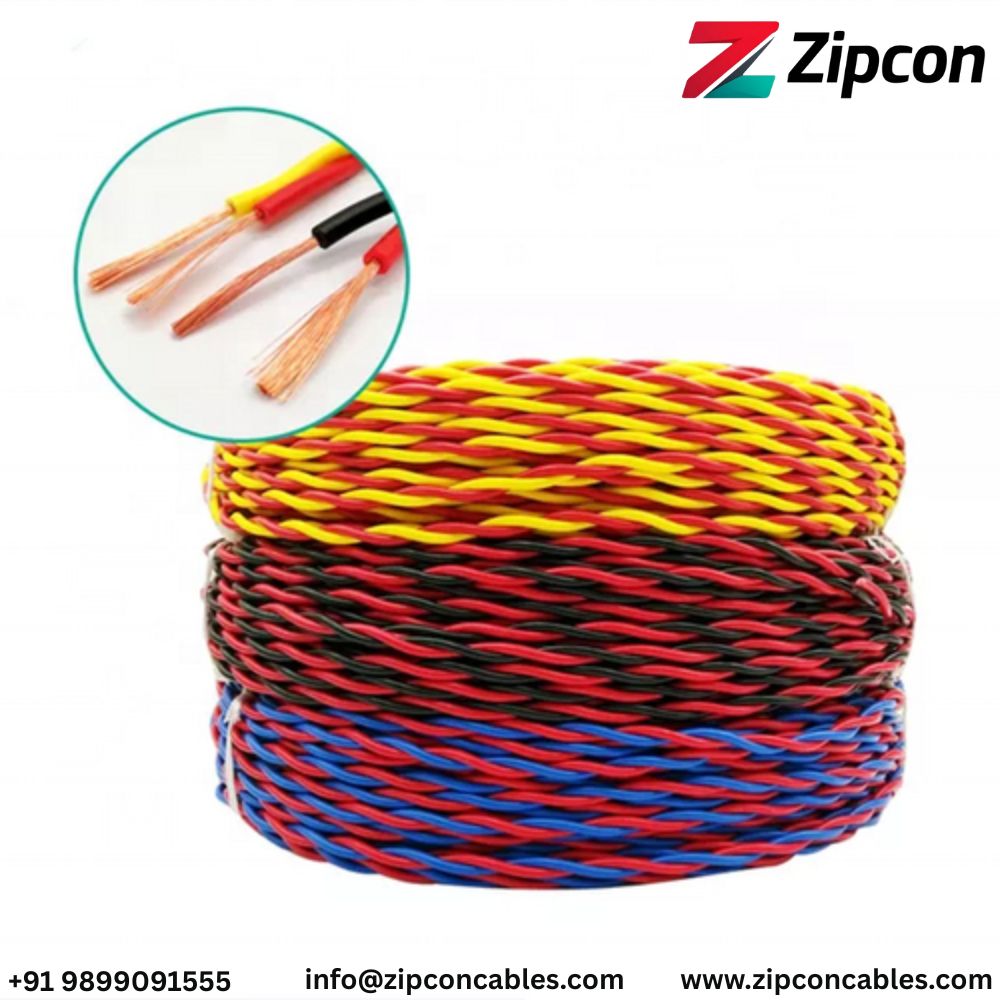
Multistrand house wire consists of multiple thin strands of conductor (usually copper or aluminum) twisted together to form a single core. Unlike single-strand (solid) wire, multistrand wire is flexible and easier to route through conduits and panels.
In residential projects, it is commonly used for lighting circuits, power sockets, AC lines, kitchen appliances, and inverter wiring. In commercial setups, it supports heavier loads such as HVAC systems, lift circuits, distribution panels, and server rooms.
The biggest reason professionals choose multistrand wire is flexibility. During installation, especially in high-rise buildings or tight conduits, flexibility reduces breakage risk and speeds up work.
Conductivity: The Core Performance Factor
Conductivity determines how efficiently current flows through the wire. Copper multistrand wire offers significantly higher conductivity than aluminum. This means:
Lower voltage drop
Better load handling
Reduced heat generation
Improved energy efficiency
For example, in a commercial office where multiple AC units and computers operate simultaneously, copper multistrand wire maintains stable performance without overheating.
Zipcon Cables’ copper multistrand wires are manufactured with high-purity copper, which ensures consistent current flow and minimal resistance losses.
Aluminum, while lighter and cheaper, has lower conductivity. To match copper’s performance, aluminum conductors must be thicker.
Durability and Heat Resistance
Under continuous load, wires heat up. The ability to withstand temperature rise without insulation damage is critical.
Copper performs better in high-load environments because:
It handles higher temperatures efficiently.
It expands and contracts less under heat cycles.
It has stronger tensile strength.
In a residential building with heavy appliances like geysers and induction cooktops, copper multistrand wiring provides better long-term durability.
Aluminum wires are more prone to expansion and contraction, which may loosen connections over time if not installed carefully.
Zipcon Cables focuses on strong PVC insulation and proper strand compaction, improving overall durability and mechanical strength.
Weight and Cost Considerations
This is where aluminum sometimes becomes attractive.
Copper is heavier and more expensive.
Aluminum is lighter and cheaper.
In large commercial projects where cable length runs into hundreds of meters, aluminum may reduce overall material cost and structural load.
However, cost should never compromise safety. For internal house wiring and power circuits, copper remains the safer long-term investment.
Think long term: cheaper installation today should not mean maintenance headaches tomorrow.
Safety and Standards
Safety depends on conductor quality, insulation, and compliance with standards.
Good multistrand house wire should:
Meet IS standards
Have flame-retardant insulation
Offer proper current rating
Provide strong insulation resistance
Copper multistrand wire is generally safer in high-load applications because it resists overheating and reduces the risk of loose terminal connections.
Zipcon Cables ensures consistent strand quality and insulation thickness, which directly impacts safety during overload situations.
Installation Needs and Practical Handling
Multistrand wire behaves differently from single-strand wire.
It bends easily without cracking.
It fits better in crowded conduits.
It reduces stress at connection points.
In a real-world scenario: imagine wiring a large residential tower in Gurgaon. Electricians often pull cables through long vertical conduits. A solid wire may kink or break under stress. Multistrand wire slides more smoothly and withstands bending.
In commercial panels with multiple bends and tight spaces, flexibility becomes a major advantage.
However, proper termination is important. Multistrand wires should be crimped or fitted with lugs to prevent loose strands.
Copper Multistrand vs Aluminum vs Single-Strand
Here’s a practical comparison:
Copper Multistrand Best for high-load residential and commercial circuits. High conductivity, better heat resistance, longer lifespan. Higher upfront cost but better long-term reliability.
Aluminum Multistrand Suitable for budget-sensitive projects and long-distance runs where weight matters. Requires larger cross-section for same performance. Needs careful installation to prevent loosening.
Single-Strand Wire Less flexible. More suited for fixed installations with minimal bends. Not ideal for complex routing in modern buildings.
Real-World Application Scenarios
Large Residential Apartment For power sockets, kitchen loads, and AC wiring — copper multistrand from Zipcon Cables is ideal. It handles fluctuating loads and offers long service life.
Commercial Office Space For distribution boards and heavy electrical equipment — copper multistrand is safer and more stable.
UPS Backup Circuits Voltage stability is critical. Copper ensures minimal voltage drop and consistent backup performance.
Cost-Sensitive Warehouse Project Aluminum may be considered for main feeders if properly sized and installed by experienced professionals.
Direct Recommendation: How to Choose
If your project involves:
High load equipment
Frequent bending and complex routing
Long-term reliability focus
Indoor residential or commercial wiring
Choose copper multistrand wire — especially from a reliable brand like Zipcon Cables.
If your project involves:
Very long cable runs
Lower load demand
Budget constraints
Structural weight considerations
Aluminum multistrand can be considered — but ensure correct sizing and proper termination.
For most residential and commercial internal wiring in Gurgaon, copper multistrand remains the safest and most practical choice.
Final Thought
Electrical wiring is not an area where shortcuts make sense. The difference between average wire and quality multistrand wire shows up after years of use — in safety, efficiency, and maintenance costs.
Zipcon Cables’ multistrand house wires are well-suited for Gurgaon’s growing infrastructure needs because they combine conductivity, flexibility, and insulation strength in a practical, installation-friendly design.
When selecting house wire, focus on load requirements, installation conditions, and long-term reliability — not just initial cost. That decision will protect both your property and your investment for years to come.
Commercial buildings and industrial facilities demand electrical systems that are safe, durable, and capable of handling high loads. This is where multistrand house wires become essential.
Multistrand wires are made of multiple thin strands twisted together to form a single conductor. Compared to single solid-core wires, they offer better flexibility, improved vibration resistance, and more reliable performance in demanding environments. For commercial complexes, factories, warehouses, and high-rise buildings in Gurgaon, choosing the right multistrand house wire directly impacts safety, efficiency, and long-term costs.
If you’re an engineer, contractor, or facility manager, here’s what you need to evaluate before making a decision.
Why Multistrand Wires Matter in Commercial & Industrial Setups
Unlike residential wiring, commercial and industrial installations involve:
Higher current loads
Continuous operation
Vibrations from machinery
Long cable runs
Frequent panel upgrades
Single-core solid wires may crack or fatigue under vibration. Multistrand wires, on the other hand, distribute mechanical stress across multiple strands, making them more durable and reliable in heavy-duty applications.
Key Performance Criteria
Conductivity
Conductivity determines how efficiently electricity flows through the conductor.
Copper offers higher conductivity (about 60% more than aluminium).
Aluminium requires a larger cross-sectional area to carry the same load.
Higher conductivity means:
Less voltage drop
Lower heat generation
Better energy efficiency
Durability
Industrial environments expose wires to:
Heat
Moisture
Mechanical stress
Chemicals
Multistrand conductors resist breakage better due to flexibility. Proper insulation (FR, FRLS, or HRFR) further enhances durability.
Weight
Weight becomes important in:
Long cable runs
Overhead installations
Cable trays
Aluminium is nearly 50% lighter than copper, reducing structural load.
Cost
Aluminium is cheaper per meter.
Copper has higher upfront cost but lower energy loss over time.
Safety
Safety depends on:
Proper insulation
Current-carrying capacity
Short-circuit resistance
Earth continuity
High-quality multistrand wires reduce overheating and fire risks.
Installation Requirements
Flexible multistrand wires are easier to:
Pull through conduits
Bend inside panels
Terminate in switchboards
This reduces installation time and labor costs.
Technical Insights (Simple & Practical)
Multistrand vs Single Strand
Single strand:
Rigid
Harder to bend
Prone to cracking under vibration
Multistrand:
Flexible
Better for panels and machinery
More resistant to mechanical fatigue
For industrial panels and commercial wiring, multistrand is almost always the smarter choice.
Skin Effect
In AC systems, current tends to flow near the outer surface of the conductor (called the skin effect). Multistrand conductors provide more surface area, improving performance slightly in higher-frequency systems. While not a major factor in standard building wiring, it becomes relevant in heavy industrial applications.
Heat Dissipation
Multiple strands allow better heat distribution, reducing localized hotspots. This improves lifespan and safety.
Copper vs Aluminium: Which One Should You Choose?
Here’s a practical comparison:
Criteria
Copper Multistrand
Aluminium Multistrand
Conductivity
Excellent
Moderate
Weight
Heavy
Light
Cost
Higher
Lower
Flexibility
Very good
Good
Corrosion Resistance
Better
Needs proper treatment
Current Capacity
Higher in same size
Requires larger size
Where Copper Performs Better
Industrial control panels
High-load commercial buildings
Critical circuits (server rooms, hospitals)
Short to medium cable runs
Areas with high temperature
Copper is ideal where safety and performance cannot be compromised.
Where Aluminium is More Suitable
Long-distance cable runs
Overhead installations
Budget-sensitive projects
Large distribution feeders
Aluminium works well when weight and cost savings are priorities.
Real-World Use Cases
Heavy-Duty Industrial Panels
Machines create vibration and heat. Copper multistrand wires are recommended here because of superior conductivity and mechanical strength.
Commercial Office Wiring
For lighting, AC systems, and workstations, copper ensures stable voltage and reduced power loss.
Flexible Connections for Machinery & Elevators
Movement and vibration demand flexibility. Multistrand copper cables perform better due to fatigue resistance.
Long Cable Runs Where Weight Matters
In warehouses or factories with long feeder lines, aluminium multistrand cables reduce structural load and installation cost.
Safety & Installation Guidelines
Earth Continuity
Proper earthing ensures fault current safely flows to ground. Use correctly sized earth conductors as per IS standards.
Current Capacity & Derating
Always check:
Ambient temperature
Cable grouping
Installation method (conduit, tray, buried)
High temperatures reduce current-carrying capacity. Apply derating factors as per Indian Standards.
Bending Radius
Avoid sharp bends. Multistrand wires allow tighter bending radius, but excessive bending can damage insulation.
Connectors & Jointing
Use proper lugs for aluminium (bimetallic lugs recommended).
Ensure tight crimping.
Avoid loose connections to prevent overheating.
Compliance
Always select wires compliant with IS standards for safety and durability.
Cost Considerations: Think Long-Term
Many buyers focus only on cost per meter. That’s a mistake.
Short-Term Cost
Aluminium appears cheaper initially.
Long-Term Cost
Copper:
Lower energy losses
Fewer maintenance issues
Longer lifespan
Failure costs in industrial environments can be massive — including downtime, equipment damage, and fire risks. Investing in quality wire reduces these risks.
Lifecycle value matters more than upfront savings.
Why Choose Zipcon Cables?
When selecting the best multistrand house wire in Gurgaon, product quality and brand reliability matter. Zipcon Cables offers:
High conductivity copper and aluminium multistrand wires
Superior insulation for commercial and industrial use
Compliance with IS standards
Consistent quality control
Reliable performance in high-load environments
Their multistrand wires are designed for flexibility, heat resistance, and long-term durability, making them suitable for panels, machinery, commercial buildings, and large infrastructure projects.
Final Recommendation: How to Decide
Choose Copper Multistrand When:
Load is high
Safety is critical
Installation involves machinery or vibration
Long-term reliability is top priority
Choose Aluminium Multistrand When:
Cable runs are long
Weight reduction is important
Budget constraints are significant
Used for main feeders and distribution
If you are wiring a commercial complex or industrial unit in Gurgaon, do not compromise on conductor quality. Evaluate load, environment, cable length, and future expansion needs before deciding.
The right multistrand wire is not just a purchase — it’s a safety investment.
Solar projects in Gurgaon are growing fast — from warehouse rooftops to large industrial plants and institutional campuses. While modules and inverters get most of the attention, cable selection directly affects efficiency, safety, and long-term performance. For engineers, electricians, and procurement teams, choosing the right solar cable is a technical decision — not just a price comparison.
This guide breaks down conductivity, durability, weight, cost, safety, installation needs, and where copper or alternative cables make more sense in real-world commercial and industrial projects.
In commercial and industrial solar systems, cables handle continuous DC current under high temperature, UV exposure, and outdoor conditions. Poor cable choice can lead to:
Voltage drop and energy loss
Overheating and insulation failure
Frequent maintenance
Reduced system lifespan
In Gurgaon’s climate — high summer heat, dust, and occasional moisture — cable durability and thermal stability are critical.
Key Performance Factors
Conductivity
Copper offers higher electrical conductivity than aluminium. This means:
Lower resistance
Reduced voltage drop over distance
Better efficiency in high-current applications
For long cable runs between strings and inverters, copper performs better when space is limited and conductor size must stay compact.
Aluminium has lower conductivity, so a larger cross-sectional area is needed to carry the same current.
Practical takeaway: For compact commercial rooftops where voltage drop control is critical, copper is often the safer choice.
Durability & Environmental Resistance
Solar DC cables must resist:
UV radiation
High temperatures (up to 90–120°C rating depending on insulation)
Moisture and dust
Mechanical stress during installation
Quality solar cables from reliable manufacturers like Zipcon Cables are typically:
UV stabilized
XLPO or cross-linked insulated
Flame retardant
Weather resistant
Copper conductors generally offer better mechanical strength under repeated thermal cycling. Aluminium requires careful termination to prevent loosening over time.
Weight
Weight becomes important in:
Large rooftop projects
Elevated cable trays
Long suspended runs
Aluminium is significantly lighter than copper. In large industrial ground-mounted plants, this reduces structural load and makes handling easier.
For high-rise commercial rooftops in Gurgaon, lighter cable can reduce installation strain.
Cost
Copper is more expensive than aluminium. For large-scale industrial solar farms, material cost difference becomes substantial.
However, cost evaluation should include:
Cable size needed
Installation hardware
Long-term energy loss
Maintenance risk
Sometimes cheaper cable leads to higher lifetime loss due to increased resistance or frequent termination issues.
Safety
Safety factors include:
Flame retardancy
Short-circuit resistance
Thermal stability
Insulation quality
Copper has better short-circuit withstand capacity. It handles fault current more reliably in high-load industrial systems.
For commercial buildings with strict fire compliance requirements, copper cables provide added reliability.
Zipcon Cables focuses on compliance with Indian and international standards, ensuring safer operation under demanding conditions.
Installation Requirements
Copper:
Easier to terminate
Less prone to connection loosening
Smaller conductor size for same load
Aluminium:
Requires proper lugs and anti-oxidation treatment
Needs larger cross-section
Slightly more care during crimping
For projects with tight commissioning timelines, copper can reduce installation complexity.
Copper vs Aluminium: Quick Comparison
Copper Solar Cable
Higher conductivity
Smaller size for same current
Higher cost
Better mechanical strength
Ideal for compact or high-load systems
Aluminium Solar Cable
Lower cost
Lightweight
Requires larger size
Suitable for large ground-mounted projects
Needs proper termination handling
Real-World Scenarios in Gurgaon
Scenario 1: Commercial Rooftop (100 kW – 500 kW)
Example: A warehouse rooftop in Manesar.
Challenges:
Limited cable tray space
Long daytime load
High summer temperature
Best option: Copper solar cable for DC string connections and inverter runs. It minimizes voltage drop and improves system efficiency over 25 years.
Here, efficiency matters more than minor material savings.
Example: A manufacturing unit in IMT Gurgaon installing a captive solar plant.
Challenges:
Long cable runs
Large cable quantities
Budget sensitivity
Best option: Aluminium cables for long-distance main runs where size flexibility is available. Copper can still be used in critical connections near inverters.
This hybrid approach balances cost and performance.
Scenario 3: High-Temperature Industrial Zone
Example: Solar plant near heavy machinery areas with heat exposure.
Best option: Copper cables with high-temperature rated insulation. They handle thermal cycling better and reduce risk of conductor expansion-related loosening.
Where Copper Clearly Performs Better
High-current inverter connections
Limited tray space
Rooftop commercial buildings
Projects requiring minimal voltage drop
Installations with strict fire safety norms
Where Aluminium Makes More Sense
Large-scale industrial solar farms
Long-distance cable routing
Budget-sensitive projects
Where weight reduction is important
Choosing the Right Solar Cable: Practical Recommendation
Instead of asking “Which is better?” ask:
What is the load current?
How long are the cable runs?
Is tray space limited?
What is the budget constraint?
What are the environmental conditions?
For commercial rooftop projects in Gurgaon, copper solar cables are generally the safer and more efficient choice.
For large industrial installations where cost and quantity dominate, aluminium can be practical — provided proper installation practices are followed.
A reliable manufacturer like Zipcon Cables ensures:
Consistent conductor quality
Proper insulation standards
UV and heat resistance
Compliance with safety norms
Long-term durability in Indian climate conditions
This reduces risk during commissioning and operation.
Final Advice for Engineers & Buyers
Don’t choose solar cable based on price per meter alone.
Calculate:
Total voltage drop
Long-term energy loss
Installation complexity
Maintenance risk
25-year lifecycle cost
In commercial systems where downtime is expensive, copper is usually worth the investment. In large industrial setups, a well-planned aluminium deployment can optimize budget without compromising safety.
The best solar cable in Gurgaon is not just about metal choice — it’s about matching conductor type, insulation quality, and installation method to the project’s technical requirements.
Make the decision based on application, not assumption.
Selecting the right flexible wire is not just a purchase decision — it directly affects electrical safety, system performance, and long-term reliability. Whether you are wiring a high-rise apartment in Gurgaon, installing machinery in an industrial plant, or setting up HVAC systems, the choice between copper and aluminium flexible wires matters.
Among manufacturers serving Gurgaon, Best Flexible Wire Brand in Gurgaon, Zipcon Cables has built a reputation for supplying technically reliable flexible wires for residential, commercial, and industrial applications. Instead of focusing on marketing claims, this article breaks down what engineers and buyers actually need to evaluate: conductivity, durability, weight, cost, safety, and practical installation scenarios.
Flexible wires are multi-stranded conductors designed for easier bending and routing compared to solid wires. They are widely used in:
Panel wiring
Control circuits
Machinery connections
Residential internal wiring
HVAC systems
Temporary and movable installations
The two common conductor materials are copper and aluminium. Each has specific advantages and limitations.
Conductivity
Conductivity determines how efficiently a wire carries current.
Copper has higher electrical conductivity than aluminium. This means:
Lower voltage drop over distance
Better current carrying capacity for the same cross-section
Reduced heat generation
In high-rise apartment wiring, where long vertical runs are common, copper flexible wires maintain stable voltage levels and reduce power loss.
Aluminium has lower conductivity compared to copper. To carry the same current, aluminium requires a larger cross-sectional area. However, for large-scale power distribution where conductor size can be increased, aluminium remains a practical choice.
Durability and Mechanical Strength
Copper is mechanically stronger and more resistant to fatigue. It performs better in:
Repeated bending situations
Machinery connections
Control panels
Vibrating equipment environments
For example, in factory machinery connections where cables are frequently moved or exposed to vibration, copper flexible wires offer better long-term durability.
Aluminium is softer and more prone to deformation. It also forms an oxide layer on exposure to air, which can affect connections if not properly terminated. Proper lugs and anti-oxidation measures are essential when using aluminium.
Weight
Weight becomes critical in large projects.
Aluminium is significantly lighter than copper. In high-rise buildings or long cable tray installations, lighter weight reduces structural load and makes handling easier.
For long-distance power distribution within industrial campuses, aluminium flexible cables reduce transportation and installation effort.
Copper, being heavier, adds more load but offers superior electrical performance.
Cost
Cost is often the deciding factor in large procurement decisions.
Copper is more expensive due to its higher conductivity and material value. However, because it carries more current in a smaller size, overall installation space and conduit requirements may be reduced.
Aluminium is more cost-effective per meter, especially for large cross-section cables. In projects with tight budgets and long cable runs, aluminium significantly lowers material cost.
However, buyers must consider total system cost — including connectors, lugs, and maintenance.
Safety Performance
Safety depends on proper installation and material characteristics.
Copper offers:
Lower resistance heating
More stable terminations
Better fire safety margins
In residential internal wiring and panel wiring, copper flexible wires are generally preferred due to reduced risk of loose connections and overheating.
Aluminium requires careful installation:
Correct termination techniques
Proper crimping tools
Periodic inspection
If installed incorrectly, aluminium connections may loosen over time due to thermal expansion differences.
Installation Requirements
Copper flexible wires are easier to terminate and install. Electricians prefer copper for:
Distribution boards
Switch panels
UPS systems
Generator connections
Aluminium wires require:
Larger terminals
Special connectors
Skilled handling
In HVAC installations across commercial buildings, aluminium may be used for main feeder lines, while copper is used for internal control wiring.
Typical Use Cases
High-rise apartment wiring Copper flexible wires are commonly used for internal circuits, lighting, and power sockets due to better conductivity and safety margins.
Factory machinery connections Copper is preferred for control panels and equipment wiring because of vibration resistance and durability.
Panel wiring Copper ensures reliable termination and compact installation.
Long-distance power distribution Aluminium becomes more economical for feeder lines and sub-distribution networks.
HVAC installations Aluminium may be suitable for main supply lines, while copper is ideal for internal system connections.
When Copper is the Better Choice
Choose copper flexible wires when:
Load is high and voltage drop must be minimal
Safety is the top priority
Installation space is limited
Frequent bending or movement is involved
Long-term maintenance needs to be minimal
Copper is typically recommended for residential internal wiring, industrial control panels, and sensitive electrical systems.
When Aluminium Makes More Sense
Choose aluminium flexible wires when:
Cable runs are long
Budget constraints are significant
Structural weight reduction is important
Application is bulk power transmission
Aluminium works well for feeder lines in large commercial buildings and industrial facilities.
Real-World Decision Guidance
For engineers and procurement managers in Gurgaon, the right choice depends on practical factors:
Budget constraints If cost per meter is the main concern in large-scale projects, aluminium provides savings.
Load requirements For higher current loads within compact systems, copper is safer and more efficient.
Safety priority For residential buildings and critical installations, copper offers stronger safety margins.
Installation environment In vibration-prone environments, copper performs better.
Long-term maintenance Copper generally requires less maintenance compared to aluminium connections.
Why Zipcon Cables is a Trusted Choice in Gurgaon
As a flexible wire manufacturer and supplier in Gurgaon, Zipcon Cables provides both copper and aluminium flexible wires designed for residential, commercial, and industrial applications. The focus remains on:
Consistent conductor quality
Proper stranding for flexibility
Reliable insulation standards
Quality control during manufacturing
Compliance with electrical safety norms
Instead of offering a one-material solution, Zipcon Cables supports project-specific requirements — whether it is high-rise housing, factory installations, HVAC systems, or long-distance feeder applications.
Final Recommendation
There is no single “best” conductor for all applications.
If your priority is performance, safety, and long-term reliability in internal wiring or machinery connections, copper flexible wires are the better choice.
If your project involves large-scale power distribution, longer runs, and cost optimization, aluminium flexible wires can be the more practical option — provided installation standards are followed correctly.
A technically sound manufacturer like Zipcon Cables ensures that whichever conductor you select, it performs reliably under real working conditions. The key is not just choosing a brand, but choosing the right conductor for the right application.
Choosing the right housing wire in Noida is not a small decision. Rising temperatures, increasing appliance loads, and high-density residential construction mean that electrical systems are under constant stress. Whether it’s a 3BHK in Sector 137, an independent villa in Greater Noida West, or a builder floor in Sector 75, wiring must handle daily load safely and efficiently for years. A poor-quality wire may save money initially but can lead to voltage drop, overheating, and safety risks. That is why many homeowners, contractors, and electricians prefer Zipcon Cables for residential wiring projects.
Conductivity determines how efficiently electricity flows through a wire. Higher conductivity reduces voltage drop and heat generation.
Copper wires offer excellent conductivity. They carry more current with lower resistance, which means better performance for high-load appliances like air conditioners, geysers, induction cooktops, and EV chargers. In modern Noida homes where multiple appliances run simultaneously, copper wiring ensures stable voltage and energy efficiency.
Aluminum wires have lower conductivity compared to copper. To carry the same load, a thicker aluminum conductor is required. While this works in certain applications, it may not be ideal for compact residential wiring systems where space and reliability matter.
Zipcon Cables manufactures high-purity conductors that maintain consistent current flow, reducing power loss and ensuring dependable performance.
Durability: Built for Long-Term Use
Durability depends on conductor quality and insulation strength. Good housing wires must resist heat, moisture, and mechanical stress.
In Noida’s climate—hot summers, humidity during monsoons—insulation quality becomes critical. Fire-retardant PVC insulation with high heat resistance prevents cracking and breakdown over time. Zipcon Cables uses insulation materials designed to handle temperature fluctuations without losing flexibility.
Copper wires are mechanically stronger and less prone to breakage. Aluminum is lighter but more susceptible to expansion and contraction, which can loosen connections over time if not properly installed.
Weight: Handling and Structural Considerations
Weight affects installation and cable routing. Copper is heavier than aluminum, which can increase handling effort during large installations. However, in residential housing, this difference is rarely a structural concern.
Aluminum’s lighter weight makes it easier to handle in long runs, especially in larger properties. But in standard apartments and builder floors, the weight difference is usually secondary to performance and safety.
Cost: Initial Price vs Long-Term Value
Copper wires cost more upfront than aluminum. However, they offer longer lifespan, better conductivity, and lower maintenance risk. For owner-occupied homes, copper wiring is usually a better long-term investment.
Aluminum wires are more budget-friendly. For rental properties or short-term usage where cost sensitivity is high, aluminum may be considered—provided installation is done carefully and load calculations are accurate.
Zipcon Cables offers both copper and aluminum housing wires, giving buyers flexibility based on project budget and requirements.
Safety: Non-Negotiable in Residential Projects
Electrical safety is critical. Housing wires must be fire-retardant, resistant to short circuits, and compliant with relevant standards.
Copper performs better in safety-critical circuits such as main power lines, kitchen wiring, and air-conditioner connections. It handles overload situations more reliably and reduces overheating risk.
Aluminum can be safe when properly sized and installed but requires careful jointing and termination. Loose connections can cause heating issues if not handled professionally.
Zipcon Cables focuses on fire-retardant insulation and strict quality control, which is essential in densely populated residential areas.
Installation Needs: Practical Site Considerations
In a typical 3BHK flat in Noida, electricians prefer flexible copper wires for easy pulling through conduits and stable terminations in switchboards.
In an independent villa with long cable runs, aluminum may be considered for certain non-critical circuits to manage cost. However, main distribution lines are usually kept copper for reliability.
In builder floor projects, contractors often standardize on copper for uniform safety and reduced callbacks.
Real-World Scenarios
In Sector 137, a newly constructed apartment complex faced voltage fluctuation complaints due to substandard wiring. After rewiring critical circuits with high-quality copper wires, load stability improved significantly.
In Greater Noida West, a rental property project opted for aluminum wiring in selected low-load lighting circuits to manage budget. However, the main power circuits were kept copper to ensure safety.
In Sector 75, a villa owner installing multiple air conditioners and a modular kitchen chose copper wiring throughout to avoid overheating risks and future maintenance.
Copper vs Aluminum: Clear Comparison
Copper is stronger, more conductive, and more reliable for high-load and safety-sensitive areas. It suits owner-occupied homes, premium projects, and properties with heavy appliance usage.
Aluminum is lighter and less expensive. It can be suitable for controlled, low-load applications where budget constraints are primary and installation is handled professionally.
Direct Recommendation
Choose copper wires if:
The property is owner-occupied
The home has multiple high-power appliances
Long-term safety and low maintenance are priorities
Consider aluminum wires if:
The project is cost-sensitive
Loads are moderate and carefully calculated
Installation quality can be strictly controlled
For both copper and aluminum housing wires, Zipcon Cables provides consistent conductor quality, durable insulation, and dependable performance suited for Noida’s residential needs.
Conclusion
Housing wiring is a long-term investment in safety and reliability. In a growing city like Noida, where residential demand and electrical load continue to rise, choosing the right wire brand makes a measurable difference. Whether selecting copper for maximum performance or aluminum for budget efficiency, the focus should always be on quality and proper installation. With strong manufacturing standards and reliable product performance, Zipcon Cables offers a practical and trustworthy solution for modern residential wiring projects.
For anyone specifying, buying, or installing cables in Noida — whether you’re an engineer, electrician, or procurement lead — the core question isn’t what’s cheapest but what performs best for the job. In both residential and industrial settings, you want multicore cables that combine reliable conductivity, mechanical strength, reasonable weight, safety under load, and straightforward installation. In most cases, Zipcon Cables’ copper multicore variants hit the balance that projects need. This article cuts through marketing fluff and gives you straight, technical insights to make good decisions.
A multicore cable bundles several insulated conductors within a single outer sheath. That design:
Reduces installation time
Cuts clutter in cable trays and conduits
Improves organization in complex systems
Often saves money on labor and accessories
Key Parameters: What You Should Prioritize
Before we compare options, here are the parameters that matter on the ground:
Conductivity
Conductivity determines how well a cable carries current with minimal losses.
Copper: Excellent conductivity — around 59.6 × 10⁶ S/m — meaning lower voltage drop and less heating. That’s why heavy-load circuits, long cable runs, and high-efficiency electrical systems favor copper.
Aluminum: About 61% of copper’s conductivity by volume and gets closer by weight, but requires larger cross-sectional area to match copper performance.
Field takeaway: For long runs or high-demand circuits (motors, elevators, HVAC), copper multicore cables outperform aluminum in efficiency and safety.
Durability
Durability is about mechanical strength and lifespan.
Copper: Stronger and more fatigue-resistant. It tolerates bending and thermal cycling without cracking.
Aluminum: Softer, more prone to creep under torque in lugs and terminals; can loosen over time.
Noida’s climate swings — hot summers, monsoon humidity — make mechanical stability important. Copper stays stable longer against oxidation and physical stress.
Weight
Cable weight affects installation labor and support structures.
Aluminum: ~30–50% lighter than copper for the same conductivity rating (before area adjustments).
Copper: Heavier, which matters in vertical risers or suspended trays.
However, once you upsise aluminum to match copper’s conductivity, the weight gap narrows.
Practical point: For upstairs riser installations in residential blocks where long cable runs aren’t present and loads are modest, aluminum multicore can reduce installation effort.
Cost
Cost is unavoidable in budgeting:
Copper Multicore: Higher upfront material cost.
Aluminum Multicore: Lower upfront cost but may require larger conductors and more robust lugs/terminations.
Real-world example: In a 50-meter feeder for a 15 kW load, aluminum might save initial spend but increase losses and future operating costs. Copper may cost ~20–30% more on material but saves on energy bills and maintenance.
Safety
Safety isn’t negotiable:
Copper advantages
Lower resistance → less heat → lower fire risk
Better mechanical stability → reduced risk of conductor breakage
Easier, more reliable terminations
Aluminum trade-offs
Softer metal → can deform under high torque
Oxidizes to a non-conductive film → needs oxidation inhibitors and careful connection techniques
In industrial settings like Noida’s factories, safety codes often lean toward copper for critical circuits (emergency power, drives, control systems) because it’s more predictable under fault conditions.
Installation Needs
Installation is where theory meets reality:
Copper Multicore
More forgiving during pulling through conduits
Handles bends and kinks better
Smaller diameters for the same current rating → easier routing
Aluminum Multicore
Needs careful terminations
Requires larger bending radii
Special anti-oxidation paste recommended at joins
If your Noida project uses dense cable trays or tight spaces, copper multicore typically makes the job quicker and cleaner.
Copper vs Aluminum: On-Site Comparison
Feature
Copper Multicore
Aluminum Multicore
Conductivity
Excellent
Good with larger area
Mechanical Strength
High
Moderate
Weight
Heavy
Lighter
Cost
Higher initial
Lower initial
Termination Ease
Easy
Trickier
Long-Term Performance
Strong
Adequate with maintenance
Suitability for Critical Loads
Excellent
Moderate
Conclusion: Copper multicore cables dominate where performance, safety, and long life matter. Aluminum has its place in cost-sensitive, low-load, short-run situations.
Typical Use Cases in Noida
Residential Buildings
Main distribution (meters → consumer panels): Copper multicore is recommended for reduced losses and fire safety compliance.
Floor risers: Copper for high-load apartments; aluminum acceptable for lighting circuits but only if terminations are handled well.
Balcony solar circuits: Copper multicore with UV-resistant jackets ensures long outdoor life.
Industrial Projects
Heavy machinery feeders: Copper multicore — minimal voltage drop under heavy currents.
Control systems and panel wiring: Always copper multicore for signal fidelity and safety.
Lighting and low-power circuits: Aluminum can be used if cost constraints are strict, but install teams must be experienced.
Specialty Variants: When They Make Sense
Noida industries have diverse environments — chemical plants, textile units, cold storage.
XLPE Insulation: Better heat resistance and mechanical strength than PVC; ideal for high-temperature industrial zones.
Armored Multicore: Protects against rodents, impact, and external damage in factory floors or underground ducts.
Fire-Resistant Cables: Required for escape routes and emergency lighting in high-rise apartments.
Zipcon Cables offers all these variants with consistent quality across cores.
Practical Recommendations
Choose Zipcon Copper Multicore When:
The load is continuous or high (motors, HVAC, lifts)
Cable runs exceed 20–30 meters
Safety and long life are priorities
Installation in industrial or high-rise residential sectors
Consider Aluminum Multicore Only When:
Loads are low and short runs
Budget constraints are significant
Installation team is skilled with aluminum terminations
Always:
Size cables not just by current but by voltage drop and ambient temperature
Use proper glands and ferrules based on conductor type
Avoid mixing materials without transition lugs
For most residential and industrial applications in Noida, Zipcon Cables’ copper multicore products offer the best balance of conductivity, durability, safety, and ease of installation. Aluminum alternatives can work in niche, low-demand scenarios, but they require careful planning and execution to avoid long-term issues.
In your next project, focus first on the load profile and environment — that determines whether copper’s higher upfront cost pays off in performance and peace of mind.
Choosing the right solar cable is not just a technical formality in a commercial or industrial solar project — it directly affects how efficiently your system performs for the next 25 years. Many project owners focus heavily on panels and inverters but underestimate the role of cables. The result? Higher voltage drop, unexpected heating, insulation failure, and long-term energy loss.
If you’re planning a rooftop plant, factory installation, or utility-scale Best Solar Cable project in Noida, your cable choice must match your load requirements, site conditions, and budget — not just the lowest per-meter price.
This guide explains what truly matters when selecting the best solar cable in Noida and how to choose between copper and aluminium options wisely. We’ll also look at why Zipcon Cables is a practical and reliable solution for commercial and industrial solar projects.
Conductivity determines how efficiently electricity flows through a cable. Higher conductivity means lower resistance — and lower resistance means less voltage drop.
Copper has higher conductivity than aluminium. In practical terms, that means:
Lower voltage drop over long distances
Smaller cable size for the same current rating
Better performance in high-load systems
For projects where the distance between panels, inverters, and transformers is significant, conductivity becomes a critical decision factor. Even a small voltage drop percentage can impact overall system output.
Durability in Harsh Conditions
Solar cables operate in demanding environments. They face:
Continuous UV exposure
High rooftop temperatures (often above 60°C in industrial zones around Noida)
Rain and moisture
Mechanical stress during installation
Quality solar cables use XLPO (cross-linked polyolefin) insulation. This material resists UV radiation, heat, and flame spread. For industrial and commercial sites, heat resistance and long-term insulation stability are non-negotiable.
Weight and Structural Load
Copper is heavier. Aluminium is lighter.
In large rooftop projects, especially on pre-engineered buildings or older factory sheds, cable weight can influence tray loading and support structure requirements. Aluminium cables help reduce structural stress in such cases.
Cost Beyond Price Per Meter
Copper costs more than aluminium. But smart buyers don’t compare price per meter alone. They evaluate:
Required cross-section size
Voltage drop impact
Installation complexity
Long-term energy loss
Sometimes paying more upfront for copper reduces operational losses over the system’s lifetime.
Safety and Compliance
In industrial settings, safety is critical. Solar cables should offer:
Flame-retardant insulation
Low smoke emission
High insulation resistance
Compliance with recognized standards
Good cable quality minimizes fire risk and short-circuit failure — which is essential in commercial facilities where downtime means revenue loss.
Installation Practicality
Fine-stranded copper cables are generally more flexible and easier to route in tight rooftop spaces. Aluminium cables may require careful termination and larger bending radii to ensure secure connections.
For complex rooftop layouts, flexibility can significantly reduce installation time.
Copper vs Aluminium Solar Cables – Practical Comparison
Where Copper Performs Better
Long cable runs with strict voltage drop limits
High-current DC systems
Rooftop systems with limited tray space
High-temperature industrial rooftops
Projects prioritizing maximum efficiency
Copper’s higher conductivity allows smaller cross-sections and reduced losses, making it ideal for performance-focused installations.
Where Aluminium Is More Suitable
Large ground-mounted utility projects
Budget-sensitive projects with large cable quantities
Long AC transmission runs where larger cable sizes are acceptable
Installations where reducing structural load matters
Aluminium becomes cost-effective when properly sized to compensate for its lower conductivity.
Real-World Scenarios
Industrial Rooftop in Noida
Limited space, high surface temperatures, moderate cable distances. Best choice: Copper DC solar cables for better heat resistance, lower voltage drop, and easier routing.
Ground-Mounted Utility Project Near Noida
Large area, long cable routes, tight project budgets. Best choice: Aluminium for long AC runs, copper for DC strings where voltage drop must be tightly controlled.
Long Run Between Inverter and Transformer (150+ meters)
Best approach: Perform a voltage drop calculation. Either increase copper cross-section or use properly sized aluminium cable. Aluminium often becomes economically practical here.
High-Temperature Industrial Facility
Dust, heavy machinery heat, continuous operation. Best choice: High-quality copper cable with UV-resistant and heat-resistant insulation.
Why Zipcon Cables Is a Reliable Option
When choosing solar cables in Noida, reliability and consistency matter more than brand claims. Zipcon Cables focuses on:
High-conductivity copper and aluminium conductors
UV-resistant and heat-resistant insulation
Durable outer sheathing for outdoor conditions
Stable performance under industrial load
For engineers and procurement managers, this means predictable performance, reduced maintenance risk, and fewer installation issues.
Direct Recommendation: How to Decide
Keep it simple:
Choose copper if efficiency, compact installation, and long-term performance are your top priorities. Ideal for commercial rooftops and industrial facilities.
Choose aluminium if you are executing a large ground-mounted project and need to optimize capital cost without compromising acceptable performance.
For mixed installations, use copper in DC strings and aluminium for long AC transmission runs after proper voltage drop calculation.
Before finalizing your purchase, calculate:
Current load
Distance of cable run
Acceptable voltage drop (usually 1–3%)
Environmental conditions
Then select the cable size and material accordingly.
The right solar cable does more than connect panels — it protects your energy output and investment for decades. In commercial and industrial solar projects across Noida, choosing a dependable manufacturer like Zipcon Cables ensures you are investing in durability, safety, and long-term performance.
When it comes to solar power systems, selecting the right type of cable is crucial for efficient energy transmission. Among the key considerations for engineers, electricians, and buyers is whether to choose copper or aluminium cables for solar installations. Both options have distinct advantages, and understanding these differences can help in making an informed decision. Zipcon Cables, one of the leading solar cable manufacturers in Noida, offers both copper and aluminium cables, each suited to specific use cases. In this article, we will break down the differences between these two types of cables and help you choose the right one based on your project needs.
Copper vs. Aluminium Solar Cables: Key Differences
Conductivity
Copper is known for its excellent electrical conductivity. In fact, it is the most conductive material commonly used in electrical systems. This means that copper cables can transmit electricity more efficiently over long distances, reducing the potential for energy loss.
Aluminium, on the other hand, has about 60% of the conductivity of copper. While it is less efficient in terms of electrical conductivity, it still performs well in short to medium-range applications. For larger solar systems where efficiency is critical, copper cables are typically the preferred choice.
Recommendation: If your solar project requires minimal voltage loss and maximum energy transfer, copper cables from Zipcon Cables are ideal. For smaller-scale or cost-sensitive installations, aluminium cables can be a suitable alternative without significant performance compromise.
Weight
One of the standout advantages of aluminium cables is their lighter weight. Aluminium is approximately one-third the weight of copper, which can make a big difference in solar installations where weight and ease of handling are important. For rooftop installations, where cables need to be routed through tight spaces or over long distances, the reduced weight of aluminium cables can ease the physical burden.
Copper cables, being heavier, can be more difficult to handle, especially in large-scale projects. However, the superior conductivity of copper often compensates for this drawback.
Recommendation: For residential or smaller commercial solar setups, where weight may be a concern, aluminium cables are a great option. For larger, industrial-scale solar farms or installations where performance is paramount, copper cables would be more suitable.
Durability
Both copper and aluminium cables are durable, but copper cables tend to have a longer lifespan. Copper is less susceptible to corrosion and oxidation compared to aluminium, especially in harsh environmental conditions. Aluminium cables, while still durable, are more prone to corrosion over time, particularly when exposed to moisture and air. This can lead to performance degradation in solar systems, especially in coastal or humid environments.
Zipcon Cables offers high-quality coatings on both copper and aluminium cables to improve their resistance to environmental factors, enhancing their durability in various climates.
Recommendation: For installations in areas with harsh weather conditions or near saltwater, copper cables are generally a better choice due to their superior resistance to corrosion. For less demanding environments, aluminium cables will perform adequately.
Cost
One of the most significant factors influencing cable choice is cost. Copper cables are more expensive than aluminium cables due to the higher cost of raw materials and manufacturing processes. However, copper’s superior conductivity often justifies the higher initial investment for long-term savings in terms of efficiency.
Aluminium cables are a more budget-friendly option, making them an attractive choice for cost-sensitive projects where the slight trade-off in performance is acceptable.
Recommendation: If budget constraints are a primary concern and the project can tolerate a slight reduction in efficiency, aluminium cables are an economical choice. For large-scale projects that prioritize efficiency and longevity, copper cables provide greater value in the long run.
Installation Ease
Both copper and aluminium cables are relatively easy to install, but there are some differences in the process. Copper cables are more flexible, making them easier to work with when bending around corners or routing through tight spaces. Aluminium cables are less flexible and require special care during installation to avoid damage.
Another factor to consider is the connection points. Aluminium cables require antioxidant paste to prevent corrosion at connection points, whereas copper cables do not.
Recommendation: For installations requiring intricate routing or where flexibility is important, copper cables are the better choice. However, for large-scale installations where cost and weight reduction are more critical, aluminium cables from Zipcon Cables are an effective solution.
When to Choose Copper vs. Aluminium Cables
Copper Cables:
Large solar installations requiring high conductivity and minimal energy loss
Installations in areas with extreme weather conditions
Projects where durability and long-term performance are critical
Where the weight of the cable is not a primary concern
Aluminium Cables:
Smaller solar systems or residential installations
Projects where budget constraints are a concern
Installations with less demanding environmental conditions
When weight and handling ease are crucial
Conclusion
Selecting the right solar cable is an essential decision for any solar energy project. Copper cables offer superior conductivity, durability, and long-term performance, making them ideal for larger installations and harsh environments. On the other hand, aluminium cables are a cost-effective and lighter alternative, perfect for smaller projects and less demanding conditions. Zipcon Cables, a trusted solar cable manufacturer in Noida, provides both options to meet the needs of a variety of customers, from residential users to large-scale solar farms.
By understanding the differences between copper and aluminium cables, you can choose the best option based on your specific requirements, ensuring that your solar energy system operates efficiently and effectively for years to come.
hoosing the rightsolar cable manufacturer is an important decision when designing a reliable solar power system. Solar cables continuously operate outdoors and are exposed to sunlight, heat, moisture, temperature changes and mechanical stress. A cable that is not designed for these conditions can affect system safety and long-term performance.
The right manufacturer does more than supply electrical cable. A reliable solar cable manufacturer focuses on material quality, insulation performance, conductor construction, manufacturing consistency and application requirements. For solar installers, EPC companies, distributors and project owners, these factors can directly influence maintenance requirements and system reliability.
Zipcon Cables provides solar cable solutions designed with a focus on dependable electrical performance, durability and demanding solar applications. Understanding what to evaluate before selecting a manufacturer can help you make a better purchasing decision and avoid premature cable replacement.
Solar cables are a critical part of the electrical connection between photovoltaic modules, junction boxes, inverters and other components. Although they may appear simple, their operating environment is considerably more demanding than that of ordinary electrical wires.
A quality solar cable needs to maintain its electrical and mechanical properties over extended outdoor exposure. The manufacturer therefore plays an important role in determining the quality of the conductor, insulation, sheath, dimensional consistency and overall cable construction.
A dependable manufacturer should have clear specifications for its products and maintain consistent production quality. This becomes particularly important for large solar installations where replacing damaged cables can require significant labour, downtime and material costs.
Key Factors to Consider When Choosing a Solar Cable Manufacturer
1. Check the Cable Construction
Start by evaluating the basic construction of the solar cable. The conductor should provide efficient current transmission while the insulation and outer layer should protect the cable from environmental conditions.
For photovoltaic applications, cable construction should be selected according to voltage, current, installation method and environmental exposure. The right cable size also matters because an incorrectly selected conductor can increase voltage drop and energy losses.
A professional manufacturer should provide clear technical specifications rather than relying only on general claims such as “heavy duty” or “premium quality.”
2. Evaluate Insulation Quality
Insulation is one of the most important components of a solar cable. It separates the conductor from the surrounding environment and helps maintain electrical safety.
Solar cables may be exposed to continuous UV radiation, elevated temperatures, moisture and physical stress. The insulation material should therefore be appropriate for the intended photovoltaic application and environmental conditions.
When comparing manufacturers, look for information about insulation material, temperature performance, environmental resistance and applicable testing requirements.
3. Consider UV and Weather Resistance
Solar cables are commonly installed outdoors, where they remain exposed to sunlight for years. Continuous UV exposure can degrade unsuitable cable materials, potentially causing cracking, brittleness and reduced protection.
A suitable solar cable should be designed for outdoor photovoltaic environments and provide appropriate resistance to sunlight and weather conditions.
For rooftop solar systems, ground-mounted plants and other exposed installations, UV and weather resistance should be considered before price.
4. Look at Temperature Performance
Solar installations can experience significant temperature variations. Cable performance must remain suitable within the temperature range expected at the installation site.
High temperatures can affect insulation materials, cable flexibility and electrical characteristics. The manufacturer should provide relevant temperature specifications and application guidance.
Instead of selecting a cable solely on its current rating, consider the complete installation environment, including ambient temperature, grouping, installation method and exposure to sunlight.
5. Verify Applicable Standards and Testing
Standards and testing provide an important way to evaluate cable quality. A manufacturer should be able to provide relevant technical documentation and test information for its products.
Depending on the cable type and application, customers may need to consider applicable Indian or international standards, project specifications and certification requirements.
Before placing a large order, ask for technical datasheets, test reports and other relevant quality documentation. This helps distinguish a manufacturer with controlled production processes from a supplier offering generic products.
Solar Cable Manufacturer vs. Generic Cable Supplier
The difference between a specialist manufacturer and a generic cable supplier is important.
Factor
Specialist Solar Cable Manufacturer
Generic Cable Supplier
Product design
Application-focused
May use general-purpose designs
Technical specifications
Detailed
Can be limited
Solar suitability
Designed for photovoltaic applications
May not be suitable
Outdoor performance
Considered during product development
Depends on cable type
Quality consistency
Controlled manufacturing process
Can vary by source
Technical support
Usually available
May be limited
A lower purchase price does not necessarily mean a lower total cost. Cable failure can lead to troubleshooting, replacement labour, system downtime and additional material expenses.
Why Cable Size Matters in Solar Applications
Selecting the correct cable size is essential for maintaining electrical efficiency and safety. The required cross-sectional area depends on factors such as current, cable length, installation conditions, permissible voltage drop and operating temperature.
For example, a long cable run may require a larger conductor than a short connection carrying the same current because voltage drop becomes more significant as cable length increases.
A reliable manufacturer or technical supplier should help customers select an appropriate cable based on the actual application instead of recommending a single size for every project.
Copper vs. Aluminium Solar Cable
Conductor material can also influence cable selection.
Copper conductors generally offer high electrical conductivity and are commonly used where compact cable dimensions and strong electrical performance are priorities.
Aluminium conductors can provide a cost-effective option for suitable applications, particularly where larger conductor sizes are acceptable. However, the correct selection depends on system design, installation conditions, termination requirements and project specifications.
The key is not simply choosing copper or aluminium. The conductor should match the electrical and installation requirements of the solar project.
Why Manufacturing Consistency Is Important
A solar cable may meet its specification when tested individually, but large projects require consistent quality across thousands of metres of cable.
Manufacturing consistency helps ensure that cable dimensions, conductor resistance, insulation properties and mechanical characteristics remain within specified limits throughout production.
This is particularly important for EPC companies and solar installers because inconsistent cable quality can create installation problems and increase inspection and replacement requirements.
Documentation You Should Request From a Manufacturer
Before selecting a solar cable manufacturer, review the available technical documentation.
Important documents may include:
Product technical datasheet
Conductor and insulation specifications
Applicable standard information
Test reports
Voltage and current ratings
Temperature ratings
Cable dimensions
Packaging and identification details
Warranty or quality assurance information
Installation recommendations
Clear documentation makes it easier to compare manufacturers objectively and select a product that matches the project specification.
Examples: Choosing the Right Solar Cable
Example 1: Residential Rooftop Solar
A residential rooftop installation requires cables that can handle outdoor exposure, elevated rooftop temperatures and long-term sunlight exposure. The cable should be selected according to the system voltage, current, cable length and installation arrangement.
In this situation, choosing a cable based only on price may create unnecessary risk. A properly specified solar cable from a dependable manufacturer provides a stronger foundation for long-term system operation.
Example 2: Commercial Solar Installation
Commercial projects often involve longer cable routes and higher electrical loads. Voltage drop, cable routing, environmental exposure and installation conditions become increasingly important.
For these projects, the manufacturer should be capable of supplying consistent cable quality along with technical specifications required by the EPC or project consultant.
Example 3: Large Solar Plant
A utility-scale solar project can require large quantities of cable across extensive installation areas. Even a small quality inconsistency can become significant when multiplied across the project.
Here, manufacturer capability, production consistency, quality control, documentation and supply reliability should be evaluated alongside product specifications.
Why Choose Zipcon Cables for Solar Cable Requirements?
Zipcon Cables focuses on providing reliable cable solutions for demanding electrical applications, including solar-related requirements.
When selecting Zipcon for a solar project, customers can evaluate the cable based on its construction, electrical specifications, insulation characteristics and suitability for the intended application.
For installers, distributors and project buyers, working with a manufacturer that understands application requirements can simplify cable selection and support better long-term project performance.
Expert Tips for Selecting a Solar Cable Manufacturer
Do not select a cable based only on price. Compare construction, specifications, testing and expected service conditions.
Check the technical datasheet before ordering. Confirm conductor size, voltage rating, temperature range and other important specifications.
Match the cable to the installation environment. Rooftop, ground-mounted and industrial installations can have different requirements.
Consider total project cost. A reliable cable can reduce the possibility of premature replacement and maintenance expenses.
Buy from an established manufacturer or authorized source. Traceability and documentation are important for project quality control.
Check cable identification and packaging. Proper product identification helps with installation, inspection and future maintenance.
Evaluate supply capability. Large solar projects require consistent quality and dependable delivery across the project lifecycle.
Common Mistakes When Choosing Solar Cables
Choosing the Cheapest Cable
Initial purchase price is only one part of the cost. A cable with inadequate environmental or mechanical performance can result in additional maintenance and replacement expenses.
Using General Electrical Wire for Solar Applications
Not every electrical wire is designed for prolonged outdoor photovoltaic exposure. Solar installations require cable selection based on the actual operating environment.
Ignoring Voltage Drop
Long cable runs can experience greater voltage drop. Ignoring cable length during sizing can affect system efficiency and electrical performance.
Buying Without Technical Documentation
Without specifications and test information, it becomes difficult to verify whether the product meets the project’s requirements.
Selecting Cable Size Without Considering Installation Conditions
Current-carrying capacity can be influenced by ambient temperature, grouping, installation method and other factors. Cable selection should consider the complete installation rather than current alone.
Conclusion
Choosing the right solar cable manufacturer is a long-term investment in the reliability of a solar power system. Conductor quality, insulation, UV resistance, temperature performance, standards, testing, manufacturing consistency and technical support should all be evaluated before making a purchase.
For solar installers, EPC companies, distributors and project owners, Zipcon Cables can be considered for dependable solar cable requirements where quality, durability and application suitability are important. Select the cable based on verified specifications and actual project conditions rather than price alone.
A well-selected solar cable can support safer installation, dependable power transmission and reduced maintenance requirements throughout the operating life of a solar project.
Evaluate the manufacturer’s product specifications, insulation quality, environmental resistance, applicable standards, testing, manufacturing consistency and technical support. The manufacturer should be able to provide clear documentation for the cable being supplied.
2. What makes a good solar cable?
A good solar cable should have appropriate conductor construction, suitable insulation, adequate electrical ratings and resistance to the environmental conditions expected at the installation site. Cable selection should also match the system design and installation method.
3. Why is UV resistance important for solar cables?
Solar cables are frequently installed outdoors and can receive continuous sunlight exposure. Appropriate UV-resistant construction helps the cable withstand prolonged outdoor conditions and maintain its protective properties.
4. How do I select the correct solar cable size?
Cable size should be selected according to current, cable length, voltage drop, installation conditions, temperature, grouping and applicable electrical requirements. The manufacturer’s technical data should be used during the final selection.
5. Is Zipcon Cables suitable for solar cable requirements?
Zipcon Cables offers cable solutions for demanding electrical applications and can be considered for solar cable requirements. Product specifications should be matched with the voltage, current, installation environment and technical requirements of the specific solar project.C