Zipcon Cables
Industrial Flexible Cables in India: What Engineers and Buyers Must Know
Flexible Cable Manufacturer in India

Industrial flexible cables in India are essential wherever electrical connections must withstand movement, vibration, bending, repeated flexing, and demanding operating conditions. They are commonly used in manufacturing plants, machinery, automation systems, control panels, material-handling equipment, construction equipment, and industrial installations.

Choosing an industrial cable is not simply about selecting the right conductor size. Engineers and buyers must evaluate the cable’s insulation, conductor construction, voltage rating, temperature range, mechanical strength, flexibility, environmental resistance, and installation method. A cable that performs well in a fixed installation may not deliver the same service life in a continuously moving application.

For businesses investing in electrical infrastructure, the right flexible cable can improve reliability and reduce maintenance-related interruptions. Zipcon Cables focuses on practical cable solutions designed around application requirements, helping industrial users make better decisions based on performance rather than price alone.

For inquiries or assistance:👉 https://zipconcables.com/contact-us/

What Are Industrial Flexible Cables?

Industrial flexible cables are electrical cables designed to tolerate bending and movement while maintaining reliable electrical performance. Unlike conventional rigid or less-flexible cables, they generally use finely stranded conductors and suitable insulation materials to provide improved flexibility.

Their construction can vary significantly depending on the application. A cable designed for occasional movement may have different construction requirements from one used in robotic equipment or a cable carrier where thousands of bending cycles can occur.

For this reason, the term industrial flexible cable covers several cable constructions rather than one universal product. Engineers should always match cable construction with the actual movement profile and working environment.

Why Flexible Cables Matter in Industrial Applications

Industrial equipment rarely operates under perfectly static conditions. Motors vibrate, machines move, automated systems travel along defined paths, and production equipment may experience repeated starting, stopping, and mechanical movement.

A standard cable installed in an unsuitable moving application can experience conductor fatigue, insulation damage, abrasion, or premature failure. These failures can interrupt production and increase replacement and maintenance costs.

Flexible cables are therefore selected not only for electrical conductivity but also for their ability to tolerate the mechanical conditions present at the installation site.

Typical Applications

Industrial flexible cables can be used in:

  • Manufacturing machinery
  • Automation and control systems
  • CNC and machine tools
  • Material-handling equipment
  • Conveyor systems
  • Industrial control panels
  • Motors and machinery connections
  • Construction equipment
  • Lifting and moving systems
  • Industrial power distribution
  • Robotics and automated equipment
  • Temporary industrial installations

The exact cable construction should always be selected according to the manufacturer’s technical specifications and the operating environment.

Key Factors Engineers Should Consider

1. Conductor Construction

The conductor has a major influence on flexibility. Fine-stranded copper conductors generally provide better flexibility than solid or coarse-stranded constructions.

For applications involving repeated movement, engineers should examine conductor class, strand construction, cross-sectional area, and bending requirements instead of evaluating the cable only by its nominal size.

2. Insulation Material

Insulation protects the conductor and helps the cable withstand electrical, thermal, and environmental stresses.

PVC is widely used in many industrial cable applications because of its practical balance of cost, insulation performance, flexibility, and availability. However, the appropriate insulation depends on temperature, chemicals, oil exposure, mechanical stress, and other site conditions.

3. Voltage Rating

The cable must be suitable for the system voltage. Using an incorrectly rated cable can create safety and performance problems.

Buyers should check the manufacturer’s stated voltage rating and ensure that it corresponds with the electrical system and applicable installation requirements.

4. Temperature Resistance

Industrial environments can expose cables to elevated temperatures from motors, machinery, electrical panels, furnaces, production processes, or enclosed installations.

Cable selection should therefore consider both the ambient temperature and the temperature generated during normal electrical operation. The manufacturer’s specified operating temperature should be treated as a key selection parameter.

5. Mechanical Flexibility

Flexibility requirements depend on how the cable moves.

A cable subjected to occasional bending has different requirements from a cable continuously moving through a cable carrier. Repeated flexing can place considerable mechanical stress on conductors and insulation.

Engineers should identify whether the installation involves:

  • Static installation
  • Occasional bending
  • Repeated movement
  • Continuous flexing
  • Torsional movement
  • Dragging or mechanical movement

This distinction can significantly affect cable selection.

Industrial Flexible Cable vs Standard Electrical Cable

The primary difference is application suitability.

FactorIndustrial Flexible CableStandard/Flexible General-Purpose Cable
MovementDesigned for applications involving movementOften intended for less demanding movement
ConductorTypically finer stranded constructionConstruction varies
FlexibilityHigher where application requires itDepends on cable type
Mechanical stressSelected for industrial conditionsMay have more limited mechanical capability
ApplicationsMachinery, automation, industrial equipmentGeneral electrical installations
Selection priorityMovement + environment + electrical loadElectrical requirements + installation

The comparison does not mean every industrial cable is automatically suitable for continuous motion. Application-specific specifications always take priority.

How to Choose the Right Industrial Flexible Cable

A practical selection process starts with the application rather than the cable price.

Step 1: Identify the Electrical Load

Determine the required conductor size based on current, voltage, installation conditions, permissible voltage drop, and applicable electrical requirements.

Cable sizing should be performed according to the relevant engineering standards and project specifications.

Step 2: Understand the Movement

Record how the cable will move during operation. Determine the approximate bending radius, frequency of movement, travel distance, and whether torsion is involved.

This information is particularly important for automated machinery and cable-chain applications.

Step 3: Evaluate the Environment

Consider exposure to:

  • Heat
  • Moisture
  • Oil
  • Chemicals
  • Dust
  • Abrasion
  • Outdoor conditions
  • Mechanical impact

The cable’s construction should be compatible with the environment in which it will operate.

Step 4: Check Installation Requirements

Installation conditions can influence cable life. Avoid tight bends, excessive pulling force, crushing, sharp edges, and unsupported cable weight where the cable is not designed for such conditions.

Always follow the manufacturer’s installation recommendations.

Step 5: Verify Technical Specifications

Before purchasing, compare the manufacturer’s datasheet for:

  • Conductor material
  • Conductor construction
  • Cross-sectional area
  • Insulation material
  • Voltage rating
  • Temperature rating
  • Flexibility characteristics
  • Overall diameter
  • Weight
  • Bending requirements
  • Applicable standards or certifications

A technical datasheet is more useful for procurement decisions than a generic product description.

Examples of Industrial Flexible Cable Selection

Example 1: Automated Machinery

Suppose a cable connects a control cabinet to a moving machine component. The cable experiences regular movement during every production cycle.

A general fixed-installation cable may not be the best choice. The engineer should evaluate a flexible construction designed for the machine’s movement pattern and bending requirements.

Example 2: Manufacturing Plant

Consider a production area where cables are installed near motors and machinery with moderate vibration.

The selection should consider electrical load, temperature, mechanical conditions, routing, and environmental exposure. A suitably constructed industrial flexible cable can provide more dependable service than a cable selected only on conductor size.

Example 3: Temporary Industrial Equipment

Construction and maintenance activities may require equipment to be connected and disconnected regularly.

In such situations, cable flexibility, mechanical durability, handling characteristics, and environmental suitability become important purchasing considerations.

Benefits of Using Quality Industrial Flexible Cables

Improved Installation Flexibility

Flexible construction can make cable routing easier around machinery, panels, and equipment where rigid cable installations are difficult.

Better Suitability for Moving Equipment

When correctly specified, flexible cables can accommodate movement that would place excessive stress on unsuitable cable constructions.

Reduced Maintenance Risk

Cable failures can result in machine downtime. Selecting a cable appropriate for the application can help reduce premature wear and unnecessary replacement.

Reliable Electrical Performance

The correct conductor size, insulation system, and voltage rating help maintain dependable electrical operation throughout the intended service conditions.

Why Buyers Should Not Select Cables Only by Price

Cable procurement based solely on the lowest quotation can create higher costs later.

A cheaper cable may appear attractive during purchase but become expensive if it has unsuitable flexibility, inadequate environmental resistance, poor construction, or a shorter operating life for the intended application.

A better approach is to compare total application value. Consider cable quality, technical suitability, expected service conditions, installation requirements, supplier reliability, and after-sales support alongside the initial purchase price.

What Makes a Reliable Cable Manufacturer Important?

The manufacturer plays an important role in cable quality and consistency. Buyers should evaluate whether the supplier provides clear technical specifications, appropriate product documentation, consistent manufacturing quality, and support for selecting the correct cable.

For industrial projects, traceability and specification accuracy can also be important because procurement teams may need to match the supplied cable with approved project requirements.

Zipcon Cables can be considered for industrial cable requirements where buyers need practical, application-focused cable solutions. Before final procurement, users should review the relevant Zipcon product specifications and confirm suitability for their particular electrical and mechanical conditions.

Expert Tips for Engineers and Buyers

  1. Start with the application, not the product name. Define electrical load, movement, environment, and installation conditions first.
  2. Check the conductor construction. Flexibility depends heavily on how the conductor is stranded.
  3. Respect minimum bending requirements. Repeatedly bending a cable below its recommended radius can accelerate mechanical damage.
  4. Consider the complete operating environment. Heat, oil, moisture, chemicals, abrasion, and vibration can all influence cable life.
  5. Ask for technical documentation. A proper datasheet allows engineers to compare products objectively.
  6. Avoid unnecessary oversizing or undersizing. Cable selection should balance electrical requirements with physical installation constraints.
  7. Buy from a consistent manufacturer. Consistent construction and documented specifications help reduce procurement and installation uncertainty.
  8. Consider lifecycle cost. A technically suitable cable can be more economical over its operating life than a low-cost cable that requires frequent replacement.

Common Mistakes When Buying Industrial Flexible Cables

Choosing Only by Cross-Sectional Area

A 4 sq mm or 6 sq mm label does not tell you everything about cable suitability. Conductor construction, insulation, voltage rating, temperature, and flexibility requirements also matter.

Ignoring Cable Movement

A cable used in continuous motion should not be selected using the same criteria as a fixed installation.

Using an Incorrect Bending Radius

Sharp bends can place excessive stress on the conductor and insulation. Cable routing should respect the manufacturer’s recommended bending requirements.

Overlooking Environmental Conditions

A cable suitable for a clean indoor panel may not be suitable for an installation exposed to oil, moisture, chemicals, high temperatures, or abrasion.

Selecting Only on Price

Lowest purchase price does not necessarily mean lowest overall cost. Performance, reliability, installation, and replacement frequency should also be considered.

Why Choose Zipcon Cables for Industrial Cable Requirements?

For industrial users, cable selection should combine electrical performance with practical installation requirements. Zipcon Cables aims to provide cable solutions suited to demanding electrical applications while giving buyers clear product specifications for informed selection.

From flexible electrical connections to specialized cable requirements, the right product should always be matched to conductor size, operating voltage, movement, temperature, installation method, and environmental conditions.

For your next industrial project, evaluate the application first and then select the Zipcon cable construction that matches the required technical parameters.

Conclusion

Selecting industrial flexible cables in India requires more than comparing prices or conductor sizes. Engineers and buyers must consider flexibility, conductor construction, insulation, voltage, temperature, mechanical stress, bending requirements, and the operating environment.

The right cable can support reliable machine operation, simplify installation, and reduce the risk of premature cable-related failures. The wrong cable can create unnecessary maintenance, downtime, and replacement costs.

Zipcon Cables is a practical option to consider when evaluating industrial cable solutions. Before placing an order, review the technical datasheet, define the application’s electrical and mechanical requirements, and confirm that the selected cable meets the project’s specifications.

Top 5 FAQs

1. What are industrial flexible cables used for?

Industrial flexible cables are used for electrical connections in machinery, automation equipment, control systems, manufacturing plants, conveyors, motors, and other applications where cables may experience bending, vibration, or movement.

2. How are industrial flexible cables different from standard cables?

Industrial flexible cables are selected for applications that may involve greater mechanical movement or flexibility requirements. Their conductor construction and overall design can make them more suitable for industrial equipment than cables intended primarily for fixed installations.

3. What should engineers check before selecting an industrial flexible cable?

Engineers should evaluate conductor size and construction, voltage rating, insulation, temperature range, movement, bending radius, environmental exposure, installation conditions, and applicable project or regulatory requirements.

4. Are flexible cables suitable for continuous movement?

Some flexible cables are designed for repeated or continuous movement, while others are intended for occasional bending or flexible installation. Continuous-motion applications require a cable specifically rated or recommended for that duty.

5. Why choose Zipcon Cables for industrial applications?

Zipcon Cables offers cable solutions for various electrical applications. Buyers should select the appropriate Zipcon product by reviewing its technical specifications and matching the cable construction to the project’s electrical, mechanical, and environmental requirements.
Best Multicore Cable Manufacturer in Delhi: Zipcon Cables

When it comes to choosing the right multicore cables for industrial, commercial, and residential applications, best multicore cable manufacturer in delhi: Zipcon Cables stands out as a leading manufacturer in Delhi. Engineers, electricians, and procurement professionals need to consider multiple factors when selecting cables for different projects. This article will explore key considerations such as conductivity, durability, weight, cost-effectiveness, safety, and installation ease, with a specific focus on how Zipcon Cables excels in all these areas.

For inquiries or assistance:👉 https://zipconcables.com/contact-us/

1. Conductivity: Copper vs. Aluminum Cables

Copper Cables: Copper is known for its superior conductivity, making it the material of choice for projects that require efficient long-distance power transmission with minimal power loss. Copper’s lower resistance ensures that it performs exceptionally well in high-load systems and high-frequency applications, where maintaining energy efficiency is critical.

Aluminum Cables: While copper offers unmatched conductivity, aluminum cables are a cost-effective alternative. Aluminum’s lighter weight makes it suitable for applications where weight is a key concern, such as overhead lines or long-distance transmission. However, aluminum service wire may suffer from higher resistance and can be prone to degradation over time if not maintained properly.

Real-World Scenario: Zipcon Cables uses copper in industrial environments, such as manufacturing plants and data centers, where performance and efficiency are paramount. Aluminum, on the other hand, is commonly used in residential projects where budget constraints are a primary concern, allowing customers to reduce installation costs without sacrificing essential functionality.

2. Durability and Longevity

Material Durability: Copper’s durability is one of its greatest advantages. It resists corrosion and oxidation, ensuring a long lifespan in even the harshest environments. Aluminum, while also durable, can degrade faster due to oxidation, especially when exposed to moisture or harsh chemicals.

Insulation and Protective Coatings: The longevity of multicore cables is also influenced by the quality of the insulation materials used. Zipcon Cables employs high-quality insulation materials, such as PVC and XLPE, which enhance cable longevity. These materials are designed to withstand high temperatures, humidity, and other environmental stresses, ensuring that Zipcon’s cables continue to perform optimally over time.

Real-World Scenario: In a comparison of failure rates, copper cables from Zipcon have proven to be highly reliable in industrial settings, where they perform well under heavy loads and extreme conditions. Aluminum cables, while effective in less demanding applications, may require more frequent replacement in high-load environments.

3. Weight Considerations

Copper vs. Aluminum Weight: Copper cables are significantly denser and heavier than aluminum cables, which can make installation more labor-intensive, especially in large-scale projects. Aluminum cables, on the other hand, are lighter and easier to handle, which reduces labor costs and simplifies installation.

Installation Challenges: For large installations, especially in overhead transmission lines, the weight of copper cables can increase both the cost and complexity of the project. Aluminum cables, being lighter, are easier to transport and install, which is crucial in projects where efficiency and cost-saving are important.

Real-World Scenario: Zipcon Cables has optimized its aluminum cables for long-distance transmission lines, where the reduced weight makes installation faster and more cost-effective. These cables are a popular choice for projects requiring high performance with minimal handling difficulty.

4. Cost-Effectiveness

Initial Cost vs. Long-Term Cost: Copper cables tend to have a higher upfront cost compared to aluminum cables. However, copper’s superior conductivity and durability often result in lower maintenance and replacement costs over time. Aluminum cables, while more affordable initially, may need to be replaced more frequently in high-demand applications, making them less cost-effective in the long run.

Cost vs. Performance: Engineers and electricians must weigh the cost against the performance requirements of the project. Copper cables are the best option when high efficiency and low power loss are critical. For projects where budget constraints are more significant, aluminum can provide an affordable solution without sacrificing too much on performance.

Zipcon Cables Advantage: Zipcon offers a range of both copper and aluminum cables, ensuring that clients get the right balance of cost and quality. Whether you’re working on a high-performance industrial setup or a budget-conscious residential project, Zipcon provides tailored solutions that meet your needs without compromising on reliability or performance.

5. Safety Standards and Compliance

Safety Features: The safety of electrical systems heavily depends on the quality of the cables used. Zipcon Cables ensures that all their multicore cables meet or exceed stringent safety standards. Copper cables, due to their consistency in conductivity and higher strength, offer superior safety by reducing the risk of overheating and short circuits.

Fire Resistance and Standards: Safety is paramount, especially in high-risk environments. Zipcon Cables complies with local and international safety standards, including ISI, UL, and CE certifications. Their cables are designed to be fire-resistant, ensuring minimal risk of electrical hazards in critical systems.

Real-World Scenario: In an industrial facility with high electrical demands, Zipcon’s cables ensure safety by maintaining consistent performance and reducing the likelihood of electrical fires. Their fire-resistant cables are particularly essential in sensitive environments like data centers, where a cable failure could result in catastrophic consequences.

6. Installation Needs and Ease of Use

Installation Process: Zipcon Cables are designed with ease of installation in mind. The cables are flexible, easy to strip, and require no special tools, which makes the installation process more straightforward and reduces the risk of errors.

Custom Solutions: Zipcon understands that each project is unique. They offer customized cable lengths and configurations to meet specific requirements. This is particularly useful for large-scale installations or when working in areas with limited access.

Real-World Scenario: A construction project in a remote location benefited from Zipcon’s customized cable solutions, which allowed the team to meet tight installation deadlines despite the challenging conditions. The cables’ flexibility and ease of handling ensured a smooth installation process.

7. Typical Use Cases and Application Suitability

Industrial Applications: Copper cables are ideal for industrial plants, machinery, and large-scale operations where high conductivity and durability are essential for efficiency and safety.

Commercial and Residential: Aluminum cables are frequently used in commercial buildings, residential wiring, and power distribution systems where budget constraints are a primary consideration. They are suitable for applications with lower power demands and longer distances.

Zipcon Cables Across Sectors: Zipcon serves a broad range of sectors, offering both copper and aluminum multicore cables for diverse applications. From small residential setups to large industrial plants, Zipcon has established itself as the go-to supplier for reliable and high-performance cables.

Conclusion

Zipcon Cables is undoubtedly the best multicore cable manufacturer in Delhi, offering high-quality copper and aluminum cables suited for various industrial, commercial, and residential applications. With a focus on conductivity, durability, cost-effectiveness, and safety, Zipcon has built a reputation for providing top-tier cables that meet the needs of engineers, electricians, and purchasing professionals. Whether you require the high performance of copper cables or the cost-effective solution of aluminum, Zipcon Cables delivers excellence across all fronts.

Multicore Wire Manufacturer in Delhi for Safe and Durable Wiring
Multicore Wire Manufacturer in Delhi

When selecting the best multicore wire manufacturer in delhi for electrical projects, one name stands out in the industry: Zipcon Cables. Known for their quality, durability, and performance, Zipcon Cables offers a wide range of multicore wires that cater to various residential, commercial, and industrial needs. This guide aims to help engineers, electricians, and buyers navigate the technical aspects of multicore wires, focusing on the key factors such as conductivity, durability, weight, cost, safety, installation needs, and typical use cases.

For inquiries or assistance:👉 https://zipconcables.com/contact-us/

Conductivity: Copper vs. Aluminum Wires

The conductivity of a wire is critical when considering long-distance transmission of electrical power. Copper is the preferred choice for multicore wires due to its superior conductivity compared to aluminum. Copper wires offer lower resistance, enabling more efficient power transmission over long distances. This makes them ideal for high-demand applications such as industrial machinery, power distribution, and residential wiring.

On the other hand, aluminum wires are less expensive than copper and lighter, making them a cost-effective alternative in situations where weight is a primary concern, and electrical demands are moderate. However, while aluminum wires can be more cost-effective upfront, they require larger cross-sections to achieve the same conductivity as copper wires. For projects where efficiency and long-term performance are critical, copper wires from Zipcon Cables are the ideal choice.

Durability: Built to Last in Harsh Environments

Durability is another critical factor when selecting multicore wires, particularly in environments that expose wires to extreme weather conditions, wear and tear, or harsh chemicals. Zipcon Cables’ multicore wires are known for their robust construction, ensuring long-lasting performance in challenging environments.

Whether it’s for outdoor installations, industrial machinery, or heavy-duty electrical systems, Zipcon Cables offers wires that resist wear, corrosion, and environmental stress. Their wires are built to withstand UV rays, moisture, and high temperatures, making them suitable for use in industries such as construction, mining, and manufacturing. For example, in a factory setting where machinery is constantly running, Zipcon’s durable wires can endure the rigors of daily use without compromising performance.

Weight: Choosing the Right Wire for Installation

The weight of the wire plays a significant role in the installation process. Lighter wires are easier to handle, reducing labor costs and simplifying the installation process. Zipcon Cables offers lightweight multicore wires that are perfect for residential and commercial applications, where ease of installation is crucial.

However, for heavy-duty projects or those requiring high-current transmission, heavier wires with thicker insulation might be necessary to ensure safety and performance. Zipcon’s range provides options to accommodate various weight requirements, giving engineers and electricians flexibility in selecting the appropriate wire for their projects.

Cost: Value Beyond the Price Tag

Cost is always a consideration when selecting wires, but it’s essential to look beyond the initial purchase price. Zipcon Cables provides excellent value by offering wires that balance cost, quality, and performance. While copper wires may cost more upfront than aluminum, they offer superior conductivity and longevity, resulting in fewer replacements and lower maintenance costs in the long term.

When compared to other competitors in the market, Zipcon Cables stands out by providing high-quality products at competitive prices. Buyers should also factor in the long-term cost savings related to installation ease, durability, and the lower risk of faults or damage, making Zipcon Cables a cost-effective option.

Safety: Prioritizing Protection

Safety is a top priority when it comes to electrical wiring. Zipcon Cables ensures that their multicore wires meet the highest safety standards, offering insulation materials that protect against electrical faults, short circuits, and fire hazards. The wires are designed to prevent overheating and are made with fire-resistant insulation to provide maximum protection for residential, commercial, and industrial installations.

Zipcon’s wires also adhere to national and international safety standards, making them a reliable choice for ensuring the safety of electrical systems. Whether it’s for a new residential project or for upgrading an industrial facility, Zipcon’s commitment to safety ensures peace of mind for both the installer and the end-user.

Installation Needs: Easy Handling and Flexibility

The installation process can vary depending on the complexity of the project and the type of environment. Zipcon Cables’ multicore wires are designed to be flexible wires and easy to handle, making them an ideal choice for projects that require frequent routing or complex installation patterns. Their wires can be bent without compromising their structure, making them suitable for a wide range of applications.

For more rigid installations, Zipcon also offers wires with enhanced protection and less flexibility, ensuring they remain in place over long periods without the risk of damage. This versatility ensures Zipcon Cables can cater to projects of all scales, whether residential wiring or heavy-duty industrial setups.

Typical Use Cases: Real-World Applications

Zipcon Cables’ multicore wires are used in a variety of applications, from residential to large-scale industrial uses. Some common use cases include:

  • Electrical Power Distribution: Zipcon’s wires are ideal for transmitting power across long distances in residential and commercial settings, offering reliable performance without signal loss or excessive heat buildup.
  • Industrial Machinery: These wires are designed to handle high electrical loads, making them perfect for factory settings, where machinery and equipment require robust and reliable electrical connections.
  • Residential Wiring: Zipcon’s lightweight and flexible multicore wires are commonly used in homes, where they are easy to install and provide long-lasting performance.
  • Solar Power Systems: Zipcon Cables also provides wires suitable for renewable energy installations, ensuring that solar panels and other equipment are wired efficiently and safely.

Conclusion: Copper vs. Aluminum Cables

In choosing between copper and aluminum multicore cables, Zipcon Cables recommends copper for high-demand applications that require superior conductivity, durability, and long-term performance. While aluminum can be a viable alternative for cost-sensitive projects, copper’s efficiency and reliability make it the better choice for most industrial and residential uses.

Zipcon Cables offers a wide selection of multicore wires that balance conductivity, durability, cost-effectiveness, and safety, making them a top choice for engineers, electricians, and buyers in Delhi. Whether you’re handling a simple residential wiring project or a complex industrial installation, Zipcon’s wires provide the right solution for every need.

High-Performance Multicore Cables for Safe Power Distribution
Best Multicore Cables Manufacturer

Safe and efficient power distribution depends heavily on the quality of the cables used in an electrical system. High-performance multicore cables provide an organized solution by combining multiple insulated conductors within a common protective sheath. This makes them suitable for applications where several electrical connections need to be routed through the same installation path.

From industrial machinery and control panels to commercial electrical systems, multicore cables help simplify wiring while supporting dependable power transmission. Their construction can provide electrical separation between cores, mechanical protection, and cleaner cable management compared with multiple individually routed wires.

Zipcon Cables focuses on practical cable solutions designed for demanding electrical applications. Selecting the right multicore cable from a quality manufacturer can help improve installation efficiency, electrical reliability, and long-term system performance.

Contact us today:- https://zipconcables.com/contact-us/

What Are High-Performance Multicore Cables?

A multicore cable consists of multiple individually insulated conductors assembled inside a common outer sheath. Each core can carry a separate electrical circuit, control signal, or power connection depending on the cable design and application.

The term high-performance multicore cables refers to cables selected or engineered to provide reliable performance under defined electrical, mechanical, and environmental conditions. Performance depends on factors such as conductor material, cross-sectional area, insulation system, sheath construction, temperature rating, voltage rating, and flexibility.

For example, an industrial machine may require several connections between its control panel and operating components. Instead of routing many separate cables, a suitable multicore cable can consolidate those connections into one organized cable assembly.

Why Multicore Cables Matter in Power Distribution

Power distribution systems require controlled and reliable movement of electrical energy from one point to another. Cable selection affects current carrying capacity, voltage drop, heat generation, insulation performance, and mechanical reliability.

Better Cable Organization

Multicore construction groups multiple conductors into a single cable. This can reduce wiring clutter and make cable routing easier, particularly in control panels, machinery, and structured electrical installations.

Efficient Installation

Routing one multicore cable can be more practical than installing several separate cables along the same path. It can reduce the number of individual cable runs and simplify installation planning.

Protection of Internal Conductors

The outer sheath provides another layer of protection around the insulated cores. Depending on the cable construction, this can help protect the cable from abrasion, handling, and other external stresses.

Easier Identification and Maintenance

When cores are properly identified, technicians can trace individual circuits within the multicore cable more efficiently. This can make inspection, troubleshooting, and maintenance more organized.

Construction of a High-Performance Multicore Cable

The performance of a multicore cable depends on how its individual components work together.

1. Conductors

Conductors carry the electrical current. Copper and aluminium are commonly used conductor materials, with the appropriate choice depending on the cable’s electrical and application requirements.

Conductor size must be selected according to factors such as expected current, voltage drop, installation method, ambient temperature, and applicable specifications.

2. Core Insulation

Each conductor receives an insulation layer that separates it electrically from other cores. Insulation selection is important because it must withstand the expected electrical and thermal conditions.

3. Core Assembly

The insulated cores are arranged into a unified cable structure. Proper construction helps maintain the cable’s physical integrity and supports consistent handling and installation.

4. Outer Sheath

The outer sheath protects the assembled cores against external mechanical and environmental conditions. Its material and construction should match the intended installation environment.

Applications of High-Performance Multicore Cables

Multicore cables can support a wide range of electrical and industrial applications.

Industrial Power Distribution

Factories and industrial facilities often have multiple electrical connections running between equipment, panels, motors, and distribution points. Multicore cables can help organize these connections while reducing cable-routing complexity.

Control Panels

Control panels contain numerous circuits for switches, sensors, relays, actuators, and other equipment. Multicore cables can provide an organized connection between panels and external components.

Industrial Machinery

Machinery frequently requires multiple electrical connections in a limited installation area. A suitable multicore cable can combine these connections while maintaining separation between individual cores.

Automation Systems

Automation equipment depends on reliable connections between controllers, sensors, drives, and machines. Correctly specified multicore cables can support these systems where multiple conductors need to follow a common route.

Commercial Electrical Installations

Commercial buildings may require structured cable routing for electrical equipment, control systems, and other installations. Multicore construction can help improve organization where multiple conductors share a route.

Multicore Cable vs Single-Core Cable

The choice between multicore and single-core cables depends on the system design.

FeatureMulticore CableSingle-Core Cable
Number of conductorsMultipleOne
Cable managementMore consolidatedRequires multiple cable runs for multiple circuits
InstallationUseful for grouped connectionsUseful for individual circuits
Outer protectionCommon sheath around coresProtection depends on installation
ApplicationControl, machinery, distribution and grouped connectionsIndividual power or circuit connections
Space managementCan reduce routing complexityMultiple cables may require more routing space

For installations where multiple conductors travel along the same route, multicore cables can provide a practical and organized solution.

Factors That Determine Multicore Cable Performance

Not every multicore cable is suitable for every power distribution application. The cable must be selected according to the operating conditions.

Current Carrying Capacity

The conductor must be appropriately sized for the expected electrical load. An unsuitable conductor size can contribute to excessive heating and voltage drop.

Voltage Rating

The cable’s voltage rating should be suitable for the electrical system. Using a cable outside its intended rating can compromise electrical safety and performance.

Temperature

Operating temperature affects conductor resistance and insulation performance. Cable selection should account for both ambient conditions and heat generated during operation.

Flexibility

Some installations require cables to bend during installation, while others involve repeated movement. The required flexibility should be considered before selecting a cable.

Environmental Exposure

Moisture, dust, chemicals, sunlight, abrasion, vibration, and mechanical impact can affect cable service life. The outer sheath and overall construction should be appropriate for the environment.

Examples of Multicore Cable Use

Example 1: Factory Control Panel

A manufacturing machine has several control circuits connecting its field components to a control cabinet. A multicore cable can group these connections into one organized cable route, reducing wiring complexity.

Example 2: Industrial Equipment

Equipment installed several metres away from a control system may require multiple conductors. Instead of routing separate wires individually, a suitable multicore cable can provide one consolidated connection.

Example 3: Structured Electrical Installation

Where multiple circuits need to follow the same route, multicore construction can simplify cable management and make the installation easier to inspect.

Benefits of Choosing Zipcon Cables

Zipcon Cables provides cable solutions for customers looking for dependable electrical performance and practical installation options. For multicore cable applications, the focus should be on matching the cable construction with the actual electrical and environmental requirements.

A good cable selection considers conductor size, core configuration, insulation, sheath, flexibility, operating temperature, voltage requirements, and installation conditions. This application-focused approach helps prevent problems caused by selecting a cable based only on price or appearance.

For contractors, industrial buyers, electrical professionals, and project managers, choosing a suitable manufacturer can also make it easier to maintain consistency across larger cable requirements.

Expert Tips for Selecting Multicore Cables

  1. Calculate the electrical load first: Determine current requirements before selecting conductor size.
  2. Choose the correct number of cores: Avoid selecting a cable with fewer cores than the actual system requires.
  3. Check voltage and temperature ratings: These specifications should match the operating conditions.
  4. Evaluate the installation environment: Consider moisture, heat, abrasion, chemicals, vibration, and outdoor exposure.
  5. Consider cable flexibility: Moving machinery may require a construction specifically designed for repeated bending.
  6. Prioritize construction quality: Conductor consistency, insulation quality, sheath performance, and manufacturing control all affect cable reliability.
  7. Follow applicable electrical standards: Ensure the selected cable meets the relevant requirements for its intended application.

Common Mistakes When Selecting Multicore Cables

Choosing Based Only on Price

The lowest purchase price does not necessarily represent the lowest overall cost. Poor cable performance can lead to premature replacement, maintenance issues, and installation problems.

Using an Undersized Conductor

An undersized conductor may not be appropriate for the required load. Conductor sizing should account for current, installation conditions, temperature, and voltage drop.

Ignoring Environmental Conditions

A cable exposed to moisture, heat, chemicals, or abrasion requires appropriate construction. Ignoring these factors can reduce service life.

Overlooking Flexibility

A cable designed for fixed installation should not automatically be used in an application involving continuous movement. Cable construction must match the mechanical duty.

Not Checking Technical Specifications

Core count, conductor size, insulation, sheath, voltage rating, temperature rating, and installation requirements should be checked before purchasing.

Why Choose Zipcon Cables for Power Distribution?

For safe power distribution, cable selection should be based on technical requirements rather than simply brand name or initial price. Zipcon Cables offers cable solutions aimed at supporting reliable electrical connections across industrial, commercial, and equipment-based applications.

The right multicore cable can help create a more organized electrical installation while providing the required protection and electrical performance. When ordering, providing complete application details allows the appropriate cable specification to be selected.

Conclusion

High-performance multicore cables provide an efficient way to manage multiple electrical connections within a single protected cable assembly. Their ability to combine several insulated conductors makes them useful for industrial machinery, control panels, automation systems, commercial installations, and structured power distribution.

For reliable results, cable selection should consider conductor size, core count, voltage, current, insulation, sheath, temperature, flexibility, and environmental exposure. Zipcon Cables can be considered for applications requiring durable and dependable multicore cable solutions.

A safe electrical installation starts with the right specification. Choose the cable according to the actual application, installation environment, and electrical load to achieve reliable long-term performance.

Top 5 FAQs

1. What are high-performance multicore cables?

High-performance multicore cables contain multiple insulated conductors within a common outer sheath and are selected for reliable electrical, mechanical, and environmental performance in defined applications.

2. Where are multicore cables used?

They are commonly used in industrial machinery, control panels, automation systems, electrical equipment, commercial installations, and applications where multiple conductors need to share a cable route.

3. How do multicore cables improve power distribution?

They consolidate multiple conductors into one cable assembly, which can simplify routing, improve cable organization, reduce wiring complexity, and provide common external protection.

4. How do I select the right multicore cable?

Consider the number of cores, conductor size, current, voltage, temperature, insulation, sheath, flexibility, installation method, and environmental conditions before selecting a cable.

5. Why choose Zipcon Cables for multicore cable requirements?

Zipcon Cables focuses on practical cable solutions for electrical and industrial applications. The appropriate Zipcon multicore cable should be selected according to the project’s electrical, mechanical, and environmental requirements.
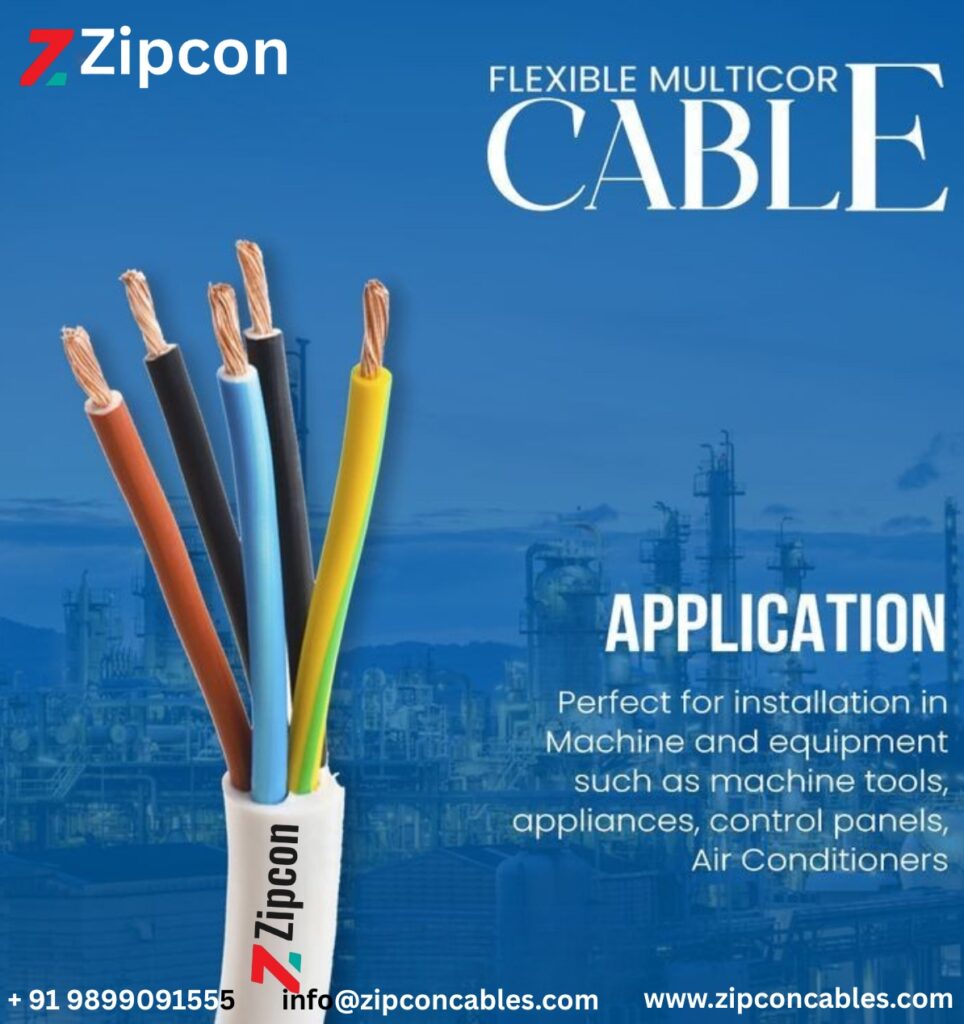
Best Multicore Cable for Industrial Electrical Systems

Industrial electrical systems require cables that can handle continuous electrical loads, demanding installation conditions, and long operating hours. Choosing the best multicore cable for industrial electrical systems is therefore not simply about selecting the right number of cores. Conductor quality, insulation, current capacity, voltage rating, flexibility, mechanical protection, and operating environment all influence cable performance.

Multicore cables combine several individually insulated conductors within a common outer sheath. This construction is particularly useful where multiple electrical connections need to follow the same route, such as between control panels, industrial machinery, motors, automation equipment, and distribution systems.

Zipcon Cables provides cable solutions for electrical and industrial applications, with cable selection focused on matching construction and specifications to the actual installation requirements.

Contact us today:- https://zipconcables.com/contact-us/

What Is a Multicore Cable?

A multicore cable contains two or more insulated conductors enclosed within a common protective sheath. Each core can be used for a separate electrical connection depending on the cable’s design and intended application.

Unlike individual wires that require separate routing and protection, multicore cables group the required conductors into a single cable assembly. This can simplify installation, improve cable management, and create a more organized electrical system.

For industrial applications, the cable must be selected according to electrical load, equipment requirements, installation conditions, temperature, movement, and environmental exposure.

Why Multicore Cables Are Important in Industrial Electrical Systems

Industrial environments place greater demands on electrical cables than many ordinary installations. Cables may be exposed to heat, vibration, bending, abrasion, moisture, dust, and continuous electrical loading.

A properly specified multicore cable helps manage multiple connections while providing insulation between individual conductors and external protection through the cable sheath.

Simplified Cable Routing

When several conductors need to travel between the same locations, a multicore cable can combine them into one route. This can reduce wiring clutter and make cable tray, conduit, and equipment connections easier to organize.

Better Cable Management

Industrial plants may contain hundreds or thousands of electrical connections. Grouping related circuits within suitable multicore cables can make installation layouts cleaner and help technicians trace connections during maintenance.

Protection of Internal Cores

Individual conductor insulation provides electrical separation, while the outer sheath provides additional physical protection. The exact level of protection depends on the cable’s construction and specification.

Efficient Installation

A properly selected multicore cable can reduce the number of individual cable runs required for grouped connections. This may improve installation efficiency and make future maintenance more manageable.

What Makes the Best Multicore Cable for Industrial Applications?

There is no single multicore cable that is the best for every industrial system. The correct choice depends on the application. However, several technical characteristics should always be evaluated.

1. Appropriate Conductor Size

Conductor cross-sectional area must be suitable for the expected current and installation conditions. An undersized conductor can result in excessive heating and voltage drop.

Conductor selection should consider the load, installation method, ambient temperature, grouping, permissible voltage drop, and applicable electrical requirements.

2. Reliable Insulation

Insulation must provide adequate electrical separation and withstand the expected operating temperature and voltage conditions. The material should also be suitable for the installation environment.

For industrial systems, insulation quality becomes particularly important because cables may operate continuously for extended periods.

3. Strong Outer Sheath

The outer sheath protects the internal cable assembly from external conditions. Depending on the application, resistance to abrasion, moisture, heat, chemicals, or mechanical stress may be important.

4. Required Flexibility

Some industrial cables remain stationary after installation, while others move with machinery. These applications require different cable constructions.

A cable intended for fixed installation should not automatically be used where continuous flexing or repeated bending occurs.

5. Suitable Voltage and Temperature Ratings

The cable must be rated for the system voltage and expected operating temperature. These specifications should be checked before installation rather than assumed from cable appearance or size.

Types of Industrial Applications for Multicore Cables

Multicore cables can be used across several industrial electrical systems when correctly specified.

Industrial Machinery

Machines often require multiple connections for motors, switches, sensors, controls, and auxiliary equipment. Multicore cables can consolidate connections that follow the same route.

Control Panels

Control cabinets commonly connect with field devices, sensors, actuators, relays, and other components. Multicore cables can help organize these connections.

Automation Equipment

Automated systems require reliable electrical connections between controllers and field equipment. Appropriate multicore cables can support control and signal-related applications where their electrical characteristics are suitable.

Motor and Equipment Connections

Industrial equipment may require multiple conductors for power and auxiliary functions. The cable configuration should be selected based on the equipment manufacturer’s requirements and the electrical installation design.

Distribution Systems

Where multiple conductors need to be routed together within an industrial facility, multicore construction can provide a practical cable-management solution.

Multicore Cable vs Single-Core Cable

FeatureMulticore CableSingle-Core Cable
ConductorsMultiple cores in one cableOne conductor per cable
Cable managementMore consolidatedRequires multiple cable routes
InstallationSuitable for grouped connectionsSuitable for individual connections
ProtectionCommon outer sheathDepends on installation method
Space managementOften more organizedCan require more routing space
Typical useMachinery, controls, grouped circuitsIndividual power connections

Neither option is universally better. Multicore cables are particularly useful when several conductors need to follow the same route, while single-core cables can be preferable for certain high-current, specialized, or installation-specific applications.

How to Select the Best Multicore Cable

Selecting the right cable should begin with the electrical system rather than the product name.

Determine the Number of Cores

Identify how many separate conductors are required. This prevents selecting a cable that lacks the necessary connections or contains unnecessary cores.

Calculate Current Requirements

Determine the expected load current and select the conductor size accordingly. Cable sizing should account for installation conditions rather than current alone.

Check Voltage Drop

For longer cable runs, voltage drop can become an important consideration. The conductor size and installation conditions should be evaluated to maintain suitable electrical performance.

Evaluate the Environment

Identify whether the cable will be exposed to heat, moisture, chemicals, sunlight, abrasion, vibration, dust, or mechanical impact.

Consider Movement

If the cable will move with industrial equipment, select a cable specifically suitable for the required bending or flexing conditions.

Verify Applicable Specifications

Before purchasing, verify conductor material, cross-sectional area, core count, insulation, sheath, voltage rating, temperature rating, and relevant standards.

Examples: Choosing a Multicore Cable

Example 1: Factory Control Panel

A production machine requires several control connections between a field assembly and a central control panel. A properly specified multicore cable can consolidate those connections into one organized cable route.

Example 2: Automated Machinery

An automated machine has sensors and actuators positioned along the equipment. Multicore construction can help organize multiple connections, provided the selected cable is appropriate for the electrical and movement requirements.

Example 3: Fixed Industrial Equipment

A stationary industrial machine requires several conductors between its electrical panel and equipment. A suitable fixed-installation multicore cable can provide a consolidated and protected cable route.

Benefits of Choosing Zipcon Cables

Zipcon Cables focuses on cable solutions for applications where dependable electrical performance, insulation quality, durability, and practical installation are important.

For industrial buyers, contractors, panel builders, and electrical professionals, selecting the right cable should involve a technical assessment of the application. Factors such as conductor size, core configuration, insulation, sheath, flexibility, temperature, voltage, and environmental exposure should be considered together.

Choosing a cable based on these parameters helps ensure that the product is appropriate for the actual electrical system rather than relying only on price or generic specifications.

Expert Tips for Industrial Multicore Cable Selection

  1. Start with the load: Determine the expected current before selecting conductor size.
  2. Check the cable route: Long routes may require additional consideration of voltage drop and installation conditions.
  3. Match insulation to temperature: Industrial equipment can generate substantial heat, so insulation must suit the operating environment.
  4. Assess mechanical stress: Vibration, pulling, abrasion, and movement can influence the required cable construction.
  5. Use the correct core count: Plan the required connections before ordering the cable.
  6. Consider future maintenance: Proper identification and organized routing can make inspection and troubleshooting easier.
  7. Purchase from a reliable manufacturer: Consistent construction and clearly defined specifications are important for industrial cable applications.

Common Mistakes to Avoid

Selecting Cable Based Only on Core Count

Two cables with the same number of cores can have very different electrical and mechanical characteristics. Core count is only one part of cable selection.

Using an Undersized Conductor

An undersized conductor can increase heating and voltage drop. Always evaluate current capacity and installation conditions before choosing the conductor size.

Ignoring Ambient Temperature

Cable performance can be affected by surrounding temperature and heat generated by nearby equipment. Temperature conditions should be considered during cable selection.

Using the Wrong Cable for Moving Equipment

Repeated bending requires an appropriate cable construction. A standard fixed cable may not be suitable for continuous movement.

Ignoring Environmental Exposure

Moisture, chemicals, abrasion, and mechanical stress can damage unsuitable cable constructions. Always evaluate the actual installation environment.

Choosing the Cheapest Available Option

Initial purchase price should not be the only selection criterion. Reliability, service life, maintenance requirements, installation efficiency, and application suitability also affect the overall value.

Why Choose Zipcon Cables for Industrial Electrical Systems?

Industrial electrical systems need cable solutions that are selected according to actual operating conditions. Zipcon Cables offers cable products intended for electrical and industrial applications where dependable performance and durable construction are important.

For a project requiring multicore cables, buyers should provide technical details such as core count, conductor size, voltage, current, installation method, temperature, environmental exposure, and movement requirements. This allows the cable specification to be aligned with the application.

Conclusion

The best multicore cable for industrial electrical systems is not determined by brand, price, or core count alone. The correct cable must match the electrical load, voltage, temperature, installation method, mechanical conditions, and environment in which it will operate.

A properly selected multicore cable can simplify wiring, improve cable organization, protect internal conductors, and support dependable electrical connections. Zipcon Cables can be considered for industrial cable requirements where reliable construction and application-focused specifications matter.

For better long-term performance, select the cable based on the complete electrical and installation requirements—not simply the lowest purchase price.

Top 5 FAQs

1. What is the best multicore cable for industrial electrical systems?

The best multicore cable is one that matches the application’s current, voltage, core count, conductor size, insulation, temperature, flexibility, environmental conditions, and installation requirements. There is no universal cable specification for every industrial system.

2. Where are industrial multicore cables used?

They are commonly used in industrial machinery, control panels, automation equipment, electrical systems, equipment interconnections, and installations where multiple conductors need to follow a common route.

3. How do I choose the correct multicore cable size?

Cable size should be selected according to expected current, conductor material, voltage drop, installation method, ambient temperature, grouping conditions, and applicable electrical requirements.

4. Are multicore cables suitable for industrial machinery?

Yes, appropriately specified multicore cables can be suitable for industrial machinery. However, applications involving continuous movement, vibration, heat, or other mechanical stresses require cable construction suited to those conditions.

5. Why choose Zipcon Cables for industrial multicore cables?

Zipcon Cables provides cable solutions for electrical and industrial applications. The appropriate cable should be selected based on the project’s conductor size, core requirements, electrical load, installation environment, and mechanical conditions.

Multicore Cable Standards, Ratings, and Compliance Explained
multicore round cables

Selecting a multicore cable is not only about the number of cores or conductor size. Multicore cable standards, ratings, and compliance determine whether a cable is suitable for its intended electrical, mechanical, and environmental conditions. Understanding these specifications helps contractors, manufacturers, project engineers, and electrical buyers choose cables with greater confidence.

A multicore cable contains several individually insulated conductors enclosed within a common outer sheath. Depending on its design, it may be used for power distribution, industrial machinery, control panels, automation, instrumentation, and equipment connections.

For Zipcon Cables, cable selection should always be based on the application’s technical requirements. A cable that is appropriate for one installation may not be suitable for another simply because both systems use the same number of cores.

Contact us today:- https://zipconcables.com/contact-us/

What Are Multicore Cable Standards?

Multicore cable standards are technical requirements that define how cables should be designed, manufactured, tested, identified, and evaluated for particular applications. Standards can address conductor characteristics, insulation, voltage performance, dimensions, mechanical properties, flame behaviour, testing, and other requirements.

The applicable standard depends on the cable type, intended application, market, voltage level, installation environment, and regulatory requirements. Therefore, buyers should verify the exact standard applicable to their project rather than assuming that one standard applies to every multicore cable.

Contact us today:- https://zipconcables.com/contact-us/

Why Cable Standards Matter

Electrical Safety

Appropriate standards help establish requirements for insulation, conductor construction, voltage performance, and testing. Meeting the relevant requirements reduces the risk associated with unsuitable cable selection.

Consistent Manufacturing

Standards provide defined technical parameters that help manufacturers maintain consistency across cable production. This is particularly important for industrial projects where multiple cable batches may be required.

Reliable Performance

A cable should perform according to its intended application and specified operating conditions. Relevant standards help establish measurable performance requirements.

Easier Product Evaluation

For contractors and procurement teams, recognized standards provide a technical basis for comparing products instead of relying only on marketing descriptions.

Understanding Multicore Cable Ratings

Cable ratings describe the conditions under which a cable is designed to operate. Several ratings may be relevant to a multicore cable.

Voltage Rating

The voltage rating indicates the electrical system conditions for which the cable is designed. It is important to select a cable whose voltage rating is appropriate for the installation.

Using a cable outside its intended voltage rating can create insulation stress and compromise electrical safety. Voltage requirements should therefore be checked before cable selection.

Current-Carrying Capacity

Current-carrying capacity, often referred to as ampacity, indicates how much current a conductor can carry under specified conditions without exceeding its permitted operating temperature.

The actual allowable current can depend on conductor size, insulation temperature rating, ambient temperature, installation method, grouping, and other conditions.

Temperature Rating

A cable’s temperature rating defines the operating temperature limits associated with its construction. Both ambient conditions and heat generated by electrical loading need to be considered.

For industrial environments, temperature can be particularly important because cables may be installed near motors, machinery, heating equipment, or other heat-producing systems.

Short-Circuit Rating

Some electrical systems require cables to withstand elevated current during short-circuit conditions for a specified duration. Where applicable, short-circuit withstand requirements should be considered during system design.

Mechanical Rating

Mechanical performance can involve resistance to bending, pulling, abrasion, impact, vibration, or other installation stresses. The required mechanical characteristics depend on how and where the cable will be installed.

Key Components Behind Cable Compliance

Compliance is not determined by one component. The complete cable construction matters.

Conductors

Conductors are responsible for carrying electrical current. Their material, size, construction, and resistance characteristics influence the cable’s electrical performance.

For example, a cable with an appropriate conductor cross-sectional area can be selected to meet the expected current and voltage-drop requirements of a system.

Insulation

Individual cores require suitable insulation to maintain electrical separation. Insulation selection should account for voltage, temperature, flexibility, and environmental conditions.

Outer Sheath

The outer sheath protects the assembled cores against external conditions. Depending on the cable design, it may need to withstand abrasion, moisture, heat, chemicals, or other environmental factors.

Cable Assembly

Core arrangement, fillers, binders, screening where applicable, and other construction elements can influence the cable’s dimensions, flexibility, mechanical behaviour, and overall performance.

Common Standards and Specifications

The applicable standards vary according to cable type and application. In India, buyers may encounter BIS/IS standards, while international projects may specify IEC or other recognized standards.

Some cable families are covered by standards dealing with low-voltage power cables, PVC-insulated cables, thermoplastic or thermosetting insulation, flame performance, conductor construction, or testing requirements.

The important point is that a standard number should never be treated as a generic quality label. The exact standard, edition, cable category, voltage rating, and applicable test requirements should be verified against the product specification.

For projects involving regulatory, contractual, or safety-critical requirements, the project engineer or relevant authority should confirm the applicable compliance requirements.

Indian Standards vs International Standards

FactorIndian StandardsInternational Standards
Common frameworkBIS/IS specificationsIEC and other recognized specifications
ApplicationIndian projects and requirementsInternational or project-specific applications
ComplianceBased on applicable Indian requirementsBased on specified international requirements
SelectionDepends on cable type and projectDepends on cable type and project
VerificationProduct documentation and applicable certificationProduct documentation and applicable certification

A cable should not be selected simply because it carries an Indian or international standard reference. The specific standard must correspond to the cable’s construction and intended use.

What Does Cable Compliance Mean?

Cable compliance means that the cable meets the requirements of the standards, regulations, specifications, or project requirements applicable to that product and application.

Compliance may involve design requirements, raw-material controls, manufacturing processes, routine tests, type tests, inspection, documentation, and certification, depending on the relevant standard and regulatory framework.

For buyers, compliance should therefore be supported by appropriate technical documentation rather than a general claim such as “certified cable.”

Testing of Multicore Cables

Testing is an important part of verifying cable quality and compliance.

Conductor Resistance Test

This test evaluates conductor resistance and helps verify whether the conductor meets the specified electrical requirements.

High-Voltage or Voltage-Withstand Test

Depending on the applicable standard, cables may undergo voltage-withstand testing to assess insulation integrity under specified test conditions.

Insulation Resistance Test

Insulation resistance testing evaluates the electrical resistance of the insulation between conductors and/or between conductors and other relevant parts of the cable.

Dimensional Checks

Dimensions such as conductor size, insulation thickness, sheath thickness, and overall cable dimensions may be checked against specified requirements.

Mechanical Tests

Where applicable, mechanical tests assess characteristics such as tensile strength, elongation, bending, abrasion resistance, or other properties specified by the relevant standard.

Flame and Fire Performance Tests

Some applications require specific flame-retardant or fire-performance characteristics. These should be verified against the exact test requirements rather than inferred from general terms such as “fire safe.”

Multicore Cable Compliance Checklist

Before purchasing multicore cables, buyers should review:

  • Applicable cable standard
  • Number of cores
  • Conductor material
  • Conductor cross-sectional area
  • Voltage rating
  • Current-carrying requirements
  • Insulation material
  • Temperature rating
  • Outer sheath material
  • Flexibility requirements
  • Environmental conditions
  • Applicable test requirements
  • Product technical datasheet
  • Required certification or test documentation
  • Project-specific specifications

This checklist can help procurement teams avoid selecting cables based only on generic product descriptions.

Examples: Applying Cable Ratings Correctly

Example 1: Industrial Control Panel

Suppose a control panel requires several conductors routed to field equipment. The buyer should first determine the required core count, conductor size, voltage, temperature, and installation environment.

The appropriate multicore cable can then be selected according to the relevant specification rather than simply choosing a cable with the required number of cores.

Example 2: High-Temperature Industrial Area

A cable installed near heat-generating machinery may experience higher ambient temperatures than a standard indoor installation. The cable’s temperature rating and derating requirements should therefore be evaluated before selection.

Example 3: Long Cable Run

A long cable route can increase voltage drop. Even when the current-carrying capacity appears adequate, the conductor size may need to be evaluated against permissible voltage drop and the actual installation conditions.

Expert Tips for Multicore Cable Compliance

1. Identify the Standard Before Buying

Determine which standard applies to the cable and application. Do not select a product solely because a standard number appears in its marketing material.

2. Verify the Complete Product Specification

Check the conductor, insulation, sheath, voltage, temperature, dimensions, core configuration, and testing requirements.

3. Consider Installation Conditions

Cable ratings are based on defined conditions. Installation method, ambient temperature, grouping, and environmental exposure can affect actual cable performance.

4. Request Technical Documentation

For commercial and industrial projects, maintain the relevant datasheet, test reports, certificates, and product documentation required by the project.

5. Avoid Mixing Incompatible Specifications

If a project specifies a particular cable standard or construction, replacing it with another cable that merely appears similar can create compliance and performance issues.

6. Work With a Reliable Manufacturer

A manufacturer such as Zipcon Cables can help buyers identify cable configurations according to their application and specified requirements.

Common Mistakes When Selecting Multicore Cables

Mistake 1: Treating All Multicore Cables as the Same

Multicore cables differ in conductor size, insulation, sheath, voltage rating, flexibility, and application. Core count alone does not define cable suitability.

Mistake 2: Ignoring Temperature Derating

A cable’s stated current capacity may depend on specific installation conditions. Ambient temperature and cable grouping can affect permissible current.

Mistake 3: Assuming “ISI” or “IEC” Means Every Requirement Is Met

A standard reference must correspond to the exact product and applicable requirements. Buyers should verify the relevant documentation.

Mistake 4: Choosing the Wrong Voltage Rating

Cable voltage rating should be compatible with the electrical system. This is particularly important in industrial and power distribution applications.

Mistake 5: Ignoring Mechanical Conditions

A cable exposed to repeated bending, vibration, abrasion, or pulling needs suitable mechanical characteristics. Electrical ratings alone are not enough.

Mistake 6: Failing to Maintain Documentation

For industrial projects, documentation can be important for procurement, inspection, quality assurance, and future maintenance. Keep relevant technical records with the project documentation.

Why Choose Zipcon Cables?

Zipcon Cables focuses on cable solutions for electrical, industrial, and equipment applications. When selecting multicore cables, the emphasis should remain on technical suitability, construction quality, reliable performance, and compliance with the requirements applicable to the project.

Customers can evaluate cable options based on core configuration, conductor size, insulation, sheath, voltage rating, temperature requirements, installation environment, and applicable standards.

For larger projects, specifying these requirements clearly before procurement helps reduce the risk of receiving a cable that does not match the intended application.

Conclusion

Understanding multicore cable standards, ratings, and compliance is essential for making informed cable-selection decisions. A reliable cable must meet the electrical requirements of the system while also being suitable for its temperature, installation method, mechanical conditions, and surrounding environment.

Standards provide technical requirements, ratings define operating conditions, and compliance demonstrates conformity with applicable specifications. Together, these factors provide a stronger basis for evaluating multicore cables than price or appearance alone.

For industrial and electrical projects, Zipcon Cables can be considered when sourcing multicore cable solutions. Always verify the exact product specification and applicable standard before purchase, and select the cable according to the actual requirements of the installation.

Top 5 FAQs

1. What are multicore cable standards?

Multicore cable standards define technical requirements for aspects such as conductor construction, insulation, dimensions, electrical performance, mechanical properties, testing, and other characteristics applicable to a specific cable type.

2. What does the voltage rating of a multicore cable mean?

The voltage rating indicates the electrical system conditions for which the cable is designed. The selected cable should have a voltage rating appropriate for the intended installation.

3. What factors affect multicore cable current capacity?

Current capacity can depend on conductor size and material, insulation temperature rating, ambient temperature, installation method, cable grouping, and other specified conditions.

4. How can I verify multicore cable compliance?

Check the manufacturer’s technical datasheet and applicable test or certification documentation. Confirm that the stated standard applies to the exact cable construction and intended application.

5. Why are cable standards important for industrial applications?

Cable standards establish technical requirements that support consistent manufacturing, electrical safety, testing, and reliable performance. They also provide a common basis for product specification and evaluation.

How to Choose the Right Multicore Cable for Your Electrical Needs
Multicore Cable

Choosing the right multicore cable manufacturer in india is a critical decision that directly impacts electrical performance, safety, installation efficiency, and long-term operating cost. For engineers, electricians, procurement managers, and industrial buyers, the challenge is not understanding what a multicore cable is—but selecting the right one for the job.

This guide, developed using the practical experience behind Zipcon Cables, is designed to help buyers make confident, application-driven decisions without unnecessary theory or marketing noise.

For inquiries or assistance, visit: 👉https://zipconcables.com/contact-us/

Understanding Multicore Cables in Real Applications

Multicore cables consist of multiple insulated conductors bundled within a single outer sheath. They are used to carry power, control signals, or data where multiple circuits must run together safely and efficiently. The key benefit is simplified installation, better cable management, and reduced risk of wiring errors.

However, these benefits are only realized when the cable is correctly selected for load, environment, and usage conditions—an area where many projects face avoidable failures.

Core Evaluation Factors That Influence Cable Selection

Electrical conductivity and performance efficiency
Conductivity determines how effectively current flows through the cable. Poor conductivity leads to voltage drop, energy loss, and heat buildup. For high-load systems, control panels, and continuous-duty operations, high-conductivity conductors ensure stable performance and energy efficiency. Zipcon Cables designs multicore cables with consistent conductor quality to support reliable current flow under demanding conditions.

Mechanical durability and lifespan
In real-world installations, cables are exposed to bending, vibration, abrasion, and occasional impact. A multicore cable must maintain insulation integrity and conductor alignment throughout its service life. Industrial buyers prioritize durability because cable failure often leads to costly downtime, not just replacement cost.

Weight and handling implications
Cable weight affects installation speed, routing flexibility, and termination quality. Heavier cables require more effort during installation, especially in compact panels or overhead trays. The right balance between conductor material and insulation design helps installers work faster and with fewer errors.

Cost considerations: initial cost vs long-term value
Initial cable cost is only one part of the equation. Maintenance, energy loss, safety risk, and replacement frequency define the true lifecycle cost. Many buyers choose Zipcon Cables because the long-term reliability of a well-built multicore cable outweighs short-term savings.

Safety standards and compliance
Electrical safety is non-negotiable. Compliance with fire resistance, insulation performance, and conductor standards protects both equipment and people. Non-compliant cables can delay approvals and increase liability. Zipcon Cables manufactures multicore cable aligned with relevant safety and quality benchmarks for commercial and industrial use.

Installation requirements
Flexibility, bending radius, sheath quality, and ease of termination all affect installation efficiency. A cable that is difficult to route or terminate increases labor time and error risk, even if its electrical ratings look adequate on paper.

Copper vs Alternative Cable Materials: Practical Comparison

Where copper multicore cables perform best
Copper offers superior electrical conductivity, excellent heat resistance, and consistent mechanical strength. Copper multicore cables from Zipcon Cables are preferred in high-load applications, critical systems, manufacturing plants, and environments where long-term reliability is essential. They handle voltage fluctuations better and maintain performance over extended operating cycles.

Where alternative materials may be suitable
Aluminum or alloy-based conductors are lighter and generally more cost-effective upfront. They may be suitable for short-distance runs, lightweight installations, or projects with strict budget constraints. However, they often require larger conductor sizes and more careful termination practices.

Quick decision view
Copper: higher performance, longer life, higher initial cost
Alternatives: lighter weight, lower upfront cost, limited-duty suitability

Real-World Application Scenarios

Industrial machinery and manufacturing plants
Multicore cables reduce wiring complexity in machines carrying power and control signals together. Copper multicore cables are preferred for their load-handling capability, vibration resistance, and thermal stability—key strengths offered by Zipcon Cables.

Commercial buildings and infrastructure
Used in HVAC systems, elevators, lighting controls, and automation networks. Copper multicore cables are commonly specified for safety compliance, fire resistance, and long-term operational reliability.

Residential wiring and compact installations
Multicore cables help manage space in distribution boards and concealed wiring. While alternative materials may work in low-load residential setups, copper remains the safer choice where durability and future expansion are concerns.

Renewable energy and control panel systems
Solar installations and automation panels rely on multicore cables for stable signal transmission and organized layouts. Copper multicore cables perform better in heat-intensive environments and ensure accurate control and monitoring.

A Clear Decision Framework

To select the right multicore cable, ask:

What is the electrical load and duty cycle?
Higher loads favor copper multicore cables.

What environment will the cable face?
Heat, moisture, vibration, or movement require durable construction.

What safety and compliance level is required?
Commercial and industrial projects typically demand copper-based solutions.

What is the expected lifecycle cost?
Reliable cables reduce maintenance, downtime, and replacement risk.

Final Recommendation

Copper multicore cables are the right choice for industrial machinery, commercial infrastructure, control panels, and any application where performance stability, safety, and service life matter. Alternative materials may suit lightweight, low-load, or cost-sensitive applications with controlled conditions.

Zipcon Cables delivers multicore cable solutions engineered for real operating environments—combining electrical efficiency, mechanical strength, and installation practicality. For buyers who prioritize dependable performance over short-term compromises, choosing the right multicore cable starts with informed selection and a trusted manufacturer.

Advantages of Zipcon Cables in Residential and Industrial Wiring
Advantages of Zipcon Cables in Residential & Industrial Wiring

Zipcon cables Manufacturer in delhi have gained significant traction in both residential and industrial wiring due to their superior durability, cost-effectiveness, and versatility. While copper cables have long been a standard in the industry, Zipcon cables present a strong alternative for various applications. In this article, we’ll explore the advantages of Zipcon cables, particularly in comparison to copper cables, across key technical areas such as conductivity, durability, weight, cost, safety, installation, and typical use cases.

For inquiries or assistance, visit: 👉https://zipconcables.com/contact-us/

Conductivity

Copper cables are known for their high conductivity, making them the preferred choice in applications where efficient power transmission is critical, such as in high-voltage and heavy-duty systems. However, Zipcon cables, while not as conductive as copper, still offer adequate conductivity for many residential and light industrial applications.

Zipcon cables use advanced materials and insulation that enhance their performance in various environments, ensuring that the electrical current flows efficiently for most residential wiring and industrial setups. In scenarios where extreme conductivity is not a priority—such as in lower power systems or residential buildings—Zipcon cables provide sufficient performance at a more affordable price.

However, for high-power, high-performance applications, copper remains the better choice due to its superior conductivity.

Durability

Zipcon cables manufacturer in india are designed to perform well in challenging environments, making them a great option for both residential and industrial installations. These cables can withstand extreme temperature variations, humidity, and mechanical wear, which are common in industrial settings like factories, warehouses, and outdoor installations.

Compared to copper, Zipcon cables offer superior resistance to environmental stresses, reducing the risk of failure over time. They are often coated with durable insulation materials that protect them from corrosion, abrasion, and other forms of degradation, which can be a concern with copper cables when exposed to harsh conditions.

In residential settings, Zipcon cables have proven to be highly reliable, requiring minimal maintenance and offering long-lasting performance. Copper cables, on the other hand, tend to have a slightly longer lifespan in optimal conditions but may require more regular maintenance due to their vulnerability to corrosion and wear over time.

Weight

One significant advantage of Zipcon cables is their lighter weight compared to copper cables. This makes them easier to handle and install, especially in large-scale projects where long cable runs are required. The reduced weight can also contribute to cost savings in terms of transportation and handling.

In contrast, copper cables are relatively heavier and may pose installation challenges, especially in tight spaces or when long distances need to be covered. The lighter weight of Zipcon cables, however, makes them a preferred choice in residential applications, where ease of installation is important.

Cost

Cost is a major factor when deciding between Zipcon and copper cables. Zipcon cables are more affordable than copper cables, making them a more cost-effective solution for many residential and industrial projects. For budget-sensitive applications, Zipcon offers a great balance between performance and price, without compromising safety or durability.

Copper cables, while more expensive, are still the go-to choice for high-performance applications that demand superior conductivity. In large-scale or budget-sensitive projects, Zipcon cables may provide significant savings without sacrificing the necessary performance.

Safety

Safety is a paramount consideration in any wiring project, and Zipcon cables excel in this area. They are equipped with advanced insulation materials that make them resistant to fire and provide protection against electrical shocks. Zipcon cables are also designed to meet various international safety standards and certifications, ensuring that they can be used safely in both residential and industrial settings.

Copper cables, on the other hand, can be more prone to overheating in certain conditions, especially if they are not properly insulated or if they carry a heavy electrical load. While copper is a highly conductive material, it requires careful installation and maintenance to avoid safety risks. Zipcon cables, with their robust insulation, provide an added layer of security, particularly in high-risk environments.

Installation Needs

The installation process for Zipcon cables is straightforward and requires minimal tools and specialized skills. Their lighter weight, flexible design, and easier handling make Zipcon cables easier and faster to install compared to copper cables. This can reduce labor costs and installation time, particularly in residential and commercial wiring projects.

In contrast, copper cables often require more careful handling and specialized tools for cutting, stripping, and installation. The installation process can also be more time-consuming due to the heavier weight and more rigid nature of copper cables.

Typical Use Cases

Zipcon cables are ideal for a wide range of applications. In residential settings, they are commonly used for wiring in homes, apartments, and offices, where high conductivity is not as critical. Their durability and cost-effectiveness make them a great choice for projects that require reliable performance without the high price tag of copper cables.

In industrial settings, Zipcon cables are used for a variety of applications, from lighting systems in factories to powering machinery in warehouses. The cables’ ability to withstand harsh conditions makes them suitable for industrial environments where temperature fluctuations and exposure to moisture are common.

Copper cables are still the preferred choice for high-performance applications, such as heavy-duty power transmission, high-voltage systems, and situations that demand the highest possible conductivity.

Copper vs. Zipcon Cables

While Zipcon cables offer several advantages, particularly in terms of cost, durability, and ease of installation, there are still scenarios where copper cables may outperform them. For applications that require superior conductivity, such as heavy-duty power systems or high-voltage installations, copper cables are the better option.

However, Zipcon cables are well-suited for most residential and many industrial applications, where cost savings, durability, and ease of installation are more important than maximum conductivity.

Recommendation

For most residential and light industrial applications, Zipcon cables provide a reliable, cost-effective, and durable solution. They perform well in a wide range of environments, offering ease of installation and lower overall costs. Copper cables should still be considered for applications that demand high conductivity, such as heavy-duty power systems or specialized high-voltage installations.

Ultimately, the choice between Zipcon and copper cables should be based on the specific needs of the project—whether it’s cost, durability, or performance that matters most. For most applications, Zipcon cables will deliver excellent results while staying within budget.

Zipcon Cables: The Future of Safe and Efficient Electrical Solutions

When it comes to electrical solutions, choosing the right cables can significantly impact the efficiency and safety of your installations. Zipcon Cables leading manufacturer in india, is at the forefront of providing high-quality cables that prioritize conductivity, durability, safety, and cost-efficiency. This article delves into the technical aspects of Zipcon Cables, covering the key factors like conductivity, durability, weight, cost, safety, installation needs, and typical use cases, while also comparing them with copper cables.

For inquiries or assistance, visit: 👉https://zipconcables.com/contact-us/

Conductivity: Ensuring Efficient Power Transmission

The primary function of any electrical cable is to efficiently transmit electrical power. Copper has long been considered the gold standard due to its high conductivity. However, Zipcon Cables, especially those made with advanced materials like aluminum, are designed to offer comparable performance. These cables provide effective conductivity, ensuring minimal power loss. In cases where copper cables are less cost-effective or not ideal due to weight constraints, Zipcon’s alternatives can be a viable solution, particularly for large-scale industrial applications where energy efficiency is crucial.

Durability: Built to Withstand Harsh Conditions

Durability is a critical factor when selecting cables, especially in outdoor or harsh environments. Zipcon Cables are designed to endure extreme conditions, including high temperatures, moisture, and physical stress. Their high-quality insulation materials ensure that they are resistant to wear and tear, reducing the likelihood of short circuits and other failures. On the other hand, while copper cables are highly durable, they are susceptible to corrosion over time, particularly in humid or salty environments. This makes Zipcon Cables a more reliable choice for long-term performance in tough settings.

Weight: Balancing Strength and Practicality

Weight is another important consideration, particularly for applications requiring long cable runs or when cables need to be installed in tight spaces. Copper cables, while excellent in conductivity, are heavy and require additional support structures, increasing both installation complexity and cost. Zipcon Cables, however, are lighter and easier to handle, reducing the overall weight burden without compromising on strength. This makes Zipcon’s cables ideal for residential, commercial, and even some industrial applications where ease of installation is a priority.

Cost: Maximizing Value

Copper cables are typically more expensive due to the high cost of raw copper. While they offer superior conductivity, their price tag can be a barrier, especially for large projects. Zipcon Cables, particularly those made with alternative materials, offer a more cost-effective solution without sacrificing too much in terms of performance. For large-scale installations, Zipcon Cables can provide substantial cost savings, making them an attractive choice for both contractors and businesses looking to optimize their budgets.

Safety: Preventing Hazards

Safety is paramount when it comes to electrical installations. Zipcon Cables are designed with robust safety features, including fire-resistant coatings and reinforced insulation, ensuring they meet stringent safety standards. These cables are less prone to overheating and short-circuiting, offering superior protection for residential, commercial, and industrial systems. While copper cables are generally safe, their heavier weight and potential for corrosion under certain conditions can lead to safety concerns over time. Zipcon Cables offer a safer alternative by minimizing these risks.

Installation Needs: Ease and Flexibility

Zipcon Cables are engineered for ease of installation, with flexible designs that allow for quick and simple setups in various environments. The lighter weight of these cables means they are easier to maneuver, reducing labor costs and installation time. Copper cables, while often more rigid and requiring more precise handling, may be better suited for certain heavy-duty industrial applications where the installation environment is stable and straightforward. For more adaptable installations, especially in complex or tight spaces, Zipcon Cables are a superior choice.

Typical Use Cases: Tailored Solutions

Zipcon Cables find applications across a variety of sectors. For residential use, their flexible, lightweight, and cost-effective designs make them ideal for home wiring and light industrial projects. In commercial applications, Zipcon Cables are used for everything from office buildings to shopping malls, offering the perfect balance of safety, durability, and affordability. Industrial sectors, including manufacturing plants and construction sites, also benefit from Zipcon’s robust and reliable solutions. For areas where copper cables excel, such as heavy machinery or high-power systems, copper remains a preferred choice, but for most other applications, Zipcon Cables provide an ideal, cost-effective alternative.

Copper vs. Zipcon: Which Should You Choose?

The decision between copper and Zipcon Cables ultimately depends on the application. Copper cables are better suited for environments where maximum conductivity is required, particularly for high-power, long-distance applications. However, for most residential, commercial, and industrial applications where cost, safety, and durability are top priorities, Zipcon Cables are the superior choice. Their ability to provide reliable performance at a lower cost, combined with easier installation and a higher degree of safety, makes them a smart choice for a wide range of electrical needs.

Conclusion

Zipcon Cables are redefining the future of safe and efficient electrical solutions. Their excellent conductivity, durability, cost-efficiency, and safety make them an excellent choice for a wide variety of applications. While copper cables remain important for certain high-power needs, Zipcon Cables provide a more versatile, practical, and affordable alternative for most projects. By choosing Zipcon, you’re investing in a reliable, long-term solution for your electrical needs.

Top-Quality Submersible Flat Cables for Reliable Underwater Applications

Submersible 3 core flat cables are crucial for powering equipment used in submerged environments like pumps, motors, and other underwater machinery. When selecting the right cable for these applications, several factors come into play, including conductivity, durability, weight, cost, safety, and installation needs. Zipcon Cables offers high-performance copper submersible cables that are designed to meet these demands. This article explores the key aspects of submersible cables, with a focus on Zipcon’s copper cables and how they compare to alternative materials like aluminum.

Conductivity: Copper vs. Alternatives

Conductivity is one of the most critical factors when choosing cables for submersible applications. The higher the conductivity, the more efficiently the cable can carry electrical current. Copper is well-known for its superior conductivity, making it the material of choice for submersible cables.

Copper has a conductivity of 59.6 × 10^6 S/m, significantly higher than aluminum (35.5 × 10^6 S/m). This means that copper cables can carry more current over longer distances without significant power loss, which is essential for submersible applications where reliable, consistent power is critical.

While aluminum cables may be lighter and less expensive than copper, they don’t offer the same level of performance and reliability, especially when used in environments where high conductivity is crucial. Copper’s ability to maintain performance over time in harsh underwater environments makes it a clear choice for long-term, high-performance submersible applications.

Durability: Built to Withstand Harsh Conditions

Submersible cables are often exposed to extreme environmental factors, including moisture, temperature fluctuations, and mechanical stress. The durability of a cable directly impacts its lifespan and reliability.

Zipcon Cables are designed with high-quality copper conductors and robust insulation materials that ensure excellent resistance to moisture and temperature changes. 4 sq mm 3 core flat submersible pump cable Copper cables are less prone to corrosion compared to aluminum, making them more durable in wet, salty, or humid conditions. In addition, copper’s high tensile strength allows the cable to withstand mechanical stress without breaking or degrading over time.

When considering durability, Zipcon Cables stand out for their ability to perform reliably in demanding environments, providing long-term value despite the challenges posed by submersion.

Weight: Ease of Installation and Long-Term Use

Weight is another important factor when selecting submersible cables. Heavier cables can be more challenging to handle during installation, especially when deploying cables in deep or remote locations. Copper cables are denser and heavier than aluminum cables, which can make them harder to install.

However, the increased weight of copper cables is often an advantage in terms of performance. The material’s superior conductivity and durability outweigh the minor inconvenience of additional weight during installation. For specific applications where weight is a concern, Zipcon offers flexible, lightweight alternatives that still maintain the high performance of copper.

Cost: Upfront Investment vs. Long-Term Value

Cost is often a significant consideration when choosing materials for submersible cables. Copper cables typically have a higher upfront cost compared to aluminum cables, but they offer better long-term value due to their superior conductivity, durability, and resistance to wear and tear.

Although aluminum cables may seem like a cost-effective option in the short term, they require more frequent maintenance and replacement due to their lower performance and susceptibility to corrosion. Zipcon’s copper cables, while higher in initial cost, reduce the need for repairs and replacements, making them a more cost-effective solution over time, particularly in harsh submersible environments.

Safety: Ensuring Reliable and Safe Operation

Safety is a top priority in submersible cable applications. Zipcon Cables prioritize safety by adhering to stringent insulation and water resistance standards. The cables are equipped with high-quality insulation materials that prevent water ingress and ensure that the cables remain electrically safe under submerged conditions.

Copper’s inherent resistance to corrosion also plays a role in maintaining the safety of submersible cables. In contrast, aluminum cables can corrode more easily, potentially leading to exposed wires and increased risk of electrical faults.

Moreover, Zipcon cables meet fire safety standards, ensuring that they do not pose a fire risk in submersible environments. This makes them a safer option compared to aluminum cables, which may have a lower fire resistance rating.

Installation Needs: Ease of Use in Challenging Environments

Installing submersible cables requires careful planning and execution, particularly in environments that are difficult to access. Zipcon’s copper cables are designed for easy handling during installation, with clear labeling, flexibility, and user-friendly features that reduce installation time and labor costs.

However, copper cables are heavier than aluminum cables, which can add complexity to the installation process. In situations where a lighter cable is necessary, Zipcon offers options that balance weight and performance, making installation more manageable without compromising on quality or durability.

Typical Use Cases for Submersible 3 Core Flat Cables

Submersible 3 core flat cables are commonly used in a wide range of applications, including powering pumps, motors, and underwater machinery. Zipcon’s copper cables are especially suited for these applications due to their excellent conductivity, durability, and safety features.

For example, Zipcon cables are ideal for submersible pumps used in water treatment plants, wells, and sewage systems. The cables ensure that power is transmitted efficiently and reliably, even under harsh submerged conditions. In addition, Zipcon’s cables are used in underwater motors for various industrial applications, providing the necessary performance and safety.

Additional Comparisons and Recommendations

While aluminum cables may be cheaper and lighter, copper cables like those from Zipcon excel in conductivity, durability, and long-term performance. Copper is the better choice when high conductivity, resistance to corrosion, and reliability are critical.

For applications where weight is a primary concern, lighter alternatives such as aluminum cables may be more suitable. However, for projects that demand the highest performance and long-term durability, Zipcon’s copper submersible cables are the recommended choice.

Conclusion

Choosing the right submersible cable is essential for ensuring the long-term performance and safety of underwater equipment. Zipcon Cables offers high-quality copper cables that deliver superior conductivity, durability, and safety, making them the best choice for demanding submersible applications. By understanding the key factors of conductivity, durability, weight, cost, safety, and installation needs, engineers, electricians, and buyers can make informed decisions and select the most suitable material for their specific application.