Zipcon Cables
How to Choose the Right Multicore Cable for Your Electrical Needs
Multicore Cable

Choosing the right multicore cable manufacturer in india is a critical decision that directly impacts electrical performance, safety, installation efficiency, and long-term operating cost. For engineers, electricians, procurement managers, and industrial buyers, the challenge is not understanding what a multicore cable is—but selecting the right one for the job.

This guide, developed using the practical experience behind Zipcon Cables, is designed to help buyers make confident, application-driven decisions without unnecessary theory or marketing noise.

For inquiries or assistance, visit: 👉https://zipconcables.com/contact-us/

Understanding Multicore Cables in Real Applications

Multicore cables consist of multiple insulated conductors bundled within a single outer sheath. They are used to carry power, control signals, or data where multiple circuits must run together safely and efficiently. The key benefit is simplified installation, better cable management, and reduced risk of wiring errors.

However, these benefits are only realized when the cable is correctly selected for load, environment, and usage conditions—an area where many projects face avoidable failures.

Core Evaluation Factors That Influence Cable Selection

Electrical conductivity and performance efficiency
Conductivity determines how effectively current flows through the cable. Poor conductivity leads to voltage drop, energy loss, and heat buildup. For high-load systems, control panels, and continuous-duty operations, high-conductivity conductors ensure stable performance and energy efficiency. Zipcon Cables designs multicore cables with consistent conductor quality to support reliable current flow under demanding conditions.

Mechanical durability and lifespan
In real-world installations, cables are exposed to bending, vibration, abrasion, and occasional impact. A multicore cable must maintain insulation integrity and conductor alignment throughout its service life. Industrial buyers prioritize durability because cable failure often leads to costly downtime, not just replacement cost.

Weight and handling implications
Cable weight affects installation speed, routing flexibility, and termination quality. Heavier cables require more effort during installation, especially in compact panels or overhead trays. The right balance between conductor material and insulation design helps installers work faster and with fewer errors.

Cost considerations: initial cost vs long-term value
Initial cable cost is only one part of the equation. Maintenance, energy loss, safety risk, and replacement frequency define the true lifecycle cost. Many buyers choose Zipcon Cables because the long-term reliability of a well-built multicore cable outweighs short-term savings.

Safety standards and compliance
Electrical safety is non-negotiable. Compliance with fire resistance, insulation performance, and conductor standards protects both equipment and people. Non-compliant cables can delay approvals and increase liability. Zipcon Cables manufactures multicore cable aligned with relevant safety and quality benchmarks for commercial and industrial use.

Installation requirements
Flexibility, bending radius, sheath quality, and ease of termination all affect installation efficiency. A cable that is difficult to route or terminate increases labor time and error risk, even if its electrical ratings look adequate on paper.

Copper vs Alternative Cable Materials: Practical Comparison

Where copper multicore cables perform best
Copper offers superior electrical conductivity, excellent heat resistance, and consistent mechanical strength. Copper multicore cables from Zipcon Cables are preferred in high-load applications, critical systems, manufacturing plants, and environments where long-term reliability is essential. They handle voltage fluctuations better and maintain performance over extended operating cycles.

Where alternative materials may be suitable
Aluminum or alloy-based conductors are lighter and generally more cost-effective upfront. They may be suitable for short-distance runs, lightweight installations, or projects with strict budget constraints. However, they often require larger conductor sizes and more careful termination practices.

Quick decision view
Copper: higher performance, longer life, higher initial cost
Alternatives: lighter weight, lower upfront cost, limited-duty suitability

Real-World Application Scenarios

Industrial machinery and manufacturing plants
Multicore cables reduce wiring complexity in machines carrying power and control signals together. Copper multicore cables are preferred for their load-handling capability, vibration resistance, and thermal stability—key strengths offered by Zipcon Cables.

Commercial buildings and infrastructure
Used in HVAC systems, elevators, lighting controls, and automation networks. Copper multicore cables are commonly specified for safety compliance, fire resistance, and long-term operational reliability.

Residential wiring and compact installations
Multicore cables help manage space in distribution boards and concealed wiring. While alternative materials may work in low-load residential setups, copper remains the safer choice where durability and future expansion are concerns.

Renewable energy and control panel systems
Solar installations and automation panels rely on multicore cables for stable signal transmission and organized layouts. Copper multicore cables perform better in heat-intensive environments and ensure accurate control and monitoring.

A Clear Decision Framework

To select the right multicore cable, ask:

What is the electrical load and duty cycle?
Higher loads favor copper multicore cables.

What environment will the cable face?
Heat, moisture, vibration, or movement require durable construction.

What safety and compliance level is required?
Commercial and industrial projects typically demand copper-based solutions.

What is the expected lifecycle cost?
Reliable cables reduce maintenance, downtime, and replacement risk.

Final Recommendation

Copper multicore cables are the right choice for industrial machinery, commercial infrastructure, control panels, and any application where performance stability, safety, and service life matter. Alternative materials may suit lightweight, low-load, or cost-sensitive applications with controlled conditions.

Zipcon Cables delivers multicore cable solutions engineered for real operating environments—combining electrical efficiency, mechanical strength, and installation practicality. For buyers who prioritize dependable performance over short-term compromises, choosing the right multicore cable starts with informed selection and a trusted manufacturer.
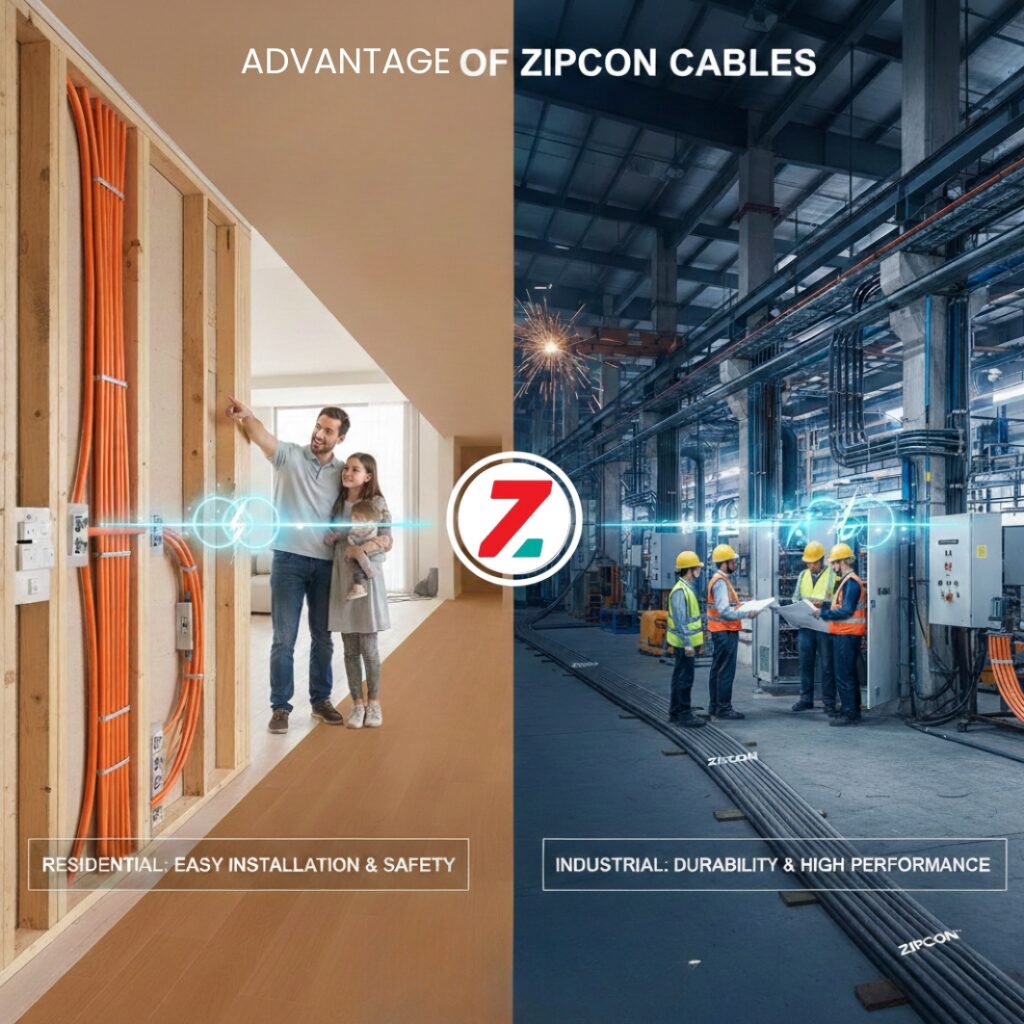
Advantages of Zipcon Cables in Residential and Industrial Wiring
Advantages of Zipcon Cables in Residential & Industrial Wiring

Zipcon cables Manufacturer in delhi have gained significant traction in both residential and industrial wiring due to their superior durability, cost-effectiveness, and versatility. While copper cables have long been a standard in the industry, Zipcon cables present a strong alternative for various applications. In this article, we’ll explore the advantages of Zipcon cables, particularly in comparison to copper cables, across key technical areas such as conductivity, durability, weight, cost, safety, installation, and typical use cases.

For inquiries or assistance, visit: 👉https://zipconcables.com/contact-us/

Conductivity

Copper cables are known for their high conductivity, making them the preferred choice in applications where efficient power transmission is critical, such as in high-voltage and heavy-duty systems. However, Zipcon cables, while not as conductive as copper, still offer adequate conductivity for many residential and light industrial applications.

Zipcon cables use advanced materials and insulation that enhance their performance in various environments, ensuring that the electrical current flows efficiently for most residential wiring and industrial setups. In scenarios where extreme conductivity is not a priority—such as in lower power systems or residential buildings—Zipcon cables provide sufficient performance at a more affordable price.

However, for high-power, high-performance applications, copper remains the better choice due to its superior conductivity.

Durability

Zipcon cables manufacturer in india are designed to perform well in challenging environments, making them a great option for both residential and industrial installations. These cables can withstand extreme temperature variations, humidity, and mechanical wear, which are common in industrial settings like factories, warehouses, and outdoor installations.

Compared to copper, Zipcon cables offer superior resistance to environmental stresses, reducing the risk of failure over time. They are often coated with durable insulation materials that protect them from corrosion, abrasion, and other forms of degradation, which can be a concern with copper cables when exposed to harsh conditions.

In residential settings, Zipcon cables have proven to be highly reliable, requiring minimal maintenance and offering long-lasting performance. Copper cables, on the other hand, tend to have a slightly longer lifespan in optimal conditions but may require more regular maintenance due to their vulnerability to corrosion and wear over time.

Weight

One significant advantage of Zipcon cables is their lighter weight compared to copper cables. This makes them easier to handle and install, especially in large-scale projects where long cable runs are required. The reduced weight can also contribute to cost savings in terms of transportation and handling.

In contrast, copper cables are relatively heavier and may pose installation challenges, especially in tight spaces or when long distances need to be covered. The lighter weight of Zipcon cables, however, makes them a preferred choice in residential applications, where ease of installation is important.

Cost

Cost is a major factor when deciding between Zipcon and copper cables. Zipcon cables are more affordable than copper cables, making them a more cost-effective solution for many residential and industrial projects. For budget-sensitive applications, Zipcon offers a great balance between performance and price, without compromising safety or durability.

Copper cables, while more expensive, are still the go-to choice for high-performance applications that demand superior conductivity. In large-scale or budget-sensitive projects, Zipcon cables may provide significant savings without sacrificing the necessary performance.

Safety

Safety is a paramount consideration in any wiring project, and Zipcon cables excel in this area. They are equipped with advanced insulation materials that make them resistant to fire and provide protection against electrical shocks. Zipcon cables are also designed to meet various international safety standards and certifications, ensuring that they can be used safely in both residential and industrial settings.

Copper cables, on the other hand, can be more prone to overheating in certain conditions, especially if they are not properly insulated or if they carry a heavy electrical load. While copper is a highly conductive material, it requires careful installation and maintenance to avoid safety risks. Zipcon cables, with their robust insulation, provide an added layer of security, particularly in high-risk environments.

Installation Needs

The installation process for Zipcon cables is straightforward and requires minimal tools and specialized skills. Their lighter weight, flexible design, and easier handling make Zipcon cables easier and faster to install compared to copper cables. This can reduce labor costs and installation time, particularly in residential and commercial wiring projects.

In contrast, copper cables often require more careful handling and specialized tools for cutting, stripping, and installation. The installation process can also be more time-consuming due to the heavier weight and more rigid nature of copper cables.

Typical Use Cases

Zipcon cables are ideal for a wide range of applications. In residential settings, they are commonly used for wiring in homes, apartments, and offices, where high conductivity is not as critical. Their durability and cost-effectiveness make them a great choice for projects that require reliable performance without the high price tag of copper cables.

In industrial settings, Zipcon cables are used for a variety of applications, from lighting systems in factories to powering machinery in warehouses. The cables’ ability to withstand harsh conditions makes them suitable for industrial environments where temperature fluctuations and exposure to moisture are common.

Copper cables are still the preferred choice for high-performance applications, such as heavy-duty power transmission, high-voltage systems, and situations that demand the highest possible conductivity.

Copper vs. Zipcon Cables

While Zipcon cables offer several advantages, particularly in terms of cost, durability, and ease of installation, there are still scenarios where copper cables may outperform them. For applications that require superior conductivity, such as heavy-duty power systems or high-voltage installations, copper cables are the better option.

However, Zipcon cables are well-suited for most residential and many industrial applications, where cost savings, durability, and ease of installation are more important than maximum conductivity.

Recommendation

For most residential and light industrial applications, Zipcon cables provide a reliable, cost-effective, and durable solution. They perform well in a wide range of environments, offering ease of installation and lower overall costs. Copper cables should still be considered for applications that demand high conductivity, such as heavy-duty power systems or specialized high-voltage installations.

Ultimately, the choice between Zipcon and copper cables should be based on the specific needs of the project—whether it’s cost, durability, or performance that matters most. For most applications, Zipcon cables will deliver excellent results while staying within budget.

Zipcon Cables: The Future of Safe and Efficient Electrical Solutions

When it comes to electrical solutions, choosing the right cables can significantly impact the efficiency and safety of your installations. Zipcon Cables leading manufacturer in india, is at the forefront of providing high-quality cables that prioritize conductivity, durability, safety, and cost-efficiency. This article delves into the technical aspects of Zipcon Cables, covering the key factors like conductivity, durability, weight, cost, safety, installation needs, and typical use cases, while also comparing them with copper cables.

For inquiries or assistance, visit: 👉https://zipconcables.com/contact-us/

Conductivity: Ensuring Efficient Power Transmission

The primary function of any electrical cable is to efficiently transmit electrical power. Copper has long been considered the gold standard due to its high conductivity. However, Zipcon Cables, especially those made with advanced materials like aluminum, are designed to offer comparable performance. These cables provide effective conductivity, ensuring minimal power loss. In cases where copper cables are less cost-effective or not ideal due to weight constraints, Zipcon’s alternatives can be a viable solution, particularly for large-scale industrial applications where energy efficiency is crucial.

Durability: Built to Withstand Harsh Conditions

Durability is a critical factor when selecting cables, especially in outdoor or harsh environments. Zipcon Cables are designed to endure extreme conditions, including high temperatures, moisture, and physical stress. Their high-quality insulation materials ensure that they are resistant to wear and tear, reducing the likelihood of short circuits and other failures. On the other hand, while copper cables are highly durable, they are susceptible to corrosion over time, particularly in humid or salty environments. This makes Zipcon Cables a more reliable choice for long-term performance in tough settings.

Weight: Balancing Strength and Practicality

Weight is another important consideration, particularly for applications requiring long cable runs or when cables need to be installed in tight spaces. Copper cables, while excellent in conductivity, are heavy and require additional support structures, increasing both installation complexity and cost. Zipcon Cables, however, are lighter and easier to handle, reducing the overall weight burden without compromising on strength. This makes Zipcon’s cables ideal for residential, commercial, and even some industrial applications where ease of installation is a priority.

Cost: Maximizing Value

Copper cables are typically more expensive due to the high cost of raw copper. While they offer superior conductivity, their price tag can be a barrier, especially for large projects. Zipcon Cables, particularly those made with alternative materials, offer a more cost-effective solution without sacrificing too much in terms of performance. For large-scale installations, Zipcon Cables can provide substantial cost savings, making them an attractive choice for both contractors and businesses looking to optimize their budgets.

Safety: Preventing Hazards

Safety is paramount when it comes to electrical installations. Zipcon Cables are designed with robust safety features, including fire-resistant coatings and reinforced insulation, ensuring they meet stringent safety standards. These cables are less prone to overheating and short-circuiting, offering superior protection for residential, commercial, and industrial systems. While copper cables are generally safe, their heavier weight and potential for corrosion under certain conditions can lead to safety concerns over time. Zipcon Cables offer a safer alternative by minimizing these risks.

Installation Needs: Ease and Flexibility

Zipcon Cables are engineered for ease of installation, with flexible designs that allow for quick and simple setups in various environments. The lighter weight of these cables means they are easier to maneuver, reducing labor costs and installation time. Copper cables, while often more rigid and requiring more precise handling, may be better suited for certain heavy-duty industrial applications where the installation environment is stable and straightforward. For more adaptable installations, especially in complex or tight spaces, Zipcon Cables are a superior choice.

Typical Use Cases: Tailored Solutions

Zipcon Cables find applications across a variety of sectors. For residential use, their flexible, lightweight, and cost-effective designs make them ideal for home wiring and light industrial projects. In commercial applications, Zipcon Cables are used for everything from office buildings to shopping malls, offering the perfect balance of safety, durability, and affordability. Industrial sectors, including manufacturing plants and construction sites, also benefit from Zipcon’s robust and reliable solutions. For areas where copper cables excel, such as heavy machinery or high-power systems, copper remains a preferred choice, but for most other applications, Zipcon Cables provide an ideal, cost-effective alternative.

Copper vs. Zipcon: Which Should You Choose?

The decision between copper and Zipcon Cables ultimately depends on the application. Copper cables are better suited for environments where maximum conductivity is required, particularly for high-power, long-distance applications. However, for most residential, commercial, and industrial applications where cost, safety, and durability are top priorities, Zipcon Cables are the superior choice. Their ability to provide reliable performance at a lower cost, combined with easier installation and a higher degree of safety, makes them a smart choice for a wide range of electrical needs.

Conclusion

Zipcon Cables are redefining the future of safe and efficient electrical solutions. Their excellent conductivity, durability, cost-efficiency, and safety make them an excellent choice for a wide variety of applications. While copper cables remain important for certain high-power needs, Zipcon Cables provide a more versatile, practical, and affordable alternative for most projects. By choosing Zipcon, you’re investing in a reliable, long-term solution for your electrical needs.

Top-Quality Submersible Flat Cables for Reliable Underwater Applications

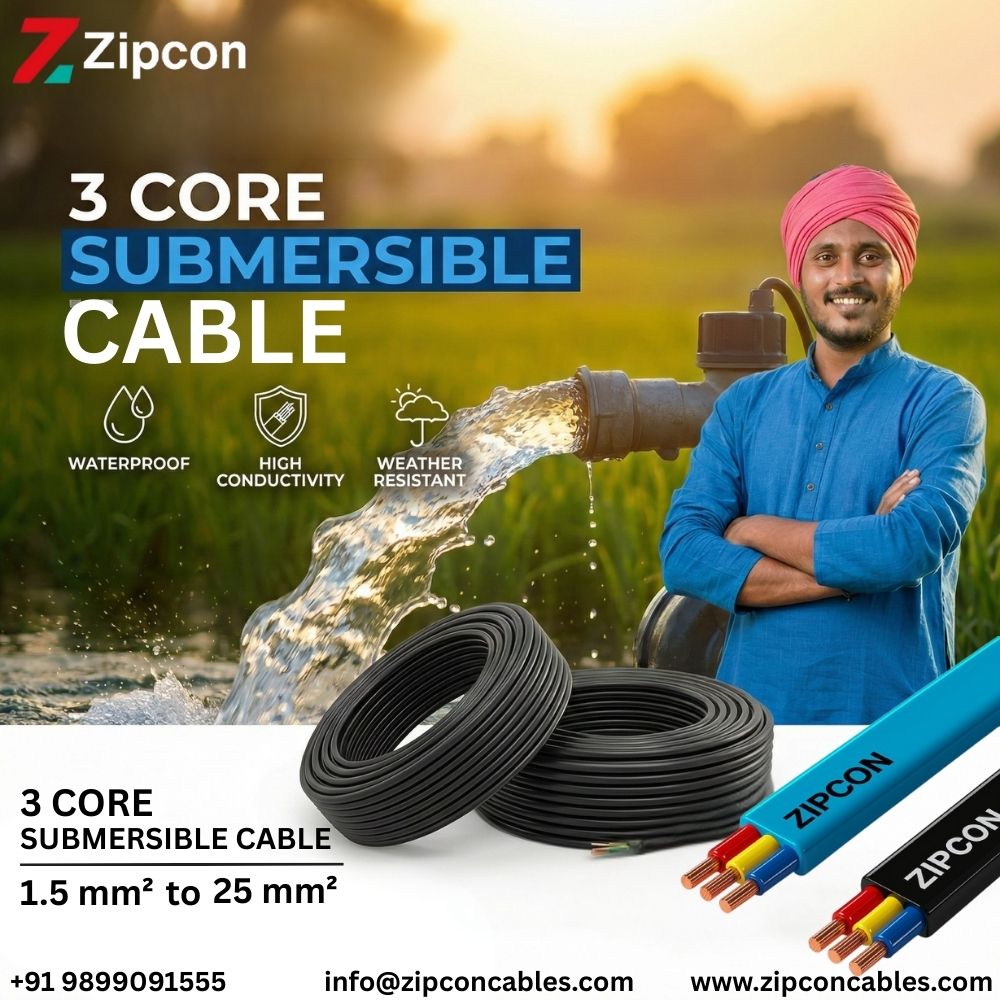
Submersible 3 core flat cables are crucial for powering equipment used in submerged environments like pumps, motors, and other underwater machinery. When selecting the right cable for these applications, several factors come into play, including conductivity, durability, weight, cost, safety, and installation needs. Zipcon Cables offers high-performance copper submersible cables that are designed to meet these demands. This article explores the key aspects of submersible cables, with a focus on Zipcon’s copper cables and how they compare to alternative materials like aluminum.

Conductivity: Copper vs. Alternatives

Conductivity is one of the most critical factors when choosing cables for submersible applications. The higher the conductivity, the more efficiently the cable can carry electrical current. Copper is well-known for its superior conductivity, making it the material of choice for submersible cables.

Copper has a conductivity of 59.6 × 10^6 S/m, significantly higher than aluminum (35.5 × 10^6 S/m). This means that copper cables can carry more current over longer distances without significant power loss, which is essential for submersible applications where reliable, consistent power is critical.

While aluminum cables may be lighter and less expensive than copper, they don’t offer the same level of performance and reliability, especially when used in environments where high conductivity is crucial. Copper’s ability to maintain performance over time in harsh underwater environments makes it a clear choice for long-term, high-performance submersible applications.

Durability: Built to Withstand Harsh Conditions

Submersible cables are often exposed to extreme environmental factors, including moisture, temperature fluctuations, and mechanical stress. The durability of a cable directly impacts its lifespan and reliability.

Zipcon Cables are designed with high-quality copper conductors and robust insulation materials that ensure excellent resistance to moisture and temperature changes. 4 sq mm 3 core flat submersible pump cable Copper cables are less prone to corrosion compared to aluminum, making them more durable in wet, salty, or humid conditions. In addition, copper’s high tensile strength allows the cable to withstand mechanical stress without breaking or degrading over time.

When considering durability, Zipcon Cables stand out for their ability to perform reliably in demanding environments, providing long-term value despite the challenges posed by submersion.

Weight: Ease of Installation and Long-Term Use

Weight is another important factor when selecting submersible cables. Heavier cables can be more challenging to handle during installation, especially when deploying cables in deep or remote locations. Copper cables are denser and heavier than aluminum cables, which can make them harder to install.

However, the increased weight of copper cables is often an advantage in terms of performance. The material’s superior conductivity and durability outweigh the minor inconvenience of additional weight during installation. For specific applications where weight is a concern, Zipcon offers flexible, lightweight alternatives that still maintain the high performance of copper.

Cost: Upfront Investment vs. Long-Term Value

Cost is often a significant consideration when choosing materials for submersible cables. Copper cables typically have a higher upfront cost compared to aluminum cables, but they offer better long-term value due to their superior conductivity, durability, and resistance to wear and tear.

Although aluminum cables may seem like a cost-effective option in the short term, they require more frequent maintenance and replacement due to their lower performance and susceptibility to corrosion. Zipcon’s copper cables, while higher in initial cost, reduce the need for repairs and replacements, making them a more cost-effective solution over time, particularly in harsh submersible environments.

Safety: Ensuring Reliable and Safe Operation

Safety is a top priority in submersible cable applications. Zipcon Cables prioritize safety by adhering to stringent insulation and water resistance standards. The cables are equipped with high-quality insulation materials that prevent water ingress and ensure that the cables remain electrically safe under submerged conditions.

Copper’s inherent resistance to corrosion also plays a role in maintaining the safety of submersible cables. In contrast, aluminum cables can corrode more easily, potentially leading to exposed wires and increased risk of electrical faults.

Moreover, Zipcon cables meet fire safety standards, ensuring that they do not pose a fire risk in submersible environments. This makes them a safer option compared to aluminum cables, which may have a lower fire resistance rating.

Installation Needs: Ease of Use in Challenging Environments

Installing submersible cables requires careful planning and execution, particularly in environments that are difficult to access. Zipcon’s copper cables are designed for easy handling during installation, with clear labeling, flexibility, and user-friendly features that reduce installation time and labor costs.

However, copper cables are heavier than aluminum cables, which can add complexity to the installation process. In situations where a lighter cable is necessary, Zipcon offers options that balance weight and performance, making installation more manageable without compromising on quality or durability.

Typical Use Cases for Submersible 3 Core Flat Cables

Submersible 3 core flat cables are commonly used in a wide range of applications, including powering pumps, motors, and underwater machinery. Zipcon’s copper cables are especially suited for these applications due to their excellent conductivity, durability, and safety features.

For example, Zipcon cables are ideal for submersible pumps used in water treatment plants, wells, and sewage systems. The cables ensure that power is transmitted efficiently and reliably, even under harsh submerged conditions. In addition, Zipcon’s cables are used in underwater motors for various industrial applications, providing the necessary performance and safety.

Additional Comparisons and Recommendations

While aluminum cables may be cheaper and lighter, copper cables like those from Zipcon excel in conductivity, durability, and long-term performance. Copper is the better choice when high conductivity, resistance to corrosion, and reliability are critical.

For applications where weight is a primary concern, lighter alternatives such as aluminum cables may be more suitable. However, for projects that demand the highest performance and long-term durability, Zipcon’s copper submersible cables are the recommended choice.

Conclusion

Choosing the right submersible cable is essential for ensuring the long-term performance and safety of underwater equipment. Zipcon Cables offers high-quality copper cables that deliver superior conductivity, durability, and safety, making them the best choice for demanding submersible applications. By understanding the key factors of conductivity, durability, weight, cost, safety, and installation needs, engineers, electricians, and buyers can make informed decisions and select the most suitable material for their specific application.

Best Flexible Wire Manufacturer in India

When it comes to choosing the best flexible wire for industrial, residential, or commercial applications, it’s crucial to consider various factors such as conductivity, durability, weight, cost, safety, and ease of installation. Zipcon Cables, a leading flexible wire manufacturer in India, has gained a reputation for offering products that excel in these key areas. In this article, we’ll dive into the technical details of Zipcon Cables and compare them to other brands in the market, helping you make an informed decision for your next project.

Conductivity: Powering Efficient Performance

One of the primary factors to consider when selecting flexible wire is conductivity. Conductivity directly affects the efficiency of electrical transmission, determining how much power is lost during transmission and how well the wire can handle high loads.

Copper vs. Other Materials: Copper wires are traditionally known for their superior conductivity, making them the go-to choice for high-performance applications where minimal power loss is essential. Zipcon Cables uses high-quality copper in its flexible wires, ensuring maximum conductivity and minimal energy loss. This makes them ideal for industrial environments where electrical performance is critical. While other materials such as aluminum or tinned copper offer alternatives, they do not match the conductivity levels of copper, which is why Zipcon’s copper wires stand out in terms of both efficiency and reliability.

Zipcon Advantage: Zipcon’s flexible wires outperform many competitors due to their top-tier copper content, ensuring that electricity flows smoothly without unnecessary resistance or heat buildup. This is especially beneficial for high-current applications, making Zipcon Cables a preferred choice in the industry.

Durability: Built to Last

Durability is an essential factor, especially for wires that are exposed to harsh conditions or frequent movement. Flexible wires, by their very nature, must withstand bending, stretching, and environmental stress without compromising their performance or safety.

Zipcon’s Durability: Zipcon Cables are engineered for longevity and wear resistance. Their flexible wires are made from materials that can endure extreme conditions, including high temperatures, exposure to chemicals, and mechanical stress. Whether used indoors or outdoors, Zipcon’s flexible wires retain their strength and reliability over time, reducing the need for frequent replacements.

Competitor Comparison: While other flexible wires in the market may offer similar durability, they often fall short in terms of resilience in extreme conditions. Zipcon’s wires excel in both wear resistance and flexibility, making them more suitable for long-term use in demanding environments.

Weight: A Key to Installation and Transportation

The weight of a flexible wire plays a significant role in both transportation and installation processes. Lighter wires are easier to handle and install, saving time and reducing labor costs.

Zipcon vs. Competitors: Zipcon Cables offer flexible wires that strike the perfect balance between weight and performance. They are lightweight enough for easy handling and installation, without sacrificing strength or durability. In comparison, some competitors’ wires, though durable, may be bulkier, making them harder to transport and install efficiently.

Practical Implication: For engineers, electricians, or buyers looking to minimize installation time and reduce transportation costs, Zipcon’s lightweight cables are a smart choice, ensuring both ease of use and cost-efficiency.

Cost: Quality Meets Affordability

When selecting flexible wires, cost is always a consideration, especially for large-scale projects. However, it’s important to balance cost with the quality of the product.

Zipcon’s Value Proposition: Zipcon Cables provide a cost-effective solution without compromising on quality. The company’s flexible wires are priced competitively while offering superior performance and longevity. This makes Zipcon Cables a great value for money, especially when compared to other brands that might offer cheaper options but fail to deliver on long-term reliability or performance.

Competitor Comparison: While some competitors may offer lower upfront prices, their wires might require more frequent replacements or maintenance, making them less economical in the long run. Zipcon, on the other hand, ensures that every purchase provides a high return on investment due to the longevity and efficiency of their cables.

Safety: Meeting Industry Standards

Safety is paramount when it comes to wiring, especially in environments where there are high voltages or fire hazards. Flexible wires must meet stringent safety standards to ensure that they do not pose risks to individuals or property.

Zipcon’s Safety Features: Zipcon Cables stand out for their excellent insulation, which helps prevent electrical faults and reduce the risk of fires. Their wires are designed to handle high temperatures and resist external elements like moisture and chemicals, making them a safe choice for both residential and industrial applications.

Fire Resistance: Zipcon’s flexible wires are equipped with fire-resistant insulation, which makes them ideal for use in high-risk environments, such as factories, construction sites, and commercial buildings. This ensures that the cables remain operational even in the event of a fire, offering an added layer of protection.

Installation Needs: Flexibility and Adaptability

The ease of installation is a crucial factor for any wiring system, especially in tight or complex spaces. A flexible wire should be easy to manipulate and install without compromising the integrity of the system.

Zipcon’s Ease of Installation: Zipcon’s flexible wires are specifically designed for easy installation. They are highly adaptable, which means they can be bent, twisted, and routed through complex installations without breaking. This flexibility reduces installation time and labor costs, making Zipcon a go-to choice for electricians and engineers.

Comparison to Other Brands: While other flexible wires may offer some level of flexibility, Zipcon’s products are particularly known for their ease of use in difficult environments, including narrow spaces or complex installations.

Typical Use Cases: Where Zipcon Cables Shine

Zipcon Cables are versatile and can be used in a variety of applications. They are commonly used in:

  • Industrial Settings: For heavy machinery, automation systems, and high-power applications where durability and conductivity are key.
  • Residential Applications: For powering household appliances and ensuring safe electrical wiring.
  • Commercial Use: In office buildings, retail stores, and other commercial establishments where both safety and performance are critical.

Copper vs. Alternatives: When to Choose Which

Copper wires are ideal for environments that require high conductivity, such as power distribution networks and heavy-duty industrial systems. However, for applications that prioritize weight and cost over conductivity—such as some residential setups or low-power applications—alternatives like aluminum or tinned copper wires might be more suitable.

Conclusion: Why Choose Zipcon Cables

Zipcon Cables offer a comprehensive solution for those seeking high-performance flexible wires that excel in conductivity, durability, safety, and ease of installation. Whether you’re an engineer, electrician, or buyer, Zipcon’s flexible wires deliver on all fronts—offering a perfect balance of quality and affordability. Choose Zipcon Cables for your next project when you need reliable, cost-effective, and high-performance wiring solutions.

Best House Wire Manufacturer in India

Choosing the right house wire manufacturer in Delhi is not just a technical decision—it directly affects safety, power efficiency, and the long-term reliability of your electrical system. Homes and commercial spaces in Delhi NCR face specific challenges such as high ambient temperatures, frequent load fluctuations, voltage variations, and increasing dependence on heavy appliances like air conditioners, geysers, and inverters. In this environment, wire quality matters more than brand names or short-term cost savings.

This article explains the real-world factors that matter when selecting house wires and clearly positions Zipcon Cables as a dependable and practical choice for residential and small commercial wiring in Delhi.

Why Wire Quality Matters in Delhi Homes

Delhi’s electrical demand has increased sharply over the years. Multiple ACs running simultaneously, high-capacity kitchen appliances, and backup power systems place constant stress on internal wiring. Poor-quality wires can overheat, cause voltage drops, or fail prematurely—often hidden inside walls, making repairs expensive and disruptive. Selecting a reliable house wire manufacturer in Delhi helps prevent these issues from day one.

Key Technical Factors to Consider When Choosing House Wires

Conductivity
High conductivity ensures efficient power flow with minimal energy loss. Copper wiring performs better than most alternatives because it allows current to pass with lower resistance. This means appliances receive stable voltage, motors run smoothly, and heat buildup is reduced. Zipcon Cables maintains consistent copper purity, which directly translates into better electrical performance across lighting and power circuits.

Durability
Durability depends largely on insulation quality and heat resistance. In Delhi’s hot climate, insulation must withstand sustained temperatures without cracking or hardening. Quality house wires from Zipcon Cables are designed for long service life under Indian conditions, reducing the risk of insulation failure over time.

Weight
Weight affects handling during installation. Copper wires are slightly heavier but offer better mechanical strength and stability once installed. Well-manufactured wires balance conductor thickness and insulation so electricians can route them easily through walls and conduits without damaging the cable.

Cost
Cheaper wires may reduce upfront expenses, but they often lead to higher long-term costs through repairs, energy loss, or safety risks. Zipcon Cables positions itself in the value segment—offering dependable performance, reduced maintenance, and longer lifespan, making the total cost of ownership lower over time.

Safety
Fire resistance and voltage tolerance are non-negotiable. High-quality insulation prevents short circuits and minimizes fire risk during overloads. Zipcon Cables follows applicable safety standards, ensuring consistent insulation thickness and stable performance even under fluctuating voltage conditions common in Delhi.

Installation Needs
Good house wires should be flexible enough for tight bends yet strong enough to avoid conductor breakage. Zipcon Cables offers wires that electricians find easy to pull through conduits, saving installation time and reducing damage during routing.

Typical Use Cases
Different circuits require different wire sizes and performance levels:

  • Lighting circuits
  • Power sockets
  • ACs and geysers
  • Inverters and UPS systems
  • Heavy appliances such as ovens and pumps

Using the correct wire for each application is critical for safety and efficiency.

Copper vs Other Cable Types: Practical Differences

Copper cables clearly perform better in:

  • High-load appliances like ACs, geysers, and microwaves
  • Long wiring runs where voltage drop matters
  • Safety-critical circuits that operate continuously

Other cable types may be suitable for:

  • Short-distance, low-load lighting circuits
  • Budget-sensitive temporary setups
  • Low-power applications with minimal current draw

The key is matching wire type to usage—not cutting corners where safety is involved.

Short Comparisons: Copper vs Alternatives

Heat Handling
Copper handles heat better under load, reducing insulation stress.

Voltage Drop
Copper wires experience lower voltage drop over distance, ensuring stable appliance performance.

Installation Effort
Copper offers better flexibility and strength, making installation smoother for electricians.

Long-Term Reliability
Copper wiring lasts longer and performs more consistently over years of use.

Real-World Scenarios in Delhi NCR

Wiring a 2–3 BHK Apartment
For a typical Delhi apartment, copper house wires from Zipcon Cables ensure safe distribution across lighting, power sockets, and kitchen appliances. The result is stable power and reduced maintenance over time.

Upgrading Wiring for ACs and Modern Appliances
Older homes often struggle with new electrical loads. Replacing outdated wiring with Zipcon Cables’ copper house wires helps prevent overheating and nuisance tripping when multiple appliances run together.

Residential vs Small Commercial Spaces
Small offices, clinics, and retail spaces need reliable wiring without industrial complexity. Zipcon Cables offers solutions that balance safety, performance, and installation ease for such environments.

Why Zipcon Cables Is a Trusted House Wire Manufacturer in Delhi

Zipcon Cables stands out due to its focus on manufacturing consistency, safety compliance, and suitability for real Indian conditions. Rather than over-promising, the brand delivers dependable conductor quality, reliable insulation, and practical performance that electricians and engineers can trust. This makes Zipcon Cables a sensible choice for both residential and light commercial projects across Delhi NCR.

Final Recommendation

  • Lighting circuits: Standard copper house wires from Zipcon Cables
  • Power sockets: Higher gauge copper wiring for stable voltage
  • ACs, geysers, and heavy appliances: Dedicated copper cables with appropriate load ratings
  • Full-home wiring: Consistent use of Zipcon Cables ensures uniform safety and performance

For homeowners, contractors, and engineers looking for a reliable house wire manufacturer in Delhi, Zipcon Cables offers a practical, safe, and long-term solution without unnecessary complexity or compromise.

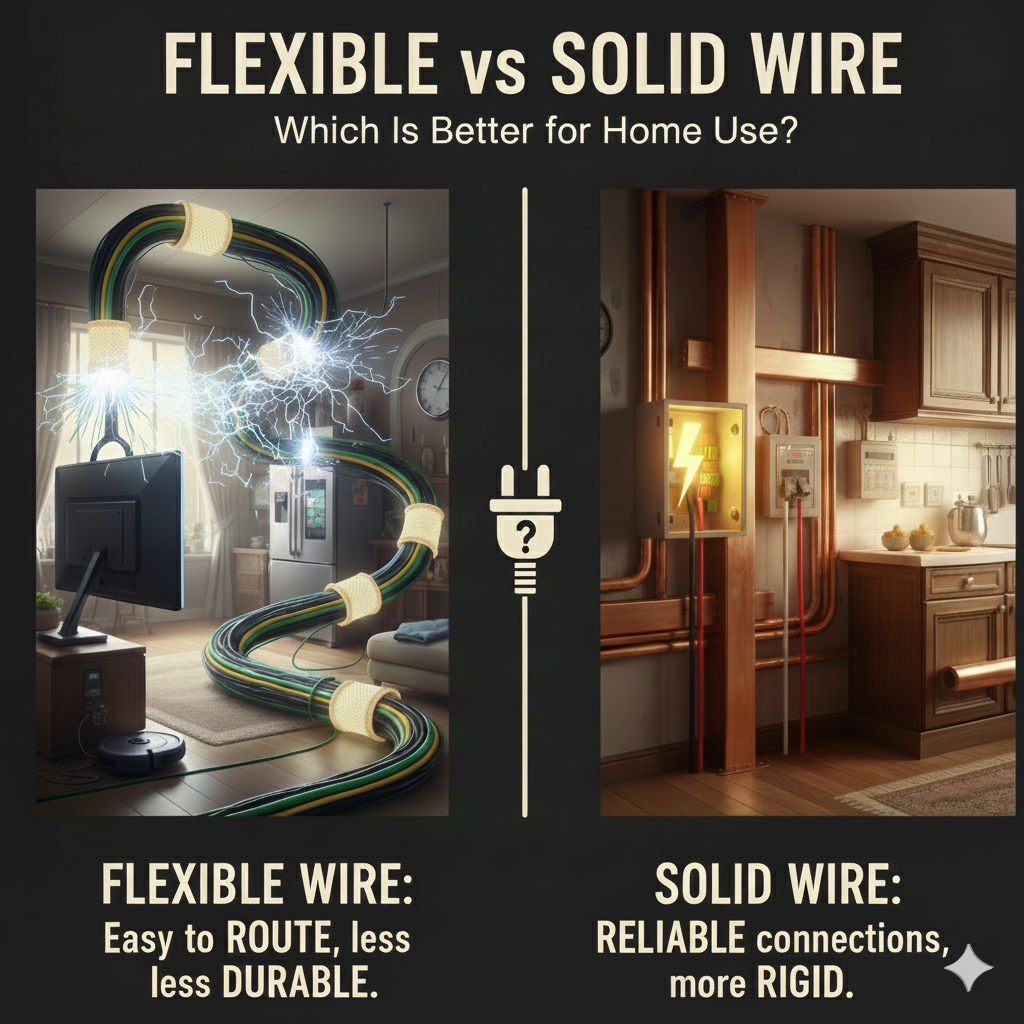
Flexible vs Solid Wire: Which Is Better for Home Use?

Choosing the right type of wire for a home installation is more important than most people realize. The wiring you select affects performance, safety, lifespan, and even how easy it is to complete an installation. Flexible and solid wires are the two most commonly used options in residential applications, and both come with clear strengths. Understanding where each one performs better makes decision-making far easier, whether you’re an electrician, contractor, or homeowner planning upgrades.

Conductivity: How Well Do They Carry Current?

Solid wire has a slight advantage in conductivity because it is made from a single copper conductor. With no air gaps or multiple strand junctions, current flows smoothly with very low resistance. This is why solid copper wire is often the preferred option for fixed home wiring, especially for lighting circuits, power sockets, and internal wall wiring.

Flexible wire is made from multiple thin copper strands twisted together. While copper itself is highly conductive, the strand-to-strand contact points can introduce a bit more resistance. In real-world home use, the difference is small, but for long runs or high-load circuits, solid copper wire tends to deliver more stable performance.

Durability: Which One Handles Stress Better?

Durability depends on the kind of stress the wire faces.

Solid wire holds its shape and is more resistant to bending fatigue. Since it won’t be moved once installed behind walls, ceilings, or conduits, it tends to last longer in static environments.

Flexible wire shines in situations that involve motion or vibration. The multiple strands give it greater bend tolerance, making it far less likely to crack when repeatedly folded or twisted. This makes flexible wires a reliable choice for fans, appliances, control panels, or lighting fixtures that may be opened or serviced occasionally.

For wiring concealed inside walls, durability favors solid copper. For exposed or movable connections, strand flexibility becomes an advantage.

Weight: What Difference Does It Make?

Solid copper wire is slightly heavier because it is a single thick conductor. In short home runs, the weight difference doesn’t change much. But when pulling wire over long distances in conduits or overhead areas, flexible wire feels lighter and easier to route.

For most residential uses, weight is not a major deciding factor, but installers often appreciate the handling ease of flexible wires in tight or complex pathways.

Cost: Which One Fits the Budget?

Solid wire is generally more affordable to manufacture, so it costs less per meter. If you’re wiring an entire home where hundreds of meters may be used, solid copper becomes a cost-effective option without compromising performance.

Flexible wire is slightly more expensive because of the added manufacturing involved in creating many fine copper strands. Homeowners usually prefer flexible wire only where necessary, rather than throughout the whole house, to keep costs reasonable.

Safety: Which One Offers Better Protection?

Both wire types are safe when used correctly, but their safety profiles differ based on application.

Solid copper wire has fewer fatigue points and is less prone to strand breakage. This makes it safer for long-term, concealed wiring inside conduits and walls where disturbances are rare.

Flexible wire handles movement better, which makes it safer in environments where bending could otherwise cause cracks in a solid wire. However, if poorly terminated, flexible wires can fray or loosen at connection points, which increases the risk of short circuits. This is why proper lugs, ferrules, and secure terminals are essential whenever flexible copper wires are used in home installations.

Installation Needs: Which One Is Easier to Work With?

Solid wires are straightforward to route in simple paths, but they can be challenging when dealing with tight bends or crowded switch boxes. Their rigidity can make them difficult to manipulate around sharp corners.

Flexible wires offer much easier maneuverability. Electricians often prefer flexible copper cables in scenarios such as:

  • Routing wires through small switchboard spaces
  • Connecting ceiling fans or underground pump sets
  • Installing home automation modules
  • Wiring appliances with tight or curved internal layouts

For concealed wiring behind walls, solid wire still remains the standard choice because it stays in place and is easy to pull through conduits.

Typical Home Use Cases

Here’s a practical breakdown of where each wire performs best in home installations:

Best Use Cases for Solid Wire

  • Concealed house wiring
  • Lighting and power circuits
  • Long conduit runs
  • Fixed installations with no movement
  • Main electrical connections

Best Use Cases for Flexible Wire

  • Fans, inverters, and home appliances
  • Distribution boards with tight spaces
  • Areas requiring repeated bending
  • Temporary wiring setups
  • Control wiring in home automation devices

Copper Performance: When It Matters Most

Copper has long been the preferred conductor for home wiring because of its high conductivity and reliability. Copper solid wires provide excellent performance for long-term fixed use, minimizing power loss and heat buildup.

Copper flexible cables add convenience and adaptability without losing core conductivity benefits. When movement, vibration, or complex bends are involved, flexible copper wiring delivers better reliability than a rigid alternative.

How to Choose: A Simple Recommendation

If your installation is fixed, long-lasting, and concealed, Zipcon solid copper wire is the better choice.
If your installation requires flexibility, frequent handling, or tight bends, choose to Zipcon flexible copper wire.

In most modern homes, both types are used together. Solid copper forms the backbone of the electrical system, while flexible copper is used for appliances, switches, and areas requiring maneuverability.

Both types play essential roles in safe, efficient home wiring, and understanding these differences helps homeowners and professionals choose the right cable for the job while ensuring long-term reliability and performance.

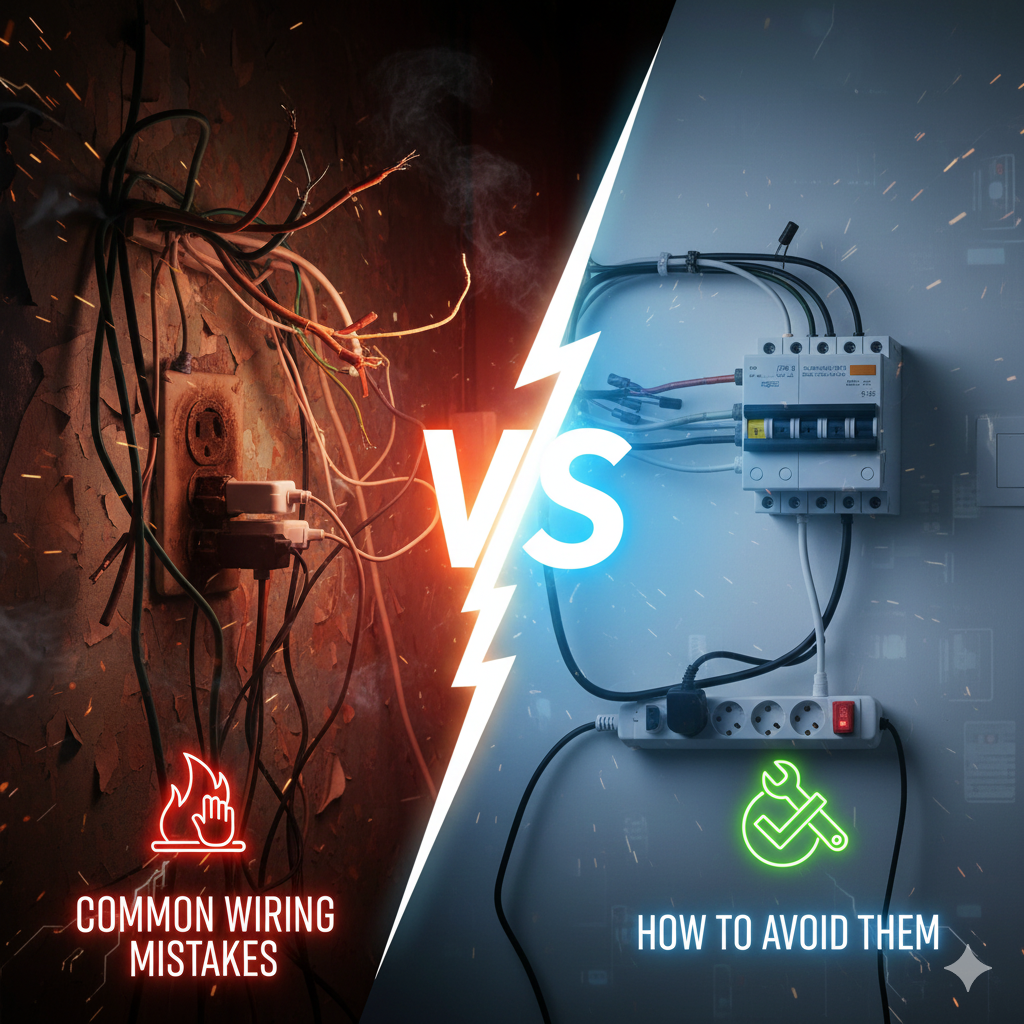
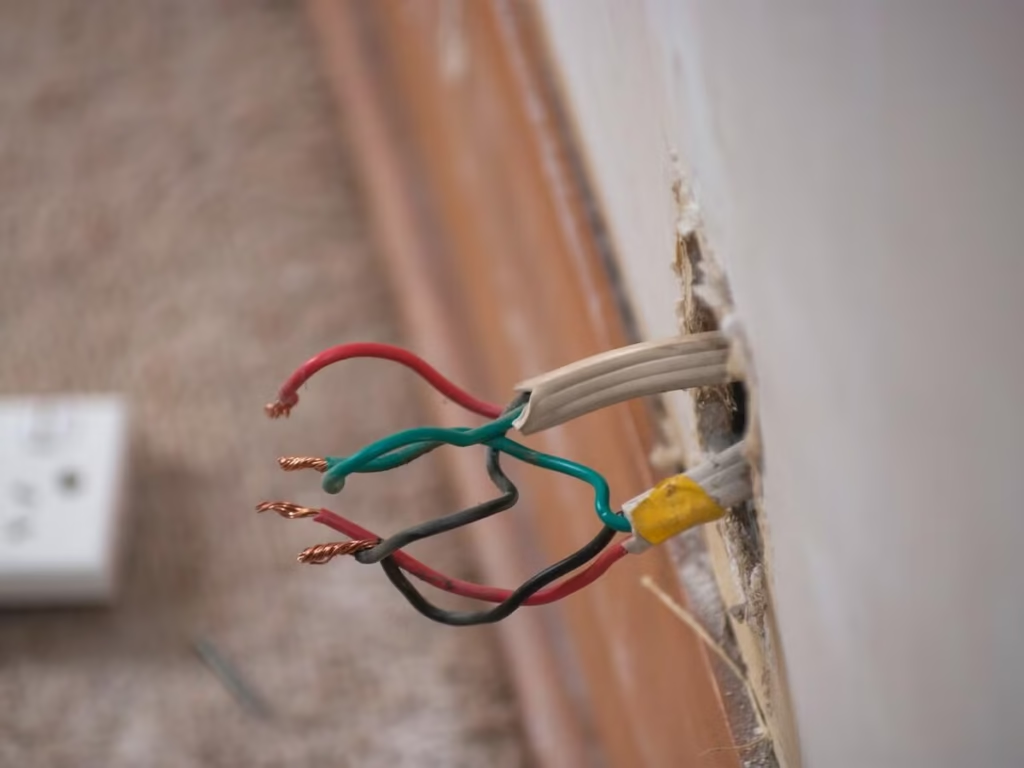
Common Wiring Mistakes in Homes & How to Avoid Them

When it comes to electrical wiring in your home, safety and performance should always be a top priority. Many common wiring mistakes are avoidable with the right knowledge and materials. One excellent choice for ensuring safety and reliability in residential wiring projects is Choosing fro Zipcon Cables. These high-quality, durable cables are designed to reduce the risk of common wiring issues, offering dependable conductivity, durability, and safety in your home.

In this article, we’ll discuss some of the most frequent electrical wiring mistakes made during home installations and how to avoid them. We’ll cover key aspects like proper wire sizing, the right choice of wire, circuit overloads, and safety standards to help ensure your electrical system works efficiently and safely.

1. Improper Wire Sizing

One of the most common mistakes homeowners or DIYers make is choosing the wrong wire gauge (size) for the job. Wire gauge refers to the thickness of the wire, which affects its current-carrying capacity. If the wire is too small for the amount of power being used, it can overheat, causing a fire hazard. On the other hand, choosing best wire manufacturer in india that’s too large can lead to unnecessary costs and complications.

How to Avoid It:
Always choose the correct wire gauge for the specific appliance or circuit. For example, for most lighting and outlet circuits, a 14-gauge wire is sufficient, but for higher-powered appliances, you’ll need a 12-gauge wire or larger. A licensed electrician can help you choose the right wire gauge for your home’s wiring system.

Real-World Scenario:
Imagine overloading a power strip with high-powered devices like a microwave or space heater. If the wire size is too small, the heat generated can cause the insulation to melt or spark, leading to a potential fire.

2. Using the Wrong Type of Wire

Another common mistake is using the wrong type of wire for a given application. For instance, some people may use indoor-rated wires in outdoor applications, or they may use uncoated wire in areas that need a protective jacket to prevent exposure to moisture.

How to Avoid It:
Make sure to use the right type of wire for the environment and purpose. For instance, if you’re wiring outdoor lighting or appliances, you’ll need a wire that’s rated for outdoor use. Choosing Zipcon Cables, which offer both residential-grade and specialized cables for different environments, can help prevent such errors by providing high-quality materials designed for specific uses.

Real-World Scenario:
Using an indoor-rated wire for an outdoor application can cause damage over time due to weather exposure. In the long term, it might lead to short circuits or power outages due to insulation breakdown.

3. Overloading Circuits

Overloading a circuit is a frequent mistake that occurs when too many appliances are plugged into one circuit or when a circuit is asked to handle more power than it was designed for. This often happens when too many devices are connected to a single power strip, drawing too much current through the wiring.

How to Avoid It:
Always ensure that your circuits are not overloaded. The National Electrical Code (NEC) recommends not exceeding 80% of a circuit’s rated capacity for continuous use. For instance, if a 15-amp circuit is used, it should not exceed 12 amps of continuous load. Install multiple circuits for larger areas and distribute devices evenly to reduce the risk of overload.

Real-World Scenario:
A common issue occurs when homeowners overload a single circuit by using multiple power-hungry appliances, like a fridge, microwave, and washing machine, all on the same circuit. This can trip the breaker or lead to overheating, causing potential safety hazards.

4. Ignoring Safety Standards

When wiring a home, it’s essential to follow local building codes and safety standards. Ignoring these regulations can lead to wiring that’s unsafe or incompatible with your home’s electrical system, which could result in power outages or safety risks like fires or electrocution.

How to Avoid It:
Make sure to adhere to local electrical codes and safety standards when performing any wiring work. If you’re unsure about the correct practices, it’s always best to consult a licensed electrician. Additionally, using quality materials like Trust-able Manufacturer in Delhi NCR Zipcon Cables ensures that you’re meeting safety standards with durable and reliable products.

Real-World Scenario:
If you’re using outdated or non-compliant wiring systems, like using old two-prong outlets or not grounding certain circuits, you may be exposing your home to significant electrical hazards, such as electric shock or fires.

5. Using Copper and Aluminium Wiring Improperly

Copper and aluminium are two common materials used in wiring, but each has specific characteristics that make it suitable for certain applications. Copper is highly conductive and more durable but is more expensive. Aluminium is lighter and cheaper, but it requires special care in installation because of its susceptibility to corrosion and expansion under heat.

How to Avoid It:
If you opt for copper or aluminium wires, ensure they are used correctly. For example, copper is ideal for high-power circuits where efficiency and durability are crucial. Aluminium, on the other hand, is better suited for larger-scale applications like overhead power lines, where weight reduction is essential. Using Zipcon Cables can help you avoid common issues with copper and aluminium wiring, offering a durable alternative that combines the best features of both materials.

Real-World Scenario:
Inappropriately connecting copper and aluminium wires can lead to corrosion at the connection points, increasing the risk of overheating and creating a fire hazard. Zipcon Cables, which are designed to reduce these risks, offer a safe and reliable option.

Conclusion: How to Avoid Common Wiring Mistakes

Electrical wiring mistakes in the home can lead to serious consequences, including electrical fires and power outages. To avoid these issues, ensure that you are using the right materials and following proper procedures.

Tips to Avoid Common Wiring Mistakes:

  • Choose the correct wire gauge for each circuit to avoid overheating.
  • Use the right type of wire for indoor or outdoor applications.
  • Never overload circuits; spread appliances across multiple circuits.
  • Follow safety standards and local codes to ensure compliance and safety.
  • Consider using Zipcon Cables for their durability and reliability in residential wiring projects, reducing the risk of common wiring issues.

By following these simple guidelines and opting for high-quality materials like Zipcon Cables, you can ensure that your home’s electrical system is safe, efficient, and long-lasting.

Best ZIPCON Electrical Wires for Indian Homes

When it comes to wiring your home, Zipcon electrical wires offer a perfect balance of safety, performance, and cost-effectiveness. Here’s why Zipcon stands out as the top choice for Indian homes.

Uncompromising Safety for Peace of Mind

In an environment where electrical safety is paramount, Zipcon guarantees exceptional protection against electrical hazards. Here’s how:

  • ISO 9001:2008 Certification: Zipcon’s manufacturing process is guided by stringent quality control measures, ensuring that every wire is safe, reliable, and compliant with international standards.
  • PVC & FR-PVC Insulation: The brand uses high-quality PVC insulation for most products, preventing potential electric shocks, overheating, and electrical faults. In high-risk areas like kitchens and bathrooms, FR-PVC (Fire-Retardant PVC) provides an extra layer of protection, reducing fire hazards.
  • Corrosion Resistance: Zipcon wires come with superior corrosion-resistant coatings, which protect against moisture and dust, making them ideal for Indian homes where environmental factors like humidity, heat, and dust are common challenges.

Built to Withstand Indian Conditions

Zipcon’s wires aren’t just for any home—they’re specifically designed to meet the demands of Indian households. Here’s how they’re tailored to handle the local environment:

  • Voltage Fluctuations: The electrical grid in India can experience unpredictable voltage spikes and drops. Zipcon’s wiring is designed to perform consistently, even under unstable voltage conditions, ensuring your home’s electrical systems stay safe and functional.
  • Flexible Design: Whether it’s running wires around corners or connecting appliances in tight spaces, Zipcon’s flexible wires provide ease of installation, reducing the chances of damage during setup and ensuring that the wiring adapts to various design requirements.
  • Wide Product Range: From submersible cables for water pumps to multi-core wires for home appliances and lighting systems, Zipcon covers all your needs. Their solar cable options make Zipcon a great choice for homes integrating renewable energy solutions, reflecting India’s growing trend towards solar power adoption.

Performance You Can Count On

When you choose Zipcon, you’re choosing long-lasting reliability. Here’s why their performance is top-notch:

  • Superior Conductivity: Zipcon uses premium copper and aluminium conductors, ensuring maximum electrical conductivity with minimal energy loss. This means your appliances will work efficiently, saving you money on electricity bills in the long run.
  • High Temperature Tolerance: Zipcon wires are made to handle India’s high temperatures, especially in areas with extreme summer heat. The wires won’t soften, melt, or lose their functionality, even during prolonged exposure to heat.
  • Long-Lasting Durability: Zipcon wiring is built to withstand wear and tear from daily use, making it the perfect choice for high-traffic areas in the home. Whether it’s the kitchen, living room, or outdoor spaces, Zipcon’s wires ensure consistent performance for years to come.

Affordability without Compromise

While safety and performance are vital, affordability is a key consideration for most homeowners. Zipcon offers exceptional value without compromising on quality:

  • Cost-Effective Materials: Zipcon uses aluminium conductors in certain wire types, which are lighter and more affordable than copper, making it easier to stay within budget without sacrificing performance.
  • Durability Means Less Replacement: With Zipcon, you’re not just saving money upfront; their long-lasting wires mean less frequent replacement costs over time, making them a smart investment for your home’s electrical system.
  • Wide Accessibility: Zipcon’s nationwide distribution network ensures that their products are available at competitive prices across India. Whether you’re in a metro city or a rural area, Zipcon’s affordable prices and easy availability make them an accessible choice for all.

Why Zipcon is Ideal for Indian Homes:

  • Local Adaptation: Zipcon understands the unique challenges of the No 1 Brand in Indian market—whether it’s voltage fluctuations, humidity, or dust—and designs wires specifically to handle these issues, giving you peace of mind no matter the weather or conditions.
  • Energy Efficiency: Zipcon wires reduce energy loss thanks to their superior conductivity, making them a sustainable choice for households looking to reduce energy consumption and lower electricity bills.
  • Future-Proof: As more homes in India embrace solar energy, Zipcon offers solar cables that can be seamlessly integrated into green homes, ensuring your electrical setup stays modern and efficient.
  • Variety of Options: With multi-core cables, submersible cables, flexible wires, and more, Zipcon caters to every requirement in your home, from lighting to heavy-duty appliances.

Call to Action: Choose Zipcon for Your Home’s Electrical Needs

If you’re looking to ensure the safety, performance, and longevity of your home’s electrical system, Zipcon electrical wires should be your go-to choice. Their affordable, high-performance wiring solutions guarantee safety, durability, and value, making them the best option for Indian homes.

When building or renovating your home, take the extra step to ensure quality wiring with Zipcon—where innovation meets affordability.

Why XLPE Submersible Cable is Better than PVC Submersible Cable ?
Submersible Cable

Submersible cables are a crucial component in power transmission systems, especially for underwater or underground applications such as borewells, pumps, irrigation systems, and sewage treatment plants. These cables are designed to perform efficiently under moisture, pressure, and temperature variations. Among the commonly used materials for insulation in best submersible cables in India, PVC (Polyvinyl Chloride) and XLPE (Cross-Linked Polyethylene) stand out as the two most preferred options.

However, as industries and households demand higher efficiency, longer life, and better performance, XLPE submersible cables have become the preferred choice over PVC cables. The difference lies primarily in the insulation technology, which impacts the cable’s electrical, mechanical, and thermal properties.

Understanding PVC and XLPE Cables

PVC Submersible Cables:
PVC cables use polyvinyl chloride as insulation, which is cost-effective, easy to manufacture, and resistant to moisture and chemicals. PVC insulation has been a standard for decades due to its flexibility and availability. Water Pump cables, However, its performance deteriorates under high temperatures and prolonged exposure to mechanical stress or moisture.

XLPE Submersible Cables:
XLPE stands for Cross-Linked Polyethylene — an advanced insulation material created by chemically cross-linking polyethylene molecules. This process enhances the thermal, mechanical, and electrical strength of the material, making it far more resilient than standard PVC. The cross-linking improves its heat resistance and allows it to maintain structural integrity under extreme conditions, making it ideal for submersible and industrial applications.

Key Differences Between XLPE and PVC Submersible Cables

1. Thermal Resistance and Operating Temperature

One of the most significant advantages of XLPE insulation over PVC is its superior thermal performance.

  • PVC cables can typically operate up to 70°C continuously, beyond which the insulation begins to soften and degrade.
  • XLPE cables, on the other hand, can withstand continuous operation at temperatures up to 90°C, with short-term peaks of 250°C without damage.

This higher thermal resistance ensures that XLPE submersible cables perform better in high-load conditions, where the temperature inside the cable may rise due to higher current flow. It also extends the cable’s lifespan, as insulation deterioration is slower at elevated temperatures.

2. Electrical Efficiency and Insulation Strength

XLPE insulation offers superior electrical properties compared to PVC. Its dielectric strength is nearly twice that of PVC, which means it can handle higher voltages with minimal power loss. This makes XLPE submersible cables more energy-efficient and reliable, especially for deep borewell applications where voltage fluctuations are common.

PVC insulation tends to absorb moisture over time, slightly reducing its insulation resistance. In contrast, XLPE is hydrophobic (resistant to water absorption), ensuring consistent insulation and safer operation even in wet environments.

3. Mechanical Strength and Durability

In terms of toughness, XLPE submersible cables outperform PVC cables. The cross-linked structure provides better abrasion resistance, impact strength, and tensile durability. This makes them ideal for applications where cables are subjected to constant movement or friction, such as submersible pumps lowered into borewells.

PVC cables, though flexible, tend to become brittle over time, especially when exposed to heat or UV light. They are more prone to cracking and mechanical wear, leading to insulation failure in the long run.

4. Resistance to Chemicals and Moisture

Submersible cables are frequently exposed to water, oils, and chemicals present underground or in pumping systems. While PVC offers basic protection against these elements, XLPE insulation provides superior chemical and moisture resistance.

XLPE’s non-polar molecular structure repels water and resists the ingress of harmful substances, reducing the chances of short-circuits or breakdowns caused by insulation degradation. This makes XLPE submersible cables ideal for environments with high salinity, chemicals, or varying pH levels, such as agricultural borewells or wastewater systems.

5. Flexibility and Weight

PVC cables are known for their flexibility, making them easier to handle and install. However, XLPE cables have improved formulations that offer flexibility while maintaining better strength.

Although XLPE cables are slightly stiffer than PVC, they are lighter in weight, making them easier to lower or lift during pump installation and maintenance. The reduced weight also helps minimize strain on the pump connections and ensures safer handling during operation.

6. Lifespan and Reliability

Durability is where XLPE cables truly excel. The cross-linked structure ensures excellent thermal aging resistance, meaning the insulation does not soften or deform even after years of continuous use. XLPE cables can last up to 30–40% longer than PVC cables under similar working conditions.

PVC cables, being thermoplastic, soften when exposed to high temperatures and harden in cold environments, leading to material fatigue and eventual failure. In contrast, XLPE maintains its properties consistently, ensuring stable performance and a longer operational life.

7. Environmental Impact and Safety

Another major advantage of XLPE cables is their eco-friendly and safer composition. PVC insulation contains chlorine, which releases toxic gases when burned, posing environmental and health hazards. XLPE, being halogen-free, does not emit corrosive or harmful gases during combustion.

This makes XLPE submersible cables a safer choice not only for users but also for the environment, especially in applications that require compliance with eco-safety standards.

Applications of XLPE Submersible Cables

Due to their superior characteristics, XLPE submersible cables are widely used in:

  • Deep borewell and agricultural pumps
  • Sewage and drainage systems
  • Underground and underwater power transmission
  • Mining and irrigation projects
  • Industrial motor connections

Their reliability under extreme temperatures and pressures ensures uninterrupted operation, reducing maintenance costs and downtime.

Cost Consideration

While XLPE submersible cables may have a slightly higher initial cost than PVC cables, their extended life, higher efficiency, and reduced maintenance make them a more economical option in the long run. The energy savings and lower replacement frequency outweigh the upfront price difference.

Why Choose XLPE Submersible Cables

In summary, XLPE submersible cables outperform PVC cables in nearly every critical aspect:

  • Better heat resistance and current-carrying capacity
  • Higher dielectric strength and insulation quality
  • Superior mechanical and chemical durability
  • Longer lifespan with minimal maintenance
  • Environmentally safe and halogen-free composition

For users seeking long-term reliability, energy efficiency, and safety, XLPE submersible cables are the clear winner. Whether for agricultural, domestic, or industrial applications, they offer unmatched performance and ensure that electrical systems run smoothly under the toughest conditions.

Final Thoughts

The shift from PVC to XLPE submersible cables reflects the industry’s move toward safer, more sustainable, and efficient solutions.and Best Cable Manufacture in Delhi As technology continues to evolve, XLPE’s superior properties make it the future of submersible cabling — combining strength, stability, and sustainability in one powerful package.