

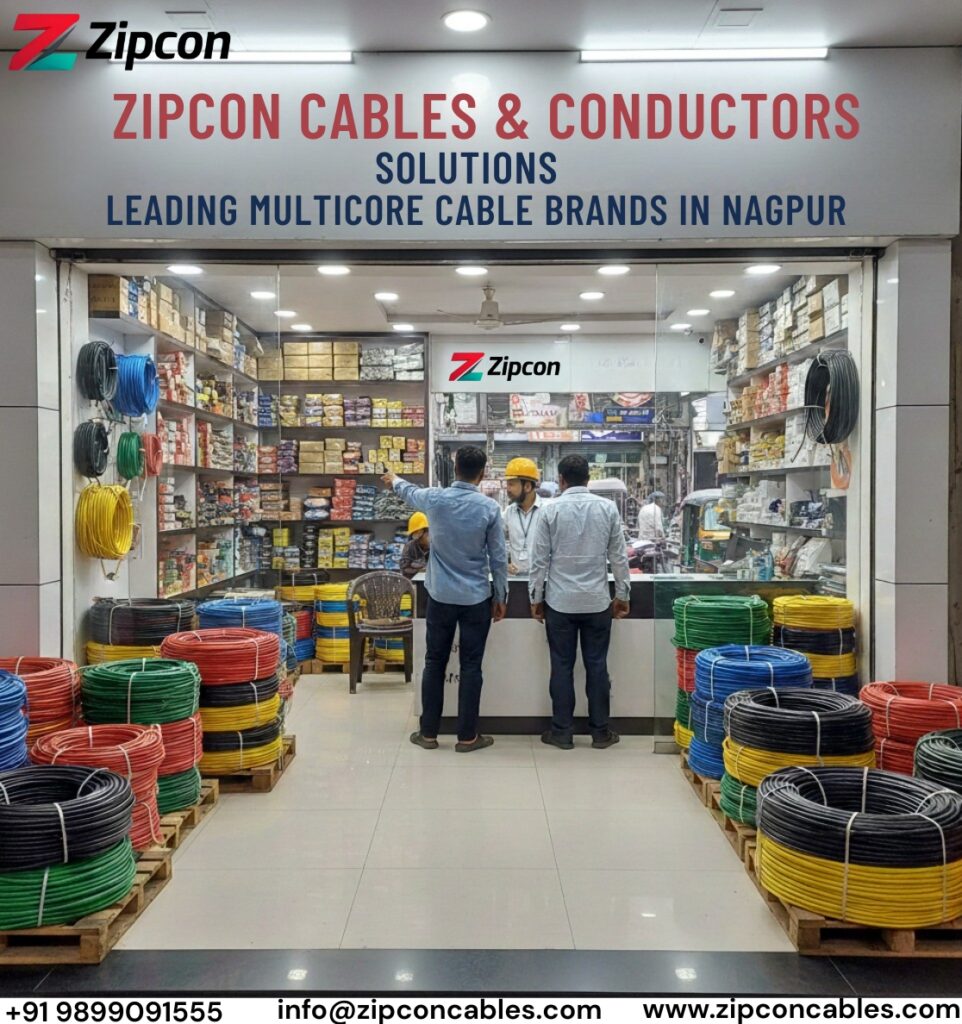
When choosing the right multicore cables for electrical systems, the quality and performance of the cables are critical. Whether for residential, commercial, or industrial use, the right choice of cable can greatly impact the efficiency, safety, and longevity of the installation. Zipcon Cables, a trusted brand in Nagpur, offers a range of multicore cables designed to meet different electrical needs. In this article, we’ll compare copper and aluminum multicore cables, exploring their conductivity, durability, weight, cost, safety, and installation needs. By the end, you will have a clear understanding of which cable is best suited for your specific requirements.
For technical support or project inquiries: https://zipconcables.com/contact-us/
Conductivity: Copper vs. Aluminum
One of the most important factors to consider when choosing a multicore cable is conductivity, as it directly impacts the performance of electrical systems.
- Copper Multicore Cables: Copper is widely known for its excellent conductivity. It has a low resistance, meaning it allows electrical current to flow more easily. This makes copper cables ideal for applications requiring high power transmission, such as in industrial plants or long-distance electrical installations. Copper cables are highly reliable and ensure minimal power loss, making them a preferred choice for critical systems.
- Aluminum Multicore Cables: Aluminum, on the other hand, has a lower conductivity compared to copper. This means that aluminum cables are not as efficient in conducting electricity, especially over longer distances. However, aluminum is still commonly used in power distribution networks, as it can handle moderate electrical loads effectively and is suitable for short-distance applications.
In residential and light commercial setups, where the power demand is moderate, aluminum cables may be sufficient. However, for high-power or long-distance applications, copper cables should be the preferred choice.
Durability: Copper vs. Aluminum
When it comes to durability, both copper and aluminum have their advantages and drawbacks.
- Copper Multicore Cables: Copper is highly resistant to corrosion, making it suitable for use in harsh environments. It can withstand extreme temperatures and is less prone to oxidation compared to aluminum. This durability translates into a longer lifespan for copper cables, making them a great investment for applications where longevity is important.
- Aluminum Multicore Cables: Aluminum cables, while lightweight, are more prone to corrosion over time, especially in humid or wet environments. Aluminum also tends to oxidize when exposed to air, which can increase resistance and reduce the cable’s efficiency. However, modern aluminum cables often come with protective coatings to minimize these issues.
In terms of longevity, copper cables tend to outperform aluminum cables, especially in environments where exposure to moisture and extreme conditions is a concern.
Weight: Copper vs. Aluminum
The weight of the cables is another important factor, particularly in terms of installation and ease of handling.
- Copper Multicore Cables: Copper cables are relatively heavy due to the dense nature of copper. This added weight can make installation more challenging, especially for larger cables or in situations where multiple cables need to be run through narrow spaces.
- Aluminum Multicore Cables: Aluminum cables are much lighter than copper cables, making them easier to handle and install. This is particularly advantageous in applications where large volumes of cable are needed, as the reduced weight can simplify the installation process and reduce labor costs.
For large installations or when handling cables over long distances, aluminum cables offer a significant advantage in terms of weight, which can reduce both installation time and effort.
Cost: Copper vs. Aluminum
Cost is often a deciding factor when selecting the right cable for your project.
- Copper Multicore Cables: Copper cables tend to be more expensive than aluminum due to the higher cost of copper material. The cost is justified by the enhanced conductivity, durability, and longevity of the cables. In critical, high-power applications, the performance benefits of copper may justify the higher upfront cost.
- Aluminum Multicore Cables: Aluminum cables are generally more affordable than copper cables, making them a more budget-friendly option for projects where cost is a concern. Although aluminum cables have lower conductivity and durability, they are more economical, especially in residential and light commercial applications.
For large-scale installations where budget is a key consideration, aluminum cables are often a more practical choice.
Safety: Copper vs. Aluminum
Safety is paramount when choosing electrical cables. The risk of overheating, short circuits, or fire hazards depends on the quality and suitability of the cables used.
- Copper Multicore Cables: Copper cables are highly resistant to heat and can handle high current loads without overheating. Copper’s superior conductivity also means less power loss and a reduced risk of overheating, which is critical for safety.
- Aluminum Multicore Cables: Aluminum cables, while less conductive, can handle moderate electrical loads. However, because they are more prone to oxidation and corrosion, they can become unsafe if not properly maintained or if installed incorrectly. Aluminum cables require more attention to ensure proper insulation and heat dissipation, particularly in high-load applications.
In terms of safety, copper cables are the safer choice for high-power or long-distance applications, while aluminum cables are suitable for lower-power applications, provided they are installed correctly and maintained regularly.
Installation Needs: Copper vs. Aluminum
Both copper and aluminum cables have different installation requirements based on their properties.
- Copper Multicore Cables: Copper cables are more rigid and less flexible than aluminum cables. This can make installation in tight spaces more difficult. Copper cables also require more careful handling during installation to avoid damage to the insulation.
- Aluminum Multicore Cables: Aluminum cables are more flexible, making them easier to handle and install, especially in tight spaces or when bending the cables around corners. However, because they are softer than copper, they can be more prone to damage if mishandled during installation.
For ease of installation, aluminum cables are typically the better choice, particularly for installations that involve multiple bends or confined spaces.
Typical Use Cases: Copper vs. Aluminum
- Copper Cables: Copper cables are ideal for applications that require high current capacity and minimal power loss. These include heavy-duty industrial setups, long-distance electrical transmissions, and high-power installations like transformers and switchboards. Copper is also preferred in critical systems where safety and reliability are essential.
- Aluminum Cables: Aluminum cables are better suited for low to medium-power applications. They are commonly used for power distribution networks, residential wiring, and other scenarios where the electrical load is not as demanding. Aluminum cables are also popular in applications where cost and weight are primary considerations.
Conclusion
Choosing the right multicore cable depends on your specific application. If you’re working on a high-power, long-distance, or critical system, copper multicore cables are your best bet, offering superior conductivity, durability, and safety. However, if you’re working with a tighter budget or lighter applications, aluminum multicore cables may be the more practical choice, offering cost savings and ease of installation.
When considering a reliable brand, Zipcon Cables stands out in Nagpur, providing both copper and aluminum multicore cables designed to meet the highest standards of quality, safety, and performance. Whether you’re an engineer, electrician, or buyer, Zipcon offers cables that suit a wide range of electrical needs, ensuring long-term reliability and efficiency for any installation.