Selecting a multicore cable is not only about the number of cores or conductor size. Multicore cable standards, ratings, and compliance determine whether a cable is suitable for its intended electrical, mechanical, and environmental conditions. Understanding these specifications helps contractors, manufacturers, project engineers, and electrical buyers choose cables with greater confidence.
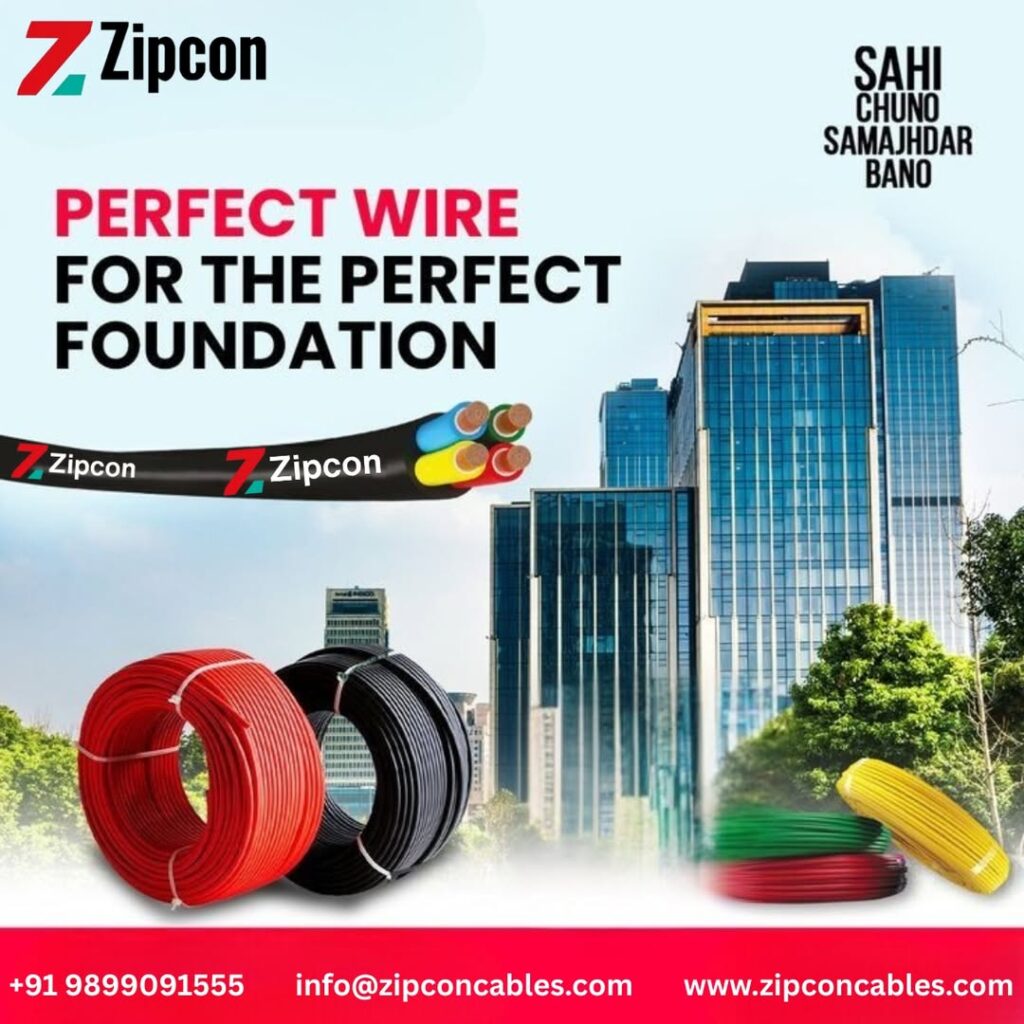
A multicore cable contains several individually insulated conductors enclosed within a common outer sheath. Depending on its design, it may be used for power distribution, industrial machinery, control panels, automation, instrumentation, and equipment connections.
For Zipcon Cables, cable selection should always be based on the application’s technical requirements. A cable that is appropriate for one installation may not be suitable for another simply because both systems use the same number of cores.
Contact us today:- https://zipconcables.com/contact-us/
What Are Multicore Cable Standards?
Multicore cable standards are technical requirements that define how cables should be designed, manufactured, tested, identified, and evaluated for particular applications. Standards can address conductor characteristics, insulation, voltage performance, dimensions, mechanical properties, flame behaviour, testing, and other requirements.
The applicable standard depends on the cable type, intended application, market, voltage level, installation environment, and regulatory requirements. Therefore, buyers should verify the exact standard applicable to their project rather than assuming that one standard applies to every multicore cable.
Contact us today:- https://zipconcables.com/contact-us/
Why Cable Standards Matter
Electrical Safety
Appropriate standards help establish requirements for insulation, conductor construction, voltage performance, and testing. Meeting the relevant requirements reduces the risk associated with unsuitable cable selection.
Consistent Manufacturing
Standards provide defined technical parameters that help manufacturers maintain consistency across cable production. This is particularly important for industrial projects where multiple cable batches may be required.
Reliable Performance
A cable should perform according to its intended application and specified operating conditions. Relevant standards help establish measurable performance requirements.
Easier Product Evaluation
For contractors and procurement teams, recognized standards provide a technical basis for comparing products instead of relying only on marketing descriptions.
Understanding Multicore Cable Ratings
Cable ratings describe the conditions under which a cable is designed to operate. Several ratings may be relevant to a multicore cable.
Voltage Rating
The voltage rating indicates the electrical system conditions for which the cable is designed. It is important to select a cable whose voltage rating is appropriate for the installation.
Using a cable outside its intended voltage rating can create insulation stress and compromise electrical safety. Voltage requirements should therefore be checked before cable selection.
Current-Carrying Capacity
Current-carrying capacity, often referred to as ampacity, indicates how much current a conductor can carry under specified conditions without exceeding its permitted operating temperature.
The actual allowable current can depend on conductor size, insulation temperature rating, ambient temperature, installation method, grouping, and other conditions.
Temperature Rating
A cable’s temperature rating defines the operating temperature limits associated with its construction. Both ambient conditions and heat generated by electrical loading need to be considered.
For industrial environments, temperature can be particularly important because cables may be installed near motors, machinery, heating equipment, or other heat-producing systems.
Short-Circuit Rating
Some electrical systems require cables to withstand elevated current during short-circuit conditions for a specified duration. Where applicable, short-circuit withstand requirements should be considered during system design.
Mechanical Rating
Mechanical performance can involve resistance to bending, pulling, abrasion, impact, vibration, or other installation stresses. The required mechanical characteristics depend on how and where the cable will be installed.
Key Components Behind Cable Compliance
Compliance is not determined by one component. The complete cable construction matters.
Conductors
Conductors are responsible for carrying electrical current. Their material, size, construction, and resistance characteristics influence the cable’s electrical performance.
For example, a cable with an appropriate conductor cross-sectional area can be selected to meet the expected current and voltage-drop requirements of a system.
Insulation
Individual cores require suitable insulation to maintain electrical separation. Insulation selection should account for voltage, temperature, flexibility, and environmental conditions.
Outer Sheath
The outer sheath protects the assembled cores against external conditions. Depending on the cable design, it may need to withstand abrasion, moisture, heat, chemicals, or other environmental factors.
Cable Assembly
Core arrangement, fillers, binders, screening where applicable, and other construction elements can influence the cable’s dimensions, flexibility, mechanical behaviour, and overall performance.
Common Standards and Specifications
The applicable standards vary according to cable type and application. In India, buyers may encounter BIS/IS standards, while international projects may specify IEC or other recognized standards.
Some cable families are covered by standards dealing with low-voltage power cables, PVC-insulated cables, thermoplastic or thermosetting insulation, flame performance, conductor construction, or testing requirements.
The important point is that a standard number should never be treated as a generic quality label. The exact standard, edition, cable category, voltage rating, and applicable test requirements should be verified against the product specification.
For projects involving regulatory, contractual, or safety-critical requirements, the project engineer or relevant authority should confirm the applicable compliance requirements.
Indian Standards vs International Standards
| Factor | Indian Standards | International Standards |
|---|---|---|
| Common framework | BIS/IS specifications | IEC and other recognized specifications |
| Application | Indian projects and requirements | International or project-specific applications |
| Compliance | Based on applicable Indian requirements | Based on specified international requirements |
| Selection | Depends on cable type and project | Depends on cable type and project |
| Verification | Product documentation and applicable certification | Product documentation and applicable certification |
A cable should not be selected simply because it carries an Indian or international standard reference. The specific standard must correspond to the cable’s construction and intended use.
What Does Cable Compliance Mean?
Cable compliance means that the cable meets the requirements of the standards, regulations, specifications, or project requirements applicable to that product and application.
Compliance may involve design requirements, raw-material controls, manufacturing processes, routine tests, type tests, inspection, documentation, and certification, depending on the relevant standard and regulatory framework.
For buyers, compliance should therefore be supported by appropriate technical documentation rather than a general claim such as “certified cable.”
Testing of Multicore Cables
Testing is an important part of verifying cable quality and compliance.
Conductor Resistance Test
This test evaluates conductor resistance and helps verify whether the conductor meets the specified electrical requirements.
High-Voltage or Voltage-Withstand Test
Depending on the applicable standard, cables may undergo voltage-withstand testing to assess insulation integrity under specified test conditions.
Insulation Resistance Test
Insulation resistance testing evaluates the electrical resistance of the insulation between conductors and/or between conductors and other relevant parts of the cable.
Dimensional Checks
Dimensions such as conductor size, insulation thickness, sheath thickness, and overall cable dimensions may be checked against specified requirements.
Mechanical Tests
Where applicable, mechanical tests assess characteristics such as tensile strength, elongation, bending, abrasion resistance, or other properties specified by the relevant standard.
Flame and Fire Performance Tests
Some applications require specific flame-retardant or fire-performance characteristics. These should be verified against the exact test requirements rather than inferred from general terms such as “fire safe.”
Multicore Cable Compliance Checklist
Before purchasing multicore cables, buyers should review:
- Applicable cable standard
- Number of cores
- Conductor material
- Conductor cross-sectional area
- Voltage rating
- Current-carrying requirements
- Insulation material
- Temperature rating
- Outer sheath material
- Flexibility requirements
- Environmental conditions
- Applicable test requirements
- Product technical datasheet
- Required certification or test documentation
- Project-specific specifications
This checklist can help procurement teams avoid selecting cables based only on generic product descriptions.
Examples: Applying Cable Ratings Correctly
Example 1: Industrial Control Panel
Suppose a control panel requires several conductors routed to field equipment. The buyer should first determine the required core count, conductor size, voltage, temperature, and installation environment.
The appropriate multicore cable can then be selected according to the relevant specification rather than simply choosing a cable with the required number of cores.
Example 2: High-Temperature Industrial Area
A cable installed near heat-generating machinery may experience higher ambient temperatures than a standard indoor installation. The cable’s temperature rating and derating requirements should therefore be evaluated before selection.
Example 3: Long Cable Run
A long cable route can increase voltage drop. Even when the current-carrying capacity appears adequate, the conductor size may need to be evaluated against permissible voltage drop and the actual installation conditions.
Expert Tips for Multicore Cable Compliance
1. Identify the Standard Before Buying
Determine which standard applies to the cable and application. Do not select a product solely because a standard number appears in its marketing material.
2. Verify the Complete Product Specification
Check the conductor, insulation, sheath, voltage, temperature, dimensions, core configuration, and testing requirements.
3. Consider Installation Conditions
Cable ratings are based on defined conditions. Installation method, ambient temperature, grouping, and environmental exposure can affect actual cable performance.
4. Request Technical Documentation
For commercial and industrial projects, maintain the relevant datasheet, test reports, certificates, and product documentation required by the project.
5. Avoid Mixing Incompatible Specifications
If a project specifies a particular cable standard or construction, replacing it with another cable that merely appears similar can create compliance and performance issues.
6. Work With a Reliable Manufacturer
A manufacturer such as Zipcon Cables can help buyers identify cable configurations according to their application and specified requirements.
Common Mistakes When Selecting Multicore Cables
Mistake 1: Treating All Multicore Cables as the Same
Multicore cables differ in conductor size, insulation, sheath, voltage rating, flexibility, and application. Core count alone does not define cable suitability.
Mistake 2: Ignoring Temperature Derating
A cable’s stated current capacity may depend on specific installation conditions. Ambient temperature and cable grouping can affect permissible current.
Mistake 3: Assuming “ISI” or “IEC” Means Every Requirement Is Met
A standard reference must correspond to the exact product and applicable requirements. Buyers should verify the relevant documentation.
Mistake 4: Choosing the Wrong Voltage Rating
Cable voltage rating should be compatible with the electrical system. This is particularly important in industrial and power distribution applications.
Mistake 5: Ignoring Mechanical Conditions
A cable exposed to repeated bending, vibration, abrasion, or pulling needs suitable mechanical characteristics. Electrical ratings alone are not enough.
Mistake 6: Failing to Maintain Documentation
For industrial projects, documentation can be important for procurement, inspection, quality assurance, and future maintenance. Keep relevant technical records with the project documentation.
Why Choose Zipcon Cables?
Zipcon Cables focuses on cable solutions for electrical, industrial, and equipment applications. When selecting multicore cables, the emphasis should remain on technical suitability, construction quality, reliable performance, and compliance with the requirements applicable to the project.
Customers can evaluate cable options based on core configuration, conductor size, insulation, sheath, voltage rating, temperature requirements, installation environment, and applicable standards.
For larger projects, specifying these requirements clearly before procurement helps reduce the risk of receiving a cable that does not match the intended application.
Conclusion
Understanding multicore cable standards, ratings, and compliance is essential for making informed cable-selection decisions. A reliable cable must meet the electrical requirements of the system while also being suitable for its temperature, installation method, mechanical conditions, and surrounding environment.
Standards provide technical requirements, ratings define operating conditions, and compliance demonstrates conformity with applicable specifications. Together, these factors provide a stronger basis for evaluating multicore cables than price or appearance alone.
For industrial and electrical projects, Zipcon Cables can be considered when sourcing multicore cable solutions. Always verify the exact product specification and applicable standard before purchase, and select the cable according to the actual requirements of the installation.
Top 5 FAQs
1. What are multicore cable standards?
Multicore cable standards define technical requirements for aspects such as conductor construction, insulation, dimensions, electrical performance, mechanical properties, testing, and other characteristics applicable to a specific cable type.
2. What does the voltage rating of a multicore cable mean?
The voltage rating indicates the electrical system conditions for which the cable is designed. The selected cable should have a voltage rating appropriate for the intended installation.
3. What factors affect multicore cable current capacity?
Current capacity can depend on conductor size and material, insulation temperature rating, ambient temperature, installation method, cable grouping, and other specified conditions.
4. How can I verify multicore cable compliance?
Check the manufacturer’s technical datasheet and applicable test or certification documentation. Confirm that the stated standard applies to the exact cable construction and intended application.
5. Why are cable standards important for industrial applications?
Cable standards establish technical requirements that support consistent manufacturing, electrical safety, testing, and reliable performance. They also provide a common basis for product specification and evaluation.