Selecting the right electrical cable directly affects the safety, reliability and efficiency of an electrical installation. The best multicore cable manufacturers in India provide cables designed to carry multiple conductors within a single outer sheath, helping simplify wiring in industrial, commercial and equipment-based applications.
Multicore cables are widely used for control panels, machinery, electrical equipment, power connections and installations where several conductors need to be routed together. Combining multiple cores into one cable can make cable management more organized while reducing the complexity of separate cable runs.
Contact us today:- https://zipconcables.com/contact-us/
What Is a Multicore Cable?
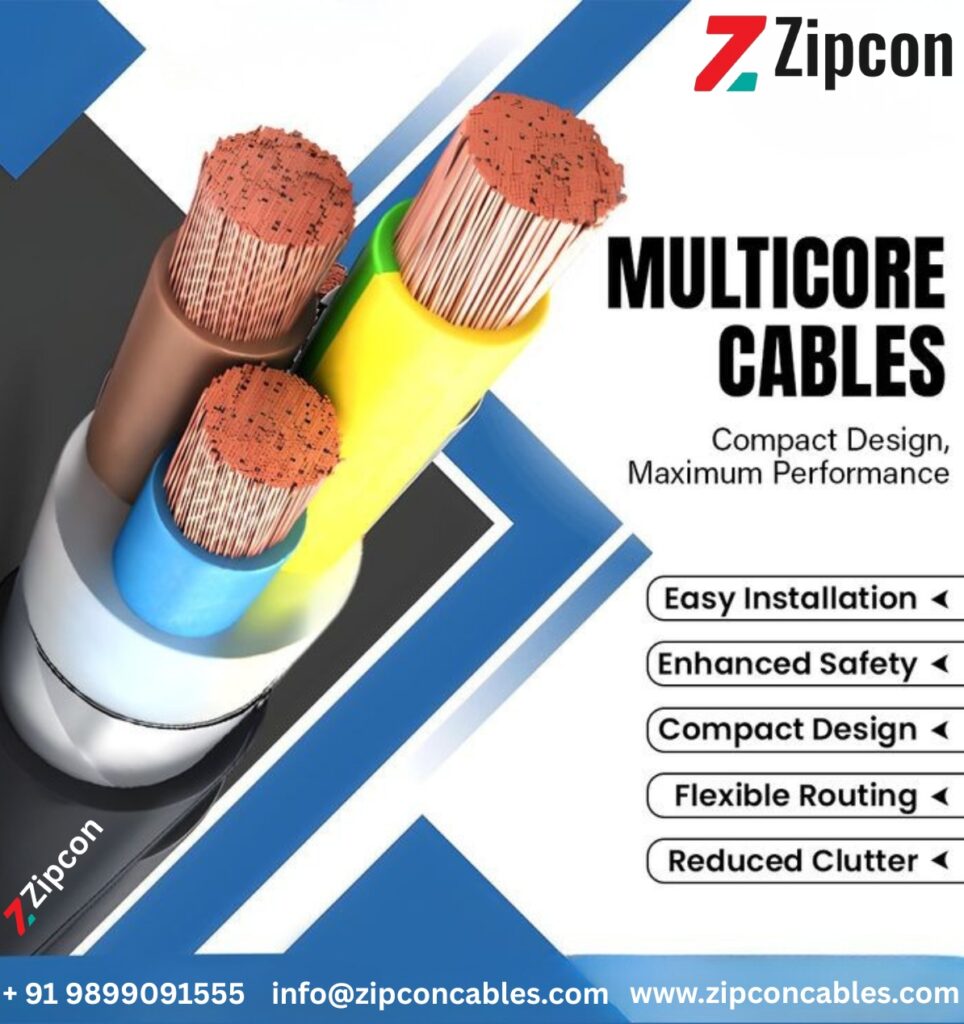
A multicore cable contains multiple individually insulated conductors enclosed within a common outer sheath. Each core performs a specific electrical function, while the outer construction keeps the cable assembly organized and protected.
The number of cores can vary according to the application. A three-core cable may be suitable for certain equipment or power connections, while control systems can require cables with significantly more cores.
The conductor size and cable construction also vary according to electrical load, installation conditions and intended use. Therefore, the term “multicore cable” describes the basic construction, not a single universal cable specification.
Why Multicore Cables Are Used in Electrical Systems
Modern electrical installations often require several connections between equipment, panels, controls and power sources. Using separate cables for every connection can increase routing complexity and consume additional installation space.
A multicore cable combines multiple conductors into one cable assembly. This can simplify cable management and create a cleaner routing arrangement when the cable is correctly selected for the application.
For industrial and commercial projects, organized cable routing can also make installation planning, identification and maintenance more manageable.
What Makes the Best Multicore Cable Manufacturers in India?
The best manufacturer is not necessarily the one offering the lowest price. A quality-focused manufacturer should provide consistent construction, clear technical specifications and cables suited to different electrical requirements.
Quality of Conductors
The conductor is the core component responsible for carrying electrical current. Copper and aluminium are commonly used depending on the cable design and application.
Copper offers high conductivity and is widely used in many electrical applications. Aluminium can provide advantages in applications where lower weight and cost are important.
The correct conductor material should be selected according to the electrical load, installation requirements and project specifications.
Consistent Insulation
Each conductor in a multicore cable needs suitable insulation to maintain electrical separation and protect the conductor.
Insulation requirements can vary depending on operating temperature, voltage, installation environment and intended application. Consistent insulation quality is therefore an important consideration when comparing manufacturers.
Reliable Outer Sheath
The outer sheath protects the complete cable assembly from the surrounding environment.
Depending on the application, the sheath may need to withstand moisture, abrasion, mechanical stress, heat or other conditions. The appropriate construction should be selected based on where and how the cable will be installed.
Manufacturing Consistency
For large projects, consistency matters as much as individual cable performance. Cable dimensions, conductor construction and insulation quality should remain consistent across production.
A manufacturer with established production and quality-control processes can make bulk procurement more predictable.
Types of Multicore Cables Available for Different Applications
Multicore cables are not limited to one application. Their construction can be adapted to different electrical and installation requirements.
Flexible Multicore Cables
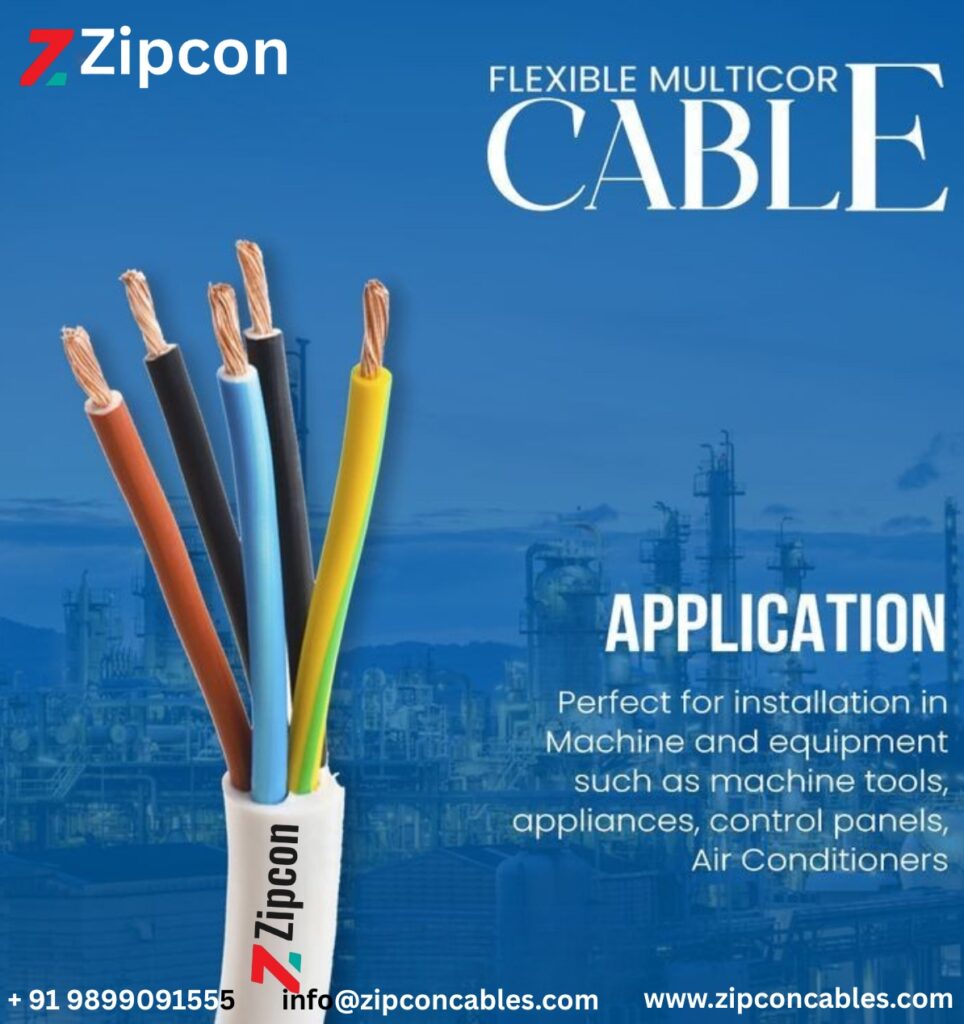
Flexible multicore cables are useful where the cable needs to bend during installation or connect equipment within restricted spaces.
Their flexibility depends on factors such as conductor stranding, insulation and overall cable construction. They can be useful for equipment connections, control panels and machinery where practical routing is required.
Industrial Multicore Cables
Industrial environments can expose cables to vibration, heat, dust, mechanical stress and continuous equipment operation.
Industrial multicore cables should therefore be selected according to both electrical requirements and the physical conditions of the installation.
Multicore Control Cables
Control systems often require several conductors for switches, sensors, signals and equipment controls.
A multicore control cable can group these connections together, reducing the need to route numerous individual cables between the control panel and equipment.
Multicore Power Cables
Multicore power cables are designed for applications where multiple power conductors are required within one cable assembly.
The conductor size, number of cores, insulation and electrical rating should be selected based on the required power and installation conditions.
How to Select the Right Multicore Cable
Choosing the correct multicore electrical cable requires an application-first approach.
1. Determine the Electrical Load
Start by identifying the expected current and electrical requirements of the circuit. Cable size should be selected according to the load and applicable installation requirements.
Using an undersized cable can result in excessive heating and reduced reliability, while unnecessary oversizing can increase cost and make installation more difficult.
2. Select the Correct Number of Cores
Determine how many conductors the equipment or electrical circuit actually requires.
For example, a system requiring three electrical connections may need a three-core configuration, while a complex control system could require a cable with substantially more cores.
3. Choose the Appropriate Conductor
Copper and aluminium conductors have different electrical and physical characteristics. The selection should consider conductivity, weight, installation requirements and project specifications.
4. Check Insulation Requirements
Consider the operating temperature, voltage, moisture exposure and surrounding conditions before choosing the insulation construction.
5. Evaluate Flexibility
If the cable needs to bend around equipment or fit into a confined route, flexibility becomes an important selection factor.
Do not assume that every multicore cable is suitable for continuous movement. Always consider the manufacturer’s recommended installation and bending requirements.
6. Consider the Installation Environment
Identify whether the cable will be installed indoors, outdoors, underground, around machinery or in an area exposed to moisture, heat or mechanical stress.
The cable’s complete construction should be suitable for these conditions.
Multicore Cable Manufacturer vs. Cable Supplier
A manufacturer and a supplier can both play important roles in cable procurement, but buyers should understand the difference.
| Factor | Cable Manufacturer | Cable Supplier/Trader |
|---|---|---|
| Manufacturing control | Direct | Depends on source |
| Product specifications | Generally detailed | Depends on manufacturer |
| Quality consistency | Controlled through production | Depends on supplied brand |
| Technical knowledge | Product-specific | Varies |
| Bulk project support | Often available | Depends on stock |
| Application guidance | Usually stronger | Varies |
| Custom requirements | May be possible | Depends on manufacturer |
For large electrical projects, working with a manufacturer or an authorized channel can make product specifications and procurement more transparent.
Why Choose Zipcon Cables?
Zipcon Cables provides cable solutions designed for different electrical applications, including multicore and flexible cable requirements.
Rather than selecting a cable only by its name or price, buyers should evaluate the complete product specification. Conductor material, cable size, core configuration, insulation, flexibility and installation environment all contribute to application suitability.
Zipcon’s approach is focused on practical cable requirements, helping contractors, electricians, distributors and project buyers identify cable solutions based on their intended use.
Real-World Examples of Multicore Cable Selection
Example 1: Factory Control Panel
A factory control panel may need multiple connections between switches, control devices and machinery.
A suitable multicore control cable can consolidate these conductors into one organized cable run. The required core count and conductor size should be determined from the panel’s electrical design.
Example 2: Industrial Machinery
A machine may have several electrical connections and limited space for cable routing.
A suitable flexible multicore cable can make routing around the equipment easier. However, the cable must be selected according to electrical load, bending requirements, temperature and operating conditions.
Example 3: Commercial Building
Commercial buildings can have numerous equipment and electrical connections distributed across different areas.
Using appropriate multicore cables can help organize cable routes and reduce the number of separate cable runs where the application permits.
Example 4: Electrical Equipment
Equipment with multiple internal or external connections may benefit from a consolidated multicore cable arrangement.
This can make cable management more structured, but the cable still needs to satisfy the equipment’s voltage, current and environmental requirements.
Benefits of Using Quality Multicore Cables
Better Cable Management
Multiple conductors within one cable can create more organized installation routes.
Simplified Installation
A suitable multicore cable can reduce the number of separate cable runs required for multiple connections.
Efficient Use of Space
Combining conductors into one cable can be useful in installations where cable tray or routing space is limited.
Practical Maintenance
Clearly identified multicore cables can make tracing and managing connections easier during maintenance.
Application-Specific Performance
A correctly selected cable can provide the conductor, insulation and mechanical characteristics required for its intended environment.
Expert Tips for Buying Multicore Cables in India
Focus on Specifications, Not Marketing Terms
Terms such as “premium,” “heavy duty” and “high performance” are not enough to evaluate a cable. Check the actual technical specifications.
Match Cable Size With Load
Never select cable size solely on what is commonly used. Electrical load and installation conditions should guide the selection.
Check the Core Count
Confirm the number of cores required before ordering. This is particularly important for control and equipment wiring.
Evaluate the Installation Environment
Consider heat, moisture, vibration, mechanical stress and other conditions that could affect the cable.
Buy From a Reliable Manufacturer
A dependable manufacturer should offer consistent product quality and clear information about cable construction and intended applications.
Plan for Installation and Maintenance
Consider cable routing, bending, termination and future maintenance before finalizing the cable specification.
Common Mistakes When Choosing Multicore Cables
Buying Only on Price
Low initial cost does not necessarily mean better value. Cable construction and application suitability should be evaluated before purchasing.
Choosing the Wrong Core Count
An incorrect number of cores can complicate installation and require additional wiring.
Ignoring Conductor Size
A cable that is physically convenient may still be unsuitable if its conductor size does not match the electrical load.
Assuming Every Multicore Cable Is Flexible
Multicore describes the number of conductors, not necessarily the cable’s movement capability. Always verify the actual construction.
Ignoring Environmental Conditions
A cable designed for one environment may not be appropriate for another. Heat, moisture and mechanical exposure should always be considered.
Poor Cable Termination
Correct cable selection must be followed by proper termination. Loose or unsuitable connections can affect the reliability of the complete electrical system.
Why Zipcon Cables Is a Strong Choice for Multicore Cable Requirements
When selecting among the best multicore cable manufacturers in India, buyers should look for a combination of product quality, technical clarity and application suitability.
Zipcon Cables offers solutions for different electrical requirements, with an emphasis on selecting cable construction according to the intended application.
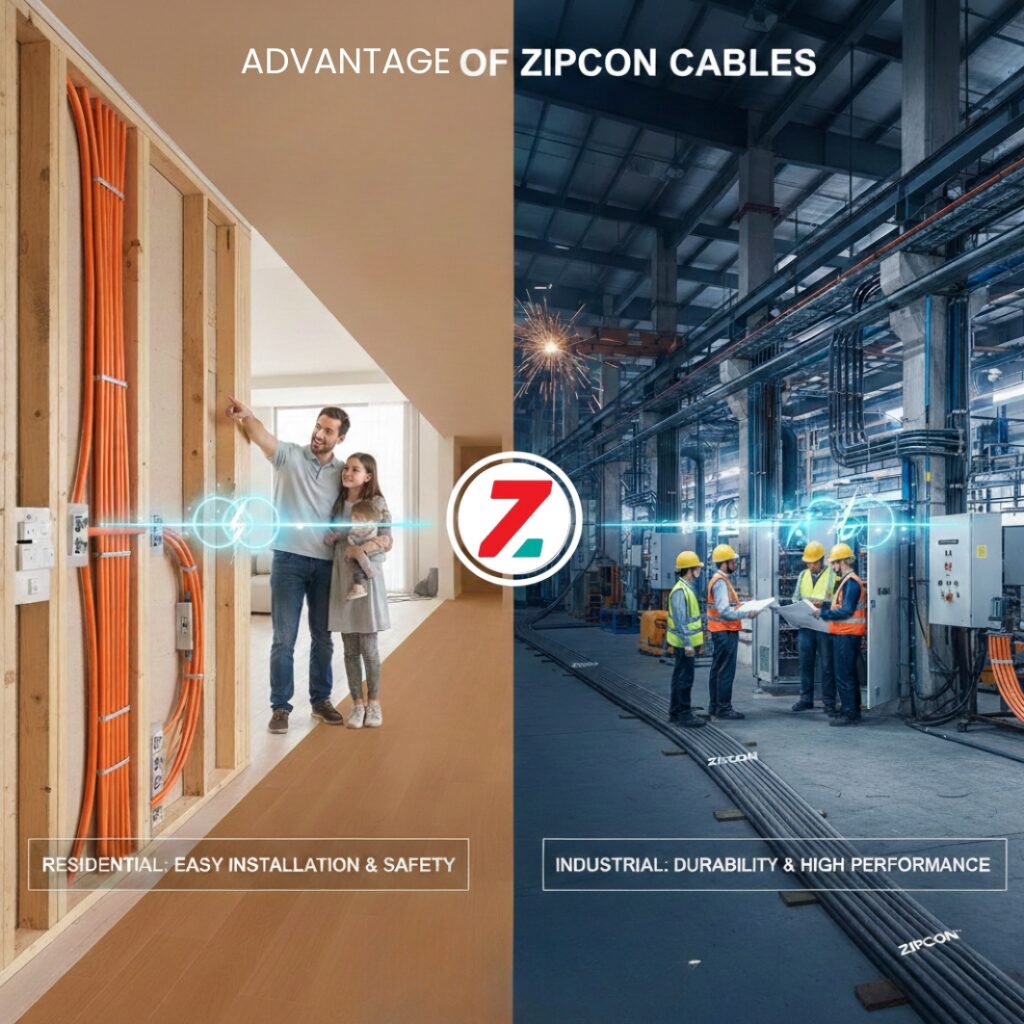
For residential, commercial and industrial projects, the right cable should be chosen after evaluating the load, conductor, size, number of cores, insulation and installation environment. This approach provides a stronger foundation for dependable electrical performance.
Conclusion
Finding the best multicore cable manufacturers in India requires more than comparing brands or prices. The right manufacturer should provide consistent cable construction, clear specifications and products suited to different electrical and installation requirements.
Before purchasing, evaluate the conductor material, cable size, number of cores, insulation, sheath, flexibility and operating environment. These factors determine whether a multicore cable is genuinely suitable for its intended application.
Zipcon Cables can be considered for buyers seeking quality-focused multicore cable solutions for electrical, commercial and industrial requirements. Choose based on specifications first, manufacturer reliability second and price as part of the overall value—not as the only deciding factor.
Top 5 FAQs
1. Who are the best multicore cable manufacturers in India?
The best manufacturer depends on the application’s technical requirements, product quality, manufacturing consistency and technical support. Buyers should compare specifications rather than selecting a manufacturer based only on brand name or price.
2. What are multicore cables commonly used for?
Multicore cables are commonly used in control panels, industrial machinery, electrical equipment, commercial installations and other applications where multiple conductors need to be routed together.
3. How do I select the correct multicore cable size?
The cable size should be selected based on the expected electrical load, conductor material, installation method, cable length and applicable electrical requirements. For critical installations, the final selection should be verified by a qualified electrical professional.
4. Are multicore cables suitable for industrial use?
Yes. Multicore cables can be suitable for industrial applications when their conductor, insulation, sheath, flexibility and electrical ratings match the operating conditions.
5. Why choose Zipcon Cables for multicore cable requirements?
Zipcon Cables offers cable solutions for different electrical applications. Buyers can evaluate its multicore cable options based on conductor construction, size, core configuration, insulation and intended application.