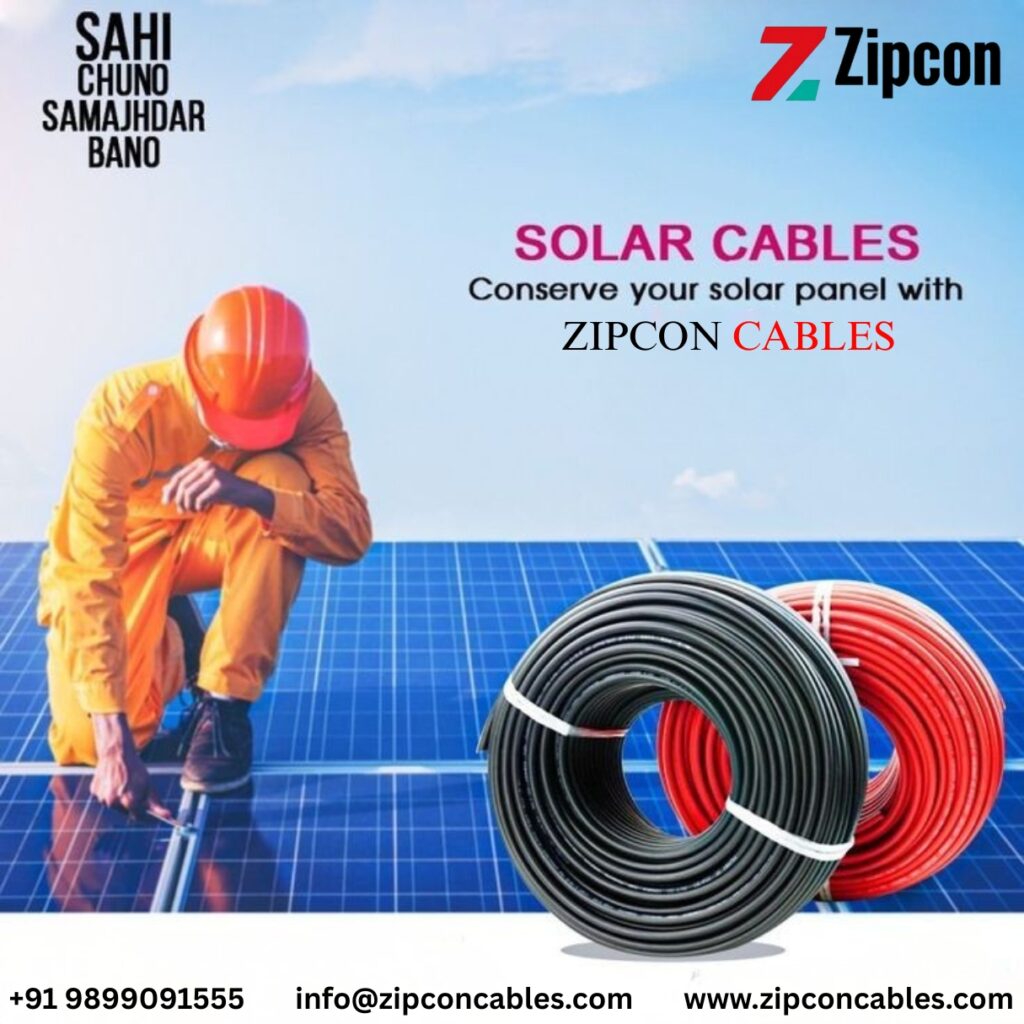
hoosing the right solar cable manufacturer is an important decision when designing a reliable solar power system. Solar cables continuously operate outdoors and are exposed to sunlight, heat, moisture, temperature changes and mechanical stress. A cable that is not designed for these conditions can affect system safety and long-term performance.
The right manufacturer does more than supply electrical cable. A reliable solar cable manufacturer focuses on material quality, insulation performance, conductor construction, manufacturing consistency and application requirements. For solar installers, EPC companies, distributors and project owners, these factors can directly influence maintenance requirements and system reliability.
Zipcon Cables provides solar cable solutions designed with a focus on dependable electrical performance, durability and demanding solar applications. Understanding what to evaluate before selecting a manufacturer can help you make a better purchasing decision and avoid premature cable replacement.
For inquiries or assistance:👉 https://zipconcables.com/contact-us/
Why the Solar Cable Manufacturer Matters
Solar cables are a critical part of the electrical connection between photovoltaic modules, junction boxes, inverters and other components. Although they may appear simple, their operating environment is considerably more demanding than that of ordinary electrical wires.
A quality solar cable needs to maintain its electrical and mechanical properties over extended outdoor exposure. The manufacturer therefore plays an important role in determining the quality of the conductor, insulation, sheath, dimensional consistency and overall cable construction.
A dependable manufacturer should have clear specifications for its products and maintain consistent production quality. This becomes particularly important for large solar installations where replacing damaged cables can require significant labour, downtime and material costs.
Key Factors to Consider When Choosing a Solar Cable Manufacturer
1. Check the Cable Construction
Start by evaluating the basic construction of the solar cable. The conductor should provide efficient current transmission while the insulation and outer layer should protect the cable from environmental conditions.
For photovoltaic applications, cable construction should be selected according to voltage, current, installation method and environmental exposure. The right cable size also matters because an incorrectly selected conductor can increase voltage drop and energy losses.
A professional manufacturer should provide clear technical specifications rather than relying only on general claims such as “heavy duty” or “premium quality.”
2. Evaluate Insulation Quality
Insulation is one of the most important components of a solar cable. It separates the conductor from the surrounding environment and helps maintain electrical safety.
Solar cables may be exposed to continuous UV radiation, elevated temperatures, moisture and physical stress. The insulation material should therefore be appropriate for the intended photovoltaic application and environmental conditions.
When comparing manufacturers, look for information about insulation material, temperature performance, environmental resistance and applicable testing requirements.
3. Consider UV and Weather Resistance
Solar cables are commonly installed outdoors, where they remain exposed to sunlight for years. Continuous UV exposure can degrade unsuitable cable materials, potentially causing cracking, brittleness and reduced protection.
A suitable solar cable should be designed for outdoor photovoltaic environments and provide appropriate resistance to sunlight and weather conditions.
For rooftop solar systems, ground-mounted plants and other exposed installations, UV and weather resistance should be considered before price.
4. Look at Temperature Performance
Solar installations can experience significant temperature variations. Cable performance must remain suitable within the temperature range expected at the installation site.
High temperatures can affect insulation materials, cable flexibility and electrical characteristics. The manufacturer should provide relevant temperature specifications and application guidance.
Instead of selecting a cable solely on its current rating, consider the complete installation environment, including ambient temperature, grouping, installation method and exposure to sunlight.
5. Verify Applicable Standards and Testing
Standards and testing provide an important way to evaluate cable quality. A manufacturer should be able to provide relevant technical documentation and test information for its products.
Depending on the cable type and application, customers may need to consider applicable Indian or international standards, project specifications and certification requirements.
Before placing a large order, ask for technical datasheets, test reports and other relevant quality documentation. This helps distinguish a manufacturer with controlled production processes from a supplier offering generic products.
Solar Cable Manufacturer vs. Generic Cable Supplier
The difference between a specialist manufacturer and a generic cable supplier is important.
| Factor | Specialist Solar Cable Manufacturer | Generic Cable Supplier |
|---|---|---|
| Product design | Application-focused | May use general-purpose designs |
| Technical specifications | Detailed | Can be limited |
| Solar suitability | Designed for photovoltaic applications | May not be suitable |
| Outdoor performance | Considered during product development | Depends on cable type |
| Quality consistency | Controlled manufacturing process | Can vary by source |
| Technical support | Usually available | May be limited |
A lower purchase price does not necessarily mean a lower total cost. Cable failure can lead to troubleshooting, replacement labour, system downtime and additional material expenses.
Why Cable Size Matters in Solar Applications
Selecting the correct cable size is essential for maintaining electrical efficiency and safety. The required cross-sectional area depends on factors such as current, cable length, installation conditions, permissible voltage drop and operating temperature.
For example, a long cable run may require a larger conductor than a short connection carrying the same current because voltage drop becomes more significant as cable length increases.
A reliable manufacturer or technical supplier should help customers select an appropriate cable based on the actual application instead of recommending a single size for every project.
Copper vs. Aluminium Solar Cable
Conductor material can also influence cable selection.
Copper conductors generally offer high electrical conductivity and are commonly used where compact cable dimensions and strong electrical performance are priorities.
Aluminium conductors can provide a cost-effective option for suitable applications, particularly where larger conductor sizes are acceptable. However, the correct selection depends on system design, installation conditions, termination requirements and project specifications.
The key is not simply choosing copper or aluminium. The conductor should match the electrical and installation requirements of the solar project.
Why Manufacturing Consistency Is Important
A solar cable may meet its specification when tested individually, but large projects require consistent quality across thousands of metres of cable.
Manufacturing consistency helps ensure that cable dimensions, conductor resistance, insulation properties and mechanical characteristics remain within specified limits throughout production.
This is particularly important for EPC companies and solar installers because inconsistent cable quality can create installation problems and increase inspection and replacement requirements.
Documentation You Should Request From a Manufacturer
Before selecting a solar cable manufacturer, review the available technical documentation.
Important documents may include:
- Product technical datasheet
- Conductor and insulation specifications
- Applicable standard information
- Test reports
- Voltage and current ratings
- Temperature ratings
- Cable dimensions
- Packaging and identification details
- Warranty or quality assurance information
- Installation recommendations
Clear documentation makes it easier to compare manufacturers objectively and select a product that matches the project specification.
Examples: Choosing the Right Solar Cable
Example 1: Residential Rooftop Solar
A residential rooftop installation requires cables that can handle outdoor exposure, elevated rooftop temperatures and long-term sunlight exposure. The cable should be selected according to the system voltage, current, cable length and installation arrangement.
In this situation, choosing a cable based only on price may create unnecessary risk. A properly specified solar cable from a dependable manufacturer provides a stronger foundation for long-term system operation.
Example 2: Commercial Solar Installation
Commercial projects often involve longer cable routes and higher electrical loads. Voltage drop, cable routing, environmental exposure and installation conditions become increasingly important.
For these projects, the manufacturer should be capable of supplying consistent cable quality along with technical specifications required by the EPC or project consultant.
Example 3: Large Solar Plant
A utility-scale solar project can require large quantities of cable across extensive installation areas. Even a small quality inconsistency can become significant when multiplied across the project.
Here, manufacturer capability, production consistency, quality control, documentation and supply reliability should be evaluated alongside product specifications.
Why Choose Zipcon Cables for Solar Cable Requirements?
Zipcon Cables focuses on providing reliable cable solutions for demanding electrical applications, including solar-related requirements.
When selecting Zipcon for a solar project, customers can evaluate the cable based on its construction, electrical specifications, insulation characteristics and suitability for the intended application.
For installers, distributors and project buyers, working with a manufacturer that understands application requirements can simplify cable selection and support better long-term project performance.
Expert Tips for Selecting a Solar Cable Manufacturer
- Do not select a cable based only on price. Compare construction, specifications, testing and expected service conditions.
- Check the technical datasheet before ordering. Confirm conductor size, voltage rating, temperature range and other important specifications.
- Match the cable to the installation environment. Rooftop, ground-mounted and industrial installations can have different requirements.
- Consider total project cost. A reliable cable can reduce the possibility of premature replacement and maintenance expenses.
- Buy from an established manufacturer or authorized source. Traceability and documentation are important for project quality control.
- Check cable identification and packaging. Proper product identification helps with installation, inspection and future maintenance.
- Evaluate supply capability. Large solar projects require consistent quality and dependable delivery across the project lifecycle.
Common Mistakes When Choosing Solar Cables
Choosing the Cheapest Cable
Initial purchase price is only one part of the cost. A cable with inadequate environmental or mechanical performance can result in additional maintenance and replacement expenses.
Using General Electrical Wire for Solar Applications
Not every electrical wire is designed for prolonged outdoor photovoltaic exposure. Solar installations require cable selection based on the actual operating environment.
Ignoring Voltage Drop
Long cable runs can experience greater voltage drop. Ignoring cable length during sizing can affect system efficiency and electrical performance.
Buying Without Technical Documentation
Without specifications and test information, it becomes difficult to verify whether the product meets the project’s requirements.
Selecting Cable Size Without Considering Installation Conditions
Current-carrying capacity can be influenced by ambient temperature, grouping, installation method and other factors. Cable selection should consider the complete installation rather than current alone.
Conclusion
Choosing the right solar cable manufacturer is a long-term investment in the reliability of a solar power system. Conductor quality, insulation, UV resistance, temperature performance, standards, testing, manufacturing consistency and technical support should all be evaluated before making a purchase.
For solar installers, EPC companies, distributors and project owners, Zipcon Cables can be considered for dependable solar cable requirements where quality, durability and application suitability are important. Select the cable based on verified specifications and actual project conditions rather than price alone.
A well-selected solar cable can support safer installation, dependable power transmission and reduced maintenance requirements throughout the operating life of a solar project.
Top 5 FAQs
1. How do I choose the right solar cable manufacturer?
Evaluate the manufacturer’s product specifications, insulation quality, environmental resistance, applicable standards, testing, manufacturing consistency and technical support. The manufacturer should be able to provide clear documentation for the cable being supplied.
2. What makes a good solar cable?
A good solar cable should have appropriate conductor construction, suitable insulation, adequate electrical ratings and resistance to the environmental conditions expected at the installation site. Cable selection should also match the system design and installation method.
3. Why is UV resistance important for solar cables?
Solar cables are frequently installed outdoors and can receive continuous sunlight exposure. Appropriate UV-resistant construction helps the cable withstand prolonged outdoor conditions and maintain its protective properties.
4. How do I select the correct solar cable size?
Cable size should be selected according to current, cable length, voltage drop, installation conditions, temperature, grouping and applicable electrical requirements. The manufacturer’s technical data should be used during the final selection.
5. Is Zipcon Cables suitable for solar cable requirements?
Zipcon Cables offers cable solutions for demanding electrical applications and can be considered for solar cable requirements. Product specifications should be matched with the voltage, current, installation environment and technical requirements of the specific solar project.C