Zipcon Cables
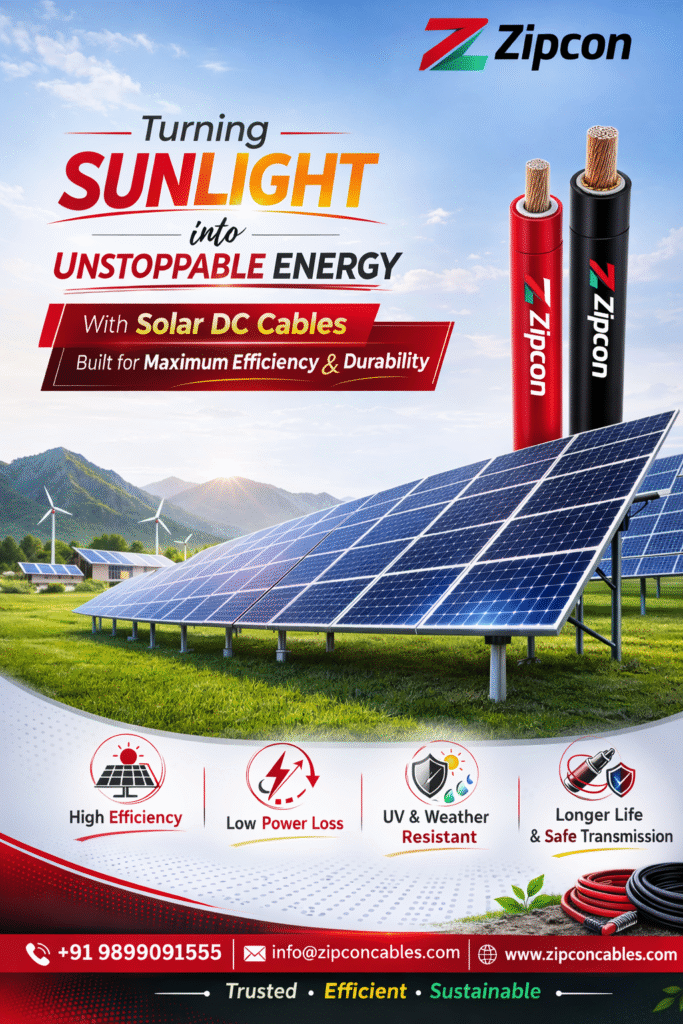
Best Solar Cable in Gurgaon for Commercial & Industrial Solar Projects
Best Solar Cable in Gurgaon

Solar projects in Gurgaon are growing fast — from warehouse rooftops to large industrial plants and institutional campuses. While modules and inverters get most of the attention, cable selection directly affects efficiency, safety, and long-term performance. For engineers, electricians, and procurement teams, choosing the right solar cable is a technical decision — not just a price comparison.

This guide breaks down conductivity, durability, weight, cost, safety, installation needs, and where copper or alternative cables make more sense in real-world commercial and industrial projects.

For technical support or project inquiries: https://zipconcables.com/contact-us/

Why Solar Cable Selection Matters

In commercial and industrial solar systems, cables handle continuous DC current under high temperature, UV exposure, and outdoor conditions. Poor cable choice can lead to:

  • Voltage drop and energy loss
  • Overheating and insulation failure
  • Frequent maintenance
  • Reduced system lifespan

In Gurgaon’s climate — high summer heat, dust, and occasional moisture — cable durability and thermal stability are critical.

Key Performance Factors

Conductivity

Copper offers higher electrical conductivity than aluminium. This means:

  • Lower resistance
  • Reduced voltage drop over distance
  • Better efficiency in high-current applications

For long cable runs between strings and inverters, copper performs better when space is limited and conductor size must stay compact.

Aluminium has lower conductivity, so a larger cross-sectional area is needed to carry the same current.

Practical takeaway: For compact commercial rooftops where voltage drop control is critical, copper is often the safer choice.

Durability & Environmental Resistance

Solar DC cables must resist:

  • UV radiation
  • High temperatures (up to 90–120°C rating depending on insulation)
  • Moisture and dust
  • Mechanical stress during installation

Quality solar cables from reliable manufacturers like Zipcon Cables are typically:

  • UV stabilized
  • XLPO or cross-linked insulated
  • Flame retardant
  • Weather resistant

Copper conductors generally offer better mechanical strength under repeated thermal cycling. Aluminium requires careful termination to prevent loosening over time.

Weight

Weight becomes important in:

  • Large rooftop projects
  • Elevated cable trays
  • Long suspended runs

Aluminium is significantly lighter than copper. In large industrial ground-mounted plants, this reduces structural load and makes handling easier.

For high-rise commercial rooftops in Gurgaon, lighter cable can reduce installation strain.

Cost

Copper is more expensive than aluminium. For large-scale industrial solar farms, material cost difference becomes substantial.

However, cost evaluation should include:

  • Cable size needed
  • Installation hardware
  • Long-term energy loss
  • Maintenance risk

Sometimes cheaper cable leads to higher lifetime loss due to increased resistance or frequent termination issues.

Safety

Safety factors include:

  • Flame retardancy
  • Short-circuit resistance
  • Thermal stability
  • Insulation quality

Copper has better short-circuit withstand capacity. It handles fault current more reliably in high-load industrial systems.

For commercial buildings with strict fire compliance requirements, copper cables provide added reliability.

Zipcon Cables focuses on compliance with Indian and international standards, ensuring safer operation under demanding conditions.

Installation Requirements

Copper:

  • Easier to terminate
  • Less prone to connection loosening
  • Smaller conductor size for same load

Aluminium:

  • Requires proper lugs and anti-oxidation treatment
  • Needs larger cross-section
  • Slightly more care during crimping

For projects with tight commissioning timelines, copper can reduce installation complexity.

Copper vs Aluminium: Quick Comparison

Copper Solar Cable

  • Higher conductivity
  • Smaller size for same current
  • Higher cost
  • Better mechanical strength
  • Ideal for compact or high-load systems

Aluminium Solar Cable

  • Lower cost
  • Lightweight
  • Requires larger size
  • Suitable for large ground-mounted projects
  • Needs proper termination handling

Real-World Scenarios in Gurgaon

Scenario 1: Commercial Rooftop (100 kW – 500 kW)

Example: A warehouse rooftop in Manesar.

Challenges:

  • Limited cable tray space
  • Long daytime load
  • High summer temperature

Best option:
Copper solar cable for DC string connections and inverter runs. It minimizes voltage drop and improves system efficiency over 25 years.

Here, efficiency matters more than minor material savings.

Scenario 2: Industrial Ground-Mounted Plant (2 MW+)

Example: A manufacturing unit in IMT Gurgaon installing a captive solar plant.

Challenges:

  • Long cable runs
  • Large cable quantities
  • Budget sensitivity

Best option:
Aluminium cables for long-distance main runs where size flexibility is available. Copper can still be used in critical connections near inverters.

This hybrid approach balances cost and performance.

Scenario 3: High-Temperature Industrial Zone

Example: Solar plant near heavy machinery areas with heat exposure.

Best option:
Copper cables with high-temperature rated insulation. They handle thermal cycling better and reduce risk of conductor expansion-related loosening.

Where Copper Clearly Performs Better

  • High-current inverter connections
  • Limited tray space
  • Rooftop commercial buildings
  • Projects requiring minimal voltage drop
  • Installations with strict fire safety norms

Where Aluminium Makes More Sense

  • Large-scale industrial solar farms
  • Long-distance cable routing
  • Budget-sensitive projects
  • Where weight reduction is important

Choosing the Right Solar Cable: Practical Recommendation

Instead of asking “Which is better?” ask:

  • What is the load current?
  • How long are the cable runs?
  • Is tray space limited?
  • What is the budget constraint?
  • What are the environmental conditions?

For commercial rooftop projects in Gurgaon, copper solar cables are generally the safer and more efficient choice.

For large industrial installations where cost and quantity dominate, aluminium can be practical — provided proper installation practices are followed.

A reliable manufacturer like Zipcon Cables ensures:

  • Consistent conductor quality
  • Proper insulation standards
  • UV and heat resistance
  • Compliance with safety norms
  • Long-term durability in Indian climate conditions

This reduces risk during commissioning and operation.

Final Advice for Engineers & Buyers

Don’t choose solar cable based on price per meter alone.

Calculate:

  • Total voltage drop
  • Long-term energy loss
  • Installation complexity
  • Maintenance risk
  • 25-year lifecycle cost

In commercial systems where downtime is expensive, copper is usually worth the investment. In large industrial setups, a well-planned aluminium deployment can optimize budget without compromising safety.

The best solar cable in Gurgaon is not just about metal choice — it’s about matching conductor type, insulation quality, and installation method to the project’s technical requirements.

Make the decision based on application, not assumption.
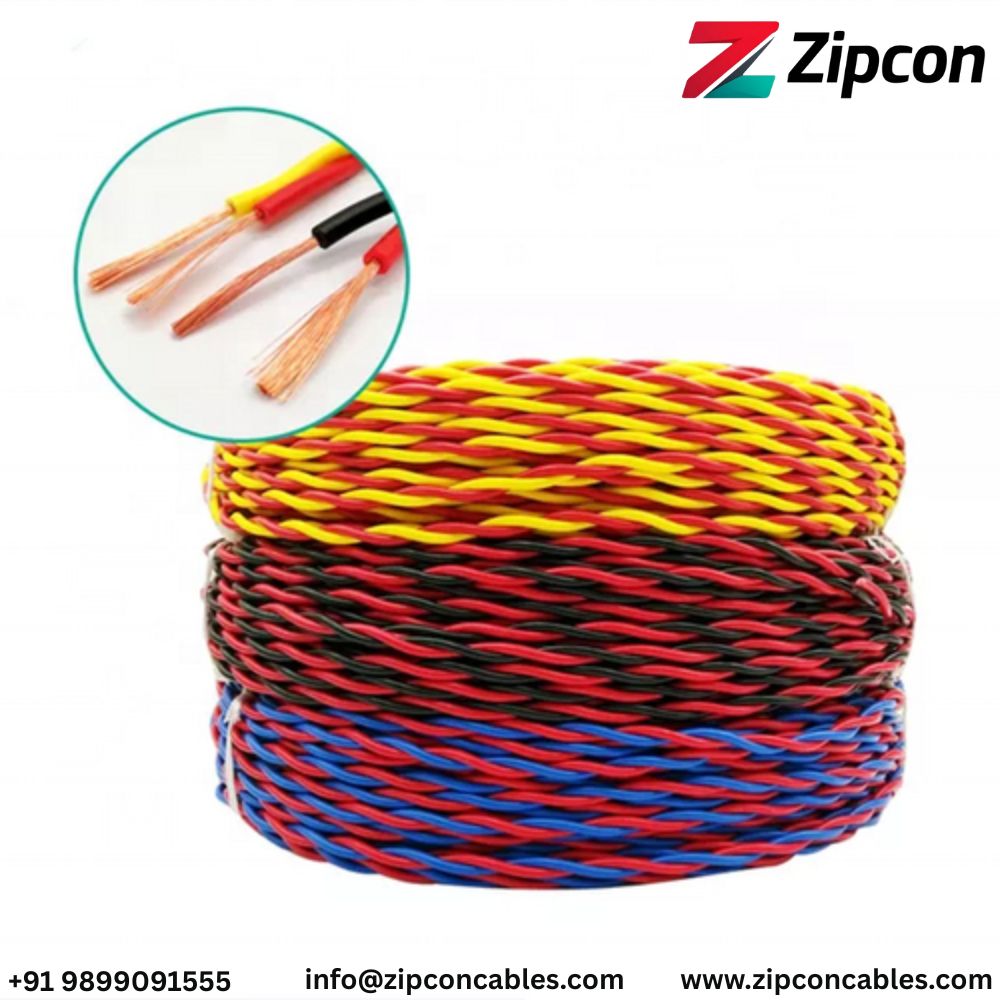
Best Flexible Wire Brand in Gurgaon – Trusted Manufacturer & Supplier

Selecting the right flexible wire is not just a purchase decision — it directly affects electrical safety, system performance, and long-term reliability. Whether you are wiring a high-rise apartment in Gurgaon, installing machinery in an industrial plant, or setting up HVAC systems, the choice between copper and aluminium flexible wires matters.

Among manufacturers serving Gurgaon, Best Flexible Wire Brand in Gurgaon, Zipcon Cables has built a reputation for supplying technically reliable flexible wires for residential, commercial, and industrial applications. Instead of focusing on marketing claims, this article breaks down what engineers and buyers actually need to evaluate: conductivity, durability, weight, cost, safety, and practical installation scenarios.

For technical support or project inquiries: https://zipconcables.com/contact-us/

Understanding Flexible Wires

Flexible wires are multi-stranded conductors designed for easier bending and routing compared to solid wires. They are widely used in:

  • Panel wiring
  • Control circuits
  • Machinery connections
  • Residential internal wiring
  • HVAC systems
  • Temporary and movable installations

The two common conductor materials are copper and aluminium. Each has specific advantages and limitations.

Conductivity

Conductivity determines how efficiently a wire carries current.

Copper has higher electrical conductivity than aluminium. This means:

  • Lower voltage drop over distance
  • Better current carrying capacity for the same cross-section
  • Reduced heat generation

In high-rise apartment wiring, where long vertical runs are common, copper flexible wires maintain stable voltage levels and reduce power loss.

Aluminium has lower conductivity compared to copper. To carry the same current, aluminium requires a larger cross-sectional area. However, for large-scale power distribution where conductor size can be increased, aluminium remains a practical choice.

Durability and Mechanical Strength

Copper is mechanically stronger and more resistant to fatigue. It performs better in:

  • Repeated bending situations
  • Machinery connections
  • Control panels
  • Vibrating equipment environments

For example, in factory machinery connections where cables are frequently moved or exposed to vibration, copper flexible wires offer better long-term durability.

Aluminium is softer and more prone to deformation. It also forms an oxide layer on exposure to air, which can affect connections if not properly terminated. Proper lugs and anti-oxidation measures are essential when using aluminium.

Weight

Weight becomes critical in large projects.

Aluminium is significantly lighter than copper. In high-rise buildings or long cable tray installations, lighter weight reduces structural load and makes handling easier.

For long-distance power distribution within industrial campuses, aluminium flexible cables reduce transportation and installation effort.

Copper, being heavier, adds more load but offers superior electrical performance.

Cost

Cost is often the deciding factor in large procurement decisions.

Copper is more expensive due to its higher conductivity and material value. However, because it carries more current in a smaller size, overall installation space and conduit requirements may be reduced.

Aluminium is more cost-effective per meter, especially for large cross-section cables. In projects with tight budgets and long cable runs, aluminium significantly lowers material cost.

However, buyers must consider total system cost — including connectors, lugs, and maintenance.

Safety Performance

Safety depends on proper installation and material characteristics.

Copper offers:

  • Lower resistance heating
  • More stable terminations
  • Better fire safety margins

In residential internal wiring and panel wiring, copper flexible wires are generally preferred due to reduced risk of loose connections and overheating.

Aluminium requires careful installation:

  • Correct termination techniques
  • Proper crimping tools
  • Periodic inspection

If installed incorrectly, aluminium connections may loosen over time due to thermal expansion differences.

Installation Requirements

Copper flexible wires are easier to terminate and install. Electricians prefer copper for:

  • Distribution boards
  • Switch panels
  • UPS systems
  • Generator connections

Aluminium wires require:

  • Larger terminals
  • Special connectors
  • Skilled handling

In HVAC installations across commercial buildings, aluminium may be used for main feeder lines, while copper is used for internal control wiring.

Typical Use Cases

High-rise apartment wiring
Copper flexible wires are commonly used for internal circuits, lighting, and power sockets due to better conductivity and safety margins.

Factory machinery connections
Copper is preferred for control panels and equipment wiring because of vibration resistance and durability.

Panel wiring
Copper ensures reliable termination and compact installation.

Long-distance power distribution
Aluminium becomes more economical for feeder lines and sub-distribution networks.

HVAC installations
Aluminium may be suitable for main supply lines, while copper is ideal for internal system connections.

When Copper is the Better Choice

Choose copper flexible wires when:

  • Load is high and voltage drop must be minimal
  • Safety is the top priority
  • Installation space is limited
  • Frequent bending or movement is involved
  • Long-term maintenance needs to be minimal

Copper is typically recommended for residential internal wiring, industrial control panels, and sensitive electrical systems.

When Aluminium Makes More Sense

Choose aluminium flexible wires when:

  • Cable runs are long
  • Budget constraints are significant
  • Structural weight reduction is important
  • Application is bulk power transmission

Aluminium works well for feeder lines in large commercial buildings and industrial facilities.

Real-World Decision Guidance

For engineers and procurement managers in Gurgaon, the right choice depends on practical factors:

Budget constraints
If cost per meter is the main concern in large-scale projects, aluminium provides savings.

Load requirements
For higher current loads within compact systems, copper is safer and more efficient.

Safety priority
For residential buildings and critical installations, copper offers stronger safety margins.

Installation environment
In vibration-prone environments, copper performs better.

Long-term maintenance
Copper generally requires less maintenance compared to aluminium connections.

Why Zipcon Cables is a Trusted Choice in Gurgaon

As a flexible wire manufacturer and supplier in Gurgaon, Zipcon Cables provides both copper and aluminium flexible wires designed for residential, commercial, and industrial applications. The focus remains on:

  • Consistent conductor quality
  • Proper stranding for flexibility
  • Reliable insulation standards
  • Quality control during manufacturing
  • Compliance with electrical safety norms

Instead of offering a one-material solution, Zipcon Cables supports project-specific requirements — whether it is high-rise housing, factory installations, HVAC systems, or long-distance feeder applications.

Final Recommendation

There is no single “best” conductor for all applications.

If your priority is performance, safety, and long-term reliability in internal wiring or machinery connections, copper flexible wires are the better choice.

If your project involves large-scale power distribution, longer runs, and cost optimization, aluminium flexible wires can be the more practical option — provided installation standards are followed correctly.

A technically sound manufacturer like Zipcon Cables ensures that whichever conductor you select, it performs reliably under real working conditions. The key is not just choosing a brand, but choosing the right conductor for the right application.

Multicore Wire Manufacturer in Delhi

When selecting the best multicore wire manufacturer in delhi for electrical projects, one name stands out in the industry: Zipcon Cables. Known for their quality, durability, and performance, Zipcon Cables offers a wide range of multicore wires that cater to various residential, commercial, and industrial needs. This guide aims to help engineers, electricians, and buyers navigate the technical aspects of multicore wires, focusing on the key factors such as conductivity, durability, weight, cost, safety, installation needs, and typical use cases.

For inquiries or assistance:👉 https://zipconcables.com/contact-us/

Conductivity: Copper vs. Aluminum Wires

The conductivity of a wire is critical when considering long-distance transmission of electrical power. Copper is the preferred choice for multicore wires due to its superior conductivity compared to aluminum. Copper wires offer lower resistance, enabling more efficient power transmission over long distances. This makes them ideal for high-demand applications such as industrial machinery, power distribution, and residential wiring.

On the other hand, aluminum wires are less expensive than copper and lighter, making them a cost-effective alternative in situations where weight is a primary concern, and electrical demands are moderate. However, while aluminum wires can be more cost-effective upfront, they require larger cross-sections to achieve the same conductivity as copper wires. For projects where efficiency and long-term performance are critical, copper wires from Zipcon Cables are the ideal choice.

Durability: Built to Last in Harsh Environments

Durability is another critical factor when selecting multicore wires, particularly in environments that expose wires to extreme weather conditions, wear and tear, or harsh chemicals. Zipcon Cables’ multicore wires are known for their robust construction, ensuring long-lasting performance in challenging environments.

Whether it’s for outdoor installations, industrial machinery, or heavy-duty electrical systems, Zipcon Cables offers wires that resist wear, corrosion, and environmental stress. Their wires are built to withstand UV rays, moisture, and high temperatures, making them suitable for use in industries such as construction, mining, and manufacturing. For example, in a factory setting where machinery is constantly running, Zipcon’s durable wires can endure the rigors of daily use without compromising performance.

Weight: Choosing the Right Wire for Installation

The weight of the wire plays a significant role in the installation process. Lighter wires are easier to handle, reducing labor costs and simplifying the installation process. Zipcon Cables offers lightweight multicore wires that are perfect for residential and commercial applications, where ease of installation is crucial.

However, for heavy-duty projects or those requiring high-current transmission, heavier wires with thicker insulation might be necessary to ensure safety and performance. Zipcon’s range provides options to accommodate various weight requirements, giving engineers and electricians flexibility in selecting the appropriate wire for their projects.

Cost: Value Beyond the Price Tag

Cost is always a consideration when selecting wires, but it’s essential to look beyond the initial purchase price. Zipcon Cables provides excellent value by offering wires that balance cost, quality, and performance. While copper wires may cost more upfront than aluminum, they offer superior conductivity and longevity, resulting in fewer replacements and lower maintenance costs in the long term.

When compared to other competitors in the market, Zipcon Cables stands out by providing high-quality products at competitive prices. Buyers should also factor in the long-term cost savings related to installation ease, durability, and the lower risk of faults or damage, making Zipcon Cables a cost-effective option.

Safety: Prioritizing Protection

Safety is a top priority when it comes to electrical wiring. Zipcon Cables ensures that their multicore wires meet the highest safety standards, offering insulation materials that protect against electrical faults, short circuits, and fire hazards. The wires are designed to prevent overheating and are made with fire-resistant insulation to provide maximum protection for residential, commercial, and industrial installations.

Zipcon’s wires also adhere to national and international safety standards, making them a reliable choice for ensuring the safety of electrical systems. Whether it’s for a new residential project or for upgrading an industrial facility, Zipcon’s commitment to safety ensures peace of mind for both the installer and the end-user.

Installation Needs: Easy Handling and Flexibility

The installation process can vary depending on the complexity of the project and the type of environment. Zipcon Cables’ multicore wires are designed to be flexible wires and easy to handle, making them an ideal choice for projects that require frequent routing or complex installation patterns. Their wires can be bent without compromising their structure, making them suitable for a wide range of applications.

For more rigid installations, Zipcon also offers wires with enhanced protection and less flexibility, ensuring they remain in place over long periods without the risk of damage. This versatility ensures Zipcon Cables can cater to projects of all scales, whether residential wiring or heavy-duty industrial setups.

Typical Use Cases: Real-World Applications

Zipcon Cables’ multicore wires are used in a variety of applications, from residential to large-scale industrial uses. Some common use cases include:

  • Electrical Power Distribution: Zipcon’s wires are ideal for transmitting power across long distances in residential and commercial settings, offering reliable performance without signal loss or excessive heat buildup.
  • Industrial Machinery: These wires are designed to handle high electrical loads, making them perfect for factory settings, where machinery and equipment require robust and reliable electrical connections.
  • Residential Wiring: Zipcon’s lightweight and flexible multicore wires are commonly used in homes, where they are easy to install and provide long-lasting performance.
  • Solar Power Systems: Zipcon Cables also provides wires suitable for renewable energy installations, ensuring that solar panels and other equipment are wired efficiently and safely.

Conclusion: Copper vs. Aluminum Cables

In choosing between copper and aluminum multicore cables, Zipcon Cables recommends copper for high-demand applications that require superior conductivity, durability, and long-term performance. While aluminum can be a viable alternative for cost-sensitive projects, copper’s efficiency and reliability make it the better choice for most industrial and residential uses.

Zipcon Cables offers a wide selection of multicore wires that balance conductivity, durability, cost-effectiveness, and safety, making them a top choice for engineers, electricians, and buyers in Delhi. Whether you’re handling a simple residential wiring project or a complex industrial installation, Zipcon’s wires provide the right solution for every need.

High-Performance Multicore Cables for Safe Power Distribution
Best Multicore Cables Manufacturer

Modern power distribution systems demand more than just electrical connectivity. They require reliability under load, safety in operation, ease of installation, and predictable long-term performance. For electrical engineers, electricians, EPC contractors, plant managers, and procurement buyers, choosing the right multicore cable directly affects system efficiency, downtime risk, and lifecycle cost.

This article explains how to choose the right multicore cable for real-world applications by clearly comparing traditional copper multicore cables with Zipcon Cables, based strictly on application needs and operating conditions.

For inquiries or assistance, visit: 👉https://zipconcables.com/contact-us/

Understanding conductivity and load handling

Conductivity determines how efficiently power flows through a cable. Copper has long been the industry benchmark because of its high electrical conductivity. In applications where voltage drop must be tightly controlled or where cables carry continuous high current—such as heavy motors, transformers, or precision equipment—copper multicore cables remain the preferred choice. They deliver stable performance with minimal losses, even under sustained loads.

Zipcon Cables are engineered to deliver optimized conductivity for standard and medium-load power distribution. While they may not replace copper in extreme high-load or precision circuits, they perform efficiently in most commercial and industrial power applications. For distribution lines, feeders, and panel-to-panel connections, Zipcon Cables provide reliable current flow while meeting practical efficiency requirements.

Durability and mechanical strength in real environments

Industrial wiring rarely operates in ideal conditions. Heat, vibration, repeated bending, and exposure to mechanical stress are common challenges. Copper multicore cables offer excellent thermal stability and long-term durability, especially in environments with continuous heat generation or heavy vibration, such as manufacturing plants and processing units.

Zipcon Cables are designed with robust insulation systems and flexible conductor construction to withstand daily industrial wear. In control panels, building power systems, and infrastructure projects where cables are routed through trays, conduits, or tight spaces, Zipcon Cables handle bending and movement without compromising insulation integrity.

Weight, handling, and installation efficiency

Cable weight has a direct impact on installation speed, labor effort, and routing complexity. Copper multicore cables are heavier, which can slow installation in large-scale projects and increase stress on cable trays and supports. In vertical runs or long horizontal routes, this weight becomes a practical concern.

Zipcon Cables offer a lighter construction, making them easier to handle, pull, and route. For electricians and EPC contractors working on time-bound projects, this translates into faster installation, reduced manpower strain, and improved site productivity. In retrofit projects or congested electrical rooms, lighter cables also simplify modifications and expansions.

Cost versus lifecycle value

Copper multicore cables typically come with a higher upfront cost. In high-load or mission-critical systems, this investment is justified by their performance stability and long service life. However, using copper across all applications often leads to unnecessary cost escalation.

Zipcon Cables provide a strong balance between cost and performance. For standard power distribution, lighting circuits, auxiliary systems, and commercial installations, they deliver dependable service at a more controlled project cost. When maintenance needs, installation savings, and system scalability are considered, Zipcon Cables often offer better overall lifecycle value.

Safety, insulation quality, and compliance

Safety is non-negotiable in power distribution. Copper multicore cables are widely used in critical circuits due to their predictable thermal behavior and compatibility with high-grade fire-resistant insulation systems.

Zipcon Cables are engineered to meet industry safety standards with high-quality insulation, flame-retardant properties, and consistent manufacturing controls. In commercial buildings, control panels, and infrastructure projects, they provide reliable insulation performance and reduced risk of electrical faults when installed correctly.

Installation needs and system design flexibility

Ease of termination, flexibility, and space management play a major role in cable selection. Copper multicore cables can be stiffer, especially at higher sizes, requiring more space for bending radius and termination work.

Zipcon Cables are designed for flexibility, making termination faster and routing easier in compact panels and trays. For projects where space constraints are a concern—such as automation panels, HVAC systems, or building distribution boards—this flexibility simplifies design and execution.

Typical use cases and practical decision-making

In factory power distribution with heavy machinery and continuous loads, copper multicore cables remain the right choice due to their superior conductivity and thermal stability.

In control panels, auxiliary circuits, commercial buildings, data centers’ non-critical feeders, and infrastructure projects, Zipcon Cables are often the more practical option. They reduce installation effort, control costs, and still deliver reliable power performance.

Clear recommendations for professionals

Choose copper multicore cables when the application involves high current, continuous load, precision equipment, or critical safety systems where performance margins must be maximized.

Choose Zipcon Cables when the priority is efficient power distribution, faster installation, controlled project cost, and dependable performance in standard industrial, commercial, and infrastructure environments.

Zipcon Cables position themselves as a well-engineered, high-performance alternative designed for modern power distribution needs—helping professionals balance safety, efficiency, and practicality without overengineering the system.

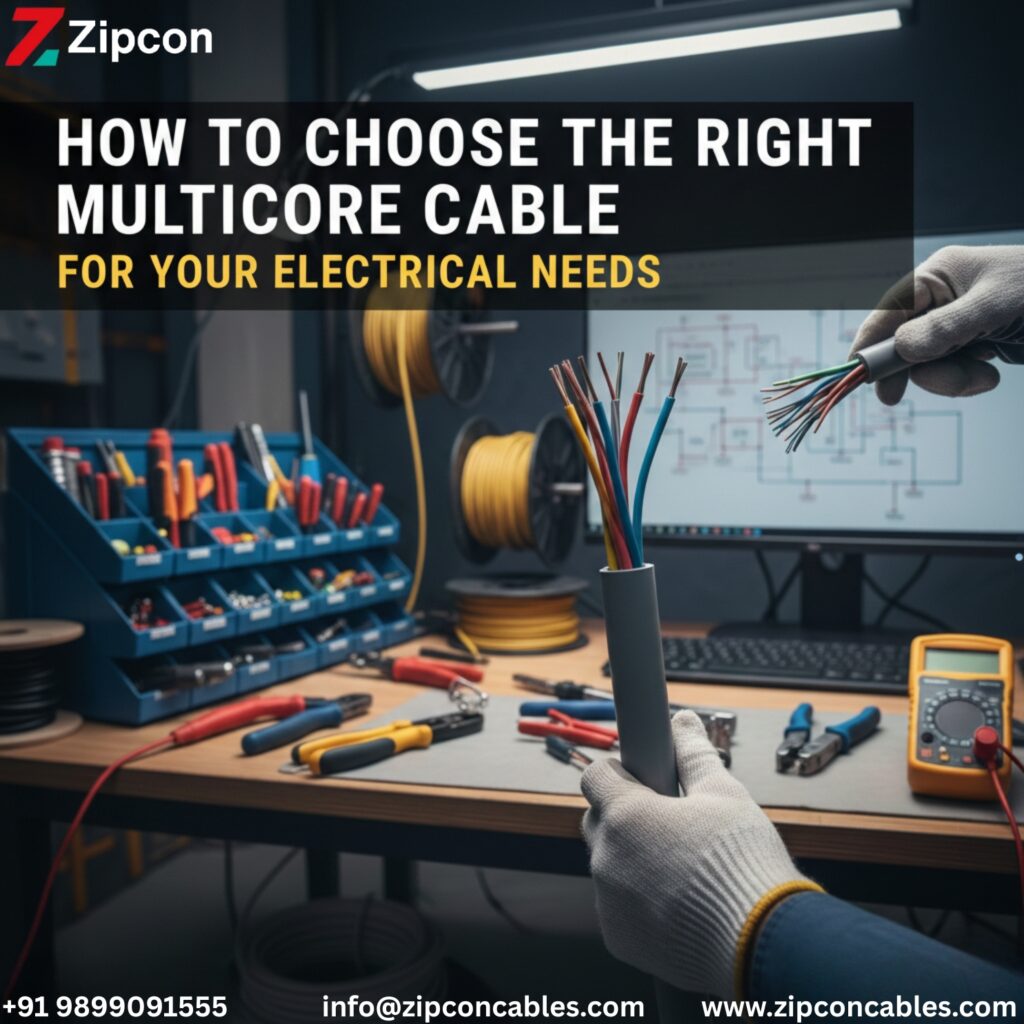
How to Choose the Right Multicore Cable for Your Electrical Needs
Multicore Cable

Choosing the right multicore cable manufacturer in india is a critical decision that directly impacts electrical performance, safety, installation efficiency, and long-term operating cost. For engineers, electricians, procurement managers, and industrial buyers, the challenge is not understanding what a multicore cable is—but selecting the right one for the job.

This guide, developed using the practical experience behind Zipcon Cables, is designed to help buyers make confident, application-driven decisions without unnecessary theory or marketing noise.

For inquiries or assistance, visit: 👉https://zipconcables.com/contact-us/

Understanding Multicore Cables in Real Applications

Multicore cables consist of multiple insulated conductors bundled within a single outer sheath. They are used to carry power, control signals, or data where multiple circuits must run together safely and efficiently. The key benefit is simplified installation, better cable management, and reduced risk of wiring errors.

However, these benefits are only realized when the cable is correctly selected for load, environment, and usage conditions—an area where many projects face avoidable failures.

Core Evaluation Factors That Influence Cable Selection

Electrical conductivity and performance efficiency
Conductivity determines how effectively current flows through the cable. Poor conductivity leads to voltage drop, energy loss, and heat buildup. For high-load systems, control panels, and continuous-duty operations, high-conductivity conductors ensure stable performance and energy efficiency. Zipcon Cables designs multicore cables with consistent conductor quality to support reliable current flow under demanding conditions.

Mechanical durability and lifespan
In real-world installations, cables are exposed to bending, vibration, abrasion, and occasional impact. A multicore cable must maintain insulation integrity and conductor alignment throughout its service life. Industrial buyers prioritize durability because cable failure often leads to costly downtime, not just replacement cost.

Weight and handling implications
Cable weight affects installation speed, routing flexibility, and termination quality. Heavier cables require more effort during installation, especially in compact panels or overhead trays. The right balance between conductor material and insulation design helps installers work faster and with fewer errors.

Cost considerations: initial cost vs long-term value
Initial cable cost is only one part of the equation. Maintenance, energy loss, safety risk, and replacement frequency define the true lifecycle cost. Many buyers choose Zipcon Cables because the long-term reliability of a well-built multicore cable outweighs short-term savings.

Safety standards and compliance
Electrical safety is non-negotiable. Compliance with fire resistance, insulation performance, and conductor standards protects both equipment and people. Non-compliant cables can delay approvals and increase liability. Zipcon Cables manufactures multicore cable aligned with relevant safety and quality benchmarks for commercial and industrial use.

Installation requirements
Flexibility, bending radius, sheath quality, and ease of termination all affect installation efficiency. A cable that is difficult to route or terminate increases labor time and error risk, even if its electrical ratings look adequate on paper.

Copper vs Alternative Cable Materials: Practical Comparison

Where copper multicore cables perform best
Copper offers superior electrical conductivity, excellent heat resistance, and consistent mechanical strength. Copper multicore cables from Zipcon Cables are preferred in high-load applications, critical systems, manufacturing plants, and environments where long-term reliability is essential. They handle voltage fluctuations better and maintain performance over extended operating cycles.

Where alternative materials may be suitable
Aluminum or alloy-based conductors are lighter and generally more cost-effective upfront. They may be suitable for short-distance runs, lightweight installations, or projects with strict budget constraints. However, they often require larger conductor sizes and more careful termination practices.

Quick decision view
Copper: higher performance, longer life, higher initial cost
Alternatives: lighter weight, lower upfront cost, limited-duty suitability

Real-World Application Scenarios

Industrial machinery and manufacturing plants
Multicore cables reduce wiring complexity in machines carrying power and control signals together. Copper multicore cables are preferred for their load-handling capability, vibration resistance, and thermal stability—key strengths offered by Zipcon Cables.

Commercial buildings and infrastructure
Used in HVAC systems, elevators, lighting controls, and automation networks. Copper multicore cables are commonly specified for safety compliance, fire resistance, and long-term operational reliability.

Residential wiring and compact installations
Multicore cables help manage space in distribution boards and concealed wiring. While alternative materials may work in low-load residential setups, copper remains the safer choice where durability and future expansion are concerns.

Renewable energy and control panel systems
Solar installations and automation panels rely on multicore cables for stable signal transmission and organized layouts. Copper multicore cables perform better in heat-intensive environments and ensure accurate control and monitoring.

A Clear Decision Framework

To select the right multicore cable, ask:

What is the electrical load and duty cycle?
Higher loads favor copper multicore cables.

What environment will the cable face?
Heat, moisture, vibration, or movement require durable construction.

What safety and compliance level is required?
Commercial and industrial projects typically demand copper-based solutions.

What is the expected lifecycle cost?
Reliable cables reduce maintenance, downtime, and replacement risk.

Final Recommendation

Copper multicore cables are the right choice for industrial machinery, commercial infrastructure, control panels, and any application where performance stability, safety, and service life matter. Alternative materials may suit lightweight, low-load, or cost-sensitive applications with controlled conditions.

Zipcon Cables delivers multicore cable solutions engineered for real operating environments—combining electrical efficiency, mechanical strength, and installation practicality. For buyers who prioritize dependable performance over short-term compromises, choosing the right multicore cable starts with informed selection and a trusted manufacturer.

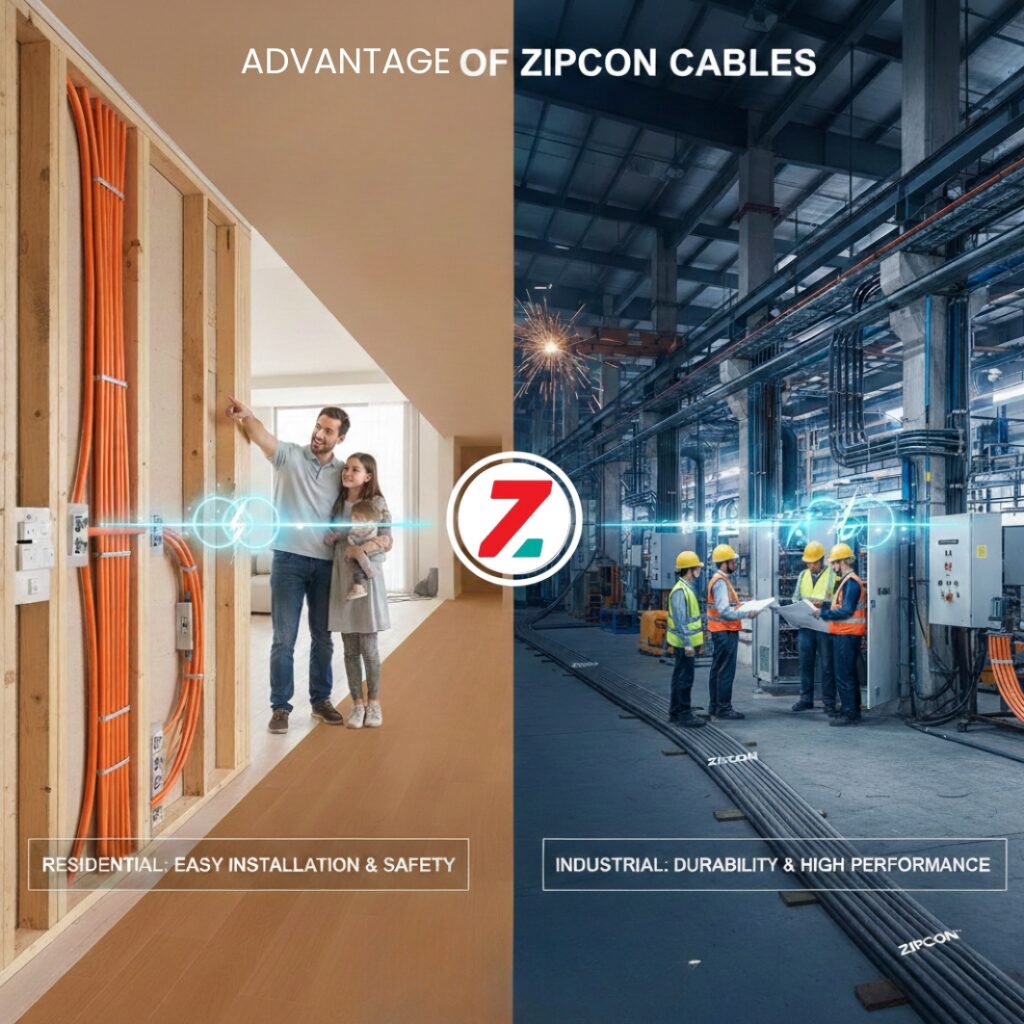
Advantages of Zipcon Cables in Residential and Industrial Wiring
Advantages of Zipcon Cables in Residential & Industrial Wiring

Zipcon cables Manufacturer in delhi have gained significant traction in both residential and industrial wiring due to their superior durability, cost-effectiveness, and versatility. While copper cables have long been a standard in the industry, Zipcon cables present a strong alternative for various applications. In this article, we’ll explore the advantages of Zipcon cables, particularly in comparison to copper cables, across key technical areas such as conductivity, durability, weight, cost, safety, installation, and typical use cases.

For inquiries or assistance, visit: 👉https://zipconcables.com/contact-us/

Conductivity

Copper cables are known for their high conductivity, making them the preferred choice in applications where efficient power transmission is critical, such as in high-voltage and heavy-duty systems. However, Zipcon cables, while not as conductive as copper, still offer adequate conductivity for many residential and light industrial applications.

Zipcon cables use advanced materials and insulation that enhance their performance in various environments, ensuring that the electrical current flows efficiently for most residential wiring and industrial setups. In scenarios where extreme conductivity is not a priority—such as in lower power systems or residential buildings—Zipcon cables provide sufficient performance at a more affordable price.

However, for high-power, high-performance applications, copper remains the better choice due to its superior conductivity.

Durability

Zipcon cables manufacturer in india are designed to perform well in challenging environments, making them a great option for both residential and industrial installations. These cables can withstand extreme temperature variations, humidity, and mechanical wear, which are common in industrial settings like factories, warehouses, and outdoor installations.

Compared to copper, Zipcon cables offer superior resistance to environmental stresses, reducing the risk of failure over time. They are often coated with durable insulation materials that protect them from corrosion, abrasion, and other forms of degradation, which can be a concern with copper cables when exposed to harsh conditions.

In residential settings, Zipcon cables have proven to be highly reliable, requiring minimal maintenance and offering long-lasting performance. Copper cables, on the other hand, tend to have a slightly longer lifespan in optimal conditions but may require more regular maintenance due to their vulnerability to corrosion and wear over time.

Weight

One significant advantage of Zipcon cables is their lighter weight compared to copper cables. This makes them easier to handle and install, especially in large-scale projects where long cable runs are required. The reduced weight can also contribute to cost savings in terms of transportation and handling.

In contrast, copper cables are relatively heavier and may pose installation challenges, especially in tight spaces or when long distances need to be covered. The lighter weight of Zipcon cables, however, makes them a preferred choice in residential applications, where ease of installation is important.

Cost

Cost is a major factor when deciding between Zipcon and copper cables. Zipcon cables are more affordable than copper cables, making them a more cost-effective solution for many residential and industrial projects. For budget-sensitive applications, Zipcon offers a great balance between performance and price, without compromising safety or durability.

Copper cables, while more expensive, are still the go-to choice for high-performance applications that demand superior conductivity. In large-scale or budget-sensitive projects, Zipcon cables may provide significant savings without sacrificing the necessary performance.

Safety

Safety is a paramount consideration in any wiring project, and Zipcon cables excel in this area. They are equipped with advanced insulation materials that make them resistant to fire and provide protection against electrical shocks. Zipcon cables are also designed to meet various international safety standards and certifications, ensuring that they can be used safely in both residential and industrial settings.

Copper cables, on the other hand, can be more prone to overheating in certain conditions, especially if they are not properly insulated or if they carry a heavy electrical load. While copper is a highly conductive material, it requires careful installation and maintenance to avoid safety risks. Zipcon cables, with their robust insulation, provide an added layer of security, particularly in high-risk environments.

Installation Needs

The installation process for Zipcon cables is straightforward and requires minimal tools and specialized skills. Their lighter weight, flexible design, and easier handling make Zipcon cables easier and faster to install compared to copper cables. This can reduce labor costs and installation time, particularly in residential and commercial wiring projects.

In contrast, copper cables often require more careful handling and specialized tools for cutting, stripping, and installation. The installation process can also be more time-consuming due to the heavier weight and more rigid nature of copper cables.

Typical Use Cases

Zipcon cables are ideal for a wide range of applications. In residential settings, they are commonly used for wiring in homes, apartments, and offices, where high conductivity is not as critical. Their durability and cost-effectiveness make them a great choice for projects that require reliable performance without the high price tag of copper cables.

In industrial settings, Zipcon cables are used for a variety of applications, from lighting systems in factories to powering machinery in warehouses. The cables’ ability to withstand harsh conditions makes them suitable for industrial environments where temperature fluctuations and exposure to moisture are common.

Copper cables are still the preferred choice for high-performance applications, such as heavy-duty power transmission, high-voltage systems, and situations that demand the highest possible conductivity.

Copper vs. Zipcon Cables

While Zipcon cables offer several advantages, particularly in terms of cost, durability, and ease of installation, there are still scenarios where copper cables may outperform them. For applications that require superior conductivity, such as heavy-duty power systems or high-voltage installations, copper cables are the better option.

However, Zipcon cables are well-suited for most residential and many industrial applications, where cost savings, durability, and ease of installation are more important than maximum conductivity.

Recommendation

For most residential and light industrial applications, Zipcon cables provide a reliable, cost-effective, and durable solution. They perform well in a wide range of environments, offering ease of installation and lower overall costs. Copper cables should still be considered for applications that demand high conductivity, such as heavy-duty power systems or specialized high-voltage installations.

Ultimately, the choice between Zipcon and copper cables should be based on the specific needs of the project—whether it’s cost, durability, or performance that matters most. For most applications, Zipcon cables will deliver excellent results while staying within budget.

Zipcon Cables: The Future of Safe and Efficient Electrical Solutions

When it comes to electrical solutions, choosing the right cables can significantly impact the efficiency and safety of your installations. Zipcon Cables leading manufacturer in india, is at the forefront of providing high-quality cables that prioritize conductivity, durability, safety, and cost-efficiency. This article delves into the technical aspects of Zipcon Cables, covering the key factors like conductivity, durability, weight, cost, safety, installation needs, and typical use cases, while also comparing them with copper cables.

For inquiries or assistance, visit: 👉https://zipconcables.com/contact-us/

Conductivity: Ensuring Efficient Power Transmission

The primary function of any electrical cable is to efficiently transmit electrical power. Copper has long been considered the gold standard due to its high conductivity. However, Zipcon Cables, especially those made with advanced materials like aluminum, are designed to offer comparable performance. These cables provide effective conductivity, ensuring minimal power loss. In cases where copper cables are less cost-effective or not ideal due to weight constraints, Zipcon’s alternatives can be a viable solution, particularly for large-scale industrial applications where energy efficiency is crucial.

Durability: Built to Withstand Harsh Conditions

Durability is a critical factor when selecting cables, especially in outdoor or harsh environments. Zipcon Cables are designed to endure extreme conditions, including high temperatures, moisture, and physical stress. Their high-quality insulation materials ensure that they are resistant to wear and tear, reducing the likelihood of short circuits and other failures. On the other hand, while copper cables are highly durable, they are susceptible to corrosion over time, particularly in humid or salty environments. This makes Zipcon Cables a more reliable choice for long-term performance in tough settings.

Weight: Balancing Strength and Practicality

Weight is another important consideration, particularly for applications requiring long cable runs or when cables need to be installed in tight spaces. Copper cables, while excellent in conductivity, are heavy and require additional support structures, increasing both installation complexity and cost. Zipcon Cables, however, are lighter and easier to handle, reducing the overall weight burden without compromising on strength. This makes Zipcon’s cables ideal for residential, commercial, and even some industrial applications where ease of installation is a priority.

Cost: Maximizing Value

Copper cables are typically more expensive due to the high cost of raw copper. While they offer superior conductivity, their price tag can be a barrier, especially for large projects. Zipcon Cables, particularly those made with alternative materials, offer a more cost-effective solution without sacrificing too much in terms of performance. For large-scale installations, Zipcon Cables can provide substantial cost savings, making them an attractive choice for both contractors and businesses looking to optimize their budgets.

Safety: Preventing Hazards

Safety is paramount when it comes to electrical installations. Zipcon Cables are designed with robust safety features, including fire-resistant coatings and reinforced insulation, ensuring they meet stringent safety standards. These cables are less prone to overheating and short-circuiting, offering superior protection for residential, commercial, and industrial systems. While copper cables are generally safe, their heavier weight and potential for corrosion under certain conditions can lead to safety concerns over time. Zipcon Cables offer a safer alternative by minimizing these risks.

Installation Needs: Ease and Flexibility

Zipcon Cables are engineered for ease of installation, with flexible designs that allow for quick and simple setups in various environments. The lighter weight of these cables means they are easier to maneuver, reducing labor costs and installation time. Copper cables, while often more rigid and requiring more precise handling, may be better suited for certain heavy-duty industrial applications where the installation environment is stable and straightforward. For more adaptable installations, especially in complex or tight spaces, Zipcon Cables are a superior choice.

Typical Use Cases: Tailored Solutions

Zipcon Cables find applications across a variety of sectors. For residential use, their flexible, lightweight, and cost-effective designs make them ideal for home wiring and light industrial projects. In commercial applications, Zipcon Cables are used for everything from office buildings to shopping malls, offering the perfect balance of safety, durability, and affordability. Industrial sectors, including manufacturing plants and construction sites, also benefit from Zipcon’s robust and reliable solutions. For areas where copper cables excel, such as heavy machinery or high-power systems, copper remains a preferred choice, but for most other applications, Zipcon Cables provide an ideal, cost-effective alternative.

Copper vs. Zipcon: Which Should You Choose?

The decision between copper and Zipcon Cables ultimately depends on the application. Copper cables are better suited for environments where maximum conductivity is required, particularly for high-power, long-distance applications. However, for most residential, commercial, and industrial applications where cost, safety, and durability are top priorities, Zipcon Cables are the superior choice. Their ability to provide reliable performance at a lower cost, combined with easier installation and a higher degree of safety, makes them a smart choice for a wide range of electrical needs.

Conclusion

Zipcon Cables are redefining the future of safe and efficient electrical solutions. Their excellent conductivity, durability, cost-efficiency, and safety make them an excellent choice for a wide variety of applications. While copper cables remain important for certain high-power needs, Zipcon Cables provide a more versatile, practical, and affordable alternative for most projects. By choosing Zipcon, you’re investing in a reliable, long-term solution for your electrical needs.

Best Submersible Cable in Haryana

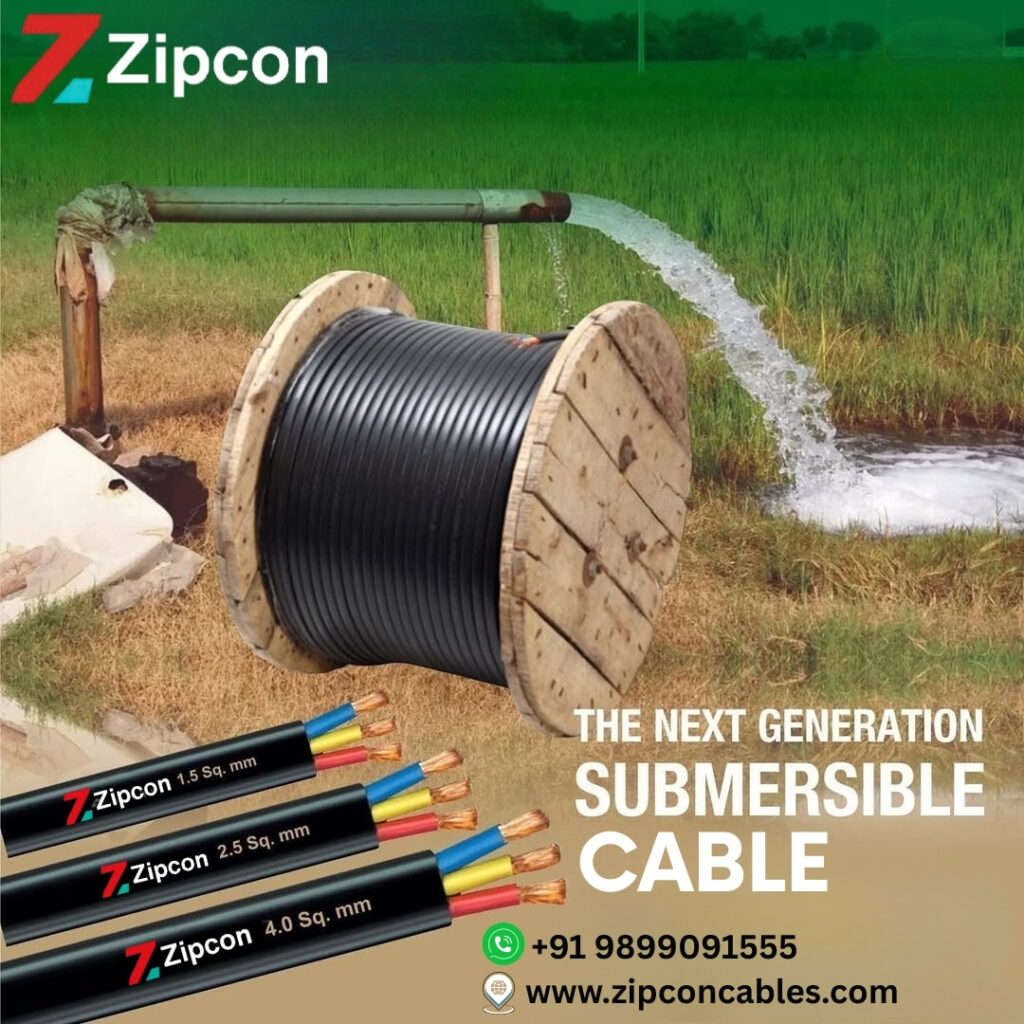
Best Submersible cables in Haryana play a critical role in Haryana’s water and power infrastructure. From deep agricultural borewells in Hisar and Sirsa to residential water supply in Gurugram and industrial pumping in Faridabad, the right submersible cable directly impacts pump efficiency, safety, and long-term operating cost. This guide explains what actually matters when choosing the best submersible cable in Haryana and how to select the Zipcon Cables right type based on real operating conditions.

For inquiries or assistance, visit: 👉 https://zipconcables.com/contact-us/

Why Submersible Cable Quality Matters

A submersible cable operates continuously underwater, often at significant depths, carrying power to motors that must run reliably for years. Poor-quality cables result in voltage drops, motor overheating, insulation failure, and repeated breakdowns—leading to high repair and replacement costs. Haryana’s groundwater conditions, including varying borewell depths, mineral content, and seasonal temperature fluctuations, make cable quality a non-negotiable factor.

Technical Performance Factors That Matter

Conductivity

Conductivity determines how efficiently electrical power reaches the motor. Higher conductivity reduces power loss, stabilizes voltage, and improves motor efficiency.

Copper conductors provide the highest conductivity, making them ideal for deep borewells and high-load applications. Aluminum conductors have lower conductivity and therefore require larger cross-sectional sizes to carry the same load safely.

Why it matters: Lower conductivity increases current draw, causing motor heating, insulation stress, and reduced pump life.

Durability and Insulation

Submersible cables must withstand continuous water immersion, pressure, abrasion, and chemical exposure. High-grade PVC or XLPE insulation with water-blocking properties is essential.

In Haryana, where borewell water often contains salts and minerals, poor insulation degrades quickly, leading to insulation leakage and electrical faults.

Weight and Handling

Copper cables are heavier but offer superior mechanical strength and resistance to stretching in deep installations. Aluminum cables are lighter and easier to handle, especially for shallow installations, but require careful handling and proper clamping.

Weak outer sheaths or excessive flexibility can cause damage during pump lowering.

Cost Considerations

Aluminum cables offer lower upfront cost, while copper cables involve higher initial investment. However, copper cables generally deliver lower operating losses, fewer failures, and longer service life—resulting in better total cost of ownership.

Safety

A reliable submersible cable must ensure:

  • High insulation resistance
  • Flame-retardant properties
  • Minimal leakage current

This is especially critical in agricultural environments where earthing conditions may be inconsistent.

Installation Requirements

Deep borewell installations require high tensile strength and secure jointing. Faulty joints remain one of the most common reasons for submersible pump failures across Haryana.

Typical Use Cases in Haryana

Agriculture and Borewells

Agricultural pumps commonly operate at depths between 100 and 300 feet and run for extended hours during irrigation cycles.

Best fit: Copper submersible cables for deeper installations and motors above 3 HP due to stable voltage delivery.

Residential Water Supply

Homes and housing societies rely on submersible pumps for daily water needs.

Best fit: Copper or well-sized aluminum cables for shallow depths, depending on load and budget.

Industrial Applications

Industries in Panipat, Faridabad, and surrounding belts require continuous pumping for cooling and process water.

Best fit: Copper submersible cables with heavy-duty insulation for uninterrupted, long-hour operation.

Copper vs Aluminum Submersible Cables – Quick Comparison

Conductivity: Copper – High | Aluminum – Moderate
Weight: Copper – Heavy | Aluminum – Light
Depth suitability: Copper – Deep borewells | Aluminum – Shallow wells
Voltage stability: Copper – Excellent | Aluminum – Average
Long-term cost: Copper – Lower | Aluminum – Higher if failures occur

Real-World Haryana Scenarios

A farmer in Sirsa operating a 7.5 HP pump at 250 feet will experience voltage instability with aluminum cables unless oversized. Copper submersible cables provide consistent power and reduce motor stress.

A residential society in Gurugram running a 1.5 HP pump at 80 feet can use a properly rated aluminum cable if installation quality is ensured.

An industrial unit in Faridabad operating pumps continuously should always use copper cables to avoid downtime and maintenance losses.

How to Choose the Right Submersible Cable

Choose copper submersible cables if:

  • Borewell depth is high
  • Motor capacity exceeds 3 HP
  • Pumps run for long durations
  • Reliability and lifespan are priorities

Choose aluminum submersible cables if:

  • Installation depth is shallow
  • Load requirement is low
  • Budget constraints exist
  • Installation quality is strictly controlled

Cable sizing should always be matched to motor load and depth—not price.

Why Choose Zipcon Cables in Haryana

Zipcon Cables has established a strong presence in Haryana by delivering submersible cables designed for real field conditions. Their copper submersible cables offer high conductivity, robust insulation, and dependable mechanical strength—making them suitable for agricultural, residential, and industrial pumping applications.

For buyers who prioritize long-term reliability, electrical safety, and consistent performance, Zipcon Cables provides a balanced combination of quality, compliance, and value.

Final Recommendation

For deep borewells, high-load motors, and continuous operation in Haryana, copper submersible cables remain the most reliable choice. Aluminum cables may be suitable for shallow, low-load applications when correctly sized and installed.

When performance, safety, and durability matter, choose Zipcon Cables for a submersible cable solution that delivers dependable results in Haryana’s demanding conditions.

Top 10 Multicore Cable Brands in India – Quality, Price & Performance

When it comes to choosing the best multicore cables for industrial, residential, and commercial applications, understanding key factors such as conductivity, durability, cost, installation requirements, and safety is essential. Whether you’re an engineer, electrician, or buyer, it’s important to select cables that offer the best performance and value for money. In this article, we’ll review the top 10 multicore cable brands in India, with a particular focus on Zipcon Cables and how they stack up against competitors.

For inquiries or assistance:👉 https://zipconcables.com/contact-us/

1. Zipcon Cables

Best for: High-quality, durable, and safe electrical solutions

Zipcon Cables stands out in the Indian market for its superior performance and technical expertise. Known for its high-quality copper and aluminum multicore cables, Zipcon ensures outstanding conductivity and safety. These cables are ideal for industrial, commercial, and residential applications, offering a perfect balance between price and performance. Zipcon’s multicore cables are tested to meet the highest industry standards for durability, ensuring long-lasting use in both indoor and outdoor environments.

  • Key Features: Exceptional conductivity, robust insulation, corrosion-resistant.
  • Application: Industrial wiring, high-load commercial applications, residential wiring.
  • Recommendation: Choose Zipcon Cables if you need cables with high durability and safety features, especially for projects that require reliable long-term performance.

2. Finolex Cables

Best for: Cost-effective solutions with high performance

Finolex is one of India’s leading cable brands, known for its affordable yet reliable multicore cables. These cables provide good conductivity and are known for their long-lasting insulation, making them a popular choice for general-purpose electrical installations.

  • Key Features: Affordable, good quality, reliable insulation.
  • Application: Residential, light industrial use.
  • Recommendation: If budget is a priority, Finolex is a great choice for basic electrical wiring needs.

3. Polycab Cables

Best for: Wide range of multicore cable options

Polycab is renowned for offering a wide selection of multicore cables that cater to diverse industries. These cables feature excellent insulation and flame-resistant properties, making them ideal for both heavy-duty and regular installations. Polycab’s multicore cables are also designed for high conductivity, providing stable power supply across a variety of applications.

  • Key Features: High conductivity, flame resistance, robust insulation.
  • Application: Heavy industrial, commercial, and residential use.
  • Recommendation: Ideal for environments where flame resistance and high conductivity are critical.

4. RR Kabel

Best for: Premium quality and safety

RR Kabel is known for its high-performance electrical cables, providing both copper and aluminum multicore options. Their cables are designed for high-load applications, with a focus on safety and compliance with international standards. RR Kabel offers excellent resistance to wear, tear, and weather conditions.

  • Key Features: High-quality copper, high load-bearing capacity, weather-resistant.
  • Application: High-load industrial applications, high-end residential setups.
  • Recommendation: Choose RR Kabel for projects requiring superior safety standards and durability.

5. Sterlite Power

Best for: Utility and power transmission solutions

Sterlite Power specializes in cables designed for power transmission and distribution systems. Their multicore cables are highly durable, ensuring reliable performance in demanding environments such as power plants and substations.

  • Key Features: High strength, corrosion-resistant, excellent for power distribution.
  • Application: Utility and power transmission, heavy-duty industrial.
  • Recommendation: Opt for Sterlite Power when you need cables for critical power infrastructure.

6. Havells India

Best for: Versatile and reliable cables

Havells offers multicore cables that combine reliability and versatility, suitable for both low and high-tension applications. These cables are designed to offer great insulation and reduce the risk of electric shocks.

  • Key Features: High-quality insulation, versatile applications, corrosion-resistant.
  • Application: Industrial, residential, and commercial.
  • Recommendation: Ideal for projects requiring a versatile cable solution across different environments.

7. KEI Cables

Best for: High conductivity and long service life

KEI is known for its high-conductivity cables that provide optimal performance, even under heavy load. Their multicore cables come with enhanced insulation, making them resistant to fire hazards and environmental factors like moisture and chemicals.

  • Key Features: Superior conductivity, fire-resistant, high insulation.
  • Application: Industrial, construction, and power applications.
  • Recommendation: Choose KEI if you require high-performance cables with long-lasting durability and superior conductivity.

8. V-Guard Cables

Best for: High-performance cables at a competitive price

V-Guard has made a mark in the Indian market by providing reliable and affordable multicore cables. These cables are designed for both heavy-duty industrial and residential applications, offering excellent insulation and safety features.

  • Key Features: Affordable, reliable insulation, good for residential and light commercial use.
  • Application: Residential, commercial, and light industrial.
  • Recommendation: Opt for V-Guard if you’re looking for a cost-effective yet reliable cable solution.

9. Indo Cables

Best for: Flame-retardant and environment-friendly cables

Indo Cables specializes in flame-retardant multicore cables, which are designed to minimize fire hazards. Their cables come with eco-friendly materials that contribute to a safer environment, especially in high-risk zones like chemical plants and factories.

  • Key Features: Flame-retardant, eco-friendly, excellent insulation.
  • Application: Industrial, commercial, high-risk environments.
  • Recommendation: Ideal for environments with a high risk of fire hazards, ensuring maximum safety.

10. Universal Cables

Best for: Heavy-duty industrial applications

Universal Cables offers robust and durable multicore cables ideal for industrial and high-power applications. They provide excellent resistance to wear and tear, ensuring long-term performance in heavy-duty environments.

  • Key Features: High tensile strength, excellent wear resistance, durable.
  • Application: Power stations, industrial plants, and heavy machinery.
  • Recommendation: Best for projects that require cables capable of handling extreme conditions and heavy loads.

Copper vs. Aluminum Cables: Where Do They Perform Better?

  • Copper Cables: Copper cables excel in terms of conductivity and are more durable. They are ideal for applications requiring high power transmission with minimal signal loss. Copper is also more resistant to corrosion, which makes it suitable for outdoor and harsh environments.
  • Aluminum Cables: Aluminum cables are lighter and more cost-effective compared to copper cables. However, they have lower conductivity and are more prone to oxidation. Aluminum is typically preferred in applications where weight and cost are more important than high conductivity, such as in overhead power lines.

Conclusion and Recommendations

When selecting a multicore cable brand in India, it’s important to consider factors like conductivity, durability, cost, and specific application requirements. Zipcon Cables stands out for its excellent balance of performance, durability, and cost-effectiveness. Whether you need cables for industrial or residential use, Zipcon provides high-quality solutions that meet international safety standards.

For those on a budget, Finolex and V-Guard offer reliable yet affordable options, while brands like RR Kabel and KEI Cables provide premium solutions for demanding applications. If flame resistance and high safety standards are paramount, Indo Cables and Polycab are the go-to options.

By considering the application type and specific requirements, you can make an informed decision on the best multicore cable brand suited to your needs.

Best House Wire in Delhi

House wires in India are the backbone of every Indian home’s electrical system. They carry power from the main supply to lights, fans, sockets, and heavy appliances like air conditioners and geysers. A wrong choice in house wiring can lead to voltage drops, frequent tripping, overheating, or even fire hazards over time. That’s why selecting the right house wire is not just about brand or price—it’s about safety, performance, and long-term value. Zipcon Cables has built a strong reputation in India for manufacturing reliable house wires designed for Indian load conditions, climate, and installation practices.

Conductivity

Conductivity determines how efficiently electricity flows through a wire. Higher conductivity means lower power loss, stable voltage at the appliance end, and reduced heat generation.

Copper has significantly higher conductivity than aluminum. In technical terms, copper’s resistivity is around 1.68 µΩ·cm, while aluminum is about 2.82 µΩ·cm—roughly 40% higher resistance. For electricians, this directly translates into better load handling with thinner copper wires compared to aluminum. Zipcon copper house wires are preferred in circuits where consistent power delivery and low losses matter.

Durability

Durability depends on conductor quality, insulation material, and overall wire construction. Copper is naturally more resistant to oxidation and mechanical fatigue. When combined with high-grade PVC or FR-grade insulation, copper wires can last decades without performance degradation.

In high-humidity regions or coastal areas, aluminum wiring can oxidize faster if insulation quality is poor. Zipcon Cables addresses this by using robust insulation compounds that protect both copper and aluminum conductors from moisture and chemical exposure, improving lifespan in real-world Indian conditions.

Weight

Weight affects installation ease, conduit loading, and long-term stress on junction boxes.

Copper is heavier, which makes handling slightly harder in long conduit runs. Aluminum is nearly 30% lighter, making it easier to pull through conduits in large homes or multi-floor buildings. Electricians often prefer aluminum for long-distance runs where weight reduction simplifies installation without compromising safety when sized correctly.

Cost

Cost is often the deciding factor for homeowners. Copper house wires are more expensive due to raw material costs, sometimes 1.5 to 2 times the price of aluminum for the same length.

However, copper delivers better long-term value through lower energy losses, higher load tolerance, and fewer maintenance issues. Aluminum wires reduce upfront cost but may require larger sizes to match copper performance. Zipcon offers both options, allowing buyers to balance budget and performance without compromising on quality.

Safety

Safety is influenced by current-carrying capacity, heat resistance, and insulation quality. Copper handles heat better and is less prone to loose connections, reducing fire risk.

In high-load circuits or areas with voltage fluctuations, copper wires provide a safer margin. Zipcon’s FR and FRLS insulated house wires are designed to limit flame spread and reduce smoke, making them suitable for modern residential safety standards.

Installation Needs

Copper wires are more flexible, making them easier to bend, terminate, and secure at switchboards. Aluminum requires careful termination using appropriate lugs and torque control to avoid loose joints.

Electricians generally prefer copper for indoor residential wiring due to ease of handling. Aluminum is better suited where trained installers and proper tools are available. Zipcon wires are designed with uniform conductor stranding to simplify installation for both materials.

Typical Use Cases

Lighting and fan circuits require stable voltage and moderate load handling—both copper and aluminum can work, depending on wire size.

Socket outlets, kitchens, and inverter lines benefit from copper due to fluctuating loads.

Heavy appliances like air conditioners, geysers, and ovens demand copper wiring for reliability and thermal safety.

Practical Comparisons

For small apartments with general lighting and sockets, aluminum house wires can be used if correctly sized, offering cost savings without performance issues.

For high-load circuits like air conditioners and geysers, copper house wires provide better long-term performance due to lower resistive losses and higher thermal tolerance.

Real-World Application Scenarios

Scenario A: New 2BHK Home

A middle-class family wiring a new 2BHK can use 1.5 sq.mm copper for lighting and fans, 2.5 sq.mm copper for sockets, and 4 sq.mm copper for AC and geyser points. This setup balances safety, efficiency, and durability using Zipcon copper house wires.

Scenario B: Renovation Upgrade

In older homes with aluminum wiring, upgrading to copper requires checking conduit size, load requirements, and breaker ratings. Switching to copper improves safety and reduces voltage drop, especially for modern appliances with higher power demands.

Direct Recommendations

Choose copper house wires when safety, load stability, and long-term reliability are priorities—especially for kitchens, air conditioners, and main circuits.

Choose aluminum wires when budget constraints exist and loads are light, such as basic lighting circuits, provided correct sizing and installation standards are followed.

Zipcon Cables offers tested copper and aluminum house wire ranges designed specifically for Indian residential needs, making selection straightforward for homeowners and electricians.

Conclusion

Choosing the best house wire in India requires understanding how material, load, and usage conditions work together. Copper excels in safety and performance, while aluminum offers cost and weight advantages when used correctly. With Zipcon Cables, homeowners get dependable wiring solutions engineered for Indian homes. Make your choice based on application, not assumptions—and invest in wiring that delivers safety and peace of mind for years.